
Why Do Dogs Howl? 12 Reasons, Meanings & How to Respond


Canine Bible is reader-supported. We receive affiliate commissions via some of our links. Learn more.
Why do dogs howl, and what are they trying to tell us when they make this long, distinctive sound? Howling is a natural canine behavior, but its meaning can vary depending on the situation, the dog’s surroundings, and its emotional state. Some dogs howl when they hear sirens, music, or other dogs, while others vocalize when left alone or seeking attention. But how can you tell whether your dog’s howling is normal or a sign that something is wrong? Certain breeds are also more vocal than others, raising questions about how genetics and instincts influence this behavior. Understanding when, why, and how often dogs howl can help owners better interpret their pets’ behavior and recognize potential concerns. This guide explores the different reasons dogs howl, what specific howling patterns may indicate, and when excessive howling deserves closer attention.
Understanding How Dogs Communicate Through Howling
Howling is a form of canine vocal communication that allows dogs to produce sustained, recognizable sounds that may carry across considerable distances. Unlike barking or whining, howling often involves longer vocalizations with variations in pitch, duration, and intensity. Understanding these characteristics, along with a dog’s body language and surroundings, helps owners interpret what a howl might communicate.
| Communication Feature | How It Works |
|---|---|
| Long-distance signaling | Sustained vocalizations can reach listeners beyond the dog’s immediate surroundings. |
| Pitch and duration | Howls vary acoustically, but individual sounds have no universal translation. |
| Vocal exchanges | Dogs may respond to one another through successive or overlapping howls. |
| Body language | Posture, facial expression, and movement provide additional context. |
| Situational context | Events surrounding a howl help clarify its possible significance. |
| Individual vocal patterns | Frequency and vocal style differ among breeds and individual dogs. |
How Dogs Physically Produce a Howl
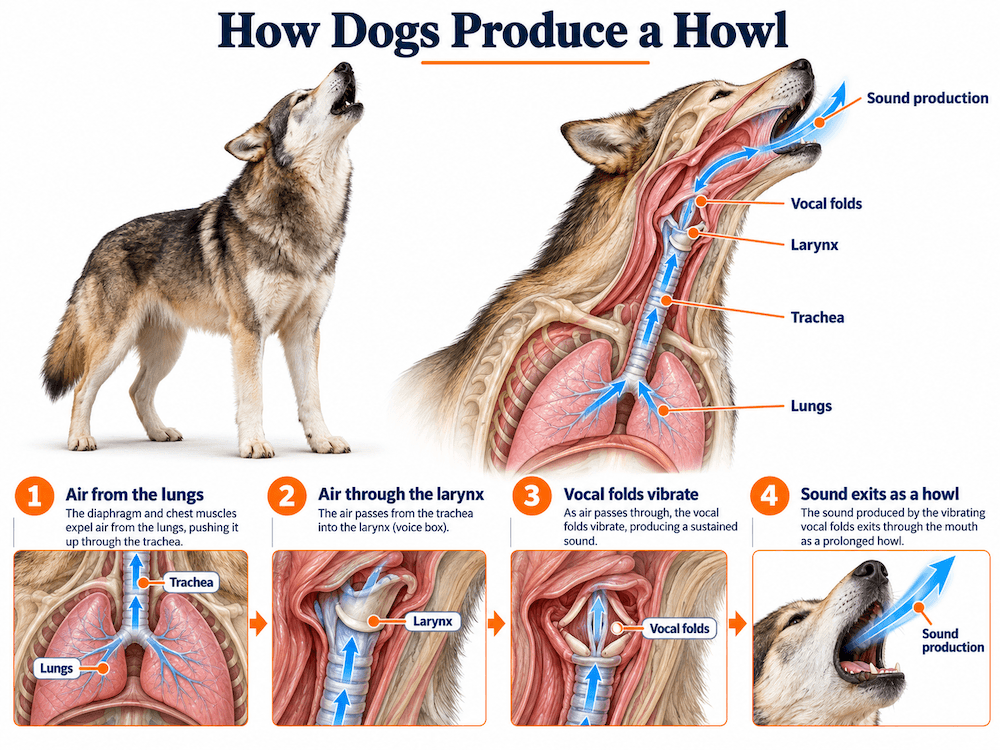
A dog howls when air from the lungs passes through the larynx, causing the vocal folds to vibrate and produce sound. Coordinated activity of the respiratory and laryngeal muscles helps regulate airflow, sound intensity, and pitch, allowing dogs to produce the sustained tones associated with howling. Unlike a typical bark, which often involves short bursts of sound, a howl can last several seconds and may change pitch throughout.
How Howling Differs From Barking, Baying, and Whining
Dogs produce several distinct vocalizations, and some can sound similar to an inexperienced listener. Recognizing the acoustic differences helps owners describe what their dogs are doing and communicate observations more accurately.
| Vocalization | Typical Sound | Key Difference |
|---|---|---|
| Howling | Long, sustained tone that may rise or fall in pitch. | Continuous sound rather than repeated short bursts. |
| Barking | Short, abrupt vocal bursts, sometimes occurring in rapid sequences. | Usually more interrupted and percussive than howling. |
| Baying | Prolonged, often rhythmic, howl-like barking common in scent hounds. | Often combines features of barking and howling. |
| Whining | Usually higher-pitched, softer, and more nasal-sounding vocalization. | Typically less resonant and forceful than a full howl. |
12 Reasons Dogs Howl
Dogs howl for several distinct reasons, ranging from natural communication instincts to learned behaviors and medical concerns. Some howls occur in response to specific sounds or social situations, while others reflect a dog’s emotional or physical state.


1. Communicate Over Long Distances
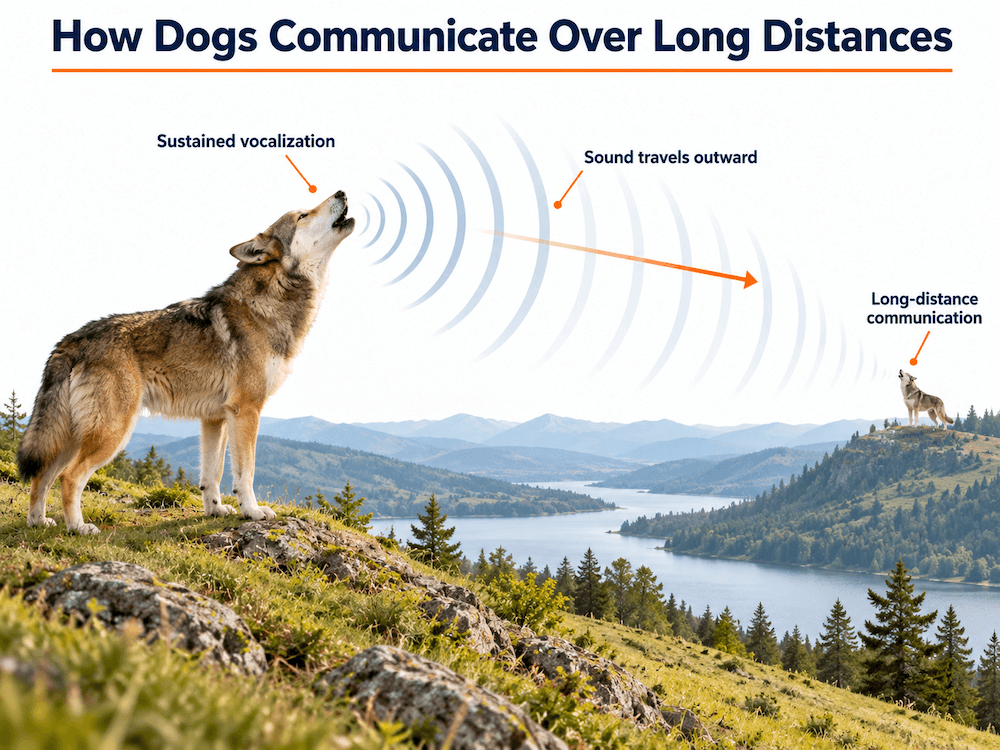
Howling is a form of long-distance vocal communication inherited from dogs’ wild ancestors. Unlike short, repeated barks, a sustained howl can travel over considerable distances, allowing animals to announce their presence or location. Domestic dogs may use this behavior when separated from familiar people or animals, although the precise message behind an individual howl cannot always be determined.
2. Respond to Other Dogs Howling
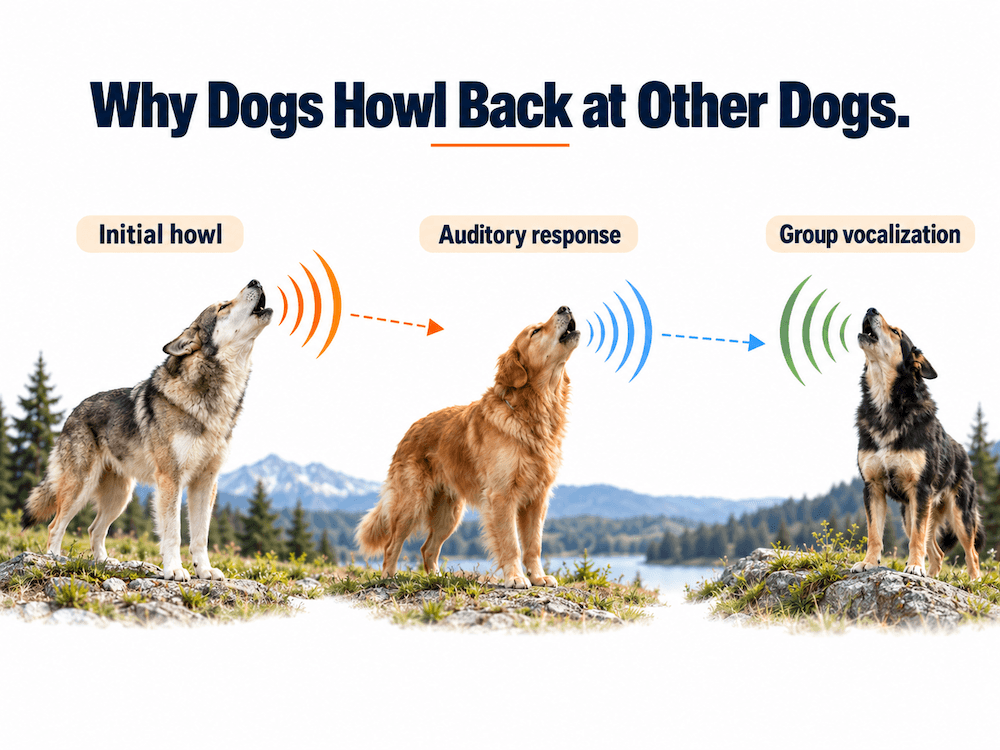
Hearing another dog howl can trigger a responsive vocalization, sometimes causing several dogs in the same neighborhood to howl in succession. This behavior resembles the group howling observed in wolves, where one animal’s call can stimulate responses from others. However, dogs may respond because of social interest, heightened alertness, or the acoustic properties of the sound, so participating in a chorus does not necessarily mean they are communicating a specific message.
3. React to Sirens, Music, or High-Pitched Sounds
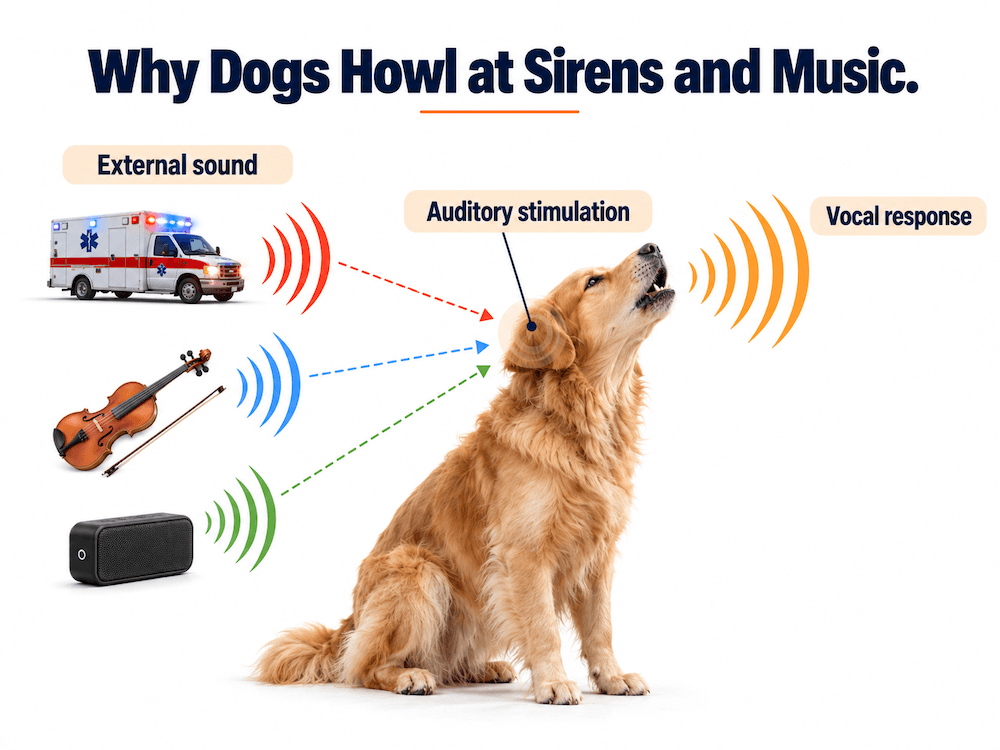
Some dogs howl when they hear sustained or high-pitched sounds, including emergency sirens, musical instruments, singing, and certain electronic noises. These sounds can stimulate the dog’s auditory system and trigger a vocal response, possibly because some acoustic features resemble natural howls. However, researchers have not established that dogs actually mistake sirens for other animals, and howling at music does not automatically mean the dog enjoys or dislikes it.
4. Announce Their Presence or Territory
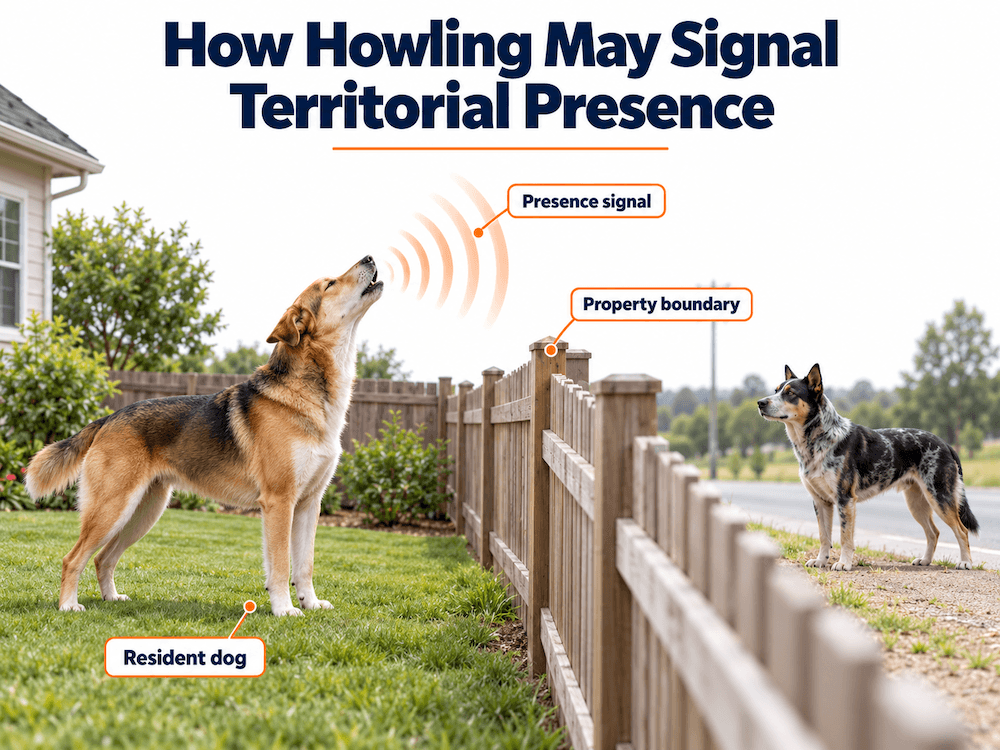
Some dogs may howl as a territorial or presence-announcing signal, particularly when unfamiliar animals approach their usual surroundings. In wolves, long-distance vocalizations can help maintain spacing between social groups and communicate territorial occupancy. A similar function is possible in domestic dogs, although territorial barking is more common and a dog’s howl alone does not establish that it is defending territory.
5. Signal a Discovery During Hunting or Tracking
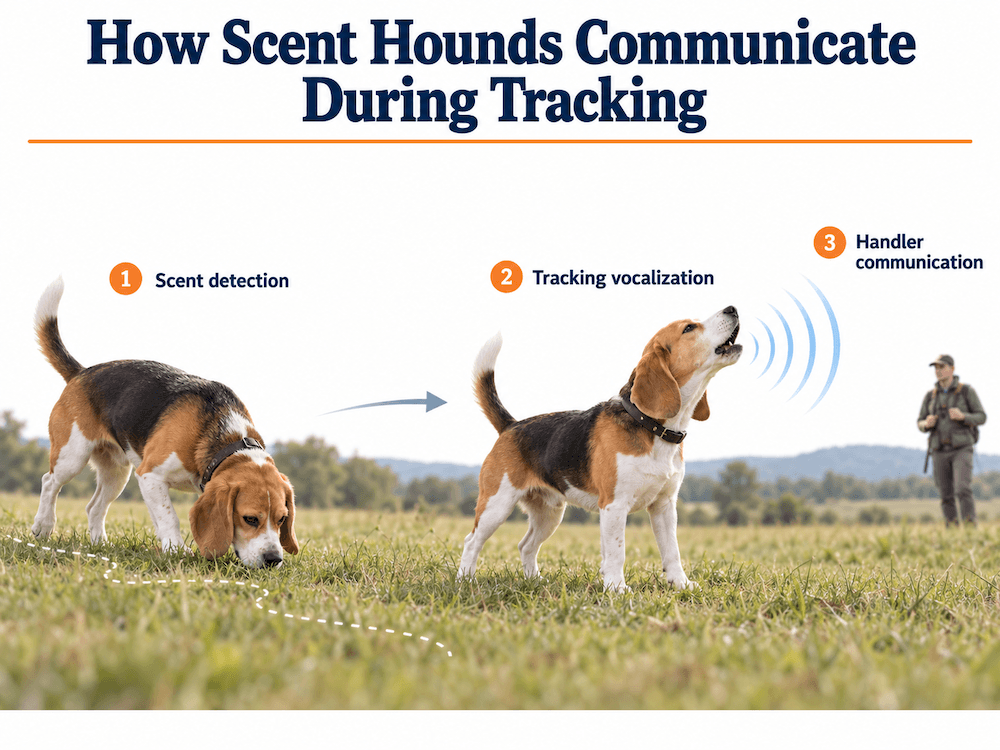
Certain hunting breeds produce prolonged vocalizations when they detect or follow an animal’s scent. This behavior, often called baying, helps human handlers and other dogs locate the tracking animal without needing direct visual contact. Baying is not identical to a classic howl, but the sounds can overlap, especially in scent hounds such as Beagles and Coonhounds.


6. Express Excitement or Anticipation
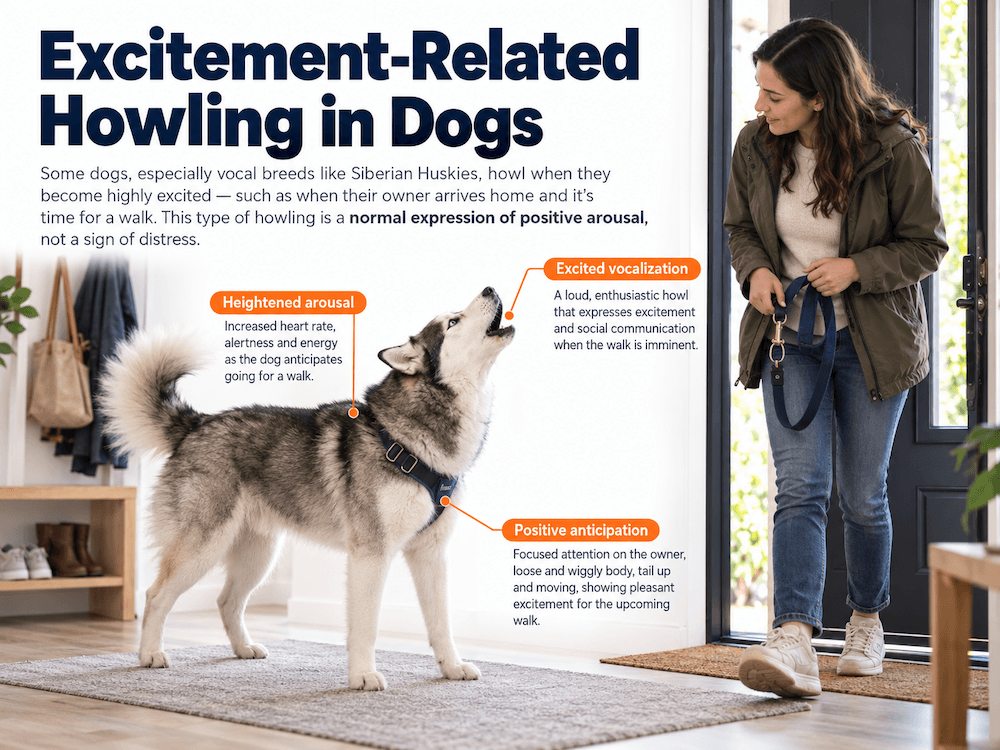
Some dogs howl during periods of heightened excitement, such as when familiar visitors arrive or they anticipate an enjoyable activity. Emotional arousal can increase vocal activity, and dogs naturally differ in whether they express excitement through barking, whining, or howling. A loose body posture, enthusiastic movement, and a predictable positive event may suggest excitement rather than distress.
7. Get Attention From Their Owners
Dogs can learn that howling produces a response when their owners regularly react by talking, petting, approaching, or offering something desirable. Through reinforcement, the behavior becomes more likely whenever the dog wants interaction. Attention-seeking howling may develop into a predictable habit, especially when the dog receives a reward immediately after vocalizing.

8. Separation-Related Distress
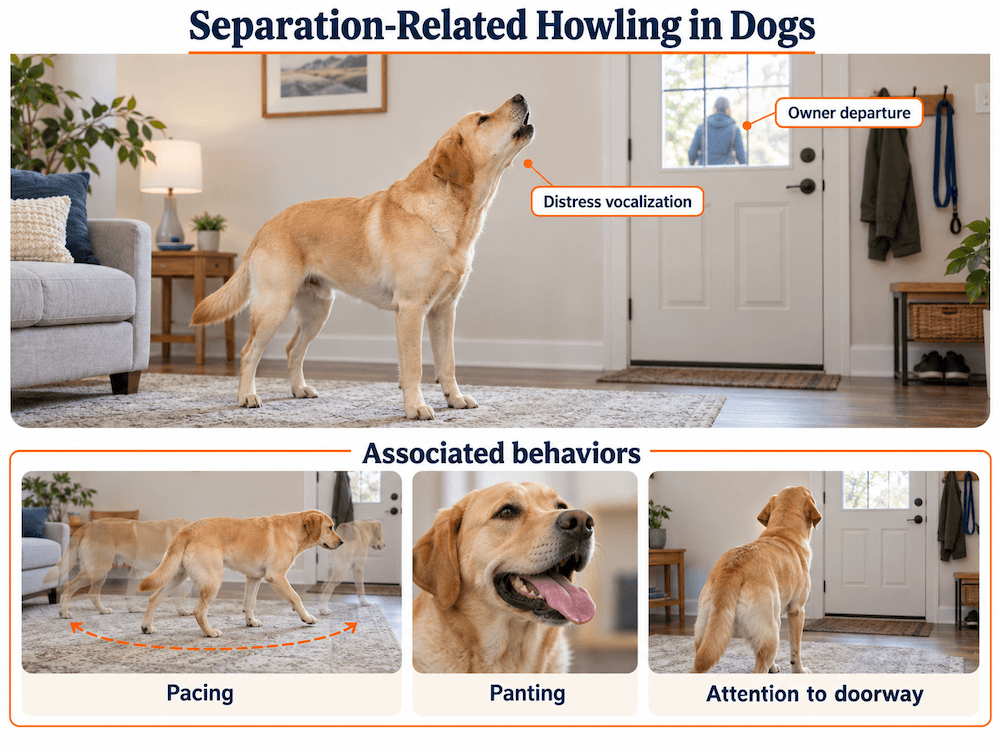
Dogs experiencing distress when separated from a familiar person may howl persistently because being alone triggers an adverse emotional response. Depending on the individual dog, separation-related problems can involve fear, anxiety, panic-like behavior, or frustration. Howling that begins around departure and accompanies pacing, panting, drooling, or destructive attempts to escape is more concerning than an occasional brief vocalization.
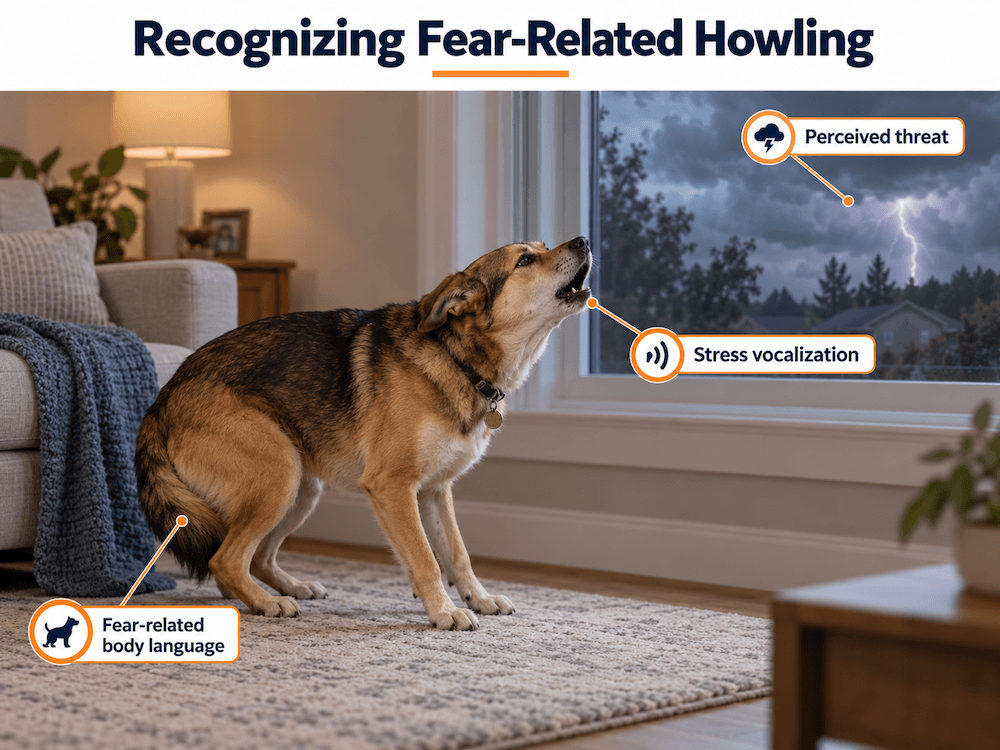
9. Fear or Environmental Stress
A dog may howl when fear or heightened stress is triggered by unfamiliar situations, frightening events, or overwhelming surroundings. The dog’s emotional and physiological arousal can increase vocalization, particularly when the animal feels unable to avoid the stressful situation. Owners might also notice trembling, hiding, lowered body posture, or repeated attempts to move away from the trigger.
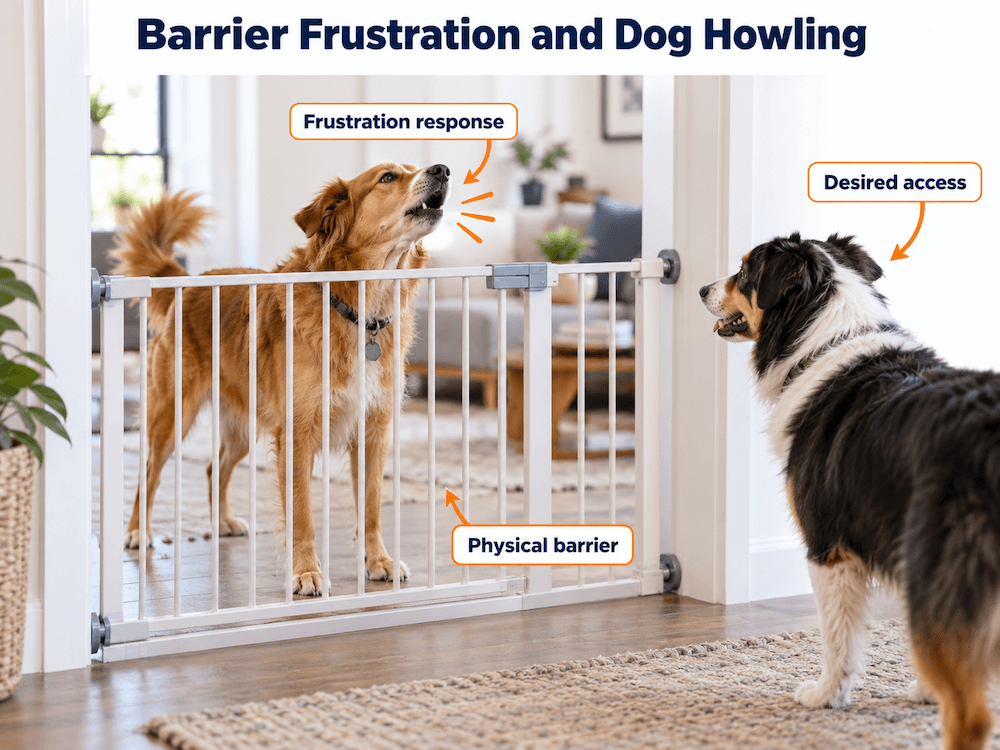
10. Frustration or Restricted Movement
Some dogs howl when a desired action is blocked, such as reaching a companion, accessing an outdoor area, or participating in an anticipated activity. Frustration develops when motivation remains high but an obstacle prevents the dog from completing the behavior. Repeated vocalization near gates, doors, or other barriers may suggest frustration, particularly when accompanied by persistent attempts to approach the inaccessible target.
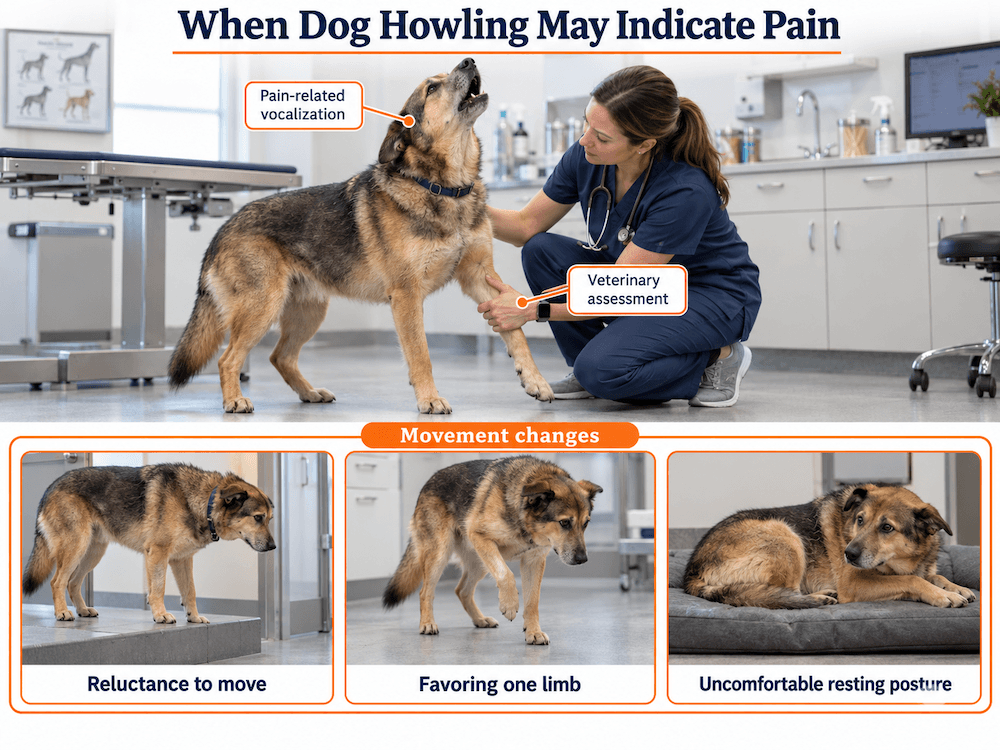
11. Physical Pain or Illness
A dog experiencing physical discomfort or pain may howl as an involuntary or distress-related vocal response. Injuries, painful medical conditions, or sudden illness can change a dog’s usual vocal behavior, particularly during movement, handling, or episodes of discomfort. A normally quiet dog that begins howling unexpectedly, especially alongside limping, weakness, appetite changes, or unusual posture, needs veterinary assessment rather than behavioral correction.
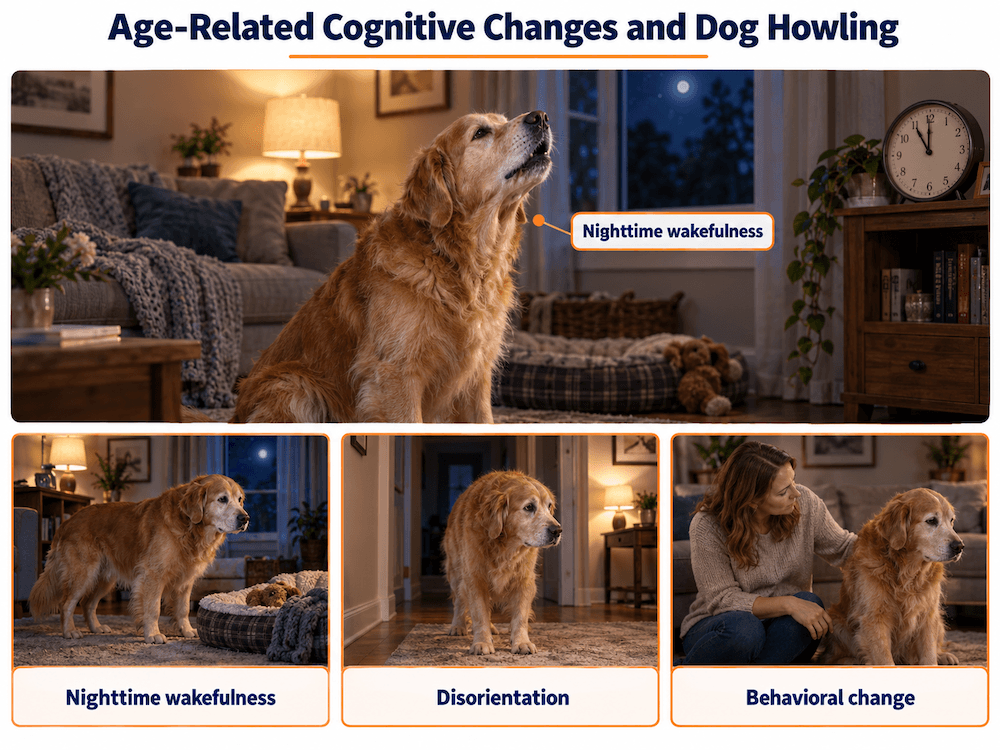
12. Age-Related Cognitive Changes
Some older dogs develop canine cognitive dysfunction, an age-associated condition involving changes in memory, awareness, behavior, and sleep patterns. Affected dogs may vocalize more frequently, sometimes howling or crying during periods of confusion or nighttime wakefulness. Disorientation, disrupted sleep, house-soiling, and changes in familiar interactions can accompany the behavior, although similar signs may also result from other medical or sensory problems.
What Veterinary Research Says About Dog Howling
Veterinary guidance supports howling as a normal form of canine communication, particularly when dogs respond to environmental sounds, seek social contact, or announce their presence. VCA Animal Hospitals also identifies attention-seeking behavior and physical discomfort as possible explanations. However, it emphasizes the importance of considering the circumstances surrounding the vocalization rather than treating every howl as having the same meaning.
A 2023 study published in Communications Biology investigated how domestication and genetic ancestry influence howling. Researchers played recorded wolf howls to 68 purebred dogs and found that older individuals from breeds genetically closer to ancestral wolf lineages generally produced longer howling responses and displayed more stress-related behaviors. These findings suggest that genetics and age influence responses to howling, although the study’s experimental setting and selected sample do not establish how often dogs howl in everyday life.[1]
Research published in Animals in 2023 examined separation-related behaviors through a survey involving 940 dog owners and a smaller direct-observation component. Howling was among the behaviors associated with separation-related problems, alongside restlessness, whining, barking, and other signs. Because much of the evidence relied on owner reports, the findings support an association between howling and separation distress rather than showing that howling alone establishes a diagnosis.[2]
Veterinary guidance also recognizes excessive vocalization as a possible feature of canine cognitive dysfunction, especially when accompanied by changes in sleep, awareness, or everyday behavior. VCA Animal Hospitals notes that age-related cognitive changes can affect how older dogs interact with their surroundings. Nevertheless, similar signs can occur with pain, sensory impairment, and other medical conditions, making veterinary assessment essential before attributing new howling to cognitive decline.
Why Some Dog Breeds Howl More Than Others
Breed-related vocal tendencies can influence how readily dogs howl in response to everyday events. Northern breeds such as Siberian Huskies and Alaskan Malamutes are often notably vocal, while scent hounds such as Beagles, Basset Hounds, and Coonhounds are known for howl-like baying. Historical breeding for particular working roles may help explain some of these differences, but breed alone cannot reliably predict an individual dog’s vocal behavior.
Individual temperament and experience also shape how often a dog uses its voice. Two dogs from the same breed may respond very differently to identical sounds or social situations, and one may remain almost entirely silent. A dog’s vocal habits can also change as it matures, encounters new environments, or develops learned associations with particular situations.
How to Figure Out Why Your Dog Is Howling
Identifying the cause of your dog’s howling requires observing what happens before, during, and after each episode. A dog’s surroundings, body language, and changes in behavior can provide valuable clues. Use the following checks to narrow down possible explanations without assuming that one sign confirms a specific cause.
| What to Check | What to Look For | Possible Meaning |
|---|---|---|
| Timing and location | When and where howling occurs. | Routine or environmental triggers. |
| Nearby sounds | Sirens, music, or other dogs. | Sound-triggered response. |
| Social situation | Departures, visitors, or blocked access. | Social needs or separation distress. |
| Body language | Relaxed posture, pacing, or trembling. | Excitement or possible distress. |
| Owner’s response | Attention or rewards following howling. | Learned attention-seeking behavior. |
| Duration and recovery | Episode length and ability to settle. | Brief response or persistent distress. |
| Health changes | Pain, confusion, or appetite changes. | Possible medical concern. |
When Dog Howling Is Normal vs. Concerning
Occasional howling is usually a normal part of canine behavior, particularly when it has a recognizable trigger, and the dog otherwise appears comfortable. The pattern surrounding the howl is more informative than the sound itself, including how long the behavior continues and whether it differs from the dog’s usual habits.
| Observation | Usually Less Concerning | More Concerning Signs |
|---|---|---|
| Frequency | Occasional howling consistent with the dog’s normal behavior. | Sudden, substantial increases or increasingly frequent episodes. |
| Duration | Brief episodes that end when the triggering event passes. | Prolonged vocalization with little opportunity to settle. |
| Body language | Relaxed posture and comfortable behavior between vocalizations. | Trembling, hiding, persistent panting, or marked agitation. |
| Daily functioning | Normal appetite, activity, sleep, and social interactions. | Noticeable changes in eating, movement, sleep, or responsiveness. |
| Recovery | Returns comfortably to normal activities after howling. | Remains distressed or struggles to settle afterward. |
| Behavioral consistency | Predictable pattern with recognizable circumstances. | New or unexplained howling without an identifiable trigger. |
Health Problems That May Contribute to Dog Howling
Some health conditions may contribute to increased howling or other vocalizations through pain, disorientation, or changes in sensory awareness. Howling alone cannot identify a medical problem, and many dogs remain quiet even when uncomfortable.
| Possible Health Problem | How It May Contribute |
|---|---|
| Arthritis and other painful joint conditions | Joint pain may trigger vocalization during movement or rest. |
| Spinal disorders, including intervertebral disc disease | Back, neck, or nerve pain may cause distress-related vocalization. |
| Dental disease or damaged teeth | Painful teeth or oral infections may cause unusual vocal behavior. |
| Urinary tract disease | Bladder inflammation, infections, or stones may cause painful urination and vocalization. |
| Hearing or vision loss | Reduced sensory awareness may increase confusion or distress-related calling. |
| Canine cognitive dysfunction | Disorientation and disrupted sleep may cause increased nighttime vocalization. |
Pain-related conditions are possible contributors to vocalization generally—not conditions with a distinctive, diagnostic “howl.” Sensory loss, urinary problems, and cognitive dysfunction can also contribute to changes in vocal behavior.
When to Call a Veterinarian About Dog Howling
Seek immediate veterinary attention if howling occurs alongside difficulty breathing, collapse, severe pain, suspected major injury, or a swollen abdomen with unproductive retching. These signs may indicate a medical emergency that requires prompt assessment and treatment. Avoid forcing your dog to move unnecessarily and arrange safe transportation to an emergency veterinary facility.
Schedule a veterinary appointment if your dog develops new, persistent, or unusually intense howling, especially when the behavior has no obvious trigger. Additional changes such as reduced appetite, limping, disrupted sleep, confusion, or unusual withdrawal make medical evaluation more important. Even when the dog otherwise appears comfortable, a substantial change from its usual vocal behavior deserves attention.
A veterinarian can perform a targeted medical and behavioral assessment to determine whether pain, illness, sensory changes, or emotional factors might be contributing to the problem. The evaluation may include a physical examination and additional tests when indicated by the dog’s history and clinical findings. Bringing a short video and a record of recent episodes can help the veterinary team understand the behavior and recommend appropriate next steps.
How to Respond When Your Dog Howls Excessively
Managing excessive howling starts with understanding what triggers the behavior and whether your dog is experiencing distress. The most effective approach addresses the underlying cause rather than simply trying to stop the noise. These practical strategies can help reduce unwanted howling while supporting your dog’s well-being.
Frequently Asked Questions
The Bottom Line
Howling is a natural form of canine communication that can serve different purposes depending on the situation. Dogs may howl in response to sounds, social interactions, excitement, or emotional distress, while some vocalizations are influenced by learned behavior. Breed characteristics, individual temperament, and environmental factors also affect how frequently dogs howl. Understanding your dog’s body language, surroundings, and vocal patterns can help you interpret what the behavior might mean. Occasional howling is generally normal and does not necessarily require intervention. However, sudden changes, persistent vocalization, or accompanying signs of discomfort may indicate a problem that deserves closer attention. By recognizing the underlying reasons for howling, owners can respond appropriately and better support their dogs’ well-being.
To better understand canine vocal communication, explore our guide to different dog sounds and their meanings. If your dog howls when left alone, learn more about the signs and causes of separation anxiety in dogs. For practical advice on managing excessive vocalization, read our guide on how to stop a dog from barking. If your dog’s howling seems unusual or accompanies behavioral changes, discover how to tell if your dog is in pain and recognize important warning signs.