Did you know that owning a dog has an environmental footprint equivalent to that of a large SUV? With over 90 million dogs in the United States, the impact of this issue is substantial. The ecological consequences of meat and agricultural production for pet food further amplify this effect on our planet. As conscientious pet owners, we aim to provide the best nutrition for our dogs while also considering the sustainability of our choices. This guide explores the best sustainable dog food options available today—brands that offer nutritious, eco-friendly food that provides optimal nutrition while minimizing environmental impact compared to traditional dog food brands.
What Is Sustainable Dog Food?
Sustainability is maintaining or improving living standards without damaging or depleting natural resources for present and future generations.[1] It rests on three core pillars: economic development, environmental health, and social equity. Embracing sustainable practices fosters thriving, diverse, and resilient communities. Sustainable dog food brands apply these principles, utilizing green technologies to minimize land and water use, as well as greenhouse gas emissions, during the manufacturing process. Eco-friendly pet-food manufacturers also support local economies and communities while conserving finite resources to ensure long-term sustainability.
The Impact of Dog Food on Our Planet According to Science
Impact Area
Key Stats
Why It Matters
Pet meat consumption impact
163+ million U.S. dogs & cats consume animal products. Pets account for ~25–30% of the environmental impacts of meat production. Up to 64 million tons of CO₂-equivalent (from methane & nitrous oxide) emitted annually from pet meat consumption.
Large, measurable footprint tied directly to the animal protein in pet diets.
Affected land during food production
~24.1 million hectares of U.S. arable land used for dog food production (~2,000 m² per dog). Dog-feed demand can equal 10–20% of national arable resources.
Drives habitat loss/deforestation and increases GHG emissions from land-use change.
Transportation & shipping
In U.S. inventories, commercial goods transport contributes ~7% of human GHG emissions; industry transport ~23%; agriculture transport ~10%.
Moving feed, ingredients, and finished pet food adds significant upstream emissions.
Livestock & farming
UN reporting notes animal agriculture emits more GHGs than all cars & trucks combined; factory farming is cited at ~18% of global GHG emissions.
Meat-heavy pet diets are coupled to high-emission livestock systems.
Equivalent to ~14M cars
U.S. pet meat consumption ≈ emissions from 13.6 million cars each year. If U.S. pets were a country, their meat intake would rank 5th globally. There are 844+ million pet dogs & cats worldwide.
Puts the footprint in everyday terms and shows the global scale.
Meat protein demand
Pet foods commonly contain 18–50% protein, while AAFCO’s adult minimum is 18%. Excess protein is often excreted. At current trends, humanity may need 1.5 planets by 2050 to meet demand.
Over-formulation increases resource use without proportional health benefits.
Energy & water use
Energy to feed one human ≈ energy to feed three dogs. ~1,800 gallons (8,182 L) of water per pound of beef. ~10 kcal fossil energy to produce 1 kcal plant protein used in livestock feed.
Highlights the high resource intensity behind each bag of dog food.
Table data sources: [2],[3],[4],[5],[6],[7],[8],[9]
Sustainable Dog Food Benefits
According to a study by the Environmental Working Group (EWG), pets have become involuntary sentinels of widespread chemical contamination. Dogs are exposed to 40% higher levels of chemicals than humans. The study found that dogs were contaminated with 48 out of 70 industrial chemicals, including plastics, food packaging chemicals, heavy metals, fire retardants, and stain-proofing chemicals.[11]
Feeding your dog sustainable food can benefit its health by reducing exposure to harmful chemicals, minimizing its ecological footprint, and positively impacting the environment and animal welfare.
What to Look For In The Best Sustainable Dog Food
Practice
What It Means
Why It Matters
Partnerships & certifications
Third-party sustainability certifications and verified partnerships.
Signals credible commitment to standards and continuous improvement.
Locally sourced
Use regional ingredients when possible.
Reduces transport distance and related emissions.
Organic agriculture
Avoids synthetic pesticides; supports soil health and resource conservation.
Generally more sustainable and helps climate mitigation.
Sustainably harvested fish
Fish sourced to minimize harm and managed responsibly.
Protects marine ecosystems while supplying omega-rich protein.
Humanely raised / grass-fed / cage-free
Animal products produced responsibly, without routine hormones or antibiotics.
Fewer inputs and typically lower emissions; supports animal welfare.
Sustainable proteins
Plant-based, insect-based (mealworms/crickets), or cultured meat options.
Can reduce deforestation, soil degradation, and GHGs from meat production.
Renewable energy
Solar, wind, or other clean energy in plants, offices, and operations.
Lowers the manufacturing carbon footprint.
Electric vehicles
EVs for transport and shipping.
Produce ~43% fewer GHGs than diesel vehicles (noted comparison).
Donations & social responsibility
Support for shelters, environmental causes, tree-planting offsets.
Advances social sustainability alongside environmental goals.
Recyclable packaging
Recyclable, recycled, or compostable materials; minimal plastic.
Avoids a contributor cited as ≈30% of GHG emissions and environmental harm.
Ethically sourced (animal welfare)
High welfare standards; no routine antibiotics/hormones; space to roam.
Protects animal well-being and aligns with responsible sourcing.
Table sources: [10],[11]
Best Sustainable Dog Foods
Here are the best sustainable dog foods of this year.
Best Overall Sustainable Dog Food
4.8
★★★★★
Open Farm
Who It’s For: Dog owners who want ultra-premium pet food that is ethically sourced and made from start to finish with sustainable and non-GMO human-grade ingredients.
Why we recommended it:Open Farm has clear climate objectives outlining a 10-year roadmap for reducing its carbon footprint and emissions by 42% by the Paris Agreement. Their dedication to sustainability and eco-friendly practices has set a high standard for most of their competitors.
What sets it apart from competitors: Nearly 90% of fruits and vegetables are locally grown, and it audits every ingredient provider to meet high environmental and health standards, helping reduce their carbon footprint.
Key Sustainable Features
Actively offsets emissions from direct operations and product manufacturing by investing in high-impact, verified carbon offset programs to make an immediate positive environmental impact. These programs include the Grasslands Portfolio in the USA, the Darkwoods Forest Conservation Project in Canada, and the Teak Afforestation Project in Mexico.
Partners with Terracycle for nationwide recycling of dog food bags.
Adheres to Oceanwise and Seafood Watch standards to minimize bycatch and overfishing, thereby protecting the marine environment.
Pros
Carefully sourced ingredients from the most humane and ethical farms, fisheries, and producers
Annual emissions data report
Ingredient traceability by scanning lot codes on their bags
High environmental and health standards set by organizations like Certified Humane and Global Animal Partnership
Cons
Higher price tag than the average
Few puppy-specific recipes
Get 20% OFF your first order with the code CANINE20 — Use this link to get started.
Who It’s For: Dog owners who want a brand that prioritizes animal welfare and the environment, that uses alternative protein sources that don’t rely on industrial farming.
Why we recommended it:Wild Earth achieves a much lower carbon footprint and less environmental damage by only using ultra-high-quality plant protein in their dog food and treats, requiring fewer resources to produce. This is increasingly important as the over-reliance on meat in kibble is responsible for 25-30% of the environmental impact of meat consumption in the United States.
What sets it apart from competitors: Their plant-based dog food requires 95% less water and emits 96% less CO2 than meat-based kibble. Their treats require 90% fewer resources to produce than meat-based treats.
Key Sustainable Features
GMO ingredients are a safe, reliable, and sustainable way to produce food. As a result, they produce higher yields on less land, making them more sustainable than those grown organically. “World Health Organization, American Medical Association, and British Royal Society, among others, say GMO crops are safe.”[13]
Plant-based food production offers a lower environmental impact and a sustainable solution by reducing energy consumption, emissions, land usage, and water consumption.[14]
Pros
No fillers, mystery meat additives, or preservatives
Uses cultured protein made with human-grade Koji for their treats
Who It’s For: Ideal for those who want to reduce carbon emissions through sustainable novel protein sources like insect protein, silver carp, and spirulina.
Why we recommended it:Chippin has carbon-neutral shipping for every bag sold. They have partnered with Pachama to offset the climate change impact on your shipment. Pachama funds high-impact forest conservation and restoration projects worldwide to offset the carbon footprint of your order.
What sets it apart from competitors: The company uses sustainable protein sources to minimize its carbon footprint. Chippin utilizes overpopulated silver carp, which helps improve water quality and protect Great Lakes communities. They also use human-grade cricket protein, which requires significantly less water and emits no methane. Lastly, the use of Spirulina, a vegan blue-green algae, is high in protein and absorbs CO2. These protein sources provide a complete and highly digestible protein with all ten essential amino acids.
Key Sustainable Features
The University of Illinois, Department of Animal Sciences, concluded that Chippin protein sources have the same or better results for amino acid content (the building blocks of protein) than proteins like chicken and are more digestible for dogs.
Chippin is powered by proteins that use 80% fewer resources. This includes the land and water used, as well as the greenhouse gases emitted.
Pros
Chippin helps improve water quality for over 48 million people by using this fish, protects great lake communities, and restores fish and wildlife biodiversity
It only takes 1 gallon of water to produce 1lb of cricket protein, but 2,000 gallons of water to produce 1lb of beef protein
Keeps landfills clean by using recycled materials to create their packaging
Cons
Only one dog food recipe
Best Human-Grade Sustainable Dog Food
4.7
★★★★★
The Farmer’s Dog
Who It’s For: Excellent choice for those seeking fresh, human-grade dog food that prioritizes optimal nutrition for their pets and the planet.
Why we recommended it:The Farmer’s Dog food is custom-made fresh meals that meet your dog’s specific dietary and health needs. All meals are prepared using human-grade ingredients. The recipes are pre-portioned to your dog’s weight, breed, and activity level and are delivered directly to your door. All their recipes are formulated by leading board-certified veterinary nutritionists and carefully crafted in USDA-certified kitchens to exceed industry nutrition standards established by the AAFCO.
What sets it apart from competitors: The brand is reevaluating its entire product experience, from the moment you open the box until you’ve finished feeding your dog, aiming to make every element as sustainable—and delightful—as conceivably possible. For instance, their insulation is made from corn starch that dissolves under running water.
Key Sustainable Features
Ingredients are sourced from small farms for a low carbon footprint, so you can trust it’s real food that looks after the planet.
Food packs are recyclable after rinsing, and the reusable container provided in every box is made from biodegradable and recyclable materials. All of their bags are made from BPA-free materials and are non-toxic.
Pros
Pre-portioned and ready-to-serve meals
Able to ship more food at one time to reduce the delivery frequency and environmental impact
Cons
More expensive than traditional kibble
Get 50% OFF your first order — Use our link to get started.
Who It’s For: People who want the benefits of fresh, nutritious dog food without refrigeration. It’s easy to pack and rehydrate, making it ideal for life on the go or limited storage space.
Why we recommended it:The Honest Kitchen’s mission is to provide socially and environmentally conscious dog nutrition. They use small, controlled batches and innovative, earth-friendly cooking practices (such as dehydration). They are one of the few companies we’ve seen with a social and environmental impact report on their website. Moreover, The Honest Kitchen is a Certified B Corporation (businesses that meet the highest standards of verified social and environmental performance). They are also certified by Amazon as a Climate Pledge Friendly company. This means Amazon recognizes the brand’s commitment to helping preserve the natural world.
What sets it apart from competitors: 46% of its finished products are currently produced using solar power, with plans to increase this percentage. Additionally, 70% of dehydrated recipes use domestically sourced ingredients, minimizing the carbon footprint associated with imports.
Key Sustainable Features
The brand’s suppliers have implemented formal programs to protect wildlife habitats, reduce pesticide usage, and implement other environmental initiatives for enhanced land management, improved soil quality, and better overall environmental outcomes.
Donates over $ 100,000 to animal aid programs; employees have volunteered over 263 hours to help these organizations. Committed to promoting women/minority leadership within the company, 71% of the workforce is comprised of females.
Pros
Transitioned to 100% remote working (except for production crew) — to reduce the carbon footprint from fossil fuels.
Shipping dehydrated food consumes less energy and space, which reduces emissions
Cons
More expensive than other brands
Get 50% OFF with code 50CANINE (or 40CANINE for orders under $30)—Use thislink to get started.
Cheapest Sustainable Dog Food
4.5
★★★★★
Canidae Sustain
Who It’s For: Great choice for dog owners looking for the most affordable, sustainable dog food.
Why we recommended it:Canidae Sustain is the company’s environmentally conscious dog food line. It features premium ingredients, responsibly sourced proteins, and the highest PCR% (post-consumer recycled) packaging in pet food. They donate pet food to the San Antonio Food Bank and support The Alliance of Therapy Dogs to promote the healing power of the human/pet bond.
What sets it apart from competitors: It partners with US farmers who use regenerative agricultural practices that leverage cutting-edge technology in robotics, water usage, weed management, and pesticide usage to reduce the negative impact on farmlands and environmental impact. Within ten years (by 2030), their goal is to source over 80% of all their ingredients from regenerative agriculture.
Key Sustainable Features
Their wild-caught Alaskan salmon is sourced from fisheries that maintain salmon populations and minimize their impact on the habitats. Their chickens are raised humanely for animal welfare.
Their plant-based recipe reduces carbon emissions and utilizes upcycled brewer’s yeast for essential non-animal-derived nutrients.
Pros
Recipe including probiotics, omega fatty acids and antioxidants
Committed to making food good for pets and the planet
No animal by-product meals
Cons
Best Sustainable Raw Food
4.9
★★★★★
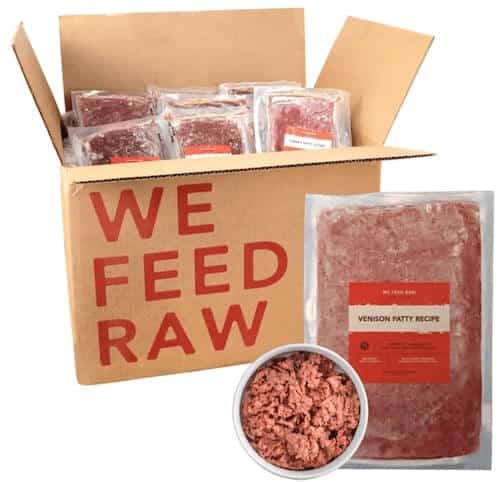
We Feed Raw
Who It’s For: Individuals who believe in providing their dogs with a diet that closely mimics what they would eat in the wild.
Why we recommended it: The nutritional benefits of raw food include higher protein content, natural enzymes, and unprocessed ingredients, all of which are more sustainably sourced and made as raw diets that do not need to be processed, unlike kibble. As more dog parents opt to raw feed their dogs, it’s important to understand the ins and outs of a raw diet for dogs — We Feed Raw is our top pick for the best raw dog food delivery companies. All ingredients are sourced from trusted suppliers, and all meats are sourced from USDA-inspected facilities.
What sets it apart from competitors: We Feed Raw uses sustainable practices, including selling raw dog food in bulk. This allows dog owners to save a significant amount of money while helping to reduce their carbon footprint. They also use eco-friendly, biodegradable, and compostable coolers that can be run underwater in your sink and dissolve within minutes.
Key Sustainable Features
Raw food creates smaller, firmer poops, reducing mess and waste bag usage
Their raw formulas utilize fewer processing methods, such as freeze-drying, and are produced in a raw state, significantly reducing the brand’s carbon emissions.
Pros
Premium ingredients sourced from reputable USA farms
Lamb and venison sourced from New Zealand, pasture-raised, grass-fed, and grass-finished
No fillers or artificial preservatives, colors, and flavors
Complete and balanced for cats as well
Cons
It does not offer other raw dog products, such as treats
Get 25% OFF your first order using the code CB25 — Use our link to get started.
Best Renewable Energy Dog Food
4.6
★★★★★
Freshpet
Who It’s For: Dog owners who want to reduce their carbon footprint and want to support brands that use renewable energy sources in their production processes.
Why we recommended it:Freshpet’s food is made in kitchens powered by wind or solar energy and stored in fridges powered by the same renewable energy. These efforts help them reduce their CO2 footprint and achieve carbon neutrality. As a result of their renewable energy commitment, they prevented 46,567 metric tons of CO2e emissions in 2020 – equivalent to taking 10,208 cars off the road for a year.
What sets it apart from competitors: All Freshpet recipes are gently cooked in USDA kitchens at low temperatures to protect ingredient integrity and then vacuum-sealed. Freshpet sources over half its ingredients within 200 miles, uses SmartWay trucks for transportation, and partners with Terracycle for 100% recyclable plastic packaging. They use up to 20 times less packaging than wet food competitors to feed a 30lb dog daily.
Key Sustainable Features
All waste from Freshpet Kitchens is recycled, reused, or converted into energy. Cardboard recycling alone saved 1,345 metric tons of CO2e emissions, 2,811,200 gallons of water, and 6,827 trees in 2020
Advocates and partners with no-kill shelters, anti-cruelty programs, and for healthcare, recovery, and rehabilitation. On-site filtration and anaerobic digestion prevent organic waste from ending up in landfills, thereby reducing 108 metric tons of CO2e emissions and alleviating the burden on water facilities.
Freshpet utilizes energy-efficient lighting, compressors, and non-ozone-depleting refrigerants to contribute to a more sustainable electric grid.
Pros
On-site filtration and anaerobic digestion prevent organic waste from ending up in landfills, preventing 108 metric tons of CO2e emissions and reducing the burden on water facilities
Their manufacturing process is designed to reduce water usage, and rainwater is collected for irrigation, minimizing stormwater runoff
Cons
Requires refrigeration
Sustainable Dog Food Packaging
4.5
★★★★★
I And Love And You
Who It’s For: Pet owners are concerned about the overuse of plastic packaging and its environmental impact.
Why we recommended it:I And Love And You proudly use 100% sustainable (reduced, reused, recycled) packaging and shipping materials, partnering with TerraCycle to ensure recyclability. Additionally, they prioritize sustainable practices on their packaging labels through a partnership with The Clean Label Project (CLP), which tests for over 130 harmful contaminants and toxins in pet food, reassuring customers of the sustainability and safety of their products. Even in their office, the company notes they use recycled paper in printers, reusable silverware and dishes in the Kitchen, and non-toxic cleaning supplies. They recycle and compost as a team, and some employees bike to work.
What sets it apart from competitors: Since 2015, they have donated over one million meals to pets in need, including during natural disasters such as hurricanes, fires, floods, and more. They also donate surplus products to animals in need rather than throwing them in a landfill.
Key Sustainable Features
“I and Love and You” partners with Climate Collaborative, Clean Label Project, Colorado Party, Xcel Energy, Pet Sustainability Coalition, and Impact Assessment to help foster their sustainability mission and reduce carbon paw print.
They are committed to providing food assistance to pets nationwide in times of crisis.
Pros
No artificial flavors, colors, or preservatives
Cons
Requires refrigeration
Best Sustainable Wet Dog Food
4.5
★★★★★
Nature’s Logic
Who It’s For: Dogs with specific dietary needs or preferences may opt for sustainable wet dog food because it often contains a higher moisture content and more easily digestible ingredients.
Why we recommended it:Nature’s Logic has been recognized as one of the top sustainable brands in the pet industry by the Pet Sustainability Coalition, aligning with the UN Sustainable Development Goals. With numerous partnerships and accolades for their sustainability practices, they offer 100% all-natural food and generate renewable energy with each pound of food.
What sets it apart from competitors: Their Tender & True Canned Dog Food provides nutrient-dense, muscle and organ-meat-based meals with concentrated fruits and vegetables. They have implemented 100% carbon-neutral warehousing and shipping.
Key Sustainable Features
Nature’s Logic received top ratings across four critical SDGs: #7 affordable and clean energy, #8 decent work and economic growth, #13 climate action, and #14 life below water.
All kibble, bags, and biscuits are produced with 100% renewable electricity. Every pound you feed creates 1 kWh of new, renewable energy, contributing to a greener future.
Pros
Kibble bags use 20% less plastic, and biscuit bags are made from 40% post-consumer recycled plastic. Their cans are 100% recyclable
Cons
Requires refrigeration
Other Sustainable Eco-Friendly Dog Foods
Sustainable Dog Food Supplements. Because Animals is the first and only company to make cultured meat (lab-grown) pet food, supplements, and treats. The company’s mission is to make the healthiest and most sustainable food for dogs and cats on the planet through lab-grown pet products.
Best Sustainable Topper. Portland Pet Food Company offers the best sustainable fresh dog food meals that work as toppers, mixers, or soft treats. Their meal pouches are not intended to be full-on meal replacements but to complement, add variety, and boost the nutrition of your dog’s usual diet.
Best Sustainable Fish Dog Food. Tender & True wants the world’s oceans to teem with life – today, tomorrow, and future generations. They are certified by The Marine Stewardship Council (MSC), meaning that a certified sustainable fishery has been responsible for catching the fish used in their recipes. Only seafood from fisheries that meet the MSC strict standard for sustainability can be sold with the blue MSC ecolabel.
Best Sustainable Dog Food UK & Europe. Beco Pets has been around since 2009 and has been on a mission to create the best products for cats and dogs while doing as little harm to the environment as possible. They provide an impact report to back up their sustainable practices. All their recipes are filled with delicious meat, vegetables, and superfoods. Nothing artificial. All ingredients are cooked at low temperatures to enhance flavor and nutrients.
How to Make Sustainable Food Choices For Your Dog
There are many ways to live a more sustainable life with your dog, including:
Buy eco-friendly dog food. Choose from our sustainable dog food recommendations
Don’t overfeed meat protein. Feed the appropriate amount to reduce waste and
Feed ingredients that are in season. Seasonal foods are typically not artificially ripened and have come from overseas
Cook your dog food. Homemade dog food preserves energy and reduces environmental impact
Don’t throw away used dog food. Donate it instead
Use sustainable dog products (i.e., dog bowls, accessories, poop bags, etc.)
Grow your herbs, fruit, and vegetables dogs can eat
The sustainable pet food trend is growing. “The State of Sustainability in Pet Foods and Treats” reports that 27% of pet food purchasers want to see more sustainably sourced pet foods.[12] Be part of a like-minded tribe that can make a living and eat sustainably, much simpler for your dog and future generations.
Other Sustainable Dog Food Problems
The crops used to feed industrially raised animals could feed an additional four billion people
Factory farming is the largest source of water pollution
26% of the Earth’s terrestrial surface is used for livestock grazing
1/3 of the planet’s arable land is occupied by livestock feed crop cultivation
Agribusiness systems, which occupy more land and resources than any other industry in the U.S., have stifled the biodiversity of crops and animals and indirectly destroyed wildlife habitats
41% of the United States’ land is used for animal feed, grazing, and keeping farm animals (nearly 800 million acres). Less than 20% is used as croplands
America’s pets produce approximately 5.1 million tons of feces each year, equivalent to the waste generated by 90 million Americans. If all of it were thrown in the trash, it would rival the total trash output of Massachusetts, at least from the human population.
*Source: 15,16,17
The Bottom Line
Choosing a sustainable diet for your pet can have a positive impact on their health, your wallet, and the environment. We recommend feeding your pup sustainably, as it promotes overall health and has a minimal environmental impact. Adopting a sustainable diet will help preserve resources for future generations of dogs and humans. All the companies reviewed in this article adhere to the highest sustainability standards in the industry and offer nutrition approved by AAFCO. However, we advise consulting your vet before changing your dog’s diet. Considering that meat production for pet food contributes significantly to greenhouse gas emissions, alternatives like vegan, insect-based, or cultured meat dog food can effectively reduce this impact.⬤
Like It? Subscribe & Share!
Sources
Canine Bible uses only high-quality sources, including peer-reviewed studies, to support the facts within our articles. Read our editorial process and product review methodology to learn more about how we fact-check, test products, and keep our content accurate, reliable, and trustworthy.
Canine Bible authorship represents the unified voice of our entire editorial team and our in-house veterinarians rather than a single author. Each article, blog post, and review published under the Canine Bible name undergoes a rigorous review process, involving all team members to guarantee accuracy and up-to-date in accordance with the latest veterinarian research. This collaborative effort is an integral part of our editorial process and aligns with our four pillars of content creation. This approach ensures our content is backed by expert knowledge and factual information, offering our readers reliable, actionable, and trustworthy content.