Tricuspid Valve Disease in Dogs: Symptoms, Types, Causes, Signs & Prevention

Canine Bible is reader-supported. We receive affiliate commissions via some of our links. Learn more.
Tricuspid Valve Disease is an uncommon heart condition in dogs that affects the valve between the right atrium and right ventricle, allowing blood to leak backward through the heart. Congenital tricuspid valve dysplasia accounts for about 3.1% of congenital heart defects in dogs. In acquired myxomatous valve disease, about 30% of affected dogs have both the mitral and tricuspid valves involved, while fewer than 10% have disease limited to the tricuspid valve. Early signs may include reduced stamina, rapid breathing, weakness, fainting, or abdominal swelling, but symptoms can be subtle at first. Left unmanaged, severe tricuspid regurgitation can enlarge the right side of the heart and lead to right-sided heart failure. With veterinary monitoring, medications, diet changes, and activity adjustments, many dogs can maintain a good quality of life with ongoing vet care.
What Is Tricuspid Valve Disease in Dogs?
Tricuspid Valve Disease, in simple terms, is a condition affecting the tricuspid valve of the heart that can interfere with normal blood flow. In dogs, it is often associated with tricuspid valve dysplasia (a congenital heart defect) or tricuspid regurgitation, a condition where the valve does not close properly and allows blood to leak backward. As the valve becomes abnormal or weakened, the heart must work harder to circulate blood efficiently, which can lead to enlargement of the right side of the heart and reduced heart function over time.
Types
Tricuspid Valve Disease in dogs can take several forms, each with different causes and effects on heart function:
| Type | Description |
|---|---|
| Tricuspid Valve Dysplasia | A congenital defect in which the tricuspid valve or its supporting structures develop abnormally. |
| Myxomatous Tricuspid Valve Disease | Degenerative thickening of the valve that can prevent proper closure and cause blood to leak backward. |
| Functional Tricuspid Regurgitation | Occurs when enlargement of the right side of the heart stretches the valve opening, preventing complete closure. |
| Tricuspid Stenosis | A rare condition in which the valve opening is abnormally narrow, restricting blood flow into the right ventricle. |
| Infective Endocarditis | An uncommon infection of the valve that can damage its leaflets and cause significant regurgitation. |
| Secondary Tricuspid Disease | Develops because of conditions such as pulmonary hypertension or other heart diseases that strain the right side of the heart. |
Predisposed Dog Breeds
Tricuspid Valve Disease can affect any dog, but certain breeds appear to be more predisposed, especially to congenital tricuspid valve dysplasia.


| Size / Group | Breeds | Notes on Risk Factors |
|---|---|---|
| Retrievers | Labrador Retriever, Golden Retriever | Labrador Retrievers are among the breeds most strongly associated with inherited tricuspid valve dysplasia. |
| Large Breeds | German Shepherd, Great Dane, Weimaraner | These breeds have been reported more frequently with congenital abnormalities of the tricuspid valve. |
| Working Breeds | Boxer, Newfoundland | Congenital heart defects, including tricuspid valve abnormalities, have been reported in these breeds. |
| Herding Breeds | Old English Sheepdog, German Shepherd | Some herding breeds appear predisposed to congenital tricuspid valve malformations and associated regurgitation. |
| Other Reported Breeds | Irish Setter, Dogue de Bordeaux, French Bulldog | Cases have been documented, although the strength of breed predisposition varies between studies. |
| Any Breed | Mixed-breed and purebred dogs | Tricuspid valve disease can occur in any dog, particularly when secondary to pulmonary hypertension or other heart disease. |
Causes
Symptoms
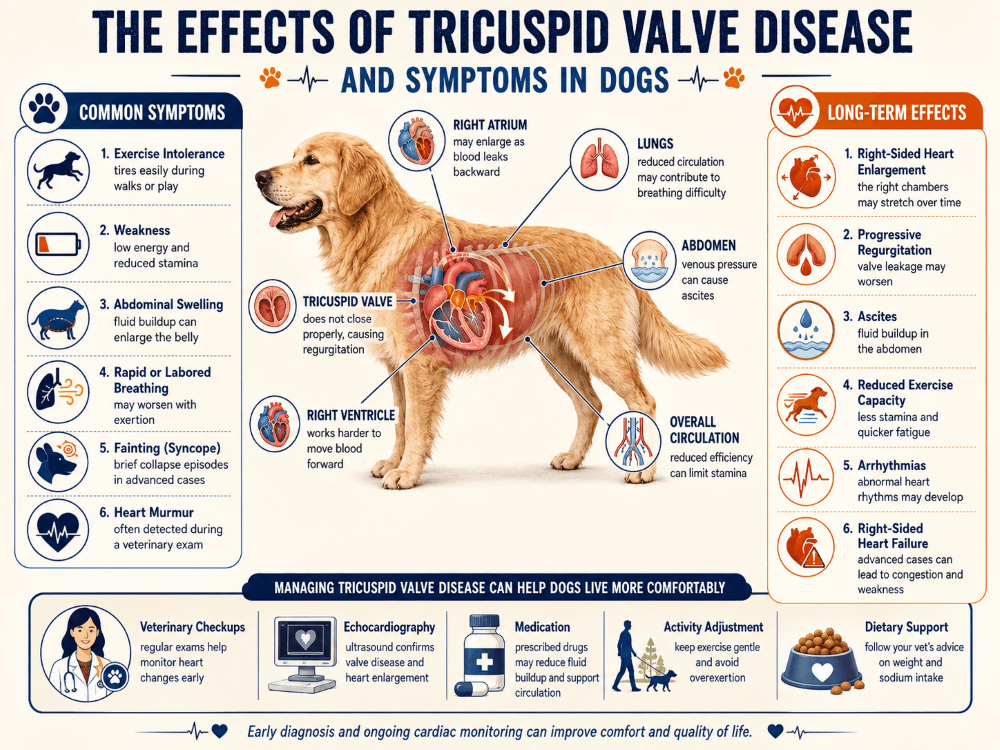
Tricuspid Valve Disease in dogs is a heart condition that affects blood flow through the right side of the heart and can significantly impact circulation and stamina. Early signs are often subtle—such as reduced exercise tolerance or mild fatigue—but can become more noticeable as the condition progresses.
This visual guide highlights the most common symptoms and how Tricuspid Valve Disease affects different parts of a dog’s body, helping you recognize warning signs early and seek veterinary care before complications such as right-sided heart failure develop.
Stages of Tricuspid Valve Disease
- Early stage: Mild valve leakage or abnormality with few or no noticeable symptoms.
- Moderate stage: Right-sided heart enlargement, reduced stamina, weakness, or exercise intolerance.
- Advanced stage: Ascites, breathing difficulty, severe fatigue, and right-sided heart failure.
Top Ways to Prevent Tricuspid Valve Disease in Dogs
Because some forms of Tricuspid Valve Disease are congenital or inherited and cannot always be prevented, early detection and proactive heart care are crucial. With regular veterinary checkups, responsible breeding, and prompt management of conditions that strain the right side of the heart, complications may be reduced and your dog’s heart function and quality of life can be better protected over time.
| Prevention Strategy | Why It Helps | How to Do It |
|---|---|---|
| Responsible Breeding | Congenital tricuspid valve dysplasia can have an inherited component in predisposed breeds. | Avoid breeding affected dogs and discuss cardiac screening with a veterinarian or veterinary cardiologist. |
| Regular Veterinary Checkups | Heart murmurs and abnormal rhythms may be detected before obvious symptoms develop. | Schedule routine wellness exams and follow your veterinarian’s recommended screening schedule. |
| Early Cardiac Screening | Early diagnosis allows closer monitoring before significant heart enlargement or heart failure develops. | Use echocardiography, Doppler imaging, ECG, or chest X-rays when recommended for at-risk dogs. |
| Maintain a Healthy Weight | Excess body weight increases cardiovascular workload and may worsen exercise intolerance. | Feed appropriate portions, limit excess treats, and monitor body condition regularly. |
| Manage Pulmonary Hypertension | High pressure in the lungs can strain the right side of the heart and worsen tricuspid regurgitation. | Identify and treat underlying lung, airway, or cardiovascular conditions under veterinary guidance. |
| Exercise Appropriately | Moderate activity supports fitness without placing excessive demand on a compromised heart. | Use gentle walks and controlled activity; avoid strenuous exercise if your veterinarian advises restrictions. |
| Monitor for Early Symptoms | Recognizing progression early can reduce the risk of severe fluid buildup and right-sided heart failure. | Watch for fatigue, weakness, fainting, rapid breathing, reduced stamina, or abdominal swelling. |
Actionable Resources
If you want to prevent, manage, or slow the progression of Tricuspid Valve Disease in your dog, here are some expert-backed resources to explore under veterinary guidance.
How Tricuspid Valve Disease Is Diagnosed in Dogs
Diagnosing Tricuspid Valve Disease requires a full veterinary assessment to evaluate heart function, confirm valve abnormalities, and rule out other cardiac or respiratory conditions. Key steps include:
- Physical Examination: A vet listens for a heart murmur, checks heart rhythm, and looks for signs such as weakness, fluid buildup, or labored breathing.
- Imaging:
- Echocardiogram – the most important test for visualizing the tricuspid valve, identifying regurgitation, and assessing heart enlargement.
- Chest X-rays – used to evaluate heart size and look for fluid accumulation or other changes affecting the lungs and circulation.
- Electrocardiogram (ECG): Helps detect abnormal heart rhythms or conduction disturbances.
- Laboratory Tests: Blood work may be performed to assess overall health and identify conditions that could worsen heart disease.
- Advanced Cardiac Evaluation: In some cases, Doppler studies or referral to a veterinary cardiologist may be recommended for a more detailed assessment.
Early diagnosis is crucial because Tricuspid Valve Disease can progress over time—catching it sooner allows for monitoring, treatment, and better long-term quality of life.
Treatment & Care
According to current veterinary guidance, the most effective treatment for Tricuspid Valve Disease in dogs depends on disease severity and whether heart failure is present, combining medications to control fluid buildup, therapies that support heart function, treatment of underlying conditions such as pulmonary hypertension or arrhythmias, and lifestyle management for optimal results.
Always consult your veterinarian before starting any new treatment or cardiac care regimen for Tricuspid Valve Disease. If you can’t reach your vet, you can chat live with a registered online veterinary professional via our online vet chat or video chat support (24 hours a day, 7 days a week). Or use Chewy’s online vet services (6 a.m. – midnight ET).
Conventional Medical Treatments
| Treatments | Benefits / Role |
|---|---|
| Diuretics | Furosemide and other diuretics may reduce fluid buildup, especially ascites caused by right-sided congestive heart failure. |
| Heart-Support Medications | Drugs such as pimobendan may be prescribed in selected dogs to support cardiac function and circulation. |
| ACE Inhibitors & Aldosterone Antagonists | Medications such as enalapril, benazepril, or spironolactone may be used as part of heart-failure management when appropriate. |
| Pulmonary Hypertension Treatment | Medications such as sildenafil may be prescribed when pulmonary hypertension contributes to right-heart strain and tricuspid regurgitation. |
| Arrhythmia & Advanced Cardiac Treatment | Antiarrhythmic medications may control abnormal rhythms, while severe cases may require referral for specialized surgical or interventional treatment. |
Supplement Support
| Supplement / Nutrient | Benefits / Role |
|---|---|
| Omega-3 Fatty Acids (EPA & DHA) | May support cardiovascular health, help regulate inflammation, and support dogs with chronic heart disease. |
| Taurine | An amino acid important for normal heart muscle function; supplementation may be recommended when dietary deficiency or low taurine status is suspected. |
| L-Carnitine | Supports energy production within heart muscle cells and may be useful in selected dogs with certain cardiac conditions. |
| Potassium | Supports normal heart rhythm and muscle function; levels may need monitoring in dogs receiving diuretics or other cardiac medications. |
| Magnesium | Helps support normal cardiac rhythm, muscle contraction, and electrolyte balance. |
| B Vitamins | Support energy metabolism and may require closer attention in dogs receiving long-term diuretic therapy. |
| Vitamin E | Provides antioxidant support that helps protect cells from oxidative stress associated with chronic disease. |
| Coenzyme Q10 (CoQ10) | Supports cellular energy production and antioxidant defenses, although evidence for clinical benefit in dogs remains limited. |
| Veterinary-Directed Sodium Management | Moderate sodium restriction may help reduce fluid retention in dogs with congestive heart failure and should be tailored to disease severity. |
Find the best over-the-counter treatments and supplements for fleas in dogs on Amazon and Chewy.

Alternative & Integrative Therapies
| Therapy | Benefits / Role |
|---|---|
| Controlled Low-Impact Exercise | Gentle activity may help maintain muscle strength and overall fitness without placing excessive strain on the heart. |
| Weight Management | Maintaining a healthy body weight reduces unnecessary cardiovascular workload and may improve exercise tolerance. |
| Veterinary Cardiac Nutrition | A balanced heart-supportive diet can help maintain healthy body condition, adequate protein intake, and appropriate sodium levels. |
| Omega-3 Fatty Acid Support | EPA and DHA may support cardiovascular health and help regulate inflammation when used under veterinary guidance. |
| Stress Reduction | Keeping routines calm and predictable may help prevent unnecessary increases in heart rate and cardiovascular demand. |
| Acupuncture | May be used as a complementary therapy for general comfort and relaxation, although evidence for treating tricuspid valve disease itself is limited. |
| Massage & Gentle Bodywork | May promote relaxation and comfort in stable dogs, but should be avoided or modified in dogs with severe breathing difficulty or heart failure. |
| Herbal & Integrative Supplements | Some products are marketed for heart support, but evidence varies and they may interact with cardiac medications; use only with veterinary approval. |
Surgical Options
| Surgical Option | Benefits / Role |
|---|---|
| Balloon Pulmonary Valvuloplasty | The most common catheter-based treatment for moderate to severe valvular pulmonic stenosis; widens the narrowed valve and reduces pressure on the right ventricle. |
| Cutting Balloon Valvuloplasty | May be considered when standard balloon dilation is insufficient, particularly in dogs with resistant or severely dysplastic valve tissue. |
| Surgical Pulmonary Valvotomy | Open surgical enlargement of the pulmonic valve may be considered in selected severe cases when catheter-based treatment is unsuitable or unsuccessful. |
| Right Ventricular Outflow Tract Reconstruction | A specialized surgical option for complex obstruction involving the pulmonic valve or surrounding outflow tract when simpler procedures cannot adequately restore blood flow. |
Emotional & Lifestyle Impact
Tricuspid Valve Disease affects more than just a dog’s heart—it can reshape both their daily life and overall well-being. Dogs with reduced cardiac function may become less playful, tire more easily, or seem withdrawn, as weakness, exercise intolerance, breathing changes, or abdominal fluid buildup can prevent them from enjoying favorite activities like running, long walks, or energetic play.
For owners, the experience can be equally difficult, bringing the emotional weight of watching a beloved companion struggle, along with the financial and time commitment of ongoing cardiac care. Daily routines may need to shift toward shorter walks, more rest, and lower-intensity activity, while home routines often require closer monitoring of breathing, appetite, energy levels, and abdominal swelling. With patience, regular veterinary care, and thoughtful lifestyle adjustments, however, pet parents can create a supportive environment that helps preserve comfort, companionship, and quality of life.
Typical Annual Cost of Treating Canine Tricuspid Valve Disease
| Category | Estimated Annual Cost Range | Notes |
|---|---|---|
| Veterinary & Cardiology Visits | $300 – $1,200 | Routine exams and veterinary cardiology consultations for monitoring disease progression. |
| Echocardiograms & Cardiac Imaging | $500 – $2,000 | Repeat echocardiograms, Doppler studies, chest X-rays, or ECGs may be needed depending on severity. |
| Heart Medications | $300 – $2,000 | May include diuretics, pimobendan, spironolactone, ACE inhibitors, or other prescribed cardiac drugs. |
| Bloodwork & Monitoring | $200 – $800 | Kidney values and electrolytes may require regular monitoring, especially in dogs receiving diuretics. |
| Diet & Nutritional Support | $200 – $1,200 | Heart-supportive diets, omega-3 fatty acids, or other veterinarian-recommended nutritional support. |
| Emergency & Advanced Care | $500 – $3,000+ | Advanced heart failure, severe ascites, collapse, or breathing problems may require emergency care or hospitalization. |
| Surgery / Interventional Treatment | $5,000 – $15,000+ | Specialized cardiac procedures may be considered in select congenital or severe cases and are typically performed at referral centers. |
| Insurance & Wellness Plans | $360 – $1,200+ | Coverage may help with diagnostics and treatment, but pre-existing heart disease is commonly excluded. |
| Typical Annual Range | Stable / Medically Managed Cases: $1,000 – $4,000+ | With Advanced Care or Intervention: $5,000 – $15,000+ | |
Tricuspid Valve Disease care can add up quickly — from ongoing heart medications and cardiology visits to repeat echocardiograms and possible advanced procedures. Pet insurance and pet wellness plans can help ease the financial burden and ensure your dog gets the cardiac care they need without compromise. If you want to compare plans and find out which providers offer the best coverage for heart disease and chronic conditions, check out our full guide to the Best Pet Insurance for Dogs and Best Pet Wellness Plans
Other Health Issues Related to Tricuspid Valve Disease in Dogs
As Tricuspid Valve Disease progresses and blood backs up through the right side of the heart, dogs may develop additional cardiovascular and systemic complications, and some symptoms may also be linked to these related conditions rather than the valve disease alone.
- Right-Sided Congestive Heart Failure
- Ascites (Abdominal Fluid Buildup)
- Right Atrial Enlargement
- Right Ventricular Enlargement
- Pulmonary Hypertension
- Arrhythmias
- Exercise Intolerance
- Weakness and Fatigue
- Fainting (Syncope)
- Jugular Vein Distension
- Liver Congestion
- Pleural Effusion
- Peripheral Edema
- Reduced Appetite
- Weight Loss / Muscle Wasting
Frequently Asked Questions
The Bottom Line
Tricuspid Valve Disease can range from a mild valve abnormality with few symptoms to a serious condition that affects circulation and leads to right-sided heart failure. While congenital forms cannot be reversed, early diagnosis, regular cardiac monitoring, appropriate medications, and thoughtful lifestyle adjustments can make a major difference in managing progression and maintaining quality of life. By following veterinary recommendations, keeping activity appropriate, maintaining a healthy weight, and watching for changes such as fatigue, fainting, breathing difficulty, or abdominal swelling, pet parents can help their dogs stay as comfortable and active as possible. Ultimately, the goal is not only to support heart function, but to preserve comfort, energy, and quality of life for as long as possible.