What Are Dog Essential Oils? Uses, Safety & Oils to Avoid

Canine Bible is reader-supported. We receive affiliate commissions via some of our links. Learn more.
Dog essential oils are concentrated plant extracts used around dogs or, in limited cases, as part of carefully formulated pet-care products. They are not automatically safe, and some oils can cause poisoning, skin irritation, or breathing problems in dogs. Safety depends on the oil, concentration, application method, and the dog’s health. Even oils commonly described as “natural” or “pet-friendly” may be harmful when swallowed, applied undiluted, or diffused in enclosed spaces. Puppies, senior dogs, and dogs with medical conditions may face greater risks. So which oils should be avoided, and are any considered safe when used correctly? Understanding the benefits, dangers, and proper precautions can help owners make informed choices before using essential oils near their pets.
Dog Essential Oils: What Owners Should Know
| Key Point | What Dog Owners Should Know |
|---|---|
| What they are | Dog essential oils are concentrated plant extracts used in some grooming, wellness, and household products around pets. |
| Safety varies | An oil’s safety depends on its type, concentration, method of use, and the individual dog’s health. |
| Common risks | Unsafe exposure may cause skin irritation, breathing problems, digestive upset, or toxic reactions. |
| Exposure methods | Dogs may be exposed through diffusers, skin application, accidental swallowing, or contact with treated surfaces. |
| Higher-risk dogs | Puppies, senior dogs, small breeds, and dogs with liver, respiratory, or neurological conditions may be more vulnerable. |
| Safe-use precautions | Products should be properly diluted, kept out of reach, and used only with guidance from a veterinarian. |
| Warning signs | Drooling, vomiting, weakness, coughing, tremors, or unusual behavior after exposure require prompt veterinary advice. |
What “Dog Essential Oils” Actually Means
Essential oils are the volatile aromatic compounds extracted from flowers, leaves, bark, roots, peels, seeds, or other plant material. Distillation and mechanical pressing are common extraction methods. The finished oil may contain a complex mixture of naturally occurring chemicals at concentrations far higher than those present in the original plant.
The word essential refers to the plant’s characteristic scent or “essence.” It does not mean the oil is essential to a dog’s diet or health. Essential oils are different from essential fatty acids, fish oil, flaxseed oil, coconut oil, and ordinary cooking oils.
“Dog essential oils” is also not a single scientific product category. Owners may encounter the phrase on several very different products:
- Aromatherapy products release a fragrance into the air.
- Grooming sprays and shampoos may use oils for scent or as part of a formulated skin-care blend.
- Topical products may be advertised for itching, hot spots, ear care, or odor.
- Pest-control products may claim to repel fleas, ticks, or mosquitoes.
These uses cannot be judged by the plant name alone. A small amount in a professionally formulated rinse is different from a bottle of undiluted oil, and brief environmental exposure is different from applying the oil directly to a dog’s coat.
Remember to contact your veterinarian if your dog is exposed to essential oils. If you can’t reach your vet, you can chat live with a registered online veterinary professional via our online vet chat or video chat support (24 hours a day, 7 days a week). Or use Chewy’s online vet services (6 a.m. – midnight ET).


How Essential Oils Can Affect a Dog
Essential oil chemicals can enter a dog’s body through the digestive tract, lungs, skin, eyes, nose, and mouth. Once absorbed, they may affect the gastrointestinal system, nervous system, respiratory tract, skin, liver, kidneys, or multiple body systems simultaneously.
Dogs often turn skin exposure into oral exposure. Oil placed on the coat, paws, collar, or bedding may be swallowed when the dog licks or grooms the area. A second pet may also lick the treated dog.
Active diffusers add another pathway. Ultrasonic and nebulizing devices may release small oil-containing droplets rather than scent alone. These droplets can settle on fur, furniture, food bowls, and other surfaces.
| Exposure Route | How It Happens | Main Concern |
|---|---|---|
| Swallowing | A dog licks oil, spills, fur, paws, or treated surfaces. | Rapid absorption may cause digestive, neurologic, or organ effects. |
| Skin contact | Oil is applied directly or accidentally spilled onto the coat. | Concentrated products may irritate skin and enter the bloodstream. |
| Active diffuser | Small oil droplets circulate and settle around the room. | Dogs may inhale droplets or swallow them during grooming. |
| Passive fragrance | Reed diffusers, warmers, or candles release scent into the air. | Strong fragrance may irritate sensitive canine airways. |
| Eye or mouth contact | Splashes reach the eyes, gums, tongue, or nose. | Pain, redness, drooling, and chemical irritation may develop. |
| Treated products | Oils appear in shampoos, sprays, cleaners, or pest products. | Safety depends on the entire formula and correct use. |
What Determines Whether an Essential Oil Is Dangerous
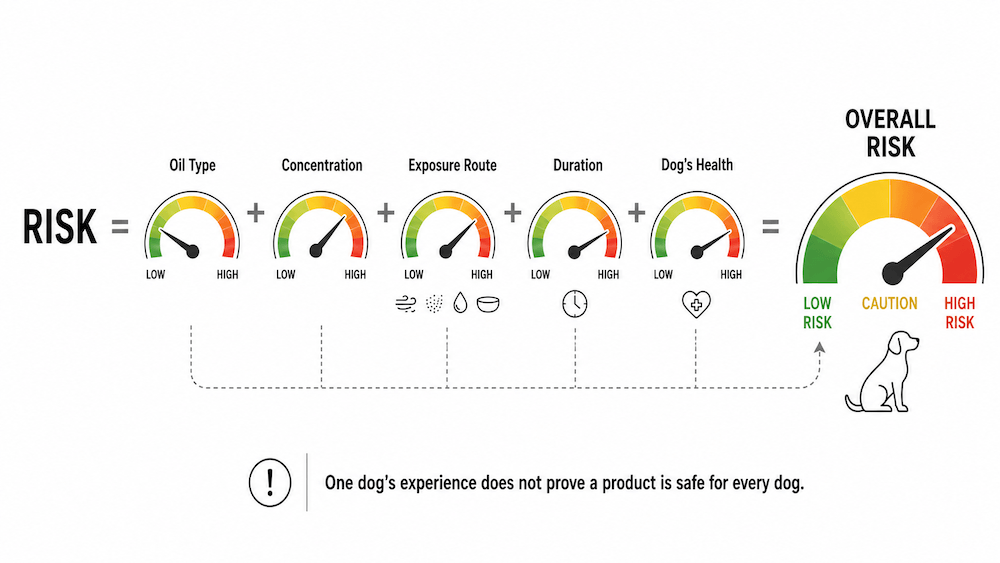
Essential oil safety is not a simple “safe oil versus toxic oil” question. Several factors work together, and changing just one of them can change the risk significantly.
Essential Oils Commonly Considered Higher Risk for Dogs
There is no complete household list that covers every oil, blend, concentration, and exposure scenario. However, certain oils are repeatedly associated with canine poisoning or significant irritation and should not be used in concentrated, homemade, or unsupervised preparations.
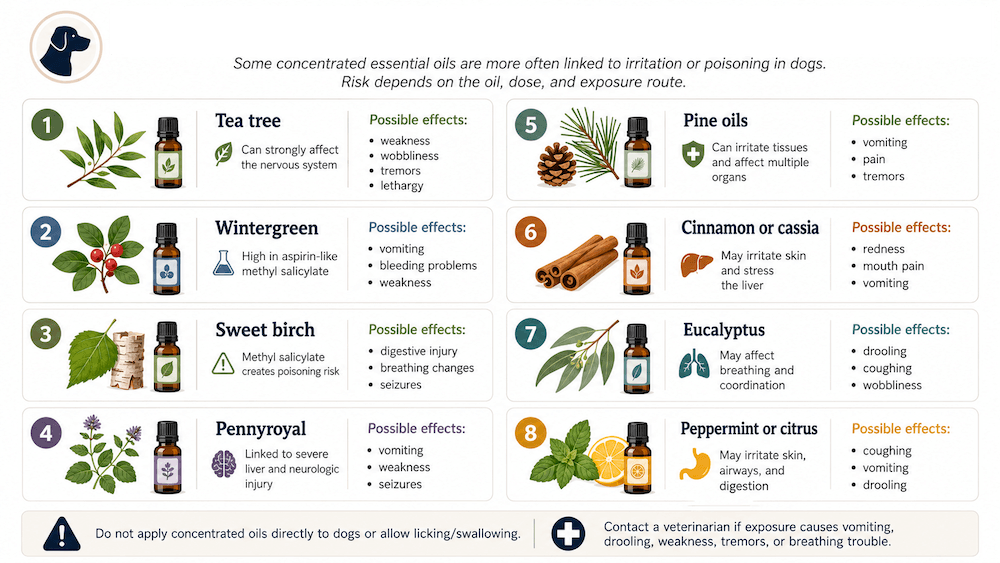
This is not a recommendation to use oils that are absent from it. Rosemary, clove, sage, cedar, hyssop, wormwood, and other concentrated oils can also create problems in certain circumstances.


Botanical naming matters as well. A product labeled only as “mint,” “citrus,” or “woodland blend” may not provide enough detail to reliably assess its ingredients.
Are Any Essential Oils Safe for Dogs?
No essential oil can be considered universally safe. Risk depends on the oil’s chemical composition, concentration, amount, exposure method, duration of use, and the individual dog.
Products made for veterinary grooming or dermatologic use are assessed as complete formulations with controlled concentrations and specific directions. This does not make the same oil safe when purchased separately, mixed at home, added to food or water, or applied directly to the skin.
Online lists of “dog-safe” oils often overlook botanical species, product ingredients, and individual health factors. Use only products specifically formulated for dogs and follow veterinary or manufacturer guidance carefully.
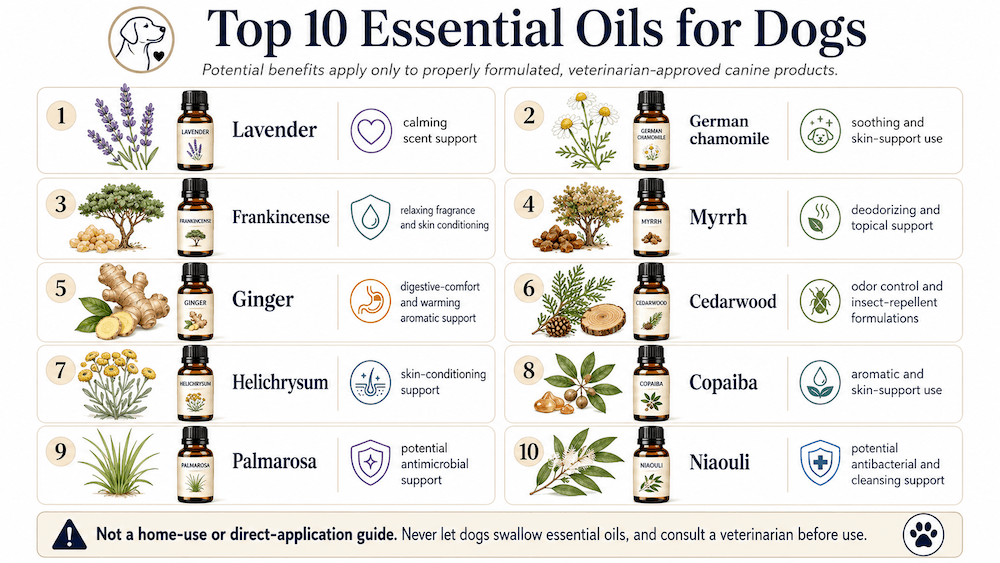
Top 10 Essential Oils for Dogs and Their Benefits
Lavender, German chamomile, frankincense, myrrh, ginger, cedarwood, helichrysum, copaiba, palmarosa, and niaouli are sometimes included in professionally formulated canine products for potential calming, skin-conditioning, deodorizing, or antimicrobial support. These possible benefits depend on the exact botanical species, concentration, product formula, and exposure method, and evidence for many canine uses remains limited. Concentrated oils should never be swallowed or applied directly to a dog without veterinary guidance.
More Potential Benefits and Where the Evidence Is Limited
Essential oils are promoted for anxiety, skin conditions, ear problems, odor, wound care, and parasite control. Some oils have antimicrobial or insecticidal effects in laboratory settings, but laboratory activity does not establish a safe home dose for a living dog.
Calming and scent enrichment
A calm scent environment may influence the behavior of some dogs, particularly in stressful settings. However, a dog becoming quieter does not necessarily mean anxiety has been medically treated. The dog may dislike the odor, become less active, or move away from the source.
For separation anxiety, noise phobia, travel fear, or chronic stress, essential oils should not replace behavior modification, environmental management, pain assessment, or veterinary treatment. Owners also need to distinguish essential-oil diffusers from dog-appeasing pheromone products, which are a different type of product.
Skin and coat products
Plant compounds may be included in professionally designed shampoos, creams, rinses, and sprays. Their concentration, supporting ingredients, rinse instructions, and intended skin condition all affect safety.
A homemade oil mixture should not be used on itching, hot spots, wounds, infected skin, or inflamed ears. These problems have many possible causes, and an irritating oil may worsen the barrier damage while delaying proper diagnosis.
Flea and tick control
Some essential oils can kill or repel parasites under laboratory conditions. The difficulty is creating a product that remains effective without irritating or poisoning the dog. Protection may also fade rapidly or be inconsistent, leaving the dog vulnerable to flea allergy, tick-borne disease, and household infestation.
Choose a flea and tick product labeled for dogs, matched to the dog’s weight and age, and used exactly as directed. Do not combine products or substitute a homemade essential-oil recipe without veterinary approval.
Odor and household cleaning
Essential oils may mask odors, but they do not fix the cause of persistent dog smell. Ear infections, dental disease, skin infections, anal gland problems, urine accidents, and damp bedding can all create recurring odor.
For routine cleaning, unscented products, laundering, ventilation, and removal of the odor source are often more useful. Keep dogs away from freshly cleaned surfaces until they are dry, and the room is well ventilated.
| Intended Use | Important Limitation | Practical Owner Decision |
|---|---|---|
| Calming | A pleasant scent does not treat the cause of anxiety. | Use a behavior plan and discuss persistent fear with a vet. |
| Itchy skin | Oil may irritate damaged skin or hide an infection. | Identify the cause before applying any leave-on product. |
| Ear care | Oils can worsen pain or damage an inflamed ear. | Use only ear products specifically approved by your veterinarian. |
| Flea control | Repellency may be inconsistent or too short-lived. | Choose labeled prevention suited to your dog and region. |
| Odor control | Fragrance may mask a medical or cleaning problem. | Find and correct the source of the odor first. |
| Home fragrance | Dogs cannot explain when a scent irritates them. | Prefer fragrance-free spaces and allow an easy exit. |
What Veterinary Research Says About Essential Oils in Dogs
The MSD Veterinary Manual explains that essential oils can be absorbed through the gastrointestinal tract, lungs, skin, and mucous membranes. Its veterinary toxicology review identifies vomiting, drooling, lethargy, loss of coordination, tremors, breathing signs, seizures, and possible liver or kidney failure among the clinical effects. It also advises against applying concentrated oils directly to pets or inducing vomiting after an exposure because of aspiration risk.[1]
A retrospective case series published in the Journal of the American Veterinary Medical Association examined 443 dogs and cats exposed to 100% tea tree oil. Reported problems included central nervous system depression, weakness, loss of coordination, paresis, and tremors developing within hours, with signs sometimes lasting several days. The case series demonstrates why concentrated tea tree oil should not be treated like a gentle household remedy.[2]
A study in the Journal of Veterinary Emergency and Critical Care reviewed adverse reactions involving plant-derived flea products containing essential-oil mixtures. Reactions occurred even in some cases involving label-directed use, and reported outcomes included skin, digestive, neurologic, and severe systemic effects. This supports choosing flea products according to demonstrated canine safety and correct labeling rather than relying on the word “natural.”[3]
A review published in Veterinary Sciences found that several essential oils show antimicrobial activity against animal pathogens in laboratory testing. However, the authors emphasized that in vivo veterinary evidence is limited and that toxicity varies with the animal species, microorganism, oil, and administration route. For owners, the practical message is that killing bacteria in a laboratory dish does not establish a safe or effective homemade treatment for a dog.[4]
What to Do If Your Dog Is Exposed to Essential Oils
Do not give milk, food, charcoal, medication, or a homemade antidote unless a veterinary professional specifically directs you to do so. Avoid cleaning the dog with alcohol, solvents, or another essential oil.
When oil is on the coat or skin, a veterinary professional may advise washing it off with a grease-cutting liquid dish detergent and lukewarm water. Ask for guidance first when the dog is weak, trembling, having difficulty breathing, or unable to stand, because emergency stabilization may be more important than bathing at home.
When Essential Oil Exposure Needs Veterinary Attention
Brief monitoring may be appropriate when mild scent avoidance or a few sneezes stop completely after fresh air, with no spill, ingestion, or direct contact. Contact your veterinarian if redness, persistent coughing, vomiting, appetite loss, lethargy, face rubbing, or unusual behavior develops.
Seek prompt poison guidance after swallowing oil, chewing a bottle, licking a spill, or having concentrated oil applied to the coat—even before symptoms appear. Do not wait for a routine appointment after exposure to high-risk oils such as tea tree, pennyroyal, wintergreen, sweet birch, or concentrated pine oil.
Seek urgent veterinary care for breathing difficulty, repeated vomiting, severe weakness, wobbliness, tremors, collapse, seizures, marked mouth irritation, or inability to stand. Symptoms may begin within minutes or hours, so early guidance is important.
How to Reduce Essential Oil Risks at Home
Avoid applying concentrated essential oils directly to your dog, and keep fragrance-free areas available—especially for puppies, seniors, pregnant dogs, and dogs with respiratory, neurologic, or liver conditions.
Store oils, diffusers, reeds, and oil-soaked materials in a closed cabinet. Never add essential oils to food, water, treats, ears, paws, collars, bedding, toys, crates, or other surfaces your dog may lick.
When a veterinarian approves limited diffuser use, keep your dog out of the room, diffuse briefly, ventilate afterward, and provide access to an unscented space. Use extra caution in homes with cats or birds, which may be more sensitive to essential oils.
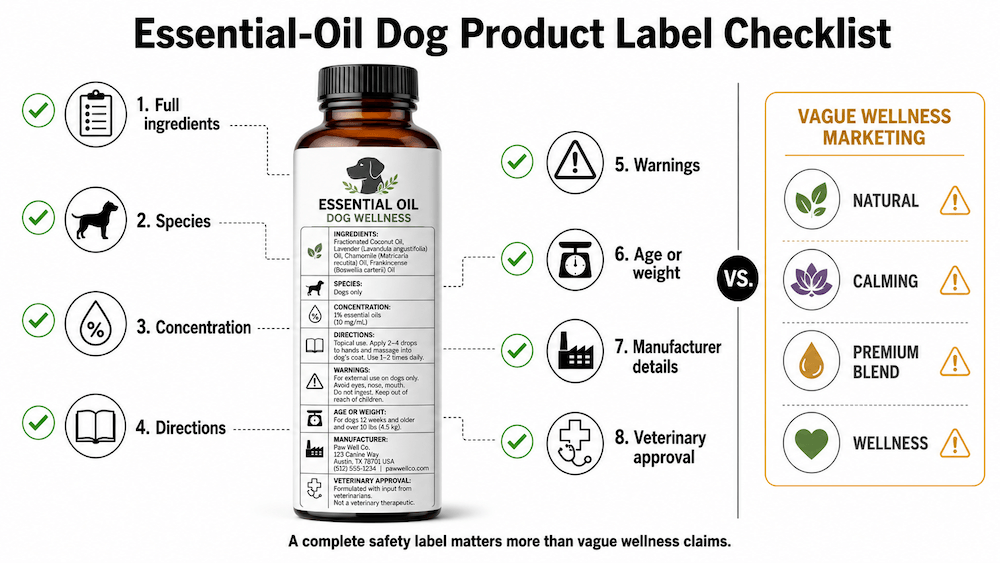
How to assess a dog product containing essential oils
A responsible product should clearly identify its intended species, complete ingredient list, directions, warnings, storage requirements, manufacturer, and batch information. Products used directly on the dog should also state the suitable age or weight range when those factors matter.
Be cautious when the label relies on vague wording such as “therapeutic grade,” “pure wellness,” or “pet-friendly” without explaining the concentration and intended use. These descriptions do not tell you whether the formula has been evaluated for your dog’s health, medications, or skin condition.
Common Myths About Essential Oils and Dogs
| Common Myth | Practical Fact | Why It Matters |
|---|---|---|
| Natural means safe | Natural plant chemicals can still irritate or poison dogs. | Judge the dose and exposure, not the marketing language. |
| Dilution removes risk | Dilution lowers concentration but cannot guarantee safe use. | The oil, dog, route, and frequency still matter. |
| Diffusers only create scent | Some devices release oil-containing droplets into the room. | Droplets may be inhaled or deposited on fur. |
| A calm dog proves benefit | Reduced activity can also reflect avoidance or discomfort. | Behavior must be interpreted in the full context. |
| Pet-safe fits every pet | A label cannot account for every dog or household animal. | Health conditions and other species may change the risk. |
Frequently Asked Questions
The Bottom Line
Dog essential oils are concentrated plant extracts used in some grooming products, home fragrances, alternative remedies, and pest-control formulas. They are not essential nutrients, and the word “natural” does not guarantee that they are safe for dogs. Risk depends on the specific oil, concentration, exposure method, duration, and the individual dog’s health. Concentrated oils should never be swallowed or applied directly to a dog’s skin, coat, ears, or paws without veterinary guidance. Diffusers may also cause problems, particularly in enclosed spaces or around dogs with respiratory or neurological conditions. When choosing a product, look for clear canine labeling, complete ingredients, precise directions, and appropriate safety warnings. If your dog shows drooling, vomiting, weakness, tremors, breathing changes, or poor coordination after exposure, contact a veterinarian promptly.
Sources
- Toxicoses From Essential Oils in Animals
- Concentrated tea tree oil toxicosis in dogs and cats: 443 cases (2002-2012)
- Adverse reactions from essential oil-containing natural flea products exempted from Environmental Protection Agency regulations in dogs and cats
- Use of Essential Oils in Veterinary Medicine to Combat Bacterial and Fungal Infections