How to Keep Your Dog Calm During Fireworks: 7 Vet-Approved Tips

Canine Bible is reader-supported. We receive affiliate commissions via some of our links. Learn more.
To keep your dog calm during fireworks, prepare before the noise starts, keep them indoors, and give them a quiet, secure place to hide with familiar bedding, background noise, calm reassurance, and vet-approved calming support when needed. Fireworks can trigger fear because dogs hear sudden sounds more intensely than we do, and while some dogs only pace or pant, others may shake, bark, hide, drool, or try to escape. The right plan depends on your dog’s fear level, past experiences, age, health, and environment, so it is also important to know what not to do, since punishment, forced exposure, or too much fuss can make anxiety worse. This guide explains how to prepare, comfort your dog safely, reduce escape risks, and know when professional help is needed.
Fireworks Anxiety: Quick Safety Guide for Dogs
| Calming Focus | What It Means for Your Dog |
|---|---|
| Prepare early | Set up your dog’s safe space before fireworks begin so they are not already panicked when you start helping. |
| Reduce noise impact | Closed windows, curtains, fans, music, or white noise can soften sudden sounds and make the environment feel less threatening. |
| Create a safe retreat | A quiet room, crate, covered bed, or familiar corner gives your dog a predictable place to hide and decompress. |
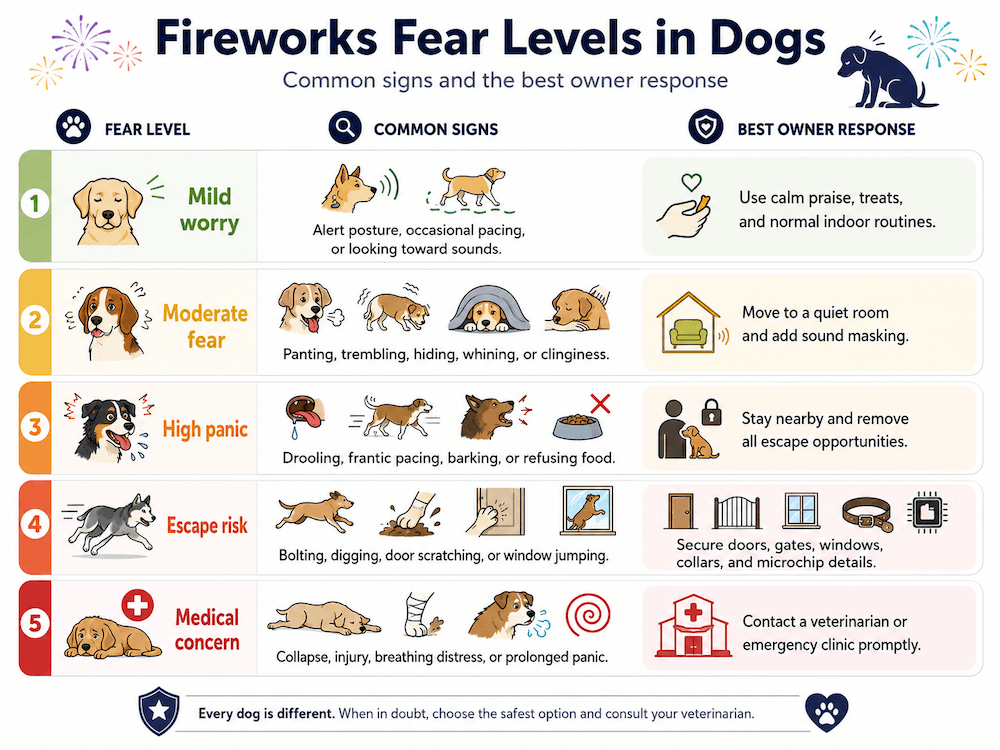
| Watch fear signs | Panting, pacing, trembling, hiding, drooling, barking, or escape attempts can show that your dog is overwhelmed. |
| Avoid punishment | Scolding or forcing your dog to “face” fireworks can increase fear and make future noise anxiety worse. |
| Improve safety | Keeping your dog indoors, checking ID tags, and securing doors helps prevent panic-related escapes. |
| Ask your vet | Dogs with severe fireworks anxiety may need a veterinarian-approved calming plan, medication, or behavior support. |
Why Fireworks Can Be So Stressful for Dogs
Fireworks are loud, sudden, unpredictable, and often paired with flashes, vibration, smoke smells, and crowds. Dogs cannot understand that the noise is temporary or harmless, so their body may respond as if there is a real threat.
Some dogs show mild worry and recover quickly. Others may panic, hide, shake, drool, destroy doors, or bolt through an open gate. The most important first step is to read your dog’s fear level honestly.
Fireworks Calm Plan: What to Do Before, During, and After
The best fireworks plan starts before sunset. A dog that is already panicking is harder to comfort, harder to redirect, and more likely to run if a door opens.
Think of fireworks care in three phases: prepare the environment, support your dog during the noise, and monitor recovery afterward. This keeps the plan simple and prevents last-minute scrambling.
| Timing | Owner Goal | What to Do |
|---|---|---|
| Days before | Build familiarity before the noisy event. | Practice using the safe room with treats and calm rest. |
| Morning of | Reduce excess energy and outdoor risk. | Give exercise, sniffing time, food, and bathroom breaks early. |
| Before dusk | Secure your dog before fireworks begin. | Bring your dog indoors and close doors, windows, and curtains. |
| During noise | Lower panic and prevent escape. | Use white noise, calm presence, enrichment, and safe confinement. |
| After fireworks | Confirm your dog is recovering normally. | Offer water, a potty break on leash, and quiet rest. |
| Next day | Review what worked and what failed. | Note fear signs and plan earlier vet help if needed. |
How to Prepare a Safe Fireworks Space for Your Dog
A good fireworks space should feel familiar, quiet, and easy for your dog to choose. Interior rooms, bathrooms, closets, laundry rooms, basements, or bedrooms away from windows often work better than open living areas.


Add your dog’s bed, blankets, water, safe chew, favorite toy, and a low-volume sound source before the fireworks start. Do not lock your dog in a crate unless they already see the crate as a safe resting place.
Calming Tools That May Help During Fireworks
Calming tools can support a good plan, but they should not replace management. A thunder shirt, pheromone product, supplement, chew, or medication works best when paired with a quiet room, owner support, and escape prevention.
Test any non-emergency tool before fireworks night. A wrap that fits poorly, a chew that upsets the stomach, or a new supplement given at the last minute can add stress instead of reducing it.
| Tool | Best For | Owner Note |
|---|---|---|
| White noise | Softening sudden outdoor bangs. | Start it before fireworks begin. |
| Covered crate | Dogs already crate-comfortable. | Never force a fearful dog inside. |
| Pressure wrap | Dogs soothed by gentle body pressure. | Test fit on a calm day first. |
| Lick mat | Mild to moderate stress. | Use only if your dog still eats. |
| Pheromone aid | Supportive calming in familiar spaces. | Use as part of a broader plan. |
| Vet medication | Severe panic or escape risk. | Discuss timing and safety in advance. |
Can You Train a Dog Not to Be Scared of Fireworks?
You may be able to reduce fireworks fear with careful sound training, but it should be done well before fireworks season. The idea is to play firework sounds at a very low volume while your dog is relaxed, then pair that sound with food, play, or calm comfort.
The volume should stay low enough that your dog notices but does not panic. If your dog hides, pants, refuses food, or leaves, the sound is too intense.


Step-by-Step: How to Keep Your Dog Calm During Fireworks
Fireworks night is not the time to test a brand-new technique. Keep the plan predictable, gentle, and focused on safety.
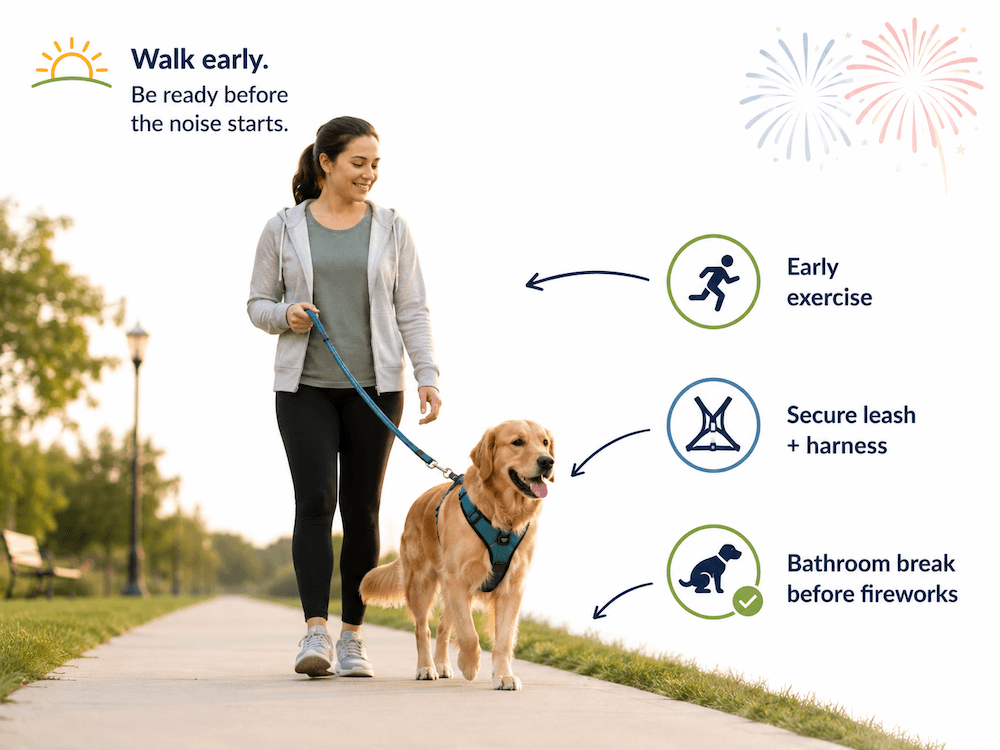
Step 1: Exercise and potty your dog before fireworks begin
Take your dog for a walk, play session, or sniffing activity earlier in the day. Avoid walking close to fireworks time, because one sudden bang can make a dog slip a collar, bolt, or refuse to come home.
For older dogs, puppies, brachycephalic breeds, or dogs with medical conditions, keep exercise gentle and appropriate. The goal is calm satisfaction, not exhaustion.
Step 2: Bring your dog indoors before dusk
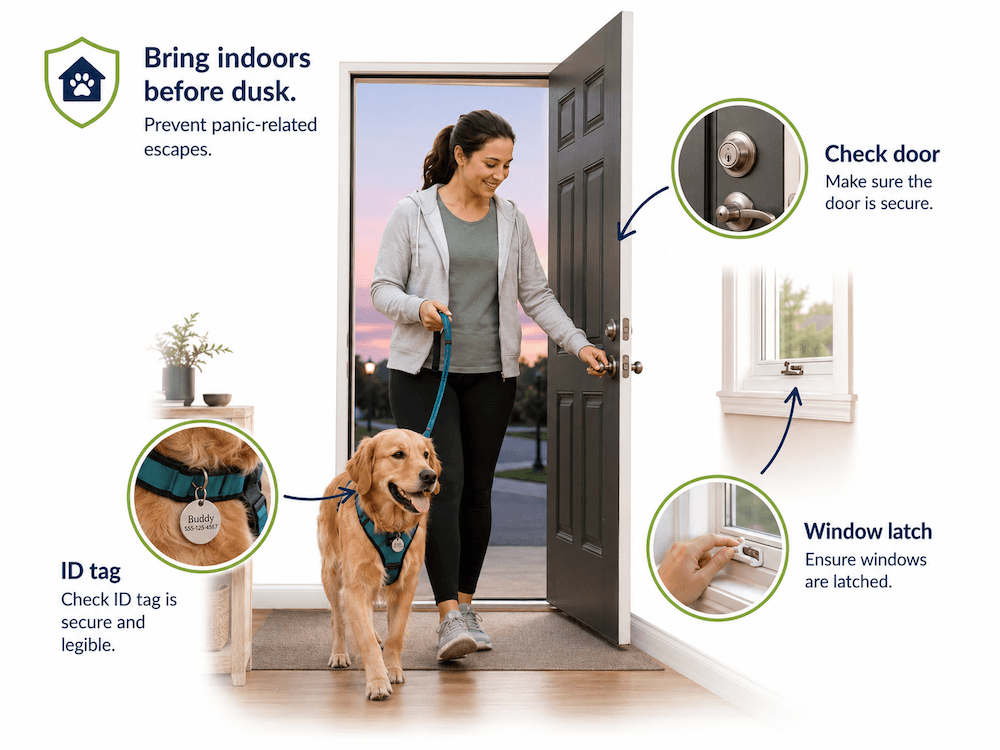
Bring your dog inside well before fireworks are expected. Do not wait until the first loud bang, because fear can start instantly.
Check that doors, windows, garden gates, balconies, and pet doors are secure. Make sure your dog is wearing a collar with current ID, even indoors.
Step 3: Start background sound before the noise peaks
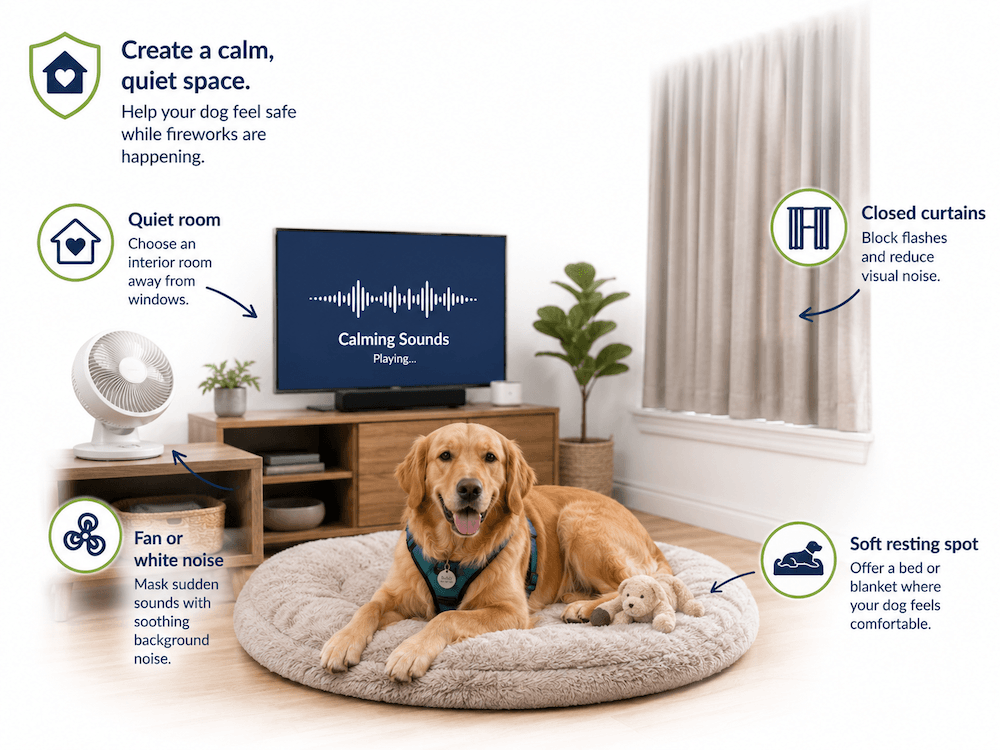
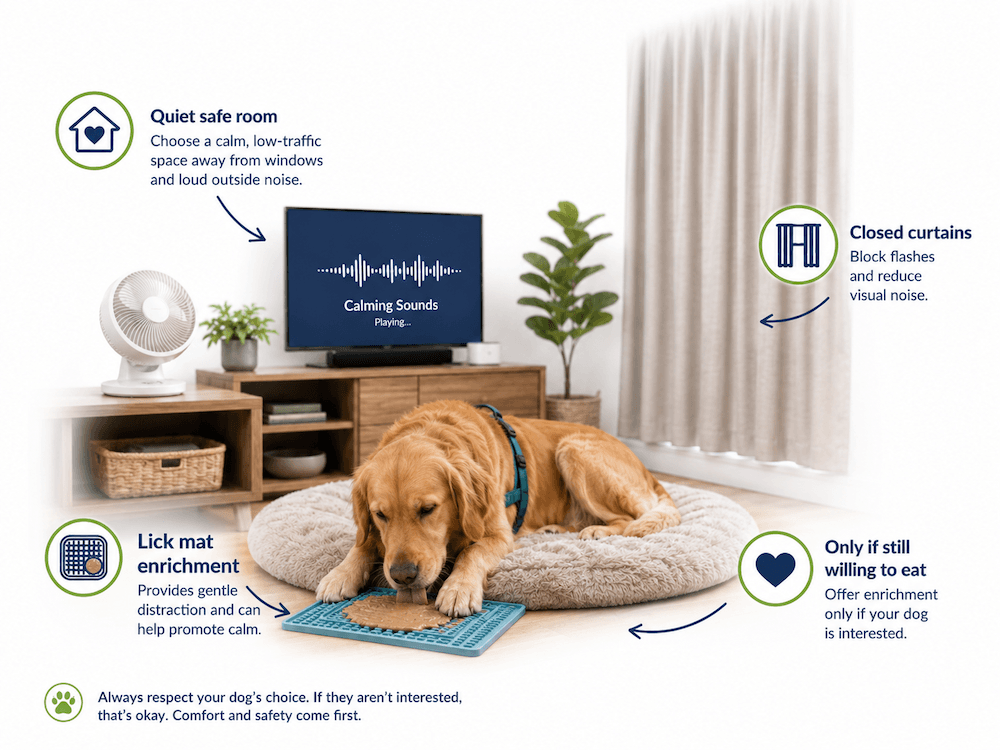
Turn on white noise, a fan, TV, radio, or gentle music before the fireworks begin. This helps reduce the contrast between a silent room and explosions.
Keep the volume comfortable. The goal is to soften outside noise, not create another stressful sound.
Step 4: Let your dog choose comfort or hiding
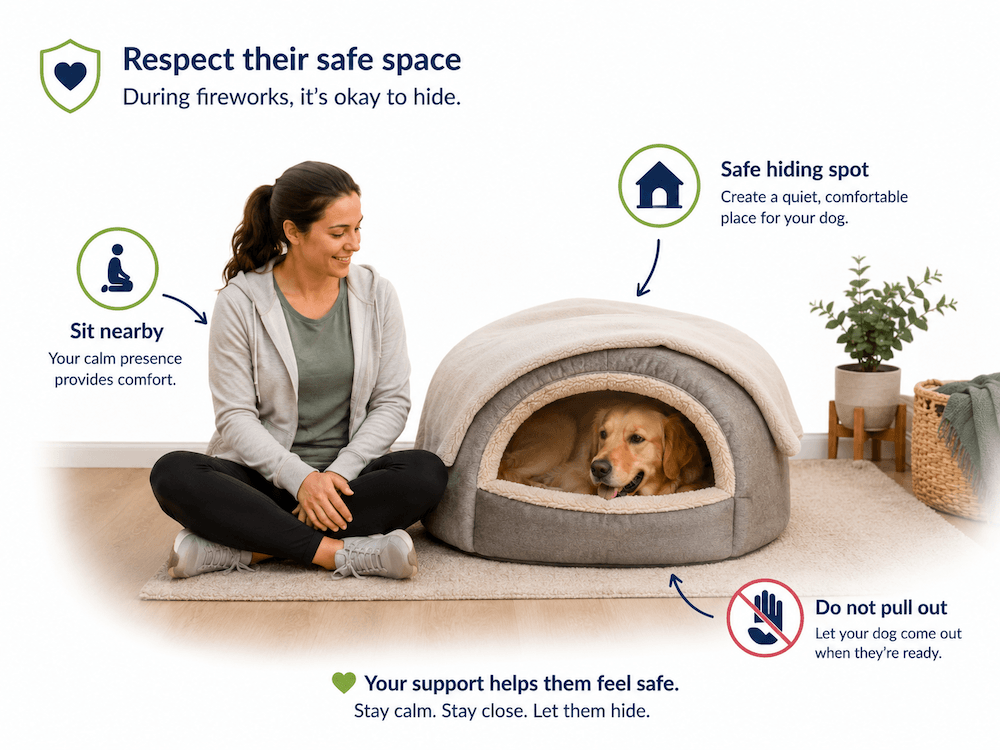
Some dogs want to sit beside their owner. Others want to hide under a desk, in a closet, behind furniture, or in a covered crate.
Do not drag your dog out of a hiding spot if the area is safe. Hiding can be a coping strategy, not misbehavior.
Step 5: Offer calm reassurance without panic
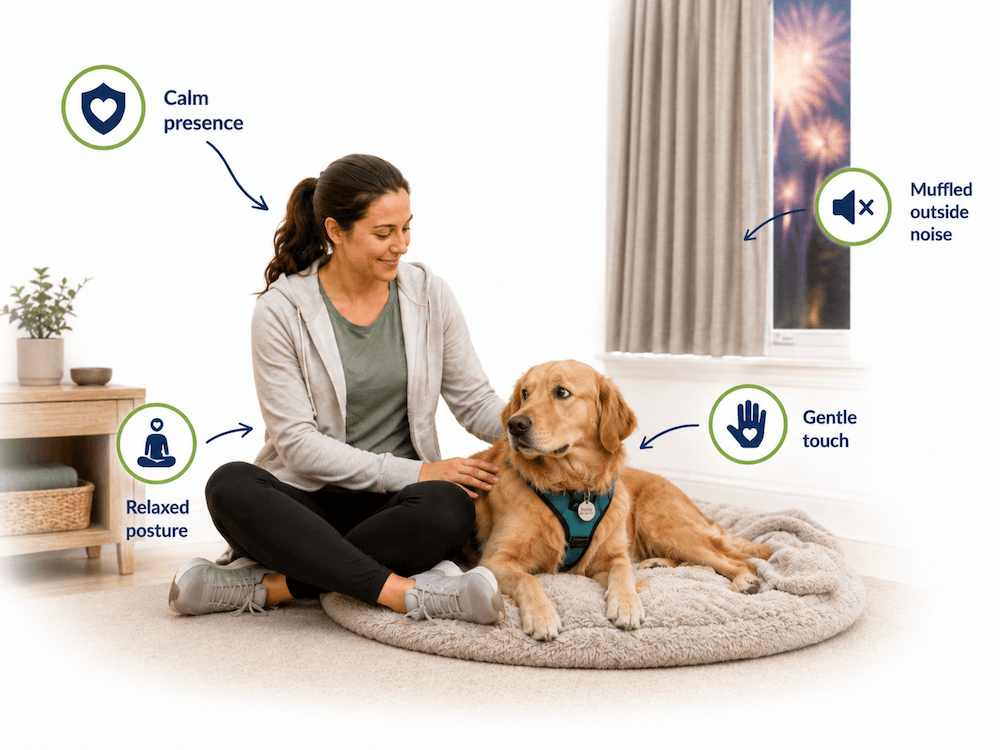
It is okay to comfort your dog. Speak softly, sit nearby, pet them if they enjoy touch, and keep your own movements relaxed.
Avoid frantic fussing, repeated checking, or anxious hovering. Your dog needs steady support, not a signal that something is dangerously wrong.
Step 6: Use food, chews, or games only if your dog can engage
A lick mat, stuffed food toy, chew, scent game, or simple treat scatter can help dogs who are still able to eat. Food-based calming works best before fear becomes intense.
If your dog refuses food, do not force it. Refusing a favorite treat can mean your dog is too stressed for distraction and needs a quieter setup or veterinary support.
Step 7: Keep potty breaks controlled after the noise ends
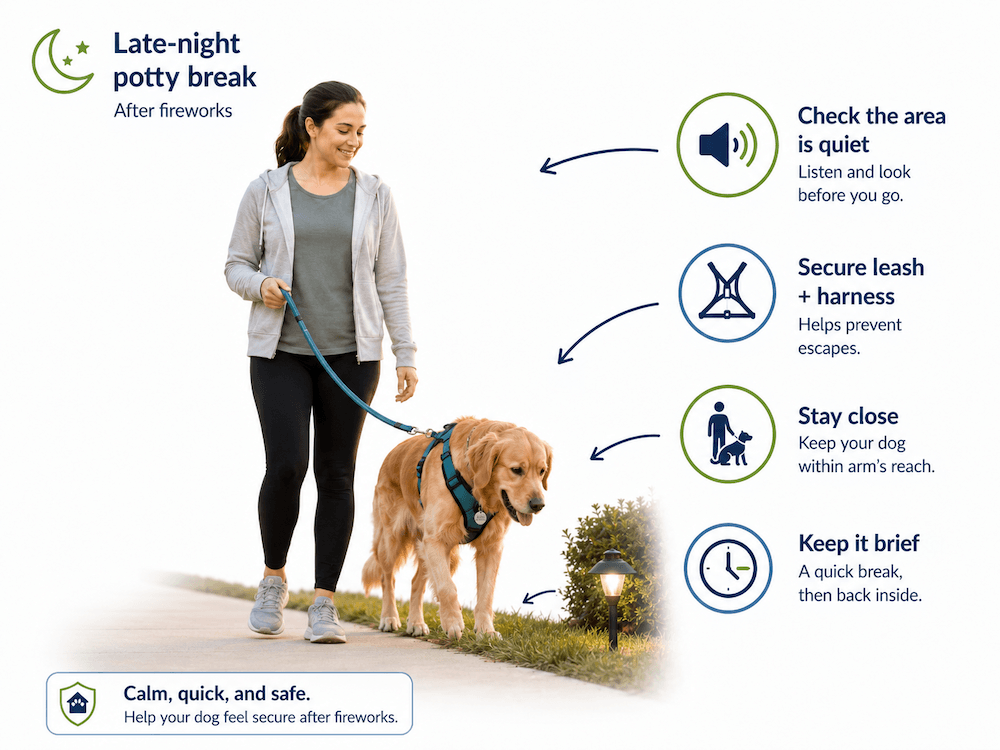
When fireworks seem finished, use a leash for the final potty break. Random late fireworks can still happen, and a startled dog may run even if they were calm indoors.
Wait until your dog’s breathing, posture, and attention look more normal. Keep the break short, quiet, and close to home.
Helpful Tips for Keeping Your Dog Calm During Fireworks
The best tips are simple, repeatable, and matched to your dog’s fear level. A mild dog may need background noise and a chew, while a highly fearful dog may need a full veterinary behavior plan.
| Calming Tip | Why It Helps | How to Apply It |
|---|---|---|
| Prepare early | Dogs cope better before panic starts. | Set up the safe room before sunset. |
| Use layers | No single tool works for every dog. | Combine sound masking, comfort, and secure confinement. |
| Stay nearby | Your calm presence can be reassuring. | Sit close without forcing interaction. |
| Try enrichment | Licking and chewing can support relaxation. | Offer a safe chew before fear peaks. |
| Block flashes | Light bursts can intensify fear. | Close curtains and choose a darker room. |
| Secure exits | Panicked dogs may bolt suddenly. | Lock gates and use leashes for potty breaks. |
| Plan vet help | Severe anxiety may need medical support. | Ask before the holiday, not during panic. |
What Not to Do When Your Dog Is Scared of Fireworks
Fireworks fear is not stubbornness, disobedience, or attention-seeking. A frightened dog needs safety and support, not correction.
Avoid anything that increases pressure, traps the dog near the noise, or teaches them that fireworks predict unpleasant handling. The wrong response can make next year harder.
| Mistake | Why It Can Backfire | What to Do Instead |
|---|---|---|
| Taking dogs outside | Close fireworks can trigger panic and escape. | Keep your dog indoors before displays begin. |
| Scolding fear | Punishment adds stress to an already scary event. | Use calm guidance and safe distance. |
| Forcing exposure | Flooding can make noise fear worse. | Use gradual training weeks ahead. |
| Ignoring escape risk | Panicked dogs may run through small openings. | Check doors, gates, windows, and ID. |
| Trying new aids late | New products may cause discomfort or stomach upset. | Test calming tools before fireworks night. |
| Leaving dogs alone | Severe fear can escalate without support. | Arrange supervision for high-risk dogs. |
| Skipping vet help | Severe anxiety rarely improves by waiting. | Ask early about behavior and medication options. |
When to Call a Veterinarian About Dog Fireworks Anxiety
Call your veterinarian if your dog’s fireworks anxiety is severe, escalating, or unsafe. Vet help is especially important if your dog panics despite a safe room, refuses food or water for a long period, injures themselves, destroys doors or crates, collapses, has breathing distress, or has a history of escaping during loud noises.
Veterinary support may include a behavior plan, medication, supplements, pheromone guidance, referral to a veterinary behaviorist, or checks for pain and health issues that may worsen anxiety. Plan ahead and ask about medication before the holiday, not during the fireworks.
Do not give human sedatives, leftover pet medication, or unverified calming products without veterinary direction. Severe noise fear often needs both training and management, and senior dogs with new or worsening fear should have a health check.
What to Monitor After Fireworks Are Over
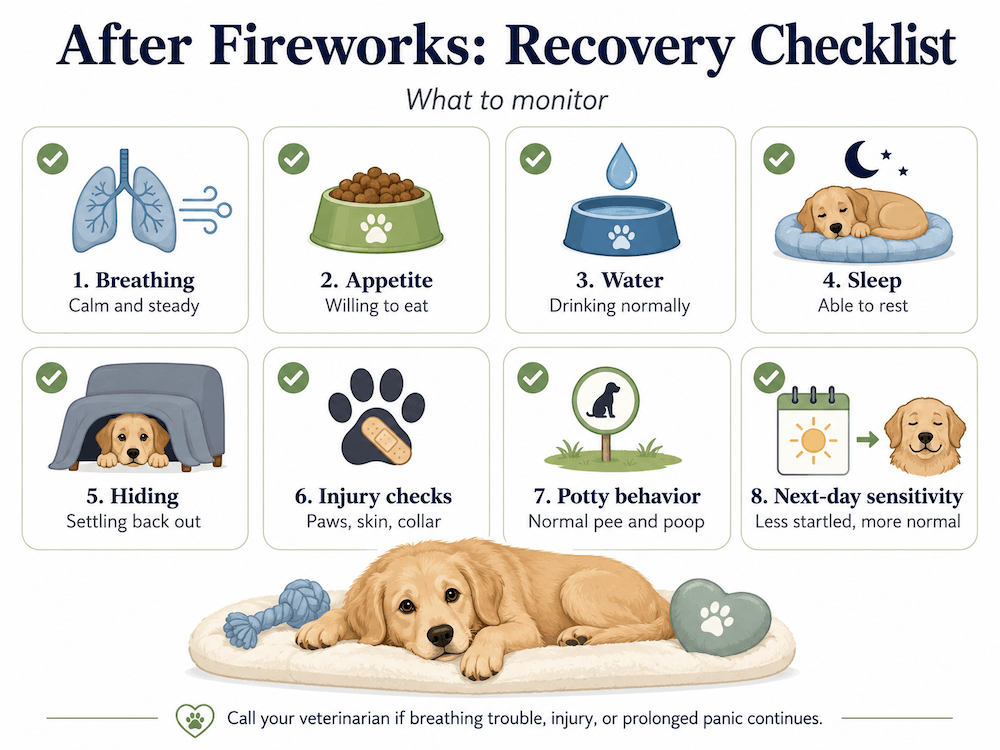
After the fireworks stop, give your dog time to decompress. Some dogs bounce back quickly, while others stay restless, clingy, tired, or sensitive to small sounds the next day. Keep the next few hours quiet. Offer water, a calm potty break on leash, and a normal bedtime routine.
What Research Says About Fireworks Anxiety in Dogs
A 2023 review in Animals explains that noise-sensitive dogs often need a combined approach: management, behavior training, and in some cases anti-anxiety medication to protect welfare and prevent fear from worsening. This supports using safe rooms, gradual sound training, and veterinary help for dogs that panic rather than relying on one quick fix.[1]
A 2019 study in PLOS ONE described noise fears as a common welfare problem in dogs and reported that fireworks are a major trigger for many affected dogs. The study also highlights why early prevention matters, because noise fear can persist or progress when it is not addressed.[2]
A 2024 owner survey published on PubMed found that 44.4% of surveyed dogs were reported to be fearful of fireworks, and only 22.5% of owners sought professional advice. Among those who did seek advice, 65.5% considered it effective, which is a useful reminder that severe fireworks fear is worth discussing with a professional.[3]
The FDA freedom-of-information summary for imepitoin reported a field study in dogs with fireworks-related noise aversion, with treatment started before the anticipated noise event and continued through it. Medication decisions depend on the dog, country, product availability, health status, and veterinary assessment, so owners should never self-prescribe or wait until the fireworks have already started.
Frequently Asked Questions
The Bottom Line
Keeping your dog calm during fireworks starts with preparation, not last-minute reaction. Bring your dog indoors early, set up a quiet safe space, reduce outside noise and flashes, and stay calmly available without forcing interaction. Some dogs may only need comfort, white noise, and a chew, while others need a veterinarian-approved anxiety plan before fireworks season. Never punish fear, force your dog to “get used to it,” or leave a severely anxious dog alone during loud displays. After fireworks, watch for lingering stress, appetite changes, injury, or unusual sensitivity to everyday sounds. With the right plan, you can lower panic, prevent escape, and help your dog recover more peacefully.