
Dog Dexamethasone Dosage Calculator: How Much to Give & Charts

Canine Bible is reader-supported. We receive affiliate commissions via some of our links. Learn more.
Dexamethasone is a powerful prescription corticosteroid used to treat certain inflammatory, immune-related, and other medical conditions in dogs. Because it is highly potent, getting the dose and medication strength right is essential for your dog’s safety. Our Dog Dexamethasone Dosage Calculator helps you check the math behind an existing veterinary prescription using your dog’s weight, prescribed dose, and medication strength. Below, you’ll also find a dexamethasone dosage chart by weight, formulation comparisons, calculation examples, side effects, safety precautions, and frequently asked questions.
Always consult your veterinarian before giving dexamethasone to your dog, changing the prescribed dosage, or stopping treatment, especially if your dog is a puppy, senior, pregnant or nursing, has diabetes, kidney or liver disease, or takes other medications, and seek prompt veterinary advice if you notice vomiting, diarrhea, excessive thirst, increased urination, black stools, unusual weakness, breathing difficulties, or other concerning symptoms. If you can't reach your vet, you can chat live with a registered online veterinary professional via our online vet chat or video chat support (24 hours a day, 7 days a week). Or use Chewy's online vet services (6 a.m. - midnight ET).
How Much Dexamethasone Can I Give My Dog?
The correct dexamethasone dosage for dogs depends on their weight, medical condition, medication formulation, and veterinarian's treatment plan. There is no single dose that is safe or appropriate for every dog.
Dexamethasone is considerably more potent than prednisone and has a longer duration of action. Even small differences in the amount administered can matter, particularly in small dogs or those with underlying health problems.
Is There a Standard Dexamethasone Dose for Dogs?
Veterinarians prescribe dexamethasone for different purposes, including controlling inflammation, suppressing abnormal immune responses, and managing selected serious medical conditions. The amount and treatment schedule may vary substantially depending on the diagnosis. Some dogs need short-term treatment, while others require a carefully monitored course with dose adjustments. A dosage used for one condition should never be assumed appropriate for another.
Why Does Dexamethasone Dosage Depend on the Condition?
Dexamethasone has both anti-inflammatory and immunosuppressive effects. The treatment goal influences how a veterinarian chooses the dose, frequency, and duration. For example, controlling inflammation is different from treating a serious immune-mediated disease. Dexamethasone is also used during certain diagnostic tests for Cushing's disease, but those tests involve specific veterinary protocols rather than routine home treatment.


Does My Dog's Weight Determine the Dose?
Weight is an important part of many medication calculations, but weight alone cannot determine how much dexamethasone a dog should receive. For example, a 20-pound dog weighs approximately 9.07 kilograms. If a veterinarian prescribes a dose in milligrams per kilogram (mg/kg), that weight is used to calculate the total milligrams. However, the prescribed mg/kg value must come from the veterinarian, not from an online estimate.
Dexamethasone Dosage Chart for Dogs
The following charts explain how weight, treatment purpose, and medication formulation affect dexamethasone calculations.
Dog Dexamethasone Dosage Chart by Weight
This dexamethasone weight chart converts common dog weights from pounds to kilograms and shows how a veterinarian-prescribed mg/kg amount is calculated.
| Dog Weight (lbs) | Weight (kg) | Prescription Calculation (mg) |
|---|---|---|
| 5 | 2.27 | 2.27 × R |
| 10 | 4.54 | 4.54 × R |
| 20 | 9.07 | 9.07 × R |
| 30 | 13.61 | 13.61 × R |
| 40 | 18.14 | 18.14 × R |
| 60 | 27.22 | 27.22 × R |
| 80 | 36.29 | 36.29 × R |
| 100 | 45.36 | 45.36 × R |
Note: R represents the exact mg/kg dose prescribed by your veterinarian. This chart does not recommend a dose. Contact your veterinarian if the prescription is unclear, the calculation differs from the label, or your dog develops symptoms.
Dexamethasone Dosage by Medical Condition
Dexamethasone is used for several veterinary purposes, but treatment protocols are not interchangeable.
| Medical Purpose | Treatment Approach | Key Consideration |
|---|---|---|
| Inflammation | Individualized prescription | Depends on the condition and response. |
| Immune-mediated disease | Condition-specific treatment | May require close monitoring. |
| Selected emergencies | Veterinary hospital protocol | Requires professional supervision. |
| Cushing's testing | Diagnostic protocol | Not a routine treatment dose. |
The diagnosis matters more than the general category. Only a veterinarian can determine whether dexamethasone is appropriate for your dog's specific condition.
Dexamethasone Forms and Concentrations
Dexamethasone comes in different formulations, and each must be measured according to its own label and veterinary instructions.


| Formulation | Measurement | What to Check |
|---|---|---|
| Oral tablets | mg per tablet | Check strength and tablet instructions. |
| Oral liquid | mg/mL | Verify concentration and syringe size. |
| Injectable solution | Product-specific | Requires veterinary direction. |
| Eye drops | Ophthalmic strength | Follow eye-specific instructions. |
| Ear medication | Product-specific | Check ear-treatment directions. |
| Combination products | Multiple ingredients | Do not substitute for plain dexamethasone. |
Important: Oral, injectable, eye, and ear products are not interchangeable. Some dexamethasone salts are also labeled differently from their dexamethasone-equivalent strength, so never assume that concentrations on different products can be substituted directly.
Dexamethasone Dosage Guidelines for Dogs
Dexamethasone belongs to a group of medications called glucocorticoids. These drugs reduce inflammation and suppress certain immune responses, making them useful for selected conditions that require stronger anti-inflammatory treatment. However, their effects extend beyond inflammation. Dexamethasone can influence blood sugar, immune function, hormone production, and the digestive system, which is why treatment requires careful veterinary oversight.
How Does Dexamethasone Work in Dogs?
Dexamethasone reduces the production and activity of substances involved in inflammation. This can help control swelling, redness, and inflammation-related discomfort while reducing excessive immune-system activity. It is considerably more potent than prednisone or prednisolone and generally has a longer biological effect. These medications cannot be exchanged milligram for milligram, even though they belong to the same drug family.
How Often Is Dexamethasone Given to Dogs?
The dosing schedule depends on the condition being treated, the prescribed amount, and your dog's response. Some treatment plans involve short courses, while others require carefully scheduled administration and follow-up.
Always distinguish between milligrams per dose and milligrams per day. If your veterinarian prescribes a total daily amount divided into multiple doses, giving that total amount at each administration could result in an overdose.
How Long Can a Dog Take Dexamethasone?
Treatment duration varies from a short course to longer-term management of certain conditions. Prolonged treatment increases the importance of monitoring for infections, muscle weakness, weight changes, and other corticosteroid-related effects.
Dogs receiving dexamethasone for more than two weeks may require gradual dose reduction under veterinary supervision. Never stop or change an established treatment schedule without discussing it with your veterinarian.
Factors That Can Affect Your Dog's Dexamethasone Dosage
Several factors influence how veterinarians prescribe dexamethasone and how accurately a calculator can check the prescribed amount.
| Factor | Why It Matters | What to Check |
|---|---|---|
| Body weight | Affects weight-based calculations. | Use a recent, accurate weight. |
| Medical condition | Determines treatment requirements. | Confirm the veterinary diagnosis. |
| Age | Young and older dogs may need extra care. | Share age and health history. |
| Body condition | May influence clinical assessment. | Discuss obesity or underweight status. |
| Medication strength | Changes tablet or liquid calculations. | Verify the product label. |
| Other medications | Can increase interaction risks. | Review all drugs and supplements. |
| Chronic disease | May affect treatment safety. | Report existing medical conditions. |
| Treatment duration | Influences monitoring and withdrawal risks. | Follow the prescribed schedule. |
Even when a calculation is mathematically correct, it cannot confirm that the medication is medically appropriate. Contact your veterinarian if you are unsure about any of these factors or notice concerning symptoms.
Common Dexamethasone Dosing Mistakes to Avoid
Most preventable dosing problems involve incorrect measurements, misunderstood prescription instructions, or using the wrong product. Double-checking these details can help reduce medication errors.
| Mistake | Why It Matters | Better Approach |
|---|---|---|
| Wrong weight units | Pounds and kilograms produce different values. | Confirm units before calculating. |
| Confusing mg and mL | Liquid volume depends on concentration. | Check the mg/mL label. |
| Wrong formulation | Products may differ in strength and use. | Match the prescribed product. |
| Daily vs. single dose | Can cause repeated overdosage. | Verify amount and frequency. |
| Using general estimates | Does not account for the diagnosis. | Follow the veterinary prescription. |
| Mixing medications | Some combinations increase serious risks. | Check interactions with your vet. |
| Ignoring symptoms | Adverse reactions may worsen. | Seek veterinary advice promptly. |
| Delaying veterinary care | Overdose complications may develop. | Call immediately after a suspected error. |
If the amount given differs from the prescription, contact your veterinarian before administering another dose. Do not attempt to correct an error by giving extra medication or changing the schedule yourself.
Dexamethasone Safety Guidelines for Dogs
Dexamethasone can be an effective medication, but its anti-inflammatory benefits come with important risks. Dogs may experience side effects even when receiving the prescribed amount, particularly during higher-dose or prolonged treatment.
Is Dexamethasone Safe for Dogs?
Dexamethasone can be safe and beneficial when a veterinarian determines that its potential benefits outweigh the risks. However, it is not appropriate for every dog or every inflammatory condition.
Veterinarians use additional caution in dogs with diabetes, gastrointestinal ulcers, active infections, heart disease, kidney problems, or recent surgery. Because dexamethasone suppresses immune responses, it may also interfere with the body's ability to fight infections.
Common Side Effects of Dexamethasone in Dogs
Some dogs develop noticeable changes soon after beginning treatment. Common effects include:
Longer treatment may contribute to weight gain, muscle weakness, changes in coat quality, and a pot-bellied appearance. Increased drinking and urination are common steroid effects, but marked or persistent changes should still be discussed with your veterinarian. Never restrict your dog's access to fresh drinking water because of increased thirst during steroid treatment.
Serious Side Effects: When to Contact a Veterinarian
Certain symptoms require urgent veterinary attention because they may indicate gastrointestinal bleeding, infection, or another serious adverse reaction.
| Symptoms | Concern | Recommended Action |
|---|---|---|
| Increased thirst or appetite | Common steroid effects | Monitor and inform your vet. |
| Persistent vomiting or diarrhea | Possible adverse reaction | Contact your vet promptly. |
| Fever or suspected infection | Possible immune-related complication | Seek prompt veterinary care. |
| Black stools or bloody vomit | Possible digestive bleeding | Seek emergency veterinary care. |
| Collapse or breathing difficulty | Potentially life-threatening condition | Get emergency care immediately. |
| Suspected overdose | Unpredictable medication risk | Contact a vet immediately. |
Do not wait for symptoms to appear after a suspected overdose. If severe signs develop, seek emergency veterinary care immediately and ask the treating veterinarian whether further doses should be withheld.
Dexamethasone Drug Interactions in Dogs
Dexamethasone can interact with other prescription drugs and over-the-counter medications. One particularly dangerous combination is dexamethasone with nonsteroidal anti-inflammatory drugs (NSAIDs), which can substantially increase the risk of stomach and intestinal ulcers or bleeding. Medications requiring veterinary review include:
Give your veterinarian a complete list of your dog's medications, including supplements and nonprescription products. Never combine dexamethasone with an NSAID unless your veterinarian specifically directs a treatment plan involving these medications.
Can You Stop Giving Dexamethasone Suddenly?
Long-term corticosteroid treatment can suppress the body's natural production of cortisol, a hormone needed for normal stress responses and other essential functions. Suddenly stopping treatment after prolonged use may cause serious weakness, vomiting, diarrhea, and potentially dangerous adrenal insufficiency.
Your veterinarian may gradually reduce the dose or change the dosing interval to allow normal hormone production to recover. The appropriate taper depends on how long your dog has been treated and why the medication was prescribed.
What to Do If Your Dog Gets the Wrong Dexamethasone Dose
If your dog accidentally receives too much dexamethasone, the wrong formulation, or medication intended for another pet, contact your veterinarian or an emergency veterinary clinic immediately. Follow these steps:
- Confirm what was given. Check the medication name, strength, amount administered, and time of administration.
- Call your veterinarian. Explain the dosing mistake even if your dog appears normal.
- Keep the medication packaging. The bottle, label, or prescription information can help the veterinarian assess the situation.
- Avoid home treatments. Do not induce vomiting, give extra medication, or attempt to counteract the dose unless specifically instructed by a veterinarian.
- Watch for serious symptoms. Vomiting, black stools, bloody vomit, collapse, or breathing difficulties require emergency assessment.
If you accidentally miss a scheduled dose, follow the instructions supplied with your prescription or contact your veterinarian. Do not double the next dose to compensate.
Special Considerations for Certain Dogs
How to Calculate a Dog's Dexamethasone Dose Manually
Dexamethasone calculations involve converting body weight, calculating a prescribed milligram amount, or converting milligrams into the corresponding medication quantity. The following formulas are for checking the arithmetic of an existing veterinary prescription, not choosing a dose independently.
Step 1: Convert Your Dog's Weight to Kilograms
- If your dog's weight is recorded in pounds, convert it into kilograms:
- Weight (kg) = Weight (lbs) ÷ 2.20462
- For example, a dog weighing 20 pounds has a weight of:
- 20 ÷ 2.20462 = 9.07 kg
Step 2: Calculate the Prescribed Milligram Amount
- If your veterinarian has prescribed dexamethasone in mg/kg, use:
- Total dose (mg) = Dog's weight (kg) × Veterinarian-prescribed dose (mg/kg)
The prescribed mg/kg value must be taken from your veterinarian's instructions. Do not substitute a general online dosage range. If the veterinarian has already prescribed a fixed milligram amount per administration, use that amount rather than recalculating it from your dog's weight.
Step 3: Convert Milligrams to Oral Liquid Volume
- For prescribed oral liquid dexamethasone, the medication concentration determines the volume to measure.
- Liquid volume (mL) = Prescribed dose (mg) ÷ Oral liquid concentration (mg/mL)
Only use the concentration printed on the specific oral medication supplied for your dog. Injectable and compounded products may have different labeling or concentration conventions.
Example Dexamethasone Calculation
Suppose a veterinarian has already prescribed 0.5 mg of dexamethasone per dose, and the pharmacy dispenses an oral liquid labeled 1 mg/mL.
- The calculation would be:
- 0.5 mg ÷ 1 mg/mL = 0.5 mL
- This means 0.5 mL contains the prescribed 0.5 mg amount at that concentration.
Important: This example demonstrates medication arithmetic only. It does not mean 0.5 mg is a suitable dose for your dog. Always confirm the actual prescription, product concentration, administration schedule, and measurement instructions with your veterinarian.
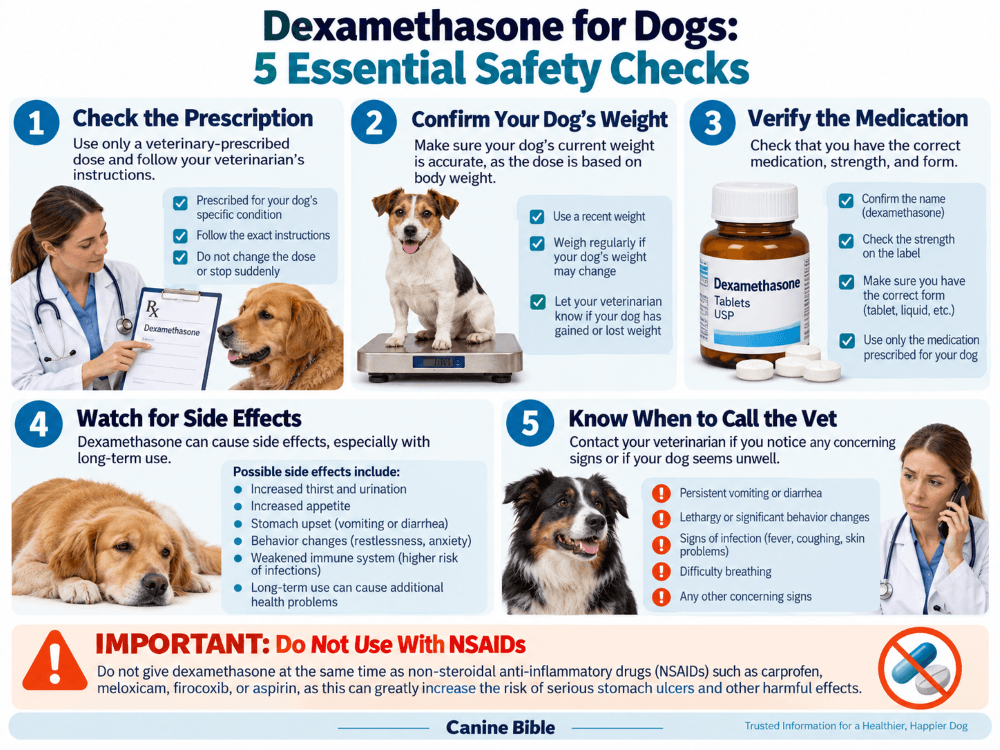
Dog Dexamethasone Dosage and Safety Infographic
Frequently Asked Questions
The Bottom Line
Dexamethasone is a potent prescription medication that can be valuable for treating certain canine medical conditions, but accurate dosing and veterinary supervision are essential. The dog dexamethasone dosage calculator helps you double-check the arithmetic behind your veterinarian's prescription using your dog's weight, prescribed amount, and medication strength. It cannot independently determine a safe dose or replace a veterinary diagnosis. Always verify your dog's prescription before administering dexamethasone, monitor for adverse reactions, and seek veterinary advice if anything seems unusual. For more information about related medications, explore Canine Bible's Dog Prednisone Dosage Calculator, Dog Aspirin Dosage Calculator, Dog Toxicity Calculator, and other dog medication safety guides.