
Why Do Dogs Chase Their Tails? 10 Reasons, Meaning & When to Worry


Canine Bible is reader-supported. We receive affiliate commissions via some of our links. Learn more.
Why do dogs chase their tails, and is this spinning behavior simply playful or a sign of something more? While an occasional tail chase may seem harmless, frequent or intense spinning can raise questions about a dog’s behavior and well-being. Some dogs chase their tails briefly, while others repeat the behavior so often that it becomes difficult to interrupt. But how can you tell when tail chasing is normal and when it deserves closer attention? Does the behavior mean something different in puppies, adult dogs, and seniors? Could persistent tail chasing indicate an underlying health or behavioral concern? Understanding the patterns, warning signs, and circumstances surrounding tail chasing can help you recognize what’s typical, what’s unusual, and when your dog may need help.
What Is Tail-Chasing Behavior in Dogs?
Tail-chasing is a repetitive movement in which a dog turns toward, follows, or attempts to catch its own tail. Dogs may spin in complete circles, make repeated half-turns, or try to grab their tail with their mouth. Some episodes last only a few seconds, while others involve prolonged spinning, snapping, or biting. The movement itself does not reveal whether the dog is playing, responding to discomfort, or experiencing a behavioral problem.
Not every dog that circles is necessarily chasing its tail. Tail-directed behavior differs from general spinning because the dog visibly focuses on its tail or hindquarters. A dog may also spin without looking at its tail, particularly during repetitive movement episodes. Recognizing the distinction can help owners describe the behavior accurately during veterinary assessments.
When Is Tail-Chasing in Dogs Normal vs. Concerning?
The pattern and consequences of tail-chasing are more informative than any single episode. Brief, easily interrupted spinning in an otherwise comfortable dog is generally less concerning than persistent or escalating behavior.
| Observation | Usually Less Concerning | More Concerning |
|---|---|---|
| Frequency | Occasional episodes during otherwise normal activities. | Repeated episodes that become increasingly frequent. |
| Duration | Brief spinning followed by another activity. | Prolonged circling or repeated episodes without settling. |
| Interruptibility | Readily responds to familiar cues or distractions. | Difficult to interrupt or immediately resumes spinning. |
| Body language | Loose movement and otherwise relaxed behavior. | Rigid posture, frantic movement, or visible distress. |
| Tail condition | Healthy skin without biting or injury. | Bleeding, swelling, hair loss, or repeated chewing. |
| Daily functioning | Normal eating, resting, playing, and social interaction. | Spinning interferes with normal daily activities. |
| Awareness | Remains alert and responds normally. | Staring, confusion, abnormal movements, or reduced responsiveness. |
| Behavior changes | Familiar pattern without increasing intensity. | Sudden onset or a marked change from baseline. |
10 Reasons Dogs Chase Their Tails
Dogs may chase their tails for behavioral, environmental, or medical reasons, and the underlying explanation can change throughout their lives. Some episodes reflect normal activity, while others develop from physical irritation or abnormal repetitive behavior.


1. Playful Exploration and Natural Chasing Behavior
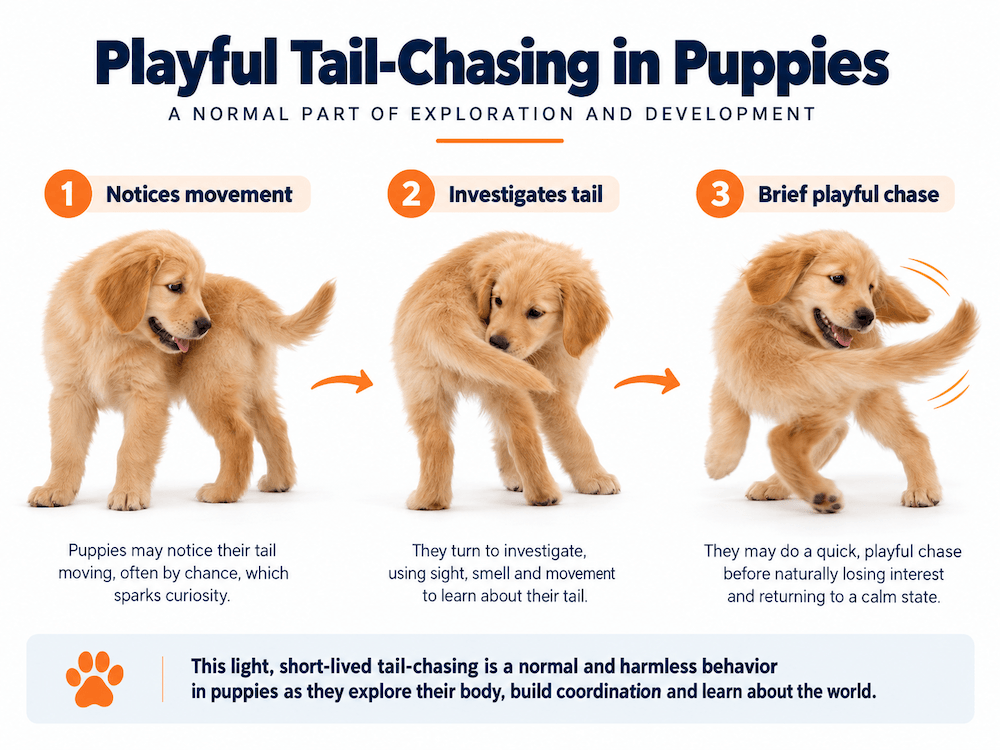
Dogs, especially puppies, may chase their tails because a moving body part becomes an interesting target for exploration and play. As puppies develop body awareness, they may turn toward their tails, investigate them with their mouths, and attempt to catch them. The movement can resemble ordinary object-chasing play, particularly when the dog appears relaxed and readily switches to another activity.
2. Excitement and Heightened Arousal
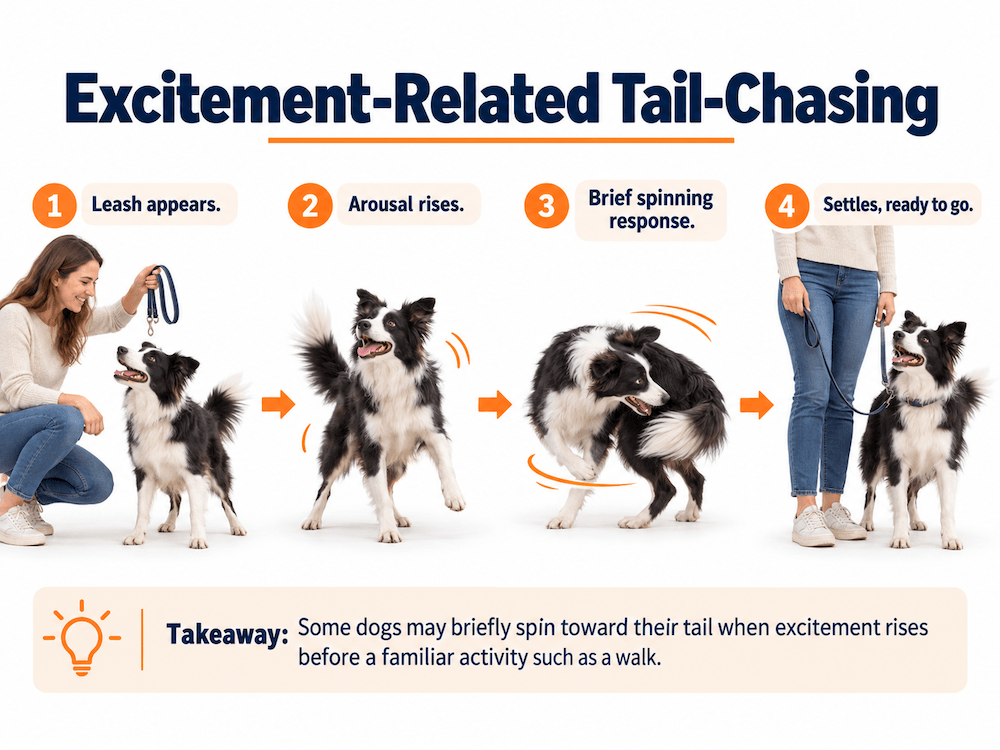
Some dogs spin toward their tails during periods of heightened emotional or physical arousal, such as before an exciting activity or when visitors arrive. Increased arousal can make movements faster and more repetitive, and tail-chasing may briefly accompany other energetic behaviors. Although excitement itself is not necessarily problematic, frequent spinning during intense arousal may indicate difficulty settling.
3. Seeking Attention From People
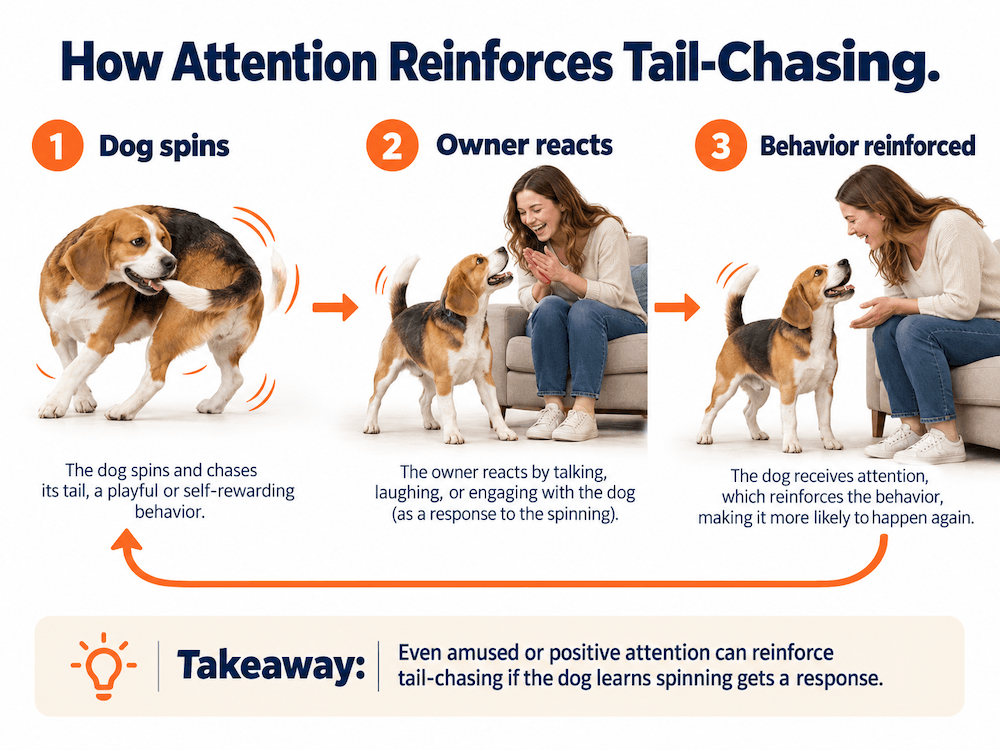
Dogs can learn that tail-chasing produces a reaction from their owners, particularly when spinning is followed by laughter, talking, petting, or excited interaction. These responses can reinforce the behavior, increasing the likelihood that the dog repeats it to attract attention. This explanation becomes more plausible when tail-chasing frequently starts while someone is watching and is followed by social interaction.
4. Boredom and Insufficient Mental Stimulation
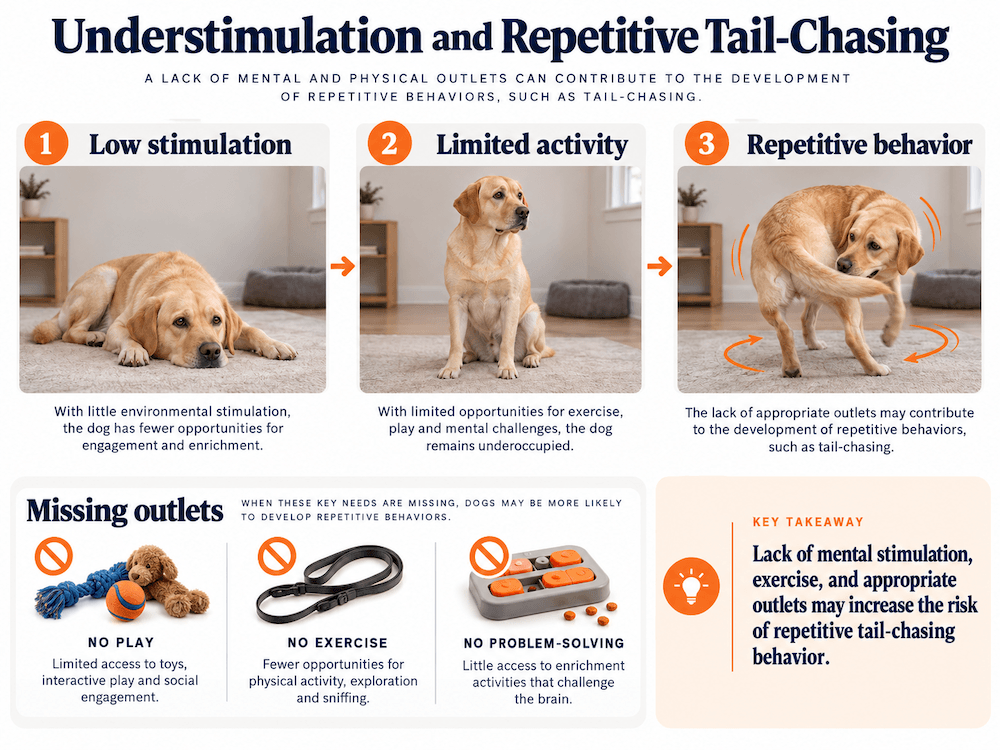
Dogs with limited opportunities for meaningful activity may develop repetitive movements because their environment provides too few outlets for normal canine behavior. Tail-chasing can become a readily available activity when a dog lacks sufficient exploration, exercise, play, or problem-solving opportunities. The behavior may appear more often during long periods of inactivity or confinement, although boredom alone cannot confirm the cause.
5. Stress, Anxiety, or Frustration
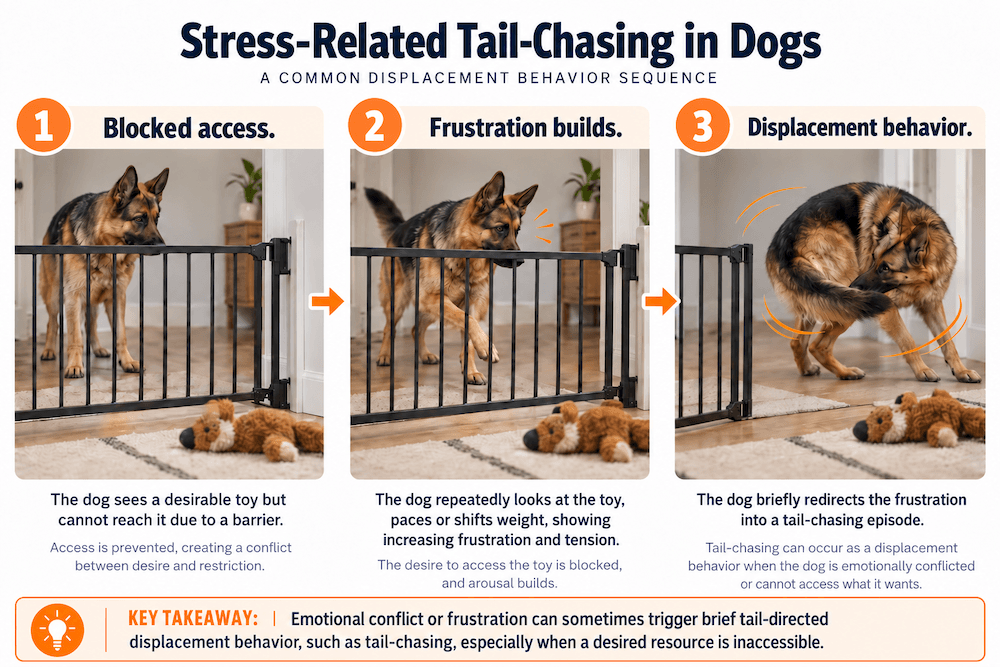
Tail-chasing can occur as a displacement behavior, meaning a dog performs an activity that appears unrelated to the immediate situation during emotional conflict or frustration. For example, a dog prevented from reaching something desirable may briefly spin when it has difficulty responding to the situation. Stress-related episodes may accompany tension, restlessness, or repeated attempts to disengage from a challenging environment, but the dog’s motivation cannot be determined from spinning alone.


6. Canine Compulsive Disorder
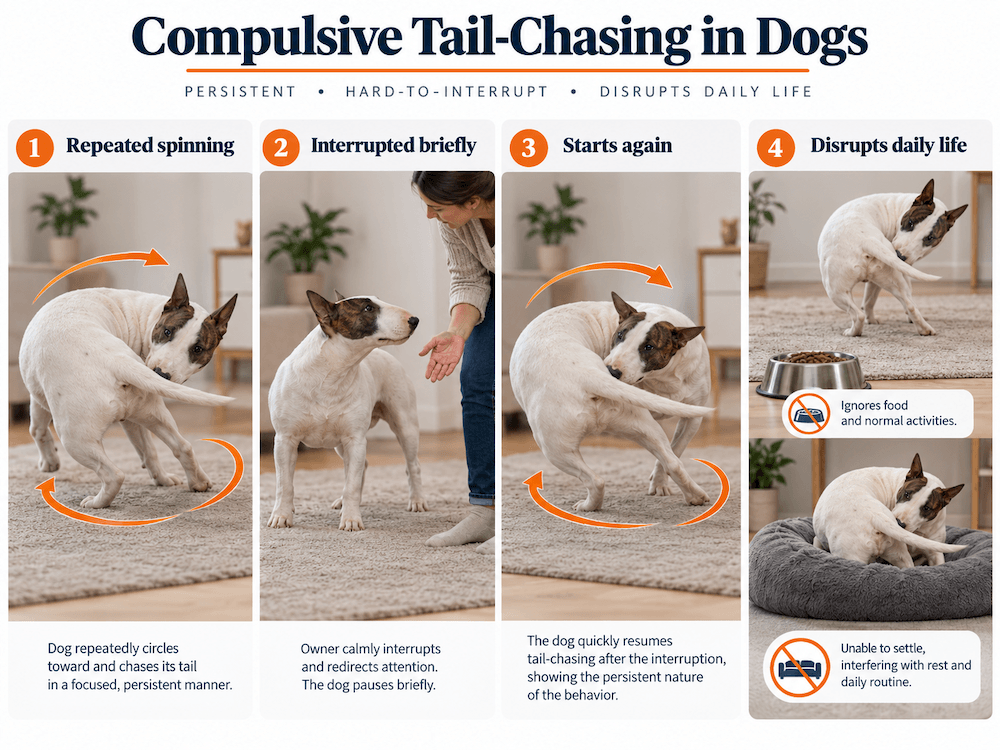
Some dogs develop canine compulsive disorder (CCD), in which repetitive behaviors become unusually persistent, difficult to control, and disruptive to normal activities. Tail-chasing may begin in response to particular circumstances but eventually occur even without an obvious external trigger. Affected dogs may repeatedly spin, return to chasing immediately after interruption, or injure their tails through biting, making veterinary behavioral assessment necessary.
7. Skin Irritation, Allergies, or External Parasites
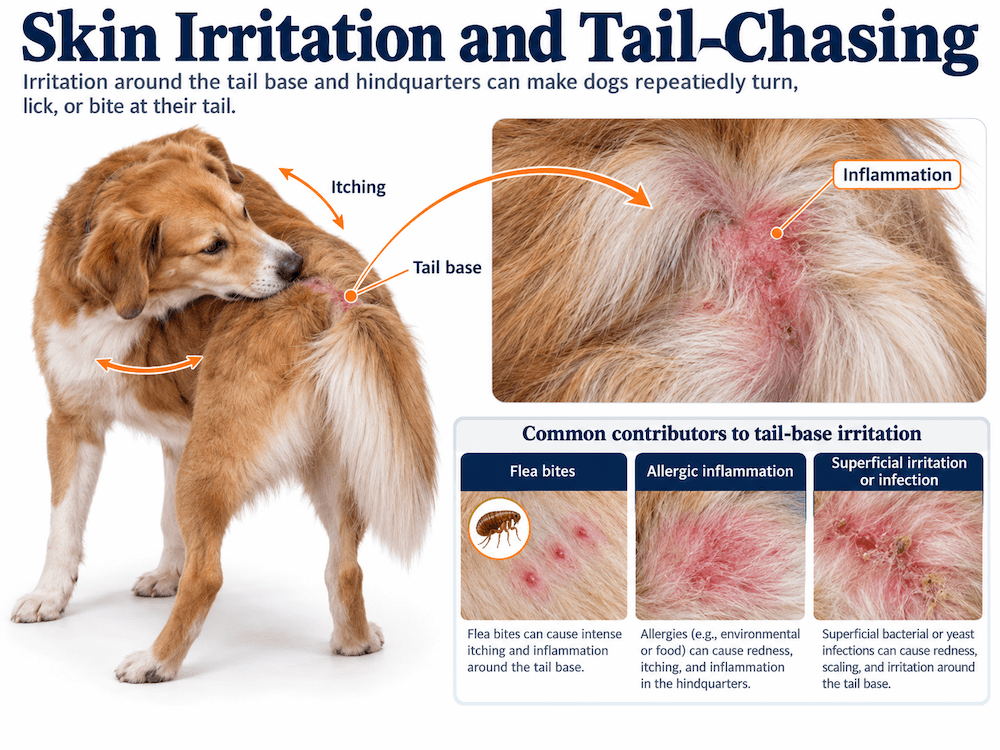
Itching or inflammation around the tail base and hindquarters may cause a dog to turn repeatedly toward the affected area in an attempt to scratch, lick, or bite it. Flea bites, allergic skin disease, and skin infections can produce discomfort that makes the tail region a frequent target. Owners may notice scratching, hair loss, redness, irritated skin, or repeated chewing rather than the loose movements associated with play.
8. Anal Sac Problems or Perianal Discomfort
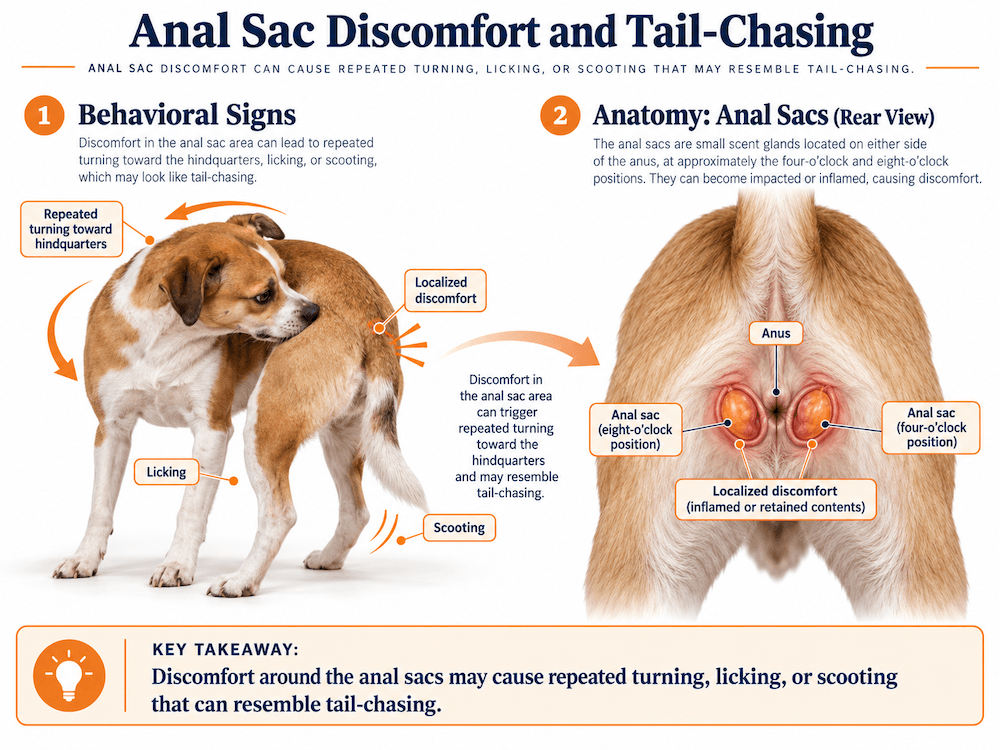
Dogs have two anal sacs near the anus that can become uncomfortable when their contents are retained, the sacs become inflamed, or an infection develops. Because the affected area is difficult to reach, a dog may repeatedly turn toward its rear end, creating movements that resemble tail-chasing. Scooting, excessive licking beneath the tail, swelling, or an unusual fishy odor may accompany the behavior.
9. Tail Injuries, Back Pain, or Musculoskeletal Discomfort
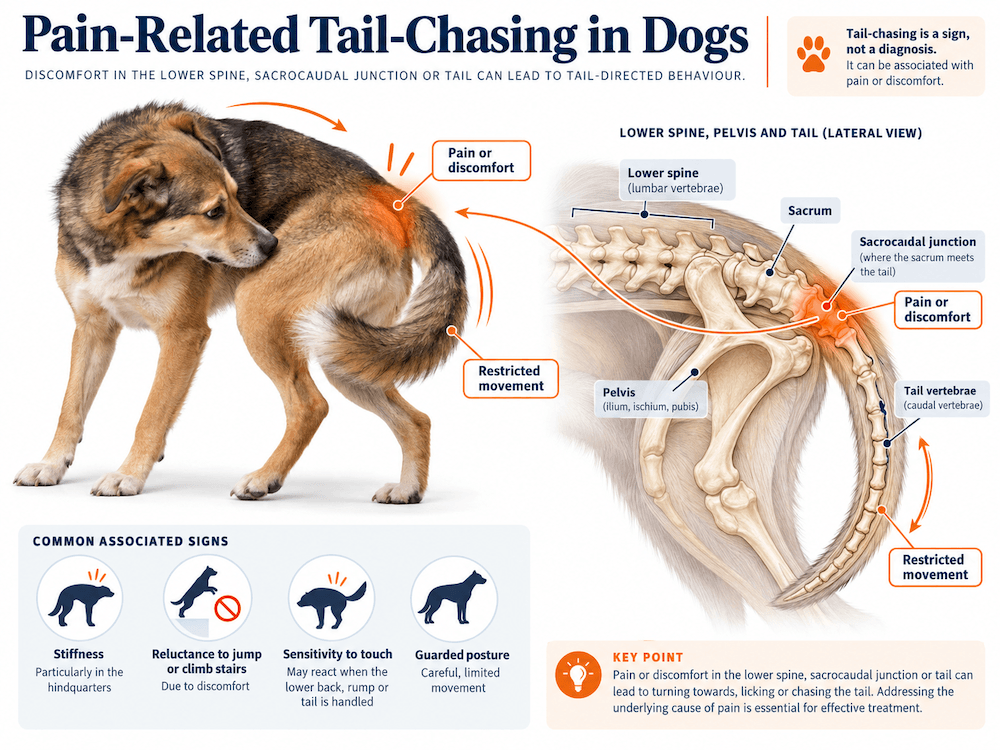
Pain affecting the tail, lower back, or nearby joints can cause a dog to repeatedly turn toward its hindquarters or make attempts to reach the painful region. Injuries, inflammation, and certain orthopedic or spinal conditions may produce unusual circling or tail-directed movements that can be mistaken for play. Stiffness, reluctance to jump, sensitivity to touch, an abnormal tail position, or difficulty moving may suggest a painful underlying condition.
10. Neurological Disorders or Seizure-Like Episodes
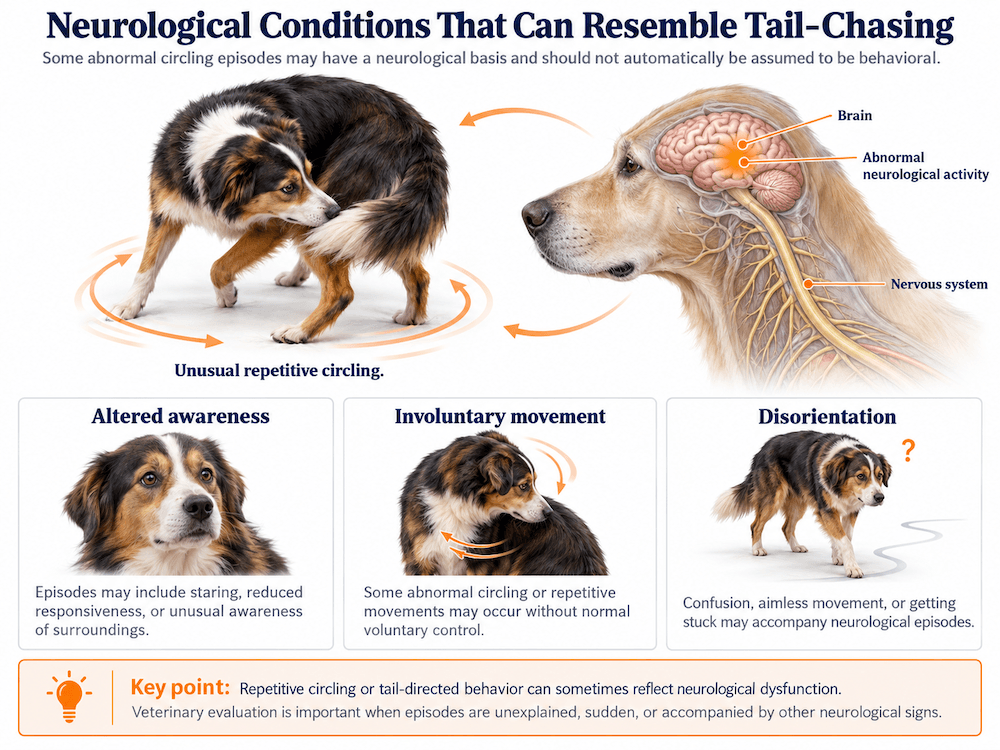
Less commonly, abnormal neurological activity can produce repetitive circling or spinning that resembles persistent tail-chasing. Focal seizures and other neurological disorders may alter movement, awareness, or sensory responses, although spinning alone does not establish a neurological diagnosis. Episodes associated with unusual staring, reduced responsiveness, involuntary movements, disorientation, or unexplained changes in coordination warrant veterinary evaluation.
Medical Conditions That Can Cause Tail-Chasing in Dogs
Tail-chasing isn’t always behavioral. Some dogs repeatedly turn toward their tails because of itching, pain, inflammation, or abnormal nerve sensations. Identifying an underlying medical condition is important because behavioral training alone won’t resolve physical discomfort.
| Medical Condition | How It Can Cause Tail-Chasing |
|---|---|
| Fleas and skin allergies | Itching around the tail base may trigger repeated turning, licking, or biting. |
| Anal gland disorders | Impacted or inflamed anal sacs can cause discomfort around the hindquarters. |
| Intestinal parasites | Some parasites, including tapeworms, may cause irritation near the anus. |
| Tail injuries and infections | Localized pain or inflammation may draw attention toward the tail. |
| Joint and spinal problems | Pain affecting the hips or lower back may cause repeated turning. |
| Neurological disorders | Abnormal nerve sensations or neurological episodes may produce repetitive circling. |
| Canine cognitive dysfunction | Age-related cognitive changes may cause disoriented circling mistaken for tail-chasing. |
Important: Tail-chasing alone cannot confirm any of these conditions. A veterinarian may need to examine the skin, tail, anal glands, musculoskeletal system, and nervous system to identify the underlying cause.
Does Age or Breed Influence Tail-Chasing?
Age and breed can influence how often dogs chase their tails and how the behavior should be interpreted. Puppies may exhibit brief, exploratory spinning, while new or persistent tail-chasing in older dogs deserves closer attention. Certain breeds may also have a greater predisposition to compulsive behavior, although individual differences remain important.
| Age or Breed Factor | How It Influences Tail-Chasing |
|---|---|
| Puppies | Brief tail-chasing may accompany normal exploration and playful development. |
| Adult dogs | Consider frequency, triggers, and changes from established behavior patterns. |
| Senior dogs | New or unusual spinning warrants evaluation for underlying health problems. |
| Bull Terriers and Miniature Bull Terriers | These breeds have a documented susceptibility to compulsive tail-chasing. |
| German Shepherd Dogs | Compulsive tail-chasing has been reported in this breed. |
| Other breeds and mixed-breed dogs | Tail-chasing can occur regardless of breed or genetic background. |
How to Figure Out Why Your Dog Is Chasing Their Tail
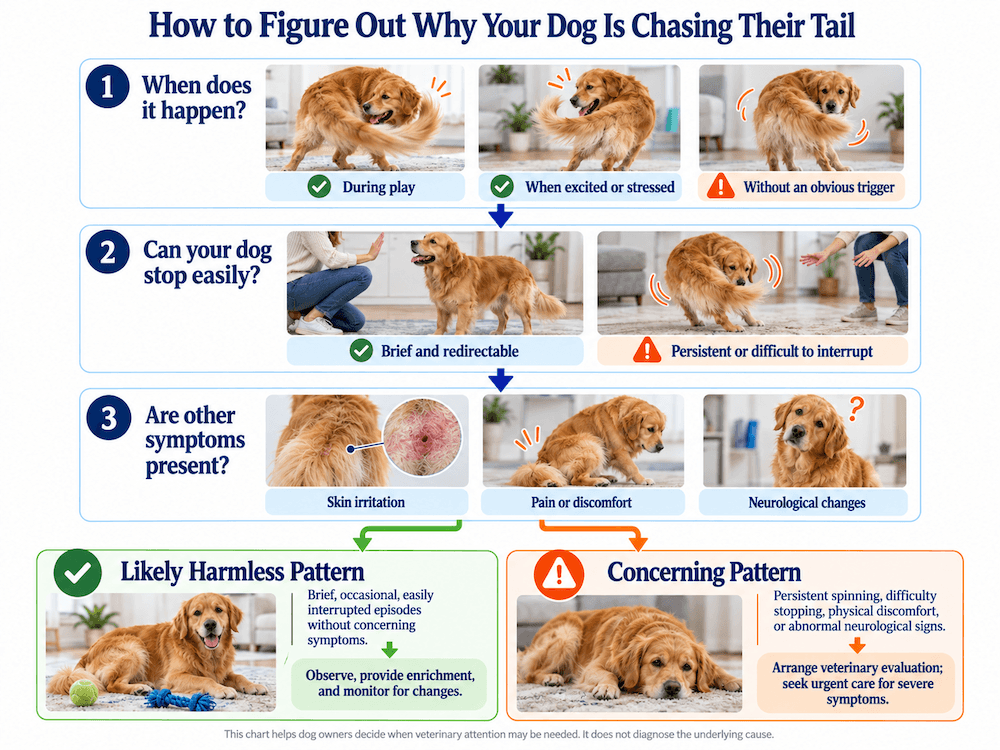
Identifying the possible cause of tail-chasing starts with observing when it happens, how easily your dog stops, and whether other symptoms are present. These clues can help distinguish occasional playful behavior from patterns that may require veterinary attention. Use the following decision flowchart to assess your dog’s behavior and determine an appropriate next step.
When to Call a Veterinarian About Tail-Chasing
Seek immediate veterinary attention if tail-chasing occurs alongside collapse, severe disorientation, difficulty breathing, suspected poisoning, or seizure activity that is prolonged or repeated without recovery. Heavy bleeding, serious tail injuries, or signs of extreme pain also require urgent care. If your dog is having an abnormal neurological episode, keep the surrounding area safe and avoid physically restraining them or placing your hands near their mouth.
Schedule a veterinary appointment if tail-chasing becomes frequent, persistent, or unusually intense, even when your dog appears otherwise healthy. Repeated tail biting, unexplained hair loss, skin inflammation, scooting, or changes in mobility deserve professional evaluation. A sudden increase in spinning or difficulty interrupting the behavior is another reason to seek advice promptly.
A veterinary assessment is also appropriate when the underlying cause remains unclear or reasonable environmental adjustments have not helped. Dogs with a history of neurological problems, chronic pain, or abnormal repetitive behavior may require a more detailed evaluation. Early identification of contributing problems can help prevent worsening symptoms and guide an appropriate treatment plan.
A dog that briefly chases its tail while playing in the yard and then returns to its toy may simply be engaging in normal activity. By contrast, a dog that begins circling repeatedly while resting, ignores familiar cues, and develops irritated skin warrants closer evaluation. Neither example establishes a diagnosis, but the differences help owners recognize why context and associated signs matter.
How to Respond When Your Dog Chases Their Tail
The best response depends on whether your dog’s tail-chasing is harmless, unwanted, or potentially related to a health problem. Occasional playful episodes may require no intervention, while recurring behavior benefits from thoughtful management and careful observation. The following approaches help owners respond without inadvertently reinforcing spinning or overlooking physical discomfort.
| Situation | Helpful Response | Why It Helps |
|---|---|---|
| Occasional playful spinning | Let brief, relaxed episodes pass, or gently invite your dog to another activity. | Not every playful behavior requires intervention, especially when the dog remains comfortable and responsive. |
| Frequent inactivity | Schedule appropriate walks, interactive play, scent searches, and food puzzles. | Understimulation can encourage dogs to develop repetitive ways of entertaining themselves. |
| Attention-seeking behavior | Give attention when your dog is settled or follows a familiar cue rather than while spinning. | Dogs may repeat behaviors that consistently produce a reaction from their owners. |
| Predictable excitement | Practice a settling cue and offer a quiet activity before exciting events. | High arousal can spill over into repetitive movements when a dog struggles to regulate excitement. |
| Stress-related episodes | Create distance from manageable triggers and provide access to a quiet, familiar space. | Some dogs display repetitive behaviors when experiencing emotional conflict, frustration, or anxiety. |
| Suspected physical discomfort | Arrange a veterinary examination and safely prevent further chewing or injury while awaiting care. | Itching, pain, and other medical problems cannot be resolved through behavioral training alone. |
| Persistent repetitive spinning | Record episodes and their triggers, then seek veterinary assessment and qualified behavioral support. | Documented patterns help professionals distinguish possible medical causes from compulsive behavior and develop an appropriate treatment plan. |
For dogs that are otherwise healthy and responsive, rewarding an alternative behavior can help reduce unwanted tail-chasing. Teach a simple behavior such as going to a mat, bringing a toy, or responding to a recall cue, and practice it when your dog is calm. Offer reinforcement for the alternative activity rather than deliberately provoking spinning. If your dog appears distressed or cannot disengage, prioritize professional assessment over repeated training attempts.
Common Mistakes When Dealing With Dog Tail-Chasing
Certain reactions can unintentionally reinforce tail-chasing or worsen underlying problems. Avoiding these common mistakes can help protect your dog’s well-being and support more effective behavior management.
| Common Mistake | Why It’s a Problem |
|---|---|
| Encouraging tail-chasing | Laughing or cheering may unintentionally reinforce attention-seeking behavior. |
| Punishing or startling the dog | May increase fear, anxiety, and repetitive behavior. |
| Forcibly restraining the dog | Can worsen distress and risk injury or defensive biting. |
| Giving treats during every episode | May reinforce spinning instead of rewarding calm behavior. |
| Trying unapproved home treatments | Inappropriate products or procedures may worsen irritation or cause injury. |
| Assuming it’s always behavioral | May delay diagnosis of pain, skin disease, or neurological conditions. |
| Using excessive exercise to stop spinning | Overexertion may increase stress or aggravate existing injuries. |
How Veterinarians Diagnose Persistent Dog Tail-Chasing
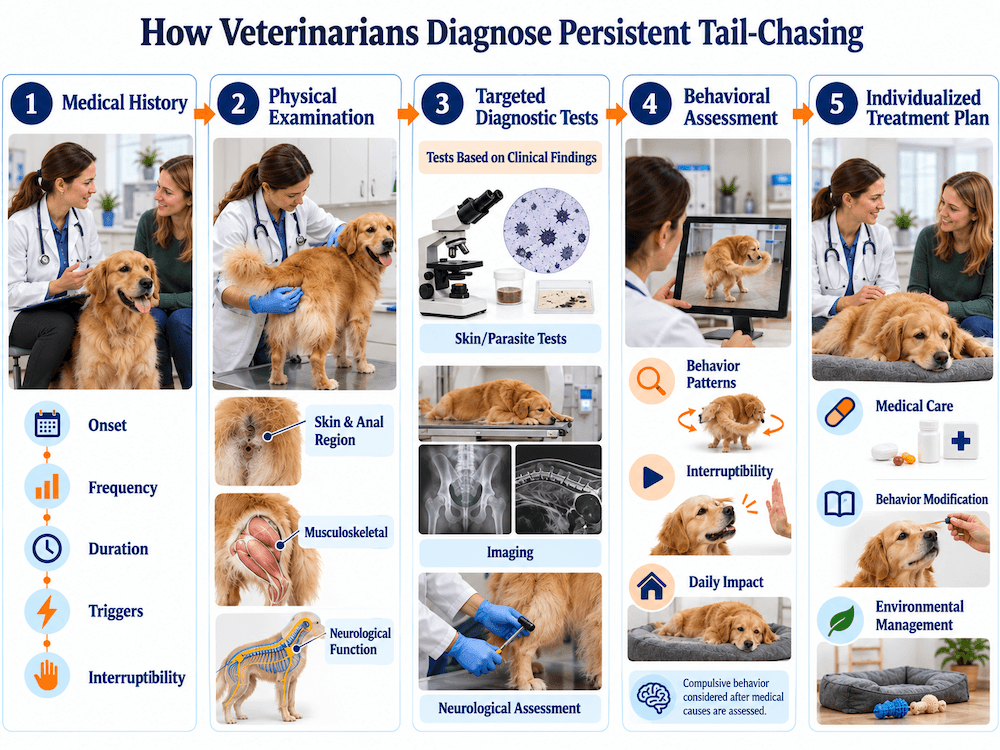
Veterinary evaluation begins by distinguishing physical discomfort from behavioral or neurological causes. Your veterinarian will typically review when the behavior started, how often episodes occur, what happens beforehand, and whether your dog responds to interruption
How to Tell Whether Your Dog’s Tail-Chasing Is Improving
Tracking changes in your dog’s tail-chasing patterns can help determine whether management strategies are working. Focus on the frequency, duration, and intensity of episodes, along with your dog’s overall comfort and daily functioning.
What Veterinary Research Says About Dog Tail-Chasing
Veterinary guidance recognizes tail-chasing as a behavior with multiple possible explanations, ranging from ordinary play to significant medical or behavioral problems. The American Animal Hospital Association emphasizes the importance of distinguishing brief, playful episodes from persistent or harmful behavior. Its guidance also identifies physical discomfort, neurological concerns, and behavioral disorders as considerations when tail-chasing becomes abnormal.
The Merck Veterinary Manual, in its 2025 review of canine behavior problems, describes abnormal repetitive behavior as a spectrum that includes displacement behaviors, stereotypies, and canine compulsive disorder. These categories differ in persistence, context, and interference with normal functioning. The manual also stresses that dermatological, orthopedic, and neurological problems must be considered before diagnosing a primary compulsive disorder.
A 2012 study investigated behavioral and environmental associations in 368 dogs from four breeds. Owner-reported boredom, stress, and aspects of the dogs’ early environment were associated with tail-chasing patterns, supporting a multifactorial explanation rather than one universal cause.[1] A separate 2011 study in the Journal of the American Veterinary Medical Association examined 333 Bull Terriers and identified associations involving tail-chasing, sex, trance-like behavior, and episodic aggression.[2]
Frequently Asked Questions
The Bottom Line
Dogs chase their tails for several reasons, ranging from harmless play to underlying behavioral or medical concerns. Puppies may spin out of curiosity, while excitement, boredom, stress, and learned behaviors can also contribute. In some cases, persistent tail-chasing may indicate physical discomfort, compulsive behavior, or neurological problems. Understanding when the behavior occurs, how frequently it happens, and whether your dog can stop easily helps distinguish normal activity from concerning patterns. Occasional, playful spinning is generally harmless, but repeated tail biting, distress, or difficulty interrupting the behavior deserves closer attention. Veterinary evaluation can help identify the underlying cause and guide appropriate treatment when necessary. By observing your dog’s behavior and responding appropriately, you can support their comfort, safety, and overall well-being.
For a closer look at persistent spinning and repetitive behaviors, explore our guide to obsessive-compulsive behaviors in dogs. If skin irritation may be contributing, learn about the symptoms and causes of fleas on dogs. You can also explore separation anxiety in dogs to better understand anxiety-related behaviors. For unusual movements or changes in awareness, our guide to what a dog seizure looks like explains important warning signs.