
15 Reasons Why Dogs Are Better Than Cats: According to Science


Canine Bible is reader-supported. We receive affiliate commissions via some of our links. Learn more.
Why are dogs better than cats? This age-old debate goes beyond personal preference, raising interesting questions about companionship, behavior, and what makes an ideal pet. While dogs are often celebrated for their unique qualities, the differences between dogs and cats are more complex than they first appear. From emotional connections and trainability to social behavior and everyday interactions, several factors shape how people compare these popular pets. But are dogs truly better companions, or does the answer depend on your personality and lifestyle? Individual temperament, care requirements, and common misconceptions can also influence which animal seems like the better choice. Understanding these differences reveals why dogs hold a special place in so many homes—and why the comparison isn’t always straightforward.
Are Dogs Really Better Than Cats?
Whether dogs are better than cats is largely a matter of personal preference, rather than an established scientific fact. Dogs often appeal to people seeking an involved relationship with their pets, while cats may suit households that prefer a different style of companionship. Both animals can develop meaningful relationships with their owners, learn behaviors, and provide enjoyable social interactions.
The important distinction is how well each animal’s needs and characteristics match its owner. A dog that thrives on frequent activity might be an excellent companion for an outdoorsy household but a poor match for someone with limited time. Similarly, a sociable indoor cat may offer exactly the companionship another person wants without requiring the same outdoor routines.
15 Reasons Why Dogs Are Better Than Cats for Some Owners
Dogs possess several characteristics that make them particularly appealing companions, from their cooperative nature to their enthusiasm for shared experiences. Many of these qualities reflect their evolutionary history, physical abilities, and relationships with people. Understanding these distinct advantages can help explain why some owners find dogs more rewarding than cats.
1. Dogs Form Strong Emotional Bonds With Their Owners
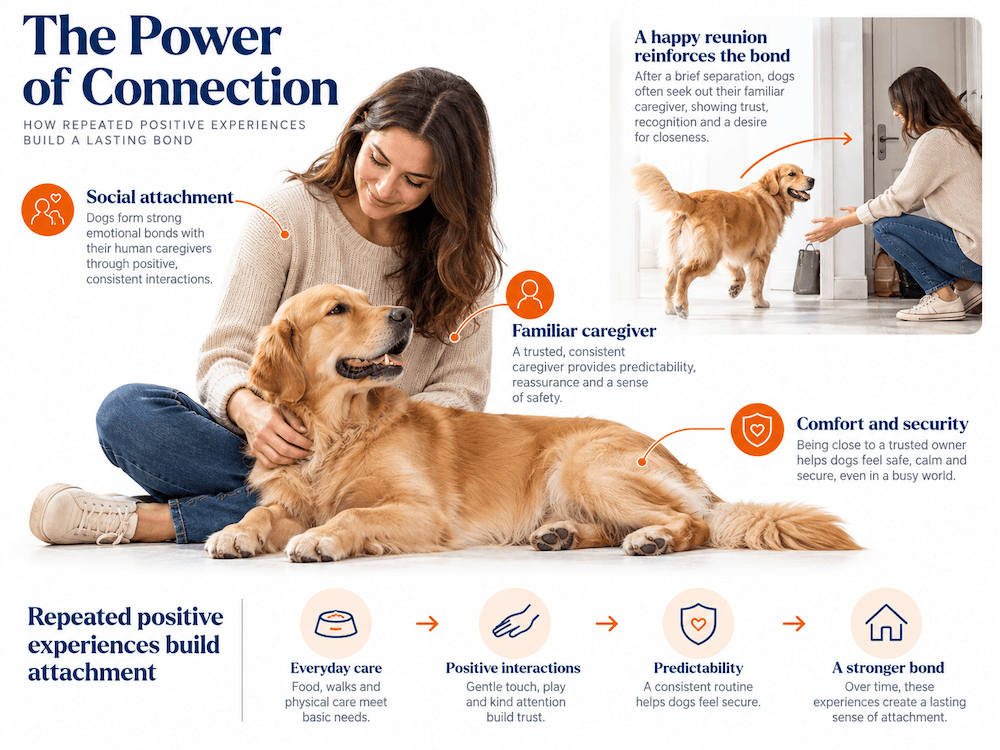
Dogs are highly social animals that can develop strong attachment relationships with familiar caregivers. These bonds form through repeated positive interactions, shared experiences, and dependable care, often leading dogs to seek proximity, reassurance, or physical contact. For people who enjoy frequent companionship, this relationship can feel especially rewarding, although cats can form secure attachments, too.


2. Dogs Are Particularly Responsive to Human Communication
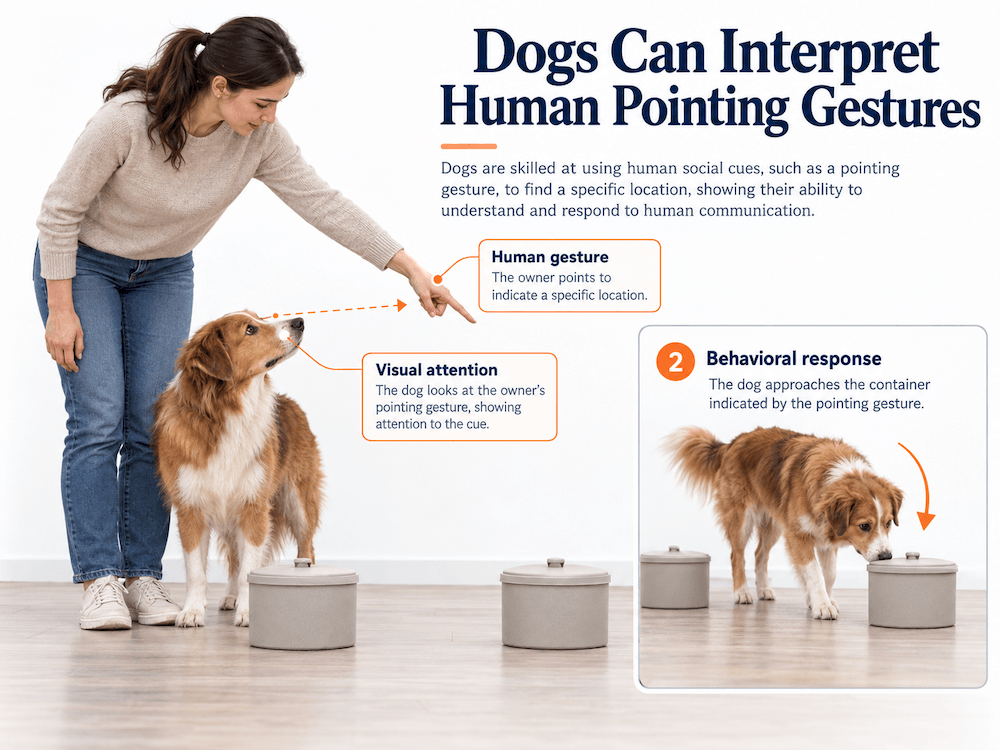
Dogs are often skilled at interpreting human gestures and social cues, including pointing, gaze direction, and familiar vocal signals. Their sensitivity to these signals reflects a combination of domestication, social motivation, and experience with people. This makes coordinated everyday interactions easier for many owners, although individual dogs differ in their attention and responsiveness.
3. Dogs Can Learn a Wide Range of Commands and Tasks
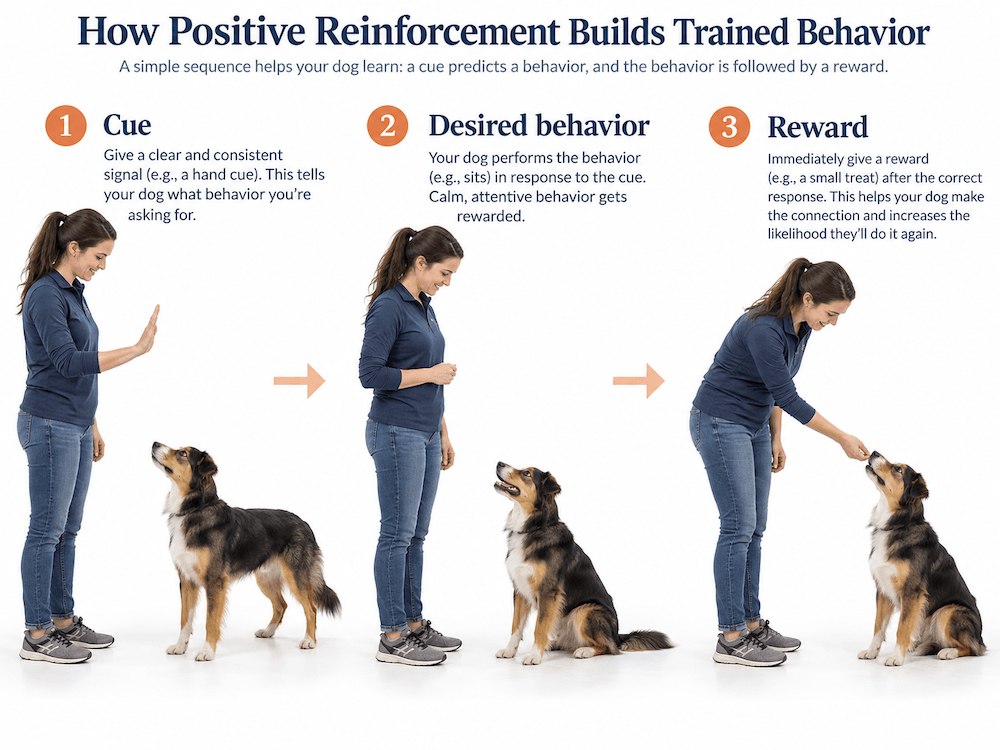
Dogs can become highly reliable partners in reward-based training because desirable behaviors can be strengthened through consistent cues, repetition, and reinforcement. They may learn household manners, recall, retrieving objects, and complex sequences of actions. Cats are also capable of learning through reinforcement, but many dogs are especially well suited to extended cooperative training sessions.
4. Dogs Often Communicate Through Readily Visible Body Language
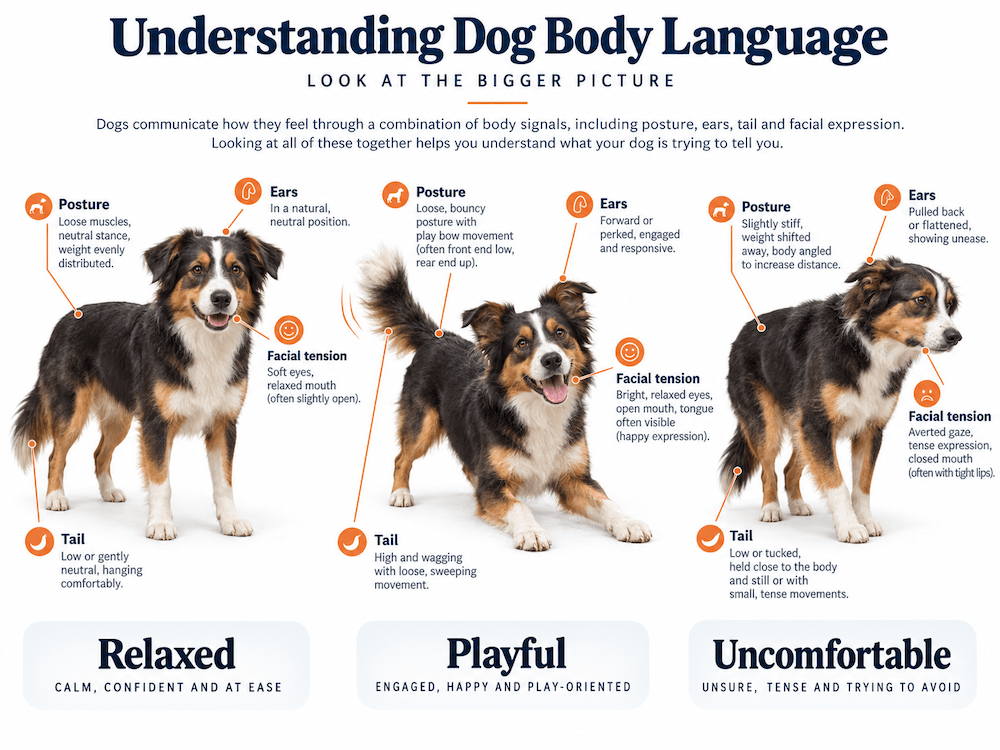
Dogs use combinations of body posture, facial expression, ear movement, tail position, and vocalizations to communicate during social interactions. Their signals can give attentive owners useful information about excitement, uncertainty, playfulness, or discomfort. For people who appreciate frequent visible feedback from a pet, canine communication may feel particularly engaging, although interpreting any single signal in isolation can be misleading.
5. Dogs Encourage Owners to Be More Physically Active
Because many dogs require regular walks and exercise, they can provide daily motivation for physical activity. Walking together creates recurring opportunities for movement that owners might otherwise skip, especially when exercise becomes part of caring for their pet. The benefit depends on both the owner’s participation and the dog’s health, age, and exercise needs.

6. Dogs Can Join Their Owners on Outdoor Adventures
Many appropriately trained and physically capable dogs can participate in shared outdoor experiences, including hikes, camping trips, and visits to dog-friendly destinations. Gradual exposure, socialization, and positive experiences can help some dogs become comfortable in varied environments. This adaptability appeals to people who want a pet involved in activities away from home, although unfamiliar outings are not enjoyable or suitable for every dog.



7. Dogs Can Help Owners Maintain a Consistent Daily Routine
Caring for a dog often requires predictable schedules for meals, toileting, activity, and rest. These recurring responsibilities can provide structure for owners who find regular routines helpful or enjoyable. Dogs also benefit when everyday needs are met consistently, although a structured schedule should remain flexible enough to accommodate each animal’s circumstances.

8. Dogs Offer Opportunities for Interactive Games and Sports
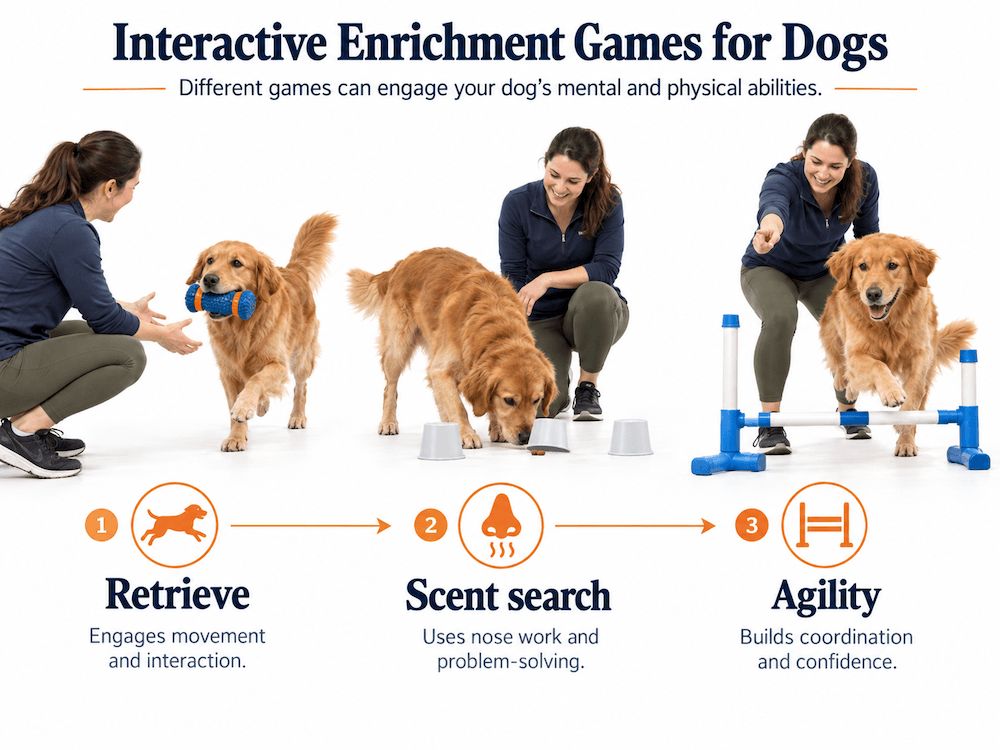
Many dogs enjoy cooperative play and mentally stimulating activities that involve both the animal and its owner. Games such as retrieving, scent searches, and structured canine sports engage different natural abilities and provide opportunities to practice shared skills. These experiences can make dog ownership particularly appealing to people who enjoy participating directly in their pets’ recreation.
9. Dogs Can Help People Build Social Connections
Walking a dog or participating in canine activities can create natural opportunities for human interaction. A friendly dog may encourage conversations between neighbors, fellow walkers, or people attending training classes and community events. These encounters can be especially appealing to socially motivated owners, although a dog should never be forced to greet unfamiliar people or animals.

10. Dogs Can Alert Owners to Unusual Activity
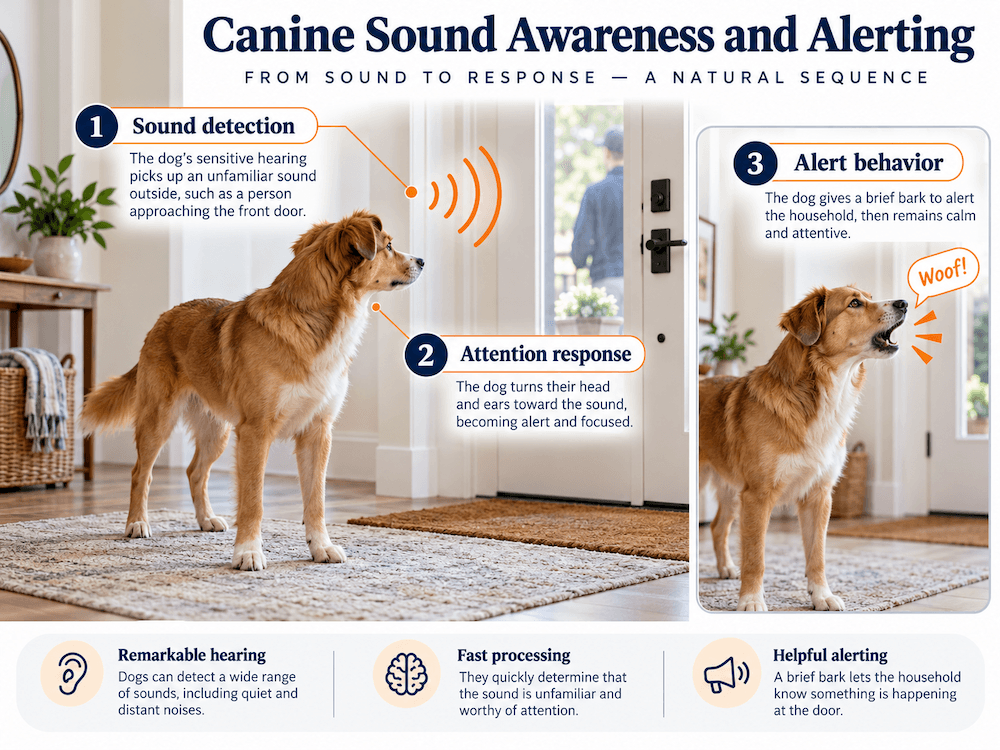
Dogs have sensitive hearing and smell and may respond to unfamiliar sounds, scents, or movement before their owners notice them. Some dogs communicate these changes through barking, orienting toward a doorway, or approaching their caregivers. This awareness can be useful in certain households, but alerting does not guarantee protection, and excessive barking or fear-based reactions should not be encouraged.
11. Dogs Can Perform Specialized Assistance and Service Tasks
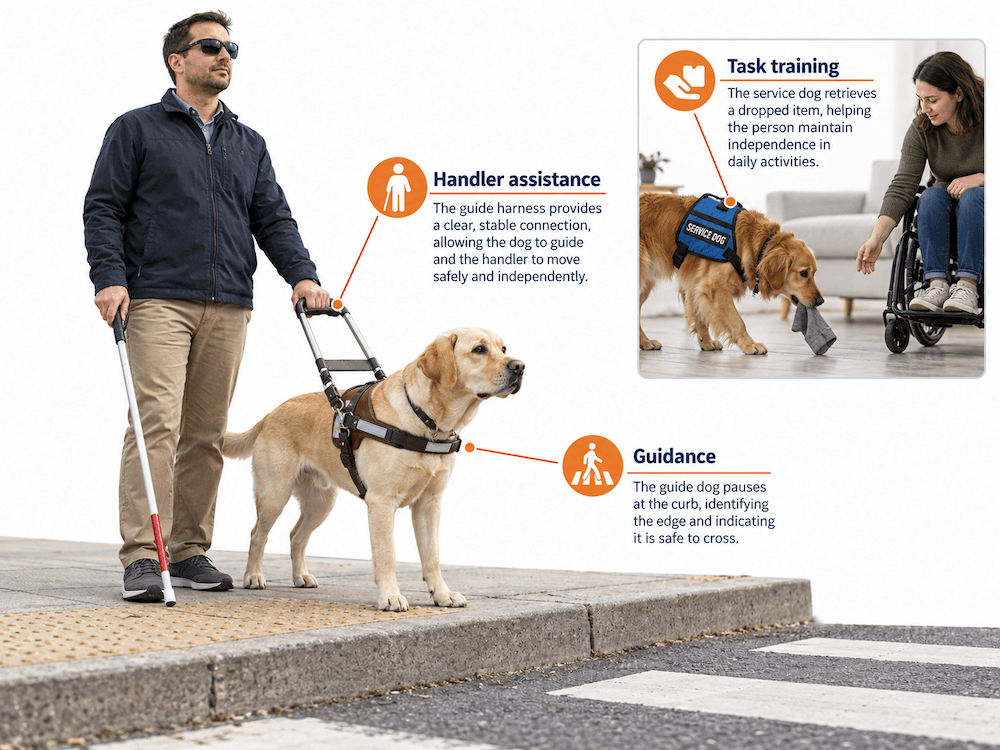
Specially selected and extensively trained dogs can provide practical assistance to people with disabilities. Depending on their training, these dogs may guide handlers around obstacles, respond to important sounds, retrieve objects, or perform other disability-related tasks. These capabilities demonstrate the potential of canine learning and cooperation, although only suitable dogs receiving appropriate specialized training can reliably perform such work.
12. Dogs Offer Exceptional Variety in Size, Appearance, and Behavioral Tendencies
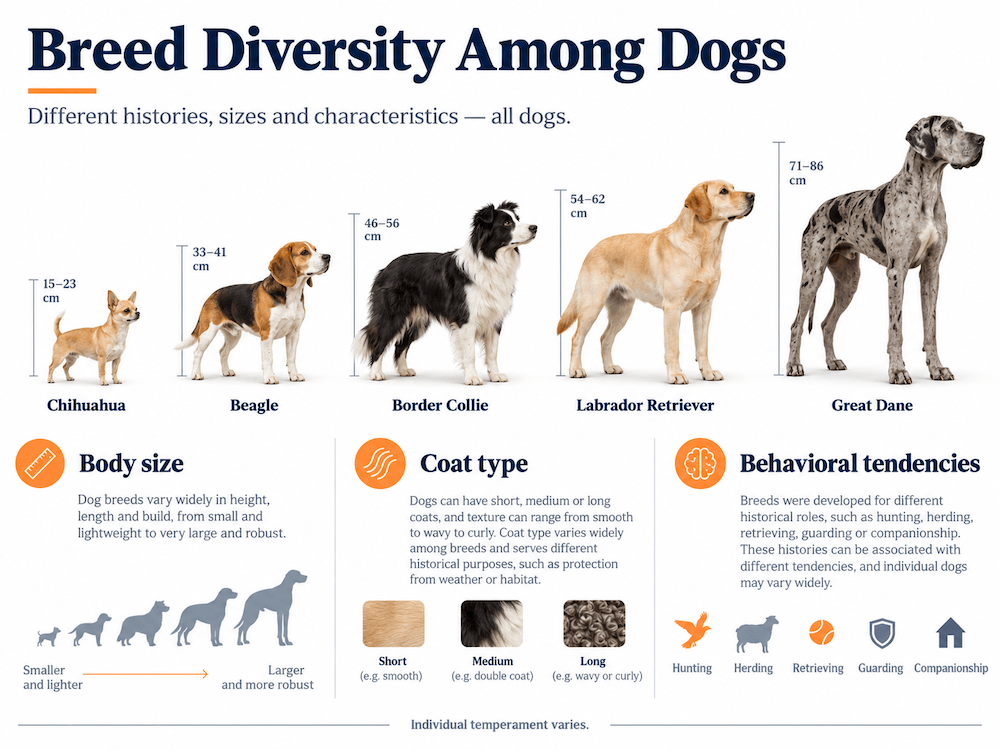
Generations of selective breeding have produced substantial diversity in canine body size, coat characteristics, and inherited behavioral tendencies. This variety gives prospective owners options ranging from smaller companion dogs to larger, physically capable working types. However, breed tendencies are not guarantees of personality, and a dog’s health, individual temperament, and care requirements matter more than appearance alone.
13. Dogs Can Help Teach Responsibility and Empathy
Living with a dog can give children and adults regular opportunities to practice consistent caregiving and empathy. Feeding, walking, grooming, and noticing a dog’s needs can help reinforce responsibility and awareness of another living being. This does not mean a dog should be treated as a teaching tool, but many families value the way dog care encourages daily involvement and thoughtful routines.

14. Many Owners Prefer Outdoor Toileting Over Indoor Litter Box Care
One practical reason some people prefer dogs is that most dogs eliminate outdoors, which can feel cleaner or more convenient for certain households. While dogs still require prompt waste pickup and regular walks, some owners prefer this system over managing a litter box indoors. This preference is highly personal, but it can be an important factor when comparing daily pet care routines.

15. Dogs Are Often Easy to Include in Public, Pet-Friendly Activities
In many communities, dogs can join their owners in a wide range of pet-friendly public settings, such as parks, patios, walking trails, and organized dog events. This can make dog ownership especially appealing to people who want their pet included in parts of daily life outside the home. Participation still depends on the dog’s behavior, health, training, and local rules, but this level of inclusion is a meaningful advantage for many owners.

Why Dogs and Cats Have Different Relationships With Humans
Dogs and cats developed different relationships with humans through distinct domestication histories. These differences influence their typical social behaviors, although genetics, socialization, and individual experiences also shape each animal’s personality.
| Characteristic | Dogs | Cats |
|---|---|---|
| Ancestry | Descended from ancient wolf populations. | Descended primarily from Near Eastern wildcats. |
| Historical relationship | Long history of cooperating with humans in hunting and guarding. | Associated with settlements where stored food attracted rodents. |
| Social tendencies | Often responsive to human gestures and cooperative interactions. | Can form strong bonds, with varied preferences for interaction. |
| Individual differences | Influenced by genetics, early socialization, learning, and experience. | Also influenced by genetics, early socialization, learning, and experience. |
Dogs vs. Cats: Intelligence, Loyalty, and Personality
Dogs and cats show intelligence, attachment, and personality in different ways. Dogs often stand out for cooperation and responsiveness, while cats show their strengths through selective social behavior, learning, and independence.
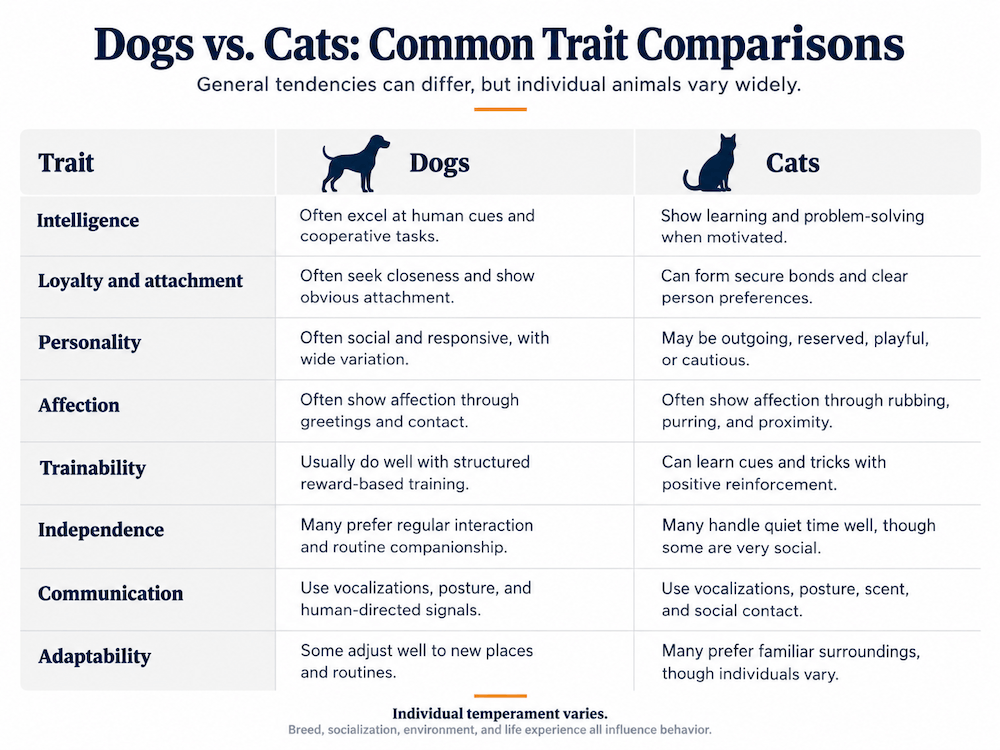
Dogs vs. Cats: Key Differences in Everyday Pet Ownership
Dogs and cats have different care requirements that can affect everyday household life. Understanding these practical differences is more useful than assuming one species is easier or more rewarding for everyone.
| Consideration | Dogs | Cats |
|---|---|---|
| Bathroom needs | Most require outdoor toileting opportunities or another suitable arrangement. | Most readily use indoor litter boxes that require regular cleaning. |
| Exercise and enrichment | Typically need walks, play, training, and appropriate physical activity. | Need daily play, climbing opportunities, and mental stimulation. |
| Training | Benefit from consistent training for household manners and safe outings. | Can learn cues and benefit from positive reinforcement and enrichment. |
| Time alone | Many need planned companionship and gradual alone-time training. | Some tolerate quiet periods well but still need daily interaction. |
| Travel | Some tolerate trips after preparation; others find travel stressful. | Many prefer familiar environments and consistent home surroundings. |
| Noise | Barking may affect neighbors, depending on the individual dog. | Vocalizations and nighttime activity can also disturb households. |
| Grooming | Coat care varies; some require frequent professional grooming. | Usually self-groom but may still need regular brushing. |
| Housing | Suitability depends on energy level, size, and exercise access. | Indoor homes need suitable scratching, climbing, and resting spaces. |
| Ongoing expenses | Food, healthcare, equipment, grooming, and pet care affect costs. | Food, healthcare, litter, enrichment, and pet care affect costs. |
Potential Challenges of Owning a Dog
Although dogs offer rewarding companionship, ownership comes with responsibilities that require time, money, patience, and long-term commitment. Understanding these challenges helps prospective owners prepare for daily care and determine whether a dog fits their lifestyle.
| Challenge | What Owners Should Consider |
|---|---|
| Time commitment | Daily feeding, walks, training, and companionship require consistent attention. |
| Exercise requirements | Insufficient activity and enrichment can contribute to boredom and unwanted behaviors. |
| Training and behavior | House training, leash manners, and behavioral challenges require patience and consistency. |
| Separation and scheduling | Some dogs struggle with being alone and need appropriate care arrangements. |
| Financial expenses | Food, veterinary care, grooming, supplies, and unexpected emergencies can become costly. |
| Noise and disturbances | Barking and other behaviors may affect neighbors or shared living spaces. |
| Grooming and cleaning | Shedding, muddy paws, and coat maintenance can increase household upkeep. |
| Travel and housing restrictions | Pet policies, transportation arrangements, and boarding needs can limit flexibility. |
| Long-term responsibility | Owners must provide appropriate care throughout the dog’s life, including senior years. |
When Might Cats Be Better Pets Than Dogs?
Cats can be excellent companions for people who prefer pets that do not require frequent outdoor walks. Many adapt well to enriched indoor environments where they can explore, rest, scratch, and play. Their indoor toileting habits may also be more convenient for households that cannot accommodate regular outdoor bathroom breaks.
Cats may also suit people who prefer less physically demanding pet interactions. However, this does not mean cats are universally quiet, independent, or low-maintenance. Some are highly energetic, vocal, and demanding of social contact, so individual temperament and care requirements remain important considerations.
How to Decide Whether a Dog or Cat Is Right for You
Choosing between a dog and a cat depends on your lifestyle, household environment, and ability to meet each animal’s needs. The following comparison can help you determine which pet may be a better fit.
| Lifestyle Factor | A Dog May Suit You If… | A Cat May Suit You If… |
|---|---|---|
| Daily schedule | You can accommodate regular walks, outdoor toileting, and training. | You prefer indoor toileting arrangements and flexible activity schedules. |
| Activity level | You enjoy walks, outdoor recreation, and active play. | You prefer indoor play and enrichment activities. |
| Living space | Your home and surroundings accommodate the dog’s exercise needs. | You can provide safe indoor climbing, scratching, and resting areas. |
| Companionship preferences | You enjoy frequent interaction and shared activities. | You prefer companionship with potentially more flexible interaction patterns. |
| Training interests | You enjoy practicing commands and structured activities. | You prefer shorter training sessions and independent enrichment. |
| Travel arrangements | You can arrange appropriate care or dog-friendly travel. | You can arrange reliable home care during absences. |
| Household compatibility | An individual dog’s temperament fits your family and existing pets. | An individual cat’s temperament fits your household and existing pets. |
| Long-term responsibility | You can meet ongoing exercise, healthcare, and behavioral needs. | You can maintain enrichment, litter hygiene, and healthcare throughout life. |
Can Dogs and Cats Live Happily Together?
Choosing between dogs and cats does not always mean choosing only one. Successful dog-cat relationships depend on compatibility, controlled introductions, and access to safe spaces, rather than either animal being naturally superior or dominant. Dogs with strong chasing tendencies may need additional management, while cats must be able to retreat without being pursued.
Introductions should progress at a pace that allows both animals to remain comfortable. Calm behavior and voluntary interaction are more meaningful indicators of progress than simply allowing the animals to occupy the same room. Some pairs become affectionate companions, while others coexist peacefully with limited direct contact.

What Research Says About Why People Prefer Dogs Over Cats
Scientific evidence helps explain some differences between dogs and cats, but it does not establish which animal is universally better. A 2025 review by Boada and Wirobski in Neuroscience & Biobehavioral Reviews examined human-directed sociability in domestic dogs, describing how domestication, development, social motivation, and learning contribute to canine interactions with people. A 2023 comparative study by Salamon and colleagues in Scientific Reports found that dogs performed better than cats in the tested human-pointing tasks, although differences in test participation, motivation, and unfamiliar environments complicate broader interpretations.[1]
Importantly, evidence does not support the popular assumption that cats are incapable of strong emotional bonds. Vitale and colleagues, writing in Current Biology in 2019, identified attachment patterns between domestic cats and their human caregivers, challenging the belief that meaningful attachments are uniquely canine. These findings highlight why a dog’s more conspicuous social behavior should not automatically be interpreted as greater affection or emotional capacity.[2]
Potential benefits for owners also require careful interpretation. A 2023 meta-analysis by Martins and colleagues examined pet ownership, physical activity, and mental health, finding evidence of greater physical activity among pet owners but less consistent mental-health outcomes. An association does not prove that acquiring a dog causes better health, and individual lifestyle factors may influence the results. Overall, the strongest defensible conclusion is that dogs offer particular opportunities for cooperative interaction and shared activities, not that they are superior pets for everyone.[3]
Frequently Asked Questions
The Bottom Line
Dogs appeal to many people because of their strong social bonds, responsiveness to human communication, and enthusiasm for shared activities. Their trainability, playful personalities, and ability to participate in everyday routines make them rewarding companions for many households. However, cats also offer affection, intelligence, and unique qualities that suit different lifestyles. Neither species is universally better, and individual temperament matters more than general assumptions about dogs or cats. Owning a dog also involves significant responsibilities, including exercise, training, financial costs, and consistent care. Understanding these differences helps prospective owners make informed decisions based on their expectations and circumstances. Ultimately, the best pet is one whose personality and needs align with the companionship and care its owner can provide.