
How to Put a Dog to Sleep: 6 Steps (Painlessly & Humanely)


Canine Bible is reader-supported. We receive affiliate commissions via some of our links. Learn more.
Putting a dog to sleep should be done through humane veterinary euthanasia, where a veterinarian uses medication to allow the dog to pass peacefully and without unnecessary suffering. The process is usually quick and gentle, but deciding when it is the right time can be one of the hardest choices a dog owner faces. Understanding what happens before, during, and after euthanasia can make the experience less frightening and help you prepare emotionally and practically. Some dogs are euthanized at a veterinary clinic, while others may be able to receive at-home euthanasia in familiar surroundings. Owners may also wonder whether sedation is used, whether their dog will feel pain, how long the process takes, and whether they can stay with their dog. Cost, quality-of-life assessments, aftercare options, and signs that a dog may be suffering can also influence the decision. This guide explains how veterinary euthanasia works, what to expect at each stage, and how to make the process as peaceful and compassionate as possible.
Before Putting Your Dog to Sleep: Assess Their Quality of Life
Quality of life reflects your dog’s overall comfort, function, and ability to enjoy daily life. A dog may still eat, walk, or have an occasional good day while struggling in other important areas, so it is more useful to evaluate several aspects of wellbeing together. Looking at the full pattern can make gradual changes easier to recognize and gives you specific observations to discuss with your veterinarian.
Look at the Whole Picture
Track Changes Over Time
Keep a simple daily record of appetite, drinking, pain, mobility, sleep, bathroom habits, breathing, and interest in normal activities. You can also mark each day as generally good, mixed, or difficult.
Patterns often become clearer when written down. A gradual decline, increasingly frequent bad days, or loss of several previously enjoyable activities may be harder to recognize when relying on memory alone, especially when your dog has occasional better days between difficult ones.


Use a Quality-of-Life Assessment
A structured quality-of-life assessment can help you evaluate your dog consistently instead of basing the decision on one symptom or one particularly difficult day. These tools commonly score areas such as pain, hunger, hydration, hygiene, happiness, mobility, and the balance of good versus bad days.
The score itself should not make the decision for you. Use it as a way to identify trends, clarify which parts of daily life are becoming difficult, and guide a conversation with your veterinarian about whether comfort can still be maintained or whether euthanasia may now be the kinder option.
When Is It Time to Put a Dog to Sleep?
There is rarely one symptom or a specific age that determines when euthanasia is appropriate. The decision usually becomes more pressing when your dog’s suffering can no longer be adequately controlled and there is no realistic way to restore an acceptable level of comfort or function.
| Pattern | Why It Matters |
|---|---|
| Uncontrolled pain | Comfort cannot be maintained despite treatment. |
| Breathing distress | Resting comfortably becomes difficult. |
| Loss of mobility | Standing, walking, or toileting causes significant difficulty. |
| Poor eating or drinking | Basic nutritional and hydration needs are no longer met comfortably. |
| Loss of interest | Favorite people and activities no longer bring enjoyment. |
| Frequent distress | Anxiety, confusion, or agitation is becoming persistent. |
| Progressive decline | Function continues worsening with little chance of recovery. |
| More bad days | Difficult days increasingly outnumber comfortable ones. |
The goal is not to identify the exact last possible day your dog could remain alive. The more useful question is whether continued life can still be kept reasonably comfortable and meaningful for your dog. Your veterinarian can help you weigh prognosis, treatment options, suffering, and the risk of waiting for a crisis.


How to Put a Dog to Sleep: Step-by-Step Guide
If you and your veterinarian have determined that euthanasia is the kindest option, it can help to know what the process usually looks like from planning through aftercare. While exact details vary by clinic and doctor, these are the steps most owners can expect.
Step 1: Talk With Your Veterinarian and Confirm the Plan
Start by having a clear conversation with your veterinarian about your dog’s quality of life, prognosis, and whether euthanasia is the most humane option. This is also the time to ask about timing, whether your dog may benefit from sedation first, and whether the procedure will happen at home or in a clinic.

Step 2: Decide Where the Euthanasia Will Take Place
Some families prefer a veterinary clinic, while others choose at-home euthanasia so their dog can remain in a familiar setting. Think about your dog’s comfort, your budget, travel stress, and whether you want privacy at home or the support of a clinic team.

Step 3: Make the Practical and Emotional Preparations
Decide who will be present, whether children should attend, and what comfort items you want to bring, such as a blanket, favorite bed, or treats if allowed. If possible, ask about payment, paperwork, transportation, and aftercare arrangements ahead of time so you do not have to make as many decisions during an emotional moment.

Step 4: Arrive for the Appointment and Help Your Dog Stay Calm
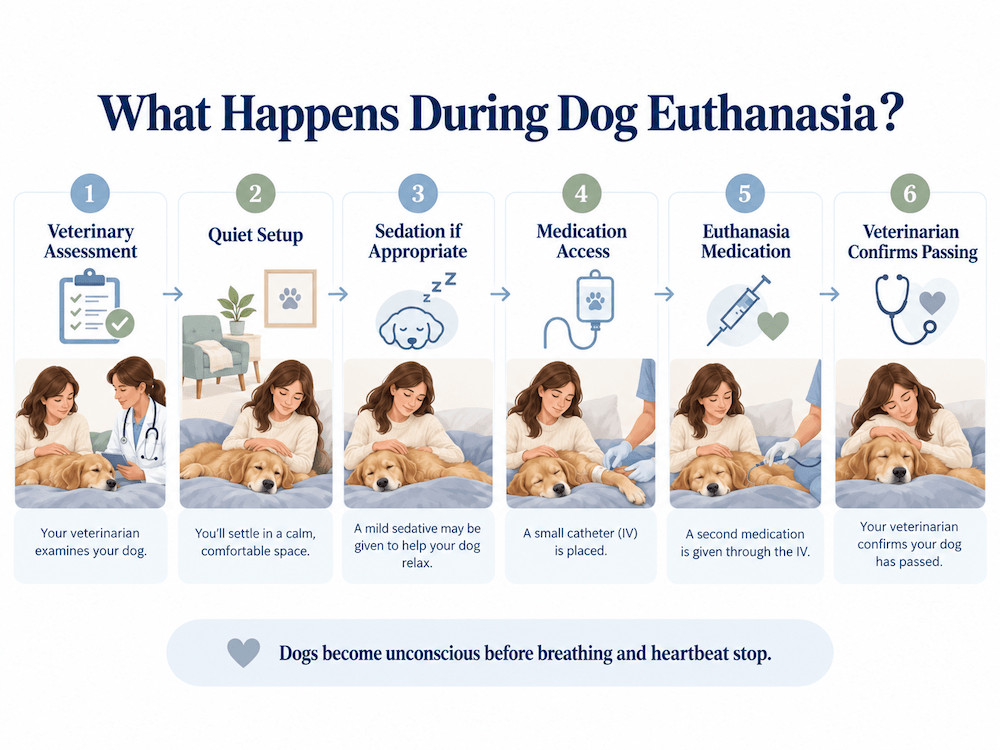
When the appointment begins, the veterinary team will usually explain the process, answer final questions, and help your dog settle as comfortably as possible. Many clinics offer a quiet room, blankets, and extra time so owners do not feel rushed.

Step 5: Understand What Happens During the Euthanasia Procedure
In many cases, a sedative is given first so the dog becomes relaxed and sleepy before the final medication is administered. The euthanasia medication then causes a peaceful loss of consciousness followed by death, usually within minutes, although small muscle movements, deep breaths, or loss of bladder or bowel control may still occur afterward.
Step 6: Say Goodbye and Handle Aftercare
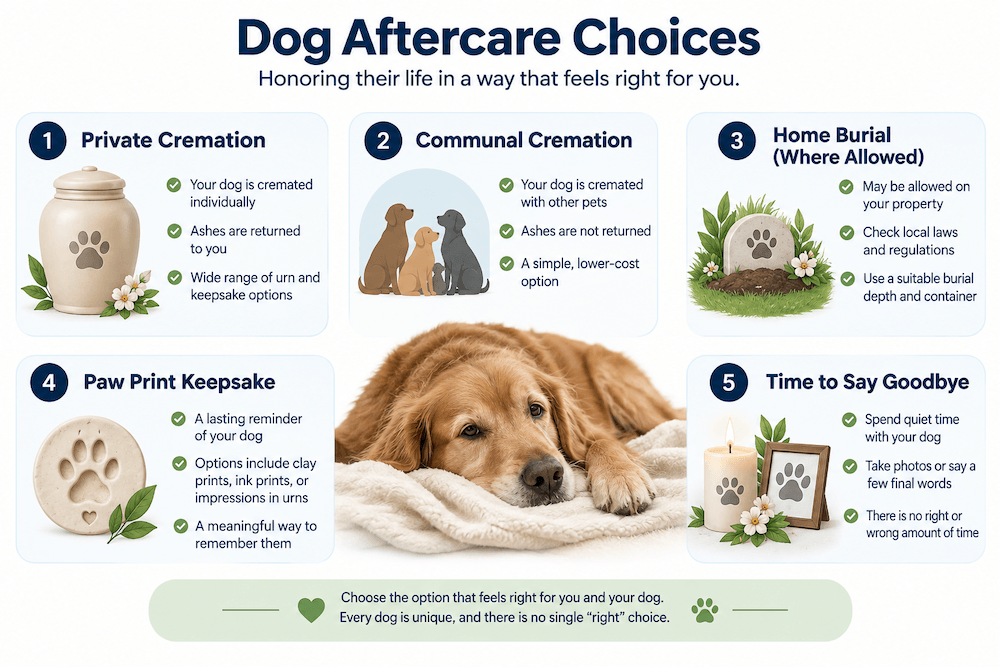
After your dog has passed, most veterinarians will give you time alone to say goodbye if you want it. Before the appointment or shortly afterward, you will usually choose aftercare such as private cremation, communal cremation, home burial where permitted, or memorial keepsakes like a paw print or fur clipping.
How Much Does It Cost to Put a Dog to Sleep?
The cost of dog euthanasia can vary considerably depending on where the procedure takes place, your location, whether sedation is included, and what aftercare you choose. It is helpful to ask for an itemized estimate beforehand so you know which services are included in the quoted price.
Veterinary Clinic, At-Home & Emergency Euthanasia Costs
| Service | Typical U.S. Cost | What Affects the Price |
|---|---|---|
| Veterinary clinic | $110–$253 | Exam, sedation, dog size, and clinic. |
| At-home euthanasia | $325–$747 | Travel, location, appointment time, and dog size. |
| Emergency euthanasia | $150–$400+ | Emergency exam and hospital fees may be extra. |
| After-hours surcharge | $100–$200 | Evenings, weekends, holidays, or last-minute visits. |
Sedation and Additional Veterinary Fees
Sedation is frequently bundled into euthanasia pricing, particularly with at-home providers, so it should not automatically be presented as an extra charge.
| Possible Fee | Typical Cost |
|---|---|
| Pre-euthanasia sedation | Often included in the euthanasia fee. |
| Quality-of-life consultation | About $150 |
| Emergency exam | About $135–$160 |
| Mobile travel fee | $40–$150+ |
| After-hours fee | $100–$200 |
| IV catheter / special handling | May be included or charged separately. |
Does Pet Insurance Cover Dog Euthanasia?
Pet insurance may cover euthanasia when it is medically necessary because of a covered illness or injury, but coverage depends on the insurer and policy. Some plans reimburse the euthanasia procedure itself, while cremation, burial, urns, and memorial services may be excluded or covered only through optional end-of-life benefits.
Check your policy or contact the insurer before the appointment when possible, and ask your veterinarian for an itemized invoice to support any claim.
Cremation and Aftercare Costs
| Aftercare Option | Typical U.S. Cost | Ashes Returned? |
|---|---|---|
| Communal cremation | $45–$200 | No |
| Private cremation | $206–$473 | Yes |
| Pet cemetery burial | $659–$1,513 | Not applicable |
| Home burial | $0+ materials | Not applicable |
| Body transportation | $50–$150+ | Depends on aftercare |
Memorial and Keepsake Costs
These are optional extras and can add anywhere from a few dollars to several hundred dollars to the final bill.
| Memorial Item | Typical Cost |
|---|---|
| Fur clipping | $10–$27 |
| Paw print | $11–$100 |
| Nose print | $23–$85+ |
| Basic or wooden urn | $55–$175+ |
| Photo or premium urn | $175–$290+ |
| Memorial jewelry | $60–$420+ |
| Engraving | $10–$100+ |
What Affects the Total Cost?
The total cost of putting a dog to sleep can vary widely depending on where the procedure takes place, when it is needed, your dog’s size, and the aftercare you choose. Understanding these factors ahead of time can help you compare estimates and avoid unexpected charges.
What Might You See During or After Euthanasia?
Some normal physical changes after unconsciousness or death can be surprising if owners are not expecting them. They do not necessarily indicate that the dog is conscious or suffering.
If you are worried about anything you may see, ask the veterinarian beforehand to describe the expected physical changes. Knowing about them before the appointment can prevent normal reflexes from being mistaken for discomfort.
| What You May Notice | What It Usually Means |
|---|---|
| Eyes remain open | A normal physical response after death. |
| Deep final breaths | Involuntary reflex breathing can occur after unconsciousness. |
| Muscle twitching | Reflex activity may continue briefly after death. |
| Urination or stool | Muscles relax after death and may release waste. |
| Body becomes limp | Muscle tone disappears as the body relaxes. |
| No heartbeat | The veterinarian confirms death by examination. |
What Happens After a Dog Is Put to Sleep?
Once the veterinarian has confirmed death, you can usually spend some private time with your dog if you wish. After that, the remains are handled according to the arrangements you selected.
If a particular aftercare option matters to you, discuss it before euthanasia because availability varies among veterinary practices and communities.
What Not to Do When Putting a Dog to Sleep
There are several things owners should avoid because they can increase suffering, delay appropriate care, or make the euthanasia process less peaceful. Humane euthanasia should always be planned with a veterinarian, using appropriate medications and professional monitoring rather than improvised methods or medication changes at home.
Frequently Asked Questions
The Bottom Line
Putting a dog to sleep should always involve humane veterinary euthanasia performed by a qualified professional. The decision is usually based on your dog’s overall quality of life, comfort, prognosis, and whether suffering can still be controlled. Tracking pain, mobility, appetite, breathing, hygiene, enjoyment, and good versus bad days can make gradual decline easier to recognize. Your veterinarian can help you decide whether continued treatment, palliative care, or euthanasia is the most appropriate next step. Knowing what happens during the appointment, preparing beforehand, and choosing aftercare in advance can make the process more manageable. Costs vary depending on the setting, timing, services included, and aftercare selected. Ultimately, the goal is to protect your dog from unnecessary suffering while making the experience as peaceful and compassionate as possible.