Dog Prednisone Dosage Calculator: How Much to Give & Charts

Canine Bible is reader-supported. We receive affiliate commissions via some of our links. Learn more.
Prednisone is a corticosteroid veterinarians use for conditions ranging from allergies and inflammation to immune-mediated diseases. The correct amount depends on much more than your dog’s weight, which is why prednisone should only be given under veterinary direction. Our Dog Prednisone Dosage Calculator helps convert a veterinarian-prescribed dose into milligrams and, when medication strength is entered, a tablet or liquid equivalent. It does not choose a prednisone dose, diagnose your dog, or replace veterinary care.
Always check the full ingredient list and contact your veterinarian or a pet poison control service if your dog may have ingested too much prednisone. If you can't reach your vet, you can chat live with a registered online veterinary professional via our online vet chat or video chat support (24 hours a day, 7 days a week). Or use Chewy's online vet services (6 a.m. - midnight ET).
How Much Prednisone Can I Give My Dog?
Give your dog only the prednisone amount prescribed by the veterinarian treating them. There is no single prednisone dosage that is appropriate for every dog based on body weight alone.
Veterinarians may use prednisone for very different purposes, including controlling inflammation, reducing allergic responses, suppressing an overactive immune system, or as part of certain cancer treatment plans. The treatment goal can substantially change the dose, schedule, duration, and monitoring required.
Your dog's weight is still important because veterinary medication calculations are often expressed in milligrams per kilogram of body weight. But the mg/kg number must come from your veterinarian, not from a general online calculator.
- For example, if your veterinarian gives you a prescription expressed in mg/kg, the basic calculation is:
- Prednisone dose in mg = body weight in kg × veterinarian-prescribed mg/kg
If your veterinarian has already prescribed a total number of milligrams per administration, there is no need to calculate a new weight-based dose. Use the prescribed total and the medication label to determine the tablet or liquid equivalent.


Prednisone Dosage Chart for Dogs
Because prednisone dosing varies by diagnosis and treatment goal, the safest weight chart is a prescription-conversion chart, not a universal dosing chart.
Prednisone Dose Conversion Chart by Dog Weight
Use the kilogram value below with the mg/kg amount your veterinarian prescribed.
| Dog Weight | Weight in kg | Prescription Calculation |
|---|---|---|
| 5 lb | 2.27 kg | 2.27 × vet-prescribed mg/kg |
| 10 lb | 4.54 kg | 4.54 × vet-prescribed mg/kg |
| 20 lb | 9.07 kg | 9.07 × vet-prescribed mg/kg |
| 30 lb | 13.61 kg | 13.61 × vet-prescribed mg/kg |
| 40 lb | 18.14 kg | 18.14 × vet-prescribed mg/kg |
| 50 lb | 22.68 kg | 22.68 × vet-prescribed mg/kg |
| 70 lb | 31.75 kg | 31.75 × vet-prescribed mg/kg |
| 100 lb | 45.36 kg | 45.36 × vet-prescribed mg/kg |
Do not choose an mg/kg number from another dog's prescription or an online chart. The appropriate regimen depends on why prednisone is being used and your dog's individual health.
Why Prednisone Doses Differ by Treatment Purpose
Prednisone can produce different effects depending on the treatment regimen. This is one reason a dose that is appropriate for one disease may be inappropriate for another.
| Treatment Use | General Purpose | Why the Regimen Differs |
|---|---|---|
| Inflammation | Reduce inflammatory activity. | Severity and treatment length vary. |
| Allergic disease | Control inflammation and itching. | The cause and severity affect treatment. |
| Immune-mediated disease | Suppress abnormal immune activity. | Stronger immune suppression may be required. |
| Cancer care | Used in selected oncology protocols. | The cancer type and other drugs matter. |
| Hormone replacement | Replace deficient glucocorticoid activity. | Disease-specific management is required. |
Prednisone Side Effects Chart
Some effects are common with corticosteroids, while others deserve prompt veterinary attention. Higher doses and longer treatment can increase the likelihood and range of adverse effects.


| Level | Possible Signs | What to Do |
|---|---|---|
| Common | More thirst, urination or hunger. | Monitor and mention persistent changes to your vet. |
| Other effects | Panting or mild behavior changes. | Contact your vet if troublesome or worsening. |
| Needs advice | Vomiting, diarrhea or marked weakness. | Contact your veterinarian promptly. |
| Urgent | Black stool, bloody stool or bloody vomit. | Seek prompt veterinary care. |
| Long-term concern | Weight gain, muscle loss or pot-bellied appearance. | Arrange a veterinary recheck. |
Prednisone Guidelines for Dogs
Prednisone is a glucocorticoid corticosteroid. After administration, prednisone is converted in the liver to prednisolone, which produces the medication's active effects. Depending on the treatment plan, corticosteroids can reduce inflammation or suppress immune activity. Long-term or higher-dose exposure can also affect metabolism, blood sugar control, infection susceptibility, muscle tissue, and adrenal function.
Follow the prescription label carefully. Liquid formulations should be measured accurately, and prednisone is commonly given with food when instructed by the prescribing veterinarian. Do not change the frequency, increase or decrease the dose, or stop an ongoing course simply because your dog appears better. Some dogs require a veterinarian-directed taper rather than abrupt discontinuation.
Prednisone vs. Prednisolone for Dogs
Prednisone and prednisolone are closely related, but they are not identical products. Prednisone must be converted in the liver into prednisolone before it becomes active. Most dogs can perform this conversion, but liver dysfunction can influence which medication a veterinarian chooses. Never substitute prednisone for prednisolone, or vice versa, without checking the prescription.
Why Treatment Duration Matters
A brief course of prednisone and several weeks or months of treatment do not carry the same considerations. With prolonged glucocorticoid exposure, the body's normal adrenal hormone production can become suppressed. Stopping treatment abruptly after adrenal suppression can cause serious illness, including weakness, lethargy, vomiting, and diarrhea. Any tapering schedule should therefore come directly from your veterinarian rather than an online formula.
Factors That Can Affect Your Dog's Prednisone Results
Prednisone treatment is individualized. These are some of the factors veterinarians consider when deciding whether a prescription, monitoring plan, or medication adjustment is appropriate.
| Factor | Why It Matters | What Owners Should Check |
|---|---|---|
| Weight | Body weight is used for mg/kg calculations. | Use a recent, accurate weight. |
| Diagnosis | Different diseases need different treatment plans. | Confirm why prednisone was prescribed. |
| Treatment length | Longer courses may require tapering and monitoring. | Follow the prescribed duration. |
| Other medications | Some drugs can increase adverse-effect risk. | Review all medicines and supplements. |
| Diabetes | Prednisone can affect glucose control. | Tell your vet about diabetes. |
| Infection | Immune suppression can complicate some infections. | Report known or suspected infection. |
| Liver disease | Prednisone requires liver conversion to prednisolone. | Tell your vet about liver problems. |
| Pregnancy | Additional medication caution may be needed. | Report pregnancy or nursing. |
Prednisone can worsen glucose regulation, suppress immune responses, and interact with several medications, so these factors should not be used to independently adjust the calculator result.
Common Prednisone Dosing Mistakes to Avoid
Medication errors can happen even when the arithmetic seems simple. Check the drug name, units, concentration, and written prescription before every calculation.
| Mistake | Why It Matters | Better Approach |
|---|---|---|
| Mixing up mg and mg/kg | These units describe different quantities. | Copy the prescription units exactly. |
| Wrong weight unit | Pounds and kilograms are not interchangeable. | Convert pounds to kilograms first. |
| Wrong formulation | Tablet and liquid strengths can differ. | Check the exact medication label. |
| Using another dog's dose | Treatment is specific to each dog and condition. | Use only your dog's prescription. |
| Doubling a missed dose | This can increase medication exposure. | Follow the label or contact your vet. |
| Stopping suddenly | Some courses require gradual withdrawal. | Follow the prescribed taper. |
| Ignoring symptoms | Some adverse effects need prompt attention. | Contact your vet if concerning signs appear. |
| Treating estimates as advice | A calculator cannot assess the medical condition. | Use results only with veterinary instructions. |
Medication name and dosing errors are recognized risks in veterinary care, particularly when human medications or different formulations are involved.
Prednisone Safety Guidelines for Dogs
Prednisone can be extremely useful when it is prescribed for the right reason and monitored appropriately. It can also cause significant adverse effects, particularly with higher exposure, longer treatment, underlying disease, or interacting medications.
Common Effects Owners May Notice
Increased thirst, increased urination, and increased appetite are among the most common effects of prednisone. Some dogs may also pant more or show mild behavioral changes. Make sure your dog has access to fresh water unless your veterinarian has specifically instructed otherwise. Do not reduce water access simply because your dog is urinating more frequently.
When to Contact Your Veterinarian
Contact the prescribing veterinarian if your dog develops persistent vomiting or diarrhea, marked weakness, significant behavior changes, signs of infection, or dramatic changes in weight, appetite, thirst, or urination. You should also call if the medication label is unclear, the calculator result does not match the prescription instructions, or you think the wrong amount was given.
Prednisone Emergency Warning Signs
Seek prompt veterinary care for black or tarry stool, bloody stool, bloody vomit, collapse, severe weakness, or rapidly worsening illness. Gastrointestinal ulceration and bleeding are important potential complications of corticosteroid therapy.
Prednisone and NSAIDs
Do not independently combine prednisone with an NSAID such as carprofen, meloxicam, deracoxib, firocoxib, aspirin, ibuprofen, or naproxen. Corticosteroids and NSAIDs can both affect the gastrointestinal tract, and combining them can increase the risk of ulceration and other complications. A veterinarian should direct any switch between these medications and determine whether a medication-free interval is appropriate.
Prednisone Drug Interactions to Check
Tell your veterinarian about every medication, supplement, and herbal product your dog receives. Several drug classes can interact with prednisone or change how closely your dog needs to be monitored.
| Medication | Why It Matters | Owner Action |
|---|---|---|
| NSAIDs | Combination can increase gastrointestinal risk. | Do not combine without veterinary direction. |
| Aspirin | May increase ulcer and bleeding risk. | Check with your veterinarian before use. |
| Insulin | Prednisone can affect glucose control. | Diabetic dogs need closer monitoring. |
| Other steroids | Effects and adverse effects may overlap. | Confirm before combining treatments. |
| Diuretics | Some combinations may affect electrolytes. | Review the full medication list. |
| Immunosuppressants | Combined immune suppression may be significant. | Use only under veterinary supervision. |
| Vaccines | Immune suppression may affect vaccine planning. | Tell your vet about current steroid use. |
What to Do If Your Dog Gets the Wrong Prednisone Dose
If you realize you gave the wrong prednisone amount, do not give an extra dose to try to correct the mistake. Check the bottle or package and write down:
Then contact your veterinarian, an emergency veterinary clinic, or an animal poison-control service for advice based on the actual exposure. Accidental corticosteroid overdose can cause vomiting, diarrhea, increased thirst, and increased urination. More significant gastrointestinal problems can occur, particularly in dogs with underlying health problems. Do not induce vomiting unless a veterinarian or animal poison-control professional specifically tells you to.
What If I Miss a Prednisone Dose?
If you miss a dose, check the prescription instructions. General veterinary guidance is to give a missed dose when remembered unless it is close to the next scheduled administration; in that situation, the missed dose is typically skipped rather than doubled. Because prednisone schedules vary, contact the prescribing clinic if you are unsure, especially if your dog is on a taper, alternate-day schedule, or treatment for a serious immune-mediated or endocrine condition.
Special Considerations for Certain Dogs
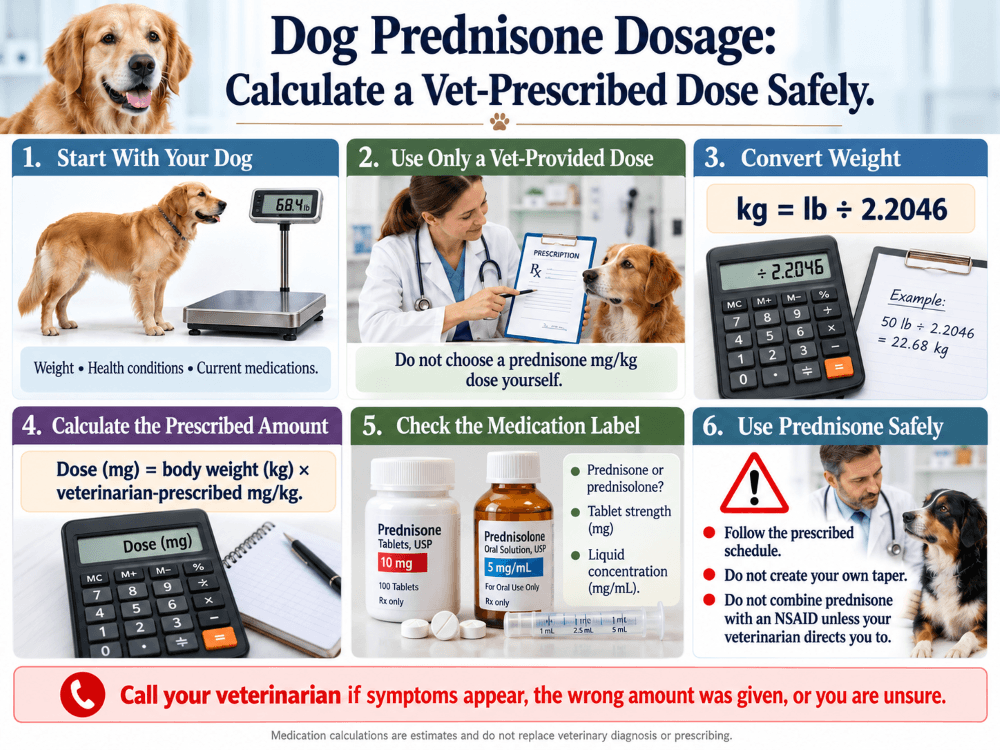
How to Calculate a Vet-Prescribed Prednisone Dose Manually
You can check the calculator's arithmetic by hand when your veterinarian has already provided the dose.
Step 1: Convert Pounds to Kilograms
- If your dog's weight is in pounds:
- Body weight (kg) = body weight (lb) ÷ 2.2046
- For example:
- 22 lb ÷ 2.2046 ≈ 10 kg
Step 2: Calculate the Prescribed Milligrams
- If your veterinarian gave the dose in mg/kg:
- Prednisone dose (mg) = body weight (kg) × veterinarian-prescribed dose (mg/kg)
- For a 10 kg dog:
- Dose = 10 × veterinarian-prescribed mg/kg
The calculator should never supply the missing mg/kg value. That number comes from your dog's veterinary prescription.
Step 3: Convert Milligrams to Tablets
- If the prescription already calls for a specific total number of milligrams:
- Tablets = prescribed mg ÷ mg per tablet
For example, if the veterinarian prescribed 7.5 mg per administration and the dispensed tablets contain 5 mg each: 7.5 ÷ 5 = 1.5 tablets
Only split tablets when the product and your veterinarian or pharmacist indicate that splitting is appropriate.
Step 4: Convert Milligrams to Liquid Volume
- For liquid prednisone:
- mL per administration = prescribed mg ÷ concentration in mg/mL
Always use the concentration printed on your dog's medication label. A product labeled 5 mg/5 mL is not the same as a product containing 5 mg/mL, so read both numbers carefully.
Dog Prednisone Dosage Infographic
Frequently Asked Questions
The Bottom Line
A dog prednisone dosage calculator is most useful for checking the math behind a veterinarian's prescription. It can convert pounds to kilograms, calculate a prescribed mg/kg amount, and translate milligrams into a tablet or liquid equivalent. It should not be used to choose a prednisone dose based only on your dog's weight. The diagnosis, treatment goal, other medications, health conditions, and duration of therapy can all change how prednisone is prescribed and monitored. Follow the prescription exactly, double-check the medication label, and contact your veterinarian if the dose is unclear, the wrong amount was given, your dog develops concerning symptoms, or you are considering changing or stopping treatment.
For other medication-related guidance, you may also find our Dog Benadryl Dosage Calculator and Dog Aspirin Toxicity Calculator helpful.