What to Put on a Dog for Dry Skin? 12 Home Remedy Options

Canine Bible is reader-supported. We receive affiliate commissions via some of our links. Learn more.
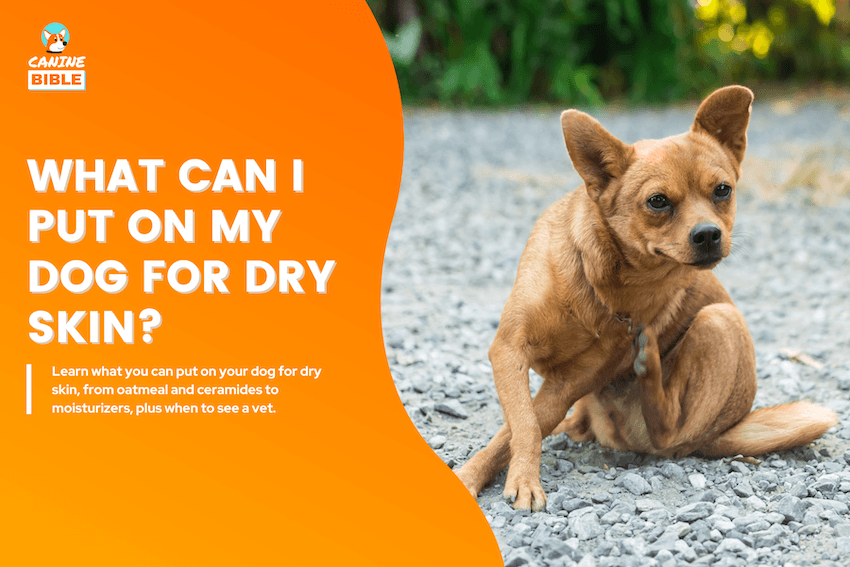
For mild dry skin, you can put a veterinarian-approved moisturizing spray, balm, or dog-safe conditioner on your dog to help soothe dryness and support the skin barrier. Products containing ingredients such as oatmeal, ceramides, or essential fatty acids are commonly used, but anything applied should be specifically formulated for dogs. Human lotions, essential oils, and medicated creams can irritate the skin or be unsafe if your dog licks them. Dry skin can also have many causes, including low humidity, allergies, parasites, frequent bathing, poor nutrition, or an underlying medical condition. What works for simple seasonal dryness may not help itching caused by fleas, infection, or allergies. You also need to know when home care is reasonable and when symptoms such as redness, sores, hair loss, odor, or persistent itching warrant a veterinary exam. In this guide, we’ll cover the safest things you can put on your dog’s dry skin, what to avoid, and how to choose the right approach based on the cause.
What to Know About Dry Skin Treatments for Dogs
| Key Consideration | What Dog Owners Should Know |
|---|---|
| Best topical options | Dog-safe oatmeal, ceramide, moisturizing, and leave-on products are common first choices. |
| Underlying causes | Allergies, parasites, infections, overbathing, and hormonal disease can all cause flaking. |
| Product safety | Human lotions, essential oils, and medicated creams may irritate or harm dogs. |
| Bathing habits | Gentle shampoos, lukewarm water, and proper rinsing help avoid worsening dryness. |
| Home remedies | Coconut oil and homemade mixtures are less predictable than dog-formulated moisturizers. |
| Warning signs | Redness, odor, sores, hair loss, or intense itching suggest more than simple dryness. |
| Veterinary care | Persistent or recurring dry skin should be evaluated to identify the underlying problem. |
Remember to ALWAYS consult with your vet before applying any product, home remedy, or treatment to your dog’s skin for dryness or irritation. If you can’t reach your vet, you can chat live with a registered online veterinary professional via our online vet chat or video chat support (24 hours a day, 7 days a week). Or use Chewy’s online vet services (6 a.m. – midnight ET).
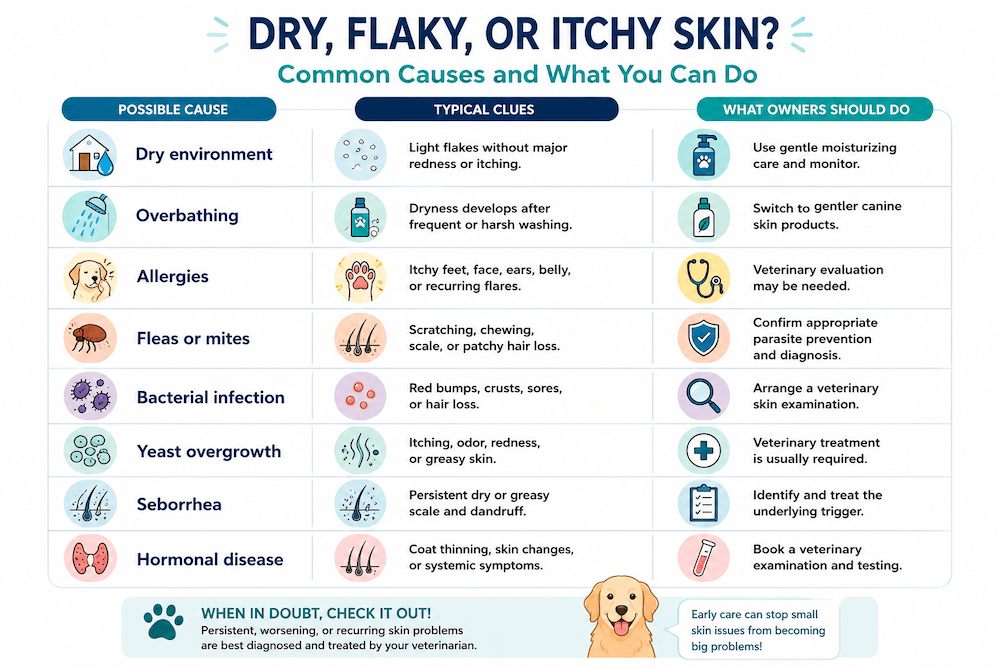
What Causes Dry Skin in Dogs?
Dry skin in dogs can have many causes, from simple environmental dryness or overbathing to allergies, parasites, infections, seborrhea, or hormonal disease. The pattern of itching, redness, flaking, hair loss, odor, or greasy skin can sometimes offer clues about what is going on. Mild dryness may improve with gentler skin care, but persistent, worsening, or recurring skin problems deserve veterinary evaluation to identify and treat the underlying cause.
The Best Things to Put on a Dog With Dry Skin
For mild dry skin, the best options are usually dog-formulated products that moisturize the skin while supporting its natural barrier. Colloidal oatmeal, ceramides, conditioners, leave-on sprays, mousses, and veterinary lipid products can all be useful depending on where the dryness occurs and how severe it is. Products for small dry areas, such as paw pads or elbows, may work better as balms, while generalized dryness is often easier to manage with shampoos, conditioners, or sprays. If the skin is persistently itchy, red, greasy, smelly, or losing hair, moisturizing alone may not be enough and the underlying cause should be evaluated.

Earthbath Relief Spray
Best For: Mild dryness, flaking, scaling, and sensitive or mildly itchy skin.
What to know: Colloidal oatmeal is commonly used in dog shampoos, conditioners, sprays, and leave-on products because it can help soothe irritated skin while adding moisture. It is especially useful when dryness is mild, and there are no signs of infection or open sores. Look for products formulated specifically for dogs rather than human oatmeal bath products. Follow the recommended contact time if the product is designed to remain on the skin before rinsing. Oatmeal can improve comfort, but persistent itching or recurring flakes may indicate an underlying condition that needs veterinary attention.


Dermoscent ATOP 7
Best For: Dry skin associated with a weakened or compromised skin barrier.
What to know: Ceramides are naturally occurring lipids that help form the protective outer barrier of the skin and reduce excessive moisture loss. Dog-formulated ceramide products are available as sprays, mousses, shampoos, conditioners, and leave-on treatments. They can be particularly useful for dogs with recurrent dryness or skin-barrier problems associated with allergic skin disease. Apply the product according to its directions because some formulations are rinsed off while others are designed to remain on the skin. Ceramides are supportive skin care and do not replace treatment for allergies, parasites, or infection.

Earthbath Conditioner
Best For: Generalized dry skin, a dry coat, and moisture loss after bathing.
What to know: A canine moisturizing conditioner can replace some of the moisture removed during shampooing and leave the skin and coat feeling less dry. These products are especially useful when a dog needs regular bathing or has naturally sensitive skin. Ingredients may include humectants, emollients, ceramides, oatmeal, or skin-supporting oils. Follow the label carefully because some conditioners should be thoroughly rinsed while others are formulated as leave-in products. Pairing a gentle shampoo with an appropriate conditioner is often more helpful than repeatedly shampooing dry skin alone.

Douxo S3 Calm Mousse
Best For: Dryness between baths, large areas of skin, or dogs that are difficult to bathe frequently.


What to know: Leave-on mousses and sprays provide a convenient way to moisturize the skin without giving the dog a full bath. Part the coat when necessary, so the product reaches the skin rather than simply coating the fur. Depending on the formulation, these products may contain ceramides, fatty acids, humectants, or other ingredients that support the skin barrier. They are particularly convenient for maintenance between baths or for treating several dry areas at once. Prevent excessive licking until the product has dried or absorbed, and always follow the manufacturer’s application instructions.

Warren London
Best For: Helping mildly dry skin attract and retain moisture.
What to know: Glycerin is a humectant, meaning it helps draw water into the outer layers of the skin and improve hydration. It is commonly included as part of complete moisturizing formulas rather than used by itself. For dogs, choose a product specifically formulated for canine skin that contains glycerin alongside other skin-supporting ingredients. These products may come as shampoos, sprays, conditioners, or leave-on moisturizers. Avoid substituting human glycerin lotions because their fragrances, preservatives, or additional active ingredients may not be appropriate for dogs.

Douxo Calm
Best For: Supporting the skin barrier in dogs with recurrent dryness or sensitive skin.
What to know: Phytosphingosine is a naturally occurring component of skin lipids and is included in some veterinary dermatology products designed to support barrier function. It may be combined with ceramides, fatty acids, moisturizing ingredients, or other skin-supportive compounds. Products are commonly available as shampoos, sprays, mousses, or spot-on formulations. They can be useful as part of a longer-term skin-care routine, particularly when dryness repeatedly returns. Because recurrent skin problems may also involve allergies or infection, persistent symptoms should still be evaluated rather than managed with topical products alone.

Pet MD Topical Spray
Best For: Dryness associated with poor skin-barrier function or recurrent skin sensitivity.
What to know: Topical fatty-acid products are designed to supply lipids that help support the protective surface of the skin. Veterinary formulations may contain essential fatty acids alongside ceramides, cholesterol, or other barrier-supporting ingredients. Depending on the product, they may be applied as a spray, mousse, or concentrated topical treatment. These products generally work best as part of ongoing skin maintenance rather than as an instant treatment for severe itching. They will not eliminate parasites or treat bacterial and yeast infections, so worsening symptoms require a different approach.

Earthbath Hypo-Allergenic
Best For: Dogs with dry or sensitive skin that still need regular cleansing.
What to know: A gentle emollient shampoo cleans the skin while minimizing excessive removal of protective surface oils. Products designed for sensitive dogs typically avoid harsh detergents and may contain moisturizing or skin-soothing ingredients. Use lukewarm water, follow any recommended contact time, and rinse the coat thoroughly to prevent shampoo residue from causing additional irritation. Bathing frequency should depend on the dog’s individual skin needs rather than following an unnecessarily frequent schedule. Strong degreasing or medicated shampoos should generally be reserved for situations where their active ingredients are actually needed.

Natural Dog Company
Best For: Small, localized dry areas such as elbows, paw pads, noses, or other rough patches when the product is labeled for that area.
What to know: Balms create a protective layer over the skin and may contain waxes, oils, butters, or other emollient ingredients intended to soften rough areas. They are better suited to small patches than to widespread dryness beneath a thick coat. Use only a product labeled as appropriate for dogs and for the specific body area you plan to treat. Apply a thin layer rather than heavily coating the skin, and discourage licking while it absorbs. Cracked, bleeding, swollen, or painful areas should be examined before simply covering them with balm.

Vet’s Best
Best For: Mild localized dryness when aloe is included in a properly formulated canine topical product.
What to know: Aloe-derived ingredients are included in some dog shampoos, conditioners, sprays, and soothing skin products. For canine use, it is better to choose a finished pet product rather than applying raw aloe directly from a plant. Raw plant material and homemade aloe preparations can contain components that are undesirable if the dog licks and swallows them. A dog-formulated product also provides clearer instructions regarding where and how often it should be applied. Aloe-based products may soothe mild dryness, but they should not be used as a substitute for treatment of infected, severely inflamed, or damaged skin.

Dermoscent Essential 6 Spot-On
Best For: Recurring dryness or dogs needing concentrated skin-barrier support between baths.
What to know: Veterinary lipid spot-ons are typically applied directly to the skin at several locations rather than rubbed over the entire coat. Depending on the formulation, they may provide ceramides, fatty acids, cholesterol, or other lipids involved in maintaining the skin barrier. They can be particularly convenient for dogs that do not tolerate frequent bathing or need ongoing barrier support. These treatments are generally intended to complement other skin care rather than provide immediate relief from severe itching. Follow the product’s dosing and application schedule carefully, especially because formulations can vary substantially.

Veterinary Formula
Best For: Dryness, scaling, or flaking associated with a diagnosed dermatologic condition.
What to know: Medicated shampoos may contain antimicrobial, antifungal, keratolytic, keratoplastic, or other active ingredients selected for a specific skin problem. The correct shampoo depends on whether the dog has infection, excessive scaling, seborrhea, allergy-associated skin changes, or another condition. Using the wrong medicated shampoo can unnecessarily dry or irritate already sensitive skin. Many products also require several minutes of skin contact before rinsing to work as intended. For significant or recurring skin disease, the shampoo should ideally be chosen as part of a veterinarian-directed treatment plan rather than by appearance alone.
How to Apply a Moisturizer to Your Dog’s Dry Skin
Applying more product does not necessarily produce better results. Moisturizers work best when the product matches the condition and is applied according to its label. If bathing is part of the plan, use lukewarm rather than very hot water. Rinse shampoo thoroughly because leftover cleanser can itself irritate sensitive skin. If the product specifies a contact time, follow that recommendation instead of immediately washing it away.
For a dog with long or dense fur, spraying product over the outer coat may accomplish very little. Gently separating the hair and applying the product closer to the skin usually makes topical therapy more useful.
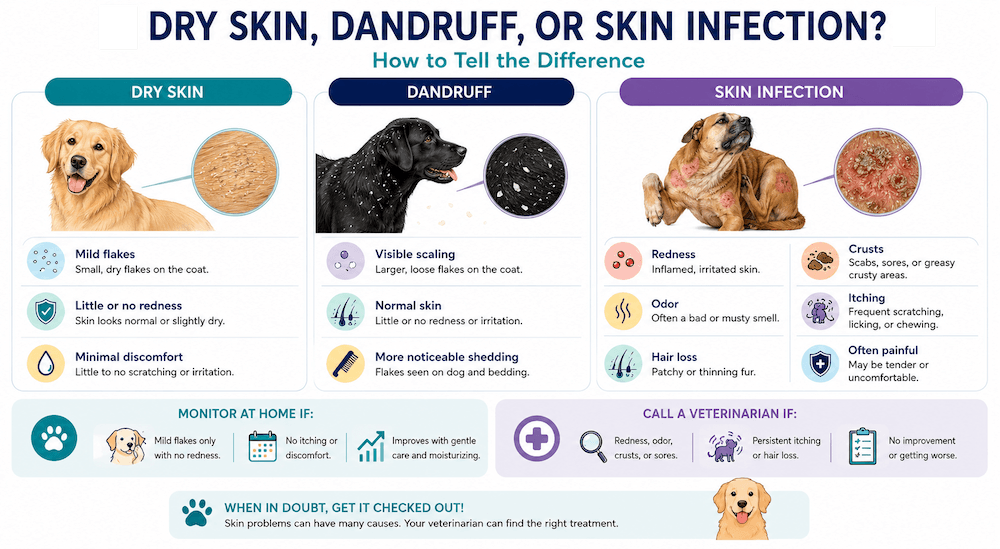
Dry Skin, Dandruff, or a Skin Infection: How Can You Tell?
Dry skin, dandruff, and skin infections can all cause visible flakes, but the surrounding symptoms help tell them apart. Simple dry skin usually causes mild flaking with little redness or discomfort, while dandruff tends to produce more noticeable scaling and shedding. A skin infection is more likely when flakes occur with redness, odor, crusts, hair loss, pain, or persistent itching. Mild cases may improve with gentle moisturizing care, but worsening or recurring symptoms should be checked by a veterinarian.
Can Changing My Dog’s Diet Help Dry Skin?
Diet can affect skin and coat health, but nutritional deficiencies are less common in dogs eating a complete and balanced commercial diet. Repeatedly switching foods is unlikely to be the quickest fix for unexplained dry skin. It is usually more useful to identify the underlying cause first.
Omega-3 fatty acids may help support some dogs with inflammatory skin conditions, but they are given orally and usually take time to work. Fish oil dosing depends on the amount of EPA and DHA, not just the total amount of oil listed on the bottle. Because fish oil also adds calories and may cause digestive upset, ask your veterinarian about an appropriate product and dose.
Good hydration supports overall health, but simply getting a healthy dog to drink more water will not usually correct dry skin caused by allergies or a damaged skin barrier. Dry skin often needs targeted treatment rather than extra water alone. If the problem persists, your veterinarian can help determine whether diet, supplements, allergies, or another condition is contributing.
Home Remedies to Help a Dog With Mild Dry Skin
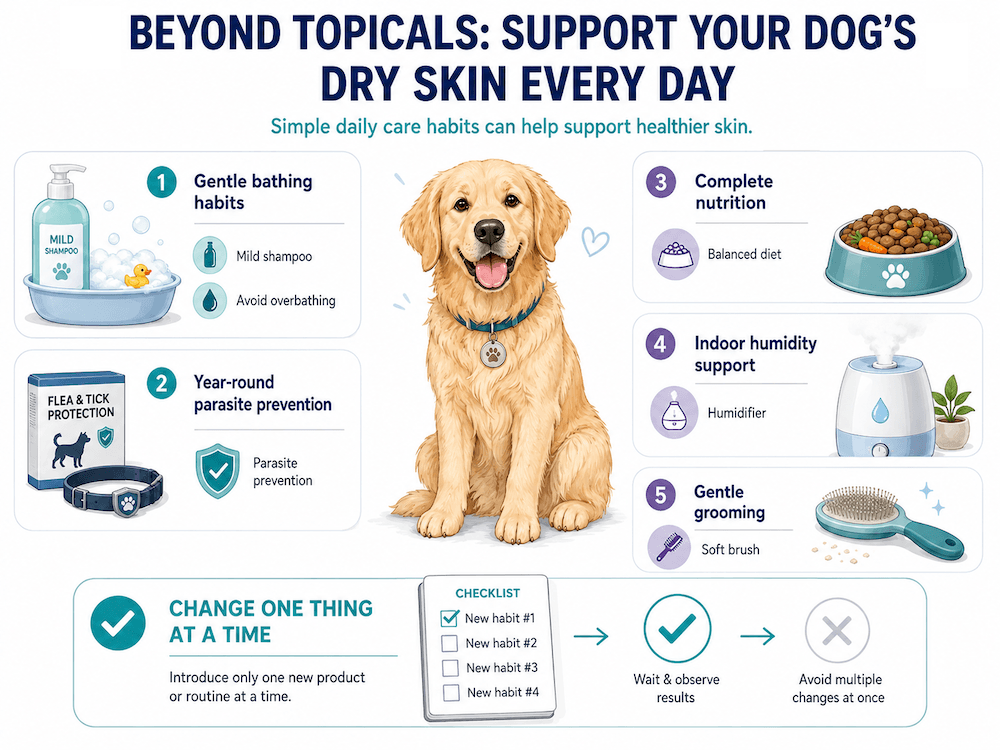
For mild dry skin, everyday care can make a meaningful difference alongside any recommended treatment. Gentle bathing, consistent parasite prevention, balanced nutrition, proper indoor humidity, and regular grooming can all support healthier skin and coat. Introduce only one new product or routine at a time so you can tell what is helping and avoid making several changes at once.
How to Prevent Dry Skin in Dogs
Preventing dry skin starts with protecting your dog’s natural skin barrier and addressing problems before they become chronic. Using appropriate moisturizing products, avoiding irritating topicals, and treating allergies or infections early can all help reduce repeated flare-ups. Persistent or recurring dryness should not be ignored, especially when it comes with itching, odor, hair loss, or greasy scaling. Regularly checking your dog’s skin makes it easier to catch changes before they worsen.
What You Should Not Put on a Dog’s Dry Skin
Dogs can absorb topical ingredients through their skin and may swallow them during grooming. For that reason, a cream that seems harmless on human skin is not automatically harmless on a dog.
When to Call a Veterinarian About Dry Skin in Dogs
Mild flaking can sometimes be monitored briefly at home if your dog is otherwise comfortable and the skin is not red, smelly, painful, or very itchy. Gentle canine moisturizing care may be reasonable for mild symptoms that are clearly improving. If the dryness persists, keeps returning, spreads, or comes with scratching, paw licking, ear problems, crusts, greasy skin, odor, or hair loss, book a veterinary visit.
Arrange an examination promptly if the skin becomes painful, swollen, moist, bleeding, produces pus, or develops rapidly expanding lesions. These changes can indicate infection or more significant inflammation that needs targeted treatment. Seek urgent care for facial swelling, breathing difficulty, collapse, or severe weakness, especially after using a topical product.
A veterinarian may use skin cytology, parasite testing, skin scrapings, fungal testing, bloodwork, or other diagnostics depending on the pattern. These tests help separate simple dryness from allergies, parasites, infection, or internal disease. Getting the underlying cause right is important because moisturizing alone will not correct every skin problem.
What Veterinary Research Says About Dry Skin in Dogs
A study published in Veterinary Dermatology compared 10 dogs with atopic dermatitis with 30 healthy dogs and found that affected dogs had greater transepidermal water loss and lower skin ceramide concentrations. Importantly, these abnormalities were detected even in some skin that did not appear visibly inflamed.[1]
A clinical study in the Journal of Veterinary Science evaluated a ceramide-containing moisturizer in 20 dogs with mild-to-moderate atopic dermatitis. After four weeks, the dogs had increased skin hydration and reductions in transepidermal water loss, itching scores, and skin-lesion scores; microscopic evaluation in a subset also showed partial improvement of the skin barrier. The findings are encouraging but should be interpreted cautiously because the study was small and did not include a placebo control.[2]
A 2020 study in Veterinary Dermatology tested a moisturizer containing glycerol and propylene glycol after experimentally disrupting the skin barrier of six healthy dogs. Moisturized areas recovered more effectively, with lower water loss and improvements in several microscopic measures of skin-barrier repair compared with untreated areas. This supports the biological role of moisturizers in skin-barrier repair, although it does not prove the same product will treat every clinical skin condition.[3]
Evidence for topical lipid products is not uniformly positive. A randomized, double-blinded, placebo-controlled trial in Veterinary Dermatology involving dogs with atopic dermatitis found that a topical emulsion containing ceramides and essential fatty acids produced an early reduction in itching in some dogs, but the improvement was not consistently maintained, and measurements of skin lesions and water loss did not significantly outperform placebo over the full study period.[4]
Frequently Asked Questions
The Bottom Line
Dry skin in dogs is often manageable with gentle, dog-formulated products such as colloidal oatmeal shampoos, ceramide moisturizers, conditioners, sprays, mousses, and skin balms. The right option depends on whether your dog has mild generalized dryness, localized rough patches, or an underlying skin condition. Avoid human lotions, essential oils, harsh shampoos, and improvised home remedies that may irritate the skin or cause problems when licked. Supporting skin health with proper bathing, regular grooming, balanced nutrition, parasite prevention, and appropriate indoor humidity can also help prevent recurring dryness. Pay attention to symptoms beyond flaking, especially persistent itching, redness, odor, crusting, greasy skin, or hair loss. These signs can indicate allergies, parasites, infection, or another condition that moisturizing alone will not correct. When dry skin persists, worsens, or repeatedly returns, a veterinary examination is the safest way to identify the cause and choose effective treatment.
For more help caring for your dog’s skin and coat, explore our guides on how to get rid of dog dandruff, the best dog conditioners, medicated dog shampoos, and home remedies for dog allergies.
Sources
- Increased transepidermal water loss and decreased ceramide content in lesional and non-lesional skin of dogs with atopic dermatitis
- Clinical use of a ceramide-based moisturizer for treating dogs with atopic dermatitis
- A moisturizer formulated with glycerol and propylene glycol accelerates the recovery of skin barrier function after experimental disruption in dogs
- Randomized, double-blinded, placebo-controlled pilot study on the effects of topical blackcurrant emulsion enriched in essential fatty acids, ceramides and 18-beta glycyrrhetinic acid on clinical signs and skin barrier function in dogs with atopic dermatitis