How to House Train a Dog: 7 Step Housebreaking Guide & Tips


Canine Bible is reader-supported. We receive affiliate commissions via some of our links. Learn more.
House training a dog means teaching them where and when to potty through routine, supervision, rewards, and consistent access to the right bathroom spot. Most dogs learn fastest when owners prevent accidents, reward outdoor potty breaks immediately, and avoid punishment after mistakes. The process sounds simple, but timing, age, health, stress, and household setup can all affect progress. A young puppy, newly adopted rescue, adult dog, or senior dog may need a different house training plan. Accidents can also be caused by confusion, too much freedom too soon, medical issues, or changes in routine. Knowing what is normal—and what is a warning sign—helps you train with patience instead of frustration. This guide explains how to build a practical house training routine, fix setbacks, and know when to call your veterinarian.
What to Know Before House Training a Dog
| Key Point | What It Means for Owners |
|---|---|
| Routine matters | Dogs learn faster when potty breaks, meals, sleep, and supervision follow a predictable schedule. |
| Prevention helps | Limiting unsupervised freedom reduces accidents and gives your dog more chances to succeed. |
| Rewards teach location | Immediate praise or treats after outdoor potty breaks helps your dog understand where to go. |
| Accidents are clues | Indoor mistakes often reveal timing gaps, too much freedom, stress, or unclear signals. |
| Age changes expectations | Puppies, adult rescues, and senior dogs may need different schedules and training timelines. |
| Punishment backfires | Scolding after accidents can create fear or hiding instead of helping your dog learn. |
| Health can interfere | Frequent accidents, straining, excessive thirst, or sudden regression may need veterinary attention. |
Why Dogs Have Accidents During House Training
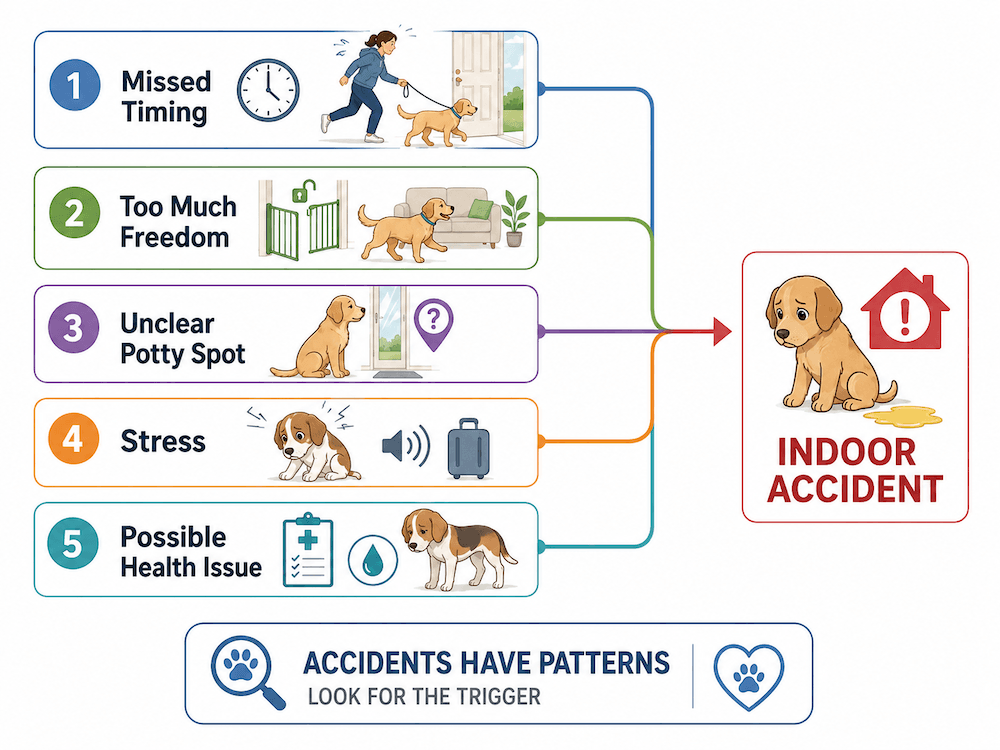
Most accidents happen because the dog had an opportunity to potty in the wrong place before they fully understood the right place. Puppies have smaller bladders, shorter attention spans, and less physical control than adults, so they need more frequent breaks. Newly adopted dogs may also be confused by a new home, new door, new yard, new smells, or a different walking schedule.
Some dogs are not “stubborn”; they are under-supervised, over-free, anxious, distracted outdoors, or taken out too late. Others have learned that indoor pads, rugs, bath mats, or soft surfaces feel like acceptable potty spots. Once a dog repeats a pattern, the training plan must become clearer and more consistent.
A good rule: treat every accident as information. Ask what happened before it, where the dog was, how long it had been since the last break, and whether the dog had eaten, played, napped, or drunk water recently.
What to Rule Out Before Starting House Training
Before assuming your dog simply needs more training, look for signs that house soiling may have a medical, emotional, or physical cause. This is especially important if the dog was previously reliable and suddenly started having accidents. Training cannot solve pain, bladder inflammation, digestive urgency, mobility problems, or distress when left alone.


House Training Supplies That Make the Process Easier
You do not need expensive tools to house train a dog, but the right setup can make success much easier. The best supplies help you supervise, prevent accidents, reward quickly, and clean thoroughly. Choose tools that match your home layout and your dog’s size, age, and comfort level.
| Supply | Why It Helps | Best Use |
|---|---|---|
| Leash | Keeps your dog focused outdoors. | Use for every planned potty trip. |
| Treats | Rewards the correct potty location. | Give immediately after your dog finishes. |
| Crate | Prevents wandering when used humanely. | Use for short rest periods only. |
| Exercise pen | Creates a safe supervised zone. | Use when you cannot watch closely. |
| Baby gates | Blocks rooms with accident risk. | Limit access until training improves. |
| Enzymatic cleaner | Breaks down lingering potty odors. | Clean every accident thoroughly. |
| Potty log | Reveals timing and accident patterns. | Track meals, breaks, and mistakes. |
How to Set a House Training Schedule
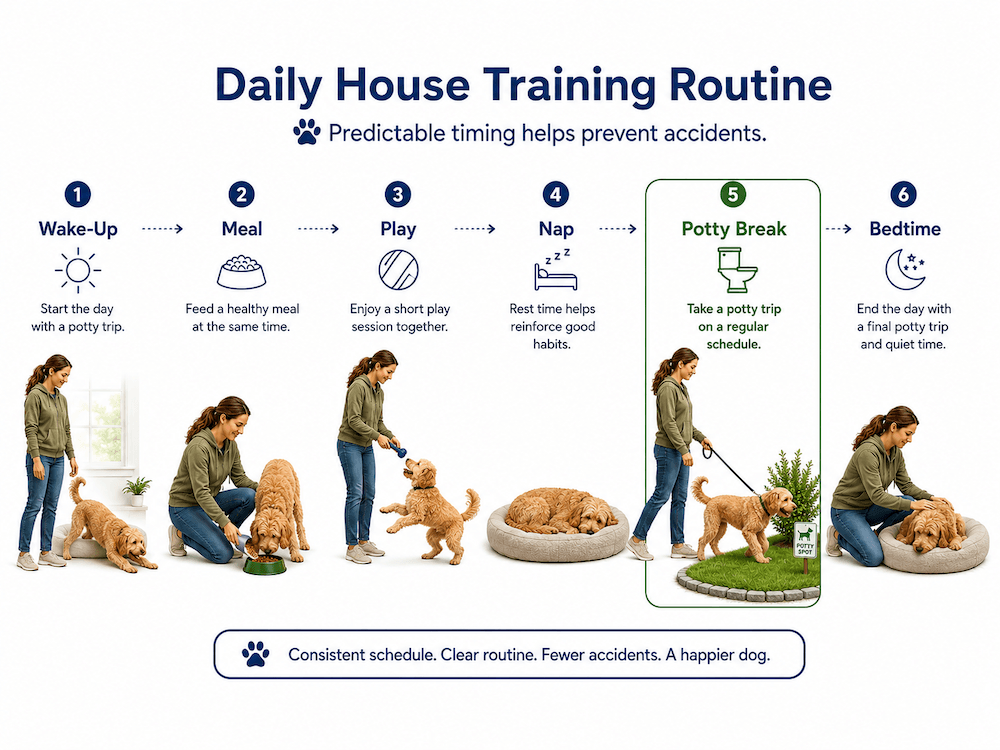
A schedule gives your dog more chances to be right. Most dogs need a potty break after waking, after eating, after drinking, after active play, after training, after naps, before confinement, and before bedtime. Puppies need more frequent breaks than adults because they are still developing bladder and bowel control.
Do not wait for perfect signals at the beginning. Many dogs do not know how to ask yet, and some signals are easy to miss, such as sniffing, circling, wandering away, staring, whining, or suddenly leaving play. A good schedule takes your dog out before those signals become an accident.
This serves as a practical starting rhythm. Adjust based on your dog’s age, health, water intake, and accident history.
| Time or Trigger | What to Do | Why It Matters |
|---|---|---|
| First waking | Go outside immediately. | Many dogs need to potty after sleep. |
| After meals | Offer a calm potty trip. | Eating often stimulates bowel movement. |
| After play | Pause play for a bathroom break. | Excitement can speed up urgency. |
| After naps | Take your dog out before freedom. | Waking is a common accident window. |
| Before crating | Give one quiet potty chance. | Emptying first keeps confinement fair. |
| Before bedtime | Use a low-energy final trip. | Calm routines support overnight success. |
| After accidents | Shorten the next interval. | Accidents show the schedule needs adjusting. |
How to House Train a Dog Step by Step
House training is a sequence: prevent indoor practice, guide your dog to the right place, reward immediately, and slowly increase freedom as reliability improves. These steps work for puppies and many adult dogs, but adults with long-standing habits may need more time and tighter management. Keep the tone calm and repeat the same routine until your dog’s behavior becomes predictable.


Step 1: Choose One Main Potty Spot
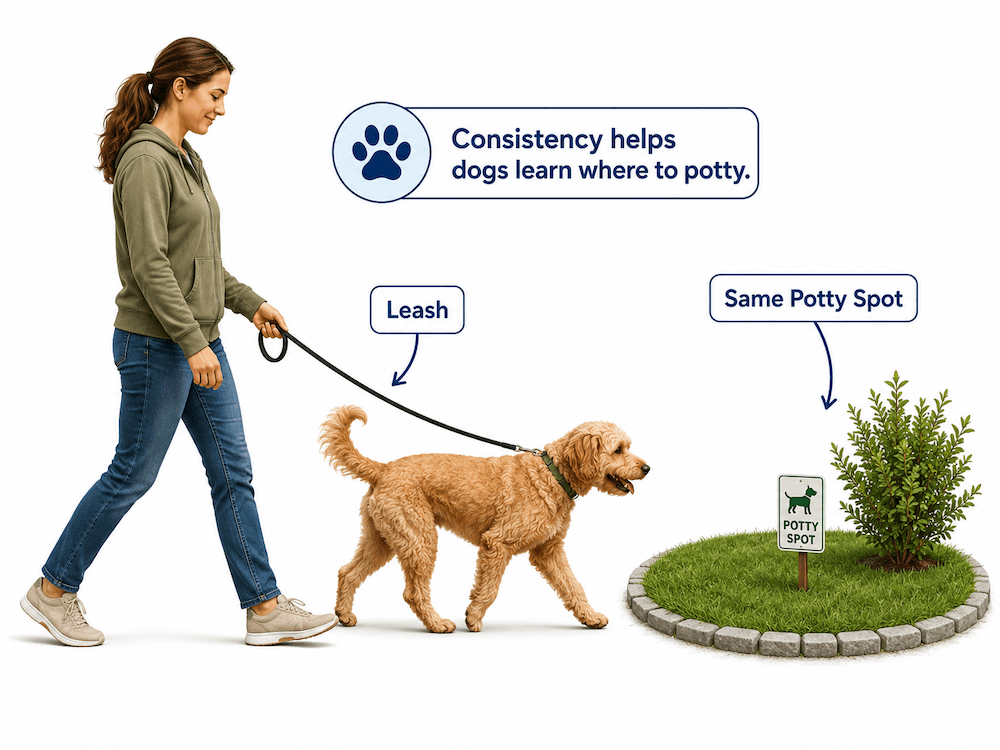
Pick one outdoor bathroom area or one approved indoor potty area if outdoor access is not realistic. Bring your dog to the same place each time so the smells, surface, and routine become familiar. For outdoor training, choose a boring spot first; play and sniff walks can happen after the dog finishes.
Step 2: Take Your Dog Out on a Predictable Schedule
Do not wait until your dog is already desperate. Take them out after waking, meals, naps, play, drinking, training sessions, and before rest or bedtime. At first, the schedule should feel more frequent than convenient because prevention is what builds the habit.
Step 3: Keep Potty Trips Calm and Focused
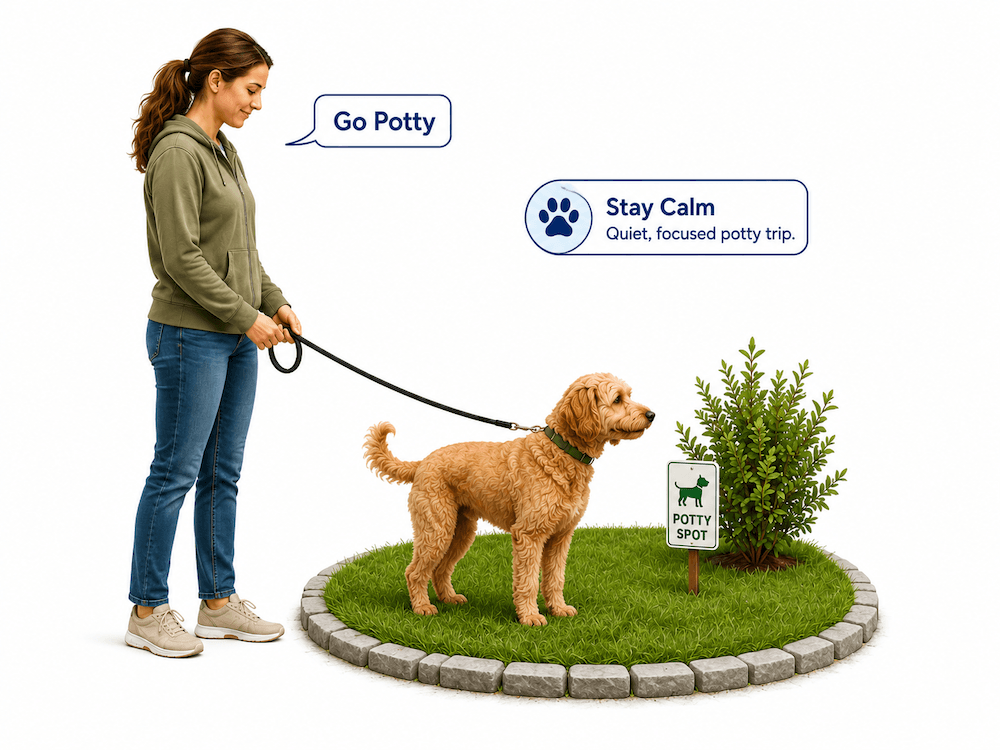
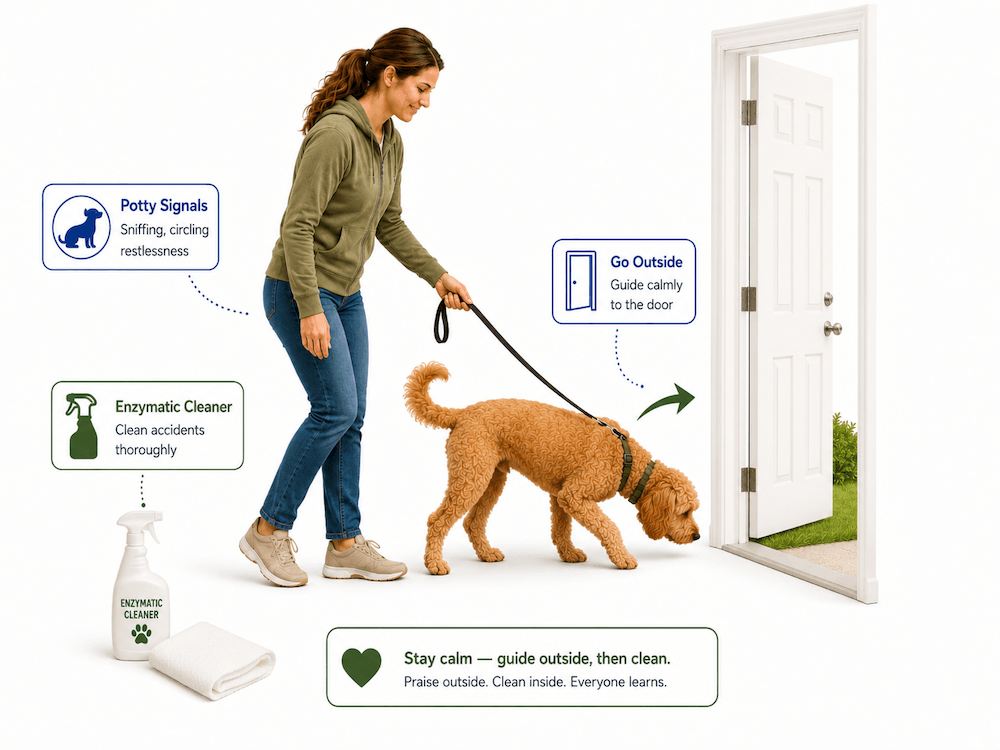
Use a leash, go to the chosen spot, and give your dog a few quiet minutes to sniff and settle. Avoid excited talking, play, or wandering around the yard before they potty. A simple cue such as “go potty” can be said calmly once your dog is in position, but the cue should not become constant chatter.
Step 4: Reward Immediately After Your Dog Finishes
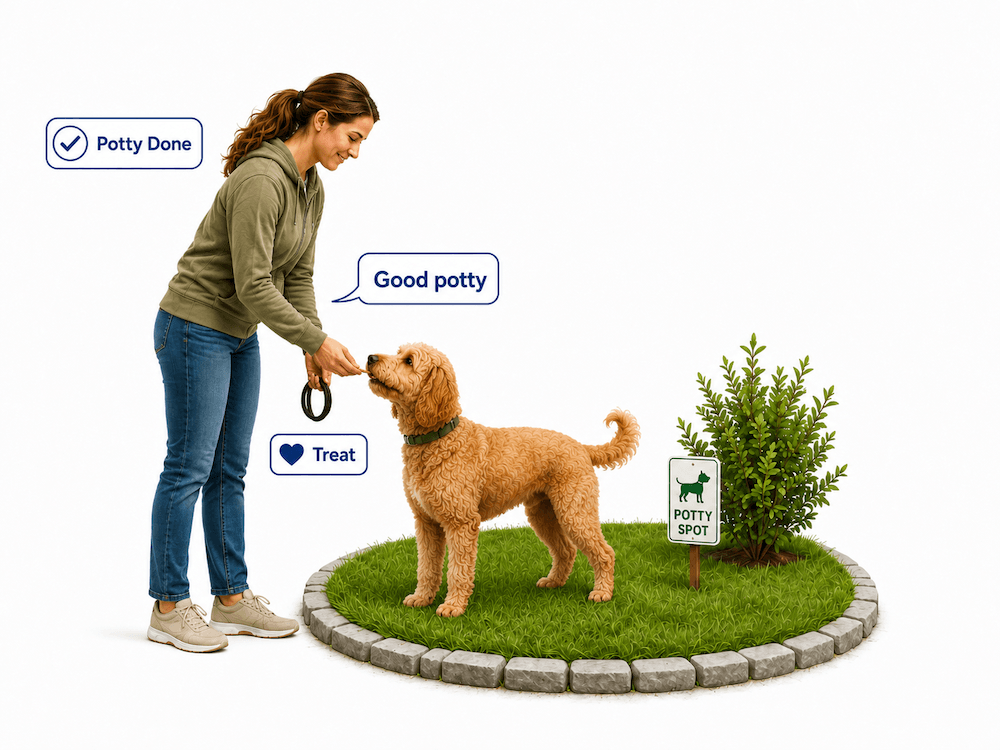
Timing matters. Praise and reward your dog right after they finish peeing or pooping, while still in the correct spot. If you wait until you are back indoors, your dog may connect the reward with coming inside instead of pottying outside.
Step 5: Supervise Indoors or Use a Safe Confinement Area
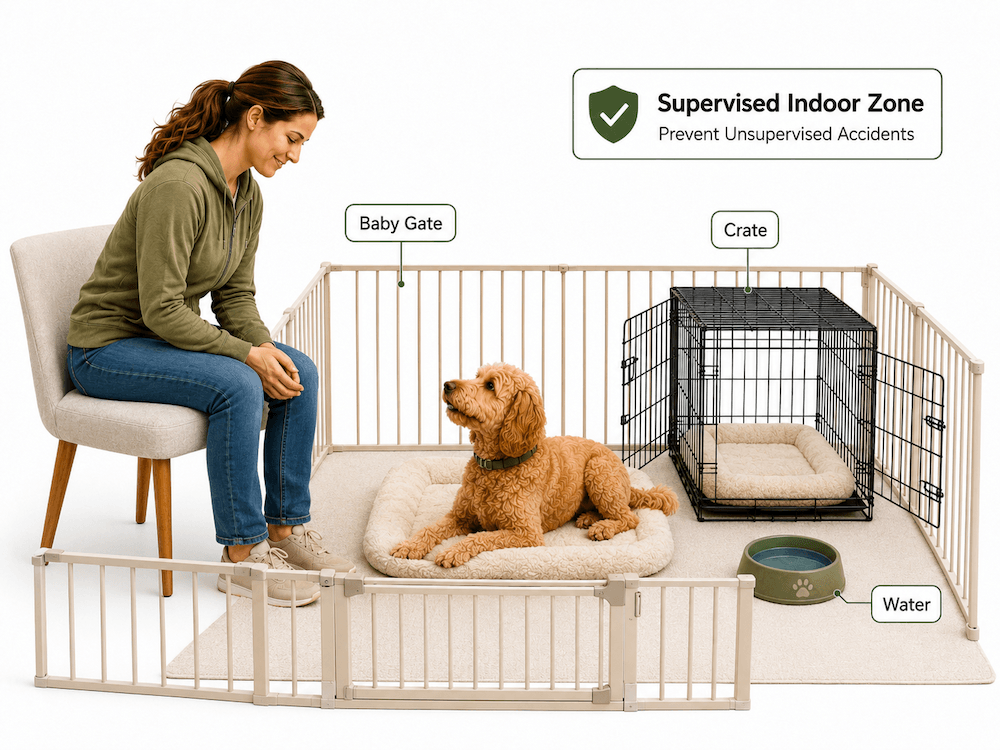
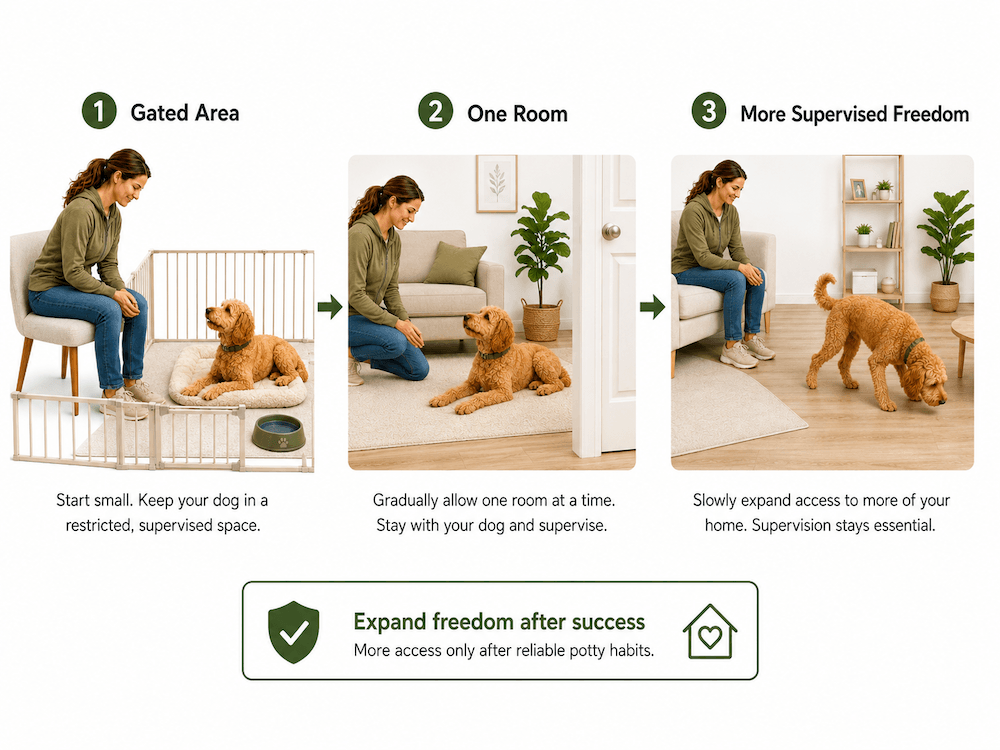
When your dog comes back inside, they should either be supervised, tethered nearby, in a gated room, in an exercise pen, or resting in a properly introduced crate. Free access to the whole house should wait until your dog has a strong accident-free pattern. If you cannot watch closely, management is kinder than letting your dog fail.
Step 6: Interrupt Accidents Calmly and Reset
If you catch your dog starting to potty indoors, calmly interrupt with a neutral sound and guide them outside or to the correct potty area. Do not yell, chase, grab roughly, or punish after the fact. If the accident already happened, clean it and adjust the schedule or supervision plan.
Step 7: Add Freedom Slowly After Success
Once your dog has several accident-free days in a small area, expand access gradually. Add one room, supervise closely, and keep the potty schedule steady. If accidents return, reduce freedom again without frustration and rebuild from the last successful level.
What to Do When Your Dog Has an Accident Indoors
An accident is not a moral failure or a sign your dog is trying to upset you. It usually means the dog had too much time, too much space, too little supervision, unclear access, or a body signal they could not control. Your response should make the next repetition easier, not scarier.
Clean the area with an enzymatic pet cleaner, especially on rugs, carpet, bedding, and upholstered furniture. Standard cleaners may remove visible mess but leave scent cues that dogs can still detect. After cleaning, block access to that area temporarily if your dog keeps returning to it.
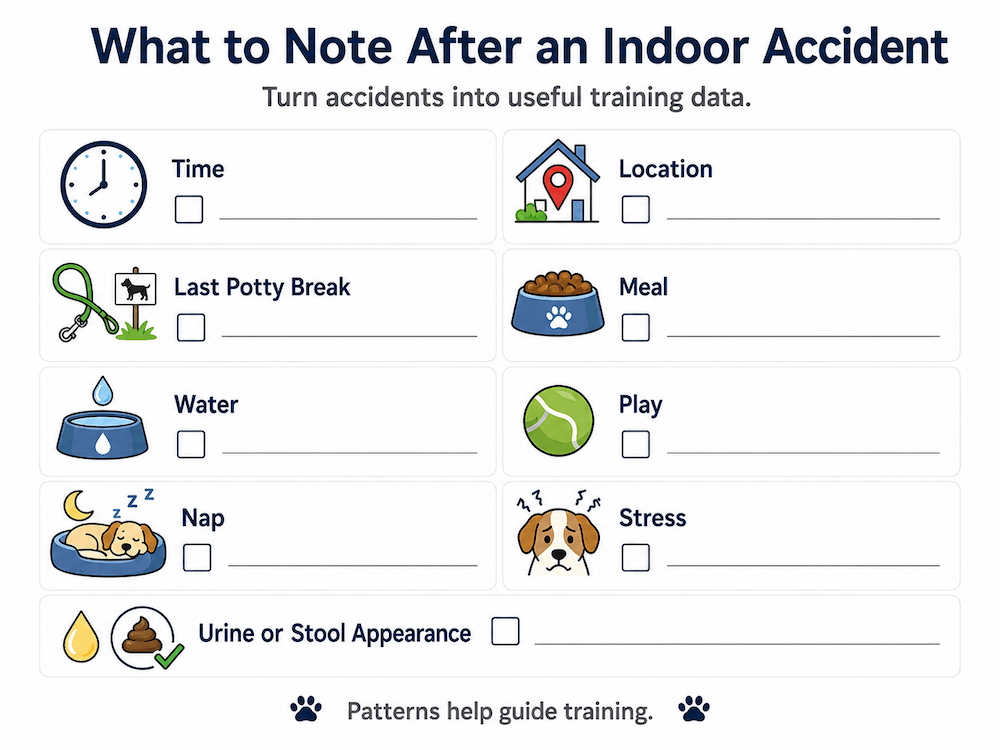
Use the accident as a training note. Record the time, location, last potty break, meal timing, water intake, activity, nap, and whether your dog gave a signal. Patterns usually appear after a few days, and those patterns tell you where the schedule or supervision plan needs to change.
How to Troubleshoot House Training Problems
If your dog is still having accidents, avoid starting over randomly. Instead, identify the pattern. The solution for a puppy who pees after play is different from the solution for an adult rescue who only soils when alone.
Many setbacks are fixable with tighter supervision and better timing. Others need veterinary care, anxiety support, or professional behavior guidance. The key is matching the response to the reason behind the accident.
| Problem | Likely Pattern | What to Try Next |
|---|---|---|
| Pees after play | Excitement increases urgency. | Schedule breaks before and after play. |
| Poops inside overnight | Dinner timing or stress may contribute. | Adjust evening routine and final potty trip. |
| Uses rugs | Soft surfaces may feel like potty areas. | Block rugs until reliability improves. |
| Hides to potty | Freedom is too broad too soon. | Return to leashing, gates, or pens. |
| Only soils alone | Separation distress may be involved. | Discuss anxiety support with a professional. |
| Sudden regression | Health changes may be affecting control. | Book a veterinary exam promptly. |
Helpful Tips for House Training a Dog Faster
Small adjustments can make house training feel much smoother. These tips do not replace the step-by-step plan; they refine it so your dog gets clearer feedback and fewer chances to practice the wrong habit. Choose the tips that match your home and your dog’s routine.
| Tip | Why It Helps | How to Apply It |
|---|---|---|
| Reward outside | Links the reward to the potty spot. | Carry treats on every potty trip. |
| Use a leash | Reduces wandering and distraction. | Stand quietly until your dog finishes. |
| Track patterns | Reveals when accidents usually happen. | Log meals, naps, potty breaks, and mistakes. |
| Feed consistently | Regular meals create more predictable output. | Use scheduled meals instead of random grazing. |
| Watch transitions | Accidents often happen after activity changes. | Go out after play, sleep, and excitement. |
| Limit freedom | Prevents hidden mistakes in quiet rooms. | Expand access only after reliable success. |
House Training Mistakes That Slow Progress
House training becomes harder when the dog receives mixed signals. A dog may be taken outside sometimes, corrected other times indoors, allowed to wander on busy days, and confined too long when owners are tired. Consistency matters because dogs learn from patterns, not from long explanations.
| Mistake | Why It Backfires | Better Choice |
|---|---|---|
| Punishing accidents | Fear can make dogs hide future pottying. | Clean calmly and improve prevention. |
| Rewarding too late | Your dog may reward the wrong behavior. | Praise immediately at the potty spot. |
| Too much freedom | Hidden rooms create repeat accident habits. | Use gates, pens, or close supervision. |
| Long gaps | Dogs may not physically hold it. | Shorten intervals after any mistake. |
| Dirty cleanup | Odor cues invite repeat marking. | Use enzymatic cleaner every time. |
| Ignoring health | Medical urgency can look like disobedience. | Call your vet for sudden changes. |
When to Call a Veterinarian, Trainer, or Behaviorist
House training is a behavior plan, but not every accident is a training issue. Medical problems can increase urgency, frequency, pain, urine volume, stool urgency, or loss of control. Anxiety, fear, and confinement distress can also cause house soiling that will not improve with a stricter potty schedule alone.
Call a veterinarian if your dog has sudden accidents, frequent urination, straining, blood in urine or stool, diarrhea, vomiting, excessive thirst, appetite changes, weight loss, pain, weakness, confusion, or accidents while sleeping. Puppies with diarrhea, very small puppies, senior dogs, and dogs with known medical conditions should be handled more cautiously.
Contact a qualified reward-based trainer or veterinary behaviorist if your dog panics in a crate, soils when left alone, hides to eliminate, guards areas, becomes fearful after accidents, or has repeated setbacks despite a consistent plan. Professional help is not a sign of failure; it is often the fastest way to separate training gaps from fear, anxiety, or health-related patterns.
How to Maintain House Training Progress
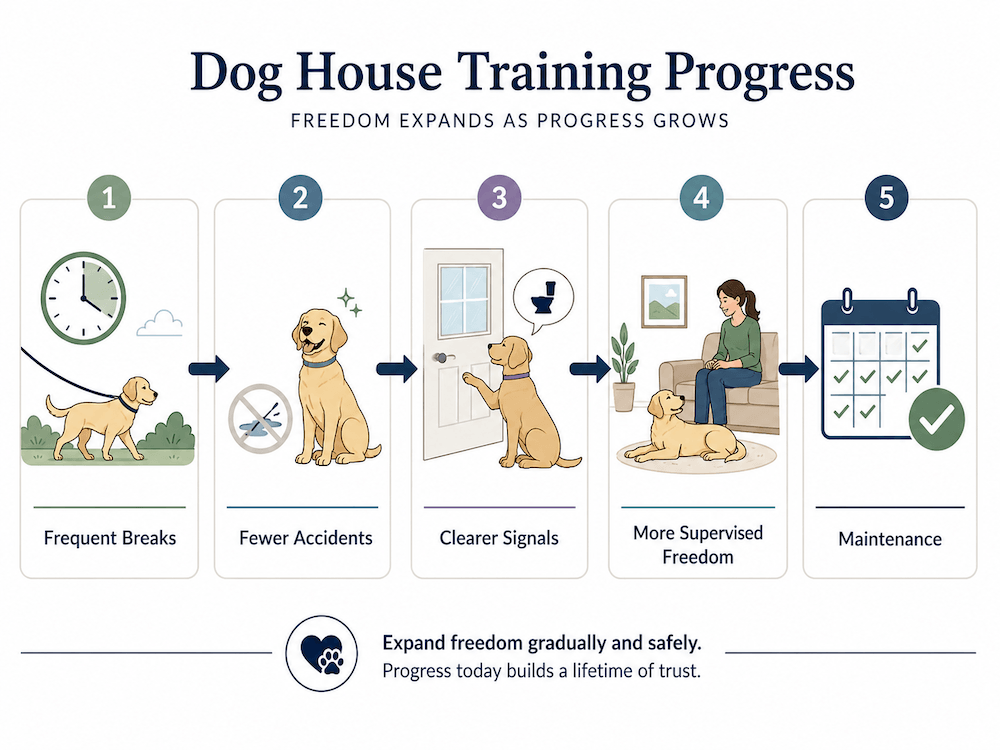
Once accidents decrease, keep the routine predictable for a little longer before relaxing the rules. Many owners stop too soon because the dog had a few good days. A better approach is to expand freedom slowly while keeping rewards, supervision, and scheduled breaks in place.
Success looks like your dog going to the door, staying clean in supervised rooms, sleeping through expected periods, and choosing the correct potty spot repeatedly. You can gradually reduce food rewards once the habit is strong, but continue calm praise and reliable access. If a setback happens, return to the last level that worked instead of assuming the entire training plan failed.
What Research Says About House Training Dogs
Veterinary behavior guidance commonly frames house training as a conditioning process built on consistency, supervision, and positive reinforcement. VCA Hospitals’ house training resource emphasizes teaching dogs where to eliminate by managing opportunities and rewarding the desired location, which supports the routine-and-reward approach used throughout this guide.[1]
The Merck/MSD Veterinary Manual explains that house soiling can come from inadequate training, marking, fear, anxiety, arousal, or medical conditions that affect urine or stool control. That matters because sudden or unusual accidents should not be treated only as a discipline problem; pain, mobility changes, urinary issues, cognitive changes, and anxiety may need professional evaluation.[2]
A retrospective study of canine house soiling found incomplete housetraining was the most common referral reason, while separation anxiety was also a frequent underlying cause in the cases reviewed. This supports a two-part approach for owners: improve the training setup, but look more closely when accidents happen mainly during alone time or confinement.[3]
Veterinary urinary references also note that bladder infections and urinary disorders may cause frequent urination, painful urination, blood in urine, dribbling, or inappropriate urination. For dog owners, this is why a previously reliable dog with sudden accidents, discomfort, or urine changes should be checked by a veterinarian rather than simply placed on a stricter schedule.[4]
Frequently Asked Questions
The Bottom Line
House training a dog works best when you focus on routine, prevention, supervision, and immediate rewards. A clear schedule helps your dog understand when potty breaks happen, while careful indoor management prevents accidents from becoming habits. If mistakes happen, treat them as useful clues rather than reasons to punish your dog. Clean accidents thoroughly, adjust the schedule, and give your dog more chances to succeed in the right place. Puppies, rescue dogs, adult dogs, and senior dogs may all progress at different speeds, so patience matters. If accidents are sudden, frequent, painful, or paired with other symptoms, contact your veterinarian. With consistency and calm guidance, most dogs can learn reliable house habits and feel more confident at home.