
How to Keep a Dog From Jumping the Fence: 7 Safe Ways to Stop Escapes

Canine Bible is reader-supported. We receive affiliate commissions via some of our links. Learn more.
To keep a dog from jumping the fence, remove jump triggers, block their view, supervise outdoor time, and make the fence harder to climb or clear. The best solution combines better fence security with more exercise, training, and enrichment. Dogs often jump fences because they are bored, anxious, excited by people or animals, or trying to reach something outside the yard. A taller fence may help, but it will not fix the problem if your dog is stressed, under-exercised, or repeatedly rewarded by escaping. Some dogs need visual barriers, coyote rollers, lean-ins, or safer yard routines to stop the habit, while others may need recall training, impulse control work, or help with separation anxiety. This guide explains why dogs jump fences and the safest ways to stop it before your dog gets hurt, lost, or into trouble.
Why Dogs Jump Fences
| Reason | What It Means for Your Dog |
|---|---|
| Boredom | A dog with too little exercise, play, or mental stimulation may jump the fence to find something more interesting. |
| Prey drive | Squirrels, cats, birds, or other fast-moving animals can trigger a strong chase response. |
| Outside triggers | People, dogs, bikes, cars, or children passing by can make some dogs bark, charge, and jump. |
| Separation anxiety | Some dogs jump fences because they panic when left alone or separated from their owner. |
| Mating instincts | An intact dog may try to escape if they smell or sense another dog in heat nearby. |
| Fear or panic | Loud noises, storms, fireworks, or unfamiliar activity can cause a dog to flee the yard. |
| Learned escape | If jumping the fence leads to freedom, attention, or fun, the behavior can quickly become a habit. |
How to Keep a Dog From Jumping the Fence
To keep a dog from jumping the fence, you need to reduce the reason your dog wants to escape and make the fence physically harder to clear. The safest plan combines supervision, trigger control, exercise, enrichment, recall training, and fence upgrades such as visual barriers, lean-ins, coyote rollers, or removing climbable objects.
A taller fence can help, but it is rarely the whole solution. Dogs jump fences because something outside the yard is more rewarding, frightening, exciting, or urgent than staying inside.
Check How Your Dog Is Getting Over the Fence
Before changing the fence, figure out how your dog is escaping. Some dogs truly leap, but many climb, scramble, use nearby objects as launch pads, squeeze through weak spots, or jump partway and pull themselves over.
Watch from a window, use a camera, or inspect the yard after an escape. Look for paw marks, bent mesh, worn grass, moved furniture, loose boards, scratch marks near the top rail, or objects like dog houses, chairs, planters, woodpiles, or storage boxes near the fence.


These clues can tell you what kind of fix your dog needs. Paw marks halfway up the fence often suggest climbing, while escapes that happen only when your dog is alone may point to anxiety, boredom, or learned escape behavior; escapes during storms, fireworks, construction noise, or nearby dogs may be fear or arousal-driven.
What to Do If Your Dog Jumps the Fence Only When Alone
Fence jumping that happens only when your dog is alone needs extra attention. This pattern may be boredom, but it can also be separation-related distress.
Signs of anxiety include pacing, barking, howling, drooling, chewing doors or windows, frantic digging, broken nails, scraped paws, or attempts to escape shortly after you leave. In these cases, more yard time is usually not the answer.
Set up a camera if you are unsure. If your dog becomes distressed within minutes of being left outside or alone, focus on indoor safety, gradual alone-time training, and professional support.
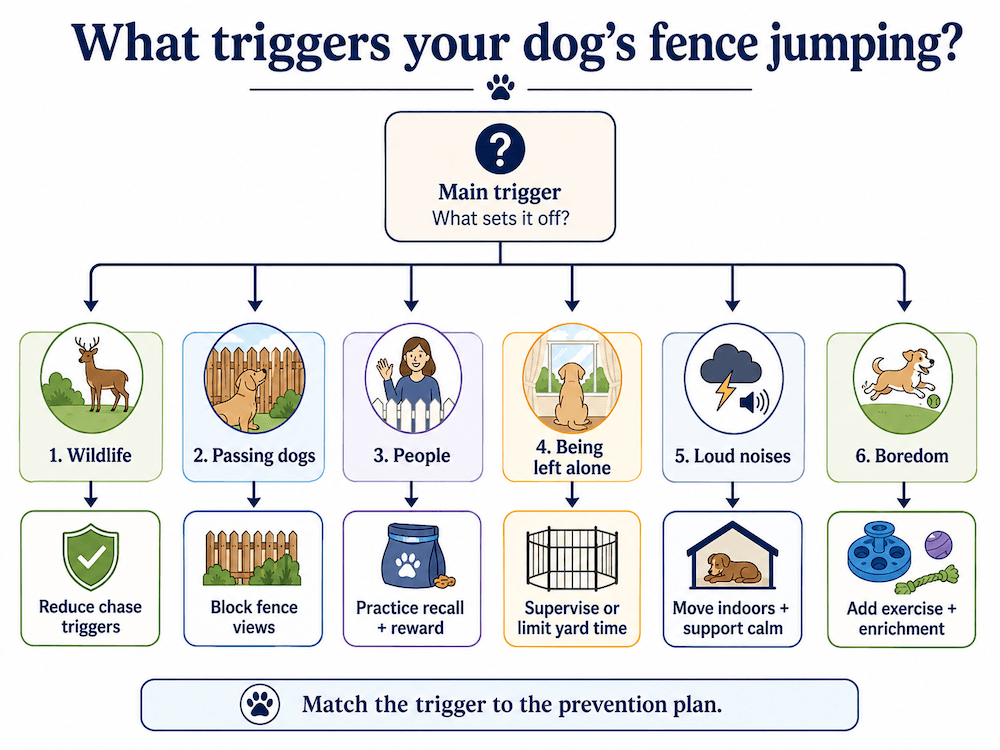
What to Do If Your Dog Jumps at People, Dogs, or Wildlife
If the trigger is outside the fence, the solution starts with distance and visibility. Block the view, supervise the yard, and reward your dog for coming away before they reach full arousal.
For prey-driven dogs, chasing wildlife can be more rewarding than food. These dogs often need fenced trigger control, leash walks, scent games, flirt-pole play with rules, and strong recall practice in low-distraction areas first.
For dogs reacting to people or other dogs, do not let the fence become a daily rehearsal space for barking, charging, and jumping. Repetition can make the pattern stronger.
How to Stop a Dog From Jumping the Fence Step-by-Step
Follow these steps to stop fence jumping safely, remove escape triggers, strengthen your yard setup, and teach your dog better outdoor habits.
Step 1: Stop Unsupervised Yard Time for Now
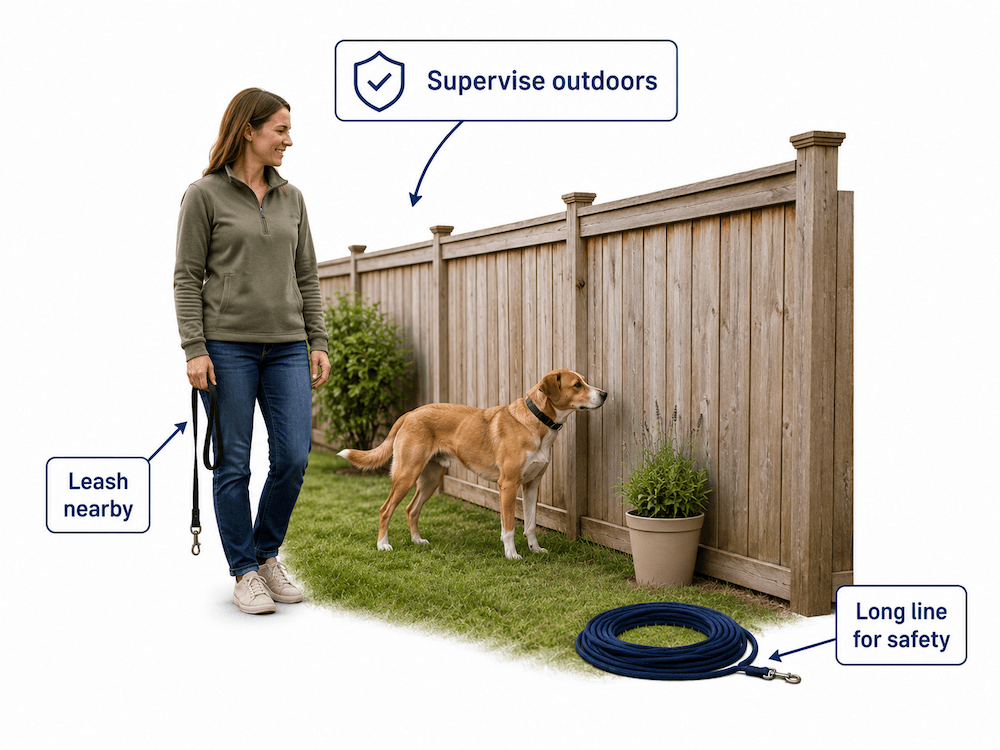
The first step is to prevent more escape practice. Until the fence is secure and your dog is responding better, keep yard time supervised, use a leash or long line, and bring your dog indoors when you cannot watch them.
Step 2: Remove Jump Triggers Near the Fence
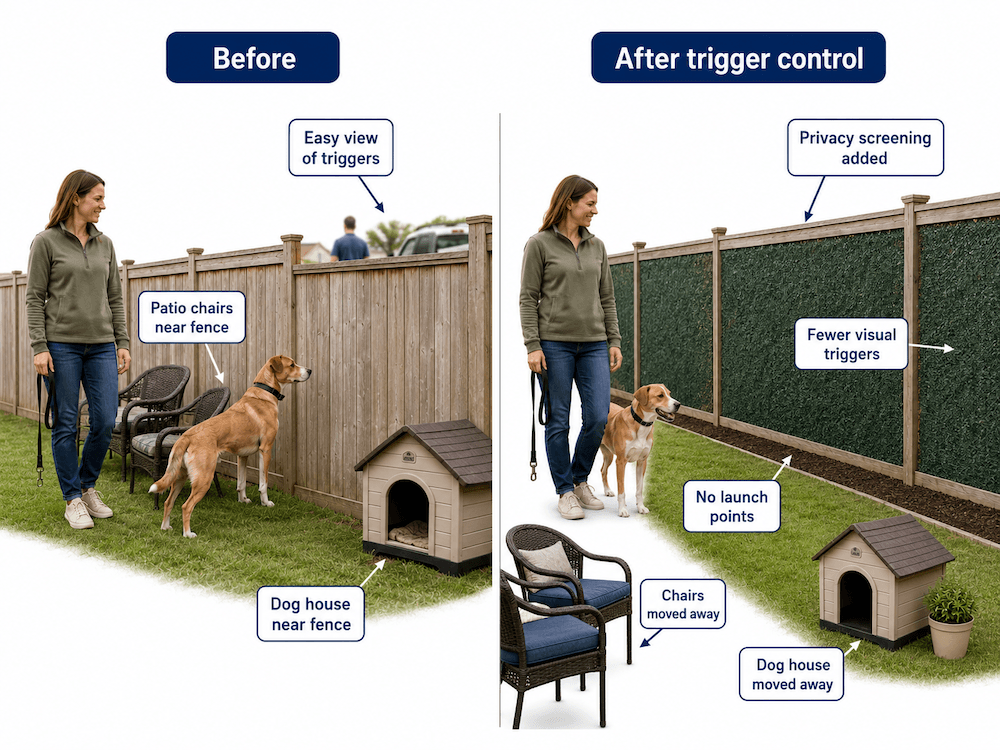
Move furniture, trash cans, dog houses, benches, planters, woodpiles, and storage items away from the fence so your dog cannot use them as launch points. Add privacy mesh, fence slats, solid panels, or safe landscaping if people, dogs, bikes, cars, or wildlife outside the yard trigger jumping.
Step 3: Make the Fence Harder to Jump or Climb
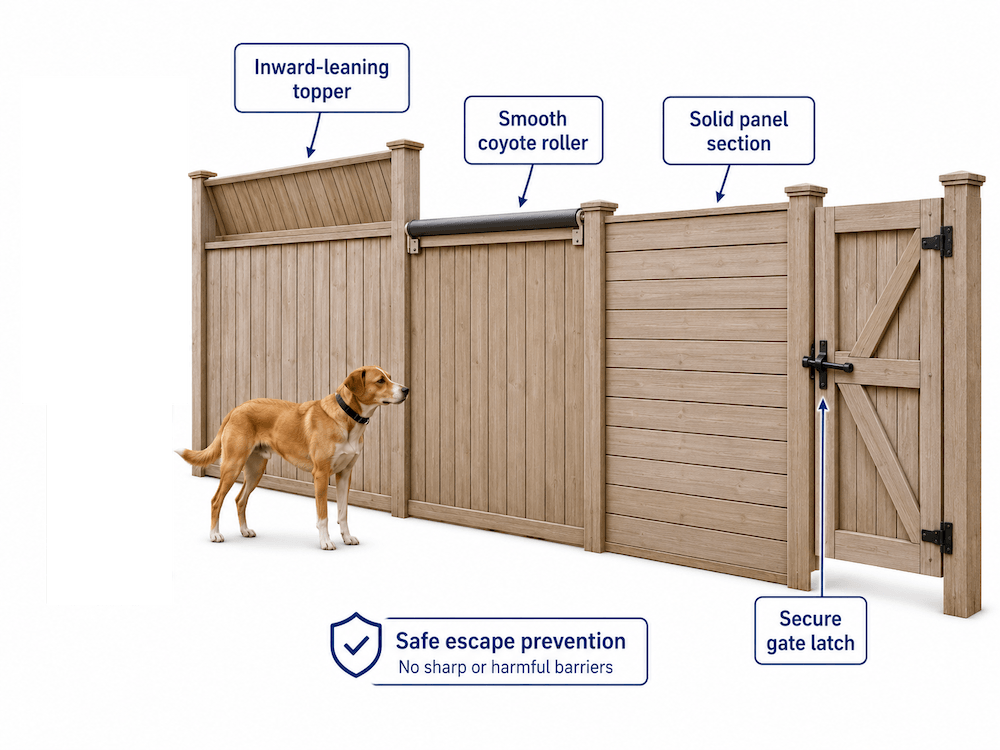
If your dog can still reach the top, add a safe barrier that changes the fence angle, grip, or height. Good options include inward-leaning extensions, coyote rollers, smooth solid panels, secure gate latches, or a taller fence where local rules allow; avoid spikes, barbed wire, nails, or sharp edges.
Step 4: Give Your Dog a Better Daily Outlet
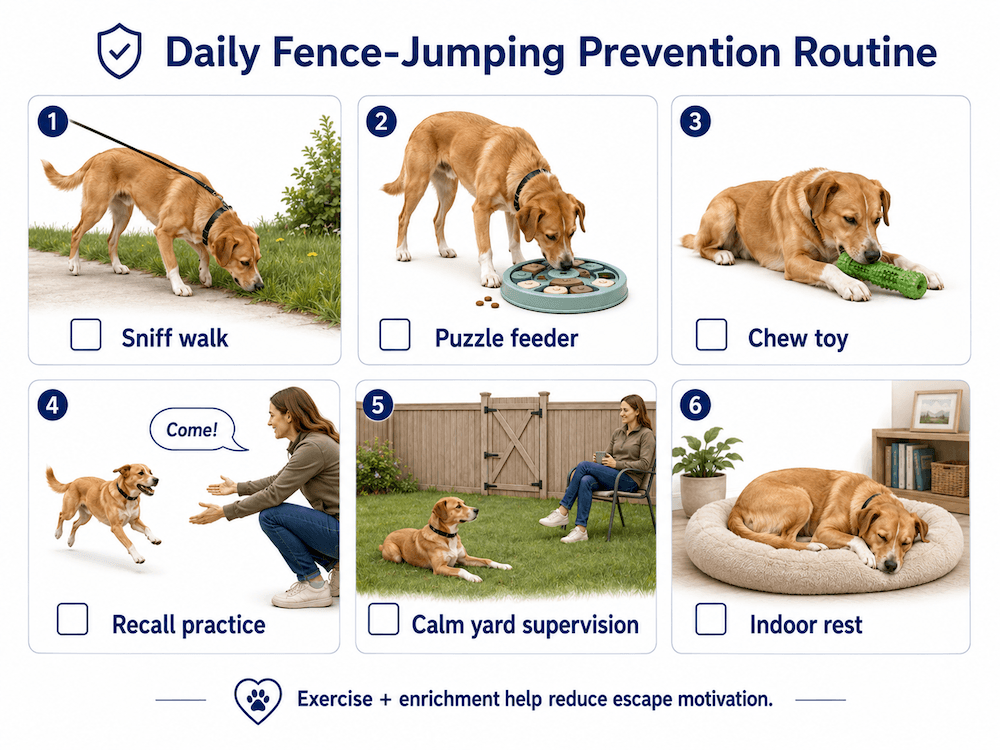
Fence jumping often gets worse when the yard is your dog’s main source of entertainment. Add structured outlets such as sniff walks, puzzle feeders, chew time, short training sessions, play, and supervised yard time so escaping becomes less rewarding.
Step 5: Teach Your Dog to Move Away From the Fence
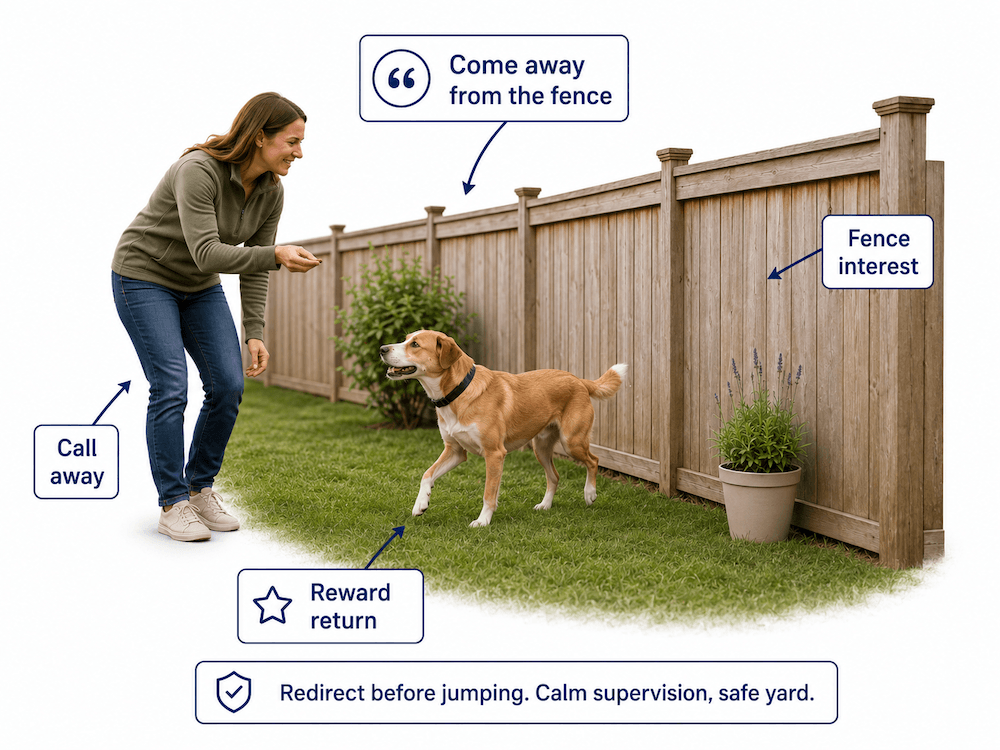
Practice calling your dog away from the fence before they become too excited to listen. Reward them for turning toward you, walking away from the fence, settling on a mat, or calmly coming back inside.
Step 6: Use Recall, Boundary, and Calm-Settle Games
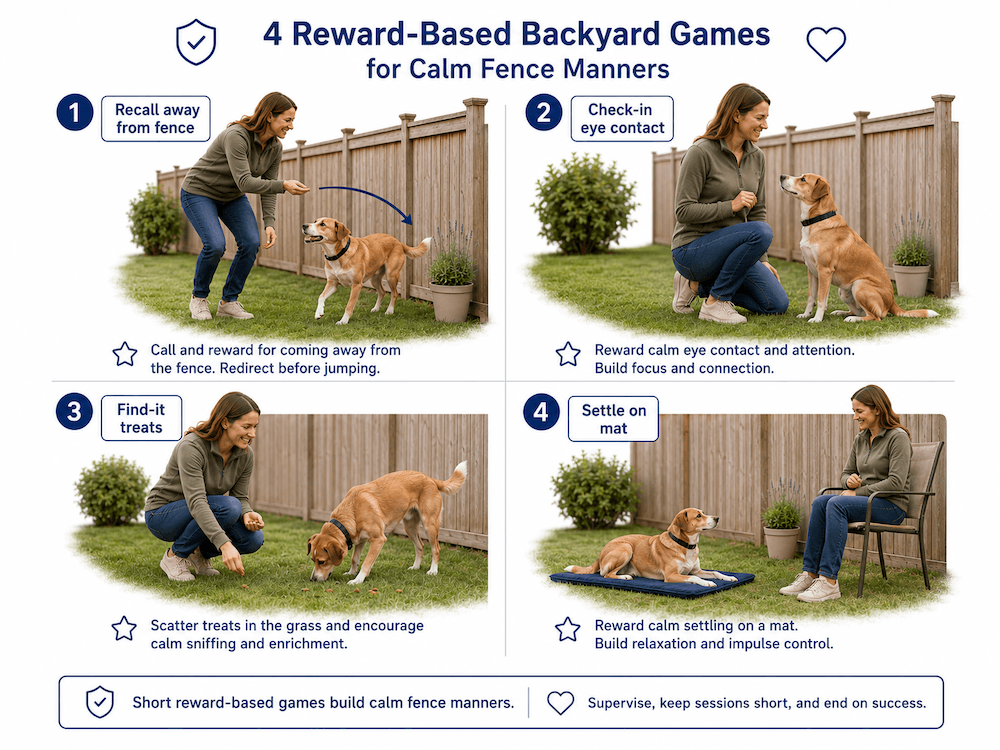
Train short, positive yard games that make staying inside the fence more rewarding than rushing it. Practice recall, check-ins, mat settling, find-it games, and calm “inside” cues for two to five minutes at a time before adding harder distractions.
Step 7: Do Not Punish After an Escape
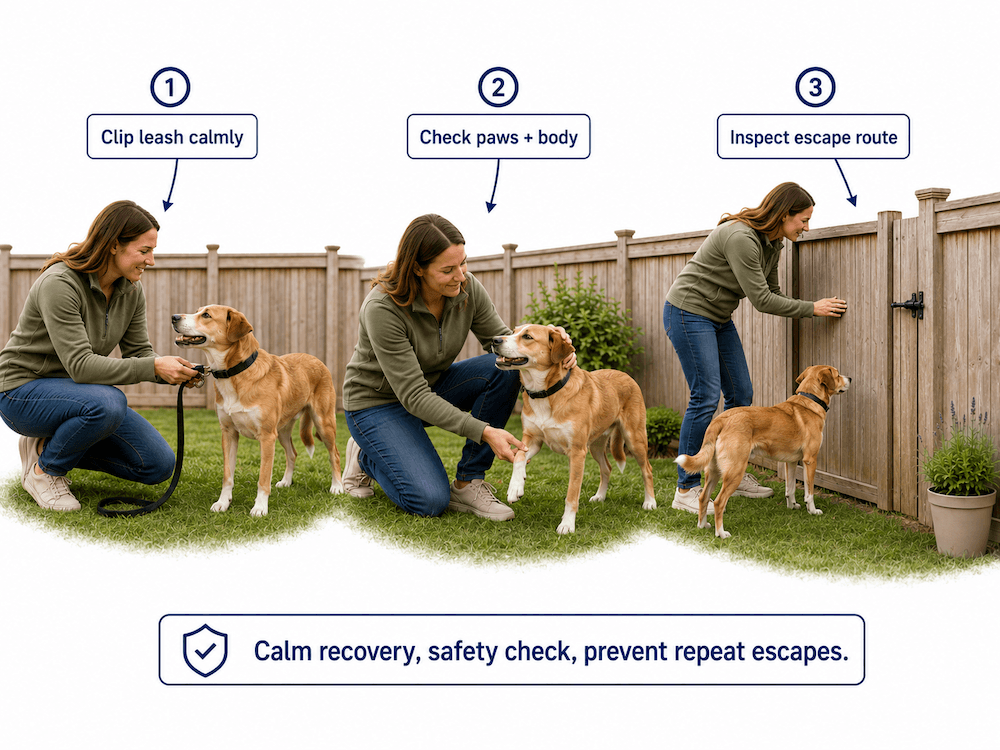
Punishing your dog after they return will not teach them why escaping was wrong and may make them afraid to come back. Calmly secure your dog, check for injuries, identify how they escaped, and prevent that route from being used again.
Helpful Tips to Stop a Dog From Jumping the Fence
Use these tips to reduce escape chances, manage triggers, and teach safer yard behavior while you improve fence security.
| Tip | Why It Helps | How to Apply It |
|---|---|---|
| Supervise first | Dogs cannot rehearse escaping when you are present. | Go outside with your dog until the habit improves. |
| Block the view | Less visual stimulation can mean less fence charging. | Add privacy screening where your dog reacts most. |
| Move launch points | Dogs often use objects to gain height. | Keep furniture and dog houses away from fences. |
| Reward check-ins | Your dog learns that staying near you pays. | Reward eye contact and returning from the fence. |
| Use enrichment | Mental activity reduces boredom-driven escape attempts. | Use puzzle feeders, sniff walks, and chew sessions. |
| Practice recalls | A trained recall can interrupt fence interest early. | Call before your dog reaches full excitement. |
| Secure gates | Some escape artists use gates instead of jumping. | Add dog-proof latches and self-closing hinges. |
Owner Mistakes That Can Make Dog Fence Jumping Worse
Avoid these common mistakes so your dog does not rehearse escaping, become more fearful, or get injured by unsafe fence fixes.
| Mistake | Why It Backfires | What to Do Instead |
|---|---|---|
| Leaving dogs alone outside | Unsupervised dogs can practice escaping repeatedly. | Supervise yard time until the fence is secure. |
| Punishing after escape | Your dog may become afraid to come back. | Secure your dog calmly and fix the escape route. |
| Using sharp barriers | Spikes or wire can cause serious injuries. | Use safe toppers, rollers, or solid extensions. |
| Ignoring anxiety | Fearful dogs may panic and escape again. | Address stress with training and professional guidance. |
| Relying only on height | Some dogs climb instead of jumping cleanly. | Remove footholds and change the top angle. |
| Skipping identification | An escape can happen before training is complete. | Keep ID tags and microchip details current. |
When to Call a Veterinarian, Trainer, or Behaviorist
Some fence jumping is a simple management problem. Other cases involve fear, anxiety, pain, aggression, or serious safety risk.
What Dog Owners Should Know From Veterinary Research
The Merck Veterinary Manual explains that many dog behaviors, including digging, predation, and destructive behavior, can be normal canine behaviors that become serious problems when they are excessive, reinforced, or rooted in fear, anxiety, arousal, or impulsivity. It also emphasizes environmental management, reinforcement-based behavior modification, and ruling out medical contributors such as pain when behavior changes are significant.[1]
A 2017 study surveyed 974 owners and 1,053 dogs about containment methods. Dogs confined by electronic fences were reported to have escaped more often than dogs confined by see-through fences, privacy fences, or tether systems, and greeting behaviors such as growling, snarling, or trying to bite were associated with bite history.[2]
The ASPCA describes escaping as one possible sign of separation anxiety when it happens while the dog is left alone or separated from their guardian. It also notes that many dogs with separation anxiety need behavior modification, and some severe cases may need veterinary-guided medication support.[3]
The RSPCA Knowledgebase describes enrichment as mental and physical stimulation that supports natural dog behaviors such as sniffing, playing, exploring, and problem-solving. It also notes that enrichment can reduce stress and undesirable behaviors when matched thoughtfully to the individual dog.[4]
Frequently Asked Questions
The Bottom Line
Keeping a dog from jumping the fence starts with understanding why they want to escape in the first place. A secure fence matters, but the best results come from combining safe barriers with supervision, training, exercise, and enrichment. Remove anything your dog can climb on, block outside triggers, and use fence toppers or rollers when extra security is needed. Avoid punishment or sharp deterrents, because they can make fear, stress, or injury more likely. If your dog jumps because of anxiety, panic, or repeated escape attempts, work with a veterinarian or qualified trainer. With the right plan, your yard can become a safer, calmer place for your dog to enjoy.