Periodontal Disease in Dogs: Symptoms, Types, Causes, Signs & Prevention

Canine Bible is reader-supported. We receive affiliate commissions via some of our links. Learn more.
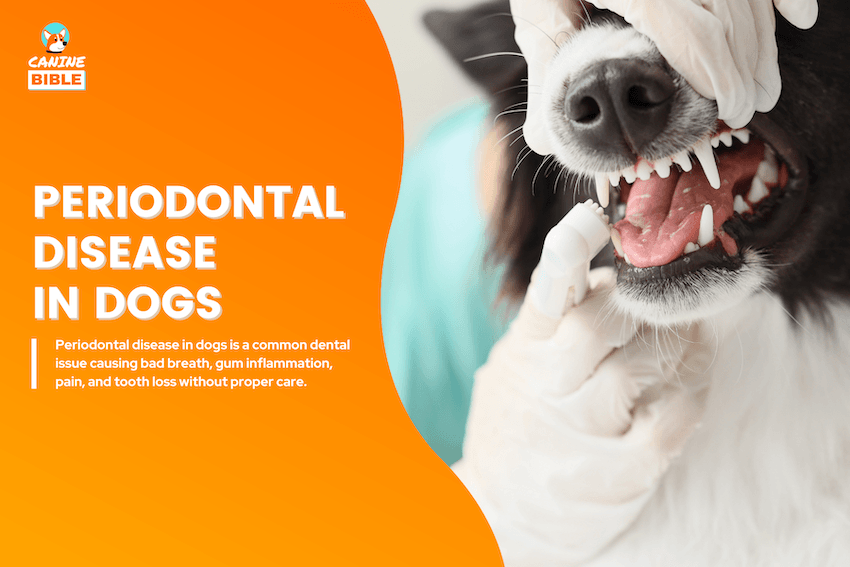
Periodontal disease is one of the most common health conditions in dogs, affecting up to 80% of dogs over the age of 3. Many pet owners overlook early signs—such as bad breath, mild gum redness, or slight tartar buildup—assuming they’re harmless, when in reality they are early indicators of dental disease. Left untreated, periodontal disease can lead to pain, tooth loss, and even serious infections that spread beyond the mouth. The good news is that with proper care, periodontal disease is largely preventable and manageable. This guide covers everything you need to know about periodontal disease in dogs—from causes and symptoms to treatment, prevention, and long-term dental care.
What Is Periodontal Disease in Dogs?
Periodontal disease is a progressive condition affecting the structures surrounding the teeth, including the gums, periodontal ligaments, and bone. It begins with the buildup of plaque—a sticky film of bacteria—on the teeth. If not removed, plaque hardens into tartar, leading to gingivitis, the earliest stage marked by gum inflammation. As the disease progresses, bacteria spread below the gumline, damaging the supporting tissues and bone. Over time, this can result in loose teeth, infection, and significant oral pain. In advanced stages, bacteria may enter the bloodstream and impact vital organs such as the heart, liver, and kidneys, making early detection and treatment essential.
Types
Periodontal disease progresses through several stages, each with increasing severity:
| Type | Description |
|---|---|
| Gingivitis | The earliest stage, where plaque buildup causes inflammation of the gums without permanent damage. |
| Early Periodontitis | Infection begins affecting the structures supporting the teeth, with mild tissue damage. |
| Moderate Periodontitis | Progressive destruction of gums, ligaments, and bone supporting the teeth. |
| Advanced Periodontitis | Severe damage leading to tooth loosening, loss, and possible spread of infection. |
| Aggressive Periodontal Disease | Rapidly progressing form that can affect younger dogs and lead to early tooth loss. |
| Systemic Impact | Advanced disease may contribute to issues affecting organs like the heart, liver, and kidneys. |
Predisposed Dog Breeds
Periodontal disease can affect any dog, but some are more prone due to genetics, size, and dental structure. Small and toy breeds are especially at risk because their teeth are more crowded, allowing plaque and tartar to build up more easily.


| Category | Examples | Notes on Risk Factors |
|---|---|---|
| Small & Toy Breeds | Chihuahua, Yorkshire Terrier, Toy Poodle, Dachshund, Shih Tzu | Crowded teeth and smaller jaws promote plaque buildup and faster tartar accumulation. |
| Brachycephalic Breeds | Pug, Bulldog, French Bulldog, Pekingese | Compressed skull structure leads to misaligned teeth and increased dental disease risk. |
| Diet Factors | Soft food diets, lack of dental chews | Less mechanical cleaning action on teeth allows plaque and tartar to build up more easily. |
| Poor Oral Hygiene | Irregular brushing, no dental care routine | Main cause of periodontal disease; plaque hardens into tartar and leads to infection. |
| Age | Middle-aged and senior dogs | Risk increases over time as plaque accumulates and gums weaken. |
| Health Conditions | Diabetes, immune disorders | Weakened immune response can worsen gum infections and slow healing. |
Causes
Symptoms
Periodontal disease in dogs is a common, progressive condition that affects the gums, teeth, and supporting structures and can significantly impact comfort, eating, and overall health. Early signs are often subtle—like mild bad breath or slight gum redness—but can worsen over time if left untreated.
This visual guide highlights the most common symptoms and how periodontal disease affects different parts of a dog’s mouth and body, helping you recognize changes early and take steps to protect your dog’s health.
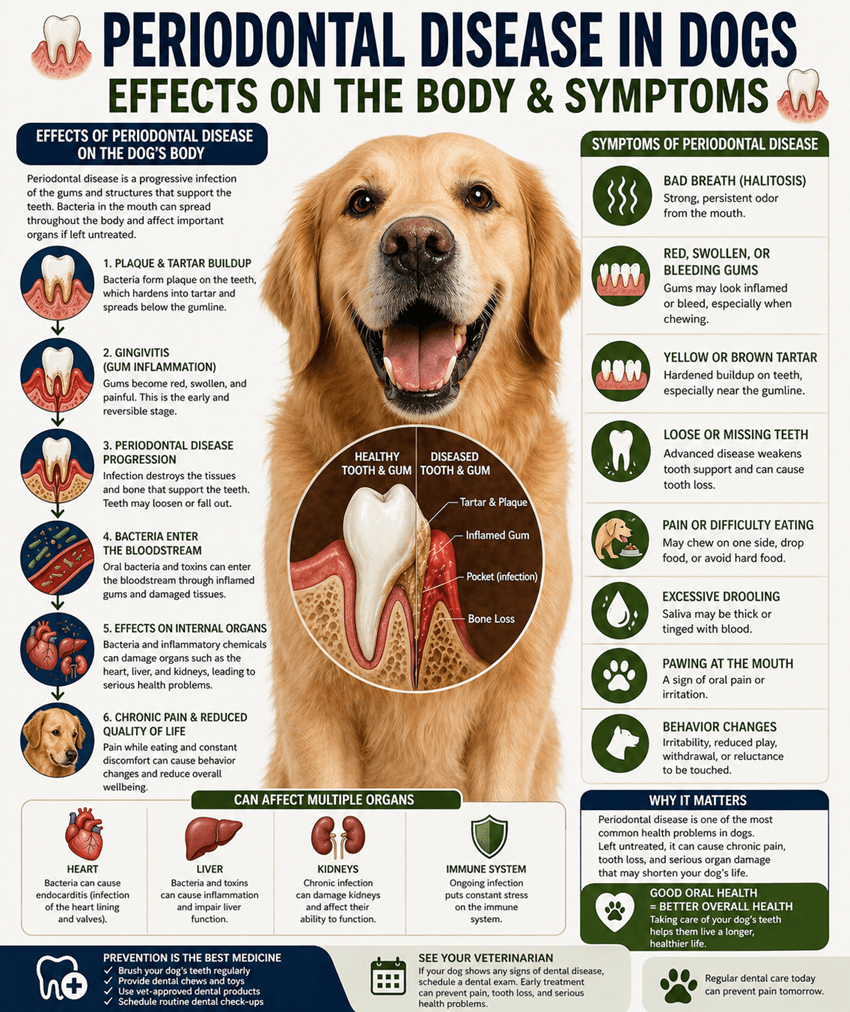
Stages of Periodontal Disease
- Early stage (Gingivitis): Mild gum inflammation, redness, and bad breath. Reversible with proper dental care.
- Moderate stage (Early–Moderate Periodontitis): Gum recession, tartar buildup, and early bone loss. Discomfort while eating may appear.
- Advanced stage (Severe Periodontitis): Significant bone loss, loose or missing teeth, infection, and chronic pain. May impact overall health.
Top Ways to Prevent Periodontal Disease in Dogs
Because periodontal disease is a progressive and largely preventable condition, early care and consistency are essential. With proper dental hygiene and regular veterinary checkups, the progression can be slowed—or even stopped—before serious damage occurs.


| Prevention Strategy | Why It Helps | How to Do It |
|---|---|---|
| Daily Tooth Brushing | Removes plaque before it hardens into tartar and causes gum disease. | Use dog-safe toothpaste and brush daily or at least 3–4 times per week. |
| Dental Chews & Toys | Provide mechanical cleaning that reduces plaque and tartar buildup. | Offer vet-approved dental chews and textured chew toys regularly. |
| Balanced Diet | Supports oral health and may reduce plaque formation. | Feed high-quality food; consider dental-specific kibble formulas. |
| Regular Professional Cleanings | Removes tartar below the gumline where brushing cannot reach. | Schedule vet dental cleanings as recommended (usually yearly). |
| Routine Oral Checks | Early detection prevents progression to severe disease. | Check gums, teeth, and breath weekly for redness, swelling, or odor. |
| Use Dental Additives | Helps control bacteria in the mouth and slow plaque buildup. | Add water additives or oral gels recommended by your vet. |
| Start Dental Care Early | Prevents buildup and conditions dogs to tolerate oral care. | Introduce brushing and dental routines during puppyhood. |
Actionable Resources
If you want to prevent or slow the progression of periodontal disease in your dog, here are some practical steps and resources to explore with your veterinarian:
How Periodontal Disease Is Diagnosed in Dogs
Diagnosing periodontal disease requires a thorough veterinary dental examination to assess the severity and identify underlying issues. Key steps include:
- Physical Examination: A veterinarian checks for tartar buildup, gum inflammation, bleeding, bad breath, and loose or damaged teeth.
- Dental Probing: Measuring pocket depth around teeth to detect gum detachment and early tissue damage.
- Dental X-rays: Essential for evaluating bone loss, tooth root health, and damage below the gumline that isn’t visible externally.
- Anesthesia Evaluation: A full dental assessment and cleaning are often performed under anesthesia for accuracy and safety.
- Laboratory Tests (if needed): Blood work may be recommended, especially in older dogs, to assess overall health before procedures.
Early diagnosis is crucial because periodontal disease is progressive—detecting it early allows for effective treatment and helps prevent pain, tooth loss, and systemic complications.
Treatment & Care
According to the latest research, the most effective treatments for periodontal disease in dogs focus on professional dental cleaning, infection control, and ongoing oral hygiene, often combining veterinary procedures with consistent at-home care for the best results.
Always consult your veterinarian before starting any new treatment or supplement for periodontal disease. You can get personalized joint-care advice from an online registered vet anytime, anywhere through Dutch. You can also chat with an online vet to ask questions about managing your dog’s periodontal disease symptoms, treatment options, and lifestyle adjustments tailored to their condition.
Conventional Medical Treatments
| Treatments | Benefits / Role |
|---|---|
| Professional Dental Cleaning | Removes plaque and tartar above and below the gumline; essential for all stages (performed under anesthesia). |
| Scaling & Polishing | Deep cleaning smooths tooth surfaces, helping prevent future plaque buildup. |
| Antibiotics | Used to control bacterial infection in moderate to advanced cases. |
| Tooth Extractions | Removes severely damaged or infected teeth to relieve pain and prevent spread of infection. |
| Antiseptic Oral Rinses | Chlorhexidine-based rinses reduce bacteria and support healing of gums. |
| Pain Management | Medications reduce discomfort during recovery and in advanced disease stages. |
Supplement Support
| Supplement / Nutrient | Benefits / Role |
|---|---|
| Omega-3 Fatty Acids (Fish Oil) | Help reduce gum inflammation and support overall oral and immune health. |
| Probiotics | Support a healthy oral microbiome and may reduce harmful bacteria in the mouth. |
| Coenzyme Q10 (CoQ10) | Supports gum tissue health and may help reduce periodontal inflammation. |
| Vitamin C | Supports gum healing, collagen production, and overall immune defense. |
| Vitamin E | Provides antioxidant protection for gum tissues and reduces oxidative stress. |
| Zinc | Helps control plaque formation and supports oral tissue repair. |
| Seaweed (Kelp) Additives | May help reduce plaque and tartar buildup when added to food regularly. |
| Chlorophyll | Helps neutralize bad breath and may support oral freshness. |
| Green Tea Extract | Contains natural antibacterial compounds that may help control oral bacteria. |
Find periodontal disease care items for dogs on Amazon.

Alternative & Integrative Therapies
| Therapy | Benefits / Role |
|---|---|
| Herbal Oral Rinses | Natural rinses (e.g., chamomile, sage) may help soothe gums and reduce mild inflammation. |
| Coconut Oil (Oral Use) | Has mild antibacterial properties and may help reduce plaque and improve breath. |
| Probiotic Oral Care | Supports a balanced oral microbiome and helps limit harmful bacteria growth. |
| Dental Gels (Natural) | Plant-based gels can help control plaque buildup and support gum health. |
| Oil Additives (Food/Water) | Specialized oral health additives may help reduce tartar and freshen breath. |
| Homeopathic Remedies | Used by some for inflammation and gum support, though evidence varies. |
| Ozone Therapy | Advanced dental treatment that helps kill bacteria and promote healing of infected gums. |
Surgical Options
| Surgical Option | Benefits / Role |
|---|---|
| Tooth Extraction | Removes severely damaged or infected teeth to eliminate pain and prevent infection spread. |
| Periodontal Surgery (Flap Surgery) | Gums are lifted to clean deep pockets and remove bacteria below the gumline. |
| Guided Tissue Regeneration | Helps regrow lost bone and gum tissue in select cases of moderate disease. |
| Gingivectomy | Removes diseased gum tissue to reduce infection and improve oral health. |
| Root Planing & Curettage | Deep cleaning procedure that smooths roots and removes infected tissue from periodontal pockets. |
Emotional & Lifestyle Impact
Periodontal disease affects more than just a dog’s mouth—it can significantly impact their comfort, behavior, and overall quality of life. Dogs with dental pain may eat less, avoid chewing toys or hard treats, drool more, or become irritable when touched around the face. Chronic bad breath and oral discomfort can also change how they interact with people and other pets.
For owners, it can be distressing to see a beloved dog in pain or struggling with everyday activities like eating. The financial and time commitment of dental care can also add up. Daily routines may need to shift to include regular tooth brushing, dental chews, and consistent veterinary checkups, while home environments may require adjustments such as offering softer food and dental-friendly products. With patience, consistency, and proper care, you can greatly improve your dog’s comfort and overall well-being.
Typical Annual Cost of Treating Periodontal Disease in Dogs
| Category | Estimated Annual Cost Range | Notes |
|---|---|---|
| Routine Vet Visits & Exams | $150 – $500 | Regular checkups to monitor oral health and detect early disease. |
| Professional Dental Cleanings | $300 – $1,000 | Performed under anesthesia; cost varies by severity and clinic. |
| Medications (Antibiotics, Pain Relief) | $100 – $500 | Used for infections, inflammation, and post-procedure care. |
| Dental Care Products | $100 – $400 | Toothpaste, brushes, dental chews, water additives. |
| Advanced Procedures / Extractions | $500 – $2,500+ | Includes tooth extractions or periodontal surgery in advanced cases. |
| Insurance & Wellness Plans | $300 – $900 | May help cover dental treatments depending on policy. |
| Typical Annual Range | Mild Cases: $300 – $1,000 | Moderate to Severe: $1,000 – $4,000+ | |
Dental care costs can add up over time—from routine cleanings to more advanced procedures like extractions. Pet insurance and wellness plans can help ease the financial burden and ensure your dog receives proper dental care without compromise. If you want to compare options and find providers that cover dental treatments, check out our guides to the Best Pet Insurance for Dogs and Best Pet Wellness Plans.
Other Health Issues Related to Periodontal Disease in Dogs
As periodontal disease progresses, bacteria can enter the bloodstream and affect other parts of the body. Some symptoms may also overlap with other conditions, making early diagnosis important.
- Heart Disease (endocarditis risk)
- Kidney Disease
- Liver Disease
- Chronic Inflammation
- Tooth Loss
- Jaw Bone Loss
- Oral Infections / Abscesses
- Sinus Infections
- Pain & Difficulty Eating
- Weight Loss
- Behavioral Changes (irritability, withdrawal)
- Reduced Appetite
- Bad Breath (chronic halitosis)
- Weakened Immune Response
Frequently Asked Questions
The Bottom Line
Periodontal disease is one of the most common yet preventable conditions in dogs, and it doesn’t have to compromise their quality of life. While advanced stages cannot be fully reversed, early detection, consistent dental care, and routine veterinary checkups can make a significant difference in preventing pain and long-term complications. By maintaining good oral hygiene, providing proper dental support, and working closely with your veterinarian, you can help your dog stay comfortable, healthy, and happy for years to come.