How Much Do Dogs & Puppy Shots Costs? Vaccination Price 2026

Canine Bible is reader-supported. We receive affiliate commissions via some of our links. Learn more.
Puppy shots typically cost $75 to $200 per visit, or $200 to $500 for the full first-year vaccine series. The exact price depends on your puppy’s age, which vaccines are needed, and whether you go to a private vet, low-cost clinic, or animal hospital. Some owners pay less with vaccine packages, while others spend more once exam fees, boosters, deworming, or optional vaccines are added. That is why the price can feel confusing, especially when one puppy’s schedule does not exactly match another’s. You also need to know which shots are considered core, which ones depend on lifestyle or location, and when each booster is due. Missing or delaying vaccines can create health risks, but overestimating the cost can make puppy care seem more expensive than it really is. In this guide, we will break down average prices, what is included, what changes the total, and how to budget for your puppy’s first-year shots.
The Importance of Puppy Shots
| Importance | Key Impact |
|---|---|
| Prevents serious disease | Puppy shots help protect against dangerous infections like parvo, distemper, and rabies before your puppy is fully protected. |
| Saves money | Vaccines usually cost far less than emergency treatment for preventable illnesses that can require intensive care. |
| Builds early immunity | A proper vaccine schedule helps your puppy develop protection during the months when they are most vulnerable. |
| Supports safe socialization | Shots lower the risk of disease exposure as your puppy starts meeting other dogs and exploring new environments. |
| Reduces health risks | Staying on schedule helps close gaps in protection that can leave puppies exposed between booster visits. |
| Helps with planning | Knowing the cost of puppy shots makes it easier to budget for routine vet care during the first year. |
| Protects other pets | Vaccinating your puppy can also reduce the chance of spreading contagious diseases to other animals in the home or community. |
| Improves peace of mind | Owners can feel more confident bringing their puppy to checkups, training, and daily outings once vaccines are on track. |
How Much Are Puppy Shots?
Puppy shots usually cost about $75 to $200 per visit, and the full first-year vaccine series often costs around $200 to $500 or more once you include booster visits and exam fees. At the low end, some community or vaccine clinics offer bundled packages starting around $85 to $270, while full-service clinics may charge more because the visit often includes an exam and a broader care plan.
The reason the total feels confusing is that “puppy shots” are not one single shot. Puppies usually need a series of vaccines over multiple visits, starting around 6 to 8 weeks of age and repeating every 2 to 4 weeks until they are about 16 weeks old or older, depending on risk and protocol. Core vaccines protect against major diseases like distemper, parvovirus, adenovirus, and rabies, while non-core vaccines depend on lifestyle, travel, boarding, daycare, and local disease risk.
Puppy Shot Schedule and Cost at a Glance
Most puppies receive their first combination vaccine at 6 to 8 weeks, continue boosters every 2 to 4 weeks, and get rabies at the age required by local law or as recommended by the vet. AAHA lists the core puppy combination series as at least 3 doses between 6 and 16 weeks, and Merck explains that repeat visits are needed because maternal antibodies can interfere with early vaccine response.


A practical budgeting rule is this: expect to pay for multiple visits, not just one appointment. The main cost drivers are the vaccine mix, whether exam fees are billed separately, and whether your puppy also receives deworming, fecal testing, or other first-year preventive care during the same visit.
| Visit Stage | Typical Age | Main Focus | Typical Cost Range |
|---|---|---|---|
| First puppy visit | 6–8 weeks | First core combination vaccine and exam | $75–$200 |
| Booster visit | 9–12 weeks | Repeat core booster and risk review | $75–$200 |
| Later booster | 12–16 weeks | Final core booster and rabies timing | $75–$200 |
| Optional vaccines | Varies | Lepto, Bordetella, Lyme, influenza | Extra cost varies |
| First-year total | First several months | Series, boosters, and exam fees | $200–$500+ |
What Shots Do Puppies Need?
Puppy vaccines are usually given as a series over several visits, not all at once, because protection builds over time. Your veterinarian should tailor the plan based on your puppy’s age, location, lifestyle, health status, and local legal requirements, especially for rabies and lifestyle-based vaccines.
Core vs Non-Core Puppy Vaccine Shots
Core vaccines are the ones recommended for nearly all dogs. AAHA lists distemper, adenovirus, parvovirus, and rabies as core, with leptospirosis also included in its core recommendations for many clinical settings. AVMA likewise explains that core vaccines are recommended for all dogs unless there is a medical reason not to vaccinate.
Non-core vaccines are based on exposure risk. These may include Bordetella, Lyme, and canine influenza, especially for puppies that will go to daycare, boarding, training classes, parks, or travel to higher-risk regions. That is why two puppies of the same age can have different first-year vaccine costs.


Puppy Shot Schedule by Age
A typical puppy vaccine schedule starts at 6 to 8 weeks, then repeats every 2 to 4 weeks until the puppy is at least 16 weeks old. AAHA recommends at least 3 doses of the puppy combination vaccine during that window, while WSAVA notes that in higher-risk settings some protocols extend the final core dose to 20 weeks or add a later follow-up depending on local risk and maternal antibody concerns.
Rabies timing depends on the law and label, but it is commonly given around 12 to 16 weeks. UC Davis notes that puppies should receive rabies by the age required under local law, with a booster typically required one year later.
| Age | Typical Vaccines | Main Goal |
|---|---|---|
| 6–8 weeks | First DHPP-style core combo | Start early immune protection |
| 9–12 weeks | Core booster; some risk-based vaccines | Reinforce developing immunity |
| 12–16 weeks | Final core booster; rabies often added | Close the protection gap |
| 16–20 weeks | Extra dose in higher-risk cases | Address lingering maternal antibodies |
| 1 year later | Booster after puppy series | Maintain durable protection |
How Much Each Puppy Vaccine Usually Costs
These ranges reflect common consumer pricing patterns and low-cost clinic pricing rather than a universal national fee schedule.
Exam Fees, Booster Visits, and Total First-Year Vaccine Cost
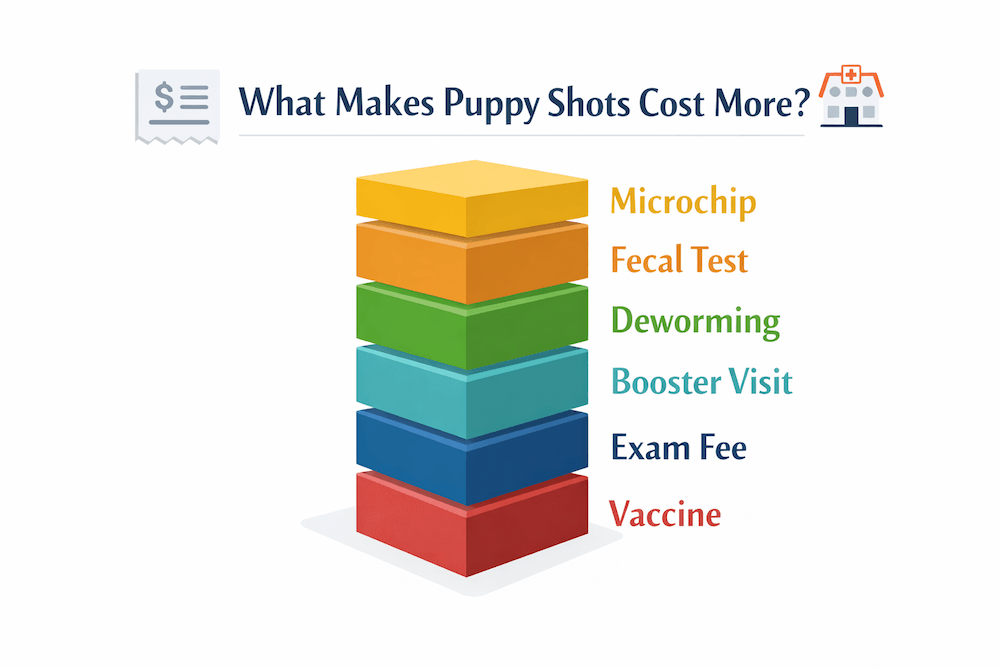
Many owners underestimate the total because they only think about the shot itself. In reality, the bill may also include a wellness exam, follow-up booster visits, and sometimes deworming, fecal testing, or microchipping. GoodRx notes that some vaccine packages include the exam and rabies, while others charge the exam separately, and Banfield also states that pricing varies based on location, pet needs, and the veterinarian’s recommendations.
That is why a puppy may cost around $200 to $500 or more for first-year vaccines and related vaccine visits, even if the vaccines themselves do not look expensive one by one. Consumer reporting also suggests that first visits can include broader preventive services, which pushes the total higher than owners expect.
Low-Cost Clinics vs Full-Service Vets
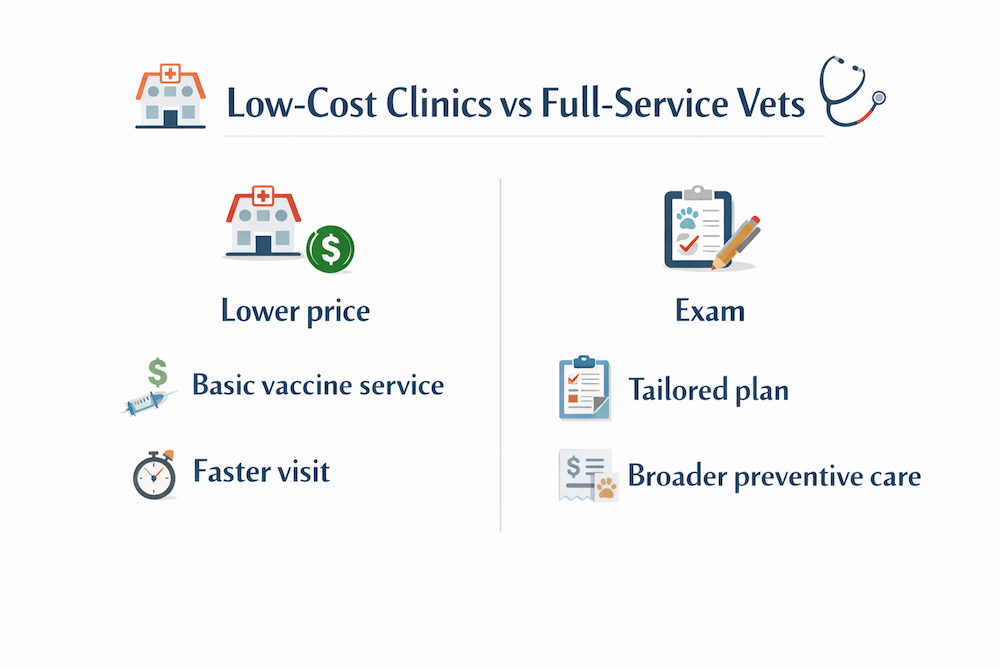
Low-cost clinics can be a smart option when your main goal is affordable vaccination. They often charge less, may use event-style pricing, and sometimes offer simple packages. GoodRx reports dog vaccine packages in the $85 to $270 range, and community vaccination events may go even lower in some areas.
Full-service veterinary hospitals usually cost more, but they also offer more complete care. That may include a physical exam, personalized vaccine recommendations, parasite screening, early detection of health problems, and a more tailored discussion about non-core vaccines based on your puppy’s environment and risk level. For a very young puppy, that extra oversight can be worth the higher price.
Evidence-Backed Guidance on Puppy Vaccines
AAHA and WSAVA both support a puppy core vaccine series that continues until at least 16 weeks of age, because maternal antibodies can block earlier vaccine responses and leave gaps in protection if the series ends too soon. That is the main reason booster visits matter so much in the first months.
Merck Veterinary Manual also explains that puppies remain susceptible to infection until the series is complete, which is why your vet may recommend avoiding unknown or unvaccinated dogs during this window.
A commonly cited veterinary study on puppy socialization found that puppies vaccinated at least once and attending well-run socialization classes were not at greater risk of confirmed parvovirus infection than vaccinated puppies not attending class. That matters because safe socialization and disease prevention can be balanced, rather than treated as an all-or-nothing choice.[1]
WSAVA also emphasizes that vaccination protects not only the individual dog but also supports broader herd immunity, which helps reduce contagious disease outbreaks in the community.
Tips for Keeping Puppy Shot Costs Manageable
These tips help keep the vaccine process organized and more affordable without cutting corners.
| Tip | Why It Helps | How to Apply It |
|---|---|---|
| Call ahead | Prices vary more than most owners expect. | Ask about exam fees and vaccine packages. |
| Use packages | Bundles may lower the per-visit total. | Compare package pricing with separate services. |
| Keep records | Good records prevent repeated vaccines and confusion. | Save every invoice and vaccine certificate. |
| Ask about risk | Not every puppy needs every non-core vaccine. | Review daycare, travel, and outdoor exposure. |
| Book boosters early | Late boosters can disrupt the planned series. | Schedule the next visit before leaving. |
| Check local clinics | Community clinics can reduce first-year costs. | Search shelters, humane societies, and events. |
Common Mistakes Dog Owners Make With Puppy Shots
These mistakes can raise costs or leave your puppy less protected than you think.
| Mistake | Why It’s a Problem |
|---|---|
| Skipping boosters | The puppy may not develop reliable protection. |
| Comparing only shot prices | Exam fees and add-ons often change the total. |
| Assuming all puppies need the same plan | Lifestyle and region affect non-core vaccine needs. |
| Waiting too long between visits | Delays can disrupt the recommended vaccine series. |
| Socializing too broadly too early | Exposure risk stays higher before full protection. |
| Losing vaccine records | Missing paperwork can cause repeated costs later. |
What to Expect After Puppy Shots
After puppy shots, most puppies do well with only mild short-term effects. You may notice temporary sleepiness, mild soreness, or slightly lower energy for a day or so. More serious reactions are uncommon, but swelling of the face, repeated vomiting, trouble breathing, collapse, or worsening lethargy should be treated as urgent reasons to call a veterinarian right away. WSAVA notes that adverse events can occur but are uncommon, and reporting helps improve vaccine safety over time.
For ongoing care, keep your puppy’s vaccine record organized, book the next booster before leaving the clinic, and ask your vet exactly when your puppy can safely expand social exposure. Signs the process is going well include staying on schedule, having clear documentation, and reaching the final puppy booster and first-year booster without gaps. Keep monitoring your puppy between visits and contact your vet if you miss an appointment, are unsure whether a vaccine was already given, or notice any concerning reaction after a shot.
Frequently Asked Questions
The Bottom Line
Puppy shots are a routine but important part of early care, and the total cost usually depends more on the full vaccine series and follow-up visits than on any single shot. For most owners, the smartest approach is to budget for the first few months as a whole, compare clinic options, and make sure the puppy stays on schedule rather than focusing only on the lowest upfront price. In the end, puppy vaccines are usually far less expensive than treating preventable diseases like parvo or distemper. Knowing what shots are core, what costs extra, and what your puppy’s schedule should look like makes it much easier to plan ahead, avoid surprises, and give your puppy the protection they need early in life.