Dog Water Intake Calculator: Daily Water Needs by Activity, Weight & Charts

Canine Bible is reader-supported. We receive affiliate commissions via some of our links. Learn more.
How much water should your dog drink every day? Water is essential for digestion, circulation, temperature regulation, and overall health, but the right amount depends on your dog’s weight, diet, activity level, and environment. Our Dog Water Intake Calculator helps you estimate your dog’s daily water requirements in milliliters, ounces, and cups. Below, you’ll also find dog water intake charts by weight, hydration guidelines, signs of dehydration and excessive thirst, calculation examples, and answers to common questions.
Always consult your veterinarian if your dog drinks significantly more or less water than usual, especially if your dog is a puppy, senior, pregnant or nursing, or has a medical condition, and seek prompt veterinary advice if you notice signs of dehydration, excessive thirst, changes in urination, vomiting, lethargy, or other unusual symptoms. If you can't reach your vet, you can chat live with a registered online veterinary professional via our online vet chat or video chat support (24 hours a day, 7 days a week). Or use Chewy's online vet services (6 a.m. - midnight ET).
How Much Water Should a Dog Drink Per Day?
Most healthy adult dogs have a general daily water intake reference of approximately 40–60 milliliters (mL) per kilogram of body weight. For a 22-pound (10 kg) dog, that works out to roughly 400–600 mL, or 1.7–2.5 US cups, per day. However, this is a starting point rather than a strict requirement. Dogs may need more water during exercise or hot weather, while dogs eating moisture-rich food may drink less directly from their bowls.
Water also comes from food. A dog eating canned food receives significantly more dietary moisture than one eating dry kibble, so measuring bowl consumption alone does not always reflect total water intake. Pay attention to your dog's usual drinking habits, urination, and overall behavior. A sudden or persistent change can be more concerning than a single measurement outside the estimated range.
Dog Water Intake Chart by Weight
Your dog's body weight provides a useful starting point for estimating daily hydration needs. The following charts show general water requirements and explain why actual drinking can vary.
Dog Water Intake Chart by Weight
The chart below uses an estimated range of 40–60 mL per kilogram of body weight per day.


| Dog Weight | Daily Water (mL) | Daily Water (US Cups) |
|---|---|---|
| 2 kg (4.4 lb) | 80–120 mL | 0.3–0.5 cups |
| 5 kg (11 lb) | 200–300 mL | 0.8–1.3 cups |
| 10 kg (22 lb) | 400–600 mL | 1.7–2.5 cups |
| 15 kg (33 lb) | 600–900 mL | 2.5–3.8 cups |
| 20 kg (44 lb) | 800–1,200 mL | 3.4–5.1 cups |
| 30 kg (66 lb) | 1,200–1,800 mL | 5.1–7.6 cups |
| 40 kg (88 lb) | 1,600–2,400 mL | 6.8–10.1 cups |
| 50 kg (110 lb) | 2,000–3,000 mL | 8.5–12.7 cups |
Note: These figures are general reference estimates, not prescribed minimums or maximums. Water from food contributes to hydration, and individual requirements may fall outside these ranges. Contact your veterinarian if drinking changes unexpectedly or symptoms appear.
Dog Water Intake Chart by Food Type
Food moisture can significantly affect how much water your dog drinks from a bowl. Wet food contains considerably more water than dry food, even when both provide complete and balanced nutrition.
| Food Type | Typical Moisture | Effect on Drinking |
|---|---|---|
| Dry kibble | About 10% | Most water generally comes from drinking. |
| Wet/canned food | 68–78% | Food provides substantial water. |
| Semi-moist food | 25–40% | Provides moderate dietary moisture. |
| Mixed wet and dry | Varies | Depends on the proportion of each food. |
| Food with added water | Varies | Added water contributes to daily intake. |
Note: Moisture percentages vary by product. Check the food label or manufacturer's information rather than assuming every food in a category contains the same amount of water.
Normal vs. Excessive Water Intake in Dogs
Water consumption naturally varies, but some patterns deserve closer attention. This chart can help you recognize when to monitor a change or speak with your veterinarian.
| Water Intake Pattern | Possible Meaning | Recommended Action |
|---|---|---|
| 40–60 mL/kg/day | Common reference range | Continue normal hydration care. |
| Below reference | May reflect dietary moisture or individual variation. | Check diet, habits, and symptoms. |
| Above reference | May reflect activity, heat, or illness. | Review changes and monitor intake. |
| Over 100 mL/kg/day | Clinical screening threshold for excessive drinking | Arrange veterinary evaluation. |
| Sudden major change | May indicate a health problem. | Contact your veterinarian promptly. |
Important: These values are screening references, not diagnostic cutoffs or limits on how much water a dog may safely access. A sudden change can warrant veterinary attention even below 100 mL/kg/day. Do not restrict your dog's water unless specifically instructed by a veterinarian.
Dog Water Intake Guidelines
Understanding a few basic hydration principles can help you make better use of your dog's estimated water requirements.
Understanding Daily Water Requirements
Dogs lose water through urination, feces, breathing, and panting. Drinking and dietary moisture help replace these losses and maintain normal body functions. For healthy dogs, thirst usually helps regulate daily drinking. However, puppies, dogs recovering from illness, and dogs with certain medical conditions may need closer monitoring or individualized veterinary guidance.


Does Water From Dog Food Count?
Yes. Water contained in dog food contributes to your dog's overall hydration, even if it never reaches the drinking bowl. For example, 200 grams of wet food containing approximately 75% moisture provides about 150 mL of water. A similar weight of dry kibble contains considerably less moisture, so a dog eating kibble generally depends more on drinking water.
Should Dogs Have Access to Water All Day?
Dogs should generally have continuous access to clean, fresh drinking water. Refill bowls regularly, wash them daily, and place them where your dog can reach them comfortably. For homes with multiple dogs, provide several bowls to reduce competition. Never withhold water to prevent nighttime urination, house-training accidents, or excessive drinking unless your veterinarian has prescribed a specific fluid-management plan.
How to Measure Your Dog's Water Intake
If your dog's drinking habits seem unusual, measuring consumption over 24 hours can provide useful information for your veterinarian.
- Fill a clean bowl with a measured amount of water.
- Record any additional water you add throughout the day.
- After 24 hours, measure the water remaining.
- Subtract the remaining amount from the total water provided.
- Account for spills, shared bowls, and other drinking sources.
For example, if you provide 1,000 mL during the day and 350 mL remains, the measured bowl consumption is approximately 650 mL. Repeat the process over several ordinary days if your dog is otherwise well. Keep in mind that shared water bowls, outdoor drinking, and food moisture can make measurements less precise.
Factors That Can Affect Your Dog's Water Intake
Weight is important, but it is not the only factor influencing water requirements. Your dog's routine, environment, and health can all change how much water they need or choose to drink.
| Factor | Why It Matters | What Owners Should Check |
|---|---|---|
| Body weight | Larger dogs generally need more water overall. | Use an accurate, recent weight. |
| Age | Life stage affects hydration needs and risks. | Consider puppy, adult, or senior status. |
| Activity | Exercise increases water loss through panting. | Monitor workload and recovery. |
| Weather | Heat and humidity increase cooling demands. | Check temperature and outdoor exposure. |
| Diet | Wet food supplies more water than kibble. | Review food moisture content. |
| Health | Illness may change thirst or fluid loss. | Watch for symptoms and urination changes. |
| Medications | Some drugs increase drinking or urination. | Review medications with your veterinarian. |
| Reproduction | Nursing increases fluid requirements. | Provide ample water and veterinary guidance. |
These factors can interact. For example, a senior dog eating dry food and taking medication that increases urination may have a very different drinking pattern from a healthy adult of the same weight.
Common Dog Water Intake Mistakes to Avoid
Small measurement errors can make water consumption seem higher or lower than it actually is. Avoid these common mistakes when calculating or tracking your dog's daily intake.
| Common Mistake | Why It Matters | Better Approach |
|---|---|---|
| Wrong weight units | Mixing pounds and kilograms changes calculations. | Check the selected unit. |
| Ignoring food moisture | Wet food contributes to hydration. | Check diet and moisture levels. |
| Shared bowls | Water consumption cannot be assigned accurately. | Measure each dog's intake separately. |
| Ignoring spills | Missing water may not have been consumed. | Track spills and refills. |
| Restricting water | Can cause dehydration or electrolyte problems. | Provide access unless your vet directs otherwise. |
| Trusting estimates | Normal numbers do not exclude illness. | Consider symptoms and drinking changes. |
| Delaying veterinary care | Abnormal thirst may indicate disease. | Contact your vet when drinking changes. |
The calculator is most useful when its estimates are considered alongside your dog's normal behavior, diet, and health.
Dog Hydration Safety Guidelines
Drinking too little or unusually large amounts of water can sometimes indicate a health problem. Recognizing changes early is important, particularly when they occur alongside vomiting, diarrhea, weakness, or abnormal urination.
Signs of Dehydration in Dogs
Dehydration occurs when a dog loses more water than their body takes in. Common causes include inadequate drinking, vomiting, diarrhea, fever, and excessive fluid loss. Possible signs include:
Skin elasticity is sometimes used as part of a hydration assessment, but it is not a reliable standalone test. Age, body condition, and skin characteristics can affect the result.
Signs Your Dog May Be Drinking Too Much Water
Increased thirst, also called polydipsia, can occur because of exercise, hot weather, or changes in diet. However, persistent excessive drinking may indicate an underlying medical condition. Watch for changes such as frequently emptying water bowls, needing more bathroom breaks, urinating larger amounts, or suddenly having accidents indoors.
Possible medical causes include kidney disease, diabetes mellitus, Cushing's disease, urinary tract problems, and certain medications. A veterinarian may recommend blood tests, urinalysis, or other examinations to investigate the cause.
When Should You Contact a Veterinarian?
Arrange a veterinary appointment if your dog develops persistent or unexplained changes in thirst, urinates noticeably more or less than usual, or refuses water. Seek emergency veterinary care if your dog experiences:
Do not wait for calculator readings to reach a particular threshold when serious symptoms are present.
Can Dogs Drink Too Much Water at Once?
Yes. Although uncommon, water intoxication can occur when a dog swallows excessive amounts of water over a short period, potentially causing a dangerous drop in blood sodium levels. This may happen during prolonged swimming, repeated water retrieval, or play involving hoses and sprinklers. Warning signs can include vomiting, bloating, stumbling, unusual behavior, seizures, or collapse.
Suspected water intoxication is a veterinary emergency. Do not attempt to treat it at home with salt, electrolyte products, or other remedies. Water intoxication is different from a dog gradually drinking more water throughout the day because of increased thirst.
What to Do If Your Dog Drinks Too Much or Too Little Water
If your dog's water intake changes, consider the circumstances and any accompanying symptoms rather than immediately trying to adjust how much they drink.
If Your Dog Is Drinking Less Than Usual
First, make sure fresh water is available in a clean, easily accessible bowl. Consider whether your dog recently switched to wetter food or is drinking from another source. Check for changes in appetite, energy, urination, vomiting, or diarrhea. If drinking decreases unexpectedly, your dog refuses water, or other signs of illness appear, contact your veterinarian promptly. Do not force water into your dog's mouth, especially if they are weak, vomiting, or unwilling to swallow.
If Your Dog Is Drinking More Than Usual
Record how much water your dog drinks over 24 hours, along with bathroom frequency and any recent dietary, medication, or activity changes. A one-time increase after exercise may have an obvious explanation. Persistent excessive drinking, particularly with increased urination, deserves veterinary assessment even if your dog otherwise seems comfortable. Never restrict water to bring consumption within the calculator's estimated range.
If Your Dog Shows Signs of Dehydration or Heatstroke
Move your dog away from heat and into a cool, shaded, or air-conditioned environment. If heatstroke is suspected, begin cooling with cool water and airflow while arranging immediate emergency veterinary treatment. An alert dog that can swallow normally may be offered water, but do not force drinking. Serious dehydration or heatstroke can require professional treatment even when the dog appears to improve.
Special Considerations for Certain Dogs
How to Calculate Your Dog's Daily Water Intake Manually
You can estimate your dog's daily water requirements using their body weight and a general water intake reference.
Dog Water Intake Formula
- First, determine your dog's weight in kilograms:
- Weight (kg) = Weight (lb) ÷ 2.2046
- Then calculate the estimated range:
- Lower estimate (mL/day) = Weight (kg) × 40
- Upper estimate (mL/day) = Weight (kg) × 60
- The result is an approximate daily water reference in milliliters.
- For conversions:
- 1 liter = 1,000 mL.
- 1 US fluid ounce = approximately 29.57 mL.
- 1 US cup = approximately 236.6 mL.
These calculations describe general requirements under ordinary conditions. They do not include individualized adjustments for illness, unusual fluid losses, or veterinary treatment.
Example Calculation for a 20 kg Dog
Suppose you have a healthy adult dog weighing 20 kg (approximately 44 lb), with a typical activity level and no known health concerns.
- Calculate the lower estimate.
- 20 × 40 = 800 mL/day.
- Calculate the upper estimate.
- 20 × 60 = 1,200 mL/day.
- Convert to US cups.
- 800 ÷ 236.6 ≈ 3.4 cups.
- 1,200 ÷ 236.6 ≈ 5.1 cups.
- Estimated daily water reference: 800–1,200 mL, or approximately 3.4–5.1 US cups.
This represents a general starting range, not an instruction to make your dog drink a specific quantity. Dietary moisture and individual circumstances can affect actual bowl consumption.
How to Calculate Water From Wet Dog Food
- To estimate how much water your dog's food contributes, use its weight and approximate moisture percentage:
- Food water (mL) ≈ Food weight (g) × Moisture percentage ÷ 100
- For example, a 200 g serving of wet dog food containing approximately 75% moisture provides:
- 200 × 75 ÷ 100 = 150 mL of water.
- This means the meal contributes approximately 150 mL toward the dog's daily hydration.
Keep in mind that moisture listed in a pet food's guaranteed analysis is often a maximum value rather than an exact measurement. The calculated contribution is therefore approximate.
How the Dog Water Intake Calculator Works
The calculator converts your dog's weight to kilograms and applies the general 40–60 mL/kg/day reference to estimate a daily range. It converts results into convenient measurements such as milliliters, liters, fluid ounces, and cups. Optional information about diet, activity, or measured drinking can provide additional context, but it does not determine whether your dog is medically hydrated.
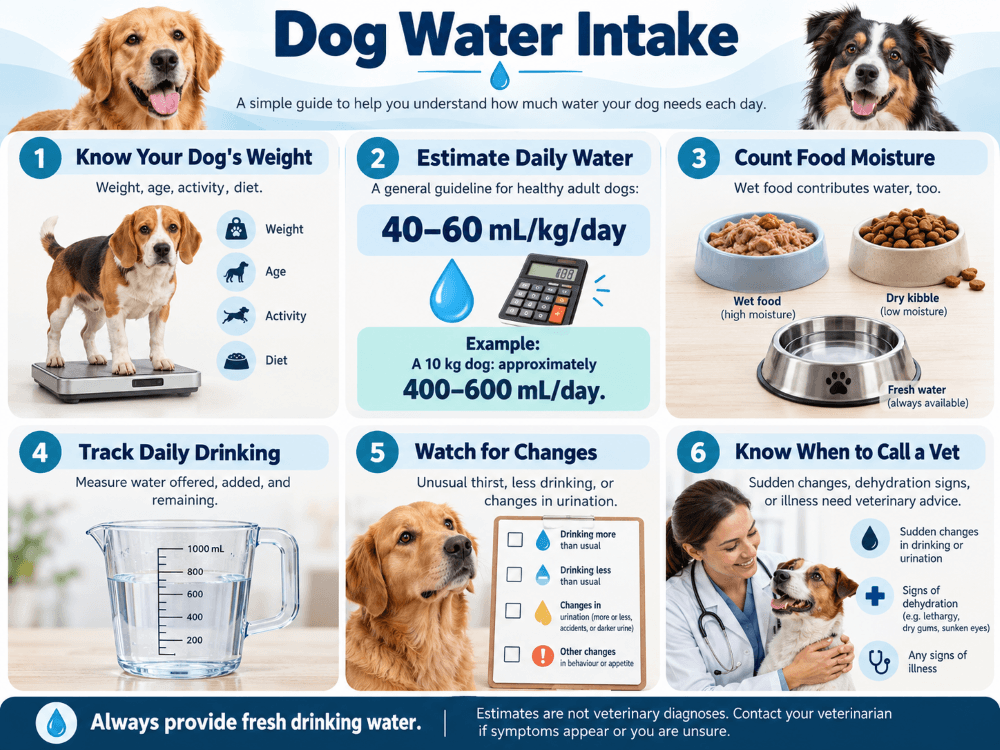
Dog Water Intake Infographic
Frequently Asked Questions
The Bottom Line
The dog water intake calculator provides a practical starting point for estimating your dog's daily water needs based on body weight. For many healthy dogs, approximately 40–60 mL/kg/day is a useful general reference, but diet, exercise, environment, and health can change actual requirements. Always provide clean, fresh drinking water and monitor changes in thirst and urination rather than treating the estimated range as a strict target. Contact your veterinarian if your dog drinks significantly more or less than usual or shows signs of illness.
For a broader look at your dog's daily care needs, explore our Dog Feeding Calculator, Dog Exercise Calculator, and Dog Walking Calculator.