
Ticks in Dogs: Symptoms, Types, Causes, Signs & Prevention

Canine Bible is reader-supported. We receive affiliate commissions via some of our links. Learn more.
A comprehensive guide to ticks in dogs, including common tick species, risk factors, warning signs, tick-borne diseases, safe removal methods, treatment options, prevention strategies and what pet parents should know to protect their dogs.
Ticks at a Glance
Most common in
Dogs exposed to grassy, wooded or brushy environments.
Common signs
Attached ticks, skin irritation, itching, fever and lethargy.
Diagnosis
Physical examination, tick identification and blood tests when needed.
Treatment
Tick removal, veterinary tick control and medication for infections.
Prognosis
Usually excellent after uncomplicated bites; varies with infection severity.
Prevention
Regular tick checks and consistent veterinarian-recommended preventives.
What Are Ticks in Dogs?
Ticks are blood-feeding external parasites that attach to a dog’s skin and feed on its blood. These small arachnids are commonly found in grassy areas, wooded environments, shrubs and places frequented by wildlife or other animals. Ticks can affect dogs of any age, breed or size, particularly those that spend time outdoors. While some tick bites cause only mild skin irritation, certain tick species can transmit infectious organisms responsible for diseases such as Lyme disease, ehrlichiosis, anaplasmosis, babesiosis and Rocky Mountain spotted fever. Heavy infestations may cause blood loss and anemia, while certain ticks can produce toxins that cause tick paralysis. Symptoms of tick-borne illnesses may develop days or weeks after exposure and can include fever, lethargy, reduced appetite, joint pain, lameness or weakness. Prompt tick removal, regular body checks and veterinarian-recommended tick prevention are essential for reducing the risk of infestations and associated health complications.


Types
Dogs can be exposed to many different types of ticks, and each can affect the body in different ways. Some attach to the skin and feed for several days, while others may transmit infections from one bite to another. Understanding the most common types of ticks can help pet parents recognize why symptoms, treatment options, and prognosis can vary so widely.
Brown Dog Tick
A widespread tick that commonly infests dogs and kennels and can transmit ehrlichiosis and other tick-borne infections.
American Dog Tick
Common in grassy and brushy areas of North America, this tick can transmit Rocky Mountain spotted fever and occasionally cause tick paralysis.
Blacklegged Tick (Deer Tick)
A small tick found in eastern North America that can transmit Lyme disease, anaplasmosis and other infections to dogs.
Western Blacklegged Tick
Found along the Pacific Coast of North America, this tick can transmit Lyme disease and anaplasmosis to dogs and humans.
Lone Star Tick
An aggressive biting tick found primarily in the eastern and central United States that can transmit certain ehrlichiosis infections.
Rocky Mountain Wood Tick
Found in mountainous regions of western North America, this tick can transmit Rocky Mountain spotted fever and cause paralysis.


Gulf Coast Tick
A tick found in southern and expanding areas of the United States that often attaches around a dog’s ears and can cause skin irritation.
Asian Longhorned Tick
An invasive tick found in several countries, including the United States, that can reproduce rapidly and infest dogs and other animals.
Australian Paralysis Tick
A dangerous tick found along Australia’s eastern coast that can release toxins causing progressive weakness, paralysis and breathing difficulties.
Other Tick Species
Includes other regional ticks such as the Pacific Coast tick, spinose ear tick and various species that affect dogs worldwide.
Predisposed Dog Breeds
While ticks can affect any dog, certain breeds may have a higher risk of exposure. Factors such as coat type, lifestyle, and outdoor activity make some breeds more prone to tick infestations than others.
| Size / Group | Breeds | Notes on Risk Factors |
|---|---|---|
| Large & Giant Breeds | Golden Retriever, German Shepherd, Bernese Mountain Dog, Newfoundland, Great Pyrenees, Saint Bernard | Thick or long coats can make attached ticks harder to detect. Dogs spending time in wooded areas, tall grass, or outdoor environments have greater exposure risks. |
| Medium Breeds | Labrador Retriever, Beagle, English Springer Spaniel, Brittany, Standard Poodle | Active dogs frequently exploring grassy trails, forests, and hunting areas may encounter more ticks. Outdoor activities and geographic location influence exposure. |
| Small Breeds | Dachshund, Jack Russell Terrier, Cocker Spaniel, Miniature Schnauzer | Dogs that frequently explore bushes, low vegetation, and grassy environments may encounter ticks. Regular inspection is important regardless of body size. |
| Toy Breeds | Chihuahua, Maltese, Yorkshire Terrier, Toy Poodle | Smaller dogs can acquire ticks during walks, outdoor play, or contact with infested environments. Ticks may be difficult to notice beneath longer coats. |
| Working & Herding Breeds | Australian Shepherd, Border Collie, Doberman Pinscher, Belgian Malinois, Australian Cattle Dog | Frequent exposure to fields, pastures, farms, and wooded environments increases opportunities for tick attachment. Working dogs benefit from regular tick checks and preventive treatments. |
| Other Predisposed Breeds | English Setter, German Shorthaired Pointer, Vizsla, Weimaraner | Hunting and sporting dogs may face increased tick exposure through frequent outdoor activities. Risk depends mainly on local tick populations, habitat, season, and preventive care rather than inherited breed characteristics. |
Causes
Ticks in dogs usually result from a combination of environmental, geographic, seasonal, and lifestyle factors rather than a single cause. While tick exposure cannot always be completely prevented, understanding the factors that may increase risk can help pet parents make informed decisions about prevention, outdoor activity, and early detection.
Geographic Location
Dogs living in regions with established tick populations face greater exposure risks. Tick species and the diseases they transmit vary depending on geographic location.
Seasonal Activity
Tick activity often increases during warmer months, although some species remain active year-round, especially in mild climates and indoor environments.
Environmental Factors
Exposure to tall grass, wooded areas, shrubs, leaf litter, and vegetation where ticks are present increases the likelihood of ticks attaching to dogs.
Wildlife & Other Animals
Wildlife, livestock, and other pets can support tick populations and introduce ticks into shared outdoor spaces, increasing the risk of exposure.
Outdoor Lifestyle
Dogs that frequently hike, hunt, camp, explore trails, or spend time in fields and forests have more opportunities to encounter ticks in their environment.
Inadequate Tick Prevention
Missing preventive treatments, inconsistent tick checks, or using ineffective tick-control products can increase the likelihood of infestations and tick-borne infections.
Climate & Weather Conditions
Temperature, humidity, and rainfall influence tick survival and activity. Mild, humid conditions can support tick populations, although environmental preferences vary among tick species.
Symptoms
Tick symptoms in dogs can vary widely depending on the type of tick, location of the bite, severity of infestation, and presence of tick-borne diseases. Some signs may be subtle at first, while others can become more noticeable as the infestation or infection progresses. Common warning signs include visible ticks, skin irritation, redness, itching, fever, low energy, appetite changes, joint pain, or weakness. Because many of these symptoms can also be caused by other conditions, any persistent or unusual changes should be evaluated by a veterinarian.
- Visible ticks attached to the skin
- Redness or swelling around tick bites
- Excessive scratching or itching
- Small bumps, scabs, or skin irritation
- Fever or increased body temperature
- Lethargy or decreased activity
- Decreased appetite
- Lameness, stiffness, or joint pain
- Pale gums or unusual bleeding in severe cases
- Weakness, poor coordination, or paralysis
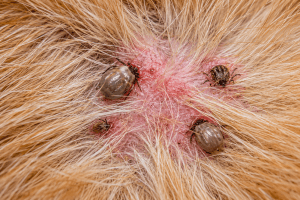
Ticks can attach anywhere on a dog’s body.
Stages & Progression of Ticks in Dogs
Tick infestations in dogs can progress at very different rates depending on the tick species, level of exposure, and whether tick-borne infections have developed. Understanding the stages of infestation helps veterinarians determine how severe the infestation is, whether tick-borne diseases are present, and which treatment options may be most appropriate. Understanding the progression of tick infestations can also provide important insight into potential complications, expected recovery, and the level of care your dog may need.
Initial Exposure
A dog encounters ticks in grassy, wooded, or infested environments. Ticks may crawl onto the coat before locating a suitable place to attach.
Tick Attachment
The tick attaches to the skin and begins feeding on blood. Dogs may show no obvious symptoms, making early detection and prompt removal important.
Feeding & Irritation
Continued feeding may cause redness, itching, swelling, or skin irritation. Heavy infestations can contribute to blood loss and anemia.
Potential Complications
Some infected ticks transmit diseases that may cause fever, lethargy, or lameness. Certain species can also cause tick paralysis, requiring urgent veterinary care.
This chart is a simplified visual guide, not a formal staging system or predictable timeline. Most tick bites do not progress through all four phases, and signs of tick-borne illness may develop without noticeable local irritation. Disease transmission and symptom onset vary by tick species and pathogen. Prompt removal and veterinarian-recommended prevention help reduce risks.
Top Ways to Prevent Ticks in Dogs
Because tick exposure is a common and preventable health risk, early prevention and routine protection are essential. By minimizing exposure to tick-infested environments, using veterinarian-recommended preventives, and performing regular tick checks, the risk of tick infestations and tick-borne diseases can be significantly reduced. Proactive care helps detect ticks early, improving your dog’s chances of staying healthy and avoiding complications.
| Prevention Strategy | Why It Helps | How to Do It |
|---|---|---|
| Use Veterinarian-Recommended Tick Preventives | Regular tick prevention reduces infestations and lowers the risk of transmitting tick-borne diseases. | Use vet-approved oral medications, topical treatments, or tick collars appropriate for your dog’s age, weight, and health. Follow the recommended schedule. |
| Perform Regular Tick Checks | Early detection allows ticks to be removed before prolonged feeding increases the risk of certain tick-borne infections. | Inspect your dog’s entire body daily, especially after outdoor activities. Check the ears, neck, armpits, groin, belly, and between the toes. |
| Limit Exposure to Tick-Infested Areas | Ticks commonly inhabit grassy, wooded, and brushy environments where they wait for passing animals. | Avoid tall grass, dense vegetation, and heavily infested trails. Keep your dog on maintained paths during walks, hikes, and outdoor activities. |
| Maintain a Tick-Safe Yard | Reducing suitable tick habitats around the home can help decrease tick populations and limit opportunities for attachment. | Mow grass regularly, remove leaf litter, trim overgrown vegetation, and keep outdoor play areas clear of brush and debris. |
| Remove Attached Ticks Promptly | Prompt removal helps reduce the duration of tick feeding and may lower the risk of transmitting certain infections. | Use fine-tipped tweezers to grasp the tick close to the skin and pull upward with steady pressure. Clean the bite area and avoid squeezing the tick’s body or using heat or petroleum jelly. |
| Protect All Household Pets | Untreated pets can carry ticks into the home, increasing exposure risks for other animals and household members. | Ensure every pet receives appropriate veterinarian-recommended tick protection. Never use dog-only tick treatments on cats, as some ingredients are highly toxic to them. |
| Keep Living Areas Clean | Cleaning areas where dogs rest can help detect ticks and reduce indoor infestations, particularly from brown dog ticks. | Wash pet bedding regularly, vacuum carpets and furniture, and inspect kennels, crates, and resting areas for ticks. |
| Monitor for Early Signs | Recognizing symptoms of tick-borne illness early allows for faster veterinary diagnosis and treatment, reducing potential complications. | Watch for fever, lethargy, decreased appetite, lameness, joint pain, weakness, or unusual bleeding. Contact your veterinarian if symptoms develop after tick exposure. |
Actionable Resources
If you want to prevent or reduce tick infestations and tick-borne diseases in your dog, here are some things you can do under veterinary guidance.
How Are Ticks in Dogs Diagnosed
Diagnosing ticks in dogs requires a comprehensive veterinary evaluation to determine the presence, type, and severity of the infestation and identify any tick-borne diseases. Key steps include:
1. Physical Examination
Your veterinarian examines your dog’s skin and coat for attached ticks, bite marks, redness, or swelling and reviews recent outdoor exposure, symptoms, and tick prevention history.
2. Laboratory Tests
If tick-borne illness is suspected, bloodwork, including a complete blood count and blood chemistry panel, helps identify anemia, low platelet counts, or organ abnormalities associated with infection.
3. Tick Identification
When a tick is available, its physical features may help identify the species. Knowing the tick type and geographic exposure can help assess potential risks of specific tick-borne diseases.
4. Tick-Borne Disease Testing
Antibody tests, antigen tests, or PCR testing may be recommended to investigate infections such as Lyme disease, ehrlichiosis, anaplasmosis, or babesiosis, depending on the suspected pathogen.
5. Results Interpretation
Your veterinarian evaluates test results alongside clinical signs and exposure history. Positive antibody results may indicate previous exposure, while early infections can sometimes produce negative results.
6. Severity Assessment & Follow-Up
Additional testing or follow-up examinations may be needed to assess complications, confirm a suspected infection, or monitor treatment response. The veterinarian determines further care based on your dog’s condition.
Early detection is vital because tick infestations and tick-borne diseases respond best when identified and treated promptly—allowing for more effective management and reducing the risk of serious complications.
Nutritional Support & Supplements
Proper nutrition can play an important supportive role for dogs affected by ticks by helping maintain energy, muscle mass, immune function, and overall quality of life during treatment and recovery. Depending on your dog’s needs, veterinarians may recommend strategies such as highly digestible, nutrient-dense diets and supplements including omega-3 fatty acids, probiotics, certain antioxidants, iron, or vitamin B12 when medically indicated. Nutrition supports recovery but does not replace tick removal, parasite prevention, or treatment for tick-borne diseases.
Important: Nutrition and supplements do not
kill ticks or treat tick-borne infections. Some supplements
can interact with medications or be harmful when unnecessary.
Always consult your veterinarian before giving supplements,
especially if your dog has anemia, liver problems, or is
receiving treatment for a tick-borne disease.
Supportive care—such as skin irritation management, nutritional support, and environmental adjustments—plays a crucial role in maintaining comfort and quality of life during treatment. These options are not a cure for tick infestations or tick-borne diseases and may interact with prescribed medications, so any diet or supplement plan should be reviewed with your veterinarian.
Over-the-Counter Products
Over-the-counter treatments and supplements mentioned in this article for ticks in dogs can be found on Amazon and Chewy.


Always consult your veterinarian before starting any new treatment, medication, or home-care regimen for canine ticks. Puppies and dogs with persistent vomiting, diarrhea, weakness, or dehydration may require prompt veterinary care. If you can’t reach your vet, you can chat live with a registered online veterinary professional via our online vet chat or video chat support (24 hours a day, 7 days a week). Or use Chewy’s online vet services (6 a.m. – midnight ET).
Treatment & Care
According to current veterinary research, the most effective treatments for ticks in dogs are multimodal, combining several approaches for the best outcome. These may include manual tick removal to eliminate attached parasites, oral or topical tick treatments to kill ticks and prevent reinfestation, and antibiotics or other prescribed medications to treat tick-borne infections when present.
Medications
Common medications used to treat ticks in dogs include:
| Medication / Treatment | Examples | How It Is Used | Important Considerations |
|---|---|---|---|
| Manual Tick Removal | Fine-tipped tweezers, tick-removal tools | Used to physically remove attached ticks from the dog’s skin, helping reduce irritation and the risk of transmitting certain tick-borne diseases. | Grasp the tick close to the skin and pull steadily without twisting or squeezing its body. Avoid heat, petroleum jelly, or chemicals to force removal. Clean the bite area afterward. |
| Isoxazoline Antiparasitics | Afoxolaner, fluralaner, sarolaner, lotilaner | Oral or topical antiparasitic medications that kill susceptible ticks and provide ongoing protection. Commonly used for treating and controlling tick infestations in dogs. | Use products appropriate for your dog’s age, weight, and health. Potential side effects include vomiting, diarrhea, tremors, poor coordination, or seizures. Consult your veterinarian, especially for dogs with neurological conditions. |
| Topical Tick Treatments | Fipronil, permethrin-based dog products, other approved topical acaricides | Applied to the skin to kill or repel ticks, depending on the formulation. Some products provide protection against fleas and other external parasites. | Follow product instructions regarding application frequency, bathing, and water exposure. Permethrin-containing dog treatments are highly toxic to cats and must never be applied to them. |
| Medicated Tick Collars | Flumethrin with imidacloprid, approved acaricidal collars | Provide extended tick control by releasing active ingredients that repel or kill ticks, depending on the product and formulation. | Protection duration varies by product. Ensure proper collar fit and monitor for skin irritation. Use only approved collars suitable for your dog’s age and size. |
| Tetracycline Antibiotics | Doxycycline, minocycline | Commonly prescribed to treat bacterial tick-borne infections such as ehrlichiosis, anaplasmosis, and Rocky Mountain spotted fever. Doxycycline is also commonly used for symptomatic canine Lyme disease. | Treatment duration depends on the infection and clinical condition. Possible side effects include vomiting, diarrhea, and appetite loss. These antibiotics do not kill ticks themselves. |
| Beta-Lactam Antibiotics | Amoxicillin | May be prescribed as an alternative antibiotic for certain dogs with symptomatic Lyme disease when doxycycline is not suitable. | Antibiotic selection depends on the confirmed or suspected infection. Amoxicillin does not reliably treat all tick-borne diseases and should only be used under veterinary guidance. |
| Antiprotozoal Medications | Imidocarb dipropionate | Used by veterinarians to treat certain forms of canine babesiosis, a tick-transmitted infection that affects red blood cells and may cause anemia and weakness. | Effectiveness varies by Babesia species. Potential side effects include vomiting, diarrhea, and reactions requiring veterinary monitoring. Availability and approved use differ by country. |
| Combination Antiprotozoal Therapy | Atovaquone with azithromycin | A combination treatment that may be prescribed for Babesia gibsoni infections, particularly when standard antiprotozoal medications are less effective. | Requires accurate diagnosis and veterinary supervision. Treatment may not completely eliminate the infection, and follow-up testing may be needed to monitor the response. |
| Tick Paralysis Antiserum | Tick antitoxin serum (Australia) | Used in Australia to treat tick paralysis caused by certain paralysis ticks. The antiserum helps neutralize circulating tick toxins before they cause further damage. | Administered by veterinarians with careful monitoring because allergic or other adverse reactions may occur. Availability is region-specific. Severe cases may require hospitalization and respiratory support. |
| Supportive & Emergency Care | Intravenous fluids, blood transfusions, anti-nausea medications, oxygen therapy | Used for dogs experiencing severe complications from tick infestations or tick-borne diseases, including dehydration, anemia, breathing difficulties, or systemic illness. | Treatment depends on the dog’s clinical condition and the underlying disease. Severe anemia, neurological symptoms, collapse, or respiratory distress require immediate veterinary attention. |
The best way to get these medications is at Chewy Pet Pharmacy:
Alternative & Integrative Therapies
Integrative and supportive therapies can help manage skin irritation, reduce discomfort, and improve quality of life for dogs affected by ticks. Options such as gentle grooming, soothing baths, veterinarian-approved skin treatments, and comfort-focused care may be used alongside conventional treatment, but should always be discussed with your veterinarian to ensure they are safe and appropriate for your dog. These approaches do not replace tick-control medications or treatment for tick-borne diseases.
Surgical Options
Tick removal is one of the most important treatment options for dogs with tick infestations, particularly when attached ticks can be safely removed. Depending on the number of ticks and their location, veterinary procedures may be used to remove attached ticks, treat infected bite wounds, relieve pain or irritation, or improve quality of life. Some dogs may also need wound cleaning, abscess drainage, or minor surgical procedures in rare cases involving severe skin complications. Your veterinarian will determine whether additional treatment is appropriate based on the severity of the infestation, bite location, skin damage, and your dog’s overall health.
Emotional & Lifestyle Impact
A tick infestation or tick-borne disease can be emotionally challenging for both dogs and their families. Dogs may experience changes in energy, appetite, mobility, and behavior, while some treatments and recovery periods can cause temporary discomfort. With thoughtful care, proper tick prevention, and veterinary support, most dogs can continue to enjoy happy, comfortable lives throughout treatment and recovery.
For Dogs
- Possible itching, skin irritation, and discomfort
- May experience fatigue or appetite changes if illness develops
- Adjusting to tick checks, grooming, and treatments
- May need extra rest and reduced activity during recovery
- Can still enjoy play, affection, and time with family
For Pet Parents
- It’s normal to feel worried about tick-borne diseases
- Focus on your dog’s comfort, safety, and recovery
- Follow regular tick prevention and inspection routines
- Lean on your veterinary team for treatment guidance
- Enjoy outdoor activities with appropriate tick protection
Tick exposure may bring temporary challenges, but it doesn’t have to take away the joy of everyday life. With proper prevention, timely treatment, and loving care, your dog can continue enjoying happy, healthy adventures.
Brighter tomorrows.
Dog Ticks Prognosis
A dog’s tick infestation prognosis depends on several factors, including the type of tick, severity of infestation, presence of tick-borne diseases, response to treatment, overall health, and level of supportive care. Most dogs recover successfully with prompt tick removal and appropriate treatment, while others may develop serious complications that require additional veterinary care. Working closely with your veterinary team can help guide treatment decisions, manage symptoms, and maintain the best possible quality of life for your dog.
Key Factors That Influence Prognosis
Typical Annual Cost of Treating Canine Ticks
| Category | Estimated Annual Cost Range | Notes |
|---|---|---|
| Initial Diagnosis & Testing | $60 – $350 | Includes veterinary examinations, tick identification, and initial blood tests when tick-borne infections are suspected. Testing costs vary by clinic. |
| Tick Removal & Treatment | $0 – $200 | Includes manual tick removal, veterinary assistance, and treatment of irritated bite sites. Uncomplicated ticks can often be removed safely at home using appropriate tools. |
| Oral Tick Preventive Medications | $120 – $400 | Includes veterinarian-recommended chewable medications such as afoxolaner, sarolaner, or fluralaner. Costs depend on dog weight, product, and dosing frequency. |
| Topical Treatments & Tick Collars | $60 – $300 | Includes topical tick treatments and medicated collars that kill or repel ticks. Protection duration and costs vary by brand, formulation, and dog size. |
| Follow-Up Exams & Bloodwork | $100 – $600 | Follow-up visits, complete blood counts, and other laboratory tests may be needed to monitor recovery from tick-borne infections or complications. |
| Antibiotics & Prescription Medications | $50 – $300 | Includes medications such as doxycycline for certain bacterial tick-borne diseases. Treatment costs vary by infection type, prescription, dosage, and duration. |
| Advanced Tick-Borne Disease Treatment | $300 – $1,500+ | May include additional diagnostic testing, specialized medications, and veterinary monitoring for infections such as babesiosis, ehrlichiosis, or anaplasmosis. |
| Emergency & Hospitalization Care | $1,000 – $6,000+ | Severe cases may require hospitalization, intravenous fluids, blood transfusions, oxygen therapy, or intensive care for severe anemia, tick paralysis, or other life-threatening complications. |
| Home & Environmental Tick Control | $50 – $500 | Includes yard maintenance, environmental tick-control products, cleaning supplies, and professional pest-control services when infestations are persistent. |
| Pet Insurance Coverage | Varies | Some accident-and-illness plans cover eligible tick-borne disease diagnosis and treatment after deductibles. Routine tick prevention is generally excluded unless a wellness benefit applies. |
| Typical Annual Range | Routine Tick Prevention: $100 – $500 | Tick-Borne Illness Treatment: $300 – $1,500+ | Severe Complications: $1,000 – $6,000+ | |
| Cost Note | These are illustrative U.S. cost estimates, not verified clinic quotes. Routine preventive costs are annual, while diagnostic, treatment, and emergency costs apply only when needed. Categories may overlap and should not be added together automatically. Actual expenses vary by region, clinic, dog size, and severity. | |
Ticks care can add up quickly — from daily medications to possible surgeries. Pet insurance can ease the financial burden and ensure your dog gets the best treatment without compromise. If you want to compare plans and find out which providers offer the best coverage for ticks and chronic conditions, check out our full guides to the Best Pet Insurance for Dogs and Best Pet Wellness Plans.
Related Health Conditions
Some health conditions are closely linked to ticks because they may be transmitted through tick bites, develop as complications, or cause overlapping symptoms. Understanding these related conditions can help dog owners recognize potential warning signs, learn how different tick-borne diseases behave, and better understand the diagnostic and treatment options their veterinarian may recommend.
- Lyme Disease
- Ehrlichiosis
- Anaplasmosis
- Babesiosis
- Rocky Mountain Spotted Fever
- Tick Paralysis
- Anemia
- Secondary Skin Infections
- Arthritis
- Fleas
Frequently Asked Questions
The Bottom Line
Ticks in dogs are a common health concern, but it’s important to remember that most infestations can be successfully treated with prompt removal and appropriate parasite control. Advances in veterinary medicine, effective tick preventives, and improved diagnostic testing now allow many dogs to recover from tick-related illnesses and continue living happy, healthy, and comfortable lives. By learning to recognize early warning signs, performing regular tick checks, using veterinarian-recommended preventives, and maintaining a clean environment, you can play a vital role in protecting your dog’s health. Above all, your love, care, and commitment can make every day count, giving your dog the best possible quality of life and protection against future tick infestations.