Why Do Dogs Need Anal Glands Expressed? 5 Reasons Explained

Canine Bible is reader-supported. We receive affiliate commissions via some of our links. Learn more.
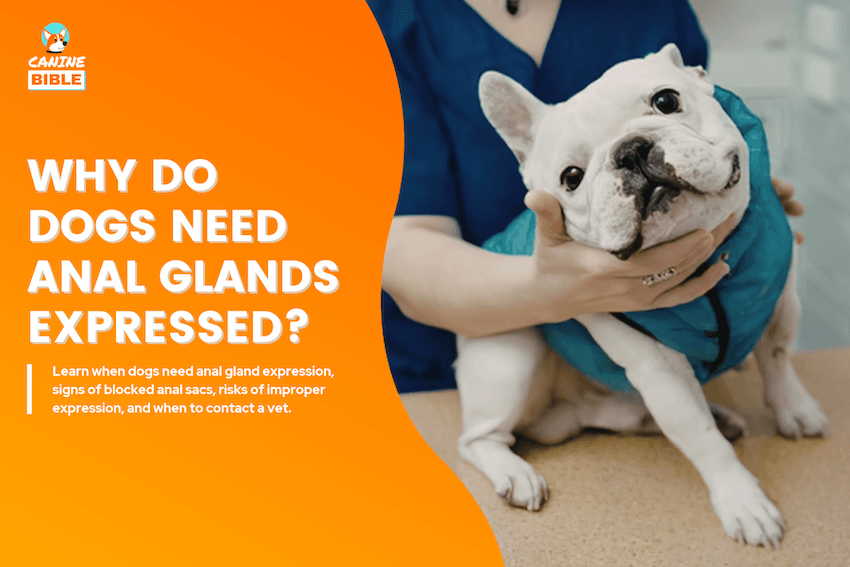
Having a dog’s anal glands expressed can be necessary in certain situations, but not every dog requires this procedure. Understanding when it is needed can make a significant difference in your dog’s comfort and health. While scooting, excessive licking, and a strong fishy odor may suggest a problem, these signs don’t always mean the glands need to be expressed. Some dogs experience recurring anal gland issues, while others go their entire lives without intervention. Surprisingly, unnecessary or improper expression can sometimes cause more harm than good. So, how can you tell when your dog needs help, and how often should anal glands actually be expressed? Knowing the warning signs, potential risks, and appropriate treatment options can help you make safer, more informed decisions about your dog’s care.
What Are a Dog’s Anal Glands, and What Do They Do?
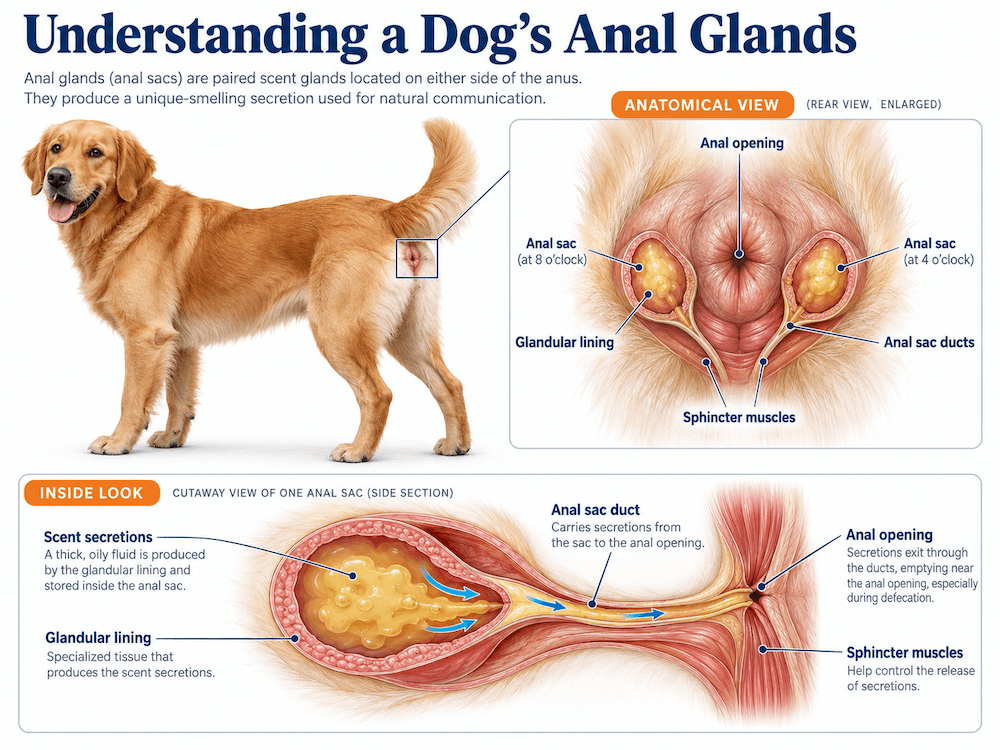
Dogs have two small anal sacs located just inside the anus, approximately at the four o’clock and eight o’clock positions. These sacs contain glands that produce a distinctive, strongly scented secretion made up of various chemical compounds. Their primary recognized function is scent communication, which may help dogs exchange chemical information with other animals.
Although commonly called anal glands, the structures that fill and empty are technically the anal sacs. The glands continuously contribute material to these small reservoirs, which release secretions through narrow ducts near the anus. This explains why natural anal sac emptying is an ongoing physiological process rather than a grooming procedure that every dog requires.
How Do Dogs Naturally Express Their Anal Glands?
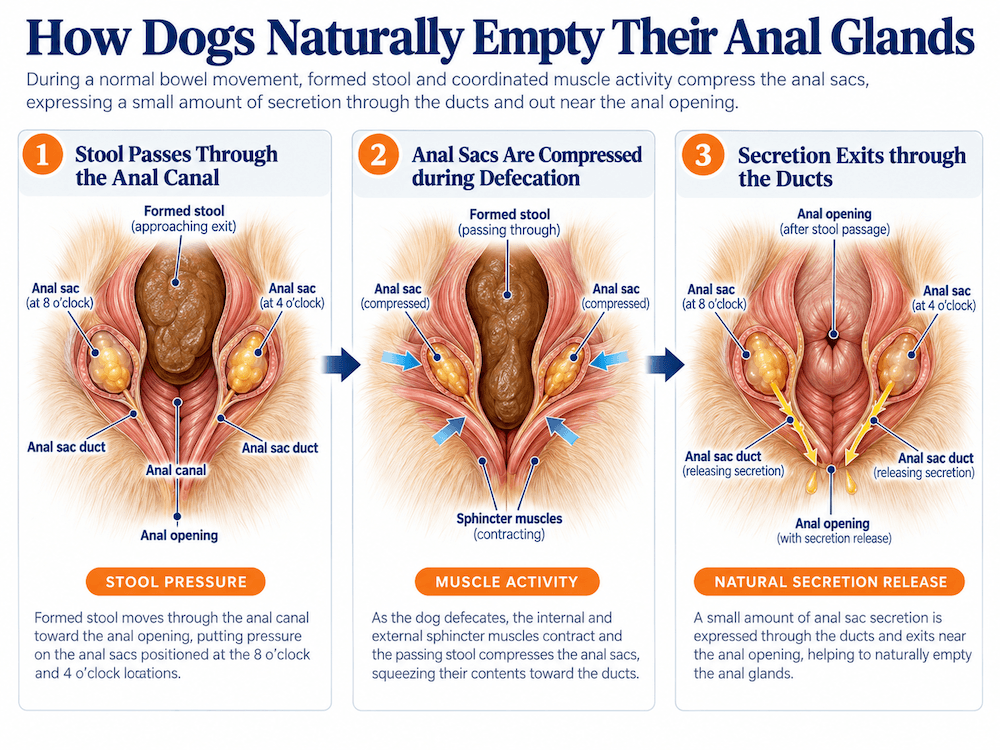
During defecation, pressure from passing stool and surrounding muscle contractions helps release small amounts of fluid through the anal sac ducts. This process occurs without deliberate effort, and owners usually do not notice it. Natural emptying depends partly on stool consistency, muscular activity, and unobstructed drainage.
Do All Dogs Need Their Anal Glands Expressed?
No. Most healthy dogs maintain normal anal sac drainage without professional expression. Routine emptying during grooming is generally unnecessary when a dog has no symptoms or history of anal sac disease. Unnecessary or improperly performed expression can irritate the surrounding tissues.


Some dogs with recurring, veterinarian-confirmed impaction may benefit from periodic checks and expression. However, the decision should be based on clinical findings, not simply whether the sacs contain fluid.
5 Reasons Dogs May Need Anal Gland Expression
Although most dogs naturally empty their anal sacs, certain conditions can interfere with normal drainage or make professional intervention necessary. These situations differ in severity, and manual expression is not always sufficient by itself. The key distinction is whether expression relieves retained material, supports treatment, or assists a veterinary examination.
1. Anal Sac Impaction
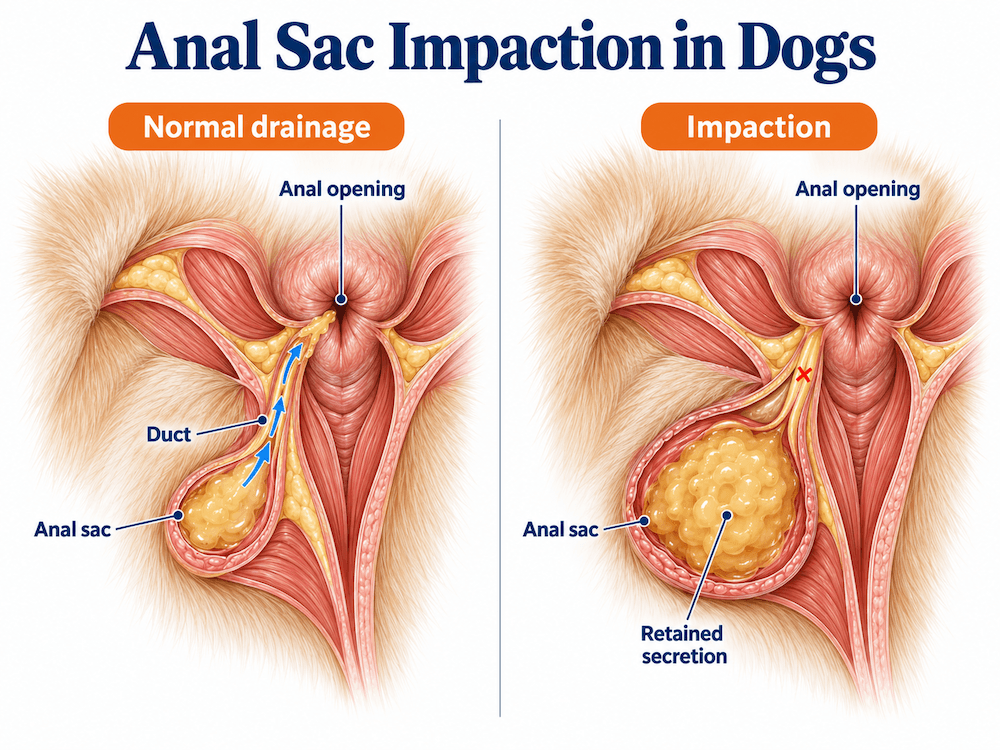
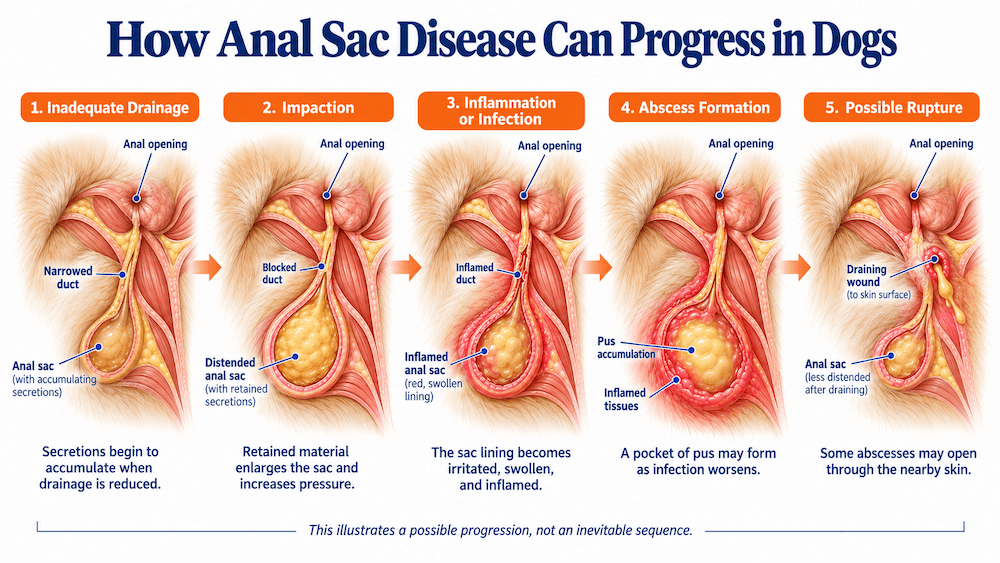
Anal sac impaction occurs when secretions accumulate instead of draining normally, causing one or both sacs to become enlarged and uncomfortable. Retained material may become difficult to evacuate, and the dog may begin scooting, licking its rear, or showing discomfort while sitting. When a veterinarian confirms uncomplicated impaction, gentle manual expression can remove the retained material and relieve pressure.[1][2]
2. Anal Sac Inflammation or Infection (Sacculitis)
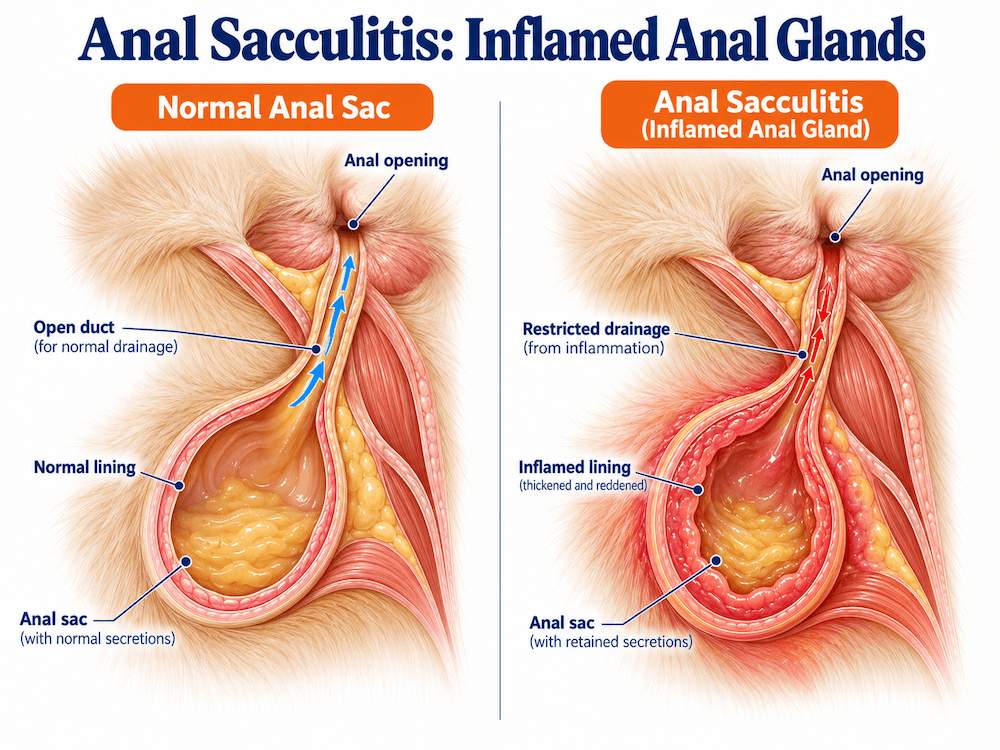
Anal sacculitis develops when the anal sac lining becomes inflamed, sometimes with an associated bacterial infection. Inflammation can interfere with drainage by causing swelling, irritation, and discomfort around the sac and its duct. A veterinarian may express the affected sac as part of treatment, but flushing and appropriate medication may also be needed to control the underlying inflammation.[3][4]


3. Anal Sac Abscesses Requiring Veterinary Drainage
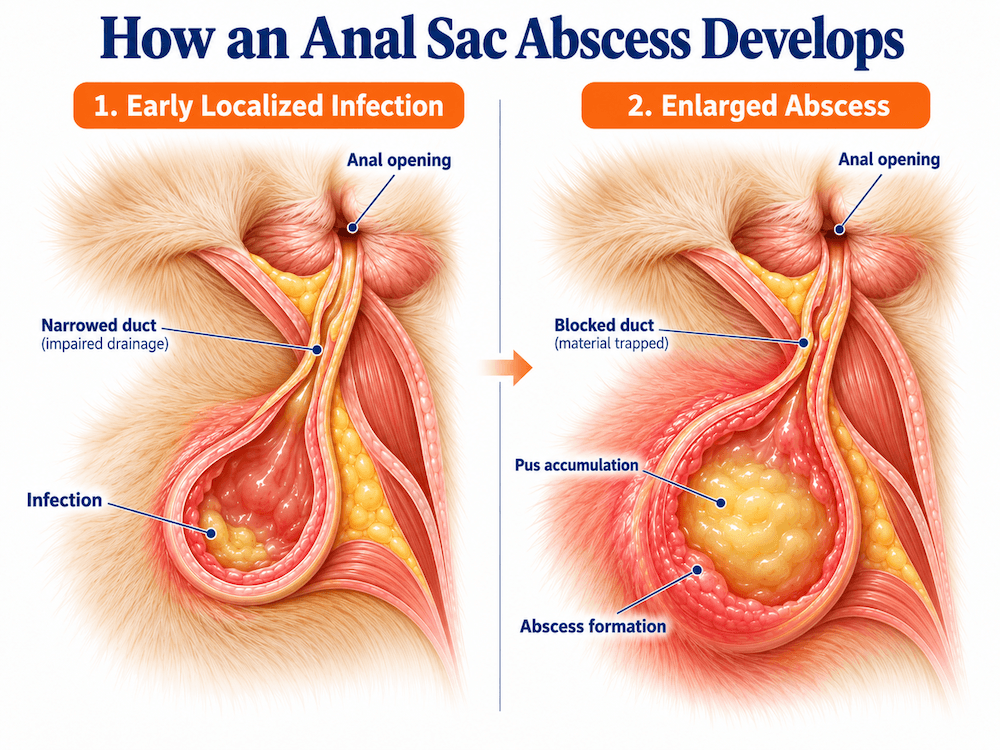
An anal sac abscess forms when infection produces a localized collection of pus, often causing marked swelling, pain, and sometimes rupture through the surrounding skin. An abscess requires professional treatment, which may involve controlled evacuation, drainage, flushing, pain relief, and medication rather than ordinary manual expression. Owners should never attempt to squeeze a suspected abscess because it can cause significant pain and further tissue damage.[1]
4. Veterinary Examination and Diagnostic Sampling
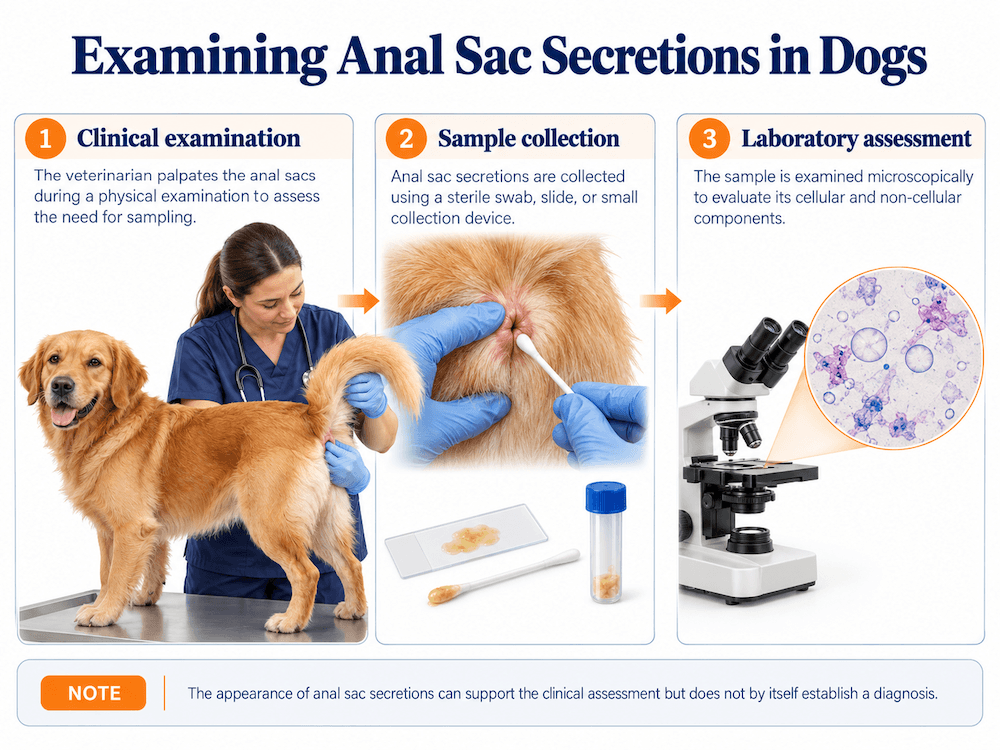
A veterinarian may express an anal sac during an examination to assess its contents and investigate suspected disease, particularly when a dog has persistent discomfort, unusual discharge, or recurring symptoms. Collected material may be evaluated for abnormalities, but secretion appearance and routine microscopic findings cannot reliably diagnose anal sac disease on their own. Expression is therefore a selective diagnostic procedure, not a necessary part of every healthy dog’s examination.[5]
5. Recurrent Anal Sac Problems Requiring Ongoing Management
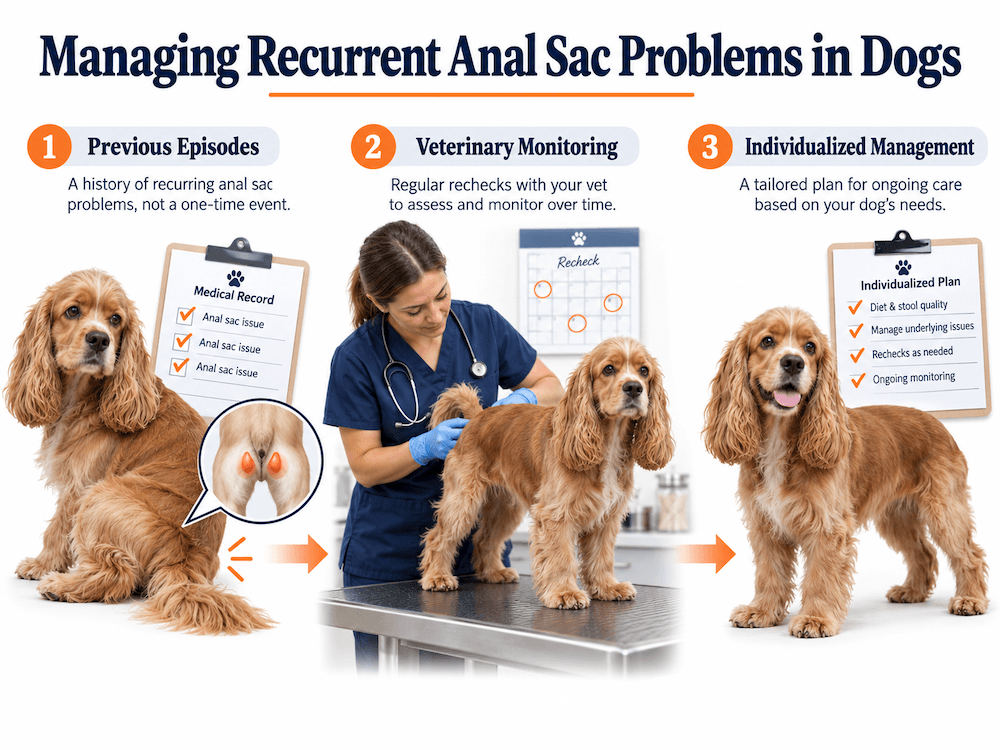
Some dogs experience repeated anal sac problems because their sacs consistently fail to empty adequately, even after previous treatment. For dogs with a documented history of recurring retention, periodic veterinary assessment and selective expression may help manage buildup before significant discomfort develops. However, repeated expression does not correct the underlying cause, so persistent problems should prompt further investigation rather than automatic lifelong treatment.[6]
What Makes Some Dogs More Prone to Anal Gland Problems?
Anal sac disorders can affect any dog, but breed characteristics, stool abnormalities, and certain health conditions may increase susceptibility. Some factors have stronger scientific support than others, so they should be considered potential contributors rather than automatic reasons for routine expression.
| Factor | Potential Influence | Evidence Distinction |
|---|---|---|
| Breed | Some small breeds and spaniels have higher disease rates. | Supported by observational studies; causes remain unclear. |
| Stool consistency | Soft stools may reduce pressure; constipation may hinder emptying. | Clinically plausible; direct causal evidence is limited. |
| Allergic skin disease | Allergies may contribute to recurring anal sac inflammation. | Observed association; causation is not established. |
| Excess body weight | Obesity may interfere with effective anal sac drainage. | Proposed contributor; independent risk remains uncertain. |
| Individual anatomy | Narrow ducts or structural abnormalities may restrict drainage. | Clinically recognized; precise risk estimates are limited. |
Signs Your Dog Needs Their Anal Glands Checked
Signs of anal sac discomfort vary from mild irritation to severe pain and swelling. Although scooting and rear licking are common, these behaviors do not confirm that the anal sacs are full. The severity, persistence, and combination of symptoms help determine how quickly veterinary care is needed.
| What You Notice | Possible Significance | Recommended Response |
|---|---|---|
| Brief fishy odor | May occur with normal spontaneous secretion release. | Monitor if isolated and your dog is comfortable. |
| Occasional scooting | May reflect temporary irritation unrelated to anal sacs. | Observe; arrange an examination if it continues. |
| Repeated scooting | Suggests persistent discomfort requiring investigation. | Schedule a veterinary examination. |
| Frequent rear licking | May indicate irritation, itching, or pain. | Have persistent behavior evaluated. |
| Pain when sitting or defecating | May indicate inflammation or another anorectal problem. | Seek prompt veterinary assessment. |
| Swelling, blood, or pus | May indicate an abscess, inflammation, or another lesion. | Seek urgent veterinary care. |
Does Scooting Always Mean a Dog Needs Anal Gland Expression?
Scooting is a response to irritation or discomfort around the rear end, not a diagnosis. Other conditions can produce similar behavior, and expressing the anal sacs unnecessarily may delay appropriate treatment.
| Possible Cause | Distinguishing Clues |
|---|---|
| Anal sac disease | Scooting, rear licking, fishy odor, or discomfort. |
| Intestinal parasites | Anal irritation, sometimes with visible tapeworm segments. |
| Allergic skin disease | Itching elsewhere, inflamed skin, or recurring irritation. |
| Grooming-related irritation | Discomfort after clipping, bathing, or contact with irritating products. |
| Perianal infection or injury | Visible redness, tenderness, wounds, or discharge. |
| Growths or masses | Persistent lump, asymmetric swelling, or difficulty defecating. |
What Happens If a Dog’s Anal Glands Aren’t Expressed When Needed?
When anal sac drainage remains impaired, retained secretions may become increasingly thick and difficult to remove. Some cases remain uncomplicated, while others progress to inflammation, infection, or abscess formation.
How Do Veterinarians Determine Whether Anal Gland Expression Is Necessary?
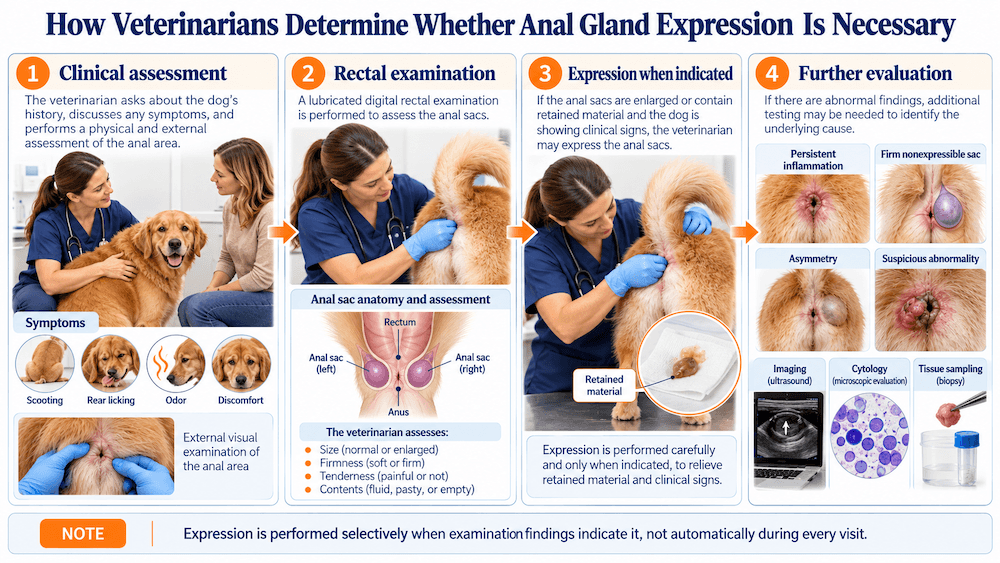
Veterinarians begin by reviewing the dog’s symptoms and examining the anal region. When appropriate, a lubricated digital rectal examination allows assessment of the sacs’ size, firmness, tenderness, and contents. Expression is performed when indicated, rather than automatically during every examination.
How Are Anal Gland Problems Treated Beyond Expression?
Treatment varies according to the underlying disorder. Uncomplicated impaction often responds to expression, while inflammation, infection, abscesses, and suspected tumors may require additional interventions.
How Often Should Dogs Have Their Anal Glands Expressed?
There is no universal schedule for anal gland expression. How often a dog needs the procedure depends on their anal sac health, history of problems, and veterinary assessment.
Should You Express Your Dog’s Anal Glands at Home?
Improper expression can cause pain, bruising, inflammation, or injury to delicate tissues. Owners should not attempt the procedure without veterinary instruction, particularly when their dog has no confirmed history of uncomplicated impaction. Pain, swelling, bleeding, or unusual resistance are reasons to stop and seek professional care.
For selected dogs with recurrent uncomplicated impaction, a veterinarian may teach the owner how to perform expression safely. However, home expression should not replace investigation of recurring symptoms.
| Provider | Appropriate Situation | Important Consideration |
|---|---|---|
| Veterinarian | Pain, suspected disease, recurring impaction, or abnormal findings. | Can diagnose and treat underlying medical conditions. |
| Professional groomer | Uncomplicated expression when recommended by a veterinarian. | Cannot diagnose infections, abscesses, or tumors. |
| Trained dog owner | Selected cases approved by a veterinarian. | Requires direct instruction and appropriate follow-up. |
Can Expressing a Dog’s Anal Glands Too Often Be Harmful?
Yes. Unnecessary or frequent manipulation can irritate the anal area, particularly when excessive pressure is used. Repeated expression without confirming the reason for the problem may also mask recurring disease and delay diagnosis.
| Do | Avoid |
|---|---|
| Follow a vet-recommended schedule. | Automatic expression at every grooming visit. |
| Seek instruction before home expression. | Forceful squeezing or repeated attempts. |
| Investigate recurring symptoms. | Assuming all scooting means full glands. |
| Stop if pain or swelling occurs. | Expressing a suspected abscess. |
When Is Anal Gland Removal Surgery Necessary?
Anal sacculectomy involves surgically removing one or both anal sacs. It may be considered for severe, repeatedly recurring disease that has not responded adequately to medical treatment or for certain anal sac tumors.
Surgery can provide lasting relief in appropriately selected cases, but it carries risks, including infection, wound complications, and temporary or potentially permanent fecal incontinence. A veterinarian must weigh these risks against the severity and frequency of the dog’s condition.
What to Expect After Anal Gland Expression
Dogs with uncomplicated impaction may show improved comfort soon after successful expression. Scooting, licking, and sensitivity should generally decrease, although mild temporary irritation is possible. Monitor your dog for the following changes:
If signs return repeatedly, record when they occur, whether stool consistency has changed, and how long relief lasts after treatment. This information can help your veterinarian identify patterns and determine whether further testing or a different treatment plan is necessary.
How to Help Prevent Anal Gland Problems in Dogs
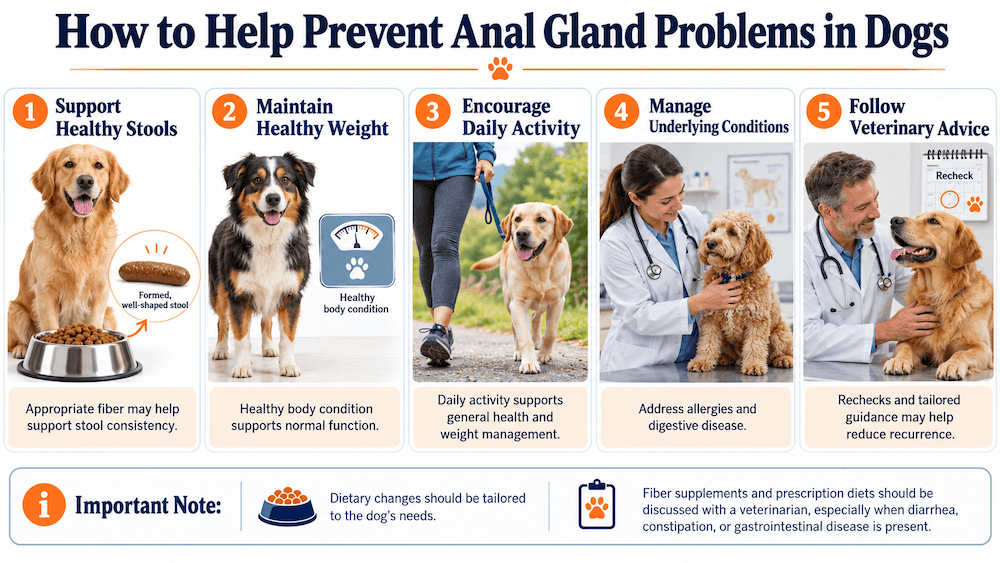
Preventive care focuses on supporting normal anal sac drainage and managing conditions that increase the likelihood of disease. These measures cannot guarantee prevention, but they may reduce recurring problems in susceptible dogs.
Frequently Asked Questions
The Bottom Line
Most dogs naturally empty their anal sacs and do not require routine manual expression. However, when secretions accumulate, or anal sac disease develops, veterinary intervention may be necessary to relieve discomfort and prevent complications. Symptoms such as persistent scooting, excessive rear licking, and unusual discharge can indicate a problem, although they are not specific to anal gland disorders. Conditions involving inflammation, infection, or abscesses may require treatment beyond simple expression. Dogs with recurring issues benefit from individualized veterinary care rather than a fixed expression schedule. Supporting healthy bowel movements and managing contributing health conditions may also promote normal anal sac function. Ultimately, recognizing concerning signs and avoiding unnecessary expression are essential to keeping your dog comfortable and healthy.
For a closer look at symptoms, causes, and complications, explore our guide to anal sac disease in dogs. If your veterinarian recommends manual expression, learn about safe techniques and precautions in our article on how to express dog anal glands. You can also explore the best foods for dogs with anal gland issues to understand dietary options that may support healthy digestion and natural anal sac emptying.
Sources
- Non-neoplastic anal sac disorders in UK dogs: Epidemiology and management aspects of a research-neglected syndrome
- Efficacy of an oral chew containing fibre and Bacillus velezensis C-3102 in the management of anal sac impaction in dogs
- Local treatment for canine anal sacculitis: A retrospective study of 33 dogs
- A retrospective study of treatment, outcome, recurrence and concurrent diseases in 190 dogs with anal sacculitis
- Comparison of anal sac cytological findings and behaviour in clinically normal dogs and those affected with anal sac disease
- A Cross-Sectional Study on Canine and Feline Anal Sac Disease