Why Do Dogs Lick People, Themselves & Everything Else? (10 Reasons)

Canine Bible is reader-supported. We receive affiliate commissions via some of our links. Learn more.
Why do dogs lick, and what are they trying to communicate through this common behavior? Whether your dog licks your face, hands, feet, other dogs, or even household objects, these seemingly simple actions can have different meanings depending on the situation. While licking is a natural part of canine behavior, not every lick means the same thing. Some dogs lick occasionally, while others seem to lick everything in sight, leaving owners wondering what’s normal. The frequency, target, and circumstances of licking can offer important clues about your dog’s behavior and well-being. But when does harmless licking become excessive, and could it signal an underlying health or behavioral concern? Understanding the different types of licking, what triggers them, and when to pay closer attention can help you better interpret your dog’s actions and recognize when something isn’t right.
What to Know About Licking Behavior in Dogs
Licking is a natural, multifunctional behavior that dogs use throughout their lives. Its meaning depends on what they lick, the surrounding circumstances, and their physical and emotional state.
| Aspect | What Dog Owners Should Know |
|---|---|
| Type of behavior | Natural behavior influenced by instinct, experience, and physical needs. |
| Primary functions | Social interaction, grooming, sensory exploration, and responses to discomfort. |
| When it begins | Starts at birth through maternal care and develops during puppyhood. |
| Body parts involved | The tongue, mouth, sensory nerves, and coordinated muscle movements. |
| What dogs lick | People, other animals, their bodies, and environmental surfaces. |
| Normal frequency | Varies by dog; occasional, brief licking is generally normal. |
| What influences licking | Age, learned habits, surroundings, health, and individual temperament. |
| Behavioral meaning | Depends on context, body language, and preceding events. |
| Potential concerns | Persistent licking may accompany discomfort, illness, or behavioral distress. |
| When to intervene | When licking causes injury, disrupts activities, or changes significantly. |
Reading Your Dog’s Body Language While Licking
A dog’s licking behavior becomes easier to interpret when you consider their overall body language. Relaxed movements and comfortable facial expressions may suggest a friendly interaction, while tension, avoidance, or other stress signals can indicate discomfort.
| Body Language | Possible Interpretation |
|---|---|
| Loose posture, soft eyes, and gentle licking | May indicate a relaxed, friendly interaction. |
| Relaxed tail movement and voluntarily approaching | Suggests comfort and willingness to engage. |
| Repeated lip licking with a tense body | May signal stress, uncertainty, or discomfort. |
| Licking while turning the head away | May indicate an attempt to avoid or disengage. |
| Ears pinned back, lowered posture, and licking | Can suggest fear or uneasiness, depending on context. |
| Stiff posture, freezing, or visible eye whites | May indicate significant discomfort; give the dog space. |
10 Common Dog Licking Behaviors and What They Mean
Dogs lick different people, animals, body parts, and objects for different reasons. Understanding what your dog is licking and when it happens can provide useful clues about the behavior’s purpose. The following situations explain the most meaningful distinctions between everyday licking and behaviors that deserve closer attention.
1. When Dogs Lick Their Owners
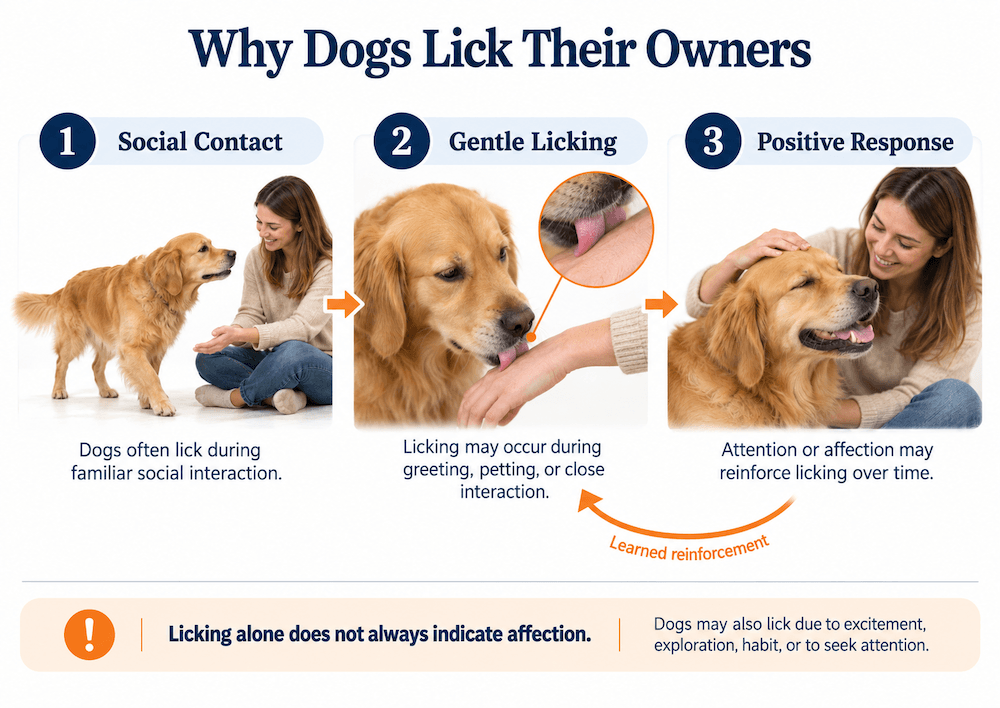
Dogs often lick familiar people as part of friendly social interaction, especially during greetings, petting, or relaxed time together. This behavior can develop through early social experiences and become reinforced when licking produces attention, affection, or other positive responses. A dog that gently licks its owner while displaying loose body language may be initiating contact or maintaining social closeness, although licking alone does not prove affection.


2. When Dogs Lick Other Dogs’ Faces or Muzzles
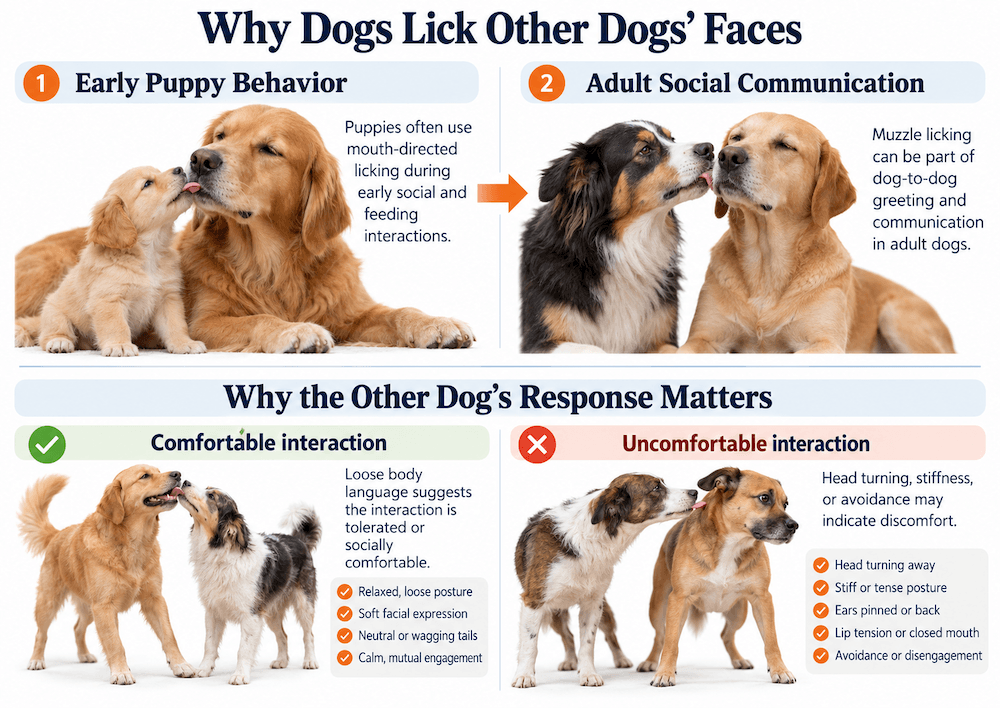
Face and muzzle licking can function as dog-to-dog social communication, particularly during greetings or interactions between familiar animals. Puppies commonly lick around an adult dog’s mouth while seeking attention or food, and elements of this behavior may persist into adulthood. Gentle muzzle licking may accompany friendly or deferential behavior, but the receiving dog’s posture and response determine whether the interaction is comfortable.
3. When Mother Dogs Lick Their Puppies
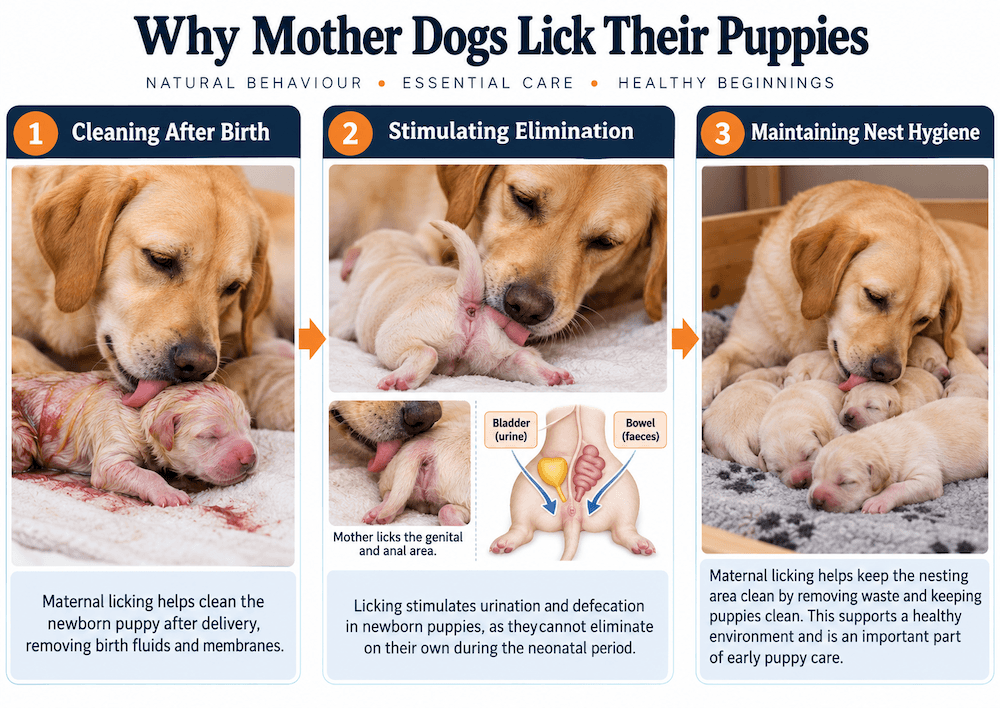
Mother dogs lick newborn puppies as part of essential maternal care that supports hygiene and early bodily functions. Immediately after birth, licking helps remove birth fluids and stimulates the puppies, while subsequent licking around the genital and anal regions encourages urination and defecation before puppies can reliably eliminate independently. This instinctive behavior also helps maintain cleanliness within the nesting area.
4. When Dogs Lick Their Own Fur During Grooming
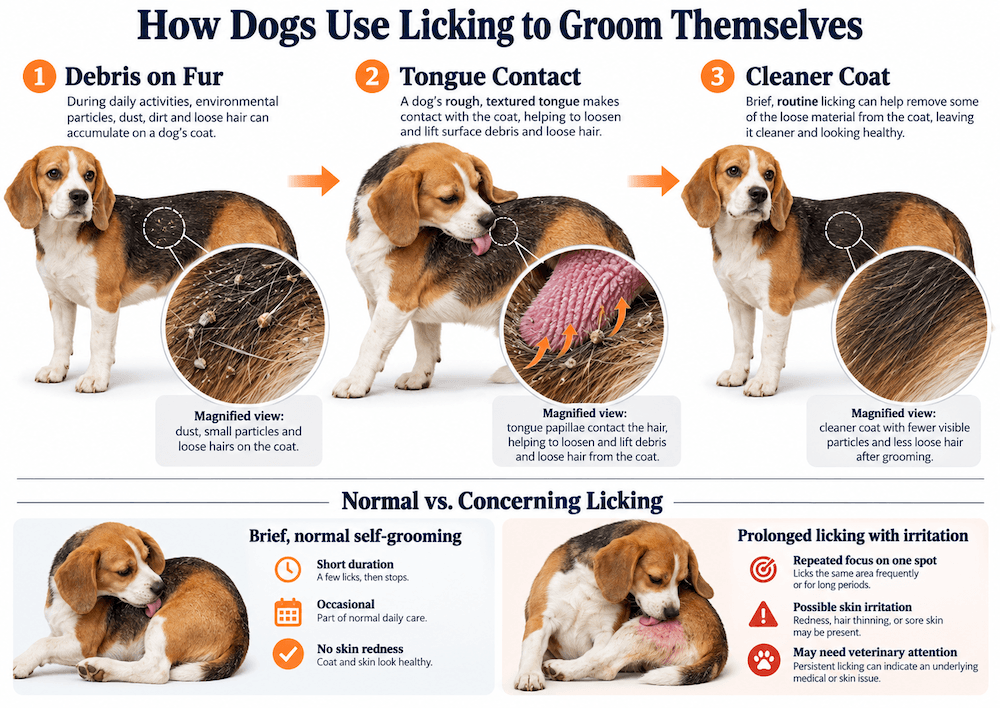
Dogs use their tongues for routine self-grooming, helping remove small amounts of dirt, loose hair, and debris from accessible parts of their coats. Short grooming sessions may occur after outdoor activities, resting, or other ordinary daily events. Unlike cats, dogs generally rely less heavily on licking for overall coat maintenance, so prolonged grooming that leaves the fur wet or damaged warrants closer attention.
5. When Dogs Repeatedly Lick Their Paws
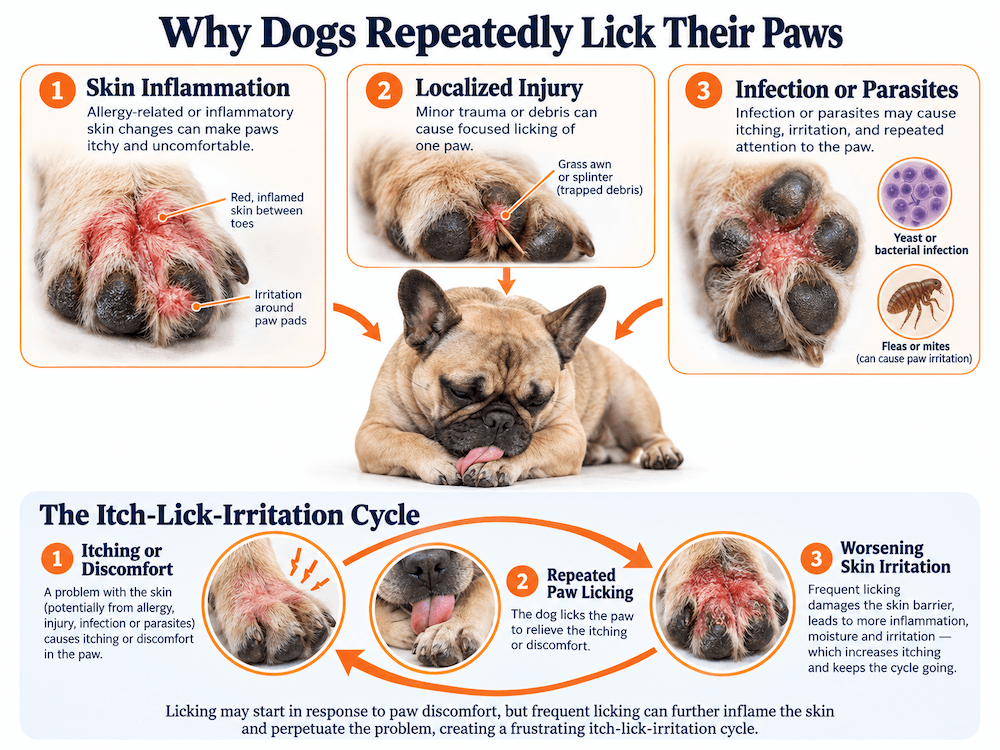
Frequent paw licking often develops when itching or localized discomfort activates sensory nerves in the skin, prompting the dog to lick or chew the affected area. Environmental allergies, infections, parasites, contact irritation, and trapped foreign material are possible triggers, while injuries may cause licking concentrated on one paw. Persistent licking can further damage the skin and intensify irritation, creating a cycle in which the licking itself makes the problem worse.
6. When Dogs Lick Their Genitals or Rear End
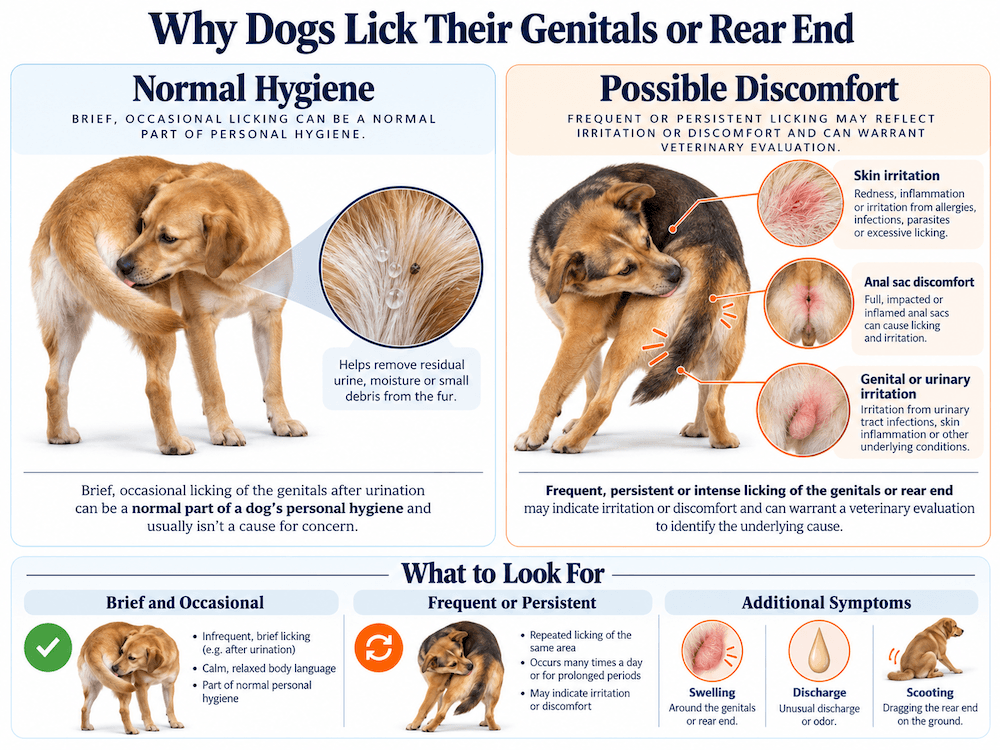
Dogs may lick their genital or anal regions for personal hygiene, particularly after urinating or defecating. Brief licking can remove residual moisture or debris, but frequent licking may indicate urinary tract irritation, reproductive tract problems, skin inflammation, or anal sac discomfort. Additional signs such as unusual discharge, swelling, scooting, foul odor, or changes in urination suggest that the behavior deserves veterinary attention.


7. When Dogs Lick Wounds or Painful Areas
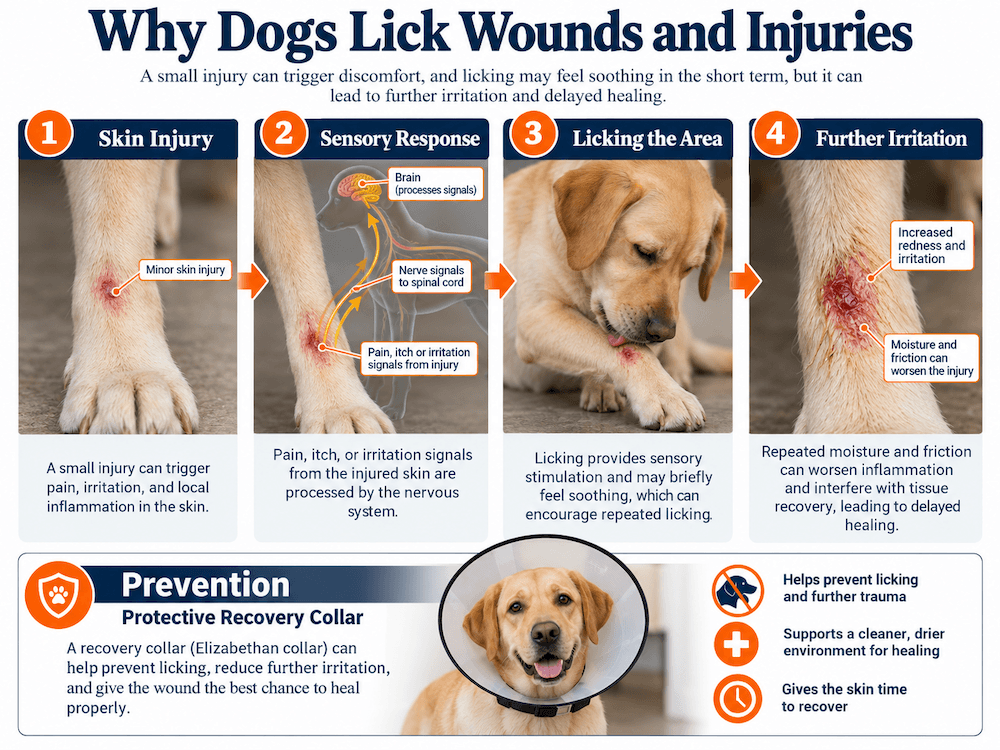
Dogs instinctively lick injured or uncomfortable body parts because physical irritation and pain can trigger a licking response. Contact from the tongue may temporarily alter how discomfort is perceived, while the licking action can also remove loose surface debris. However, repeated licking can damage healing tissue, introduce bacteria, and reopen wounds, making it important to prevent access to surgical incisions and other injuries.
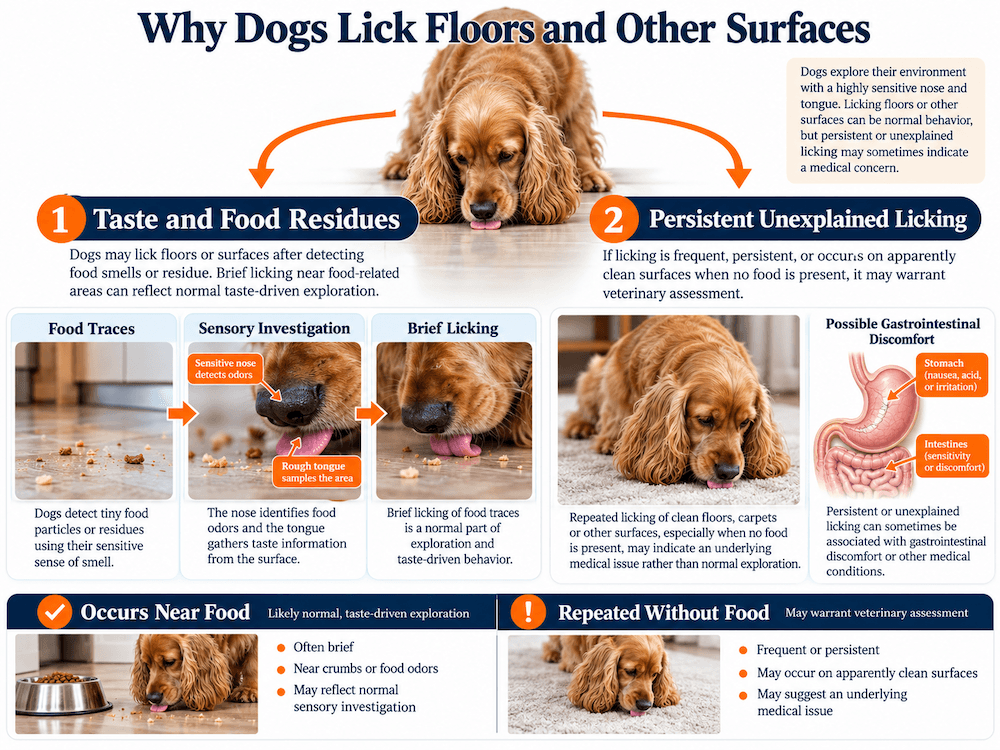
8. When Dogs Lick Floors, Carpets, or Other Surfaces
Dogs may lick floors and similar surfaces because interesting tastes or food residues encourage sensory investigation. Their tongues help detect and collect small amounts of material that remain after spills, cooking, or eating, even when those traces are difficult for people to notice. However, prolonged or repetitive surface licking without an obvious food-related trigger can sometimes accompany gastrointestinal discomfort, including nausea, and should not automatically be dismissed as curiosity.
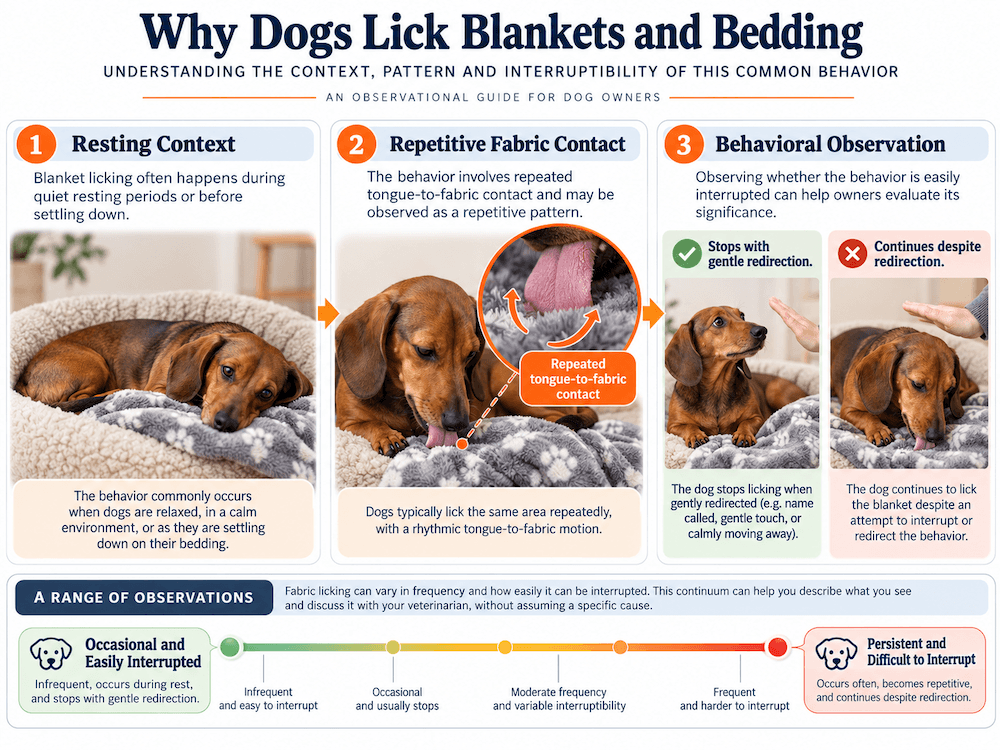
9. When Dogs Lick Blankets, Beds, or Furniture While Resting
Some dogs repeatedly lick soft household fabrics during quiet periods, potentially using the behavior as a repetitive settling activity. The texture of the material and the predictable licking movement may help occupy or calm certain dogs, although a self-soothing explanation cannot be confirmed from the behavior alone. Occasional licking may be harmless, but persistent fabric licking, especially when difficult to interrupt, can indicate emotional distress, a repetitive behavioral problem, or an underlying medical issue.
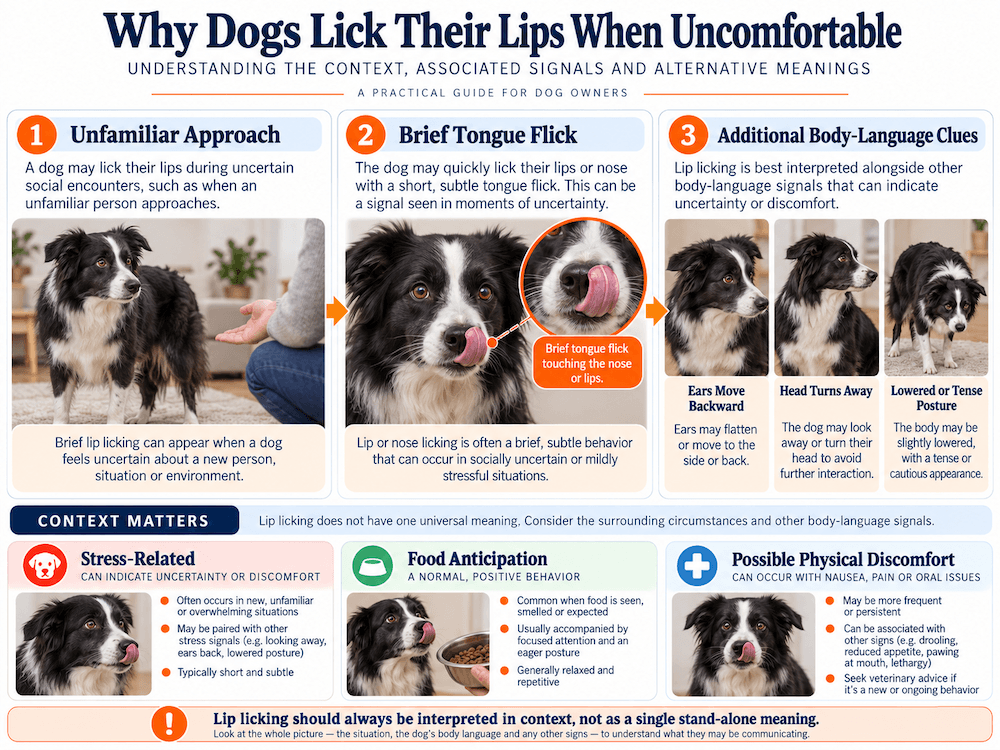
10. When Dogs Lick Their Lips or Nose During Stressful Situations
Brief lip or nose licking can appear as a subtle stress-related behavior when a dog feels uncertain, uncomfortable, or conflicted during an interaction. For example, a dog may repeatedly flick its tongue over its nose while being approached by an unfamiliar person, particularly when accompanied by a tense body, lowered posture, or avoidance. Lip licking also occurs around food and can accompany nausea or oral discomfort, so the surrounding circumstances are essential for interpretation.
What Influences How Often Dogs Lick?
The frequency of dog licking varies depending on age, individual temperament, learned habits, environment, and overall health. Some dogs naturally lick more often than others, while changes in their daily routines or physical comfort can influence how frequently the behavior occurs. Understanding these factors can help owners recognize their dog’s usual licking patterns.
When Dog Licking Is Normal vs. Concerning
Occasional licking is a normal part of canine behavior, especially when it occurs during grooming, social interaction, or brief investigation of people and surfaces. What matters most is not the behavior alone, but how often it happens, how intense it becomes, the context in which it appears, and whether other symptoms are present.
| Factor | Normal Licking | Concerning Licking |
|---|---|---|
| Frequency | Occasional episodes. | Frequent or increasing episodes. |
| Duration | Brief and self-limiting. | Prolonged or repetitive. |
| Intensity | Gentle and easily interrupted. | Persistent or difficult to interrupt. |
| Context | Grooming, greetings, or exploration. | Unexplained or disruptive behavior. |
| Body Focus | Brief grooming of different areas. | Repeated licking of one spot. |
| Skin Condition | Healthy skin and coat. | Redness, sores, or hair loss. |
| Other Symptoms | No unusual physical changes. | Pain, vomiting, swelling, or discomfort. |
| Behavior Pattern | Consistent with usual habits. | Sudden changes or escalating licking. |
Medical Conditions That Can Cause Excessive Licking in Dogs
Excessive licking is sometimes driven by an underlying medical problem rather than a harmless habit. In these cases, the key question is not just where your dog is licking, but what other physical signs appear alongside the behavior.
| Medical Condition | Why Licking Occurs | Key Symptoms |
|---|---|---|
| Allergies | Itchy, inflamed skin. | Red paws, itching, recurrent ear problems. |
| Skin infections | Skin irritation from bacteria or yeast. | Redness, odor, greasy skin, sores. |
| Fleas or mites | Parasite-related itching. | Scratching, scabs, hair loss. |
| Wounds or injuries | Pain and tissue irritation. | Broken skin, tenderness, swelling. |
| Anal sac disease | Anal pressure or inflammation. | Scooting, odor, rear-end swelling. |
| Urinary tract problems | Genital or urinary discomfort. | Frequent urination, straining, bloody urine. |
| Dental or oral disease | Pain or irritation in the mouth. | Drooling, bad breath, difficulty eating. |
| Gastrointestinal disease | Nausea or digestive discomfort. | Vomiting, repeated swallowing, appetite changes. |
| Arthritis or joint pain | Discomfort around affected joints. | Stiffness, limping, reduced mobility. |
| Neurological disorders | Abnormal nerve activity or sensation. | Twitching, staring spells, altered awareness. |
How to Figure Out Why Your Dog Is Licking
Identifying the cause of your dog’s licking starts with observing patterns rather than focusing on the licking alone. The location, timing, frequency, and accompanying symptoms can provide important clues about what triggers the behavior.
| What to Check | What to Observe | Why It Matters |
|---|---|---|
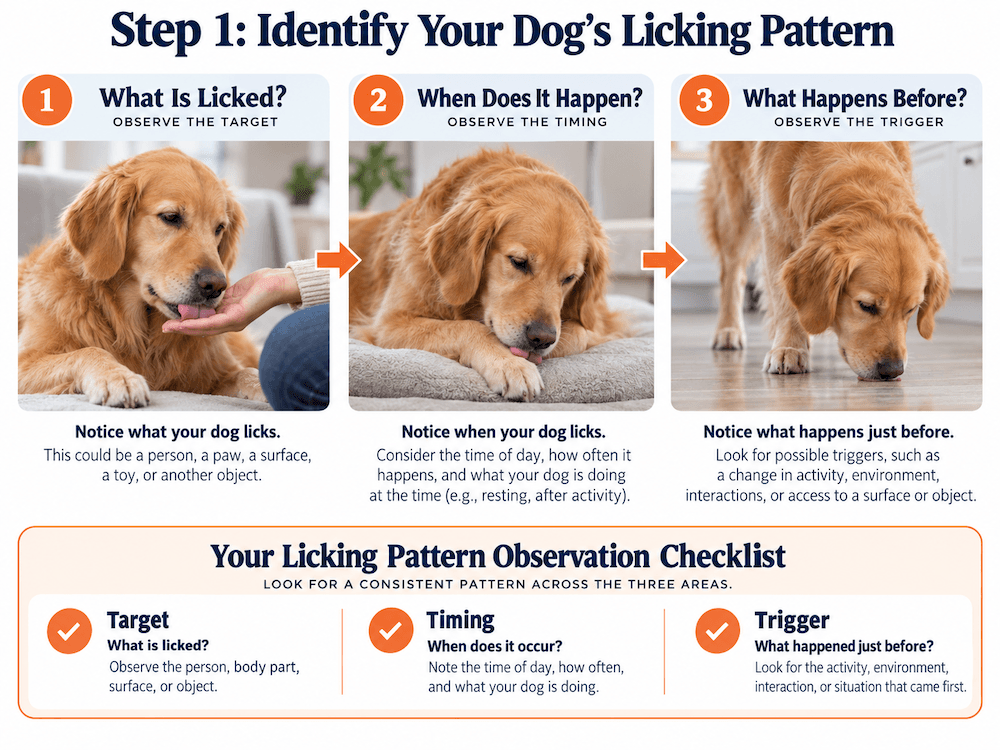
| What your dog licks | Identify the specific person, body part, object, or surface. | Helps narrow down behavioral, environmental, or physical explanations. |
| When licking occurs | Note activities, surroundings, and events immediately preceding licking. | Reveals possible triggers and recurring patterns. |
| Sudden or longstanding behavior | Determine whether licking is new, increasing, or habitual. | Sudden changes may indicate a new health or environmental concern. |
| Response to interruption | Observe whether your dog stops after gentle redirection. | Persistent, difficult-to-interrupt licking may warrant further evaluation. |
| Other symptoms | Check for redness, pain, vomiting, restlessness, or behavioral changes. | Associated symptoms can suggest an underlying medical problem. |
Can Excessive Licking Cause Health Problems?
Although licking is a normal canine behavior, repeated or prolonged licking can create health problems of its own, particularly when it damages the skin or exposes dogs to unsafe materials. Excessive moisture, friction, and repeated contact with vulnerable tissue can interfere with the body’s protective barriers.
| Potential Health Problem | How Excessive Licking Contributes | What Owners May Notice |
|---|---|---|
| Skin irritation and hot spots | Repeated moisture and friction damage skin and may promote hot spots. | Redness, moist lesions, hair loss, or sensitive skin. |
| Secondary bacterial or yeast infections | Damaged skin barriers and moisture can encourage microbial overgrowth. | Unpleasant odor, discharge, inflammation, or worsening skin irritation. |
| Delayed wound healing | Repeated tongue contact disrupts healing tissue and may introduce bacteria. | Reopened wounds, persistent inflammation, or slow healing. |
| Accidental ingestion of harmful substances or objects | Licking contaminated surfaces or swallowing materials can expose dogs to hazards. | Drooling, vomiting, illness, or possible poisoning requiring urgent assessment. |
When to Call a Veterinarian About Excessive Dog Licking
Seek immediate veterinary attention if unusual licking occurs alongside difficulty breathing, collapse, a swollen painful abdomen, or repeated attempts to vomit without producing anything. Suspected poisoning, inability to urinate, or severe pain also requires emergency evaluation. These signs can indicate serious conditions in which licking is only one part of the clinical picture.
Schedule a veterinary appointment for persistent or worsening licking that causes hair loss, redness, sores, swelling, or recurrent skin irritation. Licking accompanied by repeated vomiting, unusual discharge, limping, changes in urination, or altered appetite also deserves evaluation. Even without obvious physical symptoms, a sudden or significant change from your dog’s usual behavior should not be ignored.
A professional veterinary assessment is particularly helpful when the cause remains unclear, or attempts to manage the behavior have been unsuccessful. Depending on the history and examination findings, a veterinarian may investigate skin disease, pain, oral problems, gastrointestinal conditions, or underlying behavioral concerns. Bringing a short video and notes about when the licking occurs can help guide that evaluation.
How to Respond When Your Dog Licks Excessively
Managing excessive licking begins with identifying what triggers the behavior and determining whether it reflects an ordinary habit or an underlying problem. The most appropriate response depends on what your dog is licking, how frequently it happens, and whether physical symptoms are present.
Step 1: Identify When and Where the Licking Happens
Observe what your dog licks, when it happens, and what occurs immediately beforehand. Note whether the behavior appears during particular activities, interactions, or periods of rest. Identifying recurring patterns can help distinguish learned habits from unexplained or potentially discomfort-related licking.
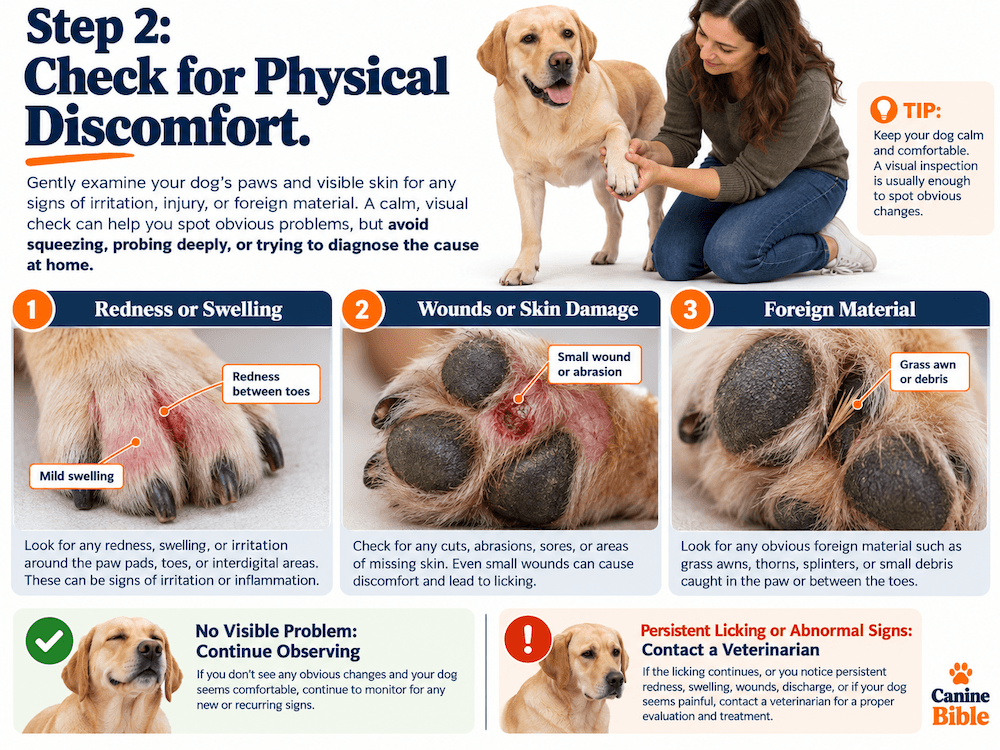
Step 2: Check for Physical Irritation or Discomfort
If your dog repeatedly licks the same body area, inspect it gently for visible abnormalities such as redness, swelling, wounds, or trapped debris. Avoid squeezing painful areas or applying human medications and unprescribed topical treatments. Arrange veterinary evaluation if the licking persists, the area appears injured, or additional symptoms develop.
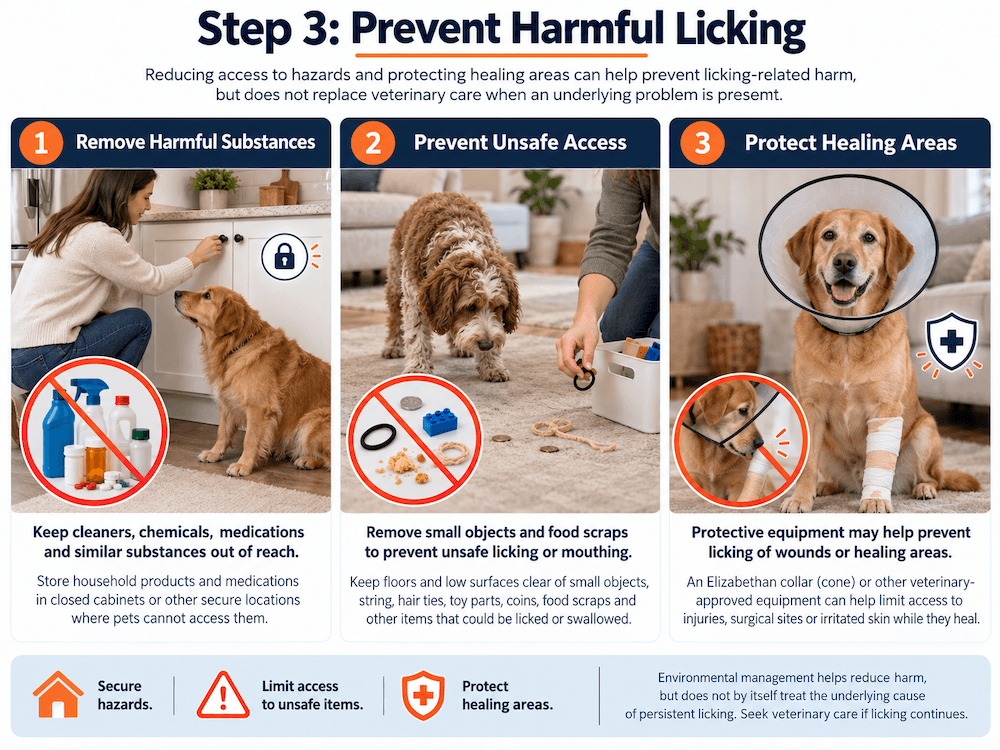
Step 3: Prevent Access to Unsafe Licking Targets
Remove potentially harmful substances and objects from areas your dog can reach, including cleaning products, medications, and small items that could be swallowed. If your dog is licking a wound or surgical incision, use veterinarian-recommended protective equipment to prevent further tissue damage. Ensure any protective collar or garment fits properly and does not interfere with breathing, drinking, or normal movement.
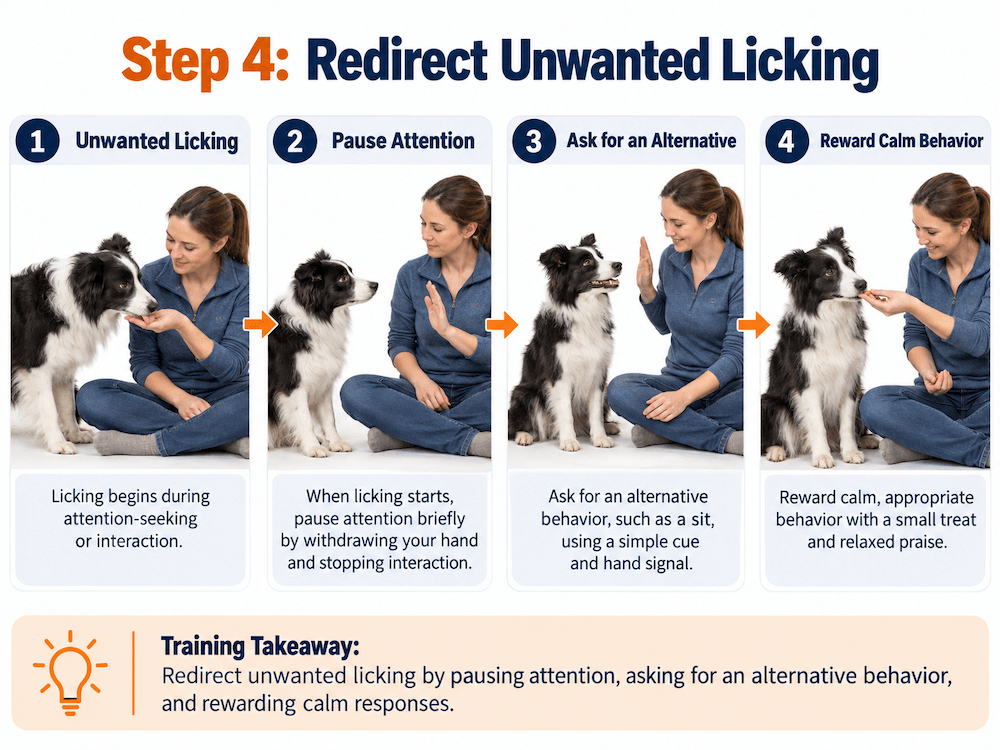
Step 4: Redirect Unwanted Licking With Positive Reinforcement
When licking appears to be an unwanted social habit rather than a medical concern, calmly redirect your dog toward an alternative behavior such as sitting or settling. Reward the alternative immediately with praise, attention, or a suitable treat. Avoid yelling, physical corrections, or forcibly restraining your dog’s mouth, which can increase distress.
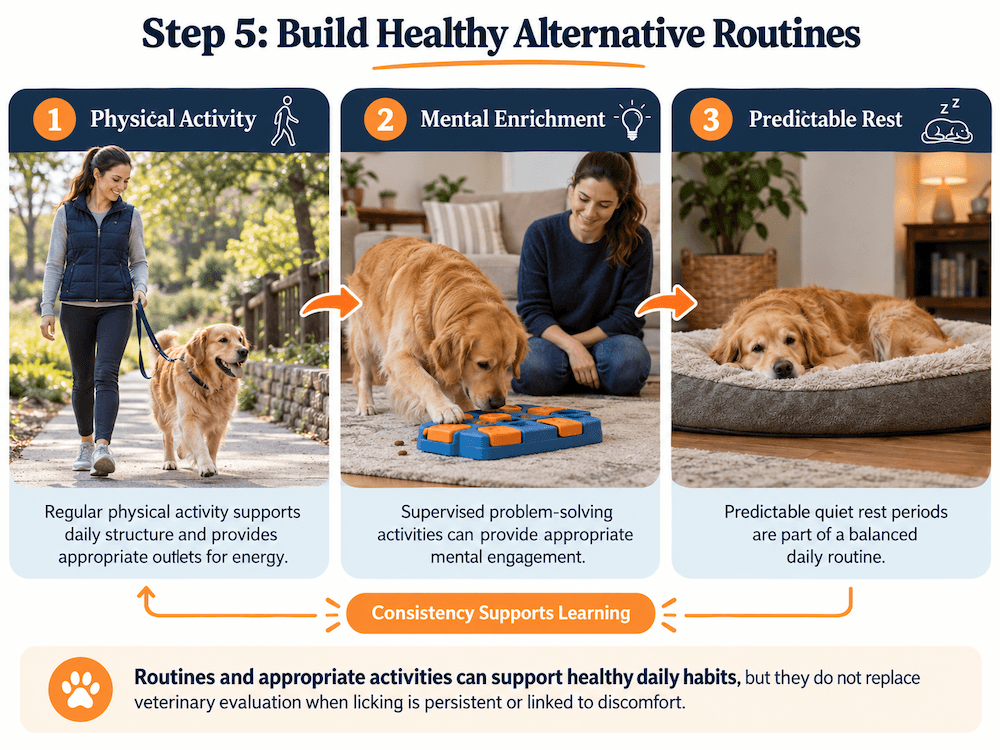
Step 5: Provide Appropriate Enrichment and Consistent Routines
For dogs whose licking is influenced by inactivity or learned routines, offer suitable alternative activities such as food puzzles, supervised enrichment toys, and age-appropriate exercise. Provide predictable opportunities for activity and rest, and encourage household members to respond consistently to unwanted licking. Enrichment may help reduce some repetitive habits, but it should not replace veterinary care when licking suggests discomfort or illness.
How to Tell Whether Your Dog’s Licking Is Improving
Improvement should be measured by changes in your dog’s licking behavior, physical comfort, and ability to engage in normal activities. Compare observations under similar circumstances, since fewer opportunities to lick do not necessarily mean the behavior has improved. Tracking progress over time can help determine whether your approach is effective or needs veterinary reassessment.
What Veterinary Research Says About Why Dogs Lick
Scientific evidence suggests that dog licking serves multiple behavioral and physiological functions, rather than expressing one universal emotion. A 2018 study by Koru and colleagues, published in Applied Animal Behaviour Science, examined owner-reported interactions involving 307 dogs. The researchers found that dogs were more likely to lick their owners’ faces when owners crouched rather than stood upright, demonstrating how human posture and interaction context can influence licking behavior. However, the findings do not establish that licking always indicates affection.[1]
A study by Albuquerque and colleagues, published in Behavioural Processes in 2018, investigated lip licking in response to emotional expressions. Dogs displayed more mouth-licking behavior when viewing negative facial expressions than positive ones, particularly in response to human faces. These findings support the possibility that lip licking is associated with dogs’ responses to emotional signals, although the behavior alone cannot reliably establish fear, anxiety, or another specific emotional state.[2]
Research also establishes a connection between skin disease and excessive self-directed licking. A 2012 study by Bruet and colleagues in Veterinary Dermatology examined 346 dogs with canine atopic dermatitis, flea infestations, or flea-bite hypersensitivity. Paw chewing and licking were particularly associated with atopic dermatitis, while other itching patterns varied between conditions. These findings demonstrate why persistent licking of a particular body area can provide useful clinical clues, although licking patterns alone cannot confirm a diagnosis.[3]
Excessive surface licking may also have an underlying gastrointestinal component. A 2012 prospective study by Bécuwe-Bonnet and colleagues, published in the Journal of Veterinary Behavior, evaluated 19 dogs with excessive surface licking and 10 healthy controls. Gastrointestinal abnormalities were identified in 14 of the 19 affected dogs, while licking resolved in 9 of 17 dogs evaluated after treatment. Although the small sample limits broader conclusions and does not establish causation, the findings suggest that persistent licking of floors, carpets, or other surfaces may warrant medical investigation rather than being automatically attributed to a behavioral disorder.[4]
Frequently Asked Questions
The Bottom Line
Licking is a natural part of canine behavior, but its meaning depends on the situation. Dogs use licking to communicate, groom themselves, explore their surroundings, and sometimes respond to physical or emotional discomfort. Understanding what your dog licks, when it happens, and how they behave during the interaction can help you recognize its possible purpose. While occasional licking is generally harmless, sudden changes or persistent licking may deserve closer attention. Excessive licking can also contribute to skin irritation, infections, and other health problems if left unaddressed. Observing your dog’s behavior and responding appropriately can help prevent minor concerns from becoming more serious. When licking becomes difficult to interrupt or occurs alongside unusual symptoms, veterinary guidance can help identify the underlying cause.
For more insight into human-dog interactions, explore what it means when a dog licks you. If your dog frequently licks their paws or skin, learn about allergies in dogs and their common symptoms. For persistent, repetitive behavior, read our guide to obsessive-compulsive behaviors in dogs. You can also discover what happens if a dog licks your cut and the potential health risks involved.
Sources
- Incidence of dogs jumping on household members upon entering their home in comparison with holding food
- Mouth-licking by dogs as a response to emotional stimuli
- Characterization of pruritus in canine atopic dermatitis, flea bite hypersensitivity and flea infestation and its role in diagnosis
- Gastrointestinal disorders in dogs with excessive licking of surfaces