Why Does My Dog Eat Poop? Reasons, Facts & What to Do

Canine Bible is reader-supported. We receive affiliate commissions via some of our links. Learn more.
To stop your dog from eating poop, remove feces promptly, supervise bathroom breaks, and reward your dog for moving away from stool when called. Consistent training, environmental management, and addressing any underlying dietary or medical issues are usually the most effective approach. Some dogs eat poop because of habit, boredom, stress, hunger, or simple curiosity, while others may have a health problem that increases their appetite. Although poop-eating, or coprophagia, is common in dogs, it can expose them to parasites, bacteria, and other unwanted substances. Punishment often makes the behavior harder to manage and may teach a dog to eat feces more quickly or hide the habit. Certain deterrents and supplements are marketed for coprophagia, but their effectiveness varies, and they do not address every cause. Understanding why your dog is eating poop is the key to choosing the safest and most effective way to stop it.
Why Do Dogs Eat Poop?
| Common Reason | What It Means for Your Dog |
|---|---|
| Scavenging instinct | Some dogs simply find feces interesting or rewarding enough to investigate and eat. |
| Puppy exploration | Young dogs often use their mouths to investigate unfamiliar smells, textures, and objects. |
| Easy access | Frequently available stool gives dogs repeated opportunities to develop and reinforce the habit. |
| Strong food drive | Highly food-motivated dogs may treat feces as another available scavenging opportunity. |
| Boredom or low enrichment | Dogs lacking enough activity or mental stimulation may seek out inappropriate things to investigate. |
| Hunger | Insufficient calories or long gaps between meals can make scavenging behavior more appealing. |
| Medical changes | Sudden poop eating with weight loss, diarrhea, or excessive hunger may warrant veterinary evaluation. |
When Poop Eating May Be Related to Hunger or a Medical Problem
Coprophagia, or eating feces, is a behavior that can occur in otherwise healthy dogs and is often linked to scavenging, curiosity, or habit. Most dogs that eat poop do not have a nutritional deficiency or underlying disease. However, new, persistent, or unusually intense coprophagia deserves more attention when it appears alongside other physical changes.
Anything that causes excessive hunger can make scavenging more likely. This may include inadequate calorie intake, but it can also occur with conditions that affect digestion, nutrient absorption, or metabolism. For example, dogs with exocrine pancreatic insufficiency may remain very hungry while losing weight and producing large amounts of loose or poorly digested stool, while intestinal disease, parasites, and some endocrine disorders can cause similar appetite or digestive changes.
Certain medications, particularly corticosteroids, can also increase appetite and potentially contribute to poop eating. If the behavior begins soon after a medication change, tell your veterinarian rather than stopping the medication on your own. A veterinary evaluation may include reviewing diet, body condition, stool quality, medications, and parasite prevention, with fecal testing, bloodwork, or digestive testing recommended when other symptoms suggest an underlying medical problem.
Signs That Make a Medical Cause More Important
A dog that eats poop but otherwise maintains a stable weight, normal appetite, normal stool, and normal energy is more likely to have a primarily behavioral problem than a dog developing several symptoms simultaneously.


Changes such as weight loss despite strong hunger, chronic diarrhea, greasy or unusually bulky stool, vomiting, excessive thirst, increased urination, poor coat condition, or a major appetite change should shift the priority from training alone to veterinary assessment.
Puppies That Eat Poop Versus Adult Dogs
Poop eating can occur at any age, but the reason often differs between puppies and adult dogs. Puppies may eat stool as part of normal exploration or during house-training, while adult dogs may develop it as a long-standing scavenging habit. Avoid punishment, as this can sometimes make the behavior worse or encourage dogs to eat stool more quickly. Sudden poop eating in an adult or senior dog, especially with appetite or digestive changes, should be discussed with a veterinarian.
| Dog’s Life Stage | What Owners Should Know |
|---|---|
| Puppies | Poop eating is often linked to normal exploration and scavenging. |
| During house-training | Supervise closely, remove stool promptly, and reward moving away after elimination. |
| Puppy punishment | Avoid punishment, which may encourage secret elimination or faster stool eating. |
| Adult dogs | Long-standing coprophagia may simply be a well-established scavenging habit. |
| Sudden adult onset | New poop eating deserves attention, especially with appetite or digestive changes. |
| Senior dogs | New behavior changes should prompt a review of health, medications, and appetite. |
Is Eating Poop Dangerous for Dogs?
Eating feces does not automatically mean a dog will become sick, especially if the dog consumes its own freshly passed stool. However, feces can carry infectious organisms and other unwanted material, so preventing coprophagia remains worthwhile.
| Stool Source | Main Concern | Owner Response |
|---|---|---|
| Own stool | Usually lower risk, but parasites or GI illness remain possible. | Prevent access and maintain routine parasite care. |
| Other dogs | Parasite and infectious-disease exposure is less predictable. | Discourage scavenging and avoid unknown feces. |
| Cat stool | GI upset, parasite exposure, and litter ingestion are possible. | Make litter boxes physically inaccessible. |
| Wildlife stool | Parasites and pathogens vary by animal and location. | Use leash control in contaminated areas. |
| Diarrheic stool | Infectious or parasitic disease may be present. | Prevent contact and monitor your dog closely. |
Some intestinal parasites are transmitted when dogs ingest infective stages from feces-contaminated environments. The timing and route of transmission vary considerably among parasites, which is one reason that routine parasite prevention and fecal testing matter even if a dog appears healthy. Eating stool can also cause temporary vomiting, diarrhea, bad breath, or gastrointestinal upset without producing a serious infection.
What Owners Can Do to Stop a Dog From Eating Poop
The most effective approach is to combine prevention, supervision, reward-based training, and better outlets for scavenging behavior. The goal is to stop your dog from repeatedly practicing the habit while teaching a predictable alternative response.

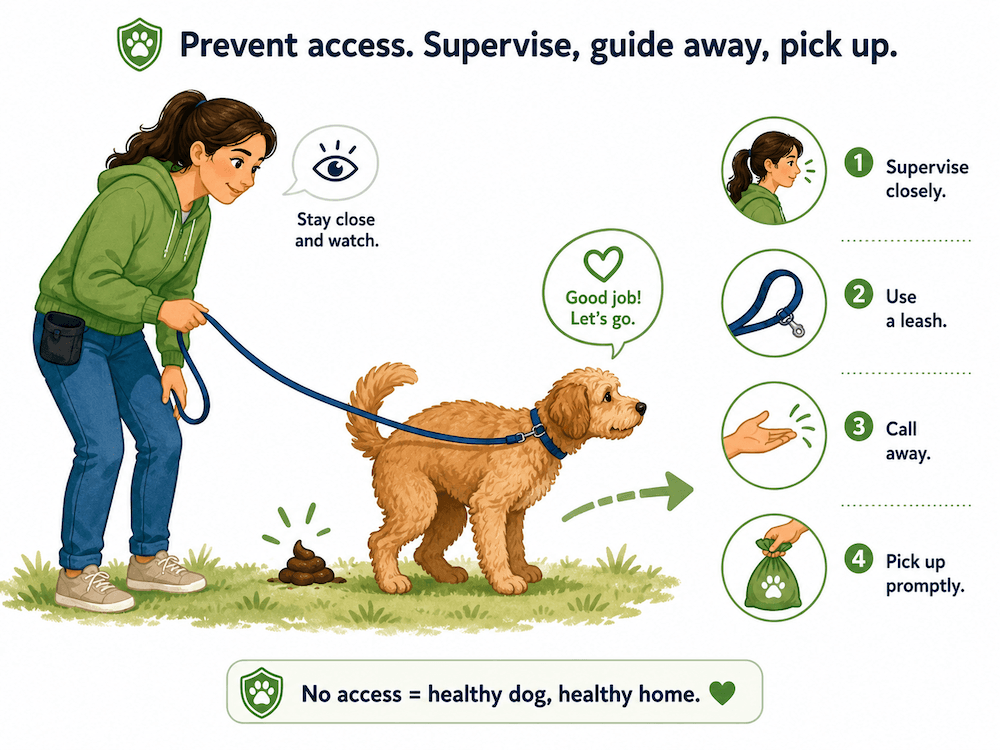
1. Supervise Every Bathroom Trip
Take your dog outside with you instead of allowing unsupervised access to the yard. Watch closely so you can intervene as soon as your dog finishes eliminating. For persistent poop eaters, temporarily keeping your dog on a leash can prevent an immediate turn back toward the stool. Consistent supervision removes opportunities to rehearse the unwanted behavior.
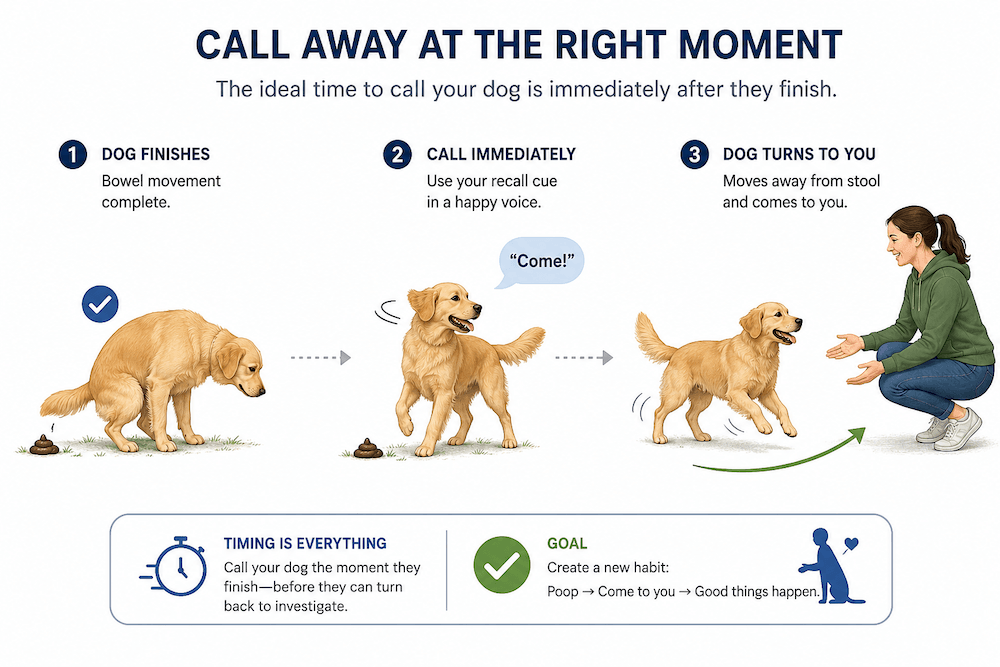
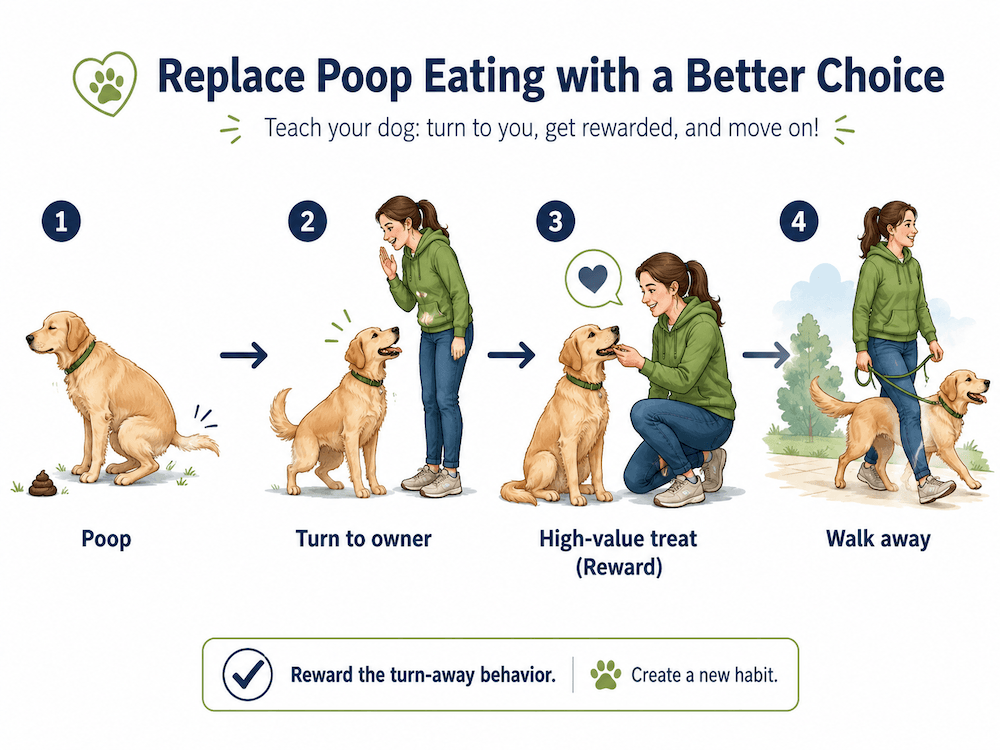
2. Call Your Dog Away Immediately
As soon as your dog finishes pooping, cheerfully call them several feet away from the stool. Use the same recall cue each time so the routine becomes predictable. Avoid waiting until your dog is already sniffing or eating the feces. The goal is to interrupt the sequence before the stool becomes the dog’s next focus.
3. Reward the Better Choice
Give your dog a high-value treat as soon as they come to you and move away from the feces. The reward should be more appealing than returning to investigate the stool. With repetition, many dogs begin learning the sequence eliminate → turn toward owner → receive reward → move on. Rewarding the desired behavior is more useful than scolding after the dog has already reached the poop.
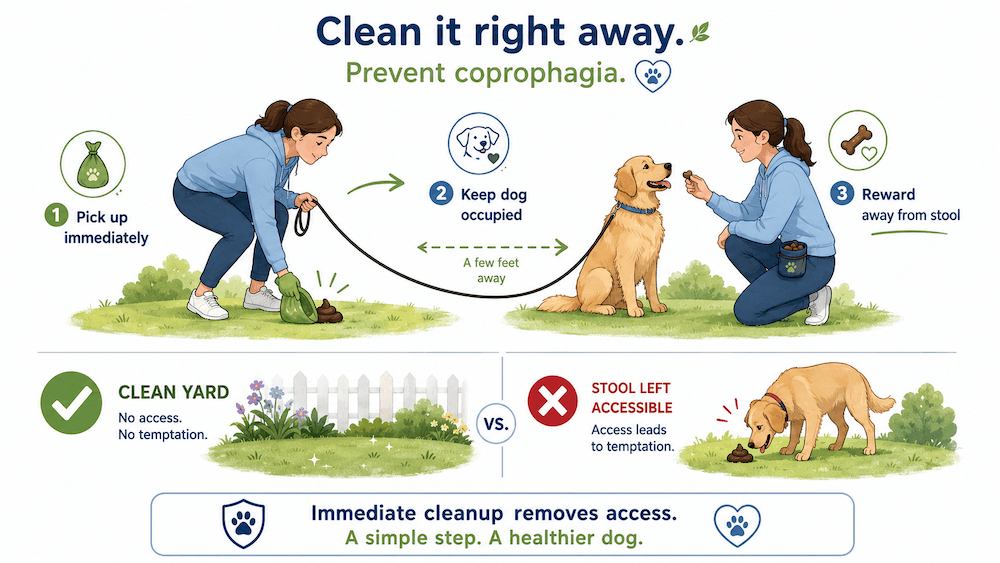
4. Pick Up the Stool Immediately
Remove feces while your dog is focused on the reward or another activity. Do not leave piles in the yard for later cleanup, especially if your dog already has a strong coprophagia habit. Frequent removal makes the unwanted behavior much harder to practice and is especially important in multi-dog households. Think of cleanup as part of the training plan rather than a separate chore.
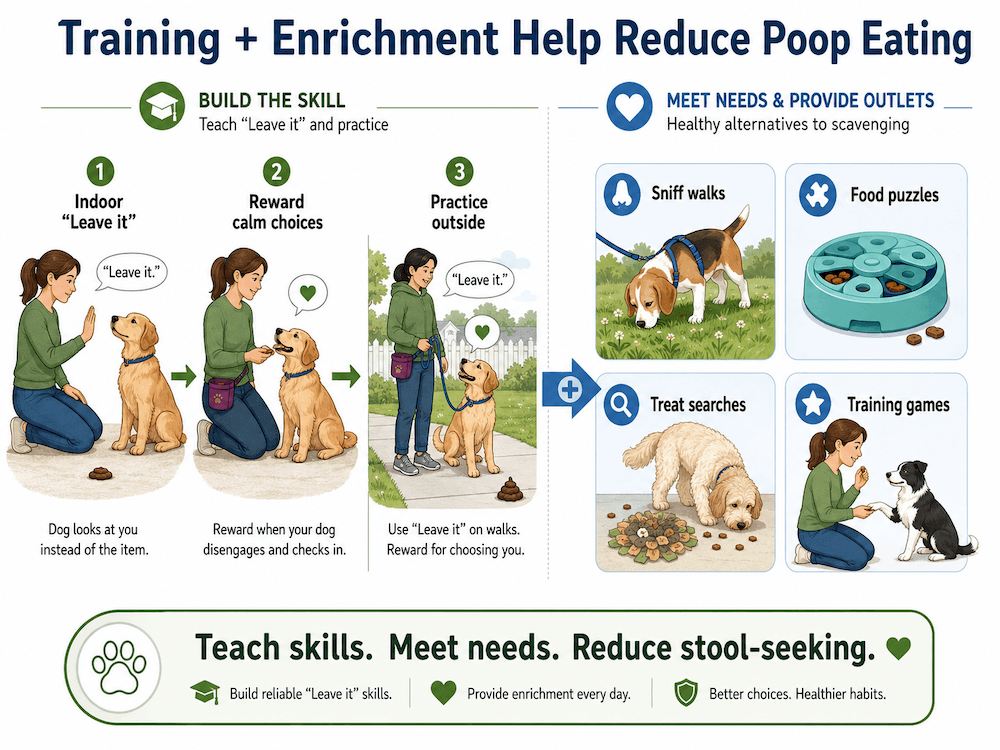
5. Build “Leave It” Skills and Better Scavenging Outlets
Teach “leave it” first with low-value objects indoors rather than testing the cue immediately around feces. Gradually practice around more tempting items while continuing to manage poop access with a leash and cleanup. Give your dog acceptable ways to sniff, search, and forage through sniff walks, food puzzles, treat searches, or short training games. If your dog seems unusually hungry despite appropriate feeding, discuss appetite and calorie needs with your veterinarian rather than simply increasing food.
How to Prevent Your Dog From Eating Poop in Different Situations
Preventing poop eating often requires adjusting your approach to the situation and limiting access whenever possible. In multi-pet homes, frequent cleanup and supervised potty breaks can help, while cat litter boxes may need to be placed somewhere the dog cannot reach. Outdoors, reliable recall and “leave it” cues, leashes, and appropriate anti-scavenging tools can provide extra control around wildlife or livestock feces.
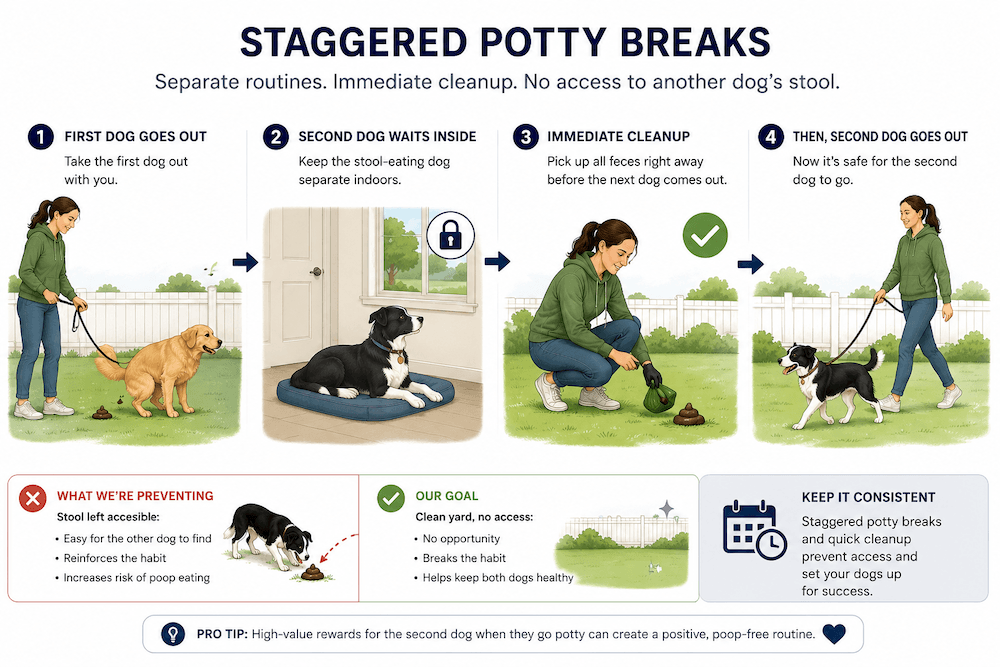
How to Stop a Dog From Eating Poop in a Multi-Pet Home
Coprophagia can be harder to control when several animals share a yard because stool is constantly becoming available. Temporarily supervising potty trips individually can make the problem much easier to manage. If one dog regularly eats another dog’s feces, clean the yard more frequently and identify each dog’s usual elimination schedule. You may need to take the stool-eating dog indoors while another dog finishes toileting and cleanup occurs.
How to Stop a Dog From Eating Cat Poop
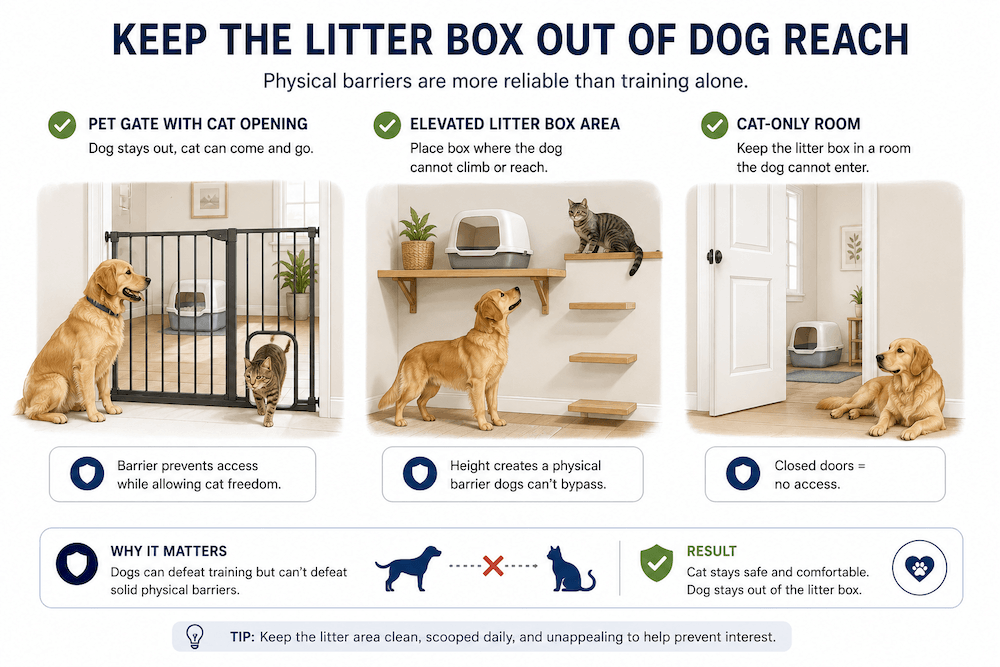
Dogs are often attracted to cat feces, so restricting access to the litter box is usually more reliable than training alone. Keep the box clean and place it behind a pet gate or in a cat-accessible area the dog cannot enter, while making sure the setup remains easy and comfortable for the cat to use. Covered boxes may discourage some dogs, but determined dogs can still gain access, so physical separation is generally the better approach.
How to Stop a Dog From Eating Rabbit, Horse, Deer, or Animal Poop
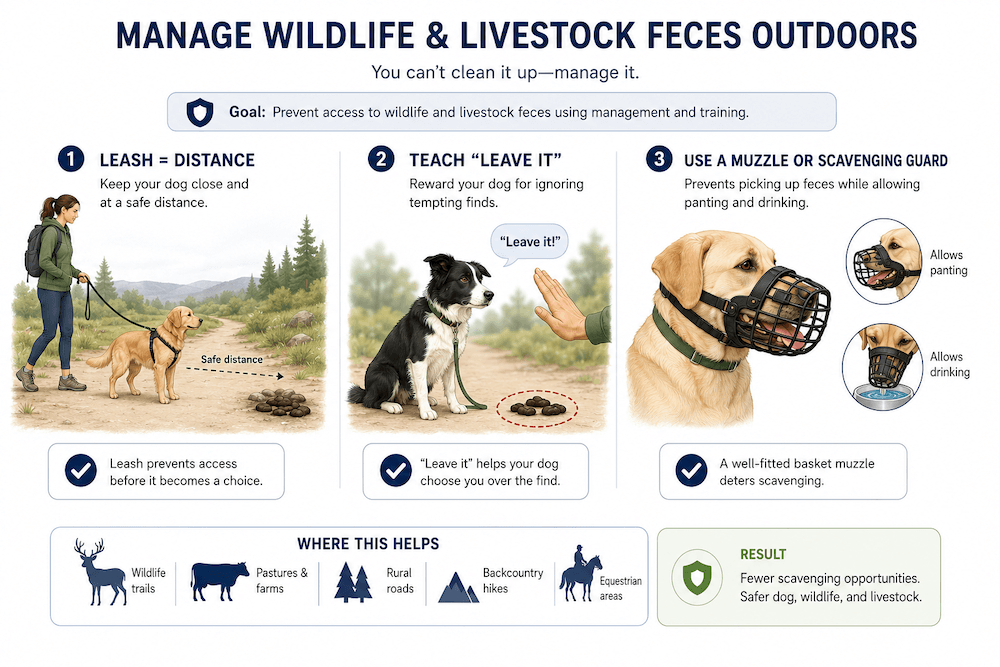
Dogs that hike, hunt, or roam rural areas may encounter wildlife or livestock feces that are difficult to avoid, so management and reliable cues are especially important. A strong recall and “leave it” command can help, but keeping your dog leashed may be more practical in areas where feces are widespread. For dogs that repeatedly swallow feces or other objects on walks, a properly fitted basket muzzle or anti-scavenging guard may offer extra protection as long as it allows comfortable panting and drinking and is used alongside training and supervision.
Do Poop-Eating Deterrents, Supplements, or Home Remedies Work?
Products marketed for coprophagia are usually added to a dog’s food with the intention of making the resulting feces taste unpleasant. Some owners report improvement, but these products are far from a guaranteed solution.
They also have an obvious limitation: they generally affect only the stool produced by the animal receiving the product. If your dog eats feces from neighborhood dogs, cats, wildlife, or animals encountered on walks, adding something to your dog’s meal does not solve the access problem.
Pineapple, pumpkin, digestive enzymes, probiotics, meat tenderizer, and various other foods or supplements are frequently promoted online as poop-eating remedies. Evidence that these reliably eliminate coprophagia is weak. A dog’s interest may also continue even when digestion and nutrition are entirely normal.
Adding unnecessary supplements can introduce extra calories, digestive upset, nutrient imbalances, or ingredients unsuitable for an individual dog. If you want to try a commercial product, check the ingredients with your veterinarian and treat it as an adjunct to management, not the central strategy.
What Not to Do When Stopping Your Dog From Eating Poop
Some approaches to stopping poop eating can make the behavior worse or create new problems. Punishment, chasing, harsh substances, and relying only on supplements may increase anxiety, turn the behavior into a game, or fail to address the underlying cause. Focus instead on prompt cleanup, supervision, training, and veterinary evaluation when the behavior appears suddenly or alongside other symptoms.
| Avoid | Why It Can Backfire |
|---|---|
| Yelling or punishment | May create fear or encourage your dog to swallow feces faster. |
| Chasing your dog | Can turn poop stealing into a rewarding game. |
| Rubbing their nose in it | Does not teach the desired behavior and may increase anxiety. |
| Leaving stool in the yard | Repeated access allows the habit to keep reinforcing itself. |
| Using harsh substances | Hot sauce, chemicals, or irritants can harm the mouth or stomach. |
| Relying only on supplements | Deterrents are inconsistent and do not replace cleanup and training. |
| Ignoring sudden behavior changes | New coprophagia with other symptoms may signal a medical problem. |
When to Call a Veterinarian About a Dog Eating Poop
Occasional poop eating in an otherwise healthy dog is usually not an emergency. You can generally monitor and manage the behavior if your dog maintains a normal appetite, weight, energy level, and stool quality. A veterinary visit becomes more important if coprophagia is new, persistent, unusually intense, or accompanied by excessive hunger.
Contact your veterinarian if poop eating occurs with chronic diarrhea, bulky or greasy stool, vomiting, gas, weight loss, excessive thirst, increased urination, or noticeable appetite changes. A recent medication change is also worth mentioning because some drugs can increase hunger. Your veterinarian may recommend a physical exam, fecal parasite testing, bloodwork, or digestive testing depending on the other signs present.
Seek prompt veterinary care if your dog repeatedly vomits, becomes markedly lethargic, develops significant diarrhea or blood in the stool, appears painful, or may have swallowed a dangerous substance along with feces. If medical causes are ruled out but the behavior remains severe, help from a veterinarian experienced in behavior or a qualified reward-based behavior professional may be useful. This is especially important when coprophagia occurs with anxiety, compulsive behavior, or persistent scavenging.
What Veterinary Research Says About Dogs Eating Poop
A 2018 study examined two large owner surveys involving 1,552 dogs in one sample and 1,475 coprophagic dogs in another. About 16% of dogs were classified as frequent stool eaters, and coprophagic dogs showed a strong preference for feces less than two days old. The study found no clear association with diet or age, although dogs described as greedy eaters were more likely to show the behavior.[1]
A 2018 study compared 70 adult dogs and found no significant relationship between coprophagia and factors such as sex, number of daily meals, commercial diet, reproductive status, or general lifestyle. However, dogs living with another coprophagic dog were more likely to display the behavior themselves. This supports the importance of environmental management in multi-dog households, where one dog’s behavior may increase another dog’s opportunities to investigate feces.[2]
A 2014 study in Veterinary Parasitology found that coprophagia can complicate fecal parasite testing because dogs may pass parasite eggs after eating contaminated feces without actually having an established infection themselves. This means veterinarians may occasionally need repeat fecal testing after preventing poop eating for several days to distinguish true infection from passive passage. The finding also reinforces the practical value of preventing access to other animals’ feces, particularly when parasite exposure is possible.[3]
A smaller 2022 study of healthy adult dogs examined whether coprophagia significantly altered nutrient digestibility and fecal fermentation measurements. Most measured variables did not differ meaningfully between coprophagic and non-coprophagic dogs, providing little support for the common assumption that poop eating automatically indicates poor digestion or nutritional deficiency. Because the study included only 12 dogs, however, it should be viewed as supporting evidence rather than definitive proof about the causes of coprophagia.[4]
Frequently Asked Questions
The Bottom Line
Stopping a dog from eating poop usually requires a combination of close supervision, immediate cleanup, consistent training, and preventing access to feces. Teaching your dog to turn toward you after eliminating and rewarding that choice can gradually replace the unwanted habit with a better routine. A reliable “leave it” cue and appropriate enrichment can also help dogs that are naturally strong scavengers. Avoid punishment, chasing, or relying entirely on supplements, since these approaches may be ineffective or make the behavior harder to manage. While coprophagia is often behavioral, sudden or unusually intense poop eating deserves more attention when it appears with weight loss, excessive hunger, diarrhea, vomiting, or other health changes. Puppies may eventually lose interest, but early prevention helps keep the behavior from becoming established. With consistent management and veterinary guidance when needed, most owners can greatly reduce their dog’s opportunities and motivation to eat feces.
Sources
- The paradox of canine conspecific coprophagy
- Canine coprophagic behavior is influenced by coprophagic cohabitant
- Coprophagy in dogs interferes in the diagnosis of parasitic infections by faecal examination
- Evaluation of the Influence of Coprophagic Behavior on the Digestibility of Dietary Nutrients and Fecal Fermentation Products in Adult Dogs