Poop Color Irregularity in Dogs: Symptoms, Types, Causes, Signs & Prevention

Canine Bible is reader-supported. We receive affiliate commissions via some of our links. Learn more.
Poop color irregularity is a common warning sign of digestive and systemic illness in dogs, with one fecal assessment study reporting that about 29% of canine stool samples displayed abnormal color variations rather than the normal brown appearance. While occasional color changes may simply reflect diet, persistent black, red, yellow, green, gray, or white stool can indicate gastrointestinal bleeding, liver disease, pancreatic disorders, parasites, or other underlying health conditions. Many owners assume unusual stool color will resolve on its own, when in fact it may be an early indicator of a medical problem requiring veterinary attention. The good news is that many of the conditions causing abnormal stool color can be successfully treated or managed when identified early. This guide covers everything you need to know about poop color irregularity in dogs—from causes and symptoms to diagnosis, treatment, prevention, and daily management—so you’ll have the knowledge to protect your dog’s health and overall well-being.
What Is Poop Color Irregularity in Dogs?
Poop color irregularity, in simple terms, is the presence of stool that differs from the normal medium to chocolate brown color seen in healthy dogs. In dogs, it’s most often associated with digestive disorders, dietary changes, or underlying conditions affecting the gastrointestinal tract, liver, pancreas, or gallbladder. As the underlying problem develops, stool may appear black, red, yellow, green, gray, or white, providing an early warning sign that warrants closer monitoring and, in many cases, veterinary evaluation.
Types
Poop color irregularity can appear in several forms, each linked to different underlying causes:
| Poop Color | What It May Indicate |
|---|---|
| Brown (Normal) | The normal stool color, indicating healthy digestion and normal bile production. |
| Black or Tarry | May indicate bleeding in the stomach or upper small intestine (melena) and requires prompt veterinary attention. |
| Bright Red | Often caused by fresh bleeding from the colon, rectum, or anal area due to irritation, parasites, or injury. |
| Yellow or Orange | Can be associated with liver disease, gallbladder problems, pancreatic disorders, or rapid intestinal transit. |
| Green | Commonly results from eating grass, but may also be linked to excess bile or certain toxins. |
| Gray, Pale, or White | May suggest reduced bile flow, pancreatic insufficiency, or excessive dietary calcium, especially in dogs fed many bones. |
Predisposed Dog Breeds
Poop color irregularity is not a disease itself, but some breeds are more prone to digestive, liver, pancreatic, or intestinal disorders that can cause abnormal stool colors.


| Breed / Group | Examples | Why They May Be at Higher Risk |
|---|---|---|
| Large Breeds | German Shepherd, Labrador Retriever, Golden Retriever | More prone to exocrine pancreatic insufficiency (EPI), which can cause pale or gray stools. |
| Miniature Breeds | Miniature Schnauzer, Yorkshire Terrier | Higher risk of pancreatitis, which may lead to yellow, greasy, or pale stools. |
| Sporting Breeds | Cocker Spaniel, Springer Spaniel | Predisposed to liver and gallbladder disorders that can alter stool color. |
| Working Breeds | Doberman Pinscher, Rottweiler | Can be genetically predisposed to liver disease or gastrointestinal disorders affecting stool appearance. |
| Brachycephalic Breeds | French Bulldog, English Bulldog, Pug | Frequently experience food sensitivities and gastrointestinal upset, increasing the likelihood of stool changes. |
| All Breeds | Dogs of any breed or mixed breed | Dietary indiscretion, intestinal parasites, infections, medications, or toxins can cause abnormal stool colors regardless of breed. |
Causes
Poop color irregularity can result from a wide range of factors, from harmless dietary changes to serious underlying diseases. Understanding the most common causes can help you recognize when a change in stool color is temporary and when it requires prompt veterinary attention.
Symptoms
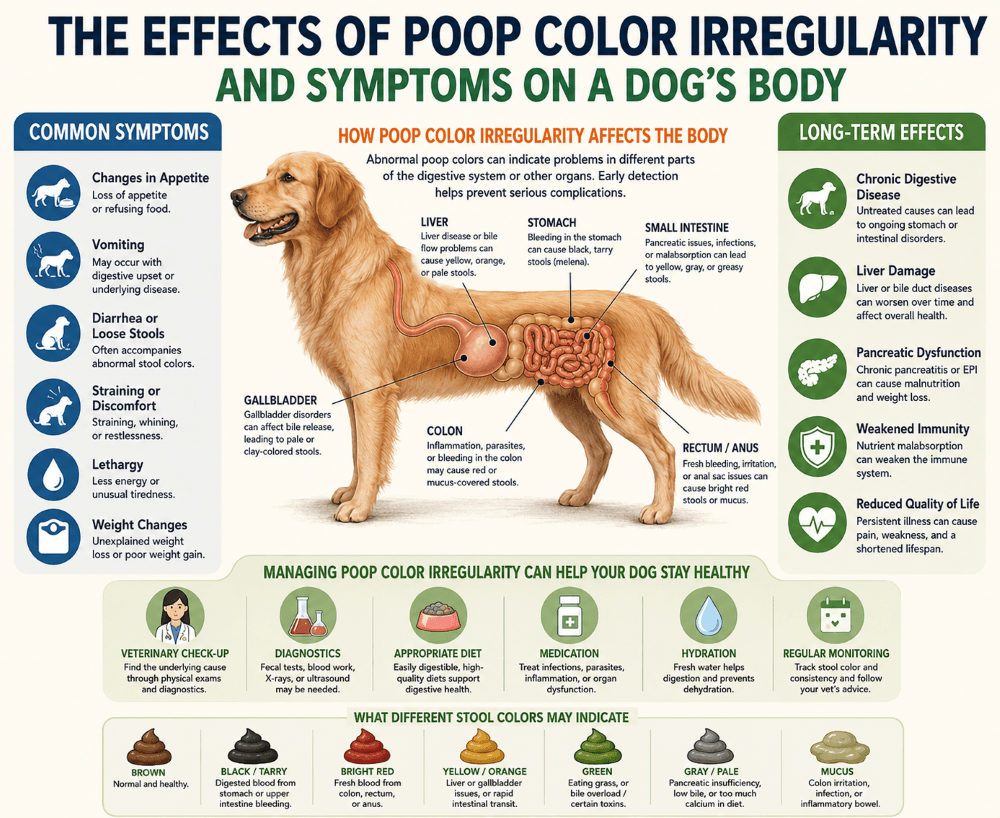
Poop color irregularity is a common clinical sign that affects the digestive system and may indicate an underlying health problem. While some color changes are harmless and caused by diet, others can signal gastrointestinal bleeding, liver disease, pancreatic disorders, or intestinal illness that require veterinary attention.
This visual guide highlights the most common symptoms associated with abnormal stool colors and how these underlying conditions can affect different parts of a dog’s body, helping you recognize warning signs early and seek appropriate care.


Stages of Poop Color Irregularity
- Early stage: Temporary stool color changes; dog otherwise appears healthy.
- Moderate stage: Persistent abnormal stool color with vomiting, diarrhea, or appetite loss.
- Advanced stage: Severe underlying disease, gastrointestinal bleeding, organ dysfunction, emergency
Top Ways to Prevent Poop Color Irregularity in Dogs
Because poop color irregularity is often a sign of an underlying health problem, early recognition and preventive care are essential. With proper nutrition, routine veterinary checkups, parasite prevention, and prompt treatment of digestive disorders, many causes of abnormal stool color can be prevented or managed before they become serious.
| Prevention Strategy | Why It Helps | How to Do It |
|---|---|---|
| Feed a Balanced Diet | Supports healthy digestion and normal bile production, reducing stool abnormalities. | Provide a high-quality diet, avoid sudden food changes, and limit table scraps. |
| Prevent Dietary Indiscretion | Eating garbage, bones, or spoiled food can cause digestive upset and abnormal stool colors. | Keep trash secured, supervise outdoor activities, and prevent scavenging. |
| Maintain Routine Parasite Control | Helps prevent intestinal parasites that can cause blood, mucus, or color changes in stool. | Use year-round deworming and fecal testing as recommended by your veterinarian. |
| Provide Fresh Water | Supports normal digestion and reduces the risk of dehydration-related gastrointestinal problems. | Ensure clean drinking water is available at all times. |
| Schedule Regular Veterinary Checkups | Early detection of liver, pancreatic, and intestinal diseases helps prevent serious complications. | Arrange wellness exams and recommended bloodwork or fecal tests. |
| Use Medications Safely | Some medications and supplements may cause gastrointestinal bleeding or stool discoloration. | Give medications only as prescribed and report abnormal stool colors promptly. |
| Monitor Stool Regularly | Early recognition of abnormal stool color allows prompt treatment of underlying disease. | Check your dog’s stool daily and seek veterinary care if unusual colors persist for more than 24–48 hours. |
Actionable Resources
If you want to prevent or reduce the risk of poop color irregularity in your dog, here are some helpful resources you can use under veterinary guidance.
How Poop Color Irregularity Is Diagnosed in Dogs
Diagnosing poop color irregularity requires a thorough veterinary evaluation to identify the underlying cause. Key steps include:
- Physical Examination: A veterinarian assesses your dog’s overall health, hydration, abdominal pain, diet history, medications, and recent changes in stool color.
- Fecal Testing:
- Fecal flotation – detects intestinal parasites and parasite eggs.
- Fecal culture/PCR – identifies bacterial or viral infections when indicated.
- Laboratory Tests: Blood work, including a complete blood count (CBC) and biochemistry profile, helps evaluate liver, pancreas, kidneys, anemia, infection, and internal bleeding.
- Diagnostic Imaging: X-rays or abdominal ultrasound may be recommended to detect foreign bodies, intestinal blockages, tumors, or liver and pancreatic disease.
Early diagnosis is important because abnormal stool color is often a symptom of an underlying condition—identifying the cause promptly allows treatment before complications become more serious.
Treatment & Care
According to current veterinary research, the most effective treatment for poop color irregularity in dogs is identifying and treating the underlying cause, whether it involves dietary changes, parasites, infections, gastrointestinal bleeding, liver disease, pancreatic disorders, or other medical conditions. Supportive care—including fluid therapy, medications, prescription diets, and ongoing monitoring—may also be recommended for optimal recovery.
Always consult your veterinarian if your dog develops persistent or unusual stool colors, especially black, bright red, gray, or white feces. If you can’t reach your vet, you can chat live with a registered online veterinary professional via our online vet chat or video chat support (24 hours a day, 7 days a week). Or use Chewy’s online vet services (6 a.m. – midnight ET).
Conventional Medical Treatments
| Treatments | Benefits / Role |
|---|---|
| Prescription Diets | Easily digestible or therapeutic diets help manage gastrointestinal, liver, or pancreatic disorders. |
| Antiparasitic Medications | Dewormers eliminate intestinal parasites that may cause bloody, dark, or abnormal-colored stools. |
| Antibiotics or Antimicrobials | Treat bacterial gastrointestinal infections when prescribed by a veterinarian. |
| Fluid Therapy | Corrects dehydration and electrolyte imbalances caused by vomiting, diarrhea, or severe digestive disease. |
| Medications for Underlying Disease | Treat liver disease, pancreatitis, inflammatory bowel disease, ulcers, or other conditions responsible for abnormal stool color. |
Supplement Support
| Supplement / Nutrient | Benefits / Role |
|---|---|
| Probiotics | Support a healthy gut microbiome and help restore normal digestion and stool quality. |
| Prebiotic Fiber | Feeds beneficial gut bacteria and promotes healthy bowel movements and stool consistency. |
| Psyllium Husk | Provides soluble fiber that helps regulate bowel function and improve stool quality. |
| Digestive Enzymes | Assist with nutrient digestion and may benefit dogs with pancreatic insufficiency or malabsorption. |
| Omega-3 Fatty Acids (Fish Oil) | May help reduce intestinal inflammation and support overall digestive and liver health. |
| L-Glutamine | Supports repair of the intestinal lining and may aid recovery from gastrointestinal disorders. |
| Vitamin B Complex | Supports energy metabolism and helps replace nutrients lost during chronic digestive disease. |
| Electrolytes | Help restore hydration and mineral balance in dogs experiencing diarrhea or vomiting. |
| Milk Thistle (Silymarin) | May provide liver support in dogs with liver conditions that contribute to abnormal stool color. |
Find the best over-the-counter treatments and supplements for poop color irregularity in dogs on Amazon and Chewy.

Alternative & Integrative Therapies
| Therapy | Benefits / Role |
|---|---|
| Probiotic Therapy | Helps restore healthy intestinal bacteria and supports normal stool color and digestive function. |
| Prescription Gastrointestinal Diets | Highly digestible diets help reduce digestive upset and support recovery from intestinal disease. |
| Fecal Microbiota Transplant (FMT) | In selected chronic gastrointestinal cases, may restore a healthier gut microbiome. |
| Herbal Digestive Support | Veterinarian-approved herbs such as slippery elm or milk thistle may support digestive or liver health. |
| Stress Reduction | Reducing anxiety may help dogs with stress-related digestive disturbances and abnormal stools. |
| Hydration Therapy | Maintains healthy digestion and supports recovery from diarrhea, vomiting, and dehydration. |
| Nutrition Consultation | A veterinary nutritionist can develop a diet plan tailored to liver, pancreatic, or gastrointestinal conditions. |
Surgical Options
| Surgical Option | Benefits / Role |
|---|---|
| Foreign Body Removal Surgery | Removes intestinal obstructions caused by swallowed objects that may lead to bleeding or abnormal stool color. |
| Exploratory Laparotomy | Allows veterinarians to diagnose and treat severe gastrointestinal disease, ulcers, tumors, or internal bleeding. |
| Liver or Gallbladder Surgery | Treats gallbladder obstruction, gallstones, or liver disorders responsible for pale, gray, or yellow stools. |
| Intestinal Tumor Removal | Removes benign or malignant masses that may cause gastrointestinal bleeding and persistent abnormal stool color. |
Emotional & Lifestyle Impact
Poop color irregularity can be more than just an unusual change in your dog’s stool—it may signal an underlying illness that affects their comfort, appetite, energy, and overall well-being. Dogs with digestive, liver, or pancreatic disorders may become less playful, more lethargic, or show reduced interest in food and daily activities, especially if the condition causes pain, nausea, or ongoing gastrointestinal upset.
For owners, persistent abnormal stool colors can be stressful, often leading to concerns about serious illness, repeated veterinary visits, and ongoing treatment costs. Daily routines may need to include closer monitoring of stool, dietary adjustments, medication schedules, and follow-up examinations, while preventing access to inappropriate foods or toxins. With early diagnosis, proper treatment, and attentive home care, however, many dogs can recover successfully and return to a healthy, active lifestyle.
Typical Annual Cost of Treating Poop Color Irregularity in Dogs
| Category | Estimated Annual Cost Range | Notes |
|---|---|---|
| Routine Vet Visits & Diagnostics | $250 – $900 | Physical exams, fecal testing, bloodwork, and follow-up evaluations. |
| Diagnostic Imaging | $300 – $1,500 | Abdominal X-rays or ultrasound to identify blockages, bleeding, liver, or pancreatic disease. |
| Medications | $200 – $1,200 | Includes dewormers, antibiotics, anti-nausea medications, gastroprotectants, or other prescribed drugs. |
| Prescription Diets & Supplements | $300 – $1,200 | Therapeutic gastrointestinal, liver, or pancreatic diets plus probiotics or digestive supplements. |
| Hospitalization / Surgery (if needed) | $1,000 – $8,000+ | Required for severe dehydration, intestinal obstruction, tumors, internal bleeding, or emergency surgery. |
| Pet Insurance & Wellness Plans | $360 – $960 | May help reduce out-of-pocket costs for diagnostics, medications, hospitalization, and surgery. |
| Typical Annual Range | Mild to Moderate Cases: $750 – $3,000 | Severe or Surgical Cases: $3,000 – $10,000+ | |
Digestive disorders and the conditions that cause poop color irregularity can lead to unexpected veterinary expenses—from diagnostic testing and prescription diets to hospitalization or emergency surgery. Pet insurance and wellness plans can help reduce these costs and ensure your dog receives prompt care. If you want to compare coverage options for digestive illnesses and emergency treatment, check out our full guide to the Best Pet Insurance for Dogs and Best Pet Wellness Plans.
Other Health Issues Related to Poop Color Irregularity in Dogs
Because poop color irregularity is a clinical sign rather than a disease, it is often associated with underlying digestive or systemic disorders. Abnormal stool colors may occur alongside these related health conditions rather than on their own.
- Gastroenteritis
- Food Allergies & Sensitivities
- Intestinal Parasites
- Inflammatory Bowel Disease (IBD)
- Constipation
- Diarrhea
- Intestinal Blockage
- Pancreatitis
- Exocrine Pancreatic Insufficiency (EPI)
- Liver Disease
- Gallbladder Disease
- Gastric or Intestinal Ulcers
- Gastrointestinal Bleeding
- Colitis
- Colorectal or Intestinal Tumors
Frequently Asked Questions
The Bottom Line
Poop color irregularity is a common warning sign that should never be ignored, but it doesn’t always indicate a serious illness. While harmless dietary factors cause some stool color changes, others may signal gastrointestinal bleeding, liver disease, pancreatic disorders, or other medical conditions. By monitoring your dog’s stool regularly, providing a balanced diet, scheduling routine veterinary care, and seeking prompt evaluation for persistent or unusual stool colors, you can help detect health problems early. Ultimately, the goal is not just restoring normal stool color, but protecting your dog’s overall health—helping them live a happy, healthy, and active life.