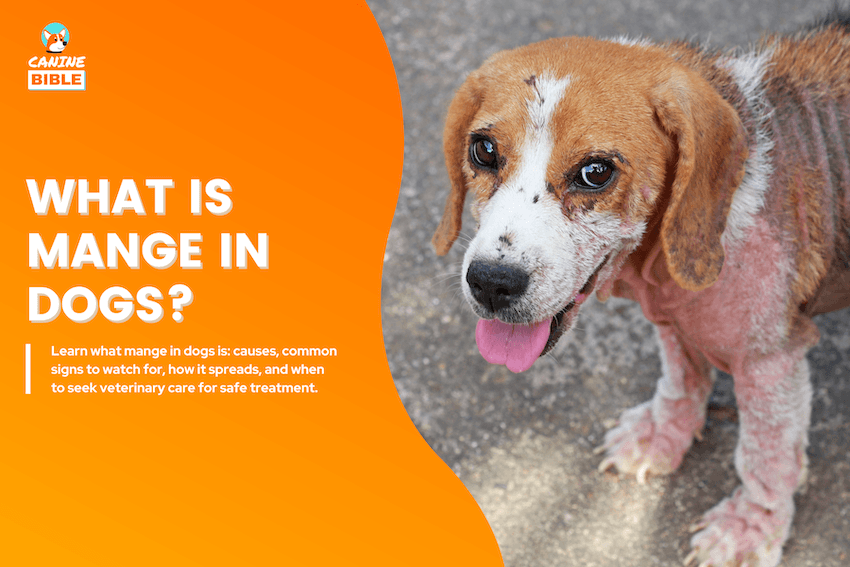
What Is Mange in Dogs? Causes, Signs, Treatment & Prevention

Canine Bible is reader-supported. We receive affiliate commissions via some of our links. Learn more.
Mange in dogs is a skin disease caused by tiny parasitic mites that live on or under the skin. It often leads to intense itching, hair loss, redness, scabs, and irritated patches that can worsen without treatment. Some types of mange are contagious, while others develop when a dog’s immune system cannot keep mite populations under control. Because mange can look like allergies, fleas, or other skin problems, it is easy for owners to misread the early signs. The risks also vary depending on the type of mite, the dog’s age, and overall health. Understanding the differences can help you know when mange is serious, how it spreads, and what treatment options may be needed.
What Dog Owners Should Know About Mange
| Key Point | What It Means for Dog Owners |
|---|---|
| Skin comfort | Mange can make dogs uncomfortable when mites irritate the skin barrier. |
| Fast action | Early veterinary care can prevent skin damage from becoming harder to manage. |
| Household awareness | Some mite problems may require attention for other exposed pets. |
| Accurate diagnosis | Testing helps separate mange from other common skin conditions. |
| Treatment planning | The safest treatment depends on the mite type and dog’s health. |
| Home care role | Clean bedding and reduced exposure can support veterinary treatment. |
| Long-term outcome | Most dogs improve well when mange is identified and treated properly. |
What Is Mange in Dogs?
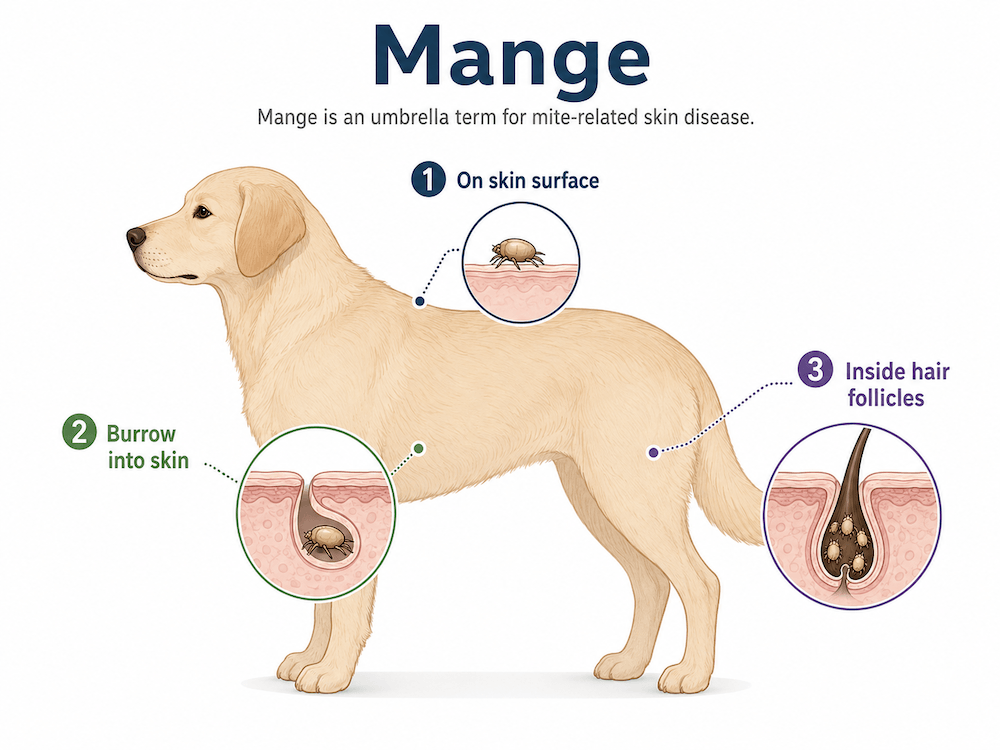
Mange in dogs is a parasitic skin disease caused by microscopic mites that live on the skin, burrow into the outer layer of the skin, or multiply inside hair follicles. It can cause itching, hair loss, redness, scaling, crusting, sores, and inflamed skin, but the symptoms and risk of contagion depend on the type of mite involved.
Mange is not one single disease. It is an umbrella term for several mite-related skin conditions, with sarcoptic mange and demodectic mange being the two most important forms in dogs. Sarcoptic mange is usually very itchy and contagious, while demodectic mange is usually linked to mite overgrowth inside hair follicles.
Mange can look similar to allergies, flea problems, ringworm, bacterial skin infections, yeast infections, or other skin diseases. That is why a dog with suspected mange should be examined by a veterinarian rather than treated based on appearance alone.
Main Types of Mange in Dogs
The main types of mange in dogs differ by mite species, location on the body, contagious risk, and typical appearance. Some mites spread easily between animals, while others become a problem only when mite numbers overgrow beyond normal control.


| Type | Primary Cause | Typical Signs | Contagious Risk | Owner Takeaway |
|---|---|---|---|---|
| Sarcoptic Mange |
Sarcoptes mites burrow into the skin surface. | Severe itching, crusts, redness, and hair loss. | Highly contagious between dogs and sometimes humans. | Prompt veterinary care and isolation are important. |
| Demodectic Mange |
Demodex mites overgrow inside hair follicles. | Patchy hair loss, scaling, redness, or pustules. | Usually not contagious between healthy adult dogs. | Underlying immune issues may need investigation. |
| Ear Mite Mange |
Otodectes mites irritate the ear canal. | Head shaking, dark debris, and itchy ears. | Contagious among pets through close contact. | Ear disease needs confirmation before treatment. |
| Walking Dandruff |
Cheyletiella mites move across skin scales. | Flaking, dandruff, mild itching, and coat debris. | Contagious and may irritate human skin. | All exposed pets may need treatment. |
| Trombiculosis | Chigger larvae attach after outdoor exposure. | Itchy red-orange spots appear seasonally. | Usually environmental rather than dog-to-dog. | Outdoor history helps guide diagnosis. |
What Causes Mange in Dogs?
Mange is caused by mites, but the disease process depends on the type of mite. Sarcoptic mange develops when mites burrow into the outer skin and trigger intense irritation. These mites can spread through close contact with an affected animal or, less commonly, through contaminated bedding, grooming tools, or shared environments.
Demodectic mange develops differently. Demodex mites live in hair follicles, and small numbers may be present on healthy dogs without causing disease. Mange occurs when mite numbers increase beyond what the skin and immune system can control, leading to follicle inflammation, hair loss, scaling, redness, and sometimes secondary infection.
Puppies may develop localized demodectic mange because their immune systems are still maturing. Adult dogs with generalized demodectic mange may need evaluation for underlying illness, immune suppression, endocrine disease, poor nutrition, or medications that affect immune function.
How Mange Affects a Dog’s Skin
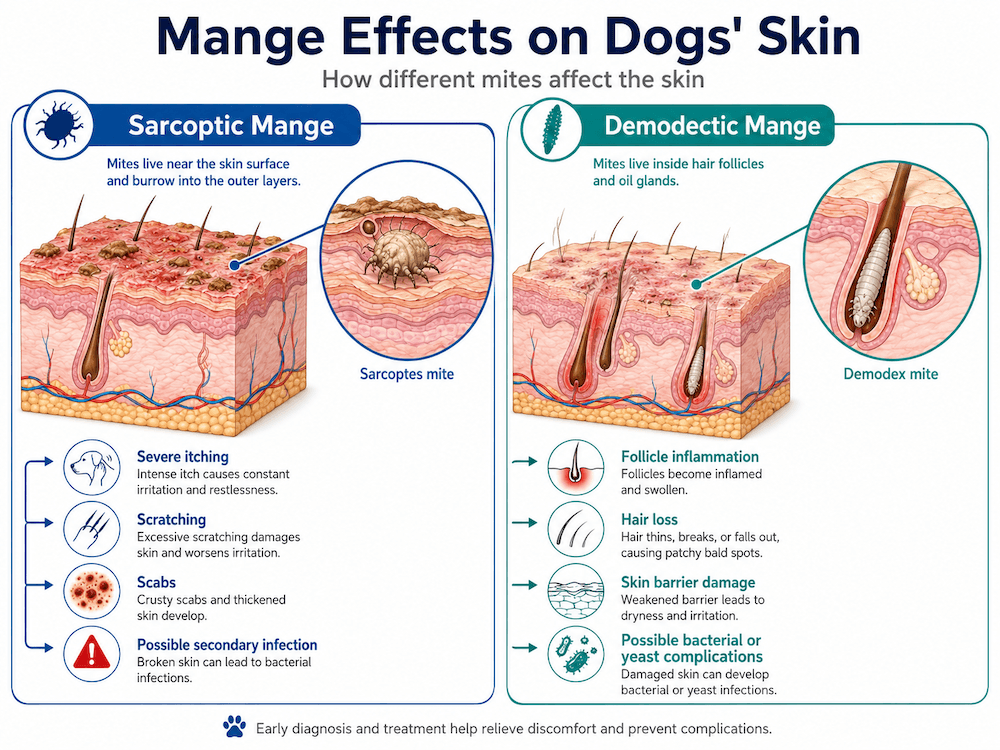
Mange causes disease through mite activity and the dog’s inflammatory response. Sarcoptic mites irritate the outer skin and trigger severe itching, which can lead to scratching, self-trauma, scabs, and secondary infection.


Demodectic mange develops deeper in the skin. Demodex mites multiply inside hair follicles, where overgrowth can inflame follicles, loosen hairs, damage the skin barrier, and allow bacteria or yeast to complicate the condition.
Common Signs of Mange in Dogs
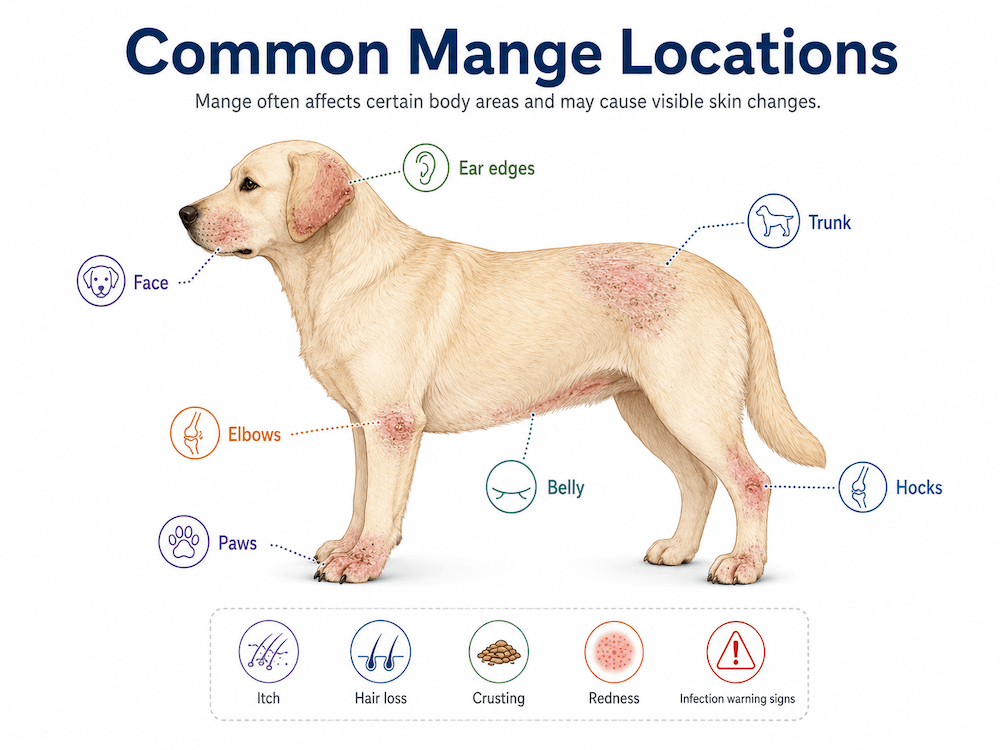
Mange signs can vary by mite type, but most cases involve some combination of itching, hair loss, redness, scaling, crusting, and irritated skin. Sarcoptic mange is usually very itchy, while demodectic mange may start as patchy hair loss with little itching.
Risk Factors for Mange in Dogs
Mange risk can increase when a dog’s immune system, environment, or exposure level makes mite problems more likely. Sarcoptic mange is contagious and is often linked to contact with infected animals, while demodectic mange is more often associated with immune weakness or mite overgrowth. These factors do not guarantee mange, but suspected cases should be diagnosed and treated by a veterinarian.
| Risk Factor | Why It May Increase Risk | What Dog Owners Can Do |
|---|---|---|
| Puppies | Immature immunity may allow Demodex mites to overgrow. | Monitor skin changes and schedule a vet exam. |
| Senior Dogs | Aging immune defenses may make skin problems more likely. | Ask a vet about new or spreading lesions. |
| Immunocompromised Dogs |
Weakened immunity may reduce normal mite control. | Manage underlying illness with veterinary guidance. |
| Shelters, Boarding, or Crowding |
Close contact can increase exposure to contagious mites. | Check skin after stays in crowded settings. |
| Exposure to Infected Animals |
Sarcoptic mange can spread through direct contact. | Separate exposed dogs and contact a veterinarian. |
| Poor Nutrition | Inadequate nutrition may weaken skin and immune health. | Feed a balanced diet approved for dogs. |
| Stress or Illness |
Stress and disease may affect immune balance. | Address ongoing illness and reduce avoidable stress. |
| Unsanitary Living Conditions |
Poor hygiene may increase irritation and infection risk. | Keep bedding clean and seek veterinary diagnosis. |
Dog Breeds Predisposed to Mange
Some dog breeds have been reported with higher odds of demodectic mange, especially juvenile or adult-onset demodicosis. This predisposition is usually linked to inherited immune-system tendencies, skin-barrier differences, or breed traits such as skin folds that can make irritation easier to miss or harder to manage. Breed risk does not mean a dog will definitely develop mange, but it can help owners know when hair loss, redness, scaling, or inflamed skin should be checked by a veterinarian sooner.
| Breed | Mange Link | Owner Note |
|---|---|---|
| Chinese Shar-Pei |
Reported with higher odds of demodicosis. | Watch for spreading hair loss or inflamed skin. |
| Pug | Associated with increased demodicosis risk. | Check facial folds, paws, and patchy bald areas. |
| Boxer | Reported in both juvenile and adult demodicosis data. | Promptly examine redness, scaling, or hair loss. |
| British Bulldog |
Linked with higher juvenile demodicosis odds. | Skin folds and irritation need regular monitoring. |
| French Bulldog |
Reported with higher juvenile demodicosis odds. | Do not assume bald patches are only allergies. |
| Staffordshire Bull Terrier |
Associated with juvenile-onset demodicosis risk. | Early testing helps confirm the true cause. |
| Dogue de Bordeaux |
Reported with increased juvenile demodicosis odds. | Spreading lesions should be checked by a vet. |
| Shih Tzu | Associated with higher adult-onset demodicosis odds. | New adult skin disease may need deeper evaluation. |
| West Highland White Terrier |
Reported with increased adult-onset demodicosis odds. | Chronic skin signs should not be self-treated. |
| Border Terrier |
Linked with higher adult-onset demodicosis odds. | A veterinarian should confirm suspected mange. |
Mange in Dogs Compared With Similar Skin Problems
Mange can resemble several common skin conditions. The table below shows why veterinary diagnosis matters before choosing treatment.
| Condition | How It Looks Similar | Helpful Clue | Why Diagnosis Matters |
|---|---|---|---|
| Flea Allergy Dermatitis |
Itching, scabs, and hair loss can overlap. | Often affects the rump and tail base. | Flea control is central to recovery. |
| Atopic Dermatitis |
Red, itchy skin may resemble mange. | Signs may be seasonal or chronic. | Long-term allergy control may be needed. |
| Ringworm | Patchy hair loss can mimic demodicosis. | Round lesions may appear with mild itching. | Antifungal treatment differs from mite treatment. |
| Bacterial Folliculitis |
Pustules and crusts can resemble demodicosis. | Small circular crusts may appear. | Antibiotic or antiseptic therapy may be needed. |
| Yeast Dermatitis |
Odor, greasiness, and itching may overlap. | Often affects paws, ears, folds, and belly. | Antifungal care may be required. |
How Mange in Dogs Is Diagnosed
Mange is diagnosed through a combination of skin history, physical examination, lesion pattern, exposure risk, and diagnostic testing. A veterinarian may use superficial skin scrapings, deep skin scrapings, hair plucks, tape impressions, microscopic examination, or other skin tests depending on the suspected mite.
Sarcoptic mange can be difficult to confirm because mites are not always found on skin scrapings. When the pattern strongly suggests sarcoptic mange, treatment response may help support the diagnosis. Demodectic mange is often confirmed by finding Demodex mites on deep skin scrapings, hair plucks, or other appropriate samples.
Diagnosis is important because mange is not the only cause of itching and hair loss in dogs. Treating the wrong condition can delay healing and allow secondary infections to worsen.
How Serious Is Mange in Dogs?
Mange can range from mild and localized to severe and widespread. A mild case may involve a few bald patches with minimal discomfort. A moderate case may involve more itching, redness, scaling, crusting, and spreading hair loss. A severe case may involve open sores, thickened skin, secondary infection, pain, odor, fever, or poor energy.
Sarcoptic mange is especially concerning because it can spread to other dogs and may cause temporary itchy skin reactions in people. Demodectic mange becomes more concerning when it is generalized, recurrent, infected, or appears in an adult dog with no obvious explanation.
| Severity | Typical Appearance | Owner Concern | Veterinary Priority |
|---|---|---|---|
| Mild | Small bald patches or mild scaling appear. | The dog may seem otherwise comfortable. | Testing helps confirm the exact cause. |
| Moderate | Itching, redness, crusts, or spreading hair loss occur. | Skin damage and infection become more likely. | Mite treatment and infection control may be needed. |
| Severe | Widespread sores, thick skin, odor, or lethargy appear. | The dog may be painful or systemically unwell. | Urgent care and follow-up are important. |
How Mange in Dogs Is Treated
Treatment depends on the mite type, severity, age of the dog, overall health, and whether secondary infection is present. Veterinary treatment may include prescription topical or oral anti-parasitic medications, medicated shampoos, antibiotics, antifungals, anti-itch care, and follow-up skin testing.
Some modern flea and tick preventives may also treat certain mites, but not every product works for every type of mange. A veterinarian should choose the safest option based on the dog’s weight, age, breed, health history, and medication risks.
Owners should avoid harsh home remedies such as motor oil, bleach, strong essential oils, or unapproved dips. These can irritate the skin, worsen inflammation, or cause poisoning.
Remember to ALWAYS consult your veterinarian before starting any new treatment or supplement for mange. If you can’t reach your vet, you can chat live with a registered online veterinary professional via our online vet chat or video chat support (24 hours a day, 7 days a week). Or use Chewy’s online vet services (6 a.m. – midnight ET).
What to Do if Your Dog Develops Mange
If your dog develops signs of mange, such as sudden intense itching, spreading hair loss, crusted skin, red patches, sores, odor, pus, ear-edge crusting, or symptoms affecting multiple pets, schedule a veterinary exam. Early care can help reduce discomfort, limit household spread, and prevent secondary skin infections.
Until your dog is evaluated, avoid sharing grooming tools, wash bedding, reduce close contact with other dogs if sarcoptic mange is possible, and avoid home remedies. If anyone in the home develops itchy bumps after close contact with a dog suspected of sarcoptic mange, they should contact a healthcare professional.
How to Prevent Mange in Dogs
You cannot prevent every case of mange, but you can lower your dog’s risk by keeping parasite prevention current, scheduling regular veterinary checkups, and addressing skin problems early. This is especially important for puppies, senior dogs, immunocompromised dogs, and dogs that spend time in shelters, boarding facilities, grooming salons, dog parks, or multi-dog homes.
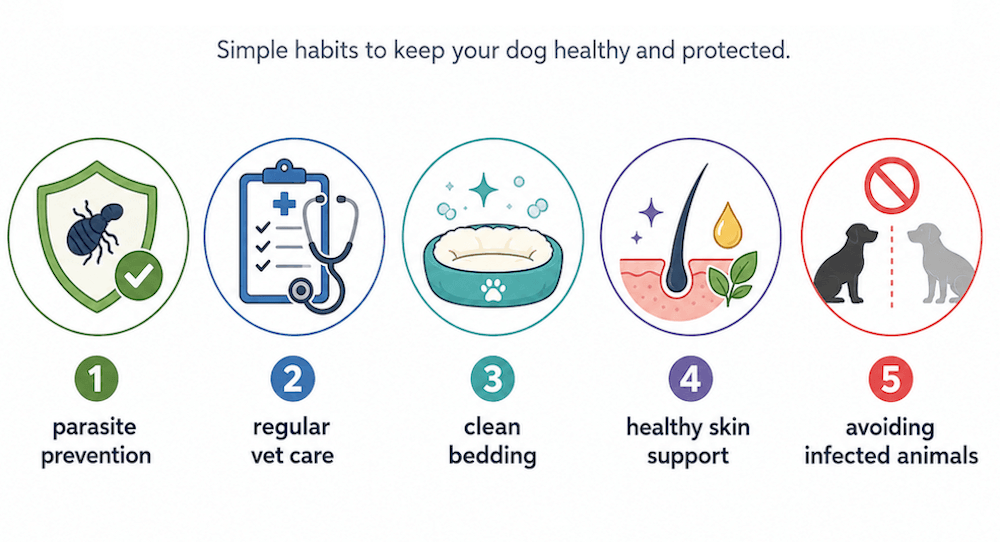
Good hygiene also helps reduce avoidable exposure and skin irritation. Wash bedding regularly, clean shared grooming tools, keep living areas sanitary, and avoid close contact with dogs that have unexplained itching, hair loss, crusting, or suspected contagious mange.
Supporting overall skin and immune health can also make a difference. Feed a balanced diet, manage underlying illness, reduce chronic stress where possible, and ask your veterinarian which flea, tick, and mite-control products are appropriate for your dog’s age, breed, weight, and health status.
What Veterinary Research Says About Mange in Dogs
The Merck Veterinary Manual describes sarcoptic mange as a mite infestation associated with sudden severe itching, exposure risk, and possible involvement of other animals or humans. It also explains why diagnosis can be difficult when skin scrapings are negative, even when clinical signs strongly suggest scabies.
The World Association for Veterinary Dermatology clinical consensus guidelines provide evidence-based recommendations for diagnosing and treating demodicosis in dogs and cats. These guidelines support diagnostic confirmation, appropriate miticidal therapy, and follow-up monitoring in generalized cases.[1]
A PubMed-indexed study by Ravera and colleagues found very low numbers of Demodex mites on healthy canine skin using real-time PCR. This supports the clinical distinction between normal low-level mite presence and demodectic mange caused by mite overgrowth.[2]
The Cornell Riney Canine Health Center describes common diagnostic and treatment considerations for sarcoptic mange, including therapeutic trials when mites are not found, and medication cautions for dogs with MDR1 sensitivity.
Frequently Asked Questions
The Bottom Line
Mange in dogs is a mite-related skin condition that can cause itching, hair loss, redness, crusting, sores, and secondary skin infections. The most important thing for dog owners to remember is that mange can have different causes, and the right treatment depends on whether the problem is contagious sarcoptic mange, demodectic mite overgrowth, or another skin condition that looks similar. A veterinarian can confirm the cause and recommend safe, effective treatment. With early diagnosis, proper care, and follow-up, most dogs recover well and return to healthier, more comfortable skin.