Tooth Infection in Dogs: Symptoms, Types, Causes, Signs & Prevention

Canine Bible is reader-supported. We receive affiliate commissions via some of our links. Learn more.
Tooth infections are among the most common dental problems in dogs, often developing as a complication of periodontal disease, which affects up to 80–90% of dogs over the age of 3. Many owners mistake the early warning signs—bad breath, red gums, difficulty chewing, and reduced appetite—for normal aging, when they may actually indicate a painful oral infection. Left untreated, tooth infections can lead to severe pain, tooth loss, jawbone damage, and the spread of bacteria to other parts of the body. The good news is that with prompt veterinary care, professional dental treatment, and consistent at-home oral hygiene, most tooth infections can be effectively treated and prevented. This guide covers everything you need to know about tooth infections in dogs—from causes and symptoms to diagnosis, treatment, prevention, and long-term dental health management.
What Is a Tooth Infection in Dogs?
A tooth infection is a bacterial infection affecting a tooth, its root, or the surrounding tissues, causing pain, inflammation, and damage within the mouth. In dogs, it most commonly develops as a result of periodontal disease, where plaque and tartar buildup allow bacteria to penetrate the gums and tooth roots. As the infection progresses, it can lead to abscesses, tooth loss, and bone destruction. If left untreated, bacteria may spread beyond the mouth, potentially affecting a dog’s overall health and well-being.
Types
Tooth infections can take several forms, each affecting different parts of the tooth and surrounding tissues:
| Type | Description |
|---|---|
| Tooth Root Abscess | A pocket of infection that develops at the root of a tooth, often due to advanced periodontal disease or a fractured tooth. |
| Periodontal Infection | Infection of the gums and supporting structures surrounding the teeth caused by plaque and tartar buildup. |
| Endodontic Infection | Occurs when bacteria invade the pulp chamber inside the tooth, usually following trauma or tooth fracture. |
| Periapical Infection | An infection located around the tip of the tooth root that can lead to bone loss and abscess formation. |
| Carnassial Tooth Abscess | A common abscess affecting the upper fourth premolar, often causing swelling below the eye. |
| Secondary Oral Infection | Develops when untreated dental disease spreads to nearby oral tissues, resulting in widespread inflammation and pain. |
Predisposed Dog Breeds
Tooth infections can affect any dog, but small and toy breeds are at higher risk due to tooth crowding, plaque buildup, and a greater susceptibility to periodontal disease.


| Size / Group | Breeds | Notes on Risk Factors |
|---|---|---|
| Toy Breeds | Chihuahua, Yorkshire Terrier, Toy Poodle, Maltese, Pomeranian | Small mouths and crowded teeth promote plaque buildup, increasing the risk of periodontal disease and tooth infections. |
| Small Breeds | Dachshund, Shih Tzu, Pekingese, Miniature Schnauzer, Cavalier King Charles Spaniel | Prone to tartar accumulation and gum disease due to dental crowding and retained baby teeth. |
| Brachycephalic Breeds | Pug, French Bulldog, English Bulldog, Boston Terrier | Compressed jaw structure can cause tooth misalignment, trapping food and bacteria between teeth. |
| Spaniels | Cocker Spaniel, Cavalier King Charles Spaniel, English Springer Spaniel | Often develop periodontal disease earlier than average, increasing susceptibility to tooth-root infections. |
| Senior Dogs | All breeds | Years of plaque accumulation and gum recession increase the likelihood of advanced dental disease and infection. |
| Dogs with Retained Baby Teeth | Common in toy and small breeds | Persistent deciduous teeth create overcrowding, allowing bacteria and debris to accumulate around the gumline. |
Causes
Tooth infections in dogs are most commonly caused by periodontal disease, where plaque and tartar buildup allow bacteria to spread beneath the gumline. Other causes include fractured teeth, oral injuries, retained baby teeth, and poor dental hygiene. As bacteria invade the tooth or surrounding tissues, infection can develop, leading to pain, inflammation, abscesses, and progressive damage to oral structures.
Symptoms
Tooth infections in dogs are a common dental condition that affects the teeth, gums, and surrounding tissues and can significantly impact comfort and overall health. Early signs are often subtle—like bad breath, mild gum redness, or reluctance to chew—but can worsen over time if left untreated.
This visual guide highlights the most common symptoms and how tooth infections affect different parts of a dog’s mouth, helping you recognize changes early and take steps to protect your dog’s oral health and quality of life.


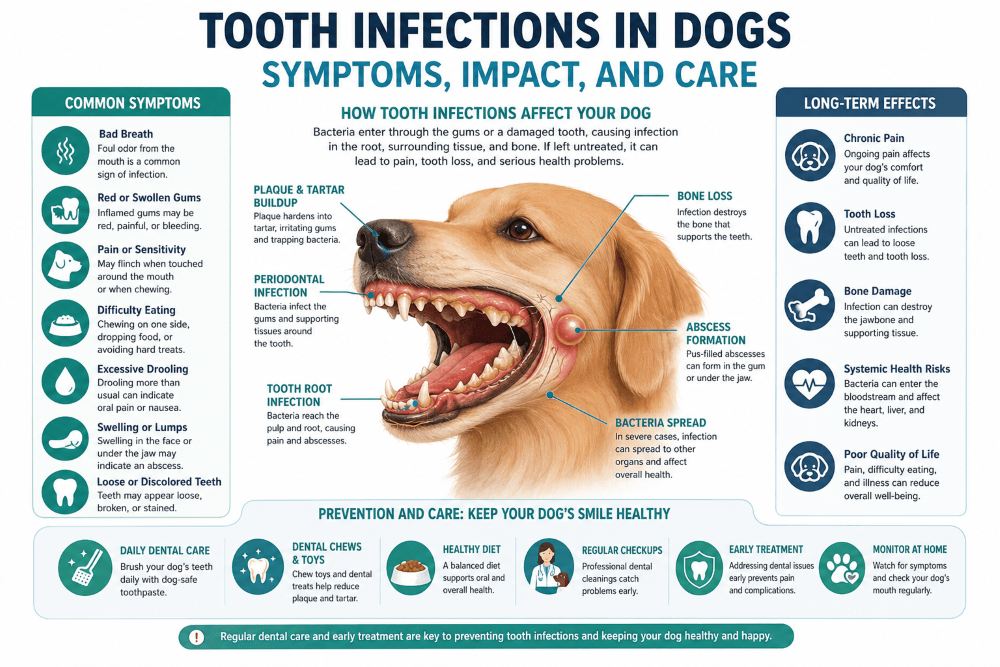
Stages of Tooth Infection
- Early stage: Bad breath, mild plaque buildup, subtle gum inflammation.
- Moderate stage: Noticeable gum infection, pain, chewing difficulty, tooth sensitivity.
- Advanced stage: Abscess formation, tooth loss, bone damage, systemic complications.
Top Ways to Prevent Tooth Infections in Dogs
Because tooth infections are largely preventable, consistent dental care is essential. Regular brushing, professional cleanings, and prompt treatment of dental problems can greatly reduce the risk of infection, helping maintain your dog’s oral health, comfort, and overall well-being.
| Prevention Strategy | Why It Helps | How to Do It |
|---|---|---|
| Daily Tooth Brushing | Removes plaque before it hardens into tartar and causes infection. | Brush your dog’s teeth daily with a veterinarian-approved canine toothpaste. |
| Professional Dental Cleanings | Removes tartar and bacteria hidden below the gumline. | Schedule routine dental cleanings based on your veterinarian’s recommendations. |
| Dental Chews & Oral Products | Help reduce plaque and support healthier gums. | Use VOHC-approved dental chews, water additives, and oral rinses. |
| Regular Oral Examinations | Identifies dental disease before it progresses to infection. | Check your dog’s mouth regularly and watch for bad breath or red gums. |
| Treat Damaged Teeth Promptly | Broken teeth can expose the pulp and allow bacteria to enter. | Seek veterinary care immediately for chipped, cracked, or fractured teeth. |
| Avoid Hard Chew Items | Reduces the risk of tooth fractures and oral trauma. | Avoid antlers, bones, rocks, and other objects that can damage teeth. |
| Routine Veterinary Checkups | Supports early diagnosis and treatment of dental problems. | Schedule annual or semiannual wellness exams, especially for senior dogs. |
Actionable Resources
If you want to prevent or reduce the risk of tooth infections in your dog, here are some helpful resources to explore under veterinary guidance.
How Tooth Infections Are Diagnosed in Dogs
Diagnosing a tooth infection requires a thorough veterinary dental evaluation to determine the source and severity of the infection. Key steps include:
- Physical Examination: A veterinarian checks for bad breath, swollen gums, loose teeth, facial swelling, pain, and other signs of oral disease.
- Oral & Dental Assessment:
- Dental Probing – Evaluates gum pockets, periodontal disease, and tooth stability.
- Oral Examination Under Anesthesia – Allows a detailed inspection of teeth and tissues that cannot be fully assessed while awake.
- Laboratory Tests: Blood work may be performed to assess overall health and identify conditions that could affect treatment or healing.
- Infection Severity Assessment: Veterinarians evaluate the extent of periodontal disease, tissue damage, and whether the infection has spread beyond the tooth.
Early diagnosis is crucial because tooth infections are progressive conditions—identifying and treating them promptly can relieve pain, prevent tooth loss, and reduce the risk of more serious complications.
Treatment & Care
According to current veterinary dentistry guidelines, the most effective treatments for tooth infections in dogs are multimodal, combining professional dental procedures, pain management, treatment of underlying dental disease, and appropriate antibiotic therapy when indicated. Advanced cases may require tooth extraction or root canal therapy to eliminate the source of infection and prevent recurrence.
Always consult your veterinarian before starting any treatment or supplement for a tooth infection. If you can’t reach your vet, you can chat live with a registered online veterinary professional via our online vet chat or video chat support (24 hours a day, 7 days a week). Or use Chewy’s online vet services (6 a.m. – midnight ET).
Conventional Medical Treatments
| Treatments | Benefits / Role |
|---|---|
| Professional Dental Cleaning | Removes plaque, tartar, and bacteria above and below the gumline to control infection. |
| Antibiotics | Used when bacterial infection is present or has spread beyond the tooth and surrounding tissues. |
| Pain Medications | Help relieve discomfort and inflammation associated with tooth infections and dental procedures. |
| Tooth Extraction | Removes severely infected or damaged teeth to eliminate the source of infection and pain. |
| Root Canal Therapy | Preserves strategically important teeth by removing infected pulp while maintaining tooth function. |
Supplement Support
| Supplement / Nutrient | Benefits / Role |
|---|---|
| Omega-3 Fatty Acids (Fish Oil) | May help reduce inflammation in the gums and support overall oral health. |
| Probiotics | Support a healthy oral and digestive microbiome, potentially reducing harmful bacteria. |
| Vitamin C | Supports collagen production, gum tissue repair, and immune function. |
| Vitamin E | Provides antioxidant protection that may help reduce oxidative stress in oral tissues. |
| Coenzyme Q10 (CoQ10) | May support gum health and help manage inflammation associated with periodontal disease. |
| Zinc | Supports wound healing, immune function, and healthy oral tissues. |
| Dental Health Diets | Specially formulated foods help reduce plaque and tartar accumulation. |
| Dental Chews | Provide mechanical cleaning action that helps remove plaque from teeth. |
| Water Additives | May help control oral bacteria, freshen breath, and support daily dental hygiene. |
Find the best over-the-counter treatments and supplements for tooth infection in dogs on Amazon and Chewy.

Alternative & Integrative Therapies
| Therapy | Benefits / Role |
|---|---|
| Veterinary Acupuncture | May help reduce pain and improve comfort when used alongside conventional dental treatment. |
| Cold Laser Therapy | Can support healing and reduce inflammation following dental procedures or extractions. |
| Probiotic Therapy | Supports a healthier oral microbiome and may help reduce harmful bacterial populations. |
| Herbal Oral Rinses | Certain veterinarian-approved herbal products may help soothe irritated gums and support oral hygiene. |
| Dental Chews & Natural Oral Care | Provide mechanical plaque removal and may help maintain oral health between cleanings. |
| Nutritional Therapy | Supports immune function, gum health, and tissue repair through targeted nutrition. |
| Integrative Pain Management | Combines conventional and complementary therapies to improve comfort during recovery. |
Surgical Options
| Surgical Option | Benefits / Role |
|---|---|
| Tooth Extraction | Removes severely infected or damaged teeth, eliminating the source of pain and infection. |
| Root Canal Therapy | Treats infection inside the tooth while preserving tooth structure and function. |
| Abscess Drainage | Removes accumulated pus and infected material, reducing pressure, pain, and swelling. |
| Periodontal Surgery | Addresses advanced gum disease by cleaning deep pockets and removing diseased tissue around teeth. |
Emotional & Lifestyle Impact
Tooth infections affect more than just a dog’s mouth—they can significantly impact both their daily life and emotional well-being. Dogs living with chronic dental pain may become less playful, more withdrawn, reluctant to eat, or even irritable when their face or mouth is touched, as discomfort often interferes with normal activities such as chewing, playing, and social interaction.
For owners, the experience can be equally challenging, bringing concern over a pet’s pain along with the time and cost associated with dental treatment. Daily routines may need to shift toward softer foods, medication schedules, and closer monitoring of eating habits, while home care often requires regular tooth brushing, dental chews, and follow-up veterinary visits. With timely treatment, patience, and consistent oral care, most dogs can regain comfort, confidence, and a better quality of life.
Typical Annual Cost of Treating Canine Tooth Infection
| Category | Estimated Annual Cost Range | Notes |
|---|---|---|
| Veterinary Exams & Diagnostics | $150 – $800 | Includes physical exams, dental evaluations, bloodwork, and dental X-rays. |
| Professional Dental Cleaning | $300 – $1,500 | Varies based on location, anesthesia requirements, and severity of dental disease. |
| Medications | $50 – $500 | May include antibiotics, pain medications, and post-procedure prescriptions. |
| Dental Diets & Oral Care Products | $100 – $600 | Dental chews, water additives, prescription diets, toothbrushes, and toothpaste. |
| Tooth Extraction or Root Canal | $500 – $3,500+ | Costs depend on the number of affected teeth and complexity of the procedure. |
| Pet Insurance & Wellness Plans | $240 – $960 | May help offset costs for dental procedures, diagnostics, and follow-up care. |
| Typical Annual Range | Routine Dental Care: $500 – $2,000 | Advanced Cases: $1,500 – $5,000+ | |
Tooth infection treatment costs can add up quickly—from routine dental cleanings and medications to tooth extractions or advanced dental procedures. Pet insurance and wellness plans can help reduce the financial burden and ensure your dog receives timely care without compromise. If you want to compare plans and find providers that offer the best dental coverage, check out our full guide to the Best Pet Insurance for Dogs and Best Pet Wellness Plans.
Other Health Issues Related to Tooth Infections in Dogs
As dental disease progresses and infection persists, dogs may develop additional oral, physical, and behavioral complications. Some signs associated with tooth infections may also overlap with these related conditions.
- Periodontal Disease (Gum Disease)
- Tooth Root Abscesses
- Tooth Loss
- Jawbone Loss (Alveolar Bone Loss)
- Oral Pain & Chronic Discomfort
- Difficulty Eating / Reduced Appetite
- Weight Loss
- Facial Swelling
- Oral-Nasal Fistulas
- Bad Breath (Halitosis)
- Behavioral Changes (Irritability, Aggression)
- Reduced Activity & Engagement
- Systemic Bacterial Infections
- Heart Disease (Endocarditis Risk)
- Kidney Disease
- Liver Disease
- Reduced Quality of Life
Frequently Asked Questions
The Bottom Line
Tooth infections are among the most common and potentially painful dental conditions dogs face, but they do not have to compromise a dog’s quality of life. With early detection, routine dental care, and prompt veterinary treatment, most tooth infections can be successfully managed or prevented. By maintaining good oral hygiene, scheduling regular dental checkups, and addressing dental problems early, pet parents can help their dogs avoid unnecessary pain and complications. Ultimately, the goal is not just treating infection, but protecting long-term oral health—helping every dog enjoy a happier, healthier, and more comfortable life.