Tartar Buildup in Dogs: Symptoms, Types, Causes, Signs & Prevention

Canine Bible is reader-supported. We receive affiliate commissions via some of our links. Learn more.
Tartar buildup is one of the most common dental health problems in dogs, affecting up to 80% of dogs by age 3 and serving as a leading cause of periodontal disease. Many owners mistake early signs—bad breath, yellow or brown deposits on the teeth, and mild gum redness—as minor cosmetic issues, when they are actually indicators of worsening oral disease. Left untreated, tartar buildup can lead to painful gum infections, tooth loss, and damage to overall health. The good news is that with proper dental care, including regular brushing, dental chews, and professional cleanings, tartar can be managed and prevented. This guide covers everything you need to know about tartar buildup in dogs—from causes and symptoms to diagnosis, treatment, prevention, and daily oral care—so you’ll have the tools to protect your dog’s dental health and quality of life.
What Is Tartar Buildup in Dogs?
In simple terms, tartar buildup is the hardening of plaque on the teeth, which can lead to dental disease and discomfort. In dogs, it develops when plaque—a sticky film of bacteria, saliva, and food debris—is not removed regularly. As plaque mineralizes, it forms tartar (dental calculus), which adheres to the teeth and gumline. This buildup encourages bacterial growth, causing bad breath, gum inflammation, infection, and progressive periodontal disease over time.
Types
Tartar buildup in dogs can vary in severity, with each stage affecting the teeth and gums differently:
| Type | Description |
|---|---|
| Supragingival Tartar | Forms above the gumline and appears as yellow, brown, or gray deposits on the teeth. |
| Subgingival Tartar | Develops below the gumline, where it is less visible but more damaging to gum and tooth-supporting structures. |
| Mild Tartar Buildup | Characterized by small deposits on the teeth with little or no gum inflammation. |
| Moderate Tartar Buildup | More extensive deposits accompanied by noticeable gingivitis, bad breath, and plaque accumulation. |
| Severe Tartar Buildup | Heavy tartar accumulation associated with advanced periodontal disease, infection, and potential tooth loss. |
| Recurrent Tartar Buildup | Occurs when tartar returns quickly after cleaning, often due to genetics, diet, or inadequate dental care. |
Predisposed Dog Breeds
Tartar buildup can affect dogs of any breed. However, some dogs may be more prone to excessive tartar buildup and dental disease due to genetic predisposition, jaw size, tooth crowding, or breed-specific oral health characteristics.


| Risk Factor | Description | Impact on Dental Health |
|---|---|---|
| Poor Oral Hygiene | Infrequent brushing allows plaque to remain on the teeth. | Plaque hardens into tartar, increasing the risk of gum disease. |
| Soft Diets | Soft foods provide less natural abrasion on tooth surfaces. | Plaque accumulates more easily and can mineralize into tartar. |
| Aging | Dental deposits build up over time if not regularly removed. | Older dogs are more likely to have significant tartar accumulation. |
| Crowded or Misaligned Teeth | Tight spaces between teeth trap food particles and bacteria. | Makes plaque removal difficult and promotes tartar formation. |
| Lack of Professional Cleanings | Existing tartar cannot be removed by brushing alone. | Allows tartar and periodontal disease to progress. |
| Underlying Dental Disease | Gum inflammation and oral infections encourage bacterial growth. | Accelerates tartar accumulation and oral health deterioration. |
Causes
Tartar buildup develops when plaque—a sticky film of bacteria, saliva, and food particles—is not removed from a dog’s teeth through regular brushing or dental care. As plaque remains on the teeth, it hardens into tartar (dental calculus), creating a rough surface that attracts even more bacteria. Factors such as poor oral hygiene, soft diets, crowded teeth, advancing age, and genetic predisposition can all increase the risk. Small and toy breeds are especially susceptible due to their compact jaw structure, which can make plaque and tartar accumulate more quickly.
Symptoms
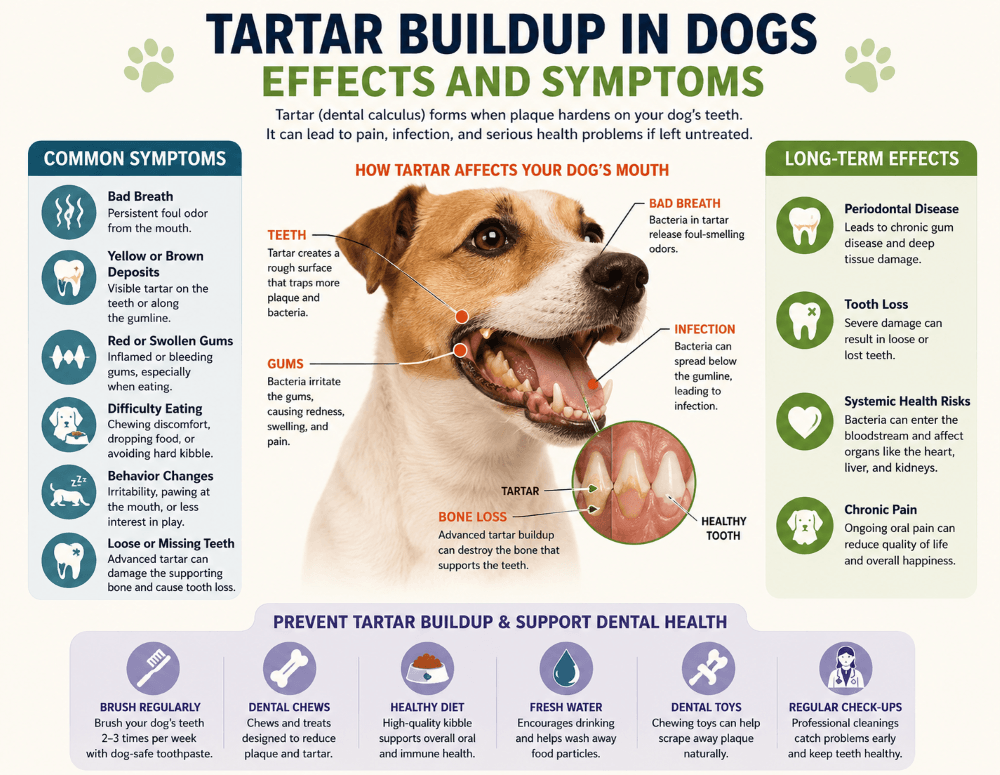
Tartar buildup in dogs is a common, progressive dental condition that affects the teeth and gums and can significantly impact oral health and comfort. Early signs are often subtle—like mild bad breath or slight yellowing of the teeth—but can worsen over time if left untreated.
This visual guide highlights the most common symptoms and how tartar buildup affects different parts of a dog’s mouth, helping you recognize changes early and take steps to support your dog’s dental health and overall well-being.


Stages of Tartar Buildup
- Early stage: Plaque accumulation, mild bad breath, and slight yellowing of the teeth.
- Moderate stage: Visible tartar deposits, gum inflammation, persistent bad breath, and oral discomfort.
- Advanced stage: Severe periodontal disease, tooth loss, oral infection, and potential systemic health complications.
Top Ways to Prevent Tartar Buildup in Dogs
Because tartar buildup is a progressive but preventable dental condition, early oral care is essential. Regular tooth brushing, professional dental cleanings, dental chews, and a balanced diet can reduce plaque accumulation and help maintain long-term dental health.
| Prevention Strategy | Why It Helps | How to Do It |
|---|---|---|
| Brush Teeth Regularly | Removes plaque before it hardens into tartar. | Brush with a dog-safe toothpaste at least several times per week. |
| Provide Dental Chews | Helps reduce plaque and tartar accumulation. | Choose veterinarian-approved dental chews designed for oral health. |
| Feed a Dental-Friendly Diet | Some diets help clean teeth and reduce plaque formation. | Ask your veterinarian about dental kibble or oral-health diets. |
| Schedule Professional Cleanings | Removes tartar that brushing cannot eliminate. | Follow your veterinarian’s recommendations for dental examinations and cleanings. |
| Use Dental Water Additives | Can help control bacteria and freshen breath. | Add veterinarian-approved products to your dog’s drinking water. |
| Offer Safe Chew Toys | Provides mild mechanical cleaning of tooth surfaces. | Use durable dental toys that promote chewing without damaging teeth. |
| Monitor Oral Health Regularly | Early detection prevents severe dental disease. | Check for bad breath, gum redness, plaque, or tartar during routine care. |
Actionable Resources
If you want to prevent or reduce the progression of tartar buildup in your dog, here are some things you can do under veterinary guidance.
How Tartar Buildup Is Diagnosed in Dogs
Diagnosing tartar buildup requires a thorough veterinary oral examination to assess the extent of plaque, tartar, and gum disease. Key steps include:
- Physical Examination: A veterinarian checks the teeth, gums, and oral tissues for tartar accumulation, bad breath, inflammation, bleeding, and signs of discomfort.
- Dental Evaluation:
- Visual Assessment – Used to identify visible plaque, tartar deposits, gum recession, and damaged teeth.
- Dental X-rays – Recommended to detect disease below the gumline, bone loss, tooth root damage, or hidden infections.
- Periodontal Assessment: Measurements may be taken around the teeth to evaluate gum health and determine the severity of periodontal disease.
- Medical History Review: Veterinarians may ask about bad breath, difficulty eating, drooling, or changes in chewing behavior.
Early diagnosis is crucial because tartar buildup is a progressive condition—identifying it early allows for treatment before significant dental disease, tooth loss, or systemic complications develop.
Treatment & Care
According to the latest research, the most effective treatments for tartar buildup in dogs focus on removing plaque and calculus while preventing periodontal disease, combining professional dental cleanings, routine tooth brushing, dental diets, oral hygiene products, and ongoing veterinary dental care for optimal results.
Always consult your veterinarian before starting any new dental care routine, treatment, or oral health supplement for tartar buildup. If you can’t reach your vet, you can chat live with a registered online veterinary professional via our online vet chat or video chat support (24 hours a day, 7 days a week). Or use Chewy’s online vet services (6 a.m. – midnight ET).
Conventional Medical Treatments
| Treatments | Benefits / Role |
|---|---|
| Professional Dental Cleaning | Removes plaque and tartar above and below the gumline under veterinary supervision. |
| Dental Extractions | May be necessary for severely damaged, loose, or infected teeth caused by advanced periodontal disease. |
| Antibiotic Therapy | Used when bacterial infections are present in the gums, teeth, or surrounding oral tissues. |
| Dental X-Rays | Help identify hidden tooth root disease, bone loss, and abnormalities beneath the gumline. |
| At-Home Dental Care | Regular brushing, dental chews, and oral hygiene products help prevent future tartar accumulation. |
Supplement Support
| Supplement / Nutrient | Benefits / Role |
|---|---|
| Dental Chews | Provide mechanical cleaning that helps reduce plaque and slow tartar accumulation. |
| VOHC-Approved Dental Diets | Specially formulated kibble helps clean teeth and reduce plaque and tartar formation. |
| Omega-3 Fatty Acids (Fish Oil) | May help support gum health and reduce inflammation associated with periodontal disease. |
| Probiotics | Support a healthier oral microbiome and may help reduce odor-causing bacteria. |
| Dental Water Additives | Help control bacterial growth and support fresher breath between brushings. |
| Antioxidants (Vitamins C & E) | Support gum tissue health and help protect oral tissues from oxidative stress. |
| Zinc | May help reduce plaque formation and support healthy gums and oral tissues. |
| Coenzyme Q10 (CoQ10) | Supports gum health and may aid oral tissue repair in dogs with periodontal disease. |
| Fresh Water | Helps rinse away food particles and supports overall oral hygiene. |
Find the best over-the-counter treatments and supplements for tartar buildup in dogs on Amazon and Chewy.

Alternative & Integrative Therapies
| Therapy | Benefits / Role |
|---|---|
| Dental Chews & Natural Chewing Aids | Help mechanically reduce plaque buildup and support cleaner teeth between brushings. |
| Coconut Oil Oral Care | May help reduce oral bacteria and improve breath when used as part of a dental routine. |
| Probiotic Supplements | Support a balanced oral microbiome and may help reduce odor-causing bacteria. |
| Dental Water Additives | Can help control bacterial growth and promote fresher breath. |
| Herbal Oral Rinses | Some veterinarian-approved herbal products may help soothe gums and support oral health. |
| Raw Carrots & Crunchy Vegetables | Provide mild abrasive action that may help remove food debris and plaque from teeth. |
| Routine At-Home Dental Care | Regular brushing combined with integrative dental products helps slow tartar accumulation and maintain oral health. |
Surgical Options
| Dental Procedure | Benefits / Role |
|---|---|
| Professional Dental Cleaning (Scaling & Polishing) | Removes plaque and tartar above and below the gumline, helping prevent periodontal disease. |
| Tooth Extraction | Removes severely damaged, loose, or infected teeth that cannot be saved. |
| Periodontal Surgery | Treats advanced gum disease by cleaning deep pockets and preserving remaining tooth structures. |
| Root Canal Therapy | May save valuable teeth affected by severe infection or trauma while maintaining function. |
| Dental Radiography | Identifies hidden tooth root disease, bone loss, and oral abnormalities requiring treatment. |
Emotional & Lifestyle Impact
Tartar buildup affects more than just a dog’s teeth—it can influence both their daily comfort and overall well-being. Dogs living with chronic dental disease may become less interested in eating, chewing toys, or playing, and may show signs of irritability or sensitivity around the mouth, as oral pain can make normal activities uncomfortable.
For owners, the experience can be equally challenging, bringing concerns about their dog’s comfort, veterinary expenses, and ongoing dental care needs. Daily routines may need to include regular tooth brushing, dental chews, and scheduled cleanings, while feeding habits may require adjustments to accommodate oral discomfort. With consistent preventive care and veterinary support, however, pet parents can help maintain their dog’s oral health, comfort, and quality of life.
Typical Annual Cost of Treating Canine Tartar Buildup
| Category | Estimated Annual Cost Range | Notes |
|---|---|---|
| Routine Vet Visits & Oral Exams | $100 – $400 | Includes wellness exams and dental health assessments. |
| Professional Dental Cleaning | $300 – $1,500 | Varies depending on location, anesthesia, and dental disease severity. |
| Dental X-Rays | $100 – $500 | Used to identify hidden tooth root disease and bone loss. |
| Dental Products & Preventive Care | $100 – $600 | Includes toothbrushes, toothpaste, dental chews, water additives, and oral rinses. |
| Tooth Extractions (if needed) | $300 – $3,000+ | Costs vary based on the number and complexity of extractions required. |
| Pet Insurance & Wellness Plans | $240 – $960 | May help offset costs for dental exams, cleanings, and procedures. |
| Typical Annual Range | Preventive Care: $200 – $1,000 | With Advanced Dental Treatment: $1,000 – $5,000+ | |
Tartar buildup care can add up over time—from routine dental products to professional cleanings and possible tooth extractions. Pet insurance and wellness plans can help reduce out-of-pocket expenses and make preventive dental care more affordable. If you want to compare plans and find out which providers offer the best coverage for dental treatments and oral health care, check out our full guide to the Best Pet Insurance for Dogs and Best Pet Wellness Plans.
Other Health Issues Related to Tartar Buildup in Dogs
As dental disease progresses and oral inflammation persists, dogs may develop additional health problems, and some symptoms associated with tartar buildup may also be linked to these conditions rather than dental disease alone.
- Gingivitis
- Periodontal Disease
- Tooth Loss
- Oral Infections
- Gum Recession
- Tooth Root Abscesses
- Chronic Bad Breath (Halitosis)
- Difficulty Eating or Chewing
- Reduced Appetite
- Weight Loss
- Oral Pain and Discomfort
- Behavioral Changes (Irritability, Sensitivity Around the Mouth)
- Jaw Bone Loss
- Heart Disease (Associated with Chronic Oral Bacteria)
- Kidney Disease (Associated with Chronic Oral Bacteria)
- Liver Disease (Associated with Chronic Oral Bacteria)
Frequently Asked Questions
The Bottom Line
Tartar buildup is one of the most common dental health problems dogs face, but it doesn’t have to compromise their quality of life. While tartar cannot be removed without professional cleaning once it has formed, early detection, consistent dental care, and regular veterinary checkups can significantly help prevent serious oral disease. By maintaining a routine of tooth brushing, dental-friendly products, and professional cleanings, pet parents can help protect their dog’s teeth, gums, and overall health. Ultimately, the goal is not just fresher breath, but long-term oral comfort, better well-being, and a healthier life for every dog.