How to Convince Your Parents to Get a Dog (In 8 Easy Ways)


Canine Bible is reader-supported. We receive affiliate commissions via some of our links. Learn more.
To convince your parents to get a dog, show them you are responsible, prepared, and realistic about the commitment. The best approach is to explain how you will help with feeding, walking, training, cleaning, and long-term care. A dog is not just a fun pet; it is a daily responsibility that affects the whole household. Your parents may worry about cost, time, mess, allergies, travel, or whether you will stay committed. That means your argument needs to be calm, practical, and backed by a clear plan. You also need to know when a dog may not be the right choice yet. This guide explains how to build trust, answer common concerns, and make your request more convincing.
When Getting a Dog May or May Not Be the Right Choice
| Factor | Getting a Dog May Be Right If… | Getting a Dog May Not Be Right If… |
|---|---|---|
| Time | Your family can handle daily walks, feeding, and training. | Everyone is too busy for consistent daily care. |
| Budget | Food, vet care, supplies, and emergencies are affordable. | Basic care or surprise vet bills would be stressful. |
| Housing | Your home allows dogs and has safe space. | Rentals, rules, or space make dog ownership difficult. |
| Family Agreement | All adults support the decision and responsibilities. | One parent strongly disagrees or feels pressured. |
| Allergies | No one has serious pet allergy or asthma issues. | Allergies or asthma may worsen with dog exposure. |
| Responsibility | You already follow routines without reminders. | You often forget chores or need repeated reminders. |
| Lifestyle | A dog’s energy level fits your family’s routine. | Your preferred dog needs more activity than you can provide. |
| Travel | Your family has a plan for trips and emergencies. | No one can care for the dog during travel. |
| Safety | Everyone can follow calm, supervised dog rules. | Young children or pets may be unsafe without close supervision. |
| Timing | Your family is stable enough for a long-term commitment. | Major moves, stress, or changes are already happening. |
Once you understand whether a dog fits your family’s current situation, the next step is to look at the decision from your parents’ point of view. Most parents are not simply saying no because they dislike dogs. They are thinking about the practical problems that come with long-term pet ownership.
What Parents Worry About Before Saying Yes to a Dog
When you ask for a dog, your parents are not only deciding whether dogs are cute. They are deciding whether the household can support a living animal for many years.
A dog needs food, exercise, preventive veterinary care, training, socialization, grooming, safe housing, and emergency planning. Veterinary organizations describe pet ownership as a long-term commitment that requires time, money, preparation, and ongoing care—not just affection.


| Parent Concern | What They May Be Thinking | Better Way to Answer |
|---|---|---|
| Cost | Dogs need food, vet care, supplies, and emergencies. | Show a realistic monthly and yearly budget. |
| Time | Someone must walk, train, feed, and clean daily. | Present a daily care schedule you can follow. |
| Responsibility | You may lose interest after a few weeks. | Prove consistency before asking again. |
| Mess | Dogs shed, track dirt, and have accidents. | Offer a cleaning plan with assigned tasks. |
| Allergies | A family member may react to dander or saliva. | Suggest allergy testing before adoption. |
| Safety | Dogs can bite, jump, or overwhelm children. | Explain supervision, training, and safe handling rules. |
| Travel | Vacations become harder and more expensive. | Research boarding, sitters, or trusted relatives. |
| Housing | Rentals, HOAs, or neighbors may limit dogs. | Check rules before bringing up breeds. |
Understanding the Real Cost of a Dog
One of the fastest ways to lose credibility is to say, “Dogs are not that expensive.” They can be affordable for some families, but they are never free.
Dog costs include adoption or purchase fees, food, supplies, grooming, training, licensing, veterinary care, vaccines, parasite prevention, boarding, and unexpected medical needs. Shelter and pet-care organizations commonly advise families to budget beyond the initial adoption fee because setup and veterinary expenses can add up quickly.
| Cost Area | Estimated Cost | What It Covers | How to Discuss It |
|---|---|---|---|
| Adoption Fee | $80–$350 one time | Often includes vaccines, microchip, and spay/neuter. | Compare local shelters and included services. |
| Food | $25–$100 monthly | Daily meals based on size, age, and diet. | Estimate by dog size and food brand. |
| Supplies | $150–$500 one time | Crate, leash, collar, bed, bowls, and toys. | Make a starter list before adopting. |
| Vet Care | $200–$700 yearly | Checkups, vaccines, exams, and basic wellness care. | Call a local clinic for first-year pricing. |
| Parasite Prevention | $15–$40 monthly | Flea, tick, and heartworm prevention products. | Ask a vet what your area requires. |
| Grooming | $30–$100 per visit | Bathing, brushing, nail trims, and coat care. | Choose a coat type your family can maintain. |
| Training | $100–$300 per class | Basic manners, leash skills, and behavior support. | Plan reward-based training from the start. |
| Pet Insurance | $30–$80 monthly | Helps cover accidents, illness, or major vet bills. | Compare deductibles, exclusions, and reimbursement rates. |
| Boarding or Sitting | $25–$75 daily | Care when the family travels or is away. | Discuss vacation plans before getting a dog. |
| Emergency Fund | $500–$2,000 saved | Unexpected illness, injury, surgery, or urgent care. | Build savings before bringing a dog home. |
| First-Year Total | $1,500–$4,000 first year | Adoption, supplies, vet care, food, and training. | Show parents the full first-year commitment. |
| Monthly Total | $100–$300 monthly | Food, preventives, grooming, insurance, and supplies. | Explain who can help pay each cost. |
Before You Ask: Build a Responsibility Plan
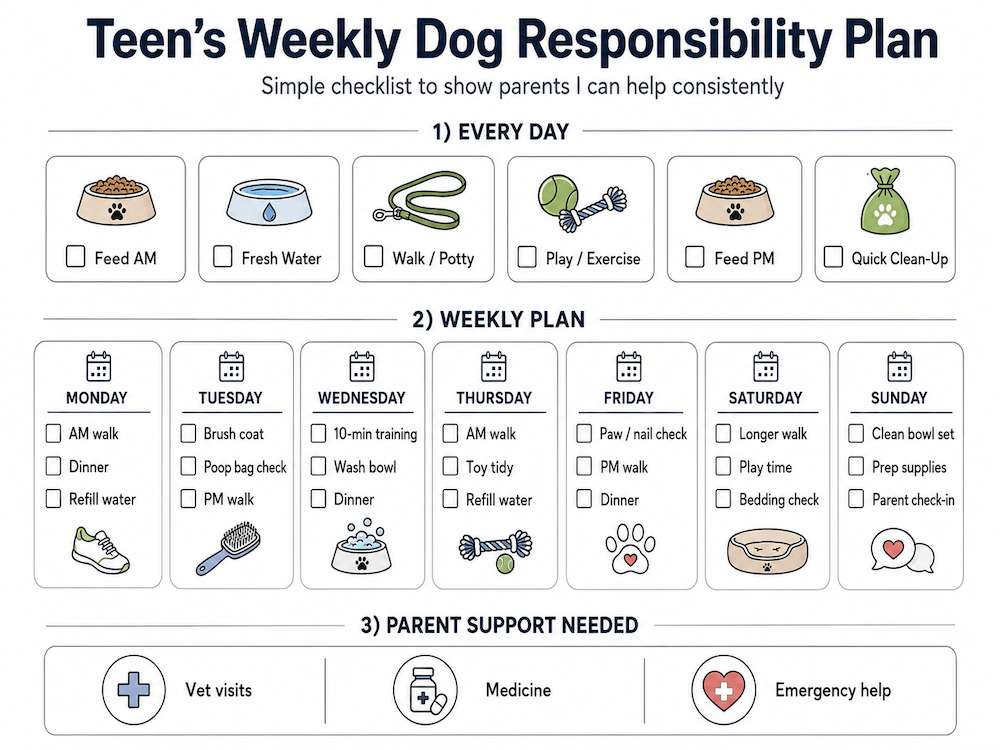
A responsibility plan is more convincing than a promise. Instead of saying, “I’ll take care of the dog,” show exactly what you will do every day, every week, and every month.
This matters because dogs need routine. Feeding, exercise, socialization, grooming, training, parasite prevention, and veterinary care are all part of responsible ownership, not optional extras.


How to Convince Your Parents to Get a Dog in 8 Practical Steps
Convincing your parents to get a dog is not about begging until they give in. It is about showing them that you understand the daily care, cost, training, safety, and long-term responsibility involved.
Step 1: Find Out Why Your Parents Are Saying No
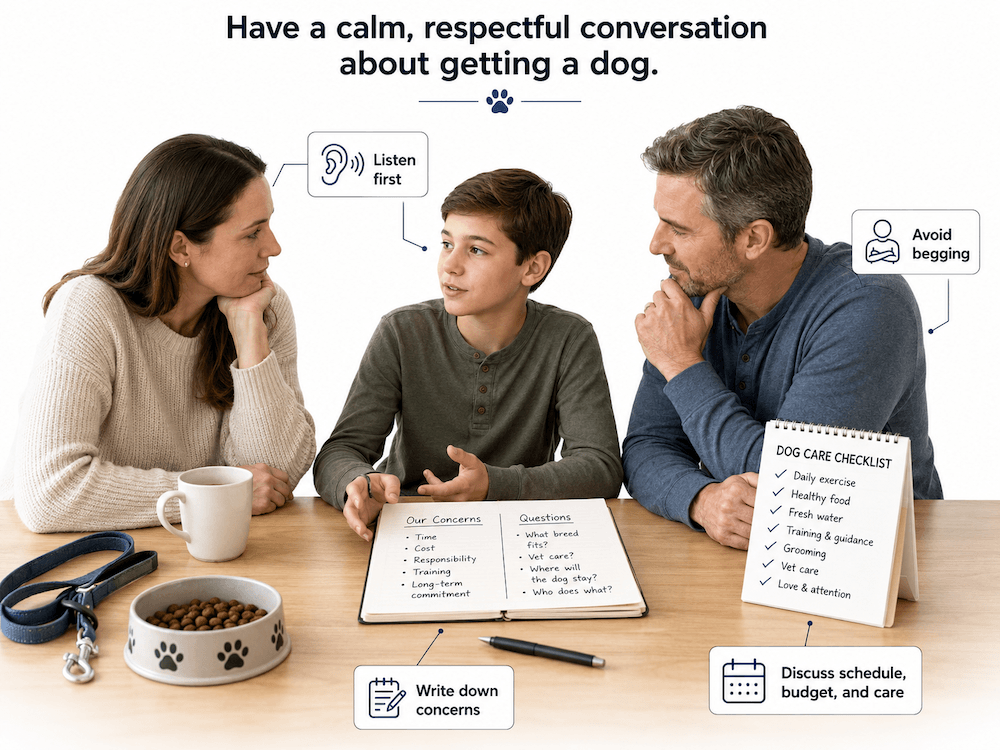
Before trying to change your parents’ minds, ask what worries them most about getting a dog. Their answer may be about money, time, allergies, mess, travel, safety, or whether you will stay responsible after the excitement wears off.
Do not interrupt or argue while they explain. The goal is to understand the real reason behind their answer so you can respond with a better plan instead of repeating the same request.
Step 2: Show Responsibility Before You Ask Again
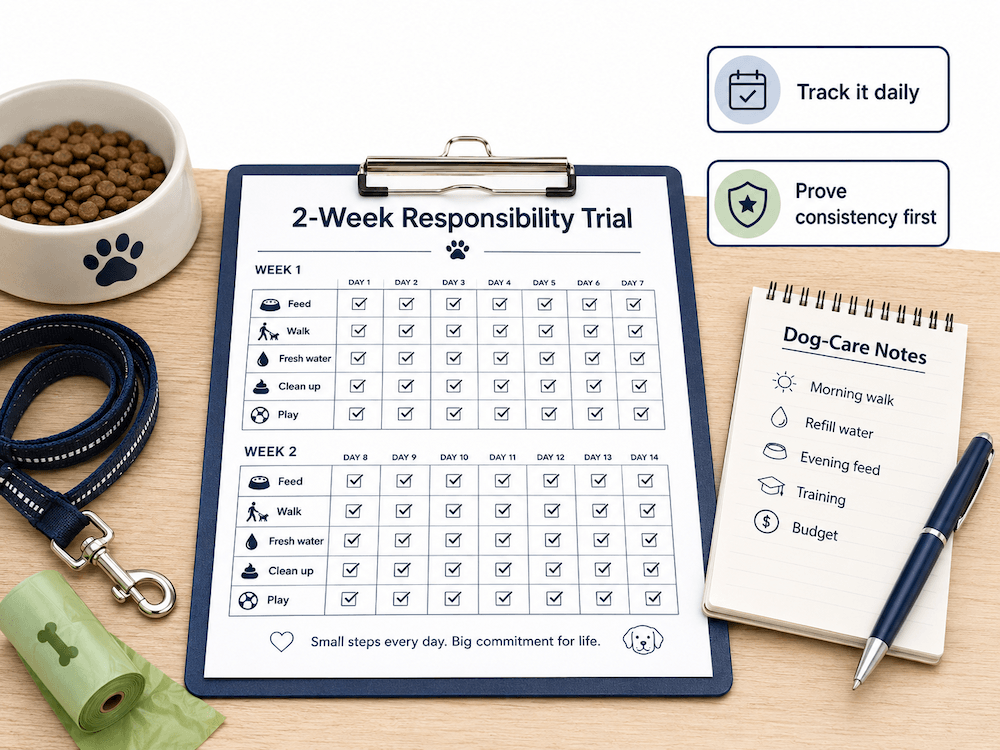
Parents are more likely to believe your plan if they see responsibility before a dog enters the home. For two to four weeks, focus on doing chores, keeping your space clean, waking up on time, and helping without being reminded. If you can show consistency with smaller responsibilities first, your request will feel more serious and mature.
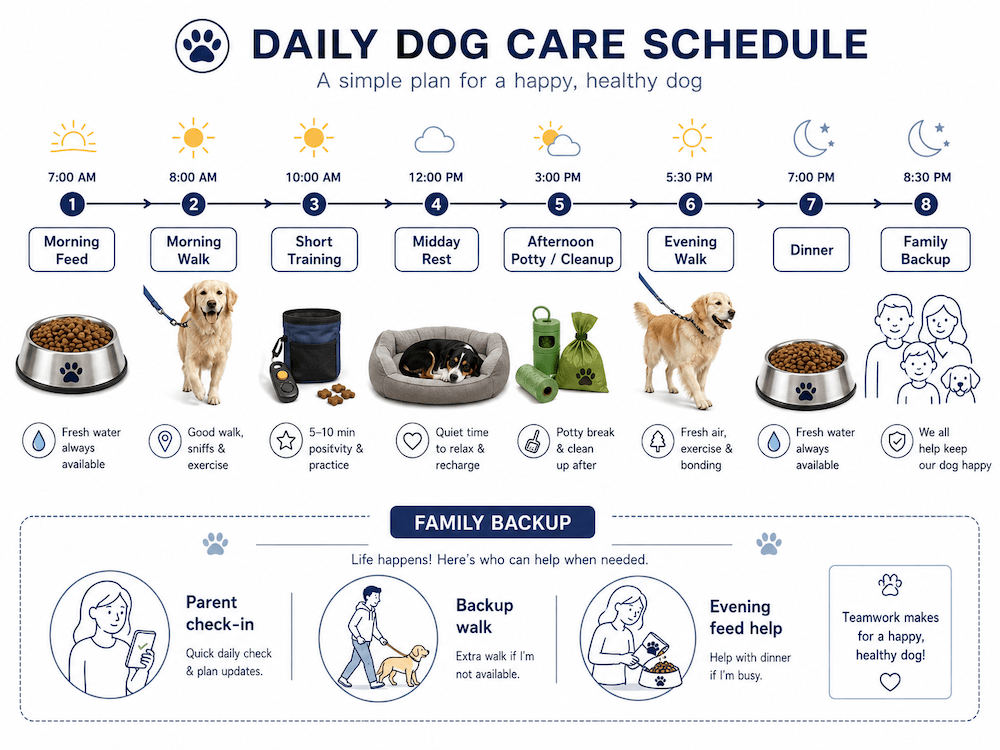
Step 3: Create a Daily Dog Care Schedule
A daily care schedule helps your parents see how the dog would fit into real life. Include mornings, school days, weekends, rainy days, holidays, and times when you may be busy with homework or activities.
Your schedule should show who will handle feeding, walks, potty breaks, training, cleaning, grooming, and bedtime routines. It should also include an adult backup plan because parents are ultimately responsible for the dog’s welfare.
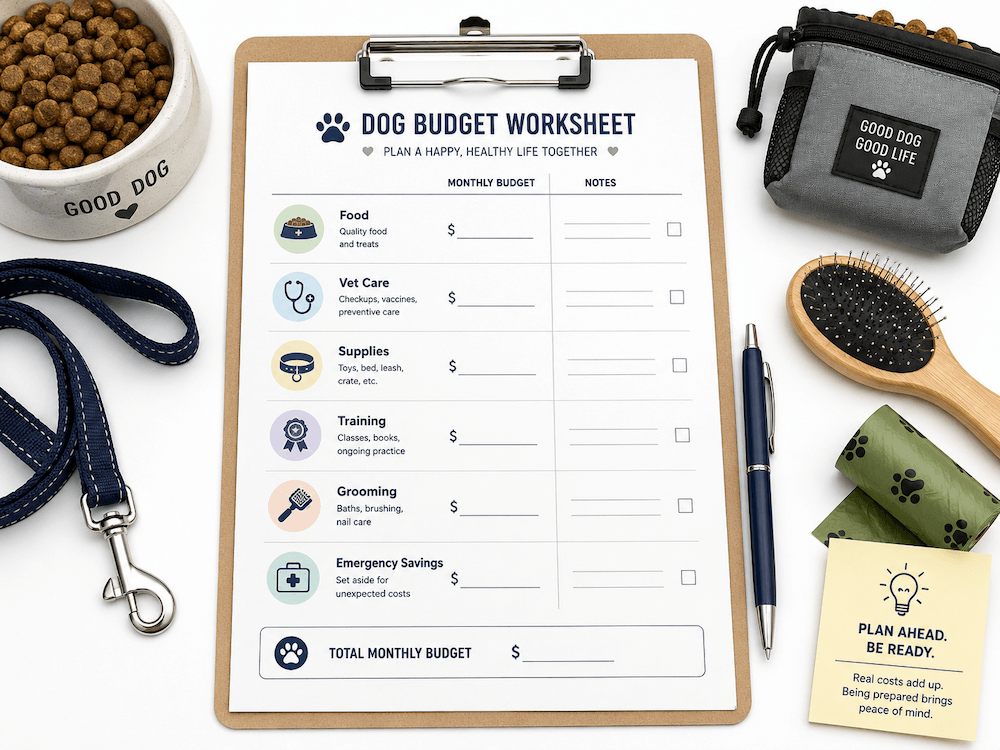
Step 4: Make a Realistic Dog Budget
Cost is one of the biggest reasons parents hesitate. A strong plan should include adoption fees, food, routine veterinary care, parasite prevention, grooming, training, supplies, boarding, and emergency savings. Do not guess or only list the cheapest items. Look up local prices so your parents can see that you understand the real financial commitment.
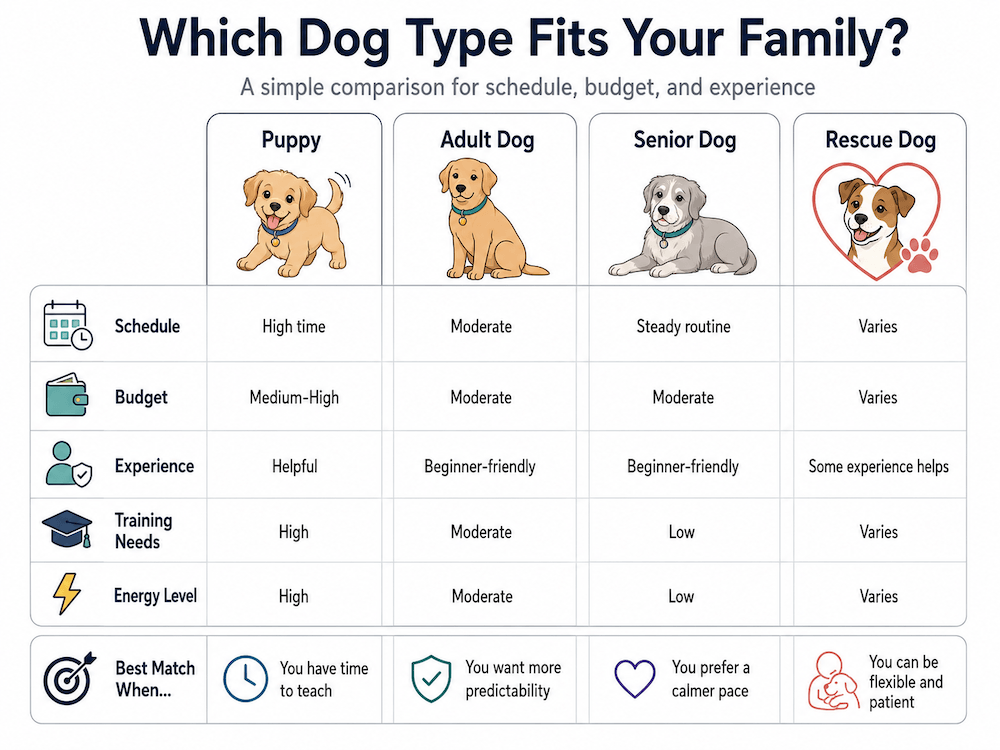
Step 5: Choose a Dog That Fits Your Family’s Lifestyle
Do not build your argument around the cutest breed or the puppy you saw online. A better plan explains what type of dog would fit your family’s home, schedule, energy level, budget, and experience.
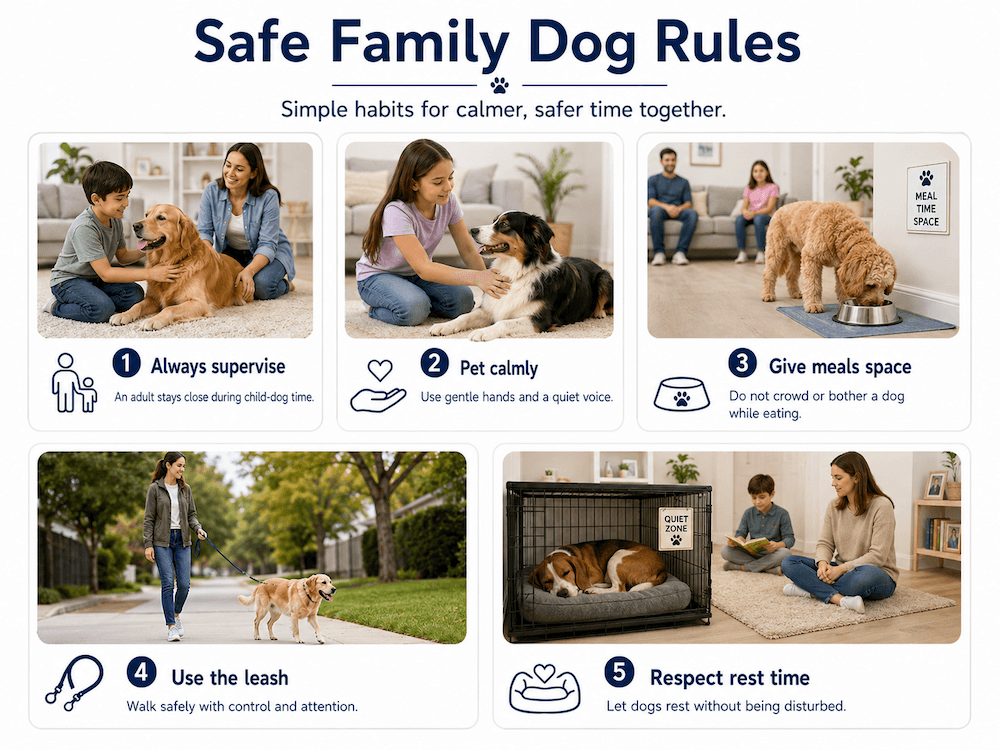
Step 6: Explain How Your Family Would Handle Safety and Allergies
A responsible dog plan should include safety rules, especially if there are children, guests, other pets, or nervous family members in the home. Dogs need calm handling, supervision, safe spaces, and clear household rules.
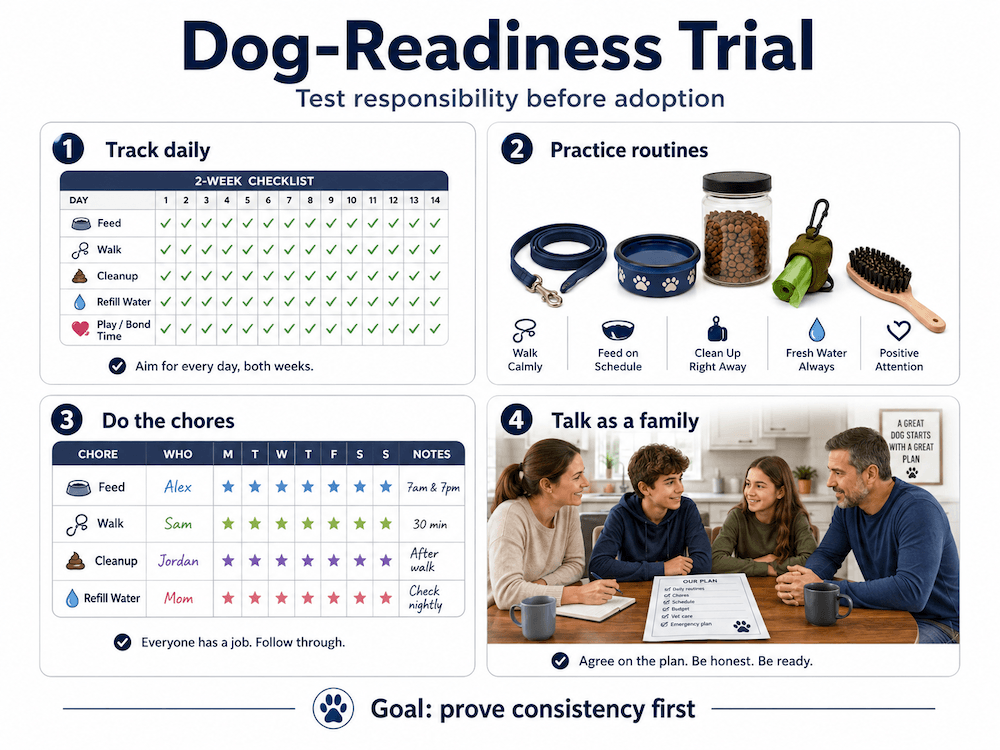
Step 7: Suggest a Trial Before Getting a Dog
A trial can help your parents see whether your family is truly ready. This could mean dog-sitting for a trusted relative, walking a neighbor’s dog with permission, volunteering at a shelter with a parent, or practicing a dog-care routine for a few weeks.
Step 8: Present Your Dog Plan Calmly
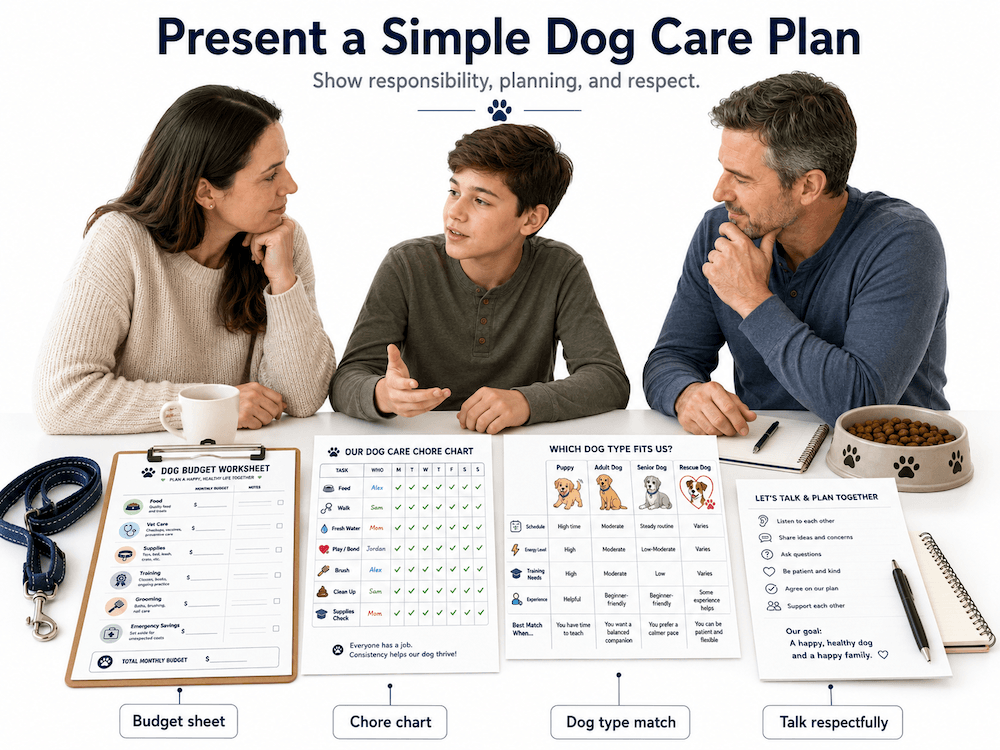
Choose a calm time to show your parents your plan. Avoid asking during an argument, a rushed morning, or a stressful family moment.
Explain that you understand the final decision belongs to them. Then show your care schedule, cost estimate, dog-type research, safety plan, and proof of responsibility. If they say no or not yet, ask what would need to change instead of arguing.
Helpful Tips for Convincing Your Parents to Get a Dog
Good persuasion is practical, patient, and honest. Your parents need to see that you can handle responsibility even when the answer is not immediate.
| Tip | Why It Helps | How to Apply It |
|---|---|---|
| Stay Calm | Parents listen better when the conversation feels mature. | Ask respectfully and avoid arguing if they hesitate. |
| Use Proof | Responsible actions matter more than repeated promises. | Complete chores and routines without reminders. |
| Show Costs | A budget shows you understand real ownership. | List supplies, food, vet care, and emergencies. |
| Offer Compromise | A smaller first step may feel less risky. | Suggest fostering, dog-sitting, or shelter volunteering. |
| Pick Carefully | The right dog reduces stress for everyone. | Prioritize temperament, age, energy, and care needs. |
| Respect No | Patience shows maturity and emotional control. | Ask what concerns must be solved first. |
Mistakes That Make Parents Less Likely to Say Yes
Some approaches make parents more resistant. Begging, guilt-tripping, comparing your family to others, or promising things you cannot control can make the request feel impulsive.
The biggest mistake is acting like love is enough. Dogs need structure, care, safety, training, and money—not just affection.
| Mistake | Why It Backfires | What to Do Instead |
|---|---|---|
| Begging | It makes the request seem emotional and impulsive. | Use a calm plan and patient timing. |
| Ignoring Cost | Parents may think you are not realistic. | Build a budget with local price examples. |
| Choosing by Looks | A cute dog may not fit your lifestyle. | Compare age, energy, temperament, and care needs. |
| Promising Everything | Some tasks still require adult help. | Be honest about what you can handle. |
| Rushing Adoption | Fast decisions can lead to poor matches. | Research, meet dogs slowly, and ask questions. |
| Downplaying Training | Untrained behavior can stress the whole family. | Plan reward-based training from day one. |
What to Do If Your Parents Say No
If your parents say no, stay calm and ask what their main concern is. They may be worried about cost, time, allergies, housing rules, travel, or whether you are ready for the responsibility. Listening instead of arguing shows maturity and keeps the conversation open.
Use their answer as your next step. If they are worried about money, create a budget; if they are worried about time, make a daily care schedule; if they are worried about mess, offer a cleaning plan. You can also suggest a smaller first step, such as volunteering at a shelter, dog-sitting for a trusted family member, or learning more about dog care.
If the answer is still no, respect it for now. Keep proving responsibility through chores, routines, schoolwork, and helping at home without reminders. A calm “not yet” approach is more convincing than pressure, and it may make your parents more willing to reconsider later.
Frequently Asked Questions
The Bottom Line
The best way to convince your parents to get a dog is to prove that you are responsible, patient, and realistic. Show them a plan for cost, care, training, cleaning, safety, and long-term commitment. Do not focus only on how much you want a dog. Focus on how the dog would be cared for every day. If your parents still say no, ask what needs to change and keep showing maturity. A calm, prepared approach gives you the best chance of turning the conversation from “no” into “maybe,” and eventually into a responsible yes.