
How to Become a Dog Trainer 101: Get Certified [Complete Guide]


Canine Bible is reader-supported. We receive affiliate commissions via some of our links. Learn more.
To become a dog trainer, you need to learn canine behavior, gain hands-on experience working with dogs, and develop effective training and communication skills. Most successful trainers combine self-study, mentorship, and real-world practice rather than relying on a single certification. You can start by studying learning theory, practicing with your own dog, and volunteering or apprenticing under experienced trainers to build confidence and skill. But not all training paths are the same. Do you need a certification, or is experience enough? Should you specialize in obedience, behavior issues, or working dogs? And how do you actually turn your skills into a career people trust and pay for? Understanding these decisions early can shape how quickly you progress—and how successful you become.
Things to Consider Before Starting a Dog Training Career
| Key Consideration | Why It’s Important |
|---|---|
| Hands-On Experience | Working directly with dogs helps you build timing, confidence, and real-world training skill. |
| Learning Canine Behavior | Understanding how dogs learn helps you choose safer and more effective training methods. |
| Physical Demands | The job often involves standing, walking, handling strong dogs, and staying alert for long periods. |
| Emotional Patience | Progress can be slow, so patience is essential when working with both dogs and frustrated owners. |
| Education Costs | Courses, certifications, insurance, and equipment can add up before your career becomes profitable. |
| People Skills | Much of the job involves teaching owners clearly, since long-term results depend on their follow-through. |
| Career Path | You should decide early whether you want to work for a company, train privately, or build your own business. |
| Specialization Options | Focusing on areas like puppies, obedience, reactivity, or service dogs can shape your training path and reputation. |
What Dog Trainers Actually Do
Dog trainers do much more than teach sit and stay. Depending on the role, you may help with puppy foundations, leash skills, recall, household manners, confidence-building, and common behavior goals such as jumping, pulling, or overexcitement. You may also watch body language, adjust the setup, and break exercises into steps that a dog can realistically succeed with.
Just as important, dog trainers often teach people as much as dogs. You explain homework, manage expectations, track progress, and change the plan when the dog, environment, or owner routine is getting in the way. In group settings, you may run classes, while in private training, you may tailor the session to one home, one dog, and one set of goals.
Core Responsibilities
How Much Do Dog Trainers Make?
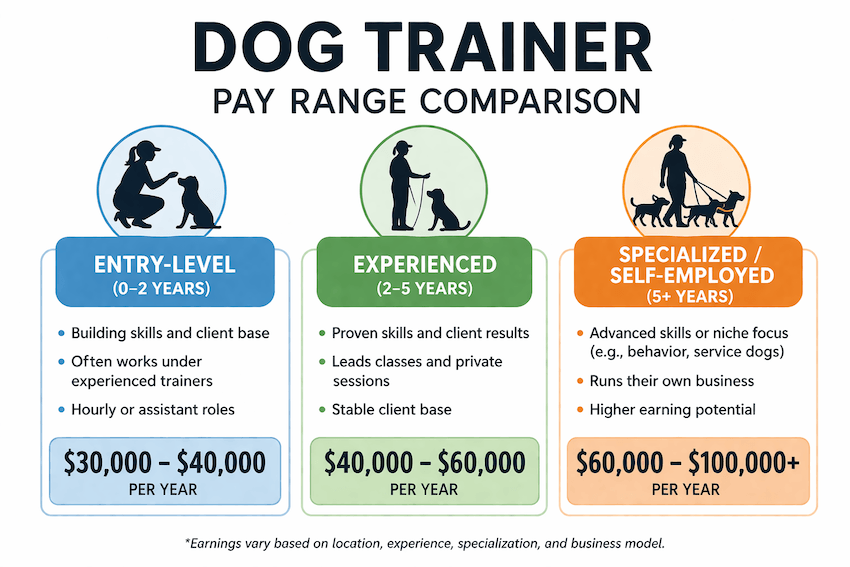
Dog trainer income varies widely because the field is fragmented. Earnings depend on location, niche, client base, experience, credentials, and whether you work for an employer or for yourself. The U.S. Bureau of Labor Statistics tracks animal trainers as a broader category and reported a 2023 national mean wage of about $46,210, while noting that state pay levels vary considerably and that the data do not include self-employed workers, which matters in a field where self-employment is common.
That means entry-level dog trainers may start modestly, especially if they are assisting classes, working part-time, or building a client base. More experienced trainers, niche specialists, or established self-employed trainers may earn more, but income is never guaranteed and usually depends on reputation, demand, and business skills as much as training ability.


Education Required for Dog Trainers
A formal college degree is not always required to become a dog trainer. What matters more is structured learning in dog behavior, learning theory, humane handling, observation, and client communication, plus enough practice to apply those ideas with real dogs and real owners.
That said, education still matters. Many trainers learn through workshops, mentorship, online or in-person programs, books, case observation, and professional coursework. Programs such as Karen Pryor Academy’s Dog Trainer Professional program emphasize both behavior science and practical client-teaching skills, which reflect what many employers and clients actually value in the field.
Types of Dog Training Careers
Dog training is not one single job. Some trainers focus on puppies and manners, while others work in group classes, private coaching, sport foundations, shelters, or service-dog-related training. Behavior-focused work can be more complex and may require stronger case assessment skills and a clearer understanding of professional limits.
Choosing a direction early can help you build a better experience. A beginner may start with puppy or basic skills work, then later move into private coaching, shelter enrichment, or more specialized paths once their observation, planning, and owner-coaching skills are stronger.


| Type of Dog Training | What It Typically Involves |
|---|---|
| Puppy Training | Social skills, crate work, handling, routines, and early manners. |
| Basic Obedience | Core cues, leash walking, recall, and everyday reliability. |
| Behavior Support | Helping with issues like fear, reactivity, frustration, or impulse control. |
| Group Classes | Teaching several dogs and handlers together in a shared learning setting. |
| Private Training | One-on-one sessions tailored to a dog’s home life, needs, and goals. |
| Sport Foundations | Building starter skills for activities such as agility, rally, or scent work. |
| Service-Dog Related Work | Foundation behaviors, public access skills, and task-prep support. |
| Shelter or Rescue Work | Enrichment, handling support, behavior observations, and adoptability skills. |
Training Materials and Tools
As a beginner dog trainer, you do not need an enormous toolkit, but you do need reliable basics. On the dog-training side, that often means a leash, long line, rewards, treat pouch, marker system, mats, cones, and simple props that help structure sessions and make practice clearer. These tools support timing, repetition, distance work, and cleaner setups.
The client side matters too. Intake forms, handouts, session notes, progress logs, and follow-up materials help you stay organized and make your work more professional. You also make it easier for owners to remember what they practiced, which matters because most real progress happens between lessons, not just during them.
| Training Material or Tool | How It Helps |
|---|---|
| Leash and Long Line | They improve control and allow safer practice at distance. |
| Rewards or Treats | They reinforce desired behavior and maintain motivation. |
| Treat Pouch | It keeps rewards accessible so timing stays efficient. |
| Clicker or Marker System | It helps mark the exact moment the dog is correct. |
| Mats, Cones, or Targets | They add structure to stationing, movement, and setups. |
| Notebook or Progress Log | It helps track sessions, patterns, and follow-through. |
| Intake Forms | They organize goals, routine details, and behavior history. |
| Client Handouts | They help owners remember steps after the session ends. |
Certifications Needed
Certification is not always legally required to start working as a dog trainer, but it can still be useful. It may help with credibility, structure, career development, and client trust, especially when you are trying to show that your knowledge has been assessed by an outside organization rather than only self-declared. CCPDT, for example, describes itself as an independent certifying body for humane, science-based dog training practices, and its CPDT-KA eligibility includes age, education, and documented training experience requirements.
It also helps to distinguish between three things that people often mix: education programs, certifications or credentials, and professional memberships. Education programs teach skills, certifications assess and recognize knowledge or competence, and memberships may provide networking, standards, or continuing education resources. IAABC, for instance, offers both memberships and credentials, including an Accredited Dog Trainer path for professionals with foundational skills and experience.
| Credential Path | What It Can Help With |
|---|---|
| Education Program | Builds structured knowledge in training mechanics and behavior basics. |
| Mentored Training Program | Improves observation, handling, and real-world coaching practice. |
| Independent Certification | Can strengthen credibility through assessed professional standards. |
| Professional Membership | Supports networking, learning resources, and industry connection. |
| Continuing Education Path | Helps you stay current as methods and standards evolve. |
Professional Standards & Resources for Dog Trainers
When evaluating a path into dog training, it is smart to look at reputable professional organizations, humane training standards, and credible educational resources rather than relying on marketing claims alone. These sources can help you compare programs, understand current welfare standards, and make better decisions about methods, mentorship, and credentials.
Step-by-Step Guide to Becoming a Dog Trainer
Here is a step-by-step guide to becoming a dog trainer, covering what the job involves, the skills and experience you need, and the practical steps you can take to get started.
Step 1: Train Your Own Dog
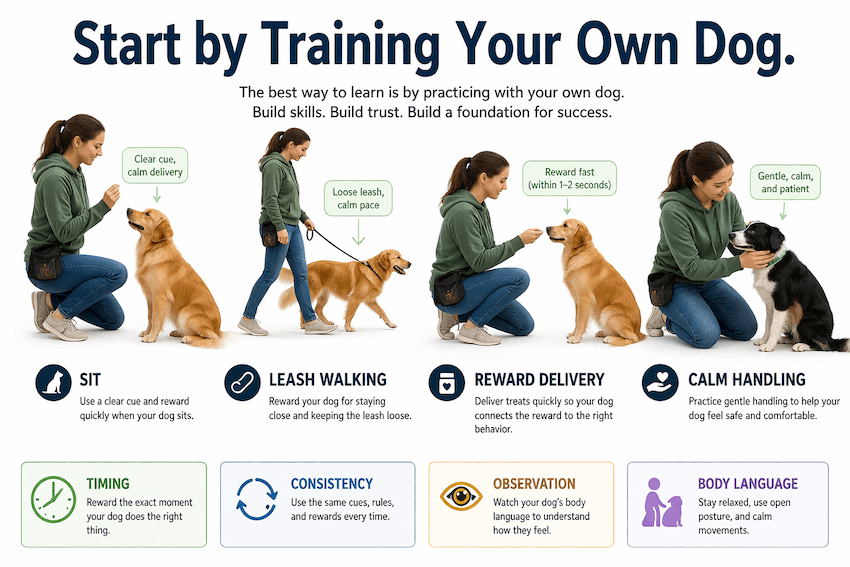
Training your own dog is a useful starting point because it builds timing, consistency, observation, reward delivery, and handling mechanics. It helps you see how small changes in your body language or setup affect behavior in real time. But it is still just a foundation, since one familiar dog cannot prepare you for the full range of dogs and client situations you will face professionally.
Step 2: Work With Other Dogs
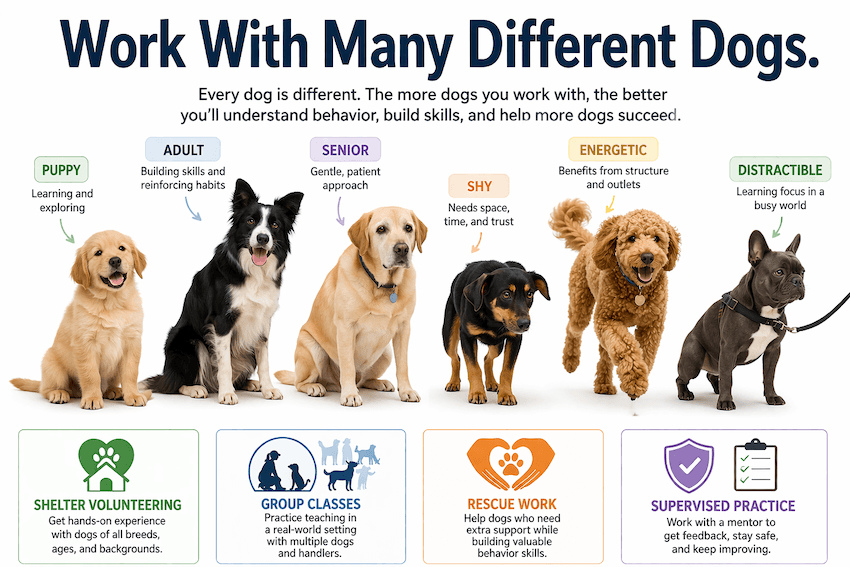
Working with a wider variety of dogs helps you understand how age, temperament, stress level, motivation, and environment can change a training session. This kind of experience often comes from shelters, rescues, group classes, or supervised practice with experienced trainers. The goal is to build safe, practical exposure to many dogs rather than relying only on what worked with your own.
Step 3: Learn to Coach People, Not Just Dogs
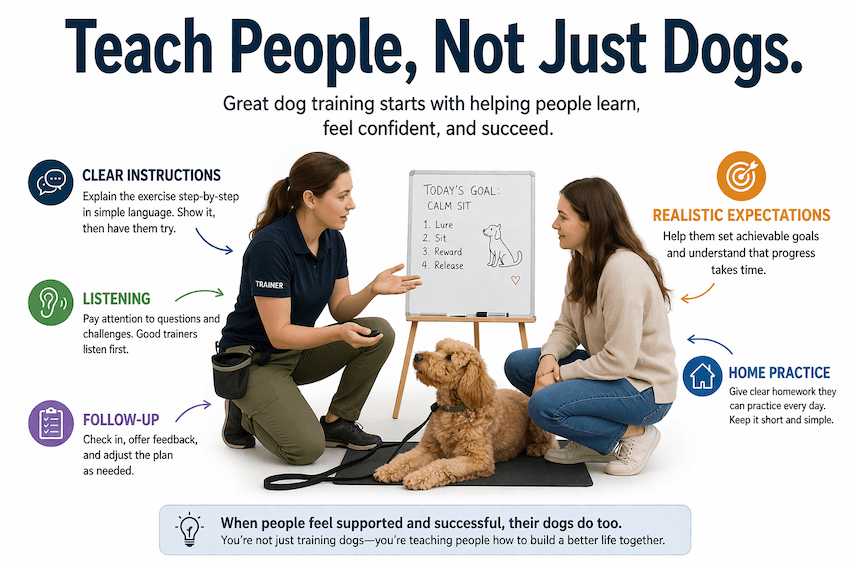
Dog training is also a people-facing job, which means you need to explain exercises clearly, listen well, set realistic expectations, and help owners stay consistent at home. Even a strong training plan can fail if the human side is not handled well. Good trainers know how to make the process feel clear, practical, and doable.
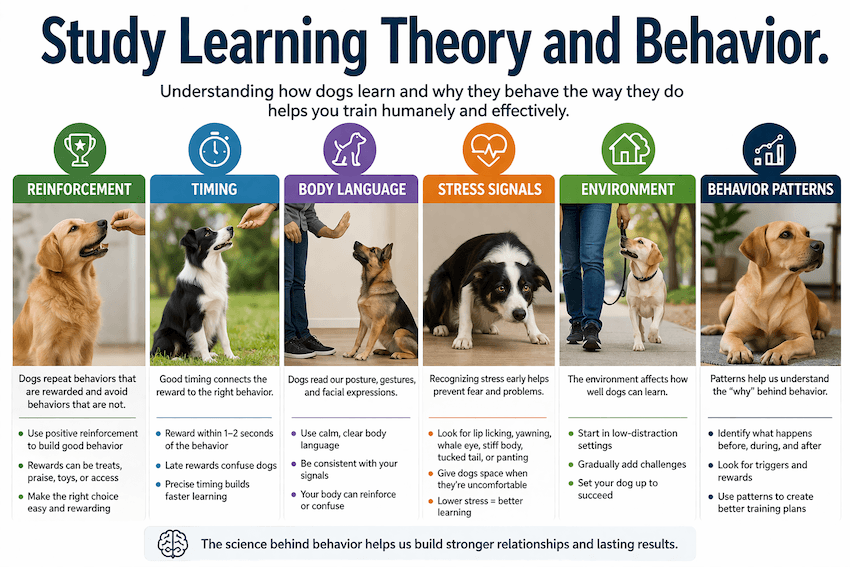
Step 4: Study Learning Theory and Behavior
A good trainer should understand the basics of reinforcement, timing, body language, stress signals, environmental management, and behavior patterns. This helps you do more than copy methods—it helps you understand why a behavior is happening and how to respond effectively. Building on humane, reward-based principles also gives you a stronger and more professional foundation.
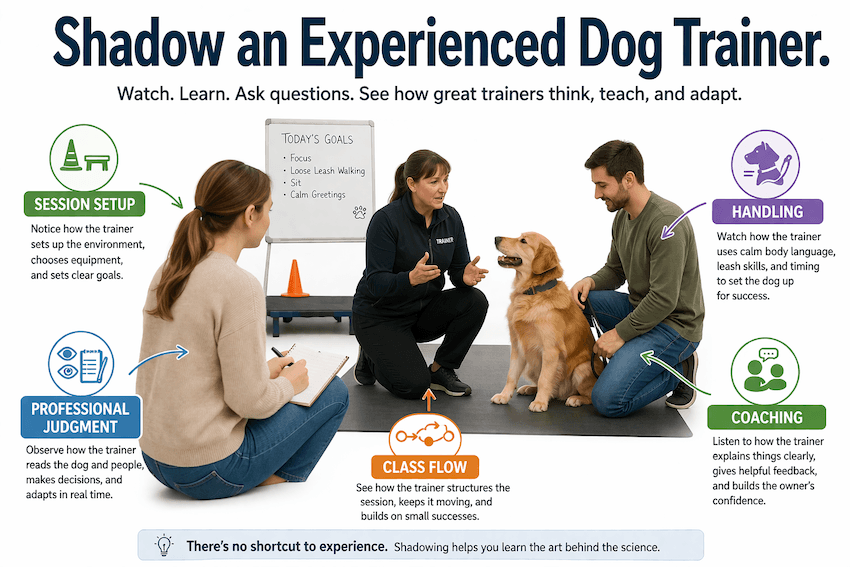
Step 5: Shadow, Mentor, or Apprentice
Watching experienced trainers work helps you learn the details that books and videos often miss, such as session setup, handling, class management, client coaching, and professional judgment. It also shows you how skilled trainers adapt when things do not go as planned. A knowledgeable, humane mentor can shape both your technical skills and your professional habits.
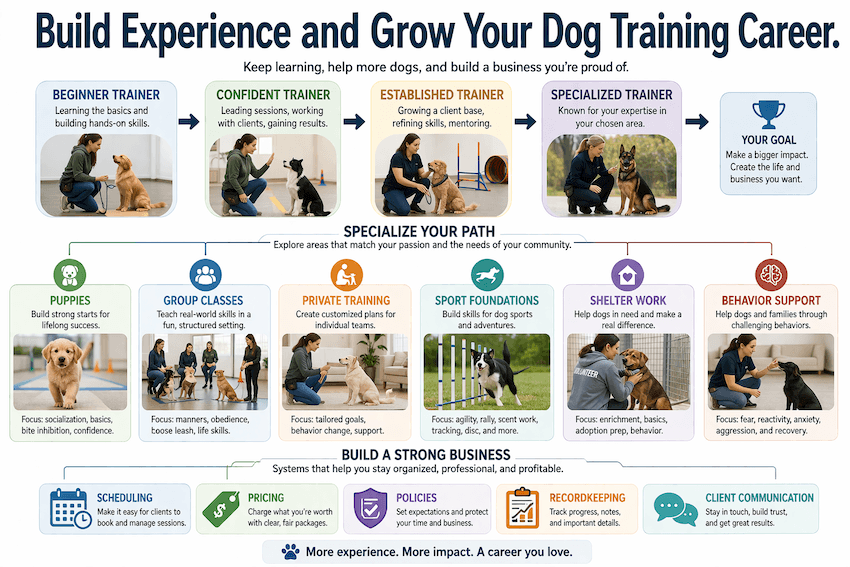
Step 6: Build Experience, Choose a Niche, and Learn Business Basics
As you gain experience, start noticing what kinds of dogs, clients, and services fit you best, whether that is puppies, private coaching, group classes, sport foundations, or another niche. At the same time, learn the basics of scheduling, pricing, client communication, policies, and recordkeeping. Long-term success in dog training depends on both strong practical skills and solid professional systems.
Additional Tips for Aspiring Dog Trainers
These additional tips can help you build stronger habits, sharpen your skills, and grow more confidently as you gain experience. Small practices like taking notes, observing, and continuing to learn can make a meaningful difference over time.
| Additional Tip | Why It Helps |
|---|---|
| Keep Session Records | Good notes help you spot patterns and improve planning. |
| Film Your Practice | Video helps you review timing, clarity, and mechanics. |
| Improve Observation Skills | Better observation leads to safer and clearer decisions. |
| Study Dog Body Language | It helps you notice stress, comfort, and readiness. |
| Sit In on Classes | Watching others teaches pacing, flow, and client coaching. |
| Strengthen Communication | Clear explanation improves owner follow-through at home. |
| Build Your Network | Professional relationships can lead to referrals and mentorship. |
| Keep Learning | Continuing education helps your methods stay current. |
Common Mistakes New Dog Trainers Should Avoid
New dog trainers often improve faster when they know which mistakes can slow progress or create confusion early on. Understanding these common issues can help you make better decisions, communicate more clearly, and build a stronger foundation from the start.
| Common Mistake | Why It Can Cause Problems |
|---|---|
| Thinking Loving Dogs Is Enough | Affection does not replace training skill or behavior knowledge. |
| Skipping Education | You may misread dogs or use weak training plans. |
| Copying Methods Blindly | Techniques fail when you do not understand why they work. |
| Ignoring Owner Coaching | Progress often stalls when clients leave confused. |
| Taking Hard Cases Too Soon | Complex dogs can exceed your experience and safety margin. |
| Neglecting Business Basics | Poor systems can damage trust and consistency. |
| Using Harsh Methods | They can harm welfare, trust, and professional credibility. |
| Stopping Education Early | Your skills can stagnate while the field evolves. |
Building a Successful Dog Training Career
After you begin training dogs professionally, focus on refining your process, reviewing case outcomes, and improving how you teach owners. Keep notes on what worked, where sessions stalled, and which cases felt outside your current skill level. That reflection helps you sharpen judgment and identify where more mentoring or education is needed.
Signs that you are progressing include clearer session structure, better owner follow-through, calmer dogs during training, and more consistent results across different dogs. Keep studying behavior, stay current with evidence-based methods, and seek professional support when cases involve training aggressive dogs, severe fear, or safety risks beyond your experience level.
Frequently Asked Questions
The Bottom Line
Becoming a dog trainer is less about finding one perfect credential and more about building real skill through practice, education, observation, and experience. The strongest trainers learn how to work with dogs humanely, coach people clearly, and keep improving as their knowledge grows. If you are serious about entering the field, start small, stay grounded, and focus on building a solid foundation before chasing difficult cases or fast results. Over time, that combination of hands-on experience, behavior knowledge, and professional habits is what turns interest in dog training into a credible career.