How Many Teeth Do Dogs Have? Chart, Diagram & Dog Dental Facts


Canine Bible is reader-supported. We receive affiliate commissions via some of our links. Learn more.
Adult dogs typically have 42 teeth, while puppies have 28 baby teeth that later fall out. This difference is completely normal and part of a dog’s natural development. But not every dog follows the textbook perfectly. Some may have missing teeth, extra teeth, or dental issues that affect that number. So how do you know if your dog’s teeth count is healthy—or a sign of a problem? And when should you expect puppy teeth to fall out and adult teeth to come in? Understanding what’s normal (and what’s not) can help you catch dental issues early and keep your dog’s mouth healthy long-term.
Dog Teeth: What Dog Owners Should Know
| What Owners Should Know | What This Means | Teething changes | As puppies grow, their baby teeth fall out and are replaced by adult teeth during the normal teething process. |
|---|---|
| Missing teeth | A dog with fewer teeth than expected may have retained baby teeth, congenital tooth loss, trauma, or dental disease. |
| Retained baby teeth | If baby teeth do not fall out on time, they can crowd adult teeth and increase the risk of bite problems and plaque buildup. |
| Chewing and comfort | Tooth problems can make chewing uncomfortable and may cause a dog to avoid hard food, toys, or mouth handling. |
| Dental disease risk | Knowing what is normal helps owners notice early signs of dental trouble before it leads to pain, infection, or tooth loss. |
| Home dental care | Regular brushing, dental chews, and routine oral checks help protect the full set of adult teeth for as long as possible. |
| When to see a vet | A veterinary exam is a good idea if your dog has bad breath, bleeding gums, loose teeth, swelling, or teeth that seem out of place. |
Puppy Teeth vs. Adult Teeth: How Many Teeth Do Dogs Have?
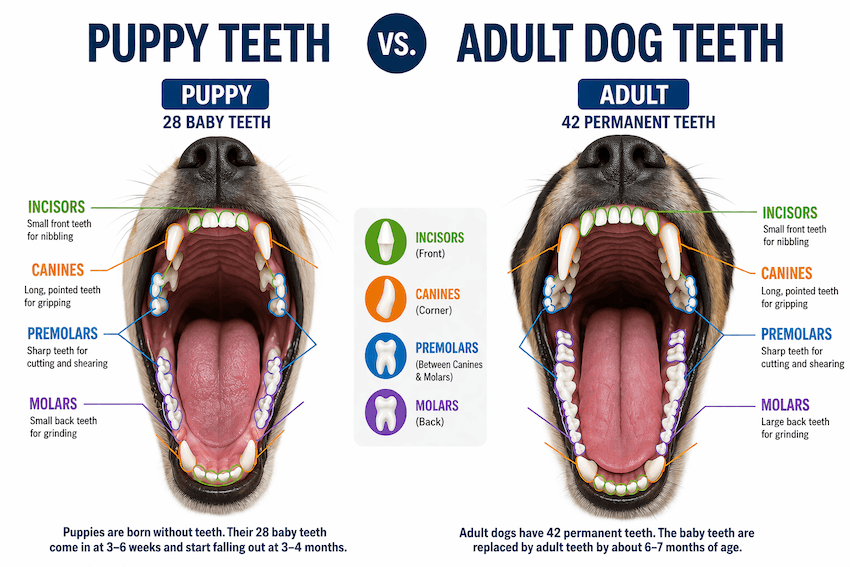
The short answer is age-dependent: puppies usually have 28 deciduous teeth, while adult dogs usually have 42 permanent teeth. Puppies do not have baby molars, which is one reason the total number of adult teeth is higher once the permanent set comes in.
| Life Stage | Tooth Count | What It Means |
|---|---|---|
| Puppy | 28 | Normal baby teeth only |
| Adult dog | 42 | Full permanent dentition |
| During teething | Varies | Baby teeth are falling out while adult teeth erupt |
A temporary in-between stage is normal during teething, so the count may briefly look inconsistent. What matters most is whether the teeth are erupting in a normal pattern for the dog’s age and whether any baby teeth remain stuck beside permanent teeth.
Dog Dental Timeline: When Baby Teeth Erupt and Fall Out
Puppy teeth usually begin erupting at about 3 to 5 weeks of age. Permanent teeth generally begin to appear at about 4 to 5 months, and the full adult set is typically present by about 6 to 7 months, though some references note the presence of all permanent teeth by 7 months.
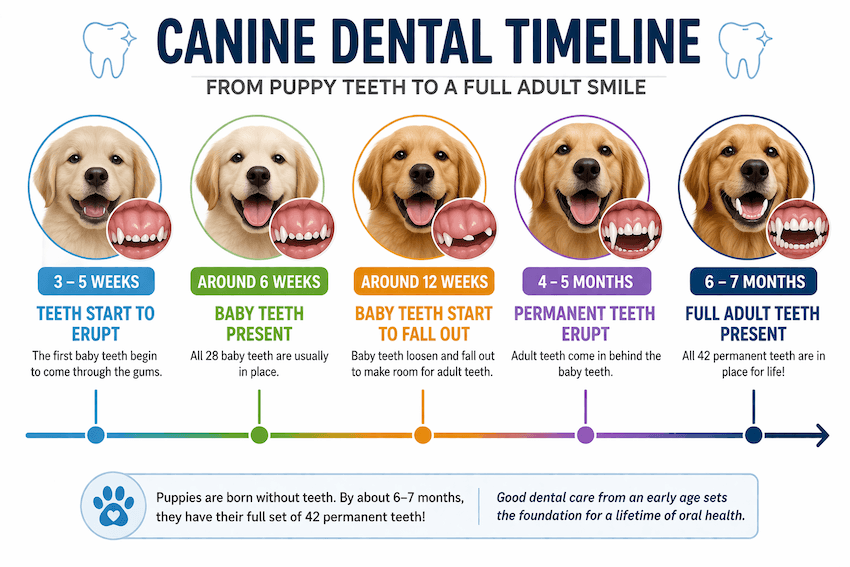
This timeline is useful because it helps dog owners distinguish normal teething from a possible delay. A puppy that still has obvious retained baby teeth when permanent teeth are erupting, especially around the canine area, may need a veterinary dental check.


Types of Dog Teeth and What They Do
Dogs have four main types of teeth, and each one is found in a different part of the mouth. At the front are the incisors, which are the small teeth dogs use for nibbling and grooming. Next to them are the canines, the long pointed teeth used for grasping and tearing. Behind the canines are the premolars, which help shear and crush food, while the molars sit farther back and provide extra grinding power in the adult mouth. Puppies have incisors, canines, and premolars, but they do not have baby molars.
| Tooth Type | Puppy Count | Adult Count | Main Function |
|---|---|---|---|
| Incisors | 12 | 12 | Nibbling and grooming |
| Canines | 4 | 4 | Grasping and tearing |
| Premolars | 12 | 16 | Shearing and crushing |
| Molars | 0 | 10 | Grinding and chewing |
| Total | 28 | 42 | — |
Knowing the tooth types helps owners notice what is missing or abnormal. For example, a dog may still have the correct-looking front teeth but have crowding, retained baby canines, or back teeth problems that are easy to miss without checking the full mouth.
What Teething Looks Like in Puppies
Normal teething in puppies often means more chewing, mild gum irritation, and the occasional tiny tooth found on the floor or swallowed without issue. Puppies may mouth objects more often during this stage, but the process should still look like a steady transition from baby teeth to adult teeth, rather than obvious pain, heavy bleeding, or severe swelling.
What dog owners commonly notice is a mix of behaviors and mouth changes: increased chewing, temporary sensitivity, gaps where teeth have fallen out, and then new permanent teeth pushing through. What should stand out as abnormal is not the chewing itself, but persistent double teeth, broken teeth, a foul odor, or trouble eating.


Why Tooth Count Matters in Dogs
Tooth count matters because it can reveal whether dental development is normal. A number that does not match the dog’s age can point to retained deciduous teeth, crowding, unerupted teeth, missing teeth, trauma, or dental disease.
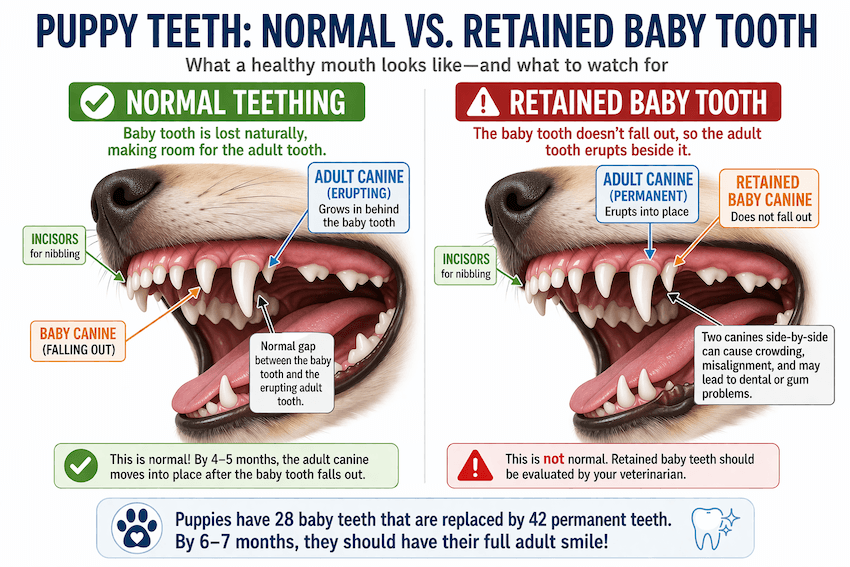
AAHA’s dental guidelines specifically note that persistent deciduous teeth should be addressed promptly because they can displace erupting permanent teeth and contribute to malocclusion and periodontal problems. In practical terms, that means “extra” teeth in a puppy are not always harmless; sometimes they are baby teeth that failed to fall out.
Tooth count also matters long-term because dental disease is extremely common in dogs. A 2022 review reported a high prevalence of periodontal disease in dogs and highlighted how common oral disease becomes with age, which is why early recognition of crowding, retained teeth, and plaque-prone areas matters clinically.
Basic Dental Care for Dogs With Baby Teeth or Adult Teeth
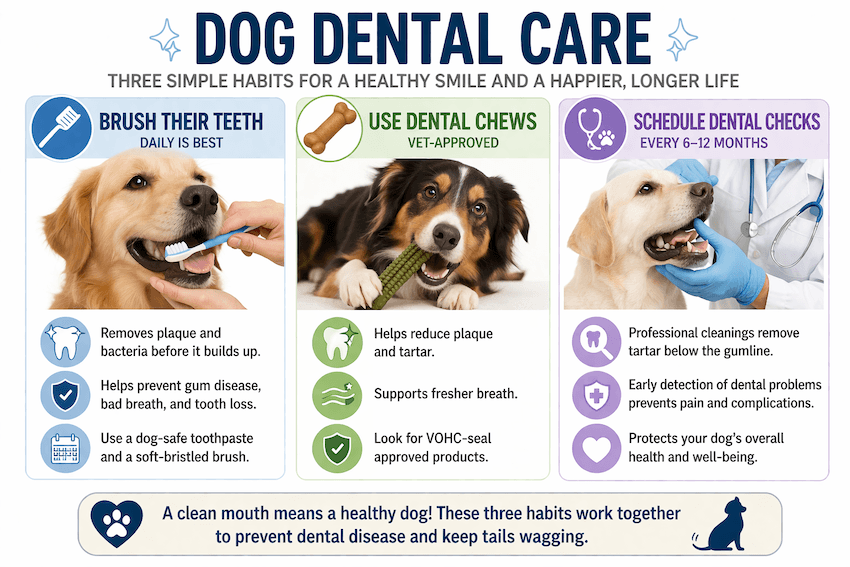
Basic dog dental care starts at home. Whether your dog has baby teeth or adult teeth, the goal is the same: keep the mouth clean, watch for changes, and catch dental problems early. Tooth brushing is the most effective home dental care habit for dogs, while dental chews, oral care products, and veterinary dental checks work best as added support.
For puppies, dog dental care is mostly about gentle mouth handling and monitoring teething. You should watch whether baby teeth fall out on time and whether adult teeth come in normally.
For adult dogs, the focus shifts to plaque control, gum health, and early signs of dental disease. Bad breath in dogs, tartar buildup, red gums, chipped teeth, or chewing discomfort can all be signs that something is wrong.
A simple routine of brushing, quick mouth checks, and regular veterinary dental exams can make a big difference. When you know what normal teeth and gums look like, it becomes much easier to spot a dog dental problem early.
When to Call the Vet About a Dog’s Teeth
Some changes in your dog’s teeth are normal, especially during teething, but others can signal pain, infection, or a dental problem that needs veterinary care. Call your vet if your dog has bad breath, bleeding gums, a broken tooth, facial swelling, trouble chewing, drooling more than usual, or teeth that look crowded or out of place. These signs can point to dog dental disease, tooth injury, or eruption problems, not just a harmless change in tooth count.
During teething, watch closely for retained baby teeth in dogs. If your puppy seems to have double teeth, especially double canines, it often means a baby tooth has not fallen out while the adult tooth is already coming in. This can crowd the mouth, affect tooth alignment, and trap plaque and food between the teeth.
Adult dogs also need prompt care if a tooth looks cracked, loose, worn down, or discolored. Even a small fracture can expose sensitive tissue and lead to pain or infection. Dogs may also show dental pain by chewing on one side, dropping food, pawing at the mouth, or avoiding hard treats.
It is also smart to book a dental check if tartar buildup keeps getting worse, bad breath does not improve, or the gums look red instead of pink. These are common early signs of dental disease in dogs, and early treatment can help protect your dog’s comfort and long-term oral health.
What Research Says About Dog Teeth and Dental Problems
Veterinary references are consistent that the normal tooth count is 28 in puppies and 42 in adult dogs, with baby teeth erupting first and permanent teeth usually completed by about 6 to 7 months. Clinically, this matters because a “wrong” count is often the first clue that eruption is delayed or abnormal.
AAHA’s dental guidance emphasizes that persistent deciduous teeth should be addressed promptly because they can displace erupting permanent teeth, worsen crowding, and contribute to periodontal problems. That is why a simple at-home tooth count can be more useful than it sounds.
Peer-reviewed literature also shows why owners should care about dental changes beyond the raw number. Periodontal disease is one of the most common conditions in dogs, and multiple reviews report that prevalence rises with age and is especially high in dogs over 3 years old.[1]
For home care, AAHA and AVMA both emphasize that daily brushing is the most effective at-home tool for reducing plaque accumulation, but brushing does not replace veterinary oral exams when disease is already present or developing below the gumline.
Tips for Checking Your Dog’s Teeth
| Tip | Why It Helps | How to Apply It |
|---|---|---|
| Count by age | Age determines whether 28 or 42 is normal. | Compare the tooth count with your dog’s stage. |
| Check both sides | Symmetry makes missing teeth easier to spot. | Look left and right under bright light. |
| Watch double canines | They often signal retained baby teeth. | Check for two teeth in one canine spot. |
| Photograph changes | Photos make teething progress easier to track. | Take monthly mouth photos during puppyhood. |
| Start brushing early | Early practice builds long-term dental tolerance. | Use dog toothpaste and very short sessions. |
| Notice chewing shifts | Pain often shows up during eating or play. | Watch for food dropping or toy avoidance. |
Common Mistakes to Avoid When Checking Your Dog’s Teeth
| Mistake | Why It’s a Problem |
|---|---|
| Using adult counts for puppies | It makes normal teething look abnormal. |
| Ignoring retained baby teeth | They can crowd or displace permanent teeth. |
| Checking only front teeth | Back teeth problems are easy to miss. |
| Assuming bad breath is normal | Persistent odor can signal dental disease. |
| Skipping puppy mouth checks | Early problems may go unnoticed for months. |
| Using human toothpaste | It may be unsafe for dogs to swallow. |
What to Watch for After Checking Your Dog’s Teeth
After checking your dog’s mouth, keep the result in context. A puppy should move gradually from 28 baby teeth toward an adult set, while an adult dog should have a stable permanent dentition unless teeth were lost, extracted, or never erupted normally.
Good signs include normal chewing, no crowding, no obvious retained baby teeth, pink gums without bleeding, and a mouth that does not smell unusually foul. Ongoing maintenance means regular brushing, periodic mouth checks at home, and veterinary dental exams when recommended.
Monitor more closely or seek veterinary help if you notice bad breath, gum bleeding, broken teeth, a persistent “double tooth,” swelling, pain while chewing, or a tooth count that does not fit your dog’s age. Those are the situations where a simple tooth-count question becomes an important health check.
Frequently Asked Questions
The Bottom Line
Dogs have 28 teeth as puppies and 42 as adults, and that simple number tells you a lot about your dog’s development. Understanding when and how that change happens helps you recognize what’s normal and what isn’t. A healthy mouth should follow a clear timeline, without crowding, retained baby teeth, or missing teeth. Small issues early on can turn into bigger dental problems if they go unnoticed. Regular checks at home, along with brushing and vet exams, make a big difference over time. If something looks off—like bad breath, bleeding gums, or “double teeth”—it’s worth getting it checked. Knowing how many teeth dogs have isn’t just trivia—it’s a simple way to stay on top of your dog’s overall health.