Addison’s Disease in Dogs: Symptoms, Types, Causes, Signs & Prevention

Canine Bible is reader-supported. We receive affiliate commissions via some of our links. Learn more.
Addison’s disease (hypoadrenocorticism) is a less common but serious endocrine disorder in dogs, often called the “great imitator” because its symptoms can be vague and easily mistaken for other conditions. Early signs—such as lethargy, poor appetite, vomiting, diarrhea, or intermittent weakness—are often dismissed as minor digestive issues or stress-related problems. However, without proper diagnosis and treatment, Addison’s disease can lead to a life-threatening adrenal crisis. The good news is that with timely diagnosis and lifelong management, most dogs with Addison’s disease can live normal, happy lives. This guide covers everything you need to know about Addison’s disease in dogs—from causes and symptoms to diagnosis, treatment, prevention, and long-term management—so you can confidently support your dog’s health and well-being.
What Is Addison’s Disease in Dogs?
Addison’s disease, in simple terms, is a hormonal disorder in which the adrenal glands fail to produce enough essential hormones—primarily cortisol and aldosterone—that regulate stress response, hydration, blood pressure, and electrolyte balance. In dogs, it most often occurs due to immune-mediated damage to the adrenal glands. As hormone levels drop, the body struggles to maintain normal functions, leading to symptoms such as weakness, vomiting, dehydration, and potentially life-threatening imbalances if left untreated.
Types
Addison’s disease in dogs can present in several forms, depending on the underlying cause and which hormones are affected.


| Type | Description |
|---|---|
| Primary Addison’s Disease | The most common form, caused by immune-mediated destruction of the adrenal glands, leading to deficiencies in both cortisol and aldosterone. |
| Secondary Addison’s Disease | Occurs when the pituitary gland fails to produce enough ACTH, resulting in low cortisol but usually normal aldosterone levels. |
| Atypical Addison’s Disease | A milder form where only cortisol is deficient; electrolyte levels may remain normal, making diagnosis more challenging. |
| Iatrogenic Addison’s | Triggered by improper or sudden withdrawal of long-term steroid medications, disrupting normal hormone production. |
| Addisonian Crisis | A life-threatening emergency caused by severe hormone deficiency, leading to shock, collapse, and critical electrolyte imbalance. |
| Other Causes | Less commonly linked to infections, tumors, or damage to the adrenal glands. |
Predisposed Dog Breeds in Addison’s Disease in Dogs
Addison’s disease is not limited to any one age or breed, but certain dogs may be more prone to developing it due to genetic predisposition. While it can affect any dog, recognizing breed-specific susceptibilities can aid earlier detection and proactive care.
| Size / Group | Breeds | Notes on Risk Factors |
|---|---|---|
| High-Risk Breeds | Standard Poodle, Portuguese Water Dog, Nova Scotia Duck Tolling Retriever, Bearded Collie | Strong genetic predisposition; autoimmune destruction of adrenal glands is more common. |
| Moderate-Risk Breeds | Labrador Retriever, Golden Retriever, German Shepherd, Great Dane | Documented increased incidence; may have immune-mediated tendencies. |
| Mixed Breeds | All mixed-breed dogs | Can develop Addison’s, though risk varies depending on genetic background. |
| Sex Predisposition | Females (especially young to middle-aged) | Females are affected more often, likely due to autoimmune factors. |
| Age Group | Young to middle-aged dogs | Most commonly diagnosed between 2–6 years of age, though it can occur at any age. |
| Other Risk Factors | Dogs on long-term steroid therapy | Sudden withdrawal of steroids can trigger iatrogenic Addison’s disease. |
Causes
Symptoms
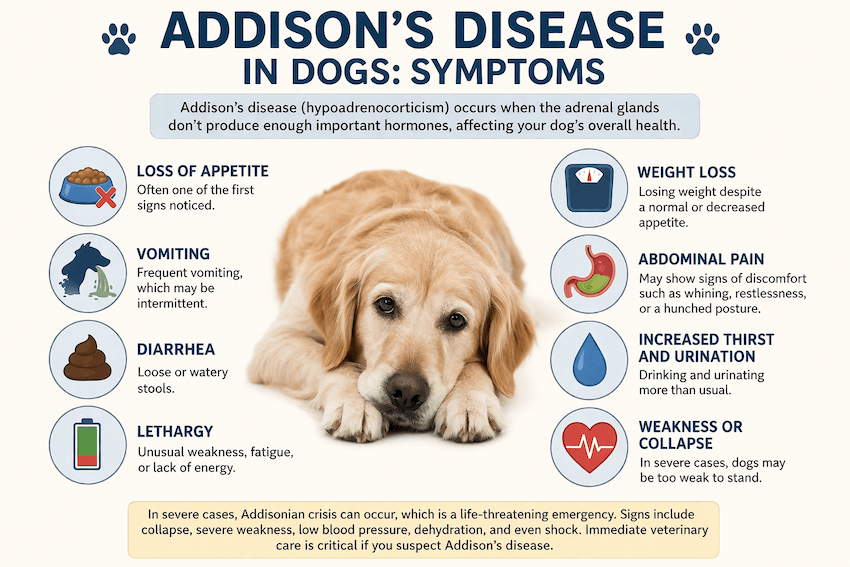
Stages of Addison’s Disease in Dogs
- Early stage: Mild, intermittent symptoms such as lethargy, decreased appetite, or occasional vomiting that may come and go.
- Moderate stage: More noticeable signs including weakness, weight loss, dehydration, and recurring gastrointestinal issues.
- Advanced stage (Addisonian crisis): Severe symptoms such as collapse, shock, dangerously low heart rate, and life-threatening electrolyte imbalances requiring emergency care.
Top Ways to Prevent Addison’s Disease in Dogs
Because Addison’s disease cannot usually be prevented—especially when it’s caused by autoimmune factors—early recognition and consistent management are essential. With proper treatment and routine veterinary care, dogs with Addison’s disease can live stable, healthy lives. Key steps include regular monitoring, sticking to prescribed hormone therapy, managing stress levels, and maintaining a consistent daily routine to help prevent complications and Addisonian crises.
| Support Strategy | Why It Helps | How to Do It |
|---|---|---|
| Stick to Hormone Therapy | Replaces missing adrenal hormones and helps keep the condition stable. | Give prescribed medications exactly as directed and never stop them suddenly. |
| Schedule Regular Vet Monitoring | Helps track electrolyte levels and ensures treatment doses remain appropriate. | Attend routine checkups and blood tests as recommended by your veterinarian. |
| Manage Stress Carefully | Stress can trigger symptom flare-ups or even an Addisonian crisis. | Keep routines consistent and ask your vet whether stress-dose medication is needed during illness, travel, or surgery. |
| Maintain Good Hydration | Dogs with Addison’s disease are prone to dehydration and electrolyte imbalance. | Provide constant access to fresh water and monitor for vomiting, diarrhea, or signs of fluid loss. |
| Feed a Balanced Diet | Supports overall health, energy levels, and recovery from episodes of illness. | Offer a consistent, high-quality diet and discuss any needed adjustments with your veterinarian. |
| Watch for Early Warning Signs | Prompt action can prevent worsening symptoms and emergency complications. | Look for lethargy, weakness, vomiting, diarrhea, poor appetite, trembling, or collapse. |
| Prepare for Emergencies | Fast treatment is critical if an Addisonian crisis develops. | Know your emergency vet location and seek immediate care if your dog becomes severely weak, collapses, or cannot keep food and water down. |
Actionable Resources
If you’re caring for a dog with Addison’s disease, here are some helpful resources and tools to support their long-term health under veterinary guidance:


How Addison’s Disease Is Diagnosed in Dogs
Diagnosing Addison’s disease requires a thorough veterinary evaluation, as its symptoms often mimic other conditions. Key steps include:
- Physical Examination: A vet assesses hydration status, heart rate, weakness, and overall condition.
- Blood Tests:
- Electrolyte imbalances (especially low sodium and high potassium) are a key indicator.
- General bloodwork may show dehydration or kidney-related changes.
- ACTH Stimulation Test: The gold standard test used to confirm Addison’s disease by measuring how the adrenal glands respond to hormone stimulation.
- Urinalysis: Helps evaluate kidney function and hydration levels.
- Imaging (Optional): Ultrasound or X-rays may be used to assess adrenal gland size or rule out other conditions.
Early diagnosis is critical because Addison’s disease can become life-threatening if untreated—but with prompt care, most dogs respond very well to treatment and management.
Treatment & Care
According to current veterinary guidelines, the most effective treatment for Addison’s disease in dogs focuses on lifelong hormone replacement and careful monitoring. This typically includes medications to replace missing adrenal hormones (such as corticosteroids and mineralocorticoids), along with regular blood tests to maintain proper electrolyte balance. In addition, supportive care—like managing stress, maintaining hydration, and providing a consistent routine—plays a key role in preventing complications and ensuring long-term stability.
Always consult your veterinarian before starting any new treatment or supplement for Addison’s disease. You can get personalized joint-care advice from an online registered vet anytime, anywhere through Dutch. You can also chat with an online vet to ask questions about managing your dog’s Addison’s disease symptoms, treatment options, and lifestyle adjustments tailored to their condition.
Conventional Medical Treatments
| Treatments | Notes / Examples |
|---|---|
| Mineralocorticoid Replacement | DOCP injections (e.g., Percorten-V, Zycortal) regulate electrolytes and hydration. |
| Glucocorticoid Therapy | Prednisone or prednisolone replaces cortisol; doses may increase during stress. |
| Emergency Treatment (Addisonian Crisis) | IV fluids, electrolyte correction, and injectable steroids to stabilize life-threatening symptoms. |
| Oral Mineralocorticoids | Fludrocortisone may be used as an alternative to injections in some dogs. |
| Monitoring & Dose Adjustment | Regular bloodwork to check sodium/potassium levels and adjust medication as needed. |
Nutritional Support & Supplements
| Supplement / Nutrition | Notes / Examples |
|---|---|
| Electrolyte Support | Maintaining proper sodium and potassium balance is critical; some dogs may benefit from vet-guided electrolyte supplementation. |
| High-Quality Balanced Diet | A complete, easily digestible diet supports overall health and helps maintain stable energy levels. |
| Omega-3 Fatty Acids (Fish Oil) | Support immune health and help reduce inflammation associated with autoimmune conditions. |
| B Vitamins | Support energy metabolism and help combat fatigue and weakness common in Addison’s disease. |
| Probiotics | Help maintain gut health, especially important for dogs with chronic vomiting or diarrhea. |
| Stress Support Supplements | Adaptogens or calming supplements may help dogs better cope with stress, which can trigger symptoms. |
| Vet vs. OTC Supplements | Always consult a veterinarian before adding supplements; improper use can disrupt electrolyte balance. |
Alternative & Integrative Therapies
| Therapy | Notes / Examples |
|---|---|
| Acupuncture | May support overall well-being, reduce stress, and help manage chronic symptoms. |
| Stress Reduction Techniques | Routine, calm environment, and minimizing sudden changes help prevent symptom flare-ups. |
| Herbal Support (Vet-Guided) | Adaptogenic herbs (e.g., ashwagandha) may support stress response—only under veterinary supervision. |
| Massage Therapy | Promotes relaxation, improves circulation, and supports recovery in weak or fatigued dogs. |
| Light Exercise Programs | Gentle, consistent activity helps maintain muscle tone without overexertion. |
| Holistic Monitoring | Tracking appetite, energy, hydration, and stress levels helps detect early warning signs. |
| Important Note | Alternative therapies should complement—not replace—lifelong hormone replacement treatment. |
Surgical Options
| Procedure / Intervention | Notes / Examples |
|---|---|
| Surgical Treatment | There is no direct surgical treatment for Addison’s disease, as it is a hormonal disorder affecting the adrenal glands. |
| Emergency Stabilization | In an Addisonian crisis, hospitalization with IV fluids, electrolyte correction, and injectable steroids is required. |
| Adrenal Tumor Surgery (Rare Cases) | If Addison’s is caused by adrenal damage from tumors, surgery may be considered, though this is uncommon. |
| Long-Term Management | Lifelong medical therapy (hormone replacement) replaces the need for any surgical intervention. |
| Monitoring & Follow-Up | Regular veterinary check-ups and blood tests are essential to ensure proper hormone balance and prevent complications. |
Emotional & Lifestyle Impact
Addison’s disease affects more than just a dog’s physical health—it can also influence their energy levels, behavior, and overall quality of life. Dogs with this condition may experience periods of lethargy, weakness, or loss of appetite, which can make them seem less playful or engaged. Fluctuating symptoms can be confusing, especially when a dog appears normal one day and unwell the next.
For owners, managing Addison’s disease can bring emotional and practical challenges. The need for lifelong medication, regular vet visits, and careful monitoring—especially during times of stress—can feel overwhelming. Daily routines may need to become more structured, with close attention to medication schedules, diet, and any early warning signs of relapse. With consistency, education, and veterinary support, however, most dogs with Addison’s disease can enjoy a stable and happy life. By creating a low-stress environment, maintaining routines, and staying proactive with care, pet parents can help their dogs feel safe, comfortable, and full of life.
Typical Annual Cost of Treating Addison’s disease
| Category | Estimated Annual Cost Range | Notes |
|---|---|---|
| Routine Vet Visits & Bloodwork | $300 – $900 | Regular exams and electrolyte monitoring (especially sodium/potassium levels). |
| Hormone Replacement (DOCP Injections) | $600 – $2,000 | Given every 3–4 weeks; cost varies by dog size and clinic. |
| Oral Steroids (Prednisone) | $50 – $200 | Low daily cost but required lifelong; doses may increase during stress. |
| Alternative Medication (Fludrocortisone) | $300 – $1,200 | Oral option replacing both hormones; may be more expensive for large dogs. |
| Emergency Care (Addisonian Crisis) | $800 – $3,000+ | Hospitalization, IV fluids, and intensive care; unpredictable but critical. |
| Supplements & Supportive Care | $100 – $500 | Optional support (probiotics, omega-3s, vitamins) depending on needs. |
| Insurance & Wellness Plans | $360 – $960 | Helps offset long-term medication and emergency treatment costs. |
| Typical Annual Range | Stable Cases: $800 – $3,000 | With Emergencies: $2,000 – $5,000+ | |
Managing Addison’s disease can involve ongoing costs—from lifelong medications and regular blood tests to emergency care if a crisis occurs. Pet insurance can help reduce the financial burden and ensure your dog receives consistent, high-quality treatment without compromise. If you want to compare plans and find out which providers offer the best coverage for chronic conditions like Addison’s disease, check out our full guide to the Best Pet Insurance for Dogs.
Frequently Asked Questions
The Bottom Line
Addison’s disease may be a lifelong condition, but it doesn’t have to limit your dog’s quality of life. While there is no cure, early diagnosis, consistent treatment, and close veterinary guidance can make a significant difference in keeping your dog stable and healthy. With proper hormone therapy, routine monitoring, and a low-stress, structured lifestyle, most dogs can thrive. By staying attentive to symptoms, maintaining a consistent care routine, and working closely with your veterinarian, you can help your dog live a comfortable, happy, and fulfilling life. The goal isn’t just managing the disease—it’s ensuring your dog continues to enjoy everyday moments with energy, comfort, and confidence.