How Do Dogs Say Sorry? 10 Apology Signs & What They Mean

Canine Bible is reader-supported. We receive affiliate commissions via some of our links. Learn more.
Have you ever scolded your dog for misbehaving, only to see them lower their head, avoid eye contact, or approach you with a hesitant wag? These behaviors can look remarkably like an apology, leaving many owners wondering: how do dogs say sorry, and do they actually understand when they’ve done something wrong? While dogs communicate through body language, facial expressions, and social interactions, their behavior doesn’t always mean what humans assume. What looks like guilt or remorse may have more to do with how your dog responds to your emotions, tone of voice, and body language. Some dogs become unusually affectionate after a tense interaction, while others retreat, act submissively, or try to avoid conflict. But can dogs truly feel guilty, recognize when they’ve upset you, or deliberately attempt to make amends? Understanding the science behind these behaviors can help you interpret your dog’s signals, avoid common misconceptions, and build a stronger, more trusting relationship.
Understanding How Dogs Communicate
Dogs communicate through body language, facial expressions, sounds, movement, and scent rather than words. Each method provides clues about their emotions, intentions, and responses to people or other animals. Understanding these communication methods can help owners interpret behaviors that resemble apologies without mistaking fear, uncertainty, or affection for guilt.
| Communication Method | How Dogs Use It |
|---|---|
| Body Posture | Body position and muscle tension can indicate relaxation, excitement, or fear. |
| Facial Expressions | Eye movements, mouth position, and facial tension reveal possible emotional cues. |
| Tail and Ear Movements | Tail and ear positions can indicate attention, arousal, or discomfort. |
| Vocalizations | Barking, whining, and growling can express excitement, frustration, or distress. |
| Movement and Physical Contact | Approaching, retreating, and leaning help regulate social interactions. |
| Scent Communication | Sniffing and scent marking help dogs gather and exchange information. |
Do Dogs Know When They’ve Done Something Wrong?
Dogs are highly sensitive to human emotions and behavior, including changes in facial expressions, posture, movement, and tone of voice. When an owner discovers a chewed shoe or an accident on the carpet, the dog may notice the owner’s frustration and react by becoming quieter, lowering its body, or moving away. The reaction can look like remorse, even when the dog is primarily responding to the owner’s immediate behavior.
The difference between appearing guilty and experiencing guilt is important. Human guilt involves recognizing that an action violated a rule or harmed someone, whereas a dog’s visible response cannot establish that level of understanding. Dogs can learn household expectations and anticipate consequences from previous experiences, but scientists have not established that their apology-like behaviors reflect human-style moral regret.
A dog may also approach its owner after a tense encounter, seeking attention, reassurance, or renewed social contact. Affectionate behavior is not necessarily an admission of wrongdoing, even when it happens immediately after misbehavior. Licking, leaning, or offering a paw can serve several purposes depending on the dog’s personality, learning history, and emotional state.


How Dogs Say Sorry: 5 Behaviors That Can Look Like an Apology
Dogs communicate through combinations of facial expressions, movement, posture, and social interactions. Common apology-like behaviors include looking away, lowering the head, pulling the ears back, licking the lips, and approaching cautiously. However, these signals do not necessarily indicate guilt or remorse. Understanding each behavior in context can help you distinguish friendly gestures, appeasement, and signs of fear or discomfort.
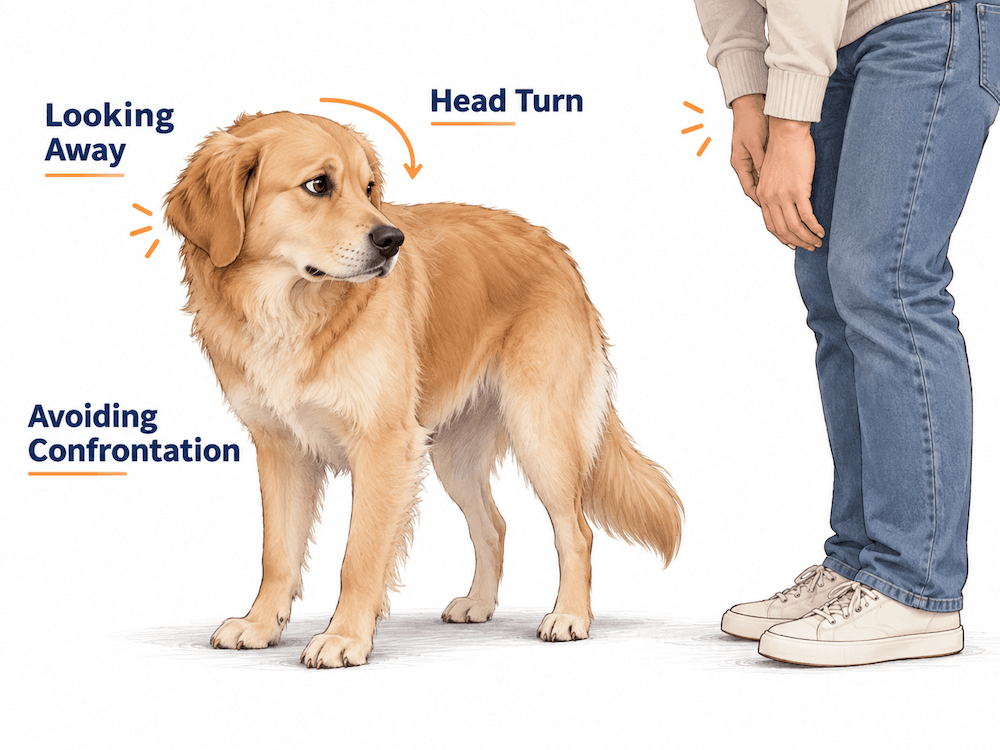
1. Avoiding Eye Contact or Turning Their Head Away
Dogs may look away or turn their heads to reduce tension during an uncomfortable interaction. If your dog avoids your gaze after being scolded, they may be responding to your expression or tone of voice rather than acknowledging wrongdoing. This behavior can help avoid confrontation, particularly when accompanied by other signs of uncertainty.
2. Licking Their Lips or Yawning
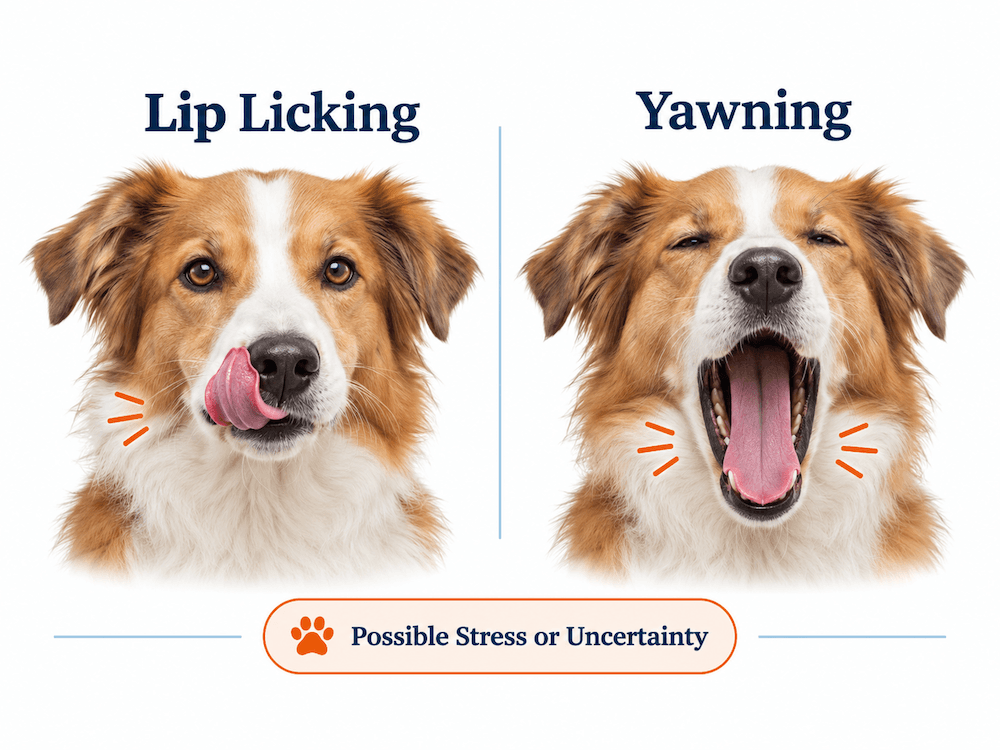
Lip licking and yawning can be subtle signs of stress, uncertainty, or discomfort, particularly when they occur without food or tiredness being involved. A dog may briefly flick its tongue across its nose or yawn during a tense interaction with its owner. These behaviors are not necessarily apologies and should be interpreted alongside other body-language signals.
3. Lowering Their Head or Crouching With Ears Back
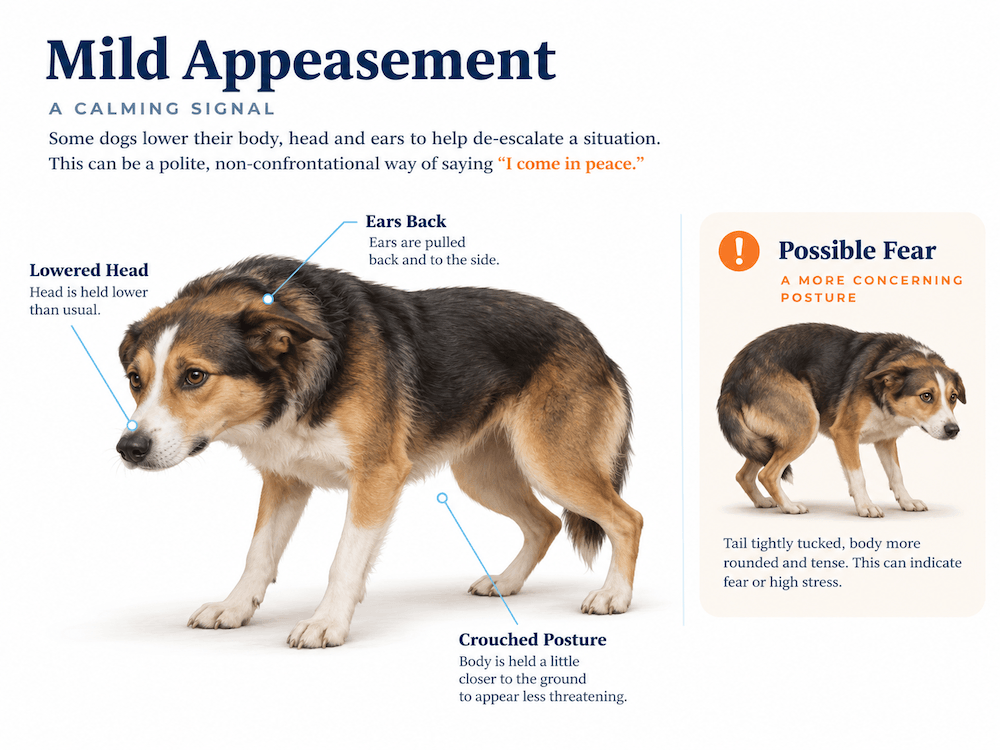
A dog may lower its head, bend its body, or pull its ears backward when feeling uncertain or trying to appear less threatening. These postures sometimes resemble a guilty or apologetic expression, especially following a stern interaction. However, pronounced crouching, a tightly tucked tail, or freezing may indicate fear rather than a friendly attempt to make amends.


4. Approaching Slowly or Seeking Gentle Contact
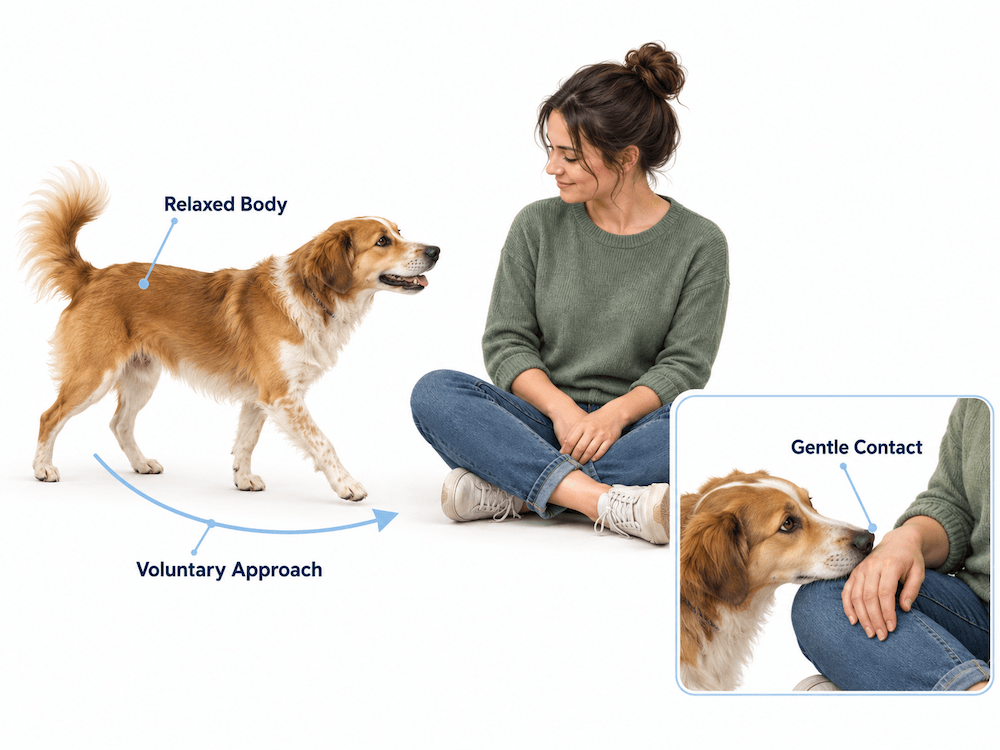
Some dogs approach their owners cautiously after a tense interaction, possibly seeking reassurance or renewed social contact. They may walk over slowly, gently nudge a hand, or lean against their owner’s leg. A loose body and voluntary approach suggest greater comfort, while stiff movements or hesitation may indicate lingering uncertainty.
5. Offering a Paw or Bringing a Favorite Toy
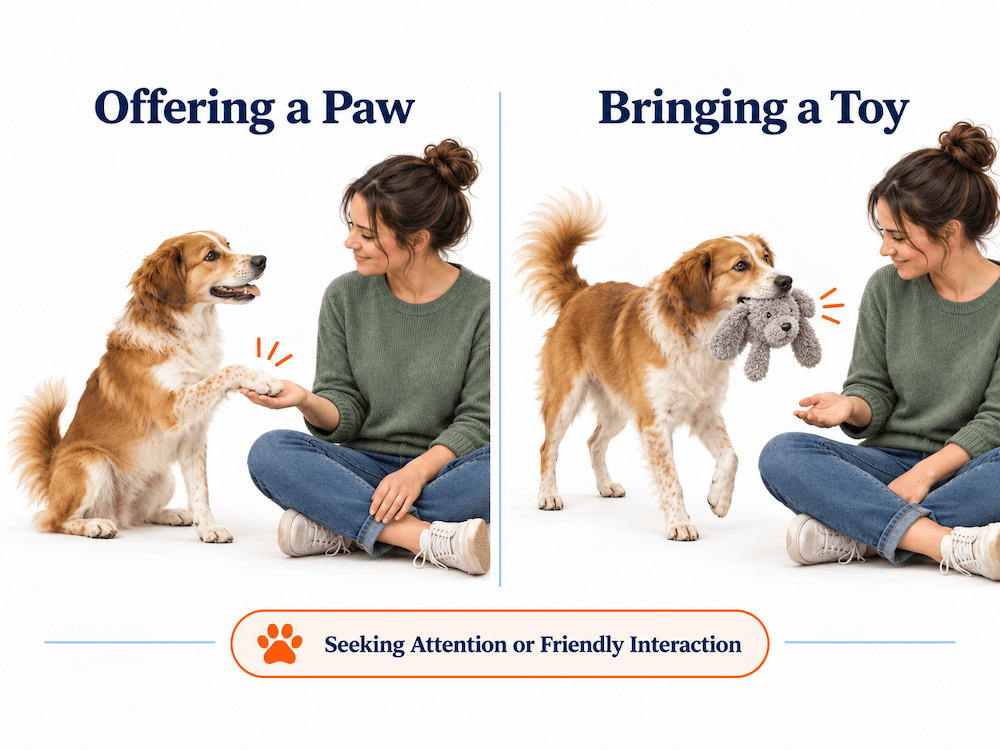
Offering a paw or bringing a toy may be a dog’s way of seeking attention or initiating a familiar positive interaction. These gestures can appear apologetic when they happen after misbehavior, particularly if the dog has learned that they lead to affection, play, or treats. However, neither behavior establishes that the dog understands its mistake or is deliberately offering an apology.
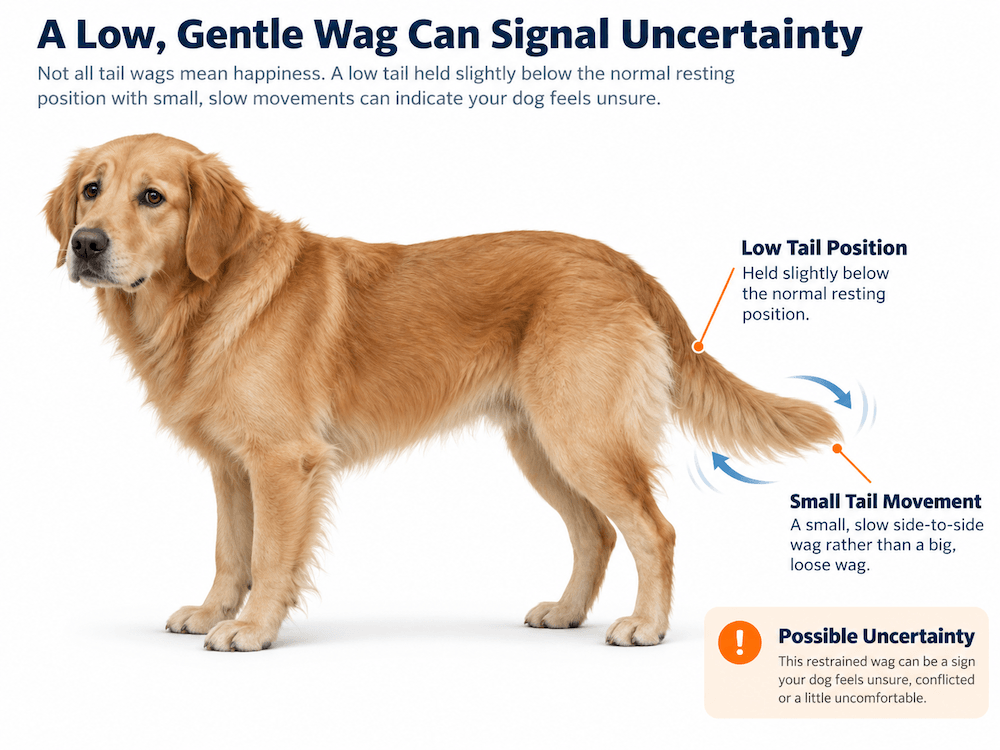
6. Wagging Their Tail Low and Slowly
A low, slow tail wag can indicate uncertainty or cautious social engagement, particularly when a dog senses tension from its owner. Unlike a loose, enthusiastic wag during a happy greeting, this movement may be smaller or more restrained. Tail wagging does not automatically mean happiness or an apology, so consider your dog’s natural tail position and overall body language.
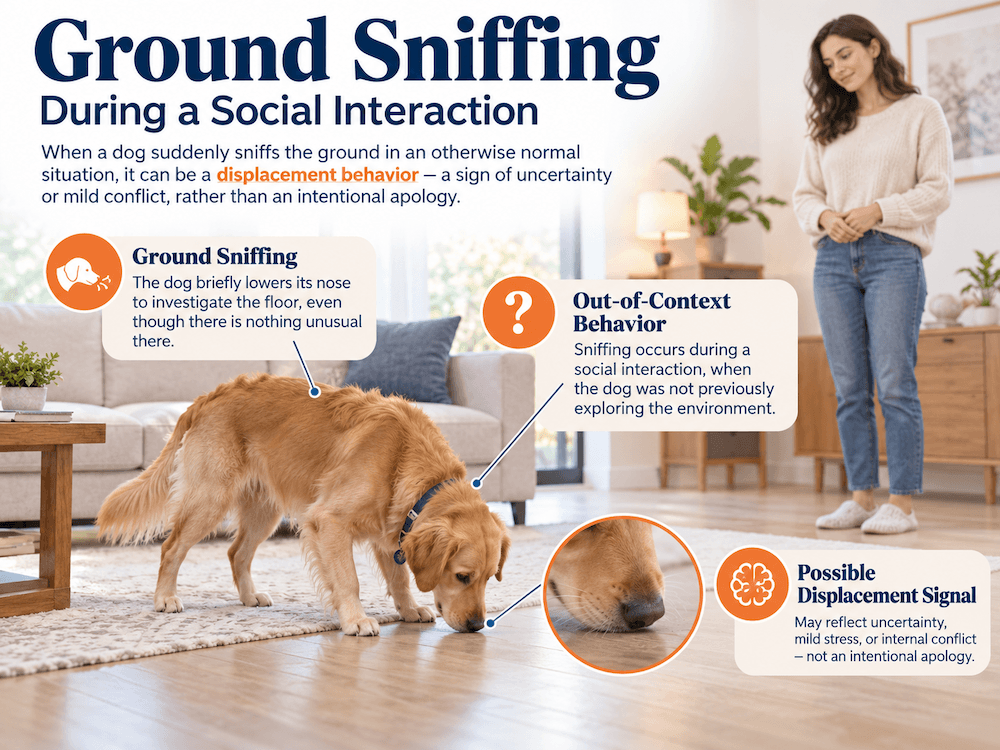
7. Sniffing the Ground During a Tense Moment
Some dogs unexpectedly begin sniffing the floor when they feel uncertain, conflicted, or uncomfortable. This can be a displacement behavior, meaning the dog performs an ordinary activity in a situation where it may be experiencing stress. For example, a dog might suddenly investigate the carpet during a tense interaction, although sniffing can also reflect genuine curiosity about a scent.
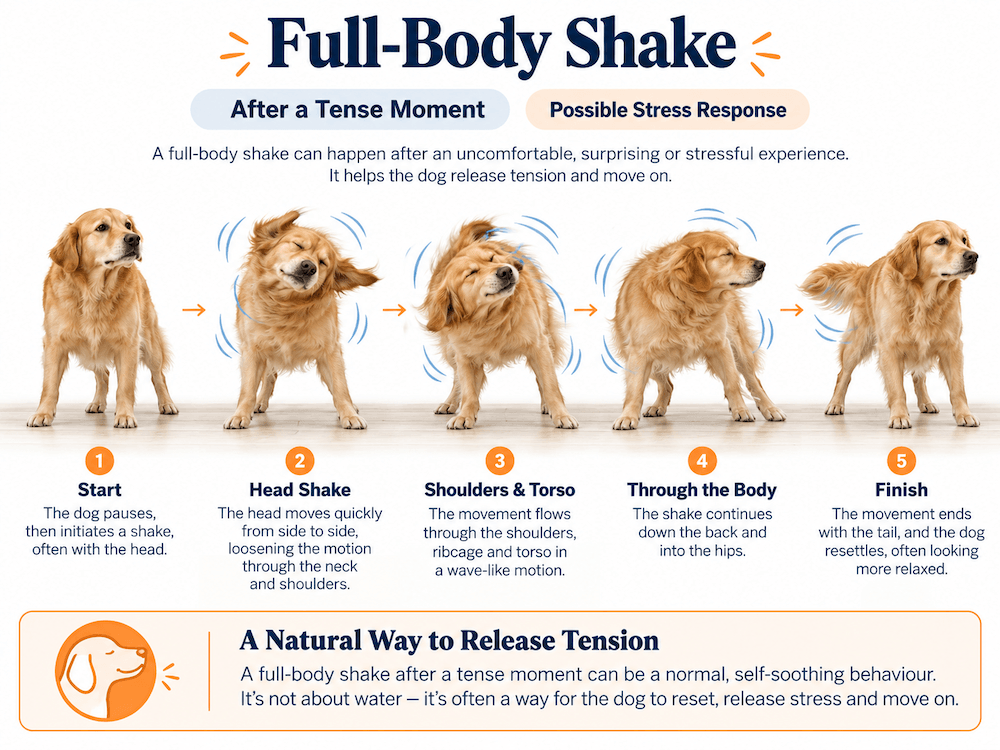
8. Shaking Their Body After an Uncomfortable Interaction
Dogs sometimes perform a full-body shake after a stressful or exciting encounter, even when their fur is completely dry. This shake-off behavior may occur as the dog transitions away from an uncomfortable interaction or responds to heightened arousal. However, dogs also shake for ordinary physical reasons, so the timing and surrounding circumstances matter.
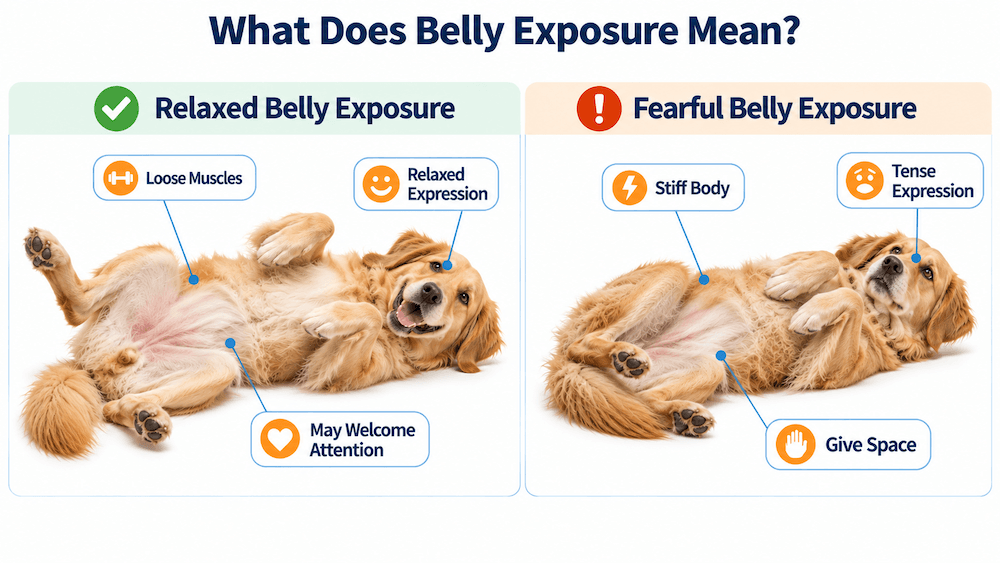
9. Rolling Onto Their Back and Exposing Their Belly
Some dogs roll onto their backs and expose their bellies during social interactions, which can be a form of appeasement or a sign of discomfort. A dog that rolls over after being scolded may be attempting to reduce perceived tension rather than asking for affection. A stiff body, tucked tail, or frozen posture suggests distress, whereas loose movements and relaxed muscles may indicate playfulness or an invitation for a belly rub.
10. Performing a Play Bow After Social Tension
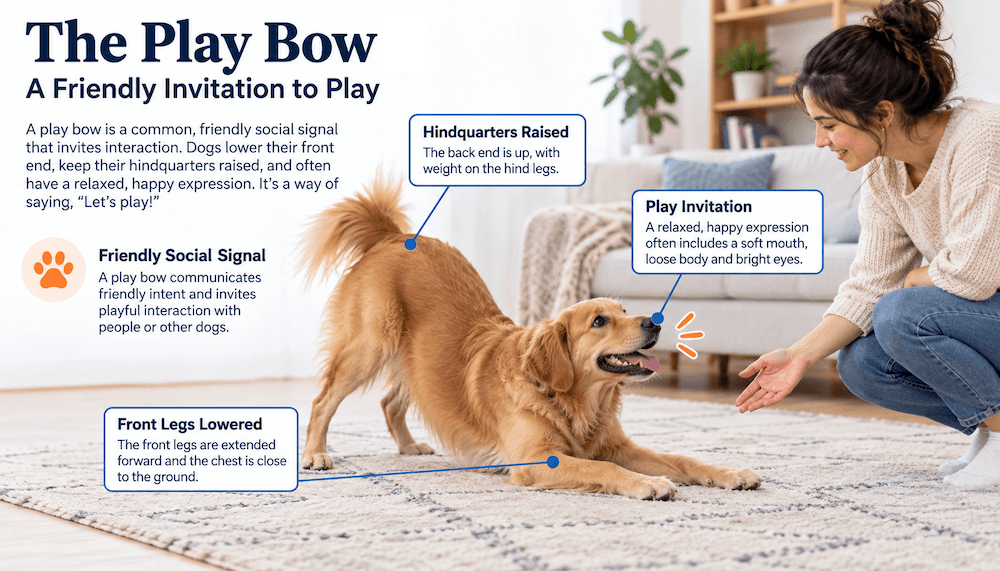
A play bow occurs when a dog lowers its front legs and chest while keeping its hindquarters raised. This posture usually signals an invitation to play and may sometimes occur as a dog attempts to shift a social interaction toward friendly engagement. Although a play bow can appear like an effort to make peace, it is better understood as a social communication signal than evidence of regret or remorse.
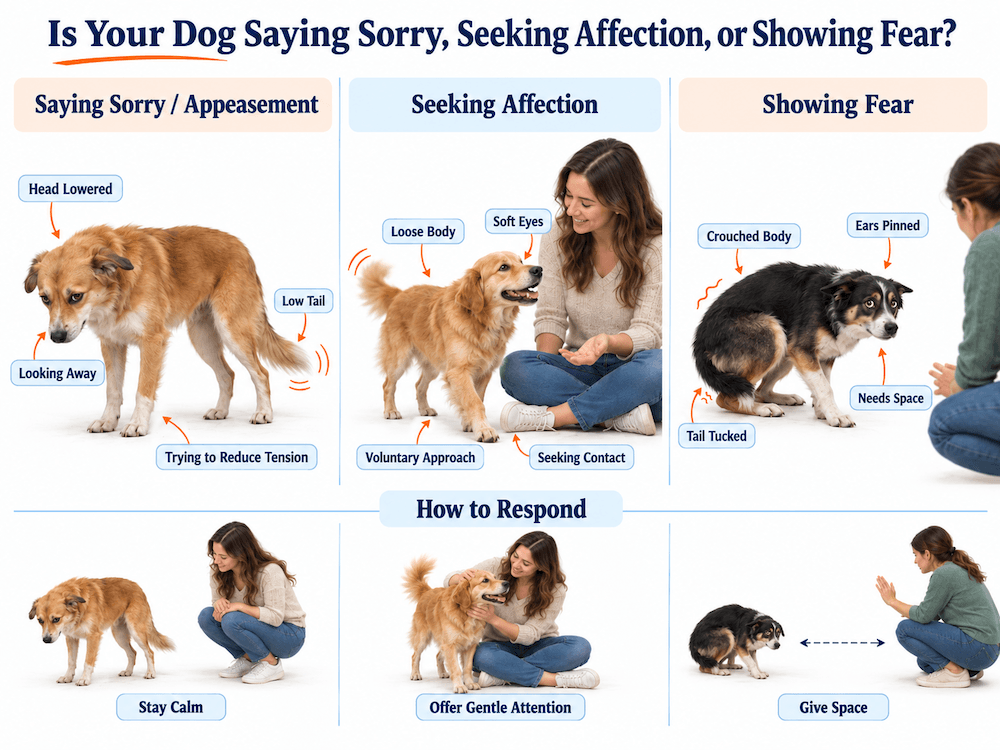
Is Your Dog Saying Sorry, Seeking Affection, or Showing Fear?
Some dog behaviors can look similar on the surface but mean very different things emotionally. A lowered head, slow approach, licking, or staying close to you might reflect appeasement, friendly reconnection, or genuine discomfort depending on the rest of the dog’s body language. The comparison below helps owners distinguish between apology-like behavior, affectionate social contact, and fear so they can respond more appropriately and avoid misreading the moment.
What Your Dog’s Behavior Means in Different Situations
The circumstances surrounding your dog’s behavior are often more informative than the behavior itself. A lowered head after a stern command may have a different meaning from the same posture during a peaceful greeting. The following comparison helps explain common situations in which owners believe their dogs are apologizing and what the observed behavior might actually indicate.
| Situation | Common Reaction | Possible Explanation | Important Context |
|---|---|---|---|
| Owner discovers a chewed shoe | Dog lowers its head or moves away. | The dog may respond to the owner’s changed behavior. | The reaction does not establish awareness of the earlier damage. |
| Dog is interrupted while misbehaving | Dog stops, freezes, or avoids eye contact. | The interruption may cause surprise, uncertainty, or concern. | The immediate interruption differs from discovering damage much later. |
| Owner speaks in a stern voice | Dog crouches, retreats, or licks its lips. | The dog may be uncomfortable with the interaction. | Repeated reactions may reflect learned expectations about scolding. |
| Dog approaches after an argument | Dog sniffs, licks, or gently leans against its owner. | The dog may seek contact or reassurance. | Voluntary contact differs from persistent avoidance or freezing. |
| Dog greets its owner normally | Dog wiggles, wags its tail, or offers a paw. | The behavior may simply be a familiar greeting. | No previous conflict is necessary for these behaviors. |
How to Respond When Your Dog Looks Sorry
When your dog displays apology-like behavior, focus on understanding the situation rather than expecting an apology. The most useful response depends on whether the unwanted behavior is still happening, whether your dog seems frightened, and whether there is an immediate safety concern. Calm, predictable interactions help you address the problem without adding unnecessary stress.
How to Prevent the Behavior That Made Your Dog Look Guilty
Preventing unwanted behavior starts with understanding its cause rather than assuming deliberate disobedience. Chewing, indoor accidents, food stealing, and other common problems may result from unmet needs, incomplete training, or environmental temptations.
| Unwanted Behavior | Possible Cause | How to Prevent It |
|---|---|---|
| Chewing shoes or furniture | Teething, curiosity, boredom, or anxiety. | Store valuables securely and provide appropriate chew toys. |
| Indoor accidents | Incomplete housetraining, insufficient bathroom breaks, or medical issues. | Maintain toilet routines; investigate sudden accidents with your veterinarian. |
| Stealing food | Easy access to rewarding food. | Clear counters and reinforce leaving food alone. |
| Raiding the trash | Attractive food smells and accessible waste. | Use secured bins and restrict unsupervised access. |
| Jumping on people | Excitement or previously rewarded attention-seeking. | Reward four paws on the floor during greetings. |
| Demand barking | Barking has previously earned attention or rewards. | Reward calm requests and provide appropriate mental enrichment. |
Mistakes to Avoid When Interpreting a Dog’s Apology
Misinterpreting apology-like behavior can increase fear, undermine trust, or leave the original problem unresolved. A dog that becomes quiet, looks away, or offers submissive gestures is not necessarily admitting wrongdoing. The following mistakes highlight why certain owner reactions can be counterproductive and how to interpret the situation more appropriately.
| Common Mistake | Why It’s a Problem | Better Approach |
|---|---|---|
| Demanding an apology | Dogs may respond with fear rather than understanding. | Focus on teaching the desired behavior. |
| Scolding after the incident | The dog may associate your reaction with the present situation. | Address the underlying cause instead of punishing afterward. |
| Forcing hugs or eye contact | Unwanted physical closeness may increase stress. | Allow your dog to choose whether to approach. |
| Assuming stillness means calmness | Freezing can indicate significant fear or discomfort. | Check body tension, facial expressions, and willingness to move. |
| Punishing growling | Suppressing warnings may leave the underlying discomfort unresolved. | Give space and address the cause of the warning. |
| Trusting a wagging tail alone | Tail wagging can accompany excitement, uncertainty, or stress. | Evaluate posture, muscle tension, and the surrounding context. |
| Assuming guilt means learning | Appeasement does not establish that the problem is resolved. | Assess changes in everyday behavior rather than guilty expressions. |
How to Tell Whether Your Dog Is Recovering From a Tense Interaction
A dog recovering from an uncomfortable interaction will generally begin returning to familiar, voluntary behaviors as they feel more secure. Some dogs seek social contact soon afterward, while others need more space before resuming normal activities. Look for consistent signs of comfort across several interactions rather than treating one affectionate gesture as proof that everything is resolved.
When to Call a Veterinarian About Apology-Like Behavior
Seek immediate veterinary attention for collapse, seizures, difficulty breathing, or severe injury, even if your dog initially seems merely withdrawn or unusually quiet. If your dog’s guilty-looking behavior follows destruction of a household item, check whether any material is missing. Contact a veterinarian or animal poison service immediately if you suspect ingestion of medication, a toxic substance, or a dangerous object; do not wait for symptoms or induce vomiting without professional instructions.
Schedule a veterinary examination for persistent or worsening behavioral changes, particularly if your normally confident dog begins hiding, cowering, trembling, or avoiding familiar people. New submissive urination, changes in appetite, reluctance to be touched, or unexplained irritability also deserve attention. Pain, illness, sensory changes, and other medical problems can sometimes influence how dogs respond to social interactions.
Professional assessment is important when the cause remains unclear, or your dog is not improving. A veterinarian can evaluate potential medical contributors and determine whether a behavioral referral is appropriate. Dogs with escalating fear, snapping, bite incidents, or severe distress may benefit from an individualized plan developed with a qualified reward-based behavior professional or veterinary behaviorist. Additional caution is particularly important for older dogs and dogs whose behavior changes suddenly.
What Research Says About Dogs Saying Sorry & Feeling Guilty
One of the most directly relevant investigations is Alexandra Horowitz’s 2009 study, “Disambiguating the ‘Guilty Look’: Salient Prompts to a Familiar Dog Behaviour,” published in Behavioural Processes. In the experiment involving 14 dogs, behaviors associated with a guilty appearance were more strongly linked to owner scolding than to whether the dogs had actually disobeyed instructions. Some obedient dogs displayed more of these behaviors when scolded. The findings challenge the assumption that a guilty look reliably indicates wrongdoing, although the small experiment cannot determine whether dogs are capable of experiencing guilt in other circumstances.[1]
A 2016 study by Albuquerque and colleagues, “Dogs Recognize Dog and Human Emotions,” published in Biology Letters, examined how dogs interpreted emotional information from faces and vocalizations. Dogs spent more time looking at facial expressions matching the emotional tone of accompanying sounds, including human emotional cues. This supports the idea that dogs can integrate information about other individuals’ emotional expressions.[2]
Research on training methods also helps explain why owner responses matter. In “Does Training Method Matter? Evidence for the Negative Impact of Aversive-Based Methods on Companion Dog Welfare,” published in PLOS ONE in 2020, Vieira de Castro and colleagues evaluated 92 companion dogs attending different training schools. Dogs exposed to more aversive training showed increased stress-related behaviors, with additional welfare differences observed in physiological and cognitive measures.[3]
Frequently Asked Questions
The Bottom Line
Dogs may appear to say sorry through lowered heads, averted gazes, cautious approaches, or affectionate gestures, but these behaviors do not necessarily indicate guilt or remorse. What looks like an apology may actually reflect appeasement, uncertainty, affection, or fear. Understanding your dog’s body language and the situation surrounding their behavior is essential for interpreting their signals accurately. Rather than expecting your dog to recognize wrongdoing, focus on calmly addressing unwanted behaviors through positive reinforcement and consistent training. Giving your dog space after uncomfortable interactions and allowing them to reconnect voluntarily can help maintain trust. Persistent fear, unusual withdrawal, or sudden behavioral changes deserve veterinary attention to rule out underlying concerns. Ultimately, recognizing how dogs communicate helps prevent misunderstandings and strengthens the relationship you share with your companion.
To better understand your dog’s communication signals, explore what it means when your dog stares at you and why dogs lick their owners. For ways to strengthen your relationship after an uncomfortable interaction, discover how to show your dog you love them through everyday actions. You can also follow our dog training guide to encourage positive behavior and build trust through reward-based training.