How to Boil Chicken for Dogs: 6 Vet-Approved Steps (& Feeding Guide)

Canine Bible is reader-supported. We receive affiliate commissions via some of our links. Learn more.
Boiled chicken can be a simple, nutritious addition to your dog’s diet, but preparing it safely requires more than just putting chicken in a pot of water. Knowing how to boil chicken for dogs helps ensure the meat is properly cooked, easy to digest, and free from ingredients that could harm your pet. While plain boiled chicken is often recommended for dogs with sensitive stomachs or temporary digestive upset, it isn’t suitable for every situation. Should you use chicken breasts or thighs, and how long should the meat cook? Can puppies eat boiled chicken, and is it safe to feed your dog every day? Portion sizes, food sensitivities, and the way you serve the chicken can also affect your dog’s health. This guide explains everything you need to know about preparing, serving, and storing boiled chicken safely so you can make informed decisions about your dog’s meals.
Is Boiled Chicken Good for Dogs?
Plain boiled chicken is a nutritious source of protein that provides essential amino acids needed for muscle maintenance, tissue repair, and normal body functions. Removing the skin and excess fat makes it a relatively lean option, while its soft texture can make it easy for many dogs to chew. It can be especially useful as an occasional meal topper, training reward, or ingredient in a veterinarian-directed temporary diet.
However, boiled chicken is not appropriate for every dog or digestive problem. Although it is sometimes used during mild gastrointestinal upset, vomiting and diarrhea can have causes that require medical treatment or a different diet. Dogs with chicken allergies, pancreatitis, certain chronic illnesses, or prescription diets may need other options. Even when a dog tolerates chicken well, feeding chicken alone does not provide all the nutrients needed for long-term health.
Remember to ALWAYS consult with your vet before making any changes that could affect your dog’s health, nutrition, or well-being. If you can’t reach your vet, you can chat live with a registered online veterinary professional via our online vet chat or video chat support (24 hours a day, 7 days a week). Or use Chewy’s online vet services (6 a.m. – midnight ET). Additionally, at-home dog gut health tests can analyze your dog’s microbiome, offering insights into which nutrients their diet should include. Similarly, at-home dog allergy testing kits can identify ingredients that may not be suitable for your dog, enabling you to choose the right diet and care plan to support optimal digestion, nutrition, and health.
What You Need to Boil Chicken for Dogs
Boneless, skinless chicken breast is usually the best choice because it is relatively low in fat, easy to cook, and simple to shred. Boneless chicken thighs are another option for dogs without fat restrictions, although they generally contain more fat. Choose fresh or safely thawed, unseasoned meat without added marinades, sauces, or flavorings.
Choosing the Best Chicken for Dogs
| Chicken Option | Key Benefits | Considerations |
|---|---|---|
| Boneless, Skinless Chicken Breast | Lean, high in protein, and generally easy to shred. | Usually the best choice for healthy dogs needing a lean protein. |
| Boneless, Skinless Chicken Thighs | Flavorful, tender, and a good source of protein. | Higher in fat; less suitable for dogs needing fat restriction. |
| Fresh Chicken | Ready to prepare without a thawing step. | Must be refrigerated promptly and cooked before spoiling. |
| Frozen Chicken | Convenient for buying in bulk and storing longer. | Thaw safely in the refrigerator for more predictable cooking. |
Ingredients and Equipment Needed
You will also need a few basic kitchen supplies. Using clean equipment and a food thermometer helps make the preparation safer and more consistent. Gather everything before cooking so you can handle the raw chicken without unnecessary contact with other foods.


How Long to Boil Chicken for Dogs
Cooking time depends on the size, thickness, and cut of chicken. Smaller pieces generally cook faster than whole breasts, while thicker cuts need additional time for the center to reach a safe temperature. The following times are approximate estimates after the water reaches a gentle simmer, not guarantees of doneness. Always verify that the thickest part reaches 165°F (74°C) before serving.
| Chicken Cut | Approximate Simmering Time | What to Know |
|---|---|---|
| Small boneless chicken breast | 15–25 minutes | Thin breasts usually cook faster than thick, rounded pieces. |
| Large or thick chicken breast | 25–35+ minutes | Extra-thick sections require more time to cook through. |
| Boneless, skinless chicken thighs | 20–30 minutes | Irregular thickness may cause pieces to finish at different times. |
| Chicken breast cut into 1-inch pieces | 8–12 minutes | Uniform pieces generally cook quickly and evenly. |
How to Boil Chicken for Dogs in 6 Simple Steps
Follow these six steps to prepare tender, thoroughly cooked chicken without unnecessary ingredients. The process is straightforward, but proper handling, controlled heat, and checking the internal temperature are essential for safe preparation.
Step 1: Inspect and Trim the Chicken
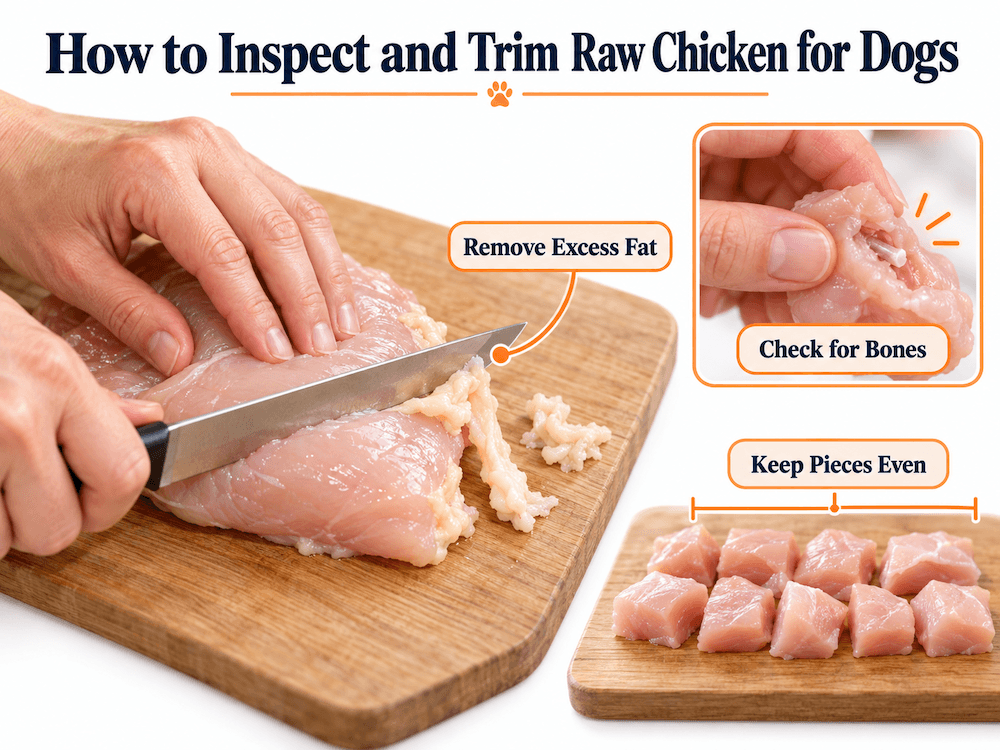
Place the raw chicken on a clean cutting board and remove any remaining skin, visible excess fat, or cartilage using a sharp knife. Check carefully for bones and bone fragments, especially if the chicken was purchased with bones attached, and keep the prepared pieces reasonably similar in thickness for even cooking.
Step 2: Place the Chicken in a Pot and Add Water
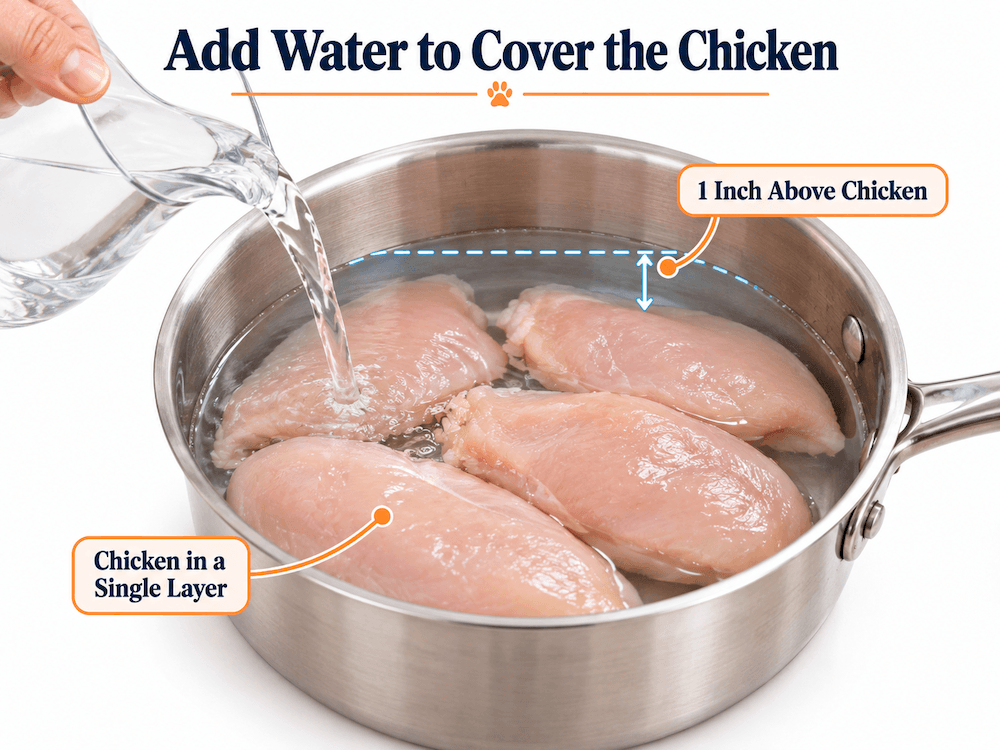
Arrange the prepared chicken in a single layer inside a saucepan or stockpot. Pour in enough plain, clean water to cover the chicken by approximately one inch, ensuring all pieces are submerged without overcrowding the pot.
Step 3: Bring the Water to a Gentle Simmer
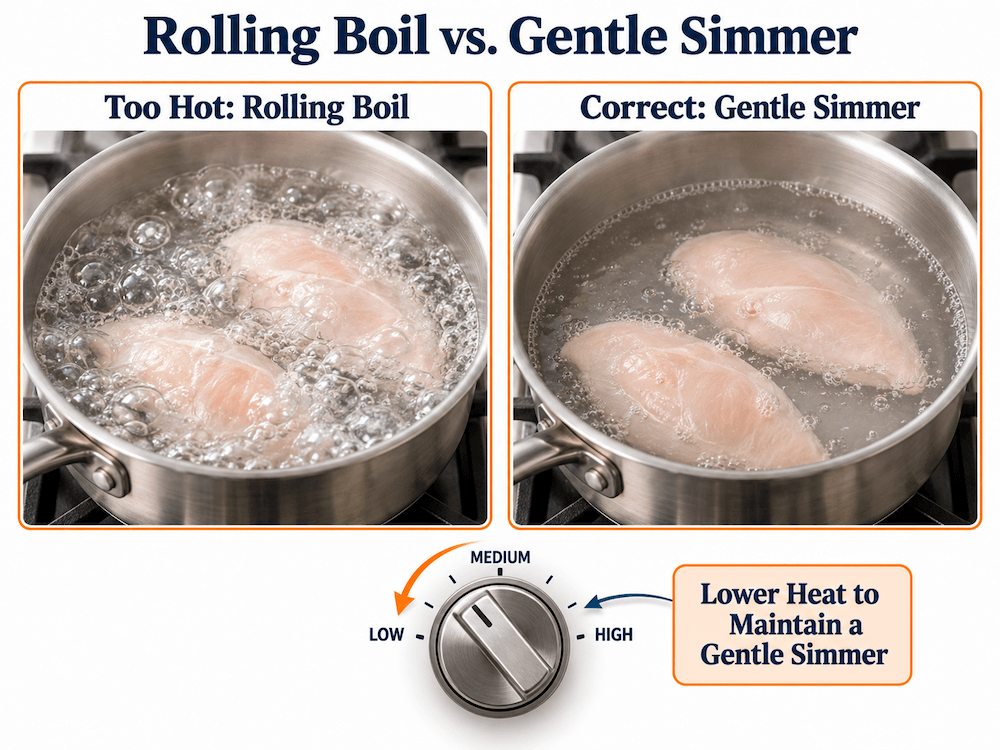
Place the pot over medium-high heat and bring the water just to a boil. Once bubbles rise steadily, reduce the heat to maintain a gentle simmer with small, consistent bubbles rather than vigorous rolling water, which can make the chicken tougher.
Step 4: Cook Until the Chicken Reaches 165°F
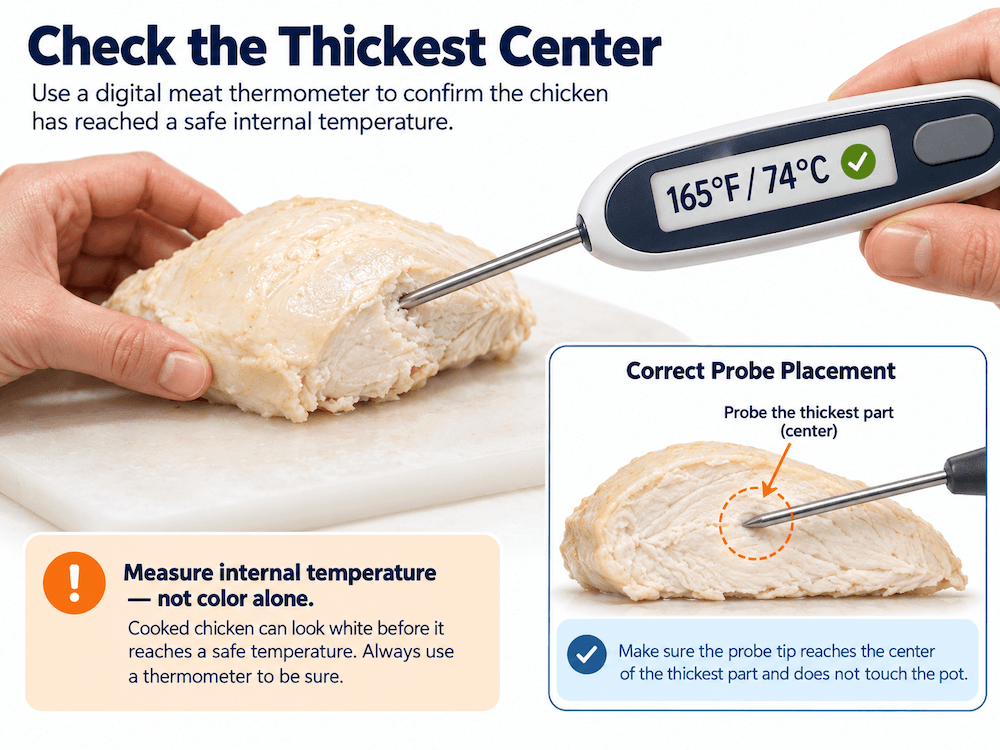
Allow the chicken to simmer, using the estimated cooking times above as a starting point for checking doneness. Insert a food thermometer into the thickest part of the largest piece, avoiding contact with the bottom of the pot, and continue cooking until the center reaches at least 165°F (74°C).


Step 5: Remove the Chicken and Let It Cool
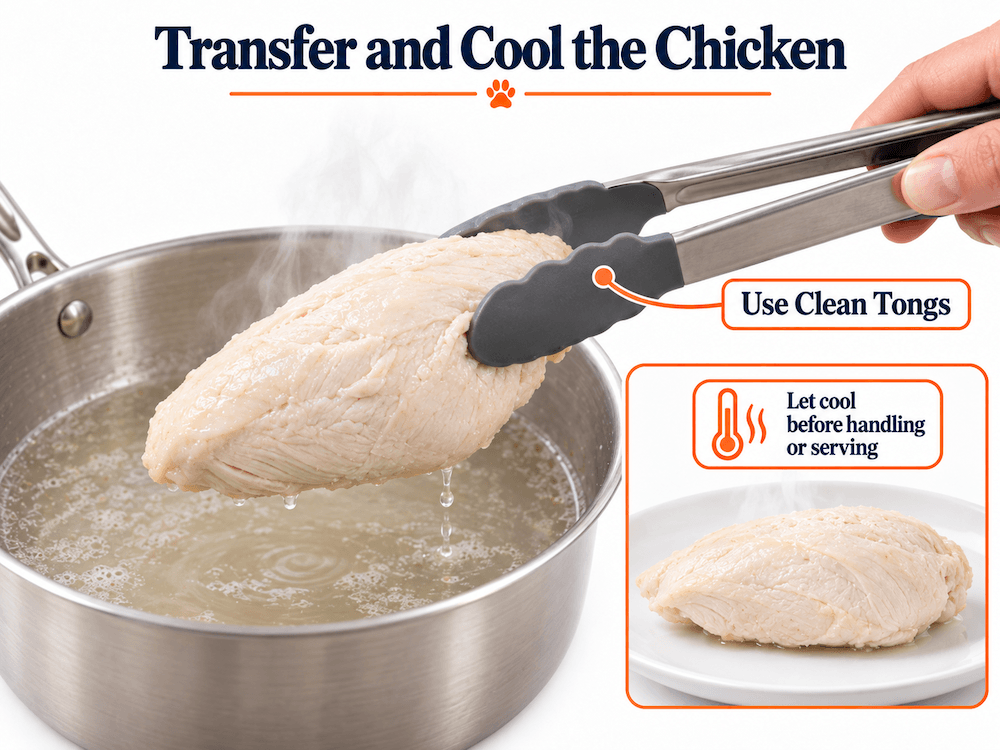
Using clean tongs, carefully lift the fully cooked chicken from the pot and transfer it to a clean plate or cutting board. Allow the meat to cool until it is comfortable to handle and no longer hot enough to burn your dog’s mouth, keeping it away from pets while it cools.
Step 6: Shred or Cut the Chicken Into Small Pieces
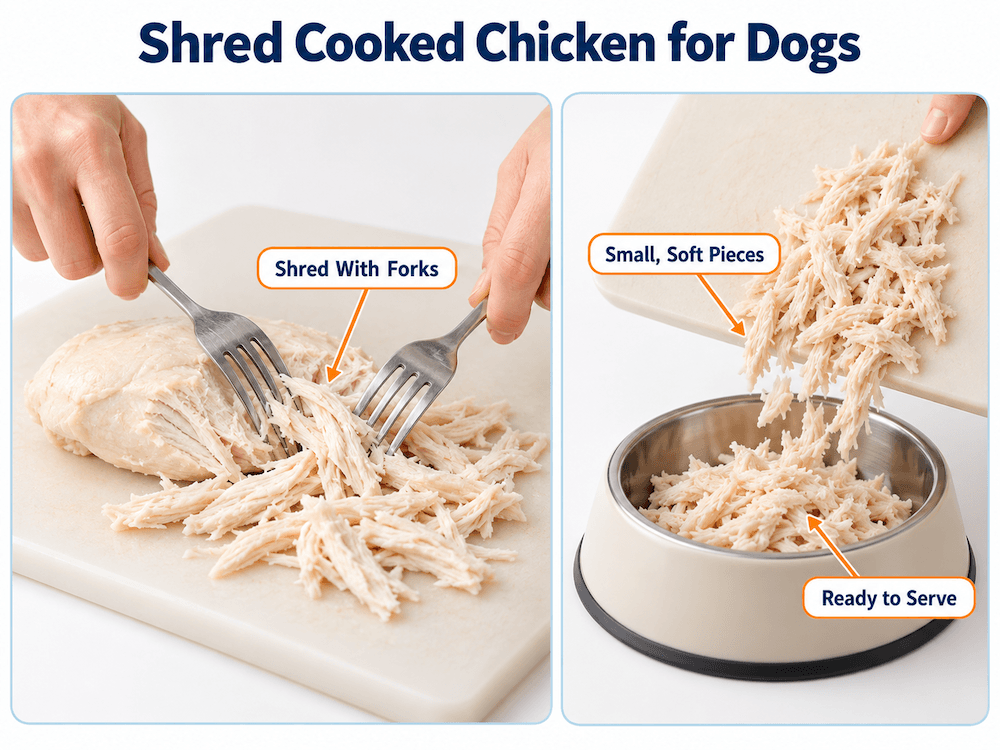
Use two forks to pull the cooled chicken apart into soft, manageable shreds, or cut it into small pieces appropriate for your dog’s size. Check the finished meat for any remaining hard fragments and place the prepared chicken in a clean serving bowl or container.
How to Boil Chicken for Dogs: Video Tutorial
You can also watch the step-by-step video below to see how to prepare boiled chicken for your dog. This tutorial provides a helpful reference for making tender, easy-to-shred chicken that can be served as an occasional treat, meal topper, or part of a veterinarian-recommended temporary diet.
How to Serve and Feed Boiled Chicken to Dogs
Boiled chicken can be served in several ways depending on your dog’s preferences, eating habits, and nutritional needs. The safest approach is to offer fully cooked, cooled, boneless, skinless chicken in portions appropriate for your dog’s size and diet. Whether used as a meal topper, training reward, or part of a veterinarian-recommended feeding plan, chicken should generally remain a supplement to complete and balanced dog food.
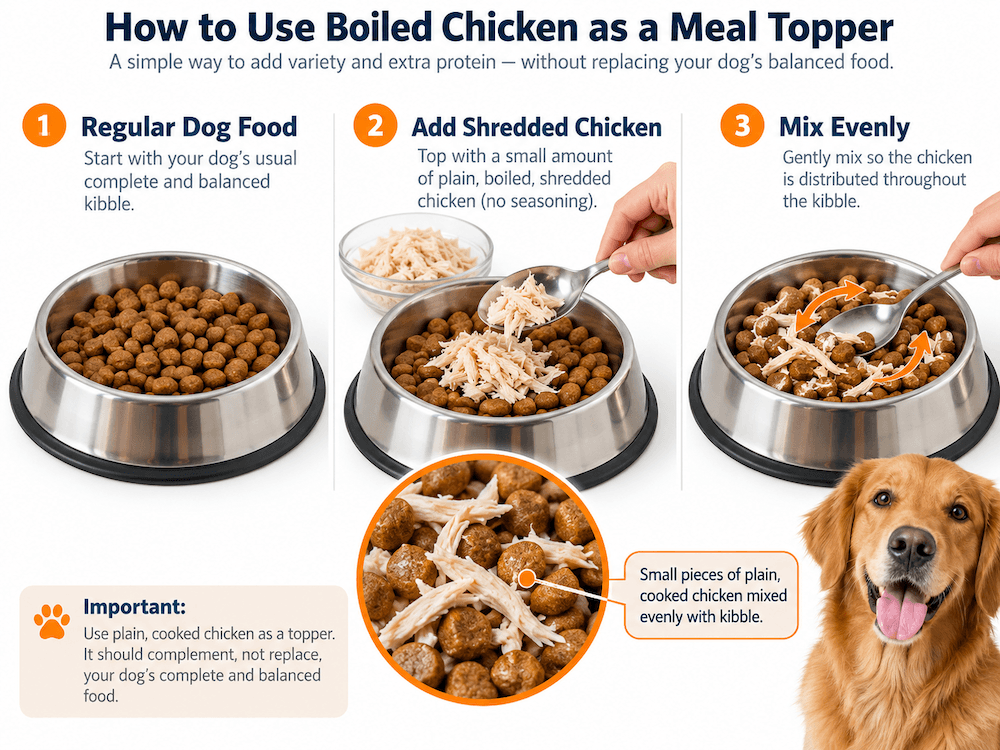
1. Mix Shredded Chicken With Regular Dog Food
Adding shredded boiled chicken to your dog’s regular kibble or wet food is an easy way to enhance flavor and encourage interest in meals. Sprinkle a small portion over the food and mix it evenly so your dog eats both ingredients rather than picking out the chicken. This method works particularly well for picky eaters, provided the added chicken fits within their daily calorie allowance.
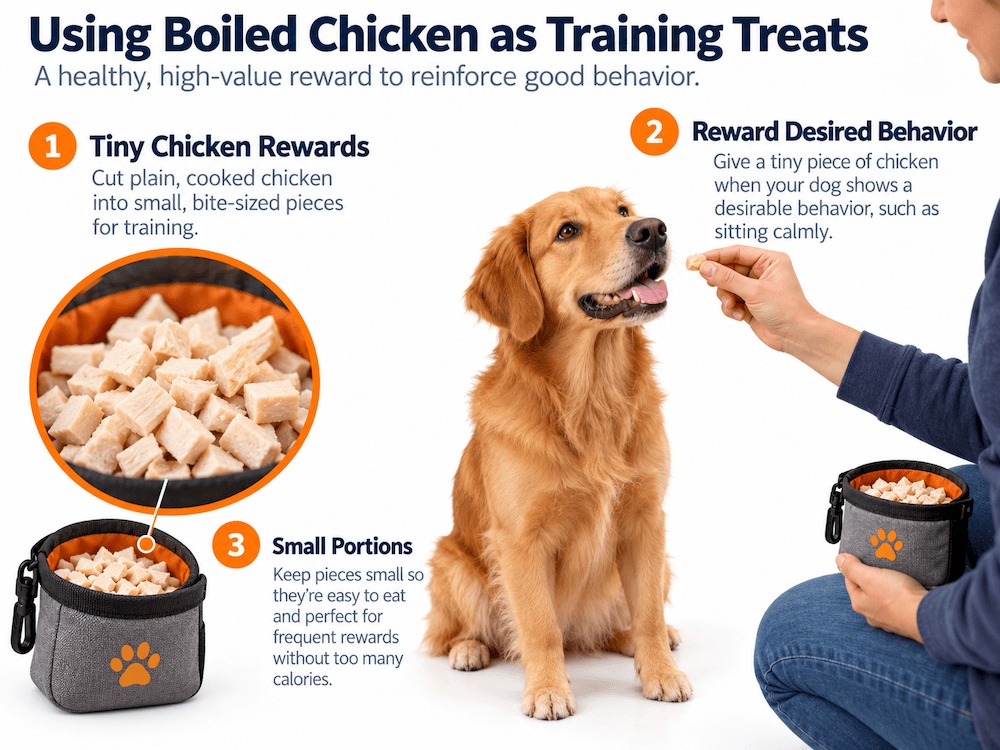
2. Offer Small Pieces as Training Treats
Cut cooled boiled chicken into tiny, bite-sized pieces and use them as rewards during obedience training, recall practice, or other positive reinforcement activities. Small portions make it easier to reward your dog frequently without providing excessive calories. Keep the pieces in a clean treat pouch or container and account for them as part of your dog’s daily treat allowance.
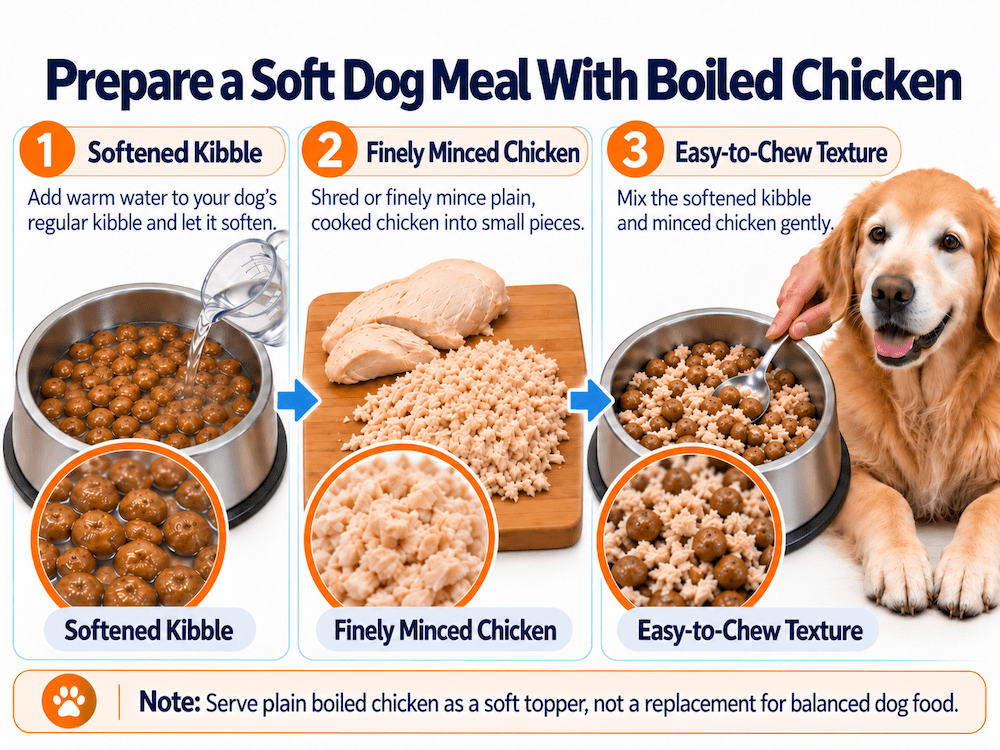
3. Combine Chicken With Softened Kibble
Finely mince boiled chicken and mix it into your dog’s regular kibble after the kibble has been softened with warm water and allowed to reach a comfortable temperature. The softer texture may help dogs that need easier-to-chew meals, including some senior dogs or those with temporary chewing limitations. Persistent difficulty chewing, however, requires veterinary evaluation rather than dietary modification alone.
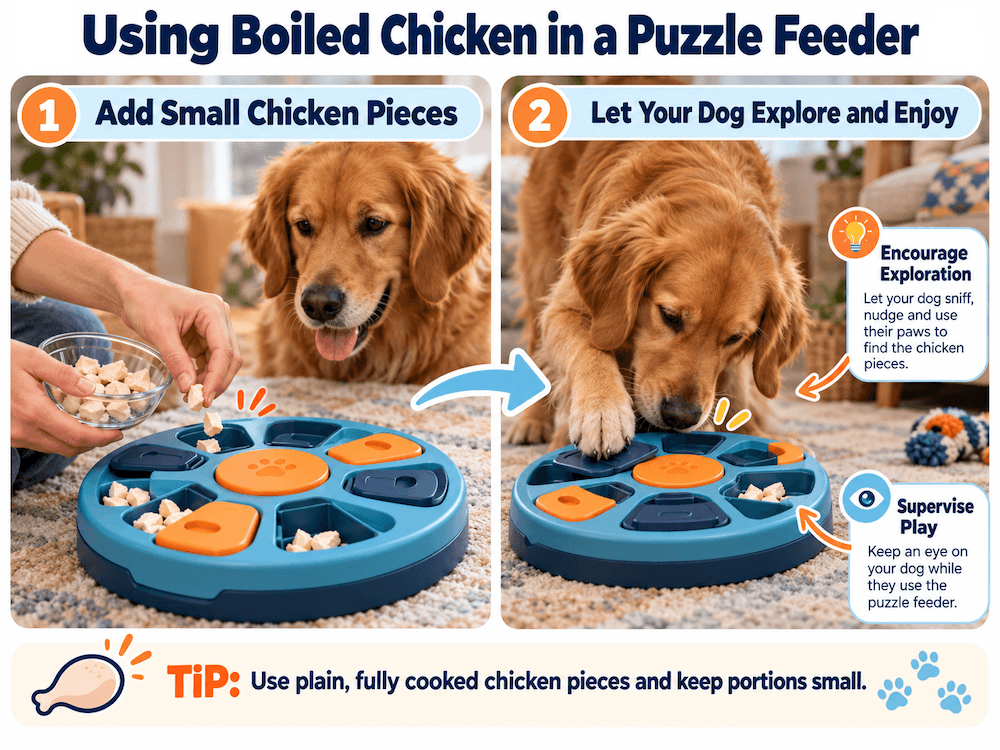
4. Add Boiled Chicken to a Food Puzzle or Enrichment Toy
Place small pieces of cooled boiled chicken inside a dog-safe puzzle feeder or treat-dispensing toy to encourage your dog to work for rewards. Food enrichment can provide mental stimulation while turning a small treat portion into an engaging activity. Choose equipment appropriate for your dog’s size and supervise use to prevent chewing or swallowing toy components.
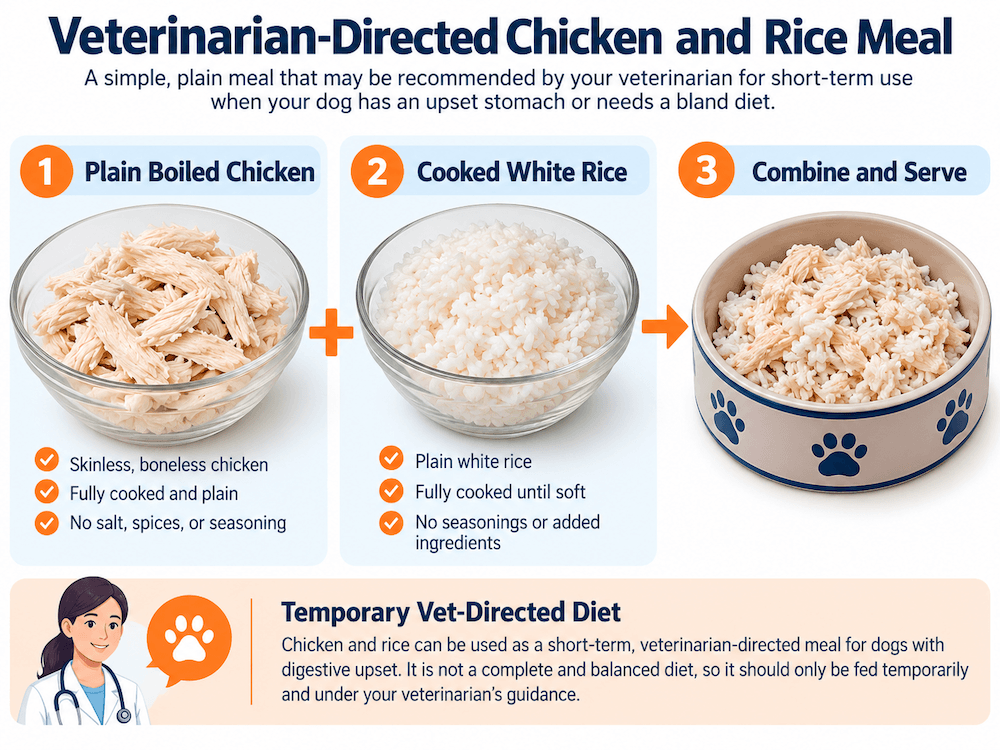
5. Serve Chicken With Rice When Recommended by a Veterinarian
Plain boiled chicken can be combined with thoroughly cooked white rice as part of a temporary bland diet when your veterinarian recommends it for a specific digestive problem. Cook both ingredients without seasonings and serve them in the proportions and amounts your veterinarian advises. Chicken and rice are not nutritionally complete for long-term feeding, so this approach should be limited to an appropriate short-term feeding plan.
Mistakes to Avoid When Boiling Chicken for Dogs
Food-handling mistakes can affect the safety of an otherwise simple recipe. Raw poultry requires careful handling, and dogs may be exposed to hazards when food is prepared or left unattended. The following mistakes are worth avoiding, particularly when cooking larger batches.
| Mistake | Why It Matters | Safer Alternative |
|---|---|---|
| Rinsing raw chicken | Water splashes can spread bacteria onto kitchen surfaces. | Skip rinsing and rely on proper cooking. |
| Thawing chicken on the counter | Outer surfaces may warm enough for bacteria to multiply. | Thaw in the refrigerator or another approved safe method. |
| Using bouillon cubes or seasoned broth | They may contain excessive sodium, onions, or garlic. | Use plain water without added flavorings. |
| Reusing raw-chicken utensils | Raw poultry juices can contaminate the cooked meat. | Wash utensils thoroughly or use separate clean equipment. |
| Leaving the cooking pot accessible | Curious dogs may overturn hot water or grab food. | Keep pets away from the cooking and cooling area. |
How Much Boiled Chicken Can You Feed a Dog?
The amount of boiled chicken your dog can eat depends on their weight, age, life stage, and daily calorie requirements. As a general guideline, plain boiled chicken should make up no more than 10% of daily calories when offered as a treat or topper, with the remaining 90% coming from complete and balanced dog food. Puppies, adults, senior dogs, and pregnant dogs have different nutritional needs, so their feeding allowances are not interchangeable.
The charts below estimate daily calorie requirements and maximum chicken portions using approximately 151 calories per 100 grams of cooked, boneless, skinless chicken breast. All chicken amounts are measured after cooking, and the 10% allowance includes any other treats or toppers your dog receives. The figures are starting estimates rather than prescribed feeding amounts; individual dogs may need substantially more or fewer calories.
Puppy Boiled Chicken Feeding Chart
Growing puppies need more calories per pound than adult dogs, particularly during their first four months. The chart uses an estimated range of two to three times resting energy requirements, with the higher end generally applying to puppies under four months old and the lower end to older puppies. Boiled chicken should remain an occasional addition to a complete puppy diet, not a replacement for growth-specific nutrition.
| Weight (lbs) | Daily Calorie Target | Max Treat Calories (10%) | Max Boiled Chicken/Day |
|---|---|---|---|
| 5 lbs | 260–390 kcal | 26–39 kcal | 17–25 g |
| 10 lbs | 435–655 kcal | 43–65 kcal | 28–43 g |
| 20 lbs | 730–1,100 kcal | 73–110 kcal | 48–72 g |
| 30 lbs | 990–1,490 kcal | 99–149 kcal | 65–98 g |
| 40 lbs | 1,230–1,845 kcal | 123–184 kcal | 81–121 g |
| 50 lbs | 1,455–2,180 kcal | 145–218 kcal | 96–144 g |
| 75 lbs | 1,970–2,960 kcal | 197–296 kcal | 130–196 g |
| 100 lbs | 2,445–3,670 kcal | 244–367 kcal | 161–243 g |
Note: These estimates apply to puppies eating solid food. Growing puppies, especially large breeds, need individualized calorie adjustments based on age, expected adult size, and growth rate.
Adult Dog Boiled Chicken Feeding Chart
For healthy adult dogs, calorie requirements depend on body weight, activity level, and whether they are spayed or neutered. This chart uses a standard estimate for a moderately active, spayed or neutered adult dog at an ideal body weight. Intact or highly active dogs may require more calories, while overweight or less active dogs may need fewer.
| Weight (lbs) | Daily Calorie Target | Max Treat Calories (10%) | Max Boiled Chicken/Day |
|---|---|---|---|
| 5 lbs | 205 kcal | 20 kcal | 13 g |
| 10 lbs | 350 kcal | 35 kcal | 23 g |
| 20 lbs | 585 kcal | 58 kcal | 38 g |
| 30 lbs | 795 kcal | 79 kcal | 52 g |
| 40 lbs | 985 kcal | 98 kcal | 64 g |
| 50 lbs | 1,165 kcal | 116 kcal | 76 g |
| 75 lbs | 1,580 kcal | 158 kcal | 104 g |
| 100 lbs | 1,960 kcal | 196 kcal | 129 g |
Note: Based on approximately 1.6 times resting energy requirements. Dogs needing weight management should follow their veterinarian’s calorie recommendations rather than using current body weight alone.
Senior Dog Boiled Chicken Feeding Chart
Senior dogs may need fewer calories as their activity levels decline, although some older dogs require additional energy to maintain a healthy weight and muscle mass. This chart uses a conservative starting estimate of 1.4 times resting energy requirements for a relatively inactive senior dog. Adjustments should reflect body condition, muscle health, existing medical conditions, and your veterinarian’s dietary recommendations.
| Weight (lbs) | Daily Calorie Target | Max Treat Calories (10%) | Max Boiled Chicken/Day |
|---|---|---|---|
| 5 lbs | 180 kcal | 18 kcal | 11 g |
| 10 lbs | 305 kcal | 30 kcal | 19 g |
| 20 lbs | 510 kcal | 51 kcal | 33 g |
| 30 lbs | 695 kcal | 69 kcal | 45 g |
| 40 lbs | 860 kcal | 86 kcal | 56 g |
| 50 lbs | 1,020 kcal | 102 kcal | 67 g |
| 75 lbs | 1,380 kcal | 138 kcal | 91 g |
| 100 lbs | 1,715 kcal | 171 kcal | 113 g |
Note: Aging alone does not determine calorie needs. Active seniors or dogs losing weight may need more calories than shown. Dogs with kidney disease, pancreatitis, or other medical conditions may require restrictions that make chicken unsuitable.
Pregnant Dog Boiled Chicken Feeding Chart
Pregnant dogs have increased nutritional requirements, particularly during the final three to four weeks of pregnancy. During early pregnancy, calorie needs generally remain close to normal adult maintenance levels. The chart below estimates late-pregnancy requirements at approximately 25–50% above intact adult maintenance needs, but the appropriate amount depends on litter size, body condition, and pregnancy stage. These are theoretical maximum chicken allowances based on the 10% rule, not recommended portions; consult your veterinarian before incorporating chicken into a pregnant dog’s diet.
| Weight (lbs) | Daily Calorie Target | Max Treat Calories (10%) | Max Boiled Chicken/Day |
|---|---|---|---|
| 5 lbs | 290–350 kcal | 29–35 kcal | 19–23 g |
| 10 lbs | 490–585 kcal | 49–58 kcal | 32–38 g |
| 20 lbs | 825–990 kcal | 82–99 kcal | 54–65 g |
| 30 lbs | 1,115–1,340 kcal | 111–134 kcal | 73–88 g |
| 40 lbs | 1,385–1,660 kcal | 138–166 kcal | 91–109 g |
| 50 lbs | 1,635–1,965 kcal | 163–196 kcal | 107–129 g |
| 75 lbs | 2,220–2,660 kcal | 222–266 kcal | 147–176 g |
| 100 lbs | 2,755–3,305 kcal | 275–330 kcal | 182–218 g |
Important: This chart applies only to late pregnancy and is not suitable for nursing dogs, whose calorie needs can be much higher. A veterinarian should determine whether treats are appropriate and ensure that the mother’s primary diet meets the nutritional requirements for growth and reproduction.
How to Store and Reheat Boiled Chicken for Dogs
Proper storage and reheating help keep boiled chicken safe and fresh while reducing the risk of bacterial growth. Whether refrigerating leftovers or preparing larger batches for future meals, follow these simple food-safety guidelines.
What to Watch for After Feeding Your Dog Boiled Chicken
Monitor your dog’s appetite, stool consistency, and overall behavior when introducing boiled chicken for the first time. Most dogs that tolerate chicken will continue eating and behaving normally, but some may experience soft stools, vomiting, or other signs of intolerance. Start with a modest amount and avoid introducing several unfamiliar foods at once, making it easier to recognize an adverse response.
If boiled chicken is part of a temporary digestive recovery plan, track whether your dog’s symptoms are improving rather than simply whether they enjoy the food. Record the amounts eaten, bathroom habits, and any return of digestive symptoms. Once your dog has recovered, follow your veterinarian’s advice about transitioning back to their usual balanced diet over the recommended period. Changes in appetite or digestion that persist despite dietary adjustments deserve reassessment.
When to Call a Vet After Feeding Your Dog Boiled Chicken
Seek immediate veterinary attention if your dog develops repeated vomiting, bloody diarrhea, severe abdominal pain, collapse, extreme weakness, or difficulty breathing. Inability to keep water down is another concerning sign, especially when accompanied by lethargy or suspected dehydration. These symptoms can indicate a serious medical condition that cannot be managed simply by changing your dog’s food.
Schedule a veterinary appointment if digestive problems persist, worsen, or repeatedly return after eating chicken. Ongoing loss of appetite, unexplained weight loss, excessive itching, or recurring ear and skin irritation may also indicate an underlying problem or possible food allergy. If mild digestive symptoms are not improving within approximately 24 hours, contact your veterinarian rather than continuing dietary changes without guidance.
Professional dietary advice is especially important for dogs with existing health conditions or uncertain symptoms. Puppies, senior dogs, and dogs with chronic gastrointestinal disease, pancreatitis, or prescribed diets may require more individualized nutrition. A veterinarian can determine whether boiled chicken is appropriate, recommend suitable portions or alternatives, and identify medical problems that dietary changes alone cannot resolve.
What Research Says About Feeding Boiled Chicken to Dogs
Chicken provides highly digestible protein and essential amino acids that support muscle maintenance, tissue repair, and other normal body functions in dogs. A 2010 study by Faber and colleagues, published in the Journal of Animal Science, evaluated chicken breast alongside beef, pork, and fish protein sources. Researchers found that dogs digested approximately 88.9% of the protein from chicken-based diets by the end of the small intestine, demonstrating its value as a digestible protein source. The study also found no significant differences in protein digestibility between the meats tested.[1]
Chicken-based ingredients may also improve food palatability, making them useful for encouraging dogs to eat. In a 2024 Journal of Animal Science study, Geary and colleagues compared dog foods containing different amounts of chicken slurry. During a feeding-preference trial involving 20 dogs, participants preferred the diet containing 16% chicken slurry over the control diet by approximately 2 to 1. Although the study examined formulated dog food rather than homemade boiled chicken, it suggests that chicken ingredients can increase the appeal of certain diets.[2]
Cooked chicken can contribute to highly digestible, nutritionally balanced meals. A 2021 study by Do and colleagues in the Journal of Animal Science compared several commercial diets, including a cooked chicken-and-white-rice formulation. The researchers found that the human-grade diets tested had higher overall nutrient digestibility and produced less fecal output than the extruded diet used for comparison, while maintaining normal stool characteristics. However, these findings involved complete diets containing multiple ingredients and cannot establish that plain boiled chicken alone improves digestive health or treats gastrointestinal illness.[3]
Despite its nutritional benefits, boiled chicken cannot provide complete nutrition by itself. A 2019 study by Pedrinelli and colleagues, published in Scientific Reports, analyzed 75 homemade dog food recipes and found that none met all evaluated nutritional requirements. Calcium and potassium were among the nutrients frequently below recommended levels, highlighting the risks of relying on improperly formulated homemade diets. Taken together, these studies support using plain boiled chicken as a digestible supplemental protein within a balanced diet, rather than as a long-term meal replacement.[4]
Frequently Asked Questions
The Bottom Line
Boiling chicken for dogs is a simple way to prepare a lean, nutritious protein without unnecessary additives. By choosing plain, boneless, skinless chicken and cooking it thoroughly to 165°F (74°C), you can ensure the meat is safe and ready to serve. Proper cooling, shredding, and portioning make it easier to incorporate into your dog’s regular meals or offer as an occasional treat. Cooking times may vary depending on the cut and thickness, making temperature checks more reliable than timing alone. Although boiled chicken can be beneficial for many dogs, portion sizes should reflect their age, weight, activity level, and nutritional requirements. Safe refrigeration and freezing also help preserve leftovers for future meals. With proper preparation and veterinary guidance when needed, boiled chicken can be a convenient addition to a balanced canine diet.
For more information about chicken’s nutritional benefits and potential risks, explore our guide on can dogs eat chicken. If you’re considering pairing boiled chicken with rice, learn whether rice is safe for dogs and how to serve it appropriately. For more meal ideas, browse our homemade dog food recipes to explore additional ingredients and nutritionally balanced feeding options.
Sources
- Protein digestibility evaluations of meat and fish substrates using laboratory, avian, and ileally cannulated dog assays
- Effects of chicken slurry inclusion on apparent total tract macronutrient digestibility, palatability, and fecal characteristics, microbiota, and metabolites of healthy adult dogs
- Nutrient digestibility and fecal characteristics, microbiota, and metabolites in dogs fed human-grade foods
- Concentrations of macronutrients, minerals and heavy metals in home-prepared diets for adult dogs and cats