Dog Aspirin Dosage Calculator: How Much to Give & Charts

Canine Bible is reader-supported. We receive affiliate commissions via some of our links. Learn more.
Aspirin is sometimes used in veterinary medicine, but deciding whether it is appropriate for a dog is not as simple as choosing a dose from a weight chart. Your dog’s health, other medications, the reason aspirin is being considered, and the exact product all affect safety. This Dog Aspirin Dosage Calculator handles the math behind a veterinarian-directed dose. Enter your dog’s weight and the mg/kg amount your veterinarian provided to estimate the corresponding milligrams and tablet amount.
Always check the full ingredient list and contact your veterinarian or a pet poison control service if your dog may have ingested too much aspirin. If you can't reach your vet, you can chat live with a registered online veterinary professional via our online vet chat or video chat support (24 hours a day, 7 days a week). Or use Chewy's online vet services (6 a.m. - midnight ET).
How Much Aspirin Can I Give My Dog?
There is no single aspirin dose that is appropriate for every dog. The amount and dosing schedule depend on why aspirin is being used, your dog's weight and medical history, other medications, the aspirin formulation, and how long treatment is expected to continue.
Veterinary references include different aspirin regimens for different purposes, which is why this calculator does not automatically insert a “standard” dose. Aspirin can also cause dose-dependent adverse effects in dogs, including stomach irritation, ulceration, and bleeding.
If your veterinarian has told you to give aspirin, use the exact mg/kg dose and schedule they provided. Do not substitute a number found online, increase the dose because your dog still seems painful, or continue treatment longer than instructed.
Why the Reason for Giving Aspirin Matters
Aspirin affects both inflammation and platelet function. A veterinarian may therefore consider it for very different clinical reasons, and those uses are not interchangeable. A dosage intended for an antiplatelet effect should not be treated as a pain-relief dose, and a pain-management regimen should not be copied for clot prevention. The dog's diagnosis and treatment goal must come first.


Why Aspirin Is Not the Same as a Veterinary Pain Medication
Several NSAIDs are specifically approved for dogs in the United States for conditions such as osteoarthritis or postoperative pain. These prescription drugs are selected and monitored by a veterinarian based on the individual dog's risks and needs.
Aspirin is a familiar human medication, but that does not make it the default choice for canine pain. Dogs process medications differently from people, and human label directions should never be transferred directly to a pet.
Dog Aspirin Dosage Chart by Weight
Because the appropriate mg/kg dose must come from your veterinarian, the safest useful weight chart shows how many milligrams each 1 mg/kg represents for dogs of different weights.
Aspirin Dose Conversion by Dog Weight
Use this chart only after your veterinarian has provided the dose in mg/kg.
| Dog Weight | Weight in kg | Amount for Each 1 mg/kg Prescribed |
|---|---|---|
| 5 lb | 2.3 kg | 2.3 mg |
| 10 lb | 4.5 kg | 4.5 mg |
| 20 lb | 9.1 kg | 9.1 mg |
| 30 lb | 13.6 kg | 13.6 mg |
| 40 lb | 18.1 kg | 18.1 mg |
| 50 lb | 22.7 kg | 22.7 mg |
| 70 lb | 31.8 kg | 31.8 mg |
| 100 lb | 45.4 kg | 45.4 mg |
For example, if a veterinarian prescribes 2 mg/kg, multiply the final column by 2. The chart does not mean that 1 mg/kg or any other dose is appropriate for your dog.


Aspirin Product and Formulation Chart
The exact product matters. Check the active ingredient, milligrams per tablet, formulation, and any other ingredients before calculating anything.
| Aspirin Type | What to Check | Important Point |
|---|---|---|
| Plain aspirin | Exact mg per tablet | Never use human label directions for a dog. |
| Low-dose aspirin | Exact tablet strength | "Baby aspirin" is not automatically safe. |
| Buffered aspirin | Aspirin mg and ingredients | Buffering does not remove systemic NSAID risks. |
| Enteric-coated | Strength and coating | Absorption may be unpredictable in dogs. |
| Combination product | Every active ingredient | Do not calculate it as plain aspirin. |
| Unknown product | Package or label | Identify the medication before giving anything. |
Enteric-coated human aspirin is particularly unsuitable for casual substitution because gastric retention in dogs can produce erratic drug exposure.
Dogs That Need Extra Caution With Aspirin
Some dogs have a higher chance of aspirin-related complications or require additional veterinary assessment before treatment.
| Risk Factor | Why It Matters | What to Do |
|---|---|---|
| Kidney disease | NSAIDs can affect kidney blood flow and function. | Get veterinary approval before use. |
| Liver disease | Drug handling and liver risk may be altered. | Discuss your dog's medical history. |
| GI disease | Aspirin can irritate or ulcerate the digestive tract. | Avoid unsupervised use. |
| Dehydration | Reduced circulation may increase kidney risk. | Contact your veterinarian first. |
| Bleeding disorder | Aspirin affects platelet function. | Do not give without veterinary direction. |
| Another NSAID | Combining NSAIDs can increase adverse effects. | Do not combine unless specifically directed. |
| Corticosteroid use | The combination can increase GI complications. | Confirm medication changes with your vet. |
NSAIDs require particular caution in dogs with kidney, liver, heart, or digestive disease, and concurrent aspirin, other NSAIDs, or corticosteroids can create additional risk.
Aspirin Guidelines for Dogs
Aspirin belongs to the nonsteroidal anti-inflammatory drug, or NSAID, family. NSAIDs reduce the production or activity of prostaglandins involved in pain and inflammation.
Those same chemical pathways also help support normal functions such as protecting the stomach lining, maintaining kidney blood flow, and regulating platelet activity. That is why a drug that can reduce pain can also cause gastrointestinal bleeding or other serious adverse effects.
Aspirin Is Not an FDA-Approved Canine NSAID
In the United States, currently marketed FDA-approved NSAIDs for dogs include drugs such as carprofen, deracoxib, firocoxib, grapiprant, meloxicam, and robenacoxib. These drugs require veterinary prescriptions. A veterinarian can sometimes use other medications extra-label when medically appropriate, but that does not make aspirin an over-the-counter do-it-yourself treatment for canine pain.
More Aspirin Is Not Better Pain Control
If your dog still seems uncomfortable after receiving a prescribed medication, do not increase the dose, shorten the interval between doses, or add another pain reliever on your own. Persistent pain may mean the underlying condition needs reassessment or a different pain-management plan. Modern veterinary pain management often combines appropriate medications with treatment of the underlying problem and other supportive strategies.
Factors That Can Affect Your Dog's Aspirin Results
A correct calculation still depends on correct inputs and on whether aspirin is appropriate for the individual dog.
| Factor | Why It Matters | What Owners Should Check |
|---|---|---|
| Weight | Vet-directed doses are often calculated in mg/kg. | Use a recent, accurate weight. |
| Reason for use | Different treatment goals can use different regimens. | Know why aspirin was prescribed. |
| Health history | GI, kidney, liver, heart, and bleeding problems change risk. | Share your dog's medical history. |
| Hydration | Dehydration may increase NSAID-related kidney concerns. | Report vomiting, diarrhea, or poor drinking. |
| Other medications | NSAIDs, steroids, and other drugs may interact. | Review every drug and supplement. |
| Tablet strength | Aspirin products contain different amounts per tablet. | Read the exact mg on the label. |
| Formulation | Coatings and added ingredients can change suitability. | Do not substitute products automatically. |
| Treatment length | Repeated exposure can increase adverse-effect concerns. | Follow the prescribed duration. |
The calculator estimates dose conversion; it cannot evaluate these clinical factors or determine whether aspirin is the right medication for your dog.
Common Aspirin Dosage Mistakes to Avoid
Most aspirin errors are preventable. Pay particular attention to units, product strength, interacting medications, and early side effects.
| Mistake | Why It Matters | Better Approach |
|---|---|---|
| Using human directions | Human dosing cannot be transferred directly to dogs. | Use only veterinary instructions. |
| Mixing lb and kg | A unit error can greatly change the calculated amount. | Confirm the weight unit first. |
| Confusing mg with mg/kg | One is a total amount and the other is weight-based. | Keep units visible during calculation. |
| Wrong tablet strength | Aspirin products come in different strengths. | Read the medication label carefully. |
| Rounding on your own | A tablet fraction may not be appropriate to give. | Confirm the final amount with your vet. |
| Combining pain medicines | Multiple NSAIDs or steroids can increase complications. | Review all medications before dosing. |
| Ignoring symptoms | GI signs can be an early adverse-effect warning. | Stop and call your veterinarian. |
| Waiting after overdose | Serious poisoning can worsen without prompt care. | Seek veterinary guidance promptly. |
Never treat the calculator result as proof that an amount is safe. The mathematics can be correct while the medication choice, formulation, frequency, or clinical situation is not.
Aspirin Safety Guidelines for Dogs
Aspirin can affect the stomach and intestines, kidneys, liver, and normal blood clotting. Gastrointestinal problems are among the most important concerns, and aspirin can directly irritate the stomach lining in addition to its broader NSAID effects. If your dog develops a possible NSAID side effect, do not give another dose until you have spoken with your veterinarian. Seemingly mild digestive signs can sometimes precede a more serious problem.
Aspirin Side Effects and Emergency Warning Signs
Use your dog's symptoms, not just the calculated dose, to decide how urgently veterinary help is needed.
| Symptom Level | Possible Signs | Recommended Action |
|---|---|---|
| Concerning | Reduced appetite, lethargy, vomiting, or diarrhea | Stop aspirin and contact your veterinarian. |
| Urgent | Repeated vomiting, bloody stool, or black/tarry stool | Seek prompt veterinary care. |
| Urgent | Marked changes in drinking or urination | Contact a veterinarian promptly. |
| Emergency | Vomiting blood, severe weakness, or collapse | Go to an emergency veterinary clinic. |
| Emergency | Seizures, abnormal breathing, or unconsciousness | Seek emergency veterinary care immediately. |
Severe salicylate poisoning can involve hemorrhage, acid-base disturbances, seizures, coma, and death. Do not wait for severe signs to appear after a known overdose or significant accidental ingestion.
Do Not Combine Aspirin With Another NSAID on Your Own
Do not give aspirin alongside another NSAID such as carprofen, meloxicam, firocoxib, deracoxib, or another pain reliever unless the veterinarian managing your dog has specifically directed the combination or transition. The same caution applies to corticosteroids such as prednisone or prednisolone. Medication changes can require a carefully planned washout period, and the correct interval depends on the drugs and the individual patient.
When to Call Your Veterinarian Before Giving Aspirin
Contact your veterinarian before giving aspirin if your dog has never been specifically prescribed it, you do not know the exact dose or schedule, or you are considering it because your dog suddenly appears painful.
Veterinary review is also important if your dog has kidney, liver, heart, gastrointestinal, or bleeding problems; is dehydrated; takes other medicines; is pregnant or nursing; or has previously reacted badly to an NSAID. Veterinary NSAIDs have not been adequately studied for safety in pregnant, nursing, or breeding animals.
What to Do If Your Dog Gets the Wrong Aspirin Dose
If your dog received more aspirin than prescribed, was given doses too close together, swallowed tablets accidentally, or received the wrong product strength, do not give another dose. Write down your dog's weight, the product name, tablet strength, number of tablets involved, approximate time of exposure, and any other medications your dog takes. Keep the package or take a clear photo of the ingredient label.
Contact your veterinarian or an animal poison-control service promptly. If your dog is already vomiting repeatedly, bleeding, having trouble breathing, collapsing, seizing, or becoming unresponsive, go directly to an emergency veterinary hospital. Do not induce vomiting or give milk, food, antacids, activated charcoal, or another home treatment unless a veterinarian or poison-control professional specifically tells you to. Treatment decisions depend on the dose, timing, formulation, symptoms, and individual dog's condition.
Special Considerations for Certain Dogs
How to Calculate an Aspirin Dose for a Dog Manually
If your veterinarian has already supplied an aspirin dose in mg/kg, the manual calculation involves three basic steps.
Step 1: Convert Pounds to Kilograms
- If your dog's weight is in pounds:
- Weight in kg = weight in lb ÷ 2.2046
- A 44-pound dog weighs approximately:
- 44 ÷ 2.2046 ≈ 20 kg
Step 2: Multiply by the Veterinarian-Provided Dose
- Use:
- Aspirin amount in mg = body weight in kg × prescribed dose in mg/kg
The mg/kg number must come from your veterinarian. It should not be selected from the calculator or chosen because another dog received the same amount.
Step 3: Compare the Result With the Tablet Strength
- If your veterinarian has confirmed the product and tablet strength:
- Tablet equivalent = required aspirin mg ÷ aspirin mg per tablet
This produces a mathematical tablet fraction. It does not automatically mean the tablet should be cut to that fraction, because some formulations may not divide accurately or may not be appropriate for the dog.
Example Calculation
- Suppose a 44 lb dog weighs approximately 20 kg, and for this arithmetic example only, a veterinarian has specifically supplied a dose of 2 mg/kg.
- 20 kg × 2 mg/kg = 40 mg
- If the confirmed product contains 81 mg of aspirin per tablet:
- 40 mg ÷ 81 mg ≈ 0.49 tablet
That calculation demonstrates the conversion only. It does not mean that a 44-pound dog should routinely receive 40 mg or half of an 81-mg tablet. The prescribed dose, frequency, formulation, and final practical amount must all be confirmed by the veterinarian treating the dog.
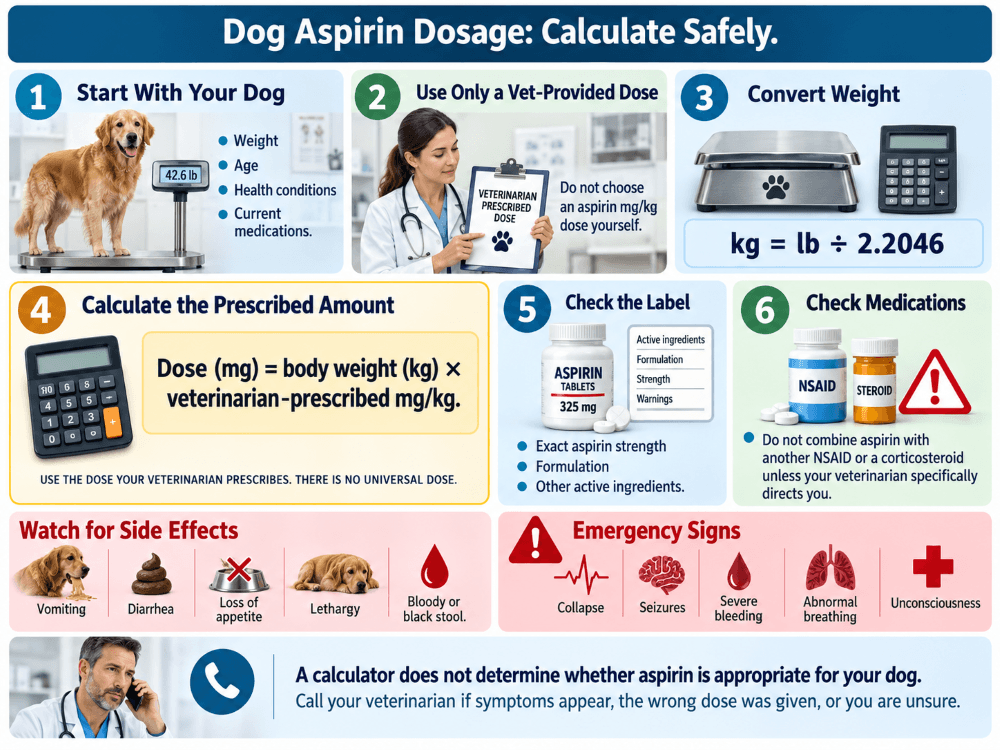
Dog Aspirin Dosage & Safety Infographic
The Bottom Line
A dog aspirin dosage calculator is most useful as a dose-conversion tool after a veterinarian has already prescribed aspirin, not as a way to choose medication or determine a dose independently. Use an accurate body weight, enter only the veterinarian-provided mg/kg rate, verify the exact tablet strength and formulation, and review every other medication your dog receives. Do not combine aspirin with another NSAID or corticosteroid unless your veterinarian has specifically directed you to. If vomiting, diarrhea, reduced appetite, black stool, bleeding, unusual weakness, or other concerning signs appear, stop giving aspirin and contact your veterinarian. Severe bleeding, collapse, seizures, abnormal breathing, or unconsciousness require emergency veterinary care.
If your dog swallowed aspirin accidentally or received too much, use the Dog Aspirin Toxicity Calculator and seek veterinary or animal poison-control guidance rather than relying on the routine dosage calculator. For another toxin ingestion, use dog toxicity calculator.