What Breed of Dog Is Clifford the Big Red Dog? (The Truth & Facts)

Canine Bible is reader-supported. We receive affiliate commissions via some of our links. Learn more.
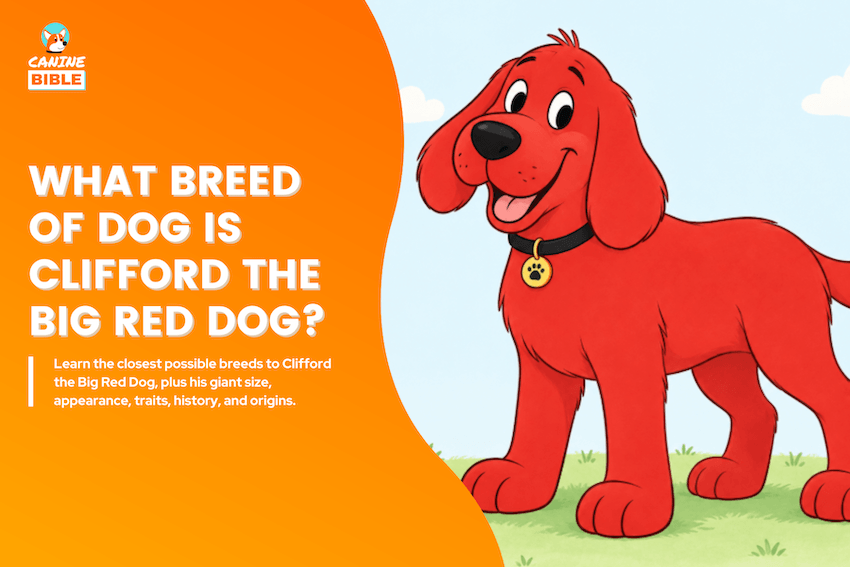
Clifford the Big Red Dog does not have an officially confirmed dog breed. In Norman Bridwell’s original books, Clifford is simply portrayed as an enormous red dog rather than a specific purebred. His floppy ears, broad muzzle, and overall build have led people to compare him with breeds such as the Bloodhound, Labrador Retriever, and Vizsla, but these similarities are only speculation. Clifford’s extraordinary size is fictional too—he grows from a tiny puppy into a dog large enough to tower over houses and vehicles. His appearance has also changed somewhat between the original books, animated television series, and 2021 live-action movie. So, what real dogs look the most like Clifford, how big is he supposed to be, and was he inspired by an actual breed? Below, we break down Clifford’s origins, appearance, size, and the breeds that come closest to the world’s most famous Big Red Dog.
What Breed of Dog Is Clifford the Big Red Dog? History & Origin
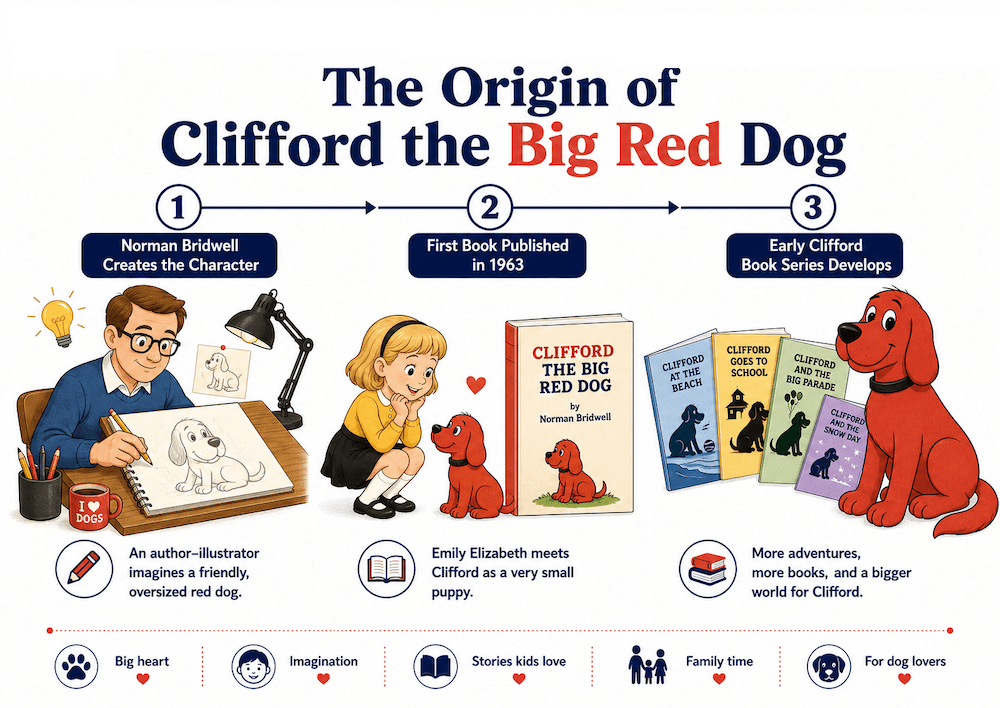
Clifford the Big Red Dog has no officially established purebred breed. Official material has described him as a mutt, while Norman Bridwell’s early concept grew from an illustration of a little girl with a very large dog rather than an attempt to depict a specific breed standard.
Bridwell was trying to enter children’s publishing when an editor suggested that he build a story around one of his drawings. He developed the idea into Clifford the Big Red Dog, which Scholastic published in 1963. The story centers on Emily Elizabeth and the unusually tiny puppy she chooses, who eventually grows into the biggest dog around.
That origin explains an important distinction: inspiration is not the same as breed identity. Some of Clifford’s early design elements can invite comparisons with hounds, and fans have proposed several real breeds over the years, but none has been established as Clifford’s canonical purebred breed.


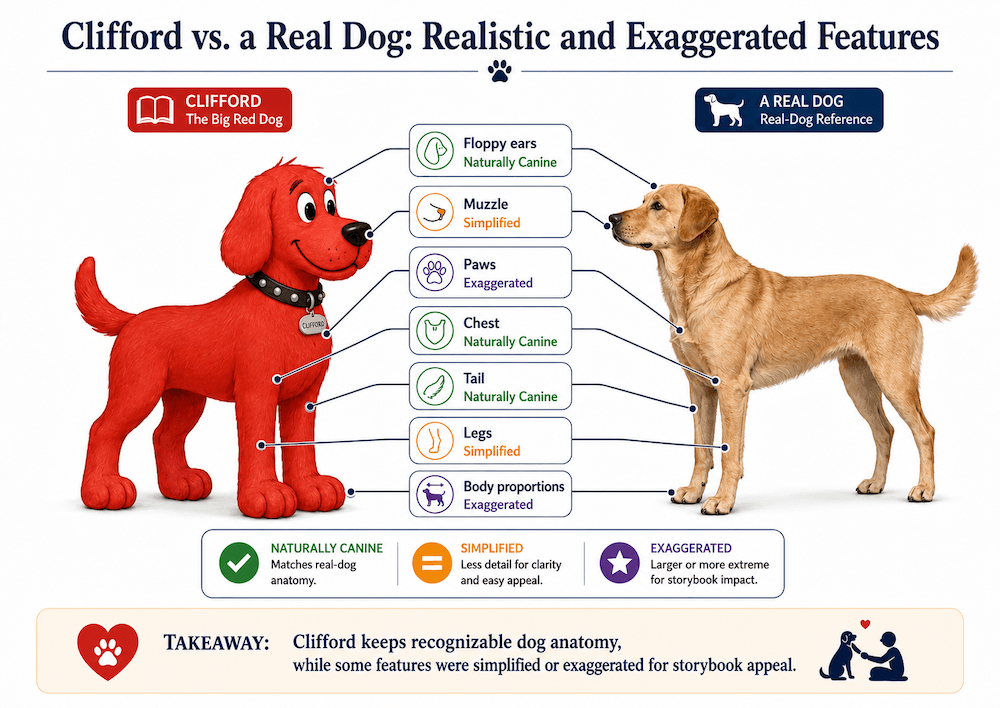
Clifford the Big Red Dog Vs a Real Dog
Clifford is recognizably canine, but he was never drawn as an anatomically precise dog. Bridwell simplified ordinary dog anatomy so young readers could immediately read Clifford’s expressions, movements, and emotions.
The Dog Breeds Clifford Most Resembles
Because Clifford has no official purebred identity, comparisons with real dogs should be treated as look-alike theories rather than breed identification. Different breeds match different parts of his appearance: coat color, floppy ears, broad expression, hound-like features, or simply exceptional stature.
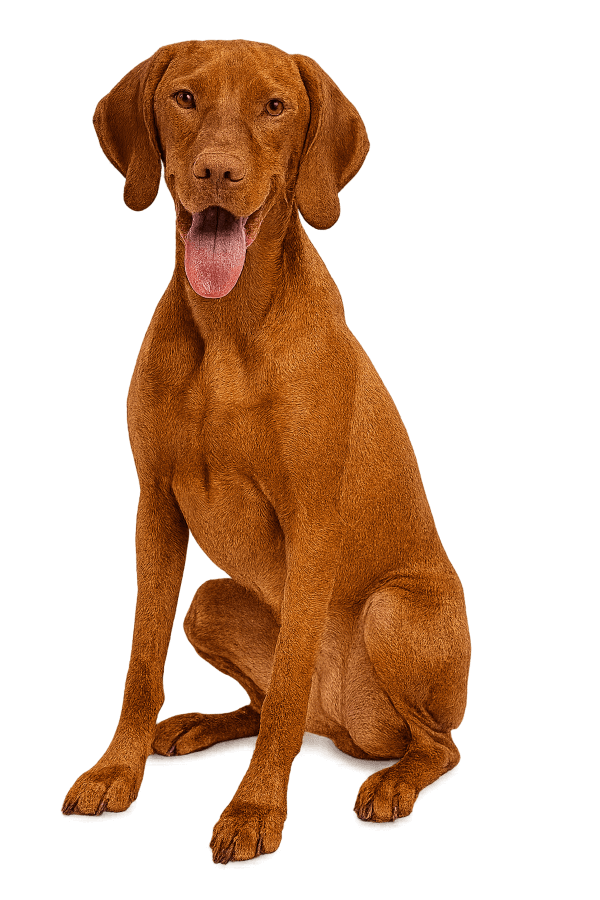
Vizsla
- Affectionate
- Energetic
- Loyal
- People-oriented
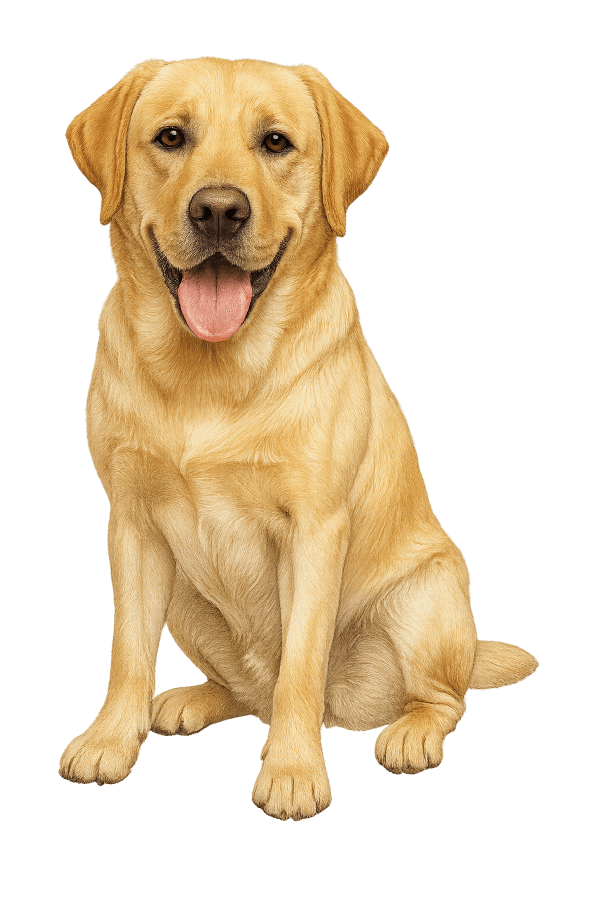
Labrador Retriever
- Friendly
- Intelligent
- Trainable
- Outgoing
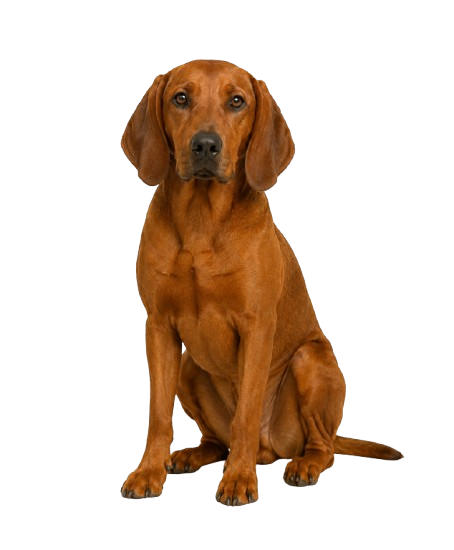
Redbone Coonhound
- Friendly
- Affectionate
- Energetic
- Scent-driven

Bloodhound
- Gentle
- Affectionate
- Determined
- Independent
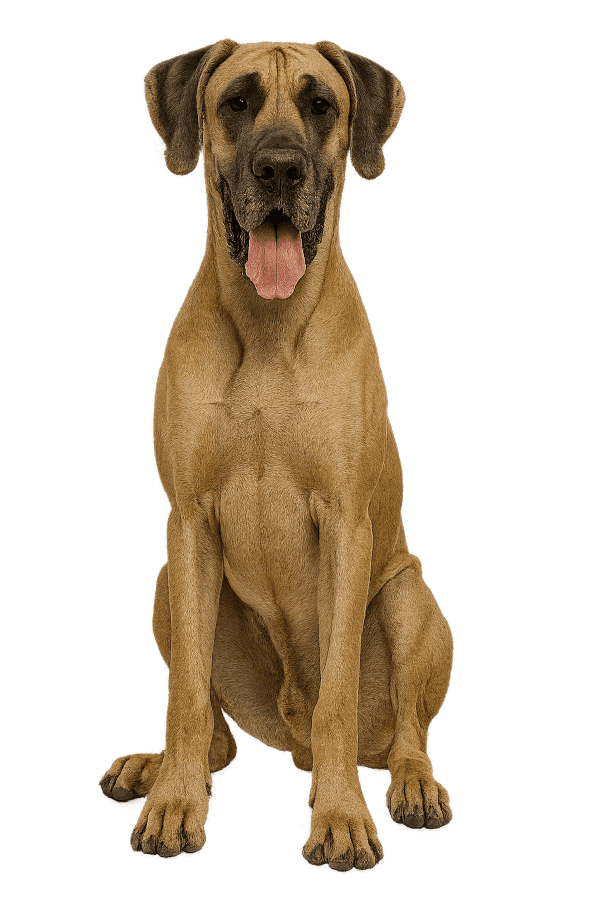
Great Dane
- Gentle
- Loyal
- Calm
- Affectionate
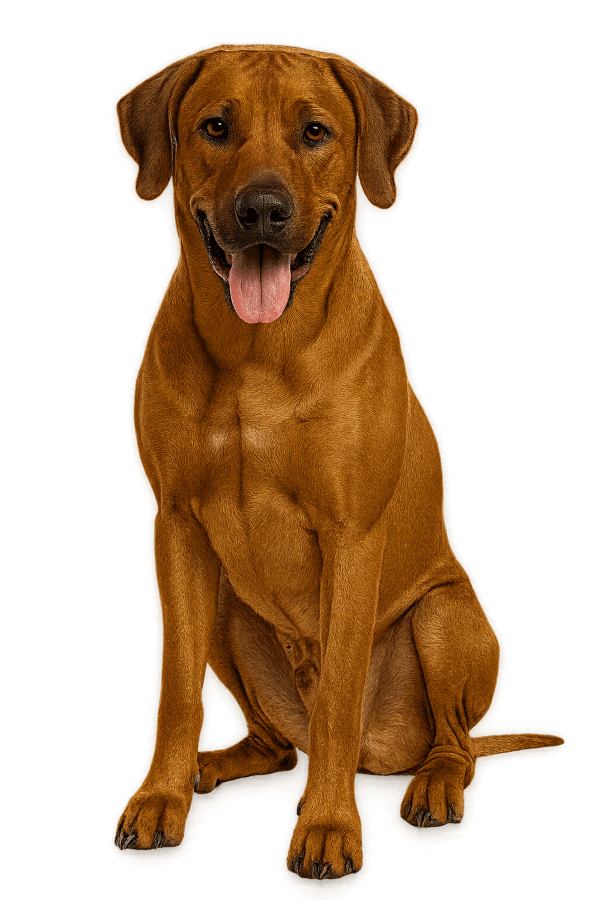
Rhodesian Ridgeback
- Loyal
- Independent
- Athletic
- Protective
Among these, the Redbone Coonhound and Vizsla offer some of the strongest visual color comparisons. Redbones have a rich mahogany coat and hound structure, while Vizslas are known for a short golden-rust coat and athletic build. Bloodhounds provide the most meaningful historical design connection, but their loose skin and heavy facial folds make them visually quite different from finished Clifford artwork.


A fox-red shade can also occur within yellow Labrador Retrievers, helping explain why some viewers see a Lab-like quality in more realistic versions of Clifford. Still, similarity in one or two traits does not establish an official breed.
Clifford’s Giant Size and Bright-Red Coat
Clifford’s most exaggerated feature is his enormous size. In the original stories, his scale changes depending on the scene, while the 2021 live-action version portrays him at about 10 feet tall. Even giant real-world breeds such as Irish Wolfhounds, Great Danes, and Mastiffs are far smaller than Clifford.
A dog could not realistically be enlarged to Clifford’s proportions because body mass increases faster than structural strength as animals scale up. His bones, joints, heart, lungs, circulation, heat regulation, and energy needs would all require major anatomical changes to support a house-sized body.
Clifford’s coat is just as fictional because real “red” dogs are not bright primary red. Natural red canine coats typically appear as copper, rust, chestnut, red-wheaten, golden-red, or deep mahogany rather than Clifford’s saturated cartoon coloring.
Clifford’s Personality & Emotional Characteristics
Clifford is consistently portrayed as kind-hearted, affectionate, and deeply attached to Emily Elizabeth. His personality is much more important to the character than any supposed breed traits, and even when his enormous size causes problems, his intentions are usually helpful and gentle.
| Trait | How Clifford Shows It |
|---|---|
| Affectionate | He openly enjoys closeness, attention, and time with Emily Elizabeth. |
| Loyal | Clifford remains devoted to Emily Elizabeth and his friends. |
| Gentle | Despite his size, he is usually careful and well-meaning. |
| Friendly | He readily interacts with people, animals, and new friends. |
| Playful | He enjoys games, adventures, and energetic activities. |
| Empathetic | He often responds to the feelings and needs of others. |
| Protective | He helps keep Emily Elizabeth and others safe when needed. |
| Eager to Help | He frequently tries to solve problems or assist his friends. |
| Strongly Bonded | His relationship with Emily Elizabeth is central to his character. |
| Well-Meaning but Clumsy | His huge size can cause accidental trouble despite kind intentions. |
Are Clifford-Like Dogs Good Family Dogs?
When someone says they want a “Clifford-like dog,” they may really mean a large dog that seems affectionate, social, gentle, and closely bonded with its family. Dogs with those qualities can make excellent companions, but appearance alone cannot predict whether an individual dog will be suitable for a particular household.
| Factor | What Owners Should Consider |
|---|---|
| Children | Consider size, gentleness, training and consistent adult supervision. |
| Other Pets | Socialization, play style and prey drive vary between dogs. |
| Space | Provide comfortable resting, movement and transportation space. |
| Experience | Large, powerful dogs require reliable handling and early manners. |
| Lifestyle | Match the dog’s actual energy and exercise requirements. |
A large yard does not automatically make a household suitable, and an apartment does not automatically rule a large dog out. Temperament, exercise needs, trainability, noise, prey drive, household routine, and the individual dog’s behavior matter more than simply copying Clifford’s appearance.
Exercise, Training & Mental Stimulation for Clifford-Like Dogs
Large size does not automatically mean low energy. A Vizsla can require substantial athletic activity, a Labrador may thrive on retrieving and swimming, while scent hounds may be especially motivated by opportunities to follow their noses.
Growing large-breed puppies need special consideration. Their bodies are developing rapidly, so owners should avoid trying to “wear them out” with excessive repetitive or high-impact exercise and instead use age-appropriate movement, play, training, and mental enrichment. Their diet and calorie intake also need to support controlled rather than maximized growth.
Health & Lifespan of Large Dogs Like Clifford
Clifford does not have a meaningful breed-specific health profile because he is fictional. For real Clifford-like dogs, health risks and lifespan should be evaluated from the actual breed, adult size, family history, and individual dog.
Body size is nevertheless relevant. Large and giant breeds generally have shorter average lifespans than smaller breeds, although there is substantial variation between breeds and individuals. Large dogs also place greater mechanical loads on their joints and have particular nutritional considerations during rapid puppy growth.
| Consideration | Why It Matters |
|---|---|
| Joint Health | Large bodies place greater mechanical load on weight-bearing joints. |
| Healthy Weight | Excess weight adds orthopedic stress and can impair mobility. |
| Puppy Growth | Controlled growth requires appropriate calories and mineral balance. |
| GDV Risk | Certain large, deep-chested dogs have increased bloat risk. |
| Health Testing | Recommended screening depends on the dog’s actual breed. |
Clifford the Big Red Dog: From Books to Television and Film
Clifford began in books, but each new medium reinterpreted the character for another generation rather than simply reproducing the original illustrations.
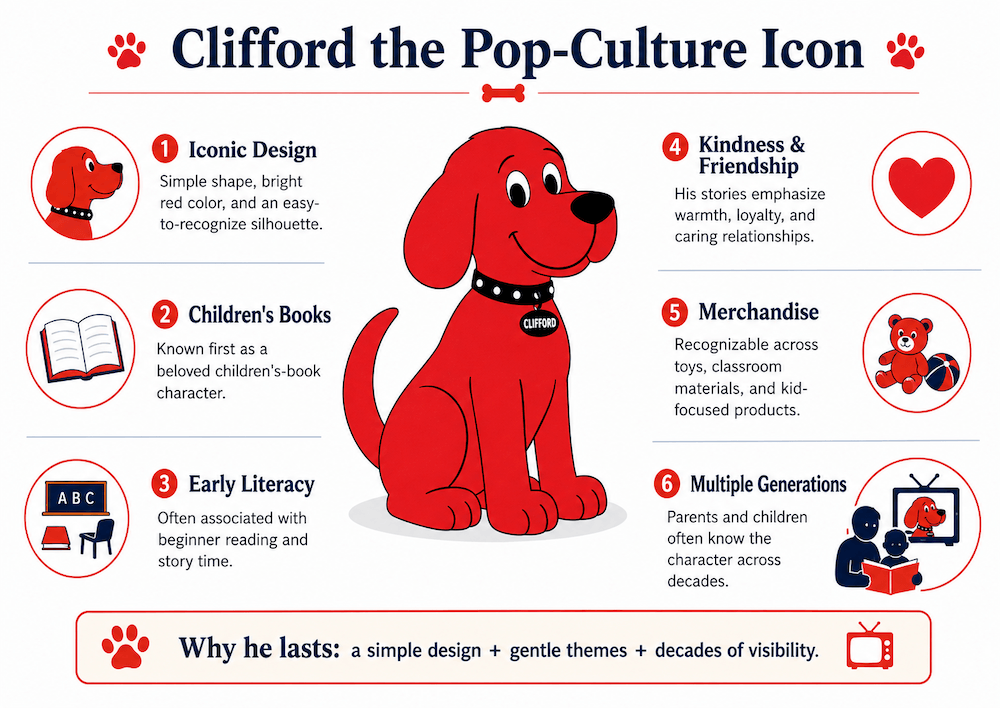
How Clifford the Big Red Dog Became a Pop-Culture Icon
Clifford became a lasting pop-culture icon because his simple red design is instantly recognizable and easy for children to remember. His long association with children’s books and early literacy helped make him familiar to generations of young readers, while themes of kindness, friendship, and loyalty gave the stories enduring appeal. Television, merchandise, classroom materials, and other adaptations expanded his visibility beyond the books. Clifford’s longevity comes from the combination of an iconic look, gentle themes, and decades of exposure.
Interesting Facts About Clifford the Big Red Dog
Beyond his enormous size and bright-red appearance, Clifford’s history includes several lesser-known details about his creation, naming, and lasting legacy.
Frequently Asked Questions
The Bottom Line
Clifford the Big Red Dog has no officially established purebred breed and is best understood as a fictional mixed-breed dog. Although his appearance has inspired comparisons with Vizslas, Redbone Coonhounds, Labrador Retrievers, Bloodhounds, and other breeds, none is officially Clifford’s breed. His enormous size and vivid red coat are imaginative traits created for children’s storytelling rather than realistic canine features. Norman Bridwell’s simple idea of a tiny puppy growing into an enormous companion helped turn Clifford into one of the most recognizable dogs in children’s literature. For owners who love the Clifford look, real breeds can offer similar coloring, floppy ears, affectionate personalities, or large size—but their care needs vary considerably. Temperament, exercise requirements, health, training needs, and adult size should always matter more than resemblance to a fictional character. Clifford may be impossible to replicate in real life, but his themes of friendship, kindness, and responsible dog ownership continue to resonate with generations of readers.
If Clifford’s appearance has you curious about real dogs with similar traits, explore our guides to the Vizsla, Redbone Coonhound, and Labrador Retriever. You can also discover how real giant breeds compare in our guide to the biggest dogs in the world.