Throwing Up White Foam in Dogs: Symptoms, Types, Causes, Signs & Prevention


Canine Bible is reader-supported. We receive affiliate commissions via some of our links. Learn more.
Throwing up white foam is a common reason dogs are brought to the veterinarian, but it is a symptom rather than a disease. Many owners assume a single episode is caused by an empty stomach or mild indigestion, when in fact it can also signal conditions such as gastritis, acid reflux, pancreatitis, intestinal blockage, or even life-threatening bloat. Left untreated, persistent vomiting can lead to dehydration and delay treatment of serious illness. The good news is that early veterinary care can identify the underlying cause and help dogs recover quickly. This guide covers everything you need to know about dogs throwing up white foam—from causes and symptoms to diagnosis, treatment, prevention, and when emergency care is needed—so you’ll have the knowledge to protect your dog’s health and well-being.
What Is Throwing Up White Foam in Dogs?
Throwing up white foam, in simple terms, is the vomiting of frothy white fluid that typically contains saliva, stomach acid, mucus, and air. In dogs, it’s most often associated with an empty stomach or mild gastrointestinal irritation, but it can also be caused by conditions such as gastritis, acid reflux, pancreatitis, intestinal blockage, or bloat. While an occasional episode may be harmless, repeated vomiting can indicate an underlying medical problem that requires prompt veterinary attention.
Types
Throwing up white foam can occur for several reasons, each with different underlying causes.
| Type | Description |
|---|---|
| Empty Stomach (Bilious Vomiting) | Occurs when stomach acid irritates an empty stomach, producing white foamy vomit. |
| Gastritis | Inflammation of the stomach lining caused by dietary indiscretion, infection, toxins, or medications. |
| Acid Reflux | Stomach acid backs up into the esophagus, leading to nausea and foamy vomiting. |
| Pancreatitis | Inflammation of the pancreas that often causes repeated vomiting, abdominal pain, and loss of appetite. |
| Intestinal Obstruction | Caused by swallowed foreign objects that block the digestive tract and trigger persistent vomiting. |
| Serious Emergencies | Life-threatening conditions such as bloat (GDV), poisoning, or severe infections may also cause white foamy vomit. |
Predisposed Dog Breeds
Throwing up white foam can affect dogs of any age or breed. However, some breeds may be more prone to conditions such as bloat, acid reflux, or digestive disorders that increase the risk of this symptom.


| Size / Group | Breeds | Notes on Risk Factors |
|---|---|---|
| Giant Breeds | Great Dane, Saint Bernard, Irish Wolfhound, Mastiff, Newfoundland | Highly predisposed to gastric dilatation-volvulus (bloat), which commonly begins with white foamy vomiting. |
| Large Breeds | German Shepherd, Weimaraner, Doberman Pinscher, Standard Poodle, Labrador Retriever | Greater risk of bloat, gastric disorders, and dietary indiscretion that can trigger vomiting. |
| Medium Breeds | Boxer, English Bulldog, American Bulldog, Basset Hound, Shar-Pei | More prone to digestive issues, acid reflux, and gastrointestinal inflammation. |
| Small Breeds | Yorkshire Terrier, Miniature Schnauzer, Shih Tzu, Maltese, Chihuahua | Higher incidence of pancreatitis, gastritis, and sensitive stomachs that may cause foamy vomiting. |
| Brachycephalic Breeds | Pug, French Bulldog, Boston Terrier, English Bulldog | Short-nosed anatomy increases the risk of acid reflux, regurgitation, and swallowing excess air. |
| All Breeds | Any purebred or mixed-breed dog | Dietary indiscretion, infections, toxins, intestinal blockage, or an empty stomach can cause white foamy vomit regardless of breed. |
Causes
Throwing up white foam can result from a variety of conditions, ranging from minor stomach irritation to life-threatening medical emergencies. Identifying the underlying cause is essential, as the appropriate treatment depends on what’s triggering your dog’s vomiting.
Symptoms
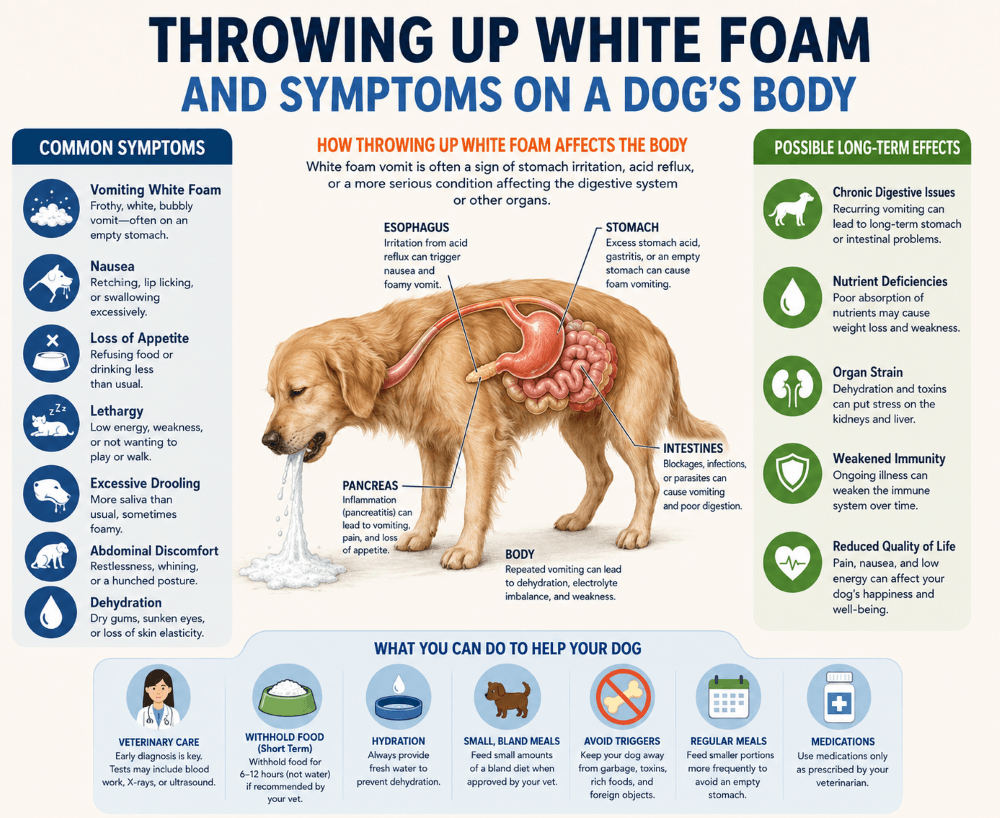
Throwing up white foam in dogs is a symptom rather than a disease and may indicate anything from mild stomach irritation to a serious medical emergency. While some dogs vomit only once and recover quickly, others develop additional signs that worsen over time if the underlying cause is not treated.
This visual guide highlights the most common symptoms and how throwing up white foam can affect different parts of a dog’s body, helping you recognize warning signs early and know when veterinary care is needed.


Stages of Throwing Up White Foam
- Early stage: Occasional white foam vomiting, mild stomach irritation.
- Moderate stage: Repeated vomiting, nausea, appetite loss, dehydration begins.
- Advanced stage: Persistent vomiting, severe dehydration, underlying medical emergency.
Top Ways to Prevent Throwing Up White Foam in Dogs
Because throwing up white foam is a symptom of many underlying conditions, prevention focuses on reducing common triggers and recognizing problems early. With proper nutrition, routine veterinary care, and prompt treatment of digestive issues, many episodes can be prevented or managed before they become serious.
| Prevention Strategy | Why It Helps | How to Do It |
|---|---|---|
| Feed Regular Meals | Helps prevent stomach acid buildup that can cause white foamy vomiting. | Offer smaller, evenly spaced meals instead of one large meal daily. |
| Provide a Balanced Diet | Supports digestive health and reduces stomach irritation. | Feed a high-quality diet and avoid sudden food changes. |
| Prevent Dietary Indiscretion | Reduces the risk of gastritis, poisoning, and intestinal blockage. | Keep garbage, spoiled food, toxins, and foreign objects out of reach. |
| Ensure Adequate Hydration | Supports normal digestion and helps prevent dehydration from vomiting. | Provide clean, fresh water at all times and encourage drinking. |
| Reduce Bloat Risk | Lowers the chance of gastric dilatation-volvulus (GDV) in susceptible breeds. | Feed smaller meals, avoid vigorous exercise around mealtimes, and use slow feeders if needed. |
| Routine Veterinary Checkups | Allows early detection of digestive, pancreatic, or systemic diseases. | Schedule wellness exams and investigate recurring vomiting promptly. |
| Manage Chronic Conditions | Controls diseases such as acid reflux, pancreatitis, or food allergies that may trigger vomiting. | Follow your veterinarian’s treatment plan and prescribed medications. |
Actionable Resources
If you want to prevent or reduce episodes of throwing up white foam in your dog, here are some helpful resources to explore under veterinary guidance.
How Throwing Up White Foam Is Diagnosed in Dogs
Diagnosing the cause of throwing up white foam requires a thorough veterinary evaluation, as this symptom can result from many different conditions. Key steps include:
- Physical Examination: A veterinarian checks hydration status, abdominal pain, body temperature, and overall health.
- Medical History:
- Recent diet changes, access to toxins, foreign object ingestion, and the frequency of vomiting.
- Any additional signs such as diarrhea, lethargy, weight loss, or bloating.
- Diagnostic Testing:
- Blood Tests – assess organ function, infection, inflammation, and pancreatitis.
- X-rays or Ultrasound – detect intestinal blockages, bloat (GDV), foreign bodies, or other abdominal abnormalities.
- Fecal or Additional Tests: Stool analysis, parvovirus testing (especially in puppies), or endoscopy may be recommended depending on the suspected cause.
Early diagnosis is important because while some cases are caused by mild stomach irritation, persistent or repeated white foamy vomiting can indicate a serious condition requiring prompt treatment.
Treatment & Care
According to current veterinary recommendations, treatment for dogs throwing up white foam depends on the underlying cause, but commonly includes temporary dietary management, fluid therapy, anti-nausea medications, stomach protectants, and treatment of conditions such as gastritis, pancreatitis, acid reflux, intestinal blockage, or toxin exposure. Prompt veterinary care provides the best chance for a full recovery.
Always consult your veterinarian before starting any medication or home treatment for a dog that is throwing up white foam. If you can’t reach your vet, you can chat live with a registered online veterinary professional via our online vet chat or video chat support (24 hours a day, 7 days a week). Or use Chewy’s online vet services (6 a.m. – midnight ET).
Conventional Medical Treatments
| Treatments | Benefits / Role |
|---|---|
| Fluid Therapy | Replaces lost fluids and electrolytes to correct dehydration caused by vomiting. |
| Anti-Nausea Medications | Drugs such as maropitant (Cerenia®) or ondansetron help control vomiting and nausea. |
| Stomach Protectants | Medications such as omeprazole, famotidine, or sucralfate reduce stomach acid and protect the digestive tract. |
| Prescription Diets | Highly digestible or gastrointestinal diets help the stomach recover and reduce further irritation. |
| Treatment of the Underlying Cause | May include surgery for intestinal blockage, treatment for pancreatitis, toxin management, antibiotics, or other condition-specific therapies. |
Supplement Support
| Supplement / Nutrient | Benefits / Role |
|---|---|
| Probiotics | Help restore healthy gut bacteria and support normal digestion after gastrointestinal upset. |
| Prebiotics | Feed beneficial intestinal bacteria, promoting digestive balance and gut health. |
| Electrolytes | Replace essential minerals lost through vomiting and help maintain proper hydration. |
| Omega-3 Fatty Acids (Fish Oil) | May help reduce gastrointestinal inflammation and support overall health during recovery. |
| Digestive Enzymes | Support food digestion in dogs with certain digestive disorders or pancreatic insufficiency. |
| Psyllium Fiber | Can help regulate digestion and support normal bowel function when recommended by a veterinarian. |
| Vitamin B12 (Cobalamin) | Supports energy production and gastrointestinal health, especially in dogs with chronic digestive disease. |
| Zinc | Supports immune function, tissue repair, and recovery from gastrointestinal illness. |
| L-Glutamine | May help support the intestinal lining and promote healing in dogs with gastrointestinal irritation. |
Find the best over-the-counter treatments and supplements for throwing up white foam in dogs on Amazon and Chewy.

Alternative & Integrative Therapies
| Therapy | Benefits / Role |
|---|---|
| Veterinary Nutrition Therapy | Uses prescription gastrointestinal diets to soothe the digestive tract and reduce recurring vomiting. |
| Probiotic Therapy | Helps restore healthy intestinal bacteria and supports recovery after gastrointestinal upset. |
| Herbal Digestive Support | Veterinarian-approved herbs, such as slippery elm, may help soothe stomach irritation in selected dogs. |
| Acupuncture | May help reduce nausea, improve gastrointestinal motility, and support recovery in some dogs. |
| Stress Reduction | Minimizes anxiety-related digestive upset through environmental enrichment and consistent routines. |
| Hydration Support | Encourages fluid intake to reduce dehydration and aid recovery following vomiting episodes. |
| Integrative Veterinary Care | Combines conventional medicine with complementary therapies tailored to the dog’s underlying condition. |
Surgical Options
| Surgical Option | Benefits / Role |
|---|---|
| Foreign Body Removal | Removes swallowed objects causing intestinal blockage and persistent vomiting. |
| Gastrotomy / Enterotomy | Allows removal of objects from the stomach or intestines when endoscopy is not possible. |
| Gastropexy (GDV Prevention) | Secures the stomach to prevent future gastric dilatation-volvulus (bloat) in high-risk dogs. |
| Emergency GDV Surgery | Treats life-threatening bloat by repositioning the stomach, relieving pressure, and preventing recurrence. |
Emotional & Lifestyle Impact
Throwing up white foam can affect more than just a dog’s digestive system—it can disrupt their daily routine, energy levels, and overall well-being. Dogs experiencing repeated vomiting may become less active, lose their appetite, or appear withdrawn and lethargic, as nausea and stomach discomfort often prevent them from eating, playing, or exercising normally.
For owners, the experience can be equally stressful, especially when vomiting becomes frequent or the cause is unclear. Daily routines may need to include smaller meals, careful hydration, medication schedules, and close monitoring for worsening symptoms or dehydration. With prompt veterinary care, appropriate treatment, and supportive home management, most dogs can recover comfortably and return to their normal quality of life.
Typical Cost of Treating Dogs Throwing Up White Foam
| Category | Estimated Cost Range | Notes |
|---|---|---|
| Veterinary Examination | $50 – $150 | Includes physical exam and medical history review. |
| Diagnostic Testing | $150 – $1,000+ | Bloodwork, fecal tests, X-rays, ultrasound, or endoscopy depending on the suspected cause. |
| Medications | $30 – $250 | Anti-nausea drugs, stomach protectants, antibiotics, or other prescribed medications. |
| Prescription Diet & Supportive Care | $40 – $200/month | Gastrointestinal diets, probiotics, electrolyte solutions, and hydration support. |
| Hospitalization | $500 – $2,500+ | Required for severe dehydration, pancreatitis, toxin exposure, or intensive monitoring. |
| Surgery (if needed) | $1,500 – $7,000+ | May be necessary for intestinal blockages, foreign body removal, or emergency GDV treatment. |
| Typical Total Cost | Mild Cases: $100 – $500 | Severe Cases: $2,000 – $8,000+ | |
Treatment for dogs throwing up white foam can range from a simple veterinary visit and medication to hospitalization or emergency surgery, depending on the underlying cause. Pet insurance and wellness plans can help reduce unexpected veterinary expenses and ensure your dog receives timely care. If you want to compare plans and find providers that offer the best coverage for digestive illnesses and emergencies, check out our full guide to the Best Pet Insurance for Dogs and Best Pet Wellness Plans.
Other Health Issues Related to Throwing Up White Foam in Dogs
Because throwing up white foam is a symptom rather than a disease, it is often associated with underlying digestive or systemic disorders. Some related health conditions may cause, worsen, or accompany episodes of white foamy vomiting.
- Gastritis
- Acid Reflux (GERD)
- Gastroenteritis
- Pancreatitis
- Intestinal Blockage
- Gastric Dilatation-Volvulus (Bloat/GDV)
- Food Allergies & Sensitivities
- Inflammatory Bowel Disease (IBD)
- Parasites
- Liver Disease
- Kidney Disease
- Toxin Ingestion / Poisoning
- Dehydration
- Electrolyte Imbalances
- Aspiration Pneumonia (after repeated vomiting)
Frequently Asked Questions
The Bottom Line
Throwing up white foam is a common symptom in dogs, but it should never be ignored, especially if it happens repeatedly or is accompanied by other signs of illness. While a single episode may be caused by an empty stomach or mild digestive upset, persistent vomiting can indicate serious conditions that require prompt veterinary attention. By providing a balanced diet, feeding regular meals, preventing access to toxins and foreign objects, and seeking veterinary care when symptoms persist, pet owners can help protect their dogs’ health and prevent complications. Ultimately, the goal is not just stopping the vomiting, but identifying and treating the underlying cause so every dog can return to a healthy, comfortable, and active life.