How to Train a German Shepherd 101: Complete Guide (Tips & Tricks)

Canine Bible is reader-supported. We receive affiliate commissions via some of our links. Learn more.
Training a German Shepherd starts with early socialization, clear commands, and consistent positive reinforcement. The goal is to teach calm obedience, good manners, and reliable focus in everyday situations. Because German Shepherds are intelligent and energetic, they need both mental and physical structure. Without it, their confidence and drive can turn into jumping, pulling, barking, or overprotective behavior. The right training plan depends on your dog’s age, temperament, and experience. Puppies, rescue dogs, and strong-willed adults may all need different starting points. This guide explains how to build trust, prevent common mistakes, and train a German Shepherd safely and effectively.
Why Training Your German Shepherd Matters
| Training Benefit | Why It Matters |
|---|---|
| Builds reliable obedience | German Shepherds are strong, intelligent dogs, so clear commands help them respond safely at home and in public. |
| Reduces problem behaviors | Consistent training helps prevent jumping, pulling, barking, chewing, and other habits that can become harder to fix later. |
| Improves social confidence | Early socialization teaches your dog how to stay calm around people, dogs, sounds, and new environments. |
| Prevents overprotectiveness | Training helps a German Shepherd learn the difference between normal situations and real threats. |
| Supports safe leash control | A trained dog is easier to guide on walks, especially because German Shepherds can be powerful and energetic. |
| Provides mental exercise | Learning commands, tasks, and routines keeps their active mind busy and reduces boredom-related behavior. |
| Strengthens your bond | Positive training builds trust, communication, and cooperation between you and your dog. |
| Creates a safer family dog | Good manners around children, guests, food, doors, and other pets help your German Shepherd fit into daily life. |
Why German Shepherd Training Should Start Early
German Shepherds learn fast. That is a strength, but it also means they can quickly learn unwanted habits if those behaviors keep working for them.
A German Shepherd that pulls and reaches the park learns that pulling works. A dog that barks and makes visitors back away may learn that barking controls people. Early training prevents those habits before they become harder to change.
A good training plan helps your German Shepherd learn:
Training is not just about commands. It is about helping a powerful, intelligent dog become safe, confident, and easy to live with.
What to Know Before Training a German Shepherd
Before you begin, remember that German Shepherds usually need both mental work and physical exercise. A tired body with an untrained mind can still create problems, and a smart dog with no outlet may invent their own jobs.


Start in a quiet place with few distractions. Use short sessions, high-value rewards, and simple goals. Once your dog succeeds at home, slowly practice in harder places.
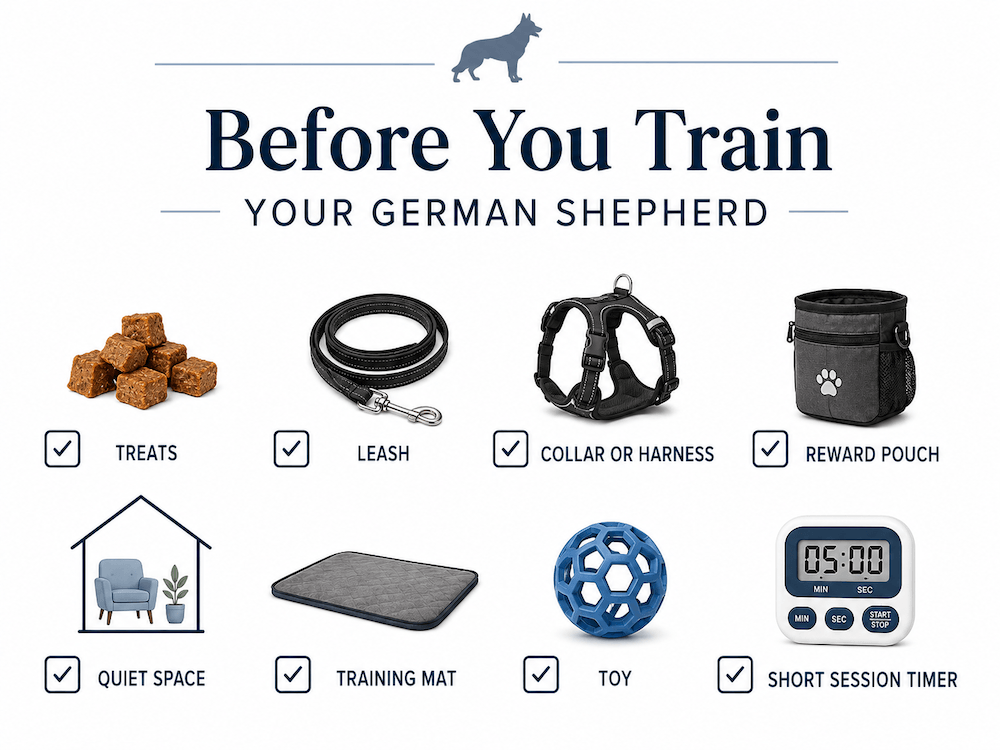
Also, it’s important to have a checklist ready before training a German Shepherd because preparation helps each session run smoothly and safely. Having treats, a leash, a collar or harness, a reward pouch, a quiet space, a training mat, a toy, and a short-session timer makes it easier to keep your dog focused, reward good behavior quickly, and avoid unnecessary distractions.
German Shepherd Training Timeline by Age
Puppies, adolescents, adults, and rescue German Shepherds may need different starting points. A puppy needs socialization and basic manners, while an adolescent may need impulse control and leash work.
An adult German Shepherd can still learn well, but training may need to address established habits first.
| Age or Stage | Main Focus | What to Practice | Watch For |
|---|---|---|---|
| 8–12 weeks | Trust, routine, and safe exposure. | Name response, handling, crate, potty routine, gentle socialization. | Fear, hiding, or overstimulation. |
| 3–6 months | Basic obedience and confidence. | Sit, down, come, leash basics, calm greetings. | Jumping, mouthing, chasing, and distraction. |
| 6–12 months | Impulse control and consistency. | Stay, leave it, recall, loose leash, settle work. | Boundary testing and reactivity. |
| Adult dog | Reliability and behavior repair. | Focus, leash manners, recall, place training. | Guarding, pulling, barking, or fear. |
| Rescue dog | Decompression and relationship-building. | Routine, calm rewards, easy cues, gentle handling. | Shutdown, stress, or defensive behavior. |
How to Train a German Shepherd Step-by-Step
Follow these steps to successfully train your German Shepherd.


Step 1: Teach a Marker Word
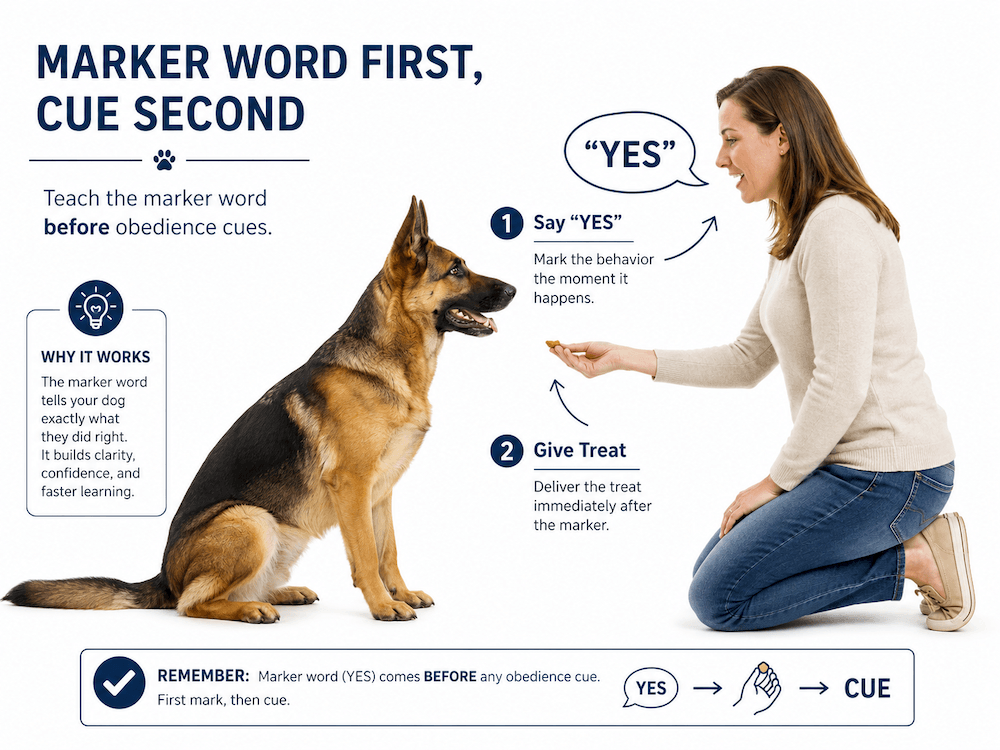
Choose a marker word like “yes” or use a clicker. The marker tells your German Shepherd the exact moment they did the right thing. Say “yes,” then give a treat. Repeat until your dog understands that the marker predicts a reward.
Step 2: Train Name Response and Eye Contact
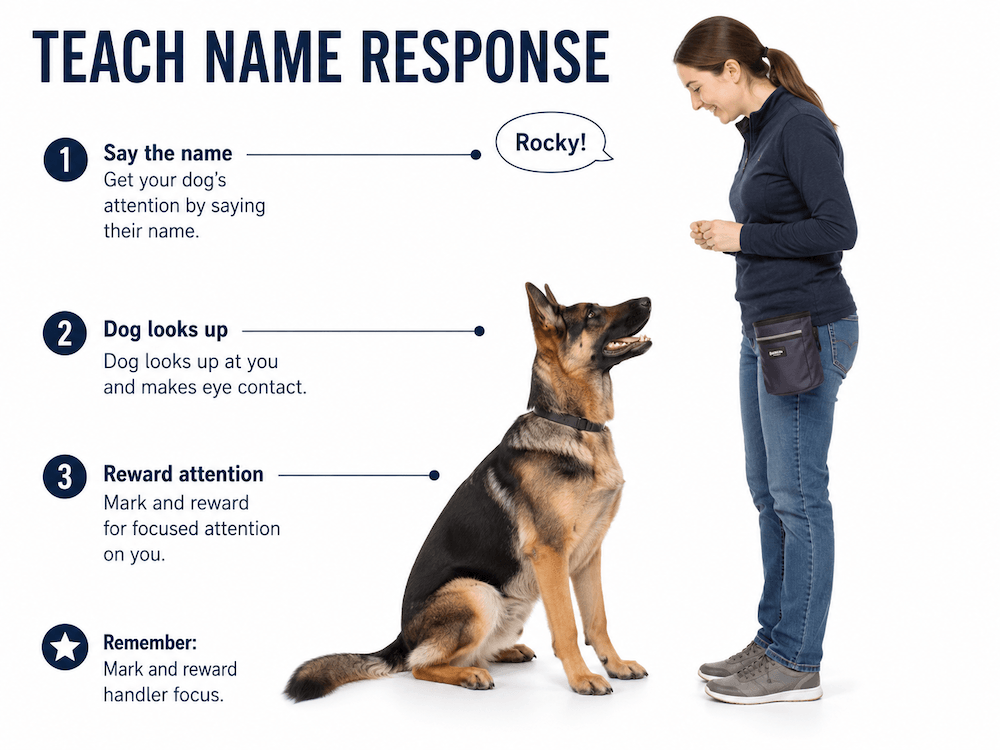
Say your dog’s name once. When they look at you, mark and reward. Practice this indoors first. Then move to the yard, driveway, quiet sidewalk, and other low-distraction places.
Step 3: Teach Sit, Down, and Stand
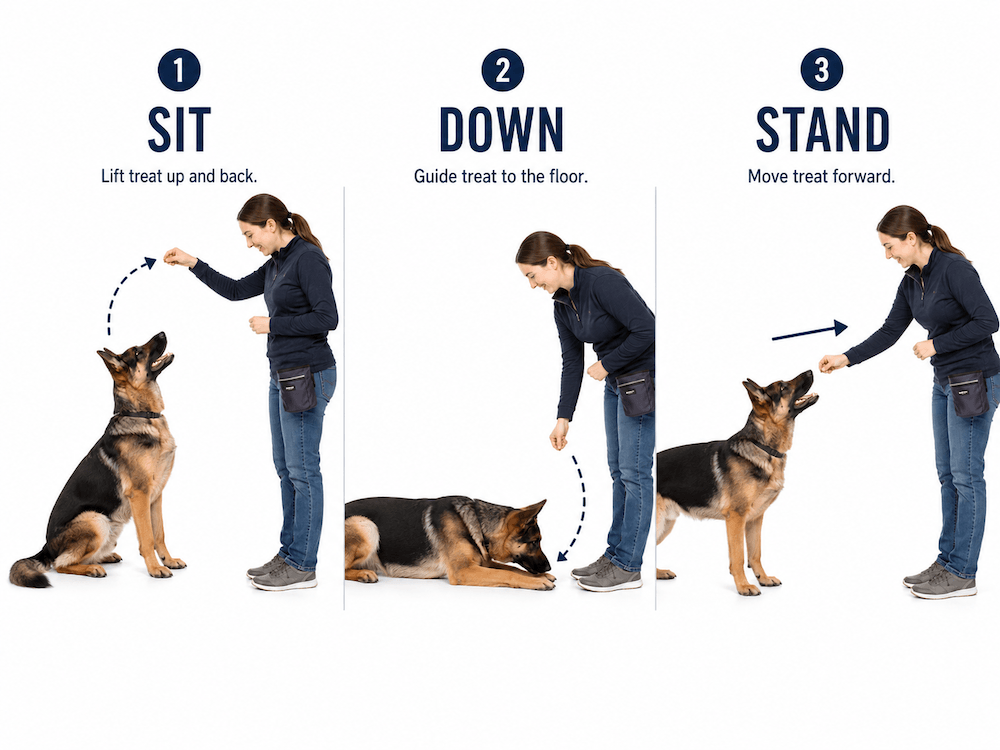
Start with simple position cues. These help your dog understand training and give you useful ways to manage daily behavior. Use a treat lure at first, then fade the lure once your dog understands the movement. Reward the final position quickly.
Step 4: Build a Reliable Recall
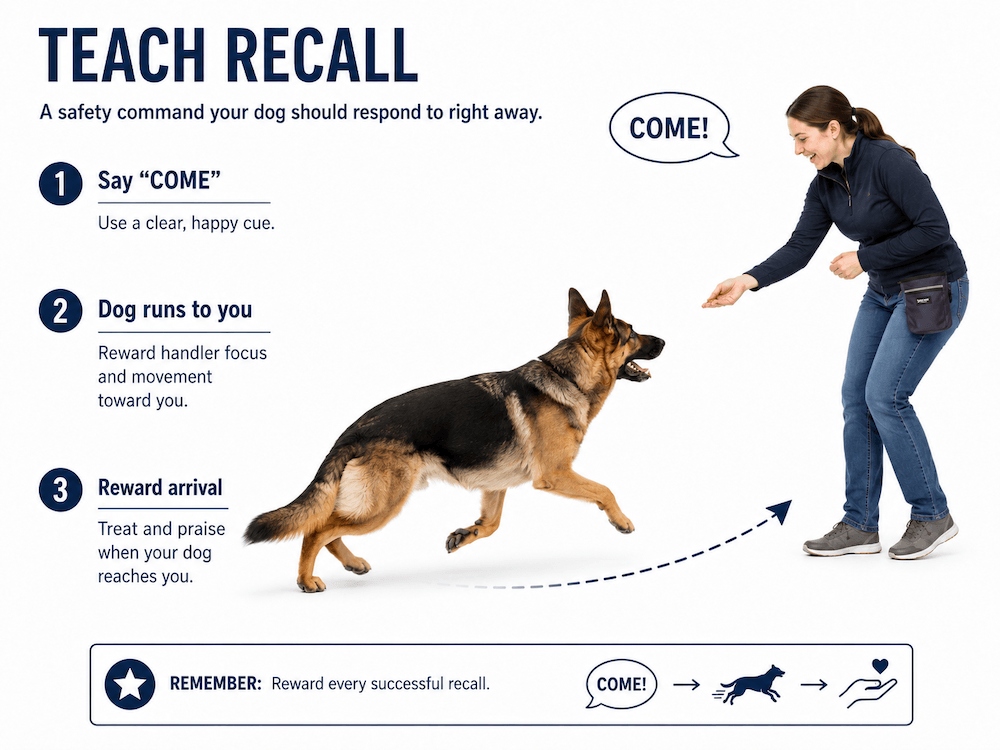
Recall should feel fun and rewarding. Start indoors with short distances before practicing outside. Say “come,” move backward slightly, and reward when your German Shepherd reaches you. Avoid calling your dog only for things they dislike, such as baths, nail trims, or leaving the park.
Step 5: Practice Loose-Leash Walking
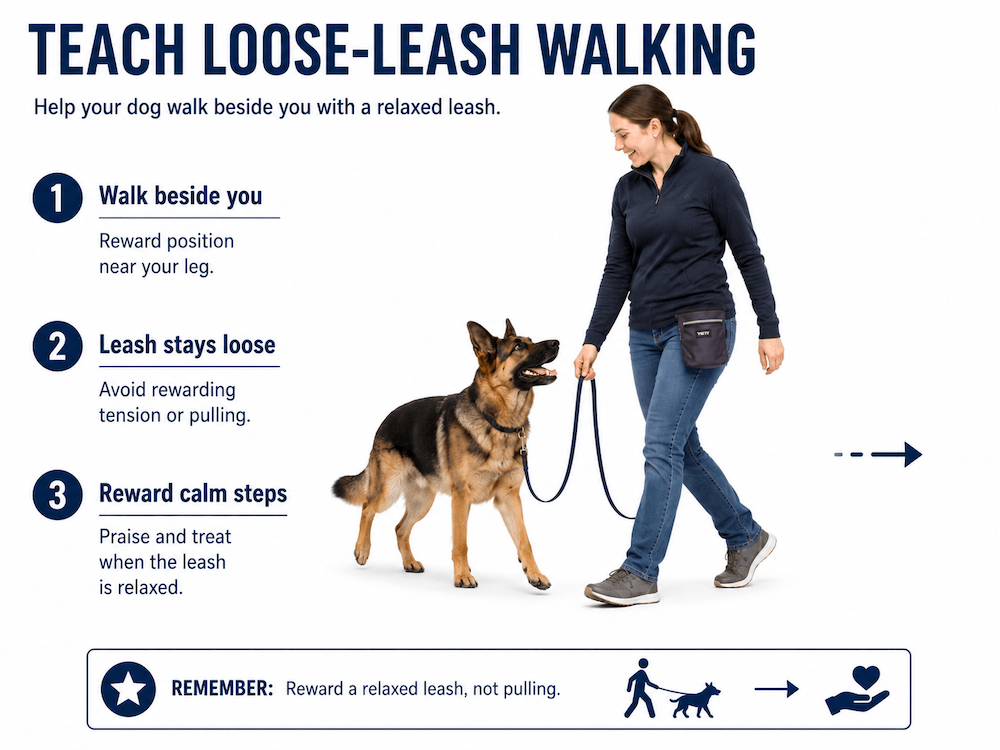
German Shepherds can become strong pullers if pulling gets them where they want to go. Start by rewarding your dog when the leash is loose and they are near you. When the leash tightens, stop walking. Wait for your dog to turn back or loosen the leash, then reward and continue.
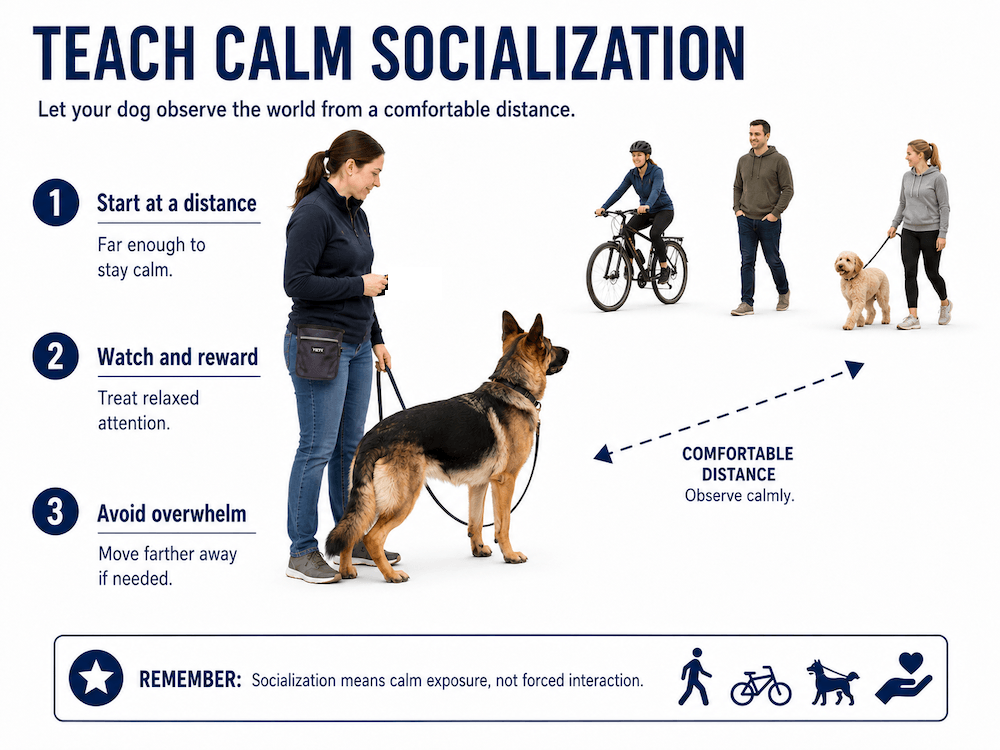
Step 6: Socialize Without Overwhelming Your Dog
Socialization does not mean forcing your German Shepherd to meet every person or dog. It means helping them feel safe around normal sights, sounds, surfaces, animals, people, and environments. Use distance, calm rewards, and short exposure. If your dog is barking, lunging, freezing, hiding, or refusing food, the situation is too intense.
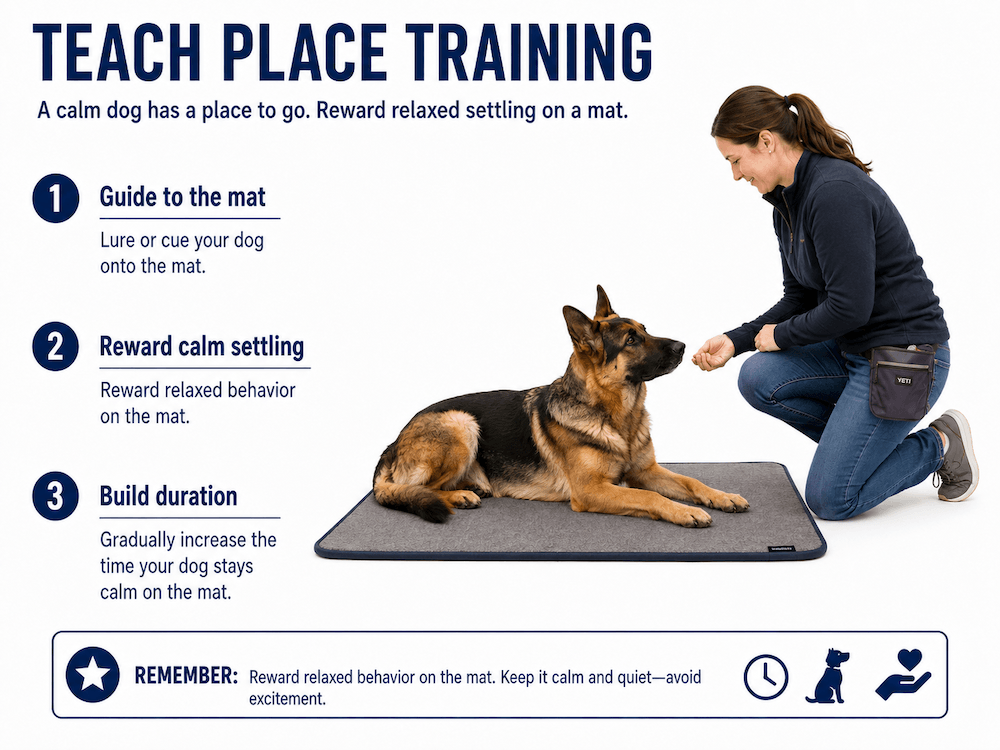
Step 7: Teach a Place or Settle Cue
A place cue teaches your German Shepherd to go to a mat, bed, or cot and relax. This helps during meals, guests, doorbells, cleaning, and busy household moments. Reward your dog for stepping onto the mat, then for staying there, then for relaxing. Build duration slowly.
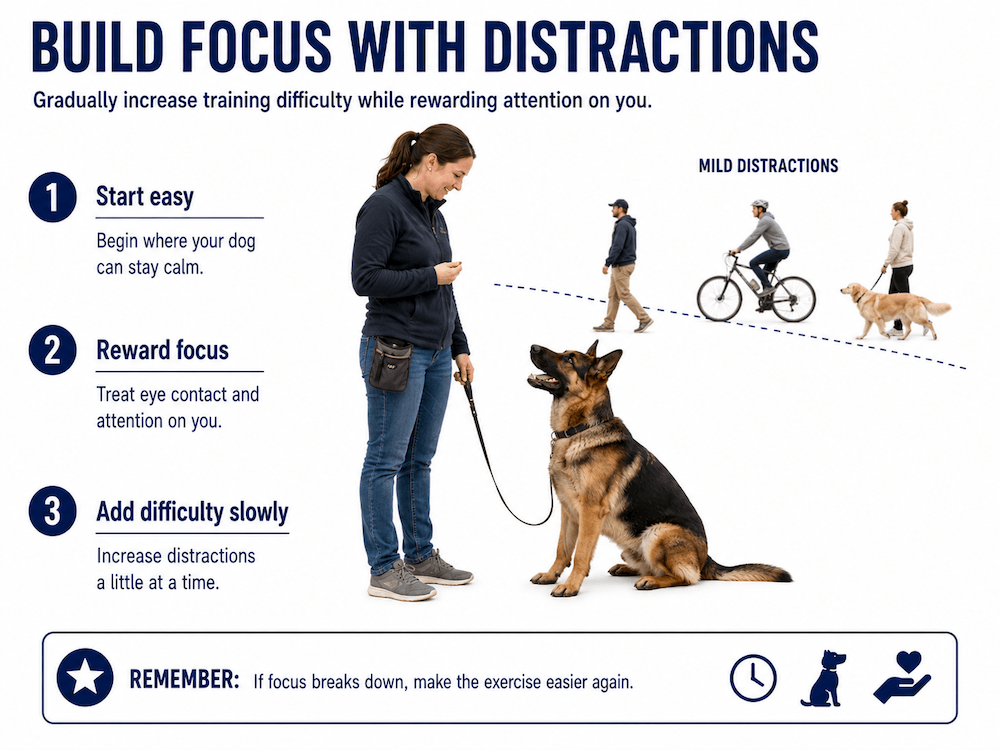
Step 8: Add Distractions Gradually
Once your German Shepherd understands a cue at home, practice in slightly harder places. Add distance, movement, sound, and distractions one layer at a time. Do not jump from a quiet kitchen to a crowded dog park. Build reliability slowly so your dog can keep succeeding.
How to Socialize a German Shepherd Safely
German Shepherds can be naturally watchful, so safe socialization is important to help that alertness stay calm instead of turning into suspicion, barking, or reactivity. The goal is not to force your dog into every situation, but to help them observe new people, sounds, surfaces, and environments without feeling overwhelmed.
Good socialization should be calm, controlled, and positive. Start at a distance where your dog can notice things like traffic, carts, children playing, umbrellas, bikes, strollers, wheelchairs, or neutral dogs without lunging, barking, or shutting down.
You can also practice gentle handling for paws, ears, brushing, and vet visits while rewarding calm behavior. Let your German Shepherd meet calm, dog-friendly people when they are relaxed, but avoid making them greet every person or dog they see.
Helpful Tips for Training a German Shepherd
German Shepherds usually respond best to training that is predictable, fair, and engaging. The goal is to make the right behavior easy to understand and rewarding to repeat.
| Training Tip | Why It Helps | How to Apply It |
|---|---|---|
| Keep sessions short | Short sessions prevent frustration and fatigue. | Practice for five to ten minutes. |
| Reward quickly | Fast rewards clarify the correct behavior. | Mark the behavior, then reward immediately. |
| Use real-life rewards | Not every reward must be food. | Use sniffing, toys, praise, or movement. |
| Train before meals | A motivated dog often focuses better. | Use part of meals for practice. |
| Practice everywhere | Dogs do not generalize cues automatically. | Repeat commands in safe new places. |
| Reward calm choices | Calm behavior grows when reinforced. | Reward quiet sitting, settling, and check-ins. |
| Manage distractions | Too much distraction causes failure. | Start far away and move closer slowly. |
| Stay consistent | Mixed rules confuse intelligent dogs. | Use the same cues and expectations. |
German Shepherd Training Mistakes That Can Make Behavior Worse
German Shepherds learn patterns quickly. If pulling, barking, jumping, or guarding work, those behaviors can become stronger. Avoid training methods that rely on fear, pain, or intimidation. These may suppress behavior temporarily, but can damage trust and increase stress.
| Mistake | Why It Backfires | Better Approach |
|---|---|---|
| Training only during problems | Your dog rehearses mistakes first. | Practice daily when your dog is calm. |
| Using harsh punishment | It may increase fear or stress. | Reward wanted behavior and manage triggers. |
| Skipping socialization | New things may become suspicious. | Use safe, positive exposure early. |
| Repeating cues constantly | Your dog may ignore the first cue. | Say it once, then help. |
| Training too long | Fatigue causes sloppy behavior. | End before your dog checks out. |
| Allowing leash pulling | Pulling becomes self-rewarding. | Stop, reset, and reward looseness. |
| Forcing greetings | Pressure can create reactivity. | Let your dog observe calmly. |
| Ignoring pain | Pain can look like disobedience. | Call your vet for sudden changes. |
When to Contact a Veterinarian, Trainer, or Behaviorist
Some training problems need professional help. This is especially true when behavior changes suddenly, seems fear-based, or could put people, dogs, or your German Shepherd at risk.
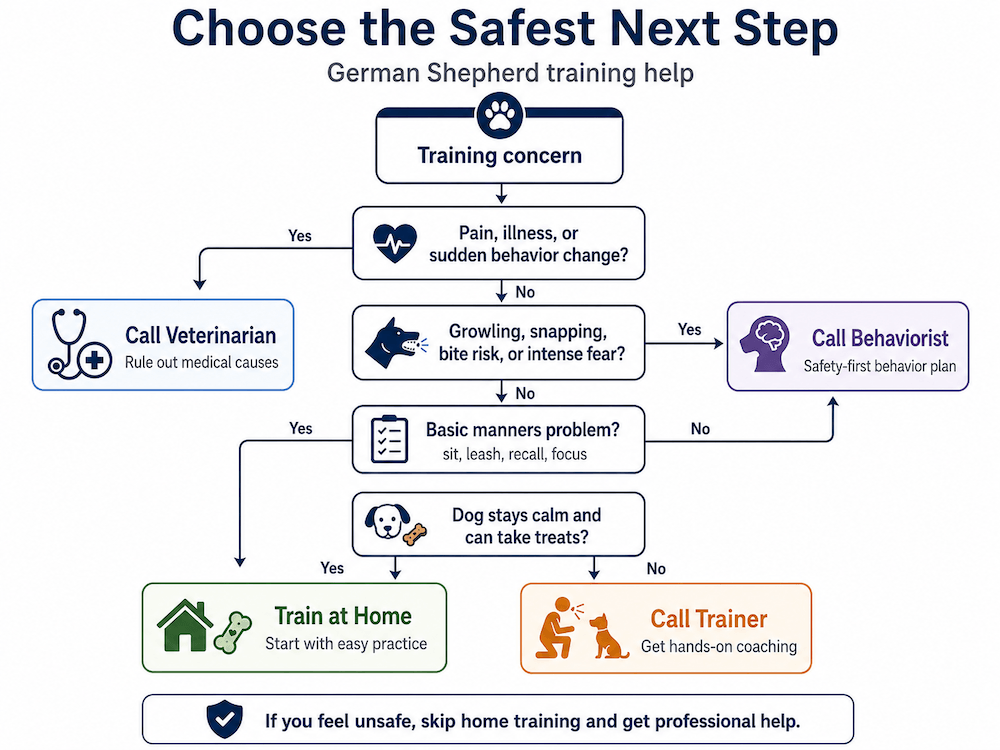
Call your veterinarian if your dog shows:
Contact a qualified reward-based trainer or veterinary behavior professional if your dog:
Where to Find Qualified German Shepherd Trainers
Use these sources to find qualified German Shepherd trainers, especially those using reward-based, science-based methods. CCPDT, IAABC, KPA, PPG, Fear Free, DACVB, AKC, and GSDCA all provide directories or resources that can help owners find trainers, behavior consultants, veterinary behaviorists, or breed-specific clubs. AVSAB recommends choosing trainers who use reward-based methods and avoiding trainers who rely on fear, pain, dominance, or harsh punishment.
| Where to Look | Best For | What to Check | Link |
|---|---|---|---|
| CCPDT Directory | Certified dog trainers and behavior consultants. | Look for CPDT-KA, CPDT-KSA, or CBCC-KA credentials. | Find a CCPDT trainer |
| IAABC Consultant Locator | Behavior issues, reactivity, fear, or aggression concerns. | Choose a certified dog behavior consultant or trainer. | Find an IAABC consultant |
| Karen Pryor Academy | Positive-reinforcement training and puppy foundations. | Look for KPA CTP trainers near your area. | Find a KPA trainer |
| Pet Professional Guild | Force-free pet training and behavior support. | Ask about German Shepherd and large-breed experience. | Find a PPG professional |
| Fear Free Directory | Anxious, sensitive, or easily stressed German Shepherds. | Look for Fear Free Certified trainers or clinics. | Find a Fear Free professional |
| APDT Trainer Search | Local trainers, group classes, and private lessons. | Review credentials, methods, and client fit carefully. | Search APDT trainers |
| DACVB Directory | Aggression, severe anxiety, guarding, or complex behavior. | Choose a board-certified veterinary behaviorist. | Find a veterinary behaviorist |
| AKC CGC Resources | Basic manners, obedience goals, and public behavior skills. | Ask about CGC classes or approved evaluators. | Find AKC CGC classes |
| GSDCA Regional Clubs | Breed-specific referrals and German Shepherd community support. | Ask whether they recommend humane pet trainers. | Find GSDCA regional clubs |
How to Handle Common German Shepherd Training Problems
Many training problems are not “stubbornness.” They often come from excitement, fear, frustration, excess energy, unclear rules, or repeated reinforcement of unwanted behavior. The first step is to ask: What is the dog getting from this behavior? Then teach a safer replacement.
| Problem | Possible Cause | What to Do |
|---|---|---|
| Jumping on people | Excitement and rewarded attention. | Reward four paws down before greeting. |
| Leash pulling | Forward movement rewards pulling. | Stop when the leash tightens. |
| Barking at dogs | Fear, frustration, or overarousal. | Increase distance and reward calm focus. |
| Ignoring commands | The cue lacks distraction practice. | Return to easier training settings. |
| Mouthing hands | Puppy biting or excitement. | Redirect to toys and reward calm play. |
| Guarding objects | Fear of losing valued items. | Avoid grabbing and get professional help. |
| Chasing cats | Movement triggers prey drive. | Use barriers and reward disengagement. |
| Overprotectiveness | Fear, genetics, or unclear rules. | Work with a qualified professional early. |
What Research Says About German Shepherd Training and Dog Behavior
Veterinary behavior guidance supports reward-based training as the safest foundation for companion dogs. AVSAB states that reward-based methods offer the most advantages and least harm, and that aversive methods are not necessary for dog training or behavior modification.
The Merck Veterinary Manual advises owners to look for trainers who use positive reinforcement rather than punishment. Merck also notes that punishment paired with triggers such as strangers, cars, or other dogs can create conditioned fear.
A 2020 PLOS ONE study comparing training methods found that aversive-based training, especially when used heavily, was associated with compromised welfare in companion dogs. For German Shepherd owners, this matters because fear, stress, and defensive behavior can become serious safety concerns in a large, powerful breed.[1]
German Shepherds also need meaningful physical and mental outlets. The AKC describes canine activities such as agility, herding, tracking, and dock diving as useful forms of physical and mental exercise for the breed.
How to Maintain German Shepherd Training Progress
Training does not end once your German Shepherd learns a command. Dogs need regular practice in real-life situations, especially around distractions like guests, doors, meals, walks, other dogs, and busy environments.
Keep using rewards, but vary them over time. Your dog may not need a treat every time forever, but they still need clear feedback, praise, access to fun activities, and occasional high-value rewards to keep training reliable.
Signs your training is working include more check-ins on walks, a looser leash, better settling after excitement, commands working in different places, and faster recovery after distractions. Slow down if barking increases, your dog avoids training, stops taking treats, pulls or lunges more, or seems tense, frantic, or shut down, because a good training plan should build confidence instead of stress.
Frequently Asked Questions
The Bottom Line
Training a German Shepherd works best when you start early, stay consistent, and use positive reinforcement. These dogs are smart, loyal, and energetic, so they need clear rules, daily practice, and healthy outlets for both their body and mind. Focus first on basics like name response, recall, leash manners, socialization, and calm behavior around distractions. Avoid harsh punishment, forced greetings, or rushing into advanced protection work before your dog has a strong foundation. If your German Shepherd shows fear, aggression, guarding, or sudden behavior changes, contact a veterinarian or qualified trainer for help. With patience and structure, a German Shepherd can become a confident, obedient, and well-balanced companion.