How to Introduce a Puppy to a Dominant Dog: 9 Easy Steps (Vet-Approved)

Canine Bible is reader-supported. We receive affiliate commissions via some of our links. Learn more.
Introducing a puppy to a dominant dog should be done slowly, in neutral territory, with both dogs controlled and supervised from the start. The goal is not to “let them work it out,” but to create calm, positive interactions before allowing closer contact. A dominant dog may tolerate a puppy well, but pressure, excitement, resource guarding, or forced greetings can quickly create tension. The first meeting, body language, home setup, feeding routine, and sleeping arrangements all matter more than most owners realize. Some adult dogs need only a few days to adjust, while others require weeks of structured introductions. This guide explains how to do it safely, what warning signs to watch for, and how to help both dogs build a stable relationship without triggering conflict.
Introducing a Puppy to a Dominant Dog: Key Safety Tips
| Key Point | What It Means for Your Dogs |
|---|---|
| Neutral meeting | Introducing both dogs away from the home helps reduce territorial behavior and gives the puppy a safer first impression. |
| Controlled contact | Leashes, distance, and calm supervision help prevent rushed greetings, chasing, or overwhelming body language. |
| Body language | Stiff posture, hard staring, growling, raised hackles, or blocking movement can signal rising tension. |
| Separate resources | Food bowls, toys, beds, and attention should be managed carefully to prevent guarding or competition. |
| Short sessions | Brief, positive interactions are safer than long introductions that allow stress or excitement to build. |
| Safe spaces | Both dogs need separate areas to rest, decompress, and avoid forced interaction during the adjustment period. |
| Gradual trust | A stable relationship develops through repeated calm experiences, not one successful first meeting. |
| Warning signs | If the adult dog repeatedly pins, snaps, guards, stalks, or scares the puppy, professional guidance may be needed. |
What “Dominant Dog” Really Means
Many dog owners say “dominant dog” when they mean the resident dog is pushy, territorial, possessive, bossy around other dogs, or quick to correct puppies. True dominance is not a fixed personality type; veterinary behavior sources describe it as a relationship pattern between dogs, not a reason to use force, intimidation, or “alpha” techniques.
A “dominant dog” means a dog that may control space, guard resources, stiffen during greetings, block movement, hover over toys or food, or become tense when another dog enters their environment. That does not mean the dog is “bad.” It means the introduction needs structure.
| Behavior | What It May Mean | Owner Response |
|---|---|---|
| Blocking | The dog may be controlling access to space. | Redirect calmly and increase distance. |
| Stiff posture | The dog may be uncomfortable or highly alert. | Pause the greeting before tension escalates. |
| Hard staring | The dog may be fixating on the puppy. | Interrupt with movement or a trained cue. |
| Growling | The dog is communicating discomfort or warning. | Separate calmly without punishing the signal. |
| Resource guarding | The dog may protect food, toys, beds, or people. | Remove shared resources before introductions. |
| Chasing | The puppy may become frightened or overwhelmed. | Stop the interaction and slow the process. |
What to Prepare Before Introducing a Puppy to a Dominant Dog
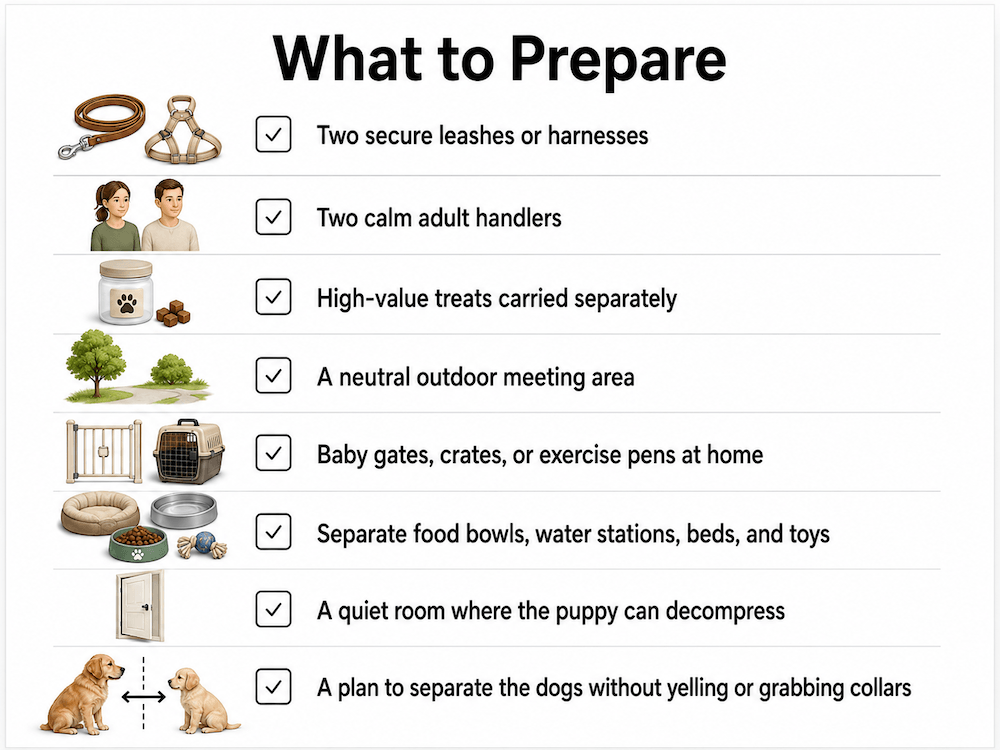
Preparation matters because the first meeting sets the emotional tone. A dominant or possessive resident dog may react more strongly if the puppy enters their home, approaches their bed, steals attention, or gets near food and toys.
Before the meeting, choose a quiet neutral location, arrange two handlers, use secure leashes, and remove high-value items from the home. Veterinary and shelter guidance commonly recommends neutral territory, close supervision, and one-on-one introductions rather than throwing dogs together inside the house.


When Is It Safe to Introduce a Puppy to a Dominant Dog at Home?
It may be safe to start introductions at home only after the dogs have had calm, neutral exposure first. The puppy should not be dropped into the resident dog’s territory without a plan, especially if the adult dog has a history of guarding, snapping, pinning, or intense fixation.
Home introductions are safer when the adult dog can respond to basic cues, disengage from the puppy, and relax behind a barrier. They are riskier when the older dog has bitten another dog, guards food or people, stiffens around puppies, or becomes hard to interrupt.
| Situation | Risk Level | Best Owner Action |
|---|---|---|
| Calm neutral walk | Lower risk when both dogs stay relaxed. | Continue with short supervised sessions. |
| Mild growling | Moderate risk if the puppy keeps pushing. | Separate calmly and restart with more distance. |
| Resource guarding | Higher risk around food, toys, beds, or people. | Remove resources and use barriers indoors. |
| History of bites | High risk, especially with size differences. | Contact a certified behavior professional first. |
| Large size gap | Higher injury risk even during excited play. | Use barriers and keep sessions very short. |
| Illness or pain | Higher risk because tolerance may be lower. | Ask your veterinarian before introductions. |
How to Introduce a Puppy to a Dominant Dog Step by Step
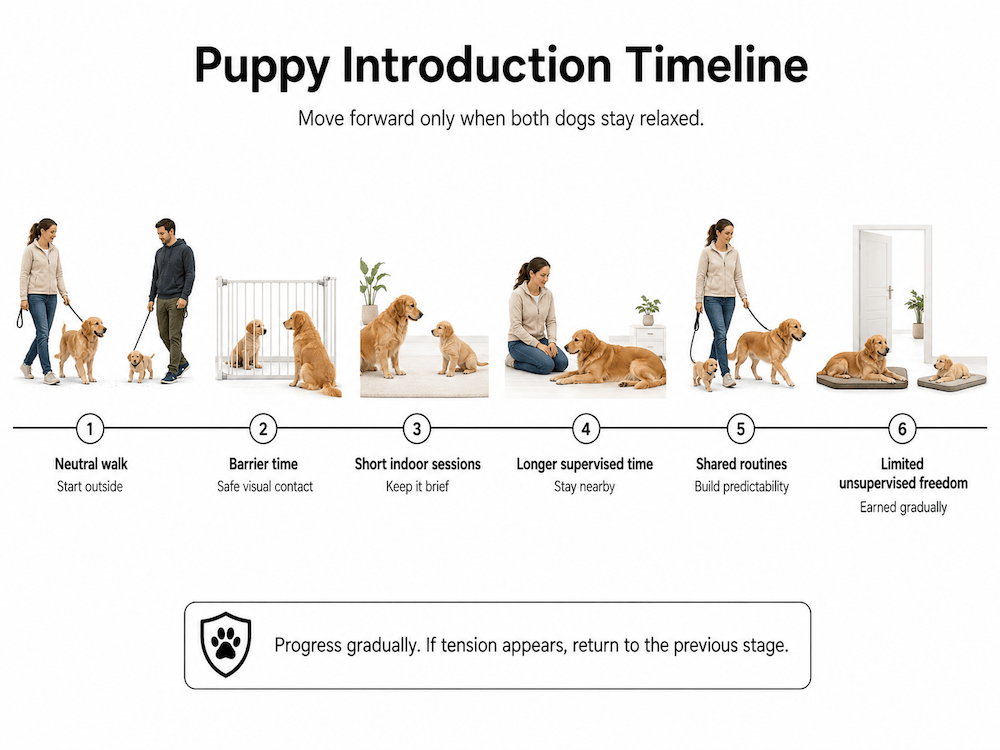
The safest approach is gradual. Move forward only when both dogs can stay loose, responsive, and easy to redirect.
Step 1: Prepare the home before the puppy arrives
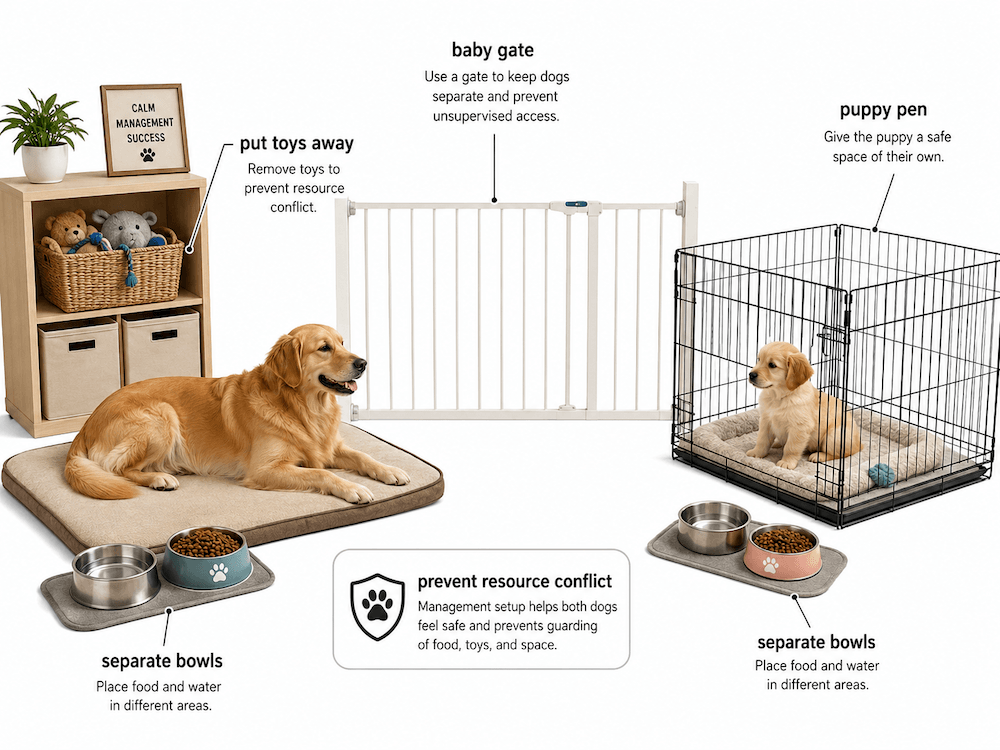
Before the first meeting, remove high-value triggers such as toys, chews, bones, food bowls, and favorite beds from shared areas. Set up baby gates, crates, or exercise pens so both dogs can be safely separated without isolation or punishment.
Step 2: Exercise and decompress the adult dog first
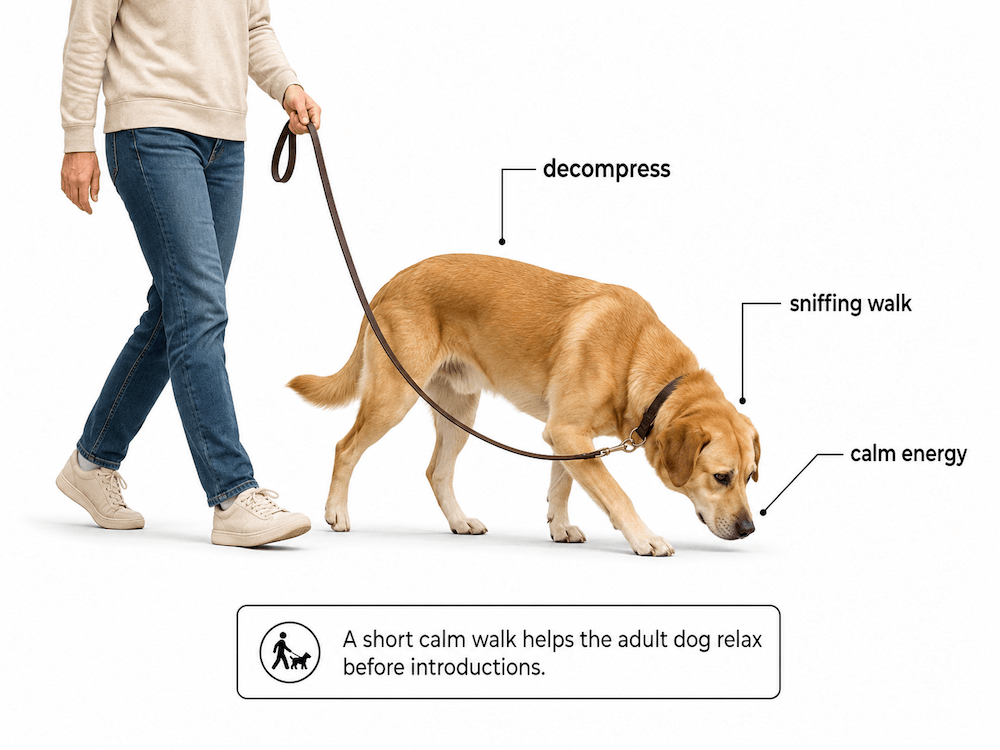
Take the resident dog for a calm walk or sniffing session before the first introduction. Avoid high-arousal games like intense fetch right before the meeting, because an overstimulated dog may be harder to redirect.
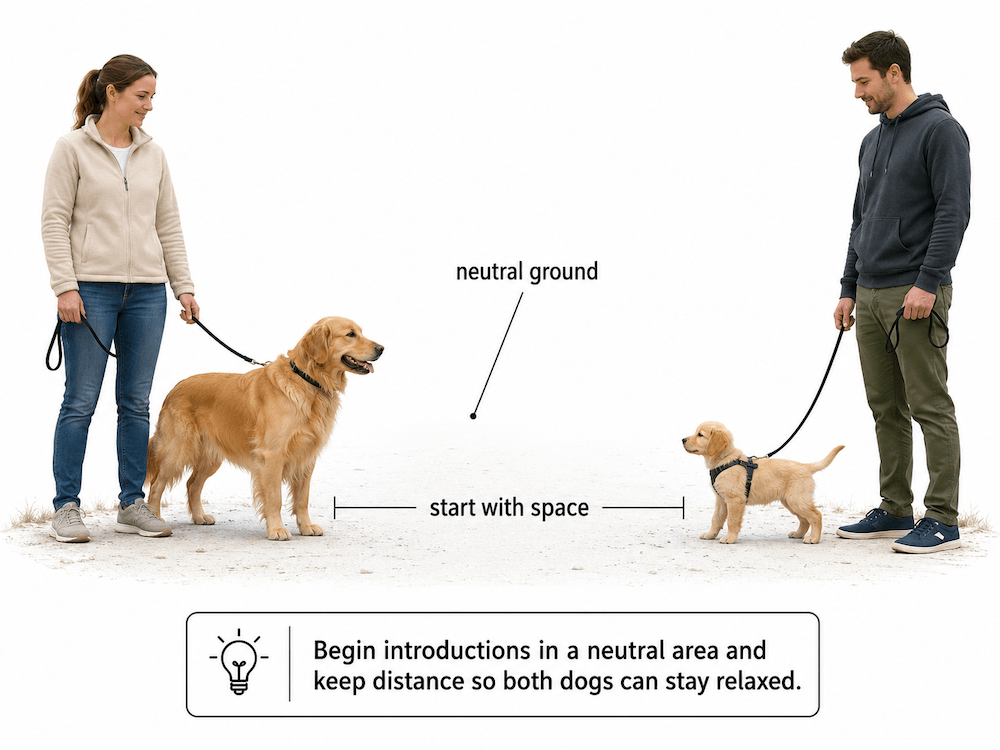
Step 3: Start the first meeting on neutral ground
Introduce the dogs somewhere the adult dog does not strongly claim, such as a quiet park path, open sidewalk, or neutral yard. Veterinary guidance commonly recommends neutral territory to reduce territorial behavior when introducing a second dog.


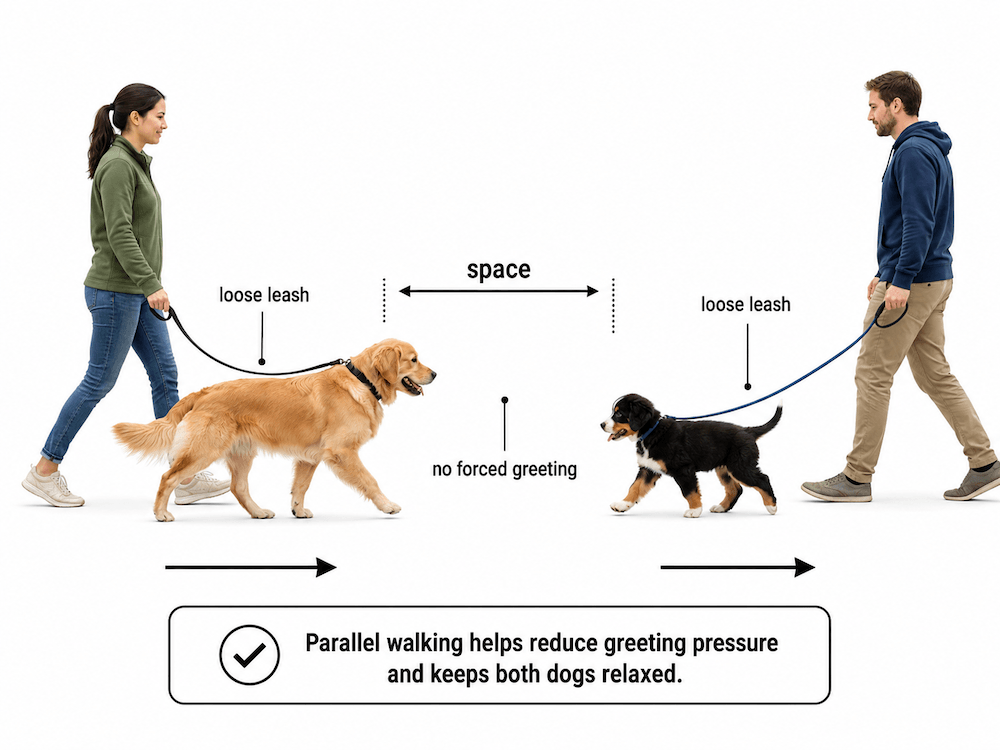
Step 4: Use parallel walking before direct greeting
Have both dogs walk in the same direction with several feet of space between them. This lets them notice each other without the pressure of a face-to-face greeting.
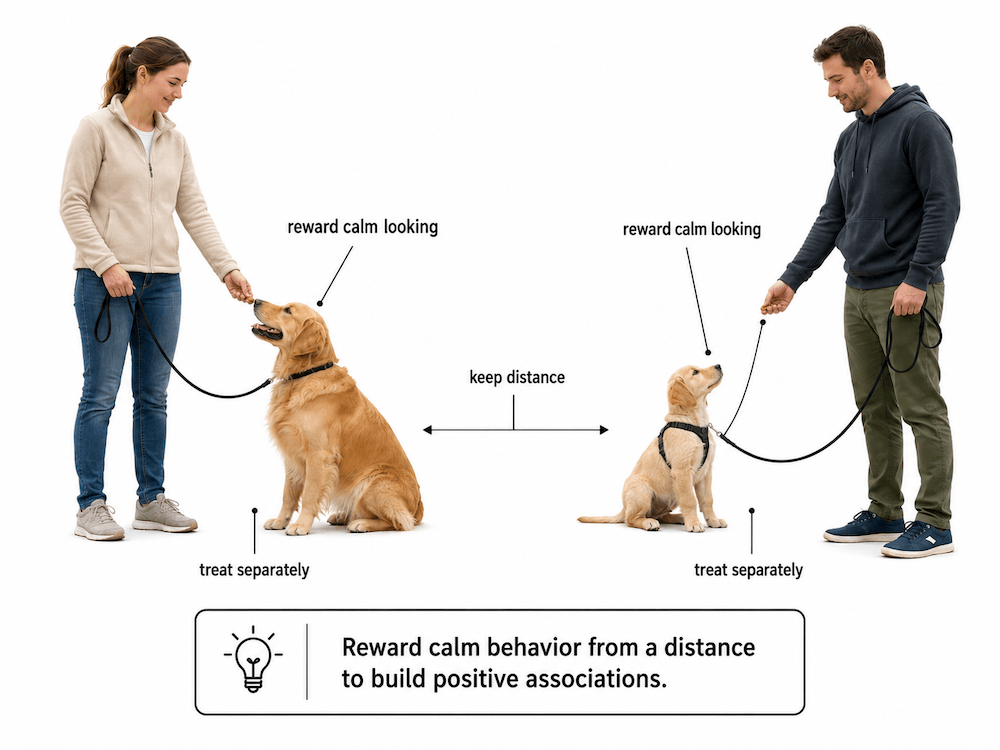
Step 5: Reward calm behavior from both dogs
Reward the adult dog for looking at the puppy without stiffening, lunging, or fixating. Reward the puppy for staying near the handler instead of jumping, barking, or rushing the older dog.
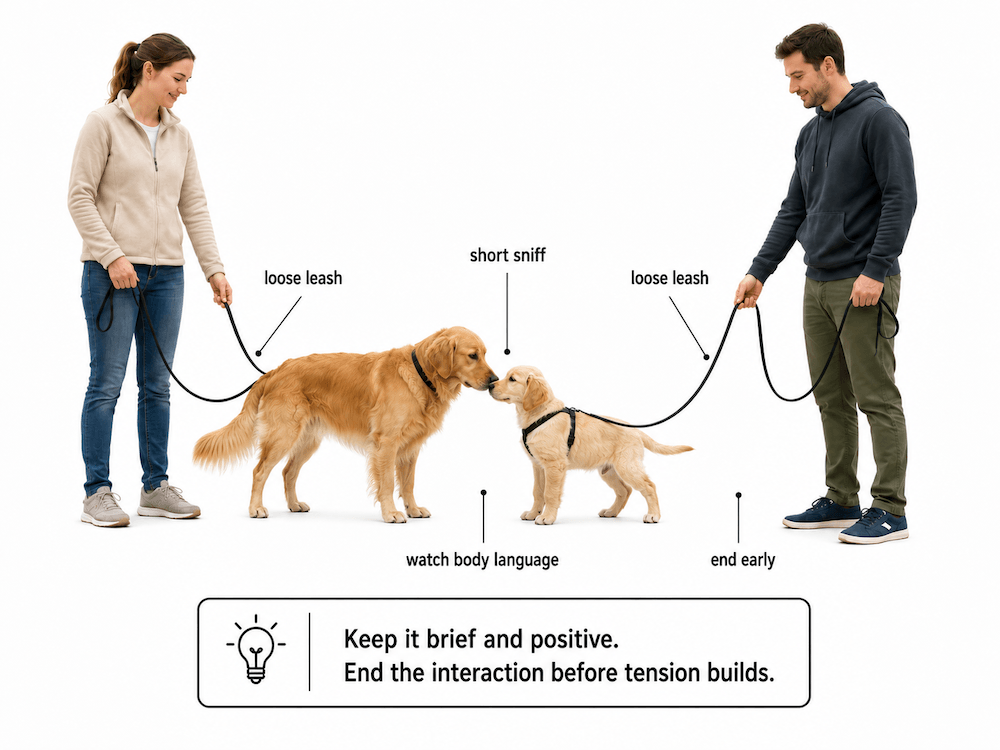
Step 6: Allow brief sniffing only if both dogs are relaxed
If both dogs have loose bodies, soft faces, and can disengage easily, allow a short sniff for a few seconds. End the sniff before tension builds, especially if the adult dog starts stiffening, blocking, hovering, or growling.
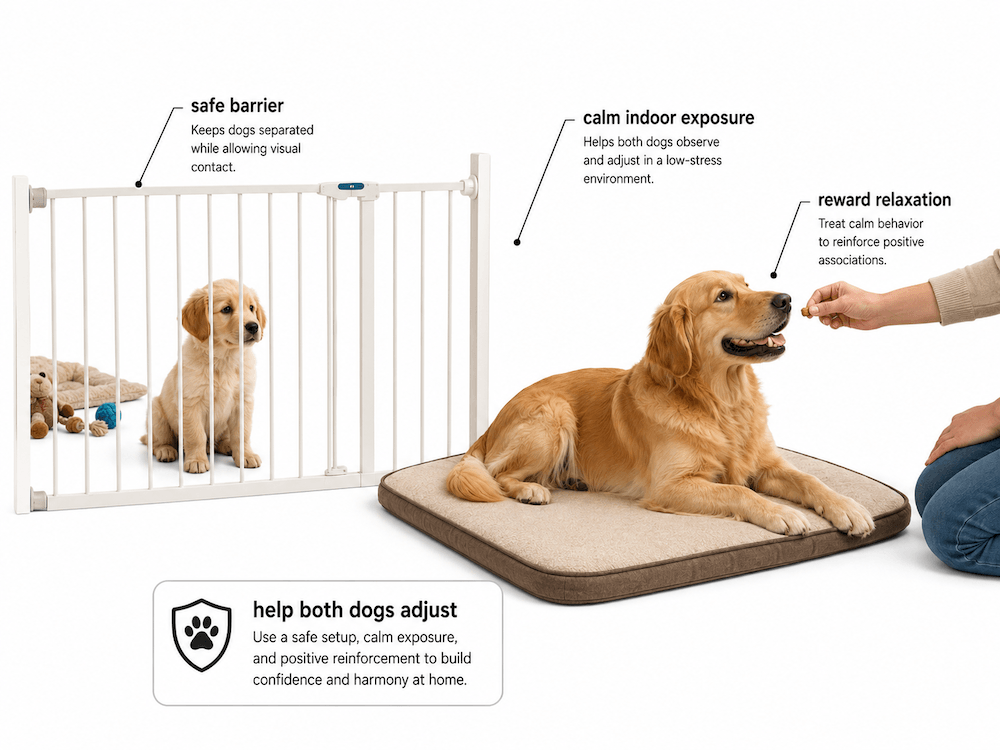
Step 7: Use barriers for the first indoor interactions
When you bring the puppy home, use a baby gate, crate, or exercise pen before allowing free indoor contact. This helps both dogs see and smell each other while preventing chasing, guarding, or overwhelming pressure.
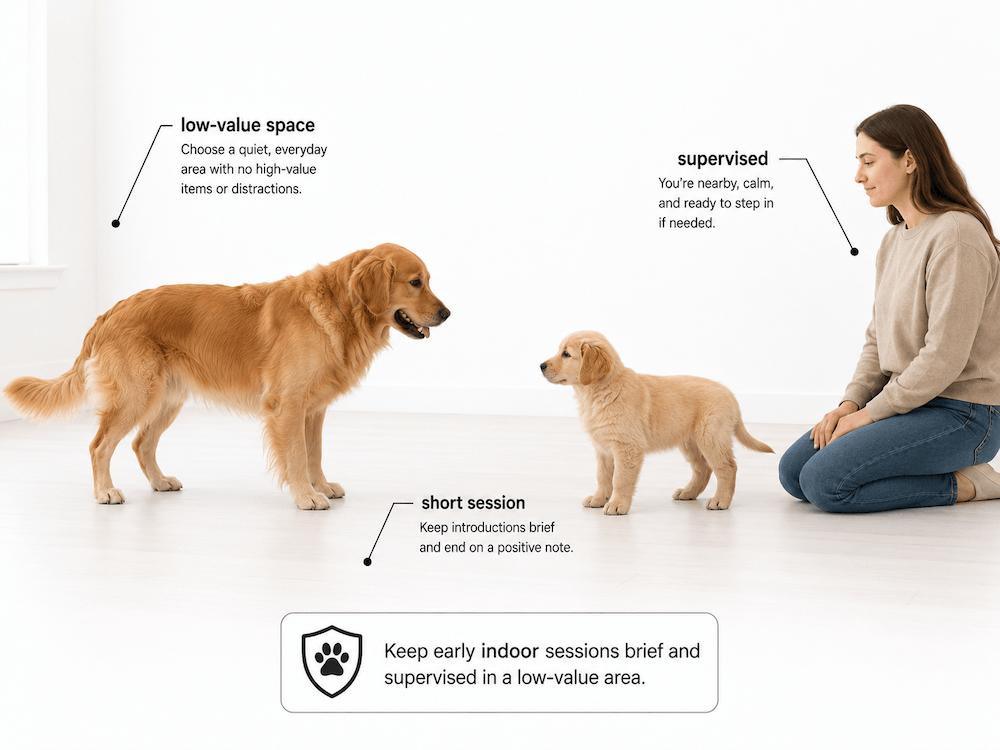
Step 8: Keep early indoor sessions short and supervised
Start with brief indoor sessions in a low-value area with no food, toys, beds, or chews nearby. End the session while both dogs are still calm instead of waiting for barking, chasing, or corrections.
Step 9: Increase freedom gradually
Do not allow unsupervised time just because the first meeting went well. Increase access over days or weeks only when both dogs can rest, move away, respond to cues, and share space without guarding or intimidation.
Body Language to Watch When Introducing a Puppy to a Dominant Dog
Dog introductions should be guided by body language, not hope. The AVMA notes that dogs communicate discomfort through body posture, facial expression, vocalization, and movement, and owners should learn to read those signals before conflict escalates.
Good signs include loose movement, curved approaches, soft blinking, sniffing then disengaging, play bows, relaxed tails, and the ability to respond to the handler. Concerning signs include hard staring, stiff legs, raised hackles, growling, lip lifting, blocking, pinning, chasing, or repeated attempts to corner the puppy.
| Signal | What It Suggests | What to Do |
|---|---|---|
| Loose body | The dog is likely comfortable and flexible. | Continue calmly and keep sessions short. |
| Soft sniffing | The dogs are gathering information calmly. | Allow briefly, then call them away. |
| Play bow | The dog may be inviting friendly play. | Permit only gentle, balanced play. |
| Hard stare | The adult dog may be fixating. | Interrupt and increase distance immediately. |
| Raised hackles | The dog is aroused, alert, or stressed. | Slow down and reduce pressure. |
| Growling | The dog is asking for space. | Separate calmly without punishment. |
| Pinning | The puppy may be frightened or unsafe. | End the interaction and seek guidance. |
Helpful Tips for Introducing a Puppy to a Dominant Dog
Small management choices often prevent big problems. The most important rule is to make calm behavior easy and conflict hard.
| Tip | Why It Helps | How to Apply It |
|---|---|---|
| Use neutral ground | It lowers territorial pressure for the resident dog. | Meet outside before entering the home. |
| Keep leashes loose | Tight leashes can increase tension and frustration. | Walk in arcs instead of pulling straight back. |
| Reward calm behavior | It makes the puppy predict good things. | Treat each dog from separate handlers. |
| Protect rest time | Tired dogs are less tolerant and more reactive. | Give both dogs separate quiet breaks. |
| Remove valuables | Resources can trigger guarding and conflict. | Pick up toys, chews, bowls, and beds. |
| Use barriers | Barriers allow contact without direct pressure. | Start with baby gates or exercise pens. |
| End early | Short sessions prevent stress from building. | Stop while both dogs are still calm. |
Mistakes That Can Make Puppy Introductions More Stressful
The biggest mistakes usually come from rushing. Owners often want the dogs to become friends immediately, but dominant or resource-sensitive dogs need time to adjust.
Do not punish growling, pin the adult dog, force greetings, or leave the puppy to “learn the hard way.” AVSAB cautions against dominance-based, coercive methods because they can create fear, stress, and behavior problems rather than solving the underlying issue.
| Mistake | Why It Can Backfire | Better Approach |
|---|---|---|
| Forcing greetings | Face-to-face pressure can trigger defensive behavior. | Use parallel walking and gradual distance changes. |
| Punishing growls | It may suppress warnings before a bite. | Respect the warning and create space. |
| Sharing toys early | Toys can trigger guarding or competition. | Introduce toys only after trust improves. |
| Leaving them alone | Conflict can happen when no one can interrupt. | Separate dogs whenever unsupervised. |
| Ignoring puppy behavior | Puppy jumping can overwhelm the adult dog. | Redirect the puppy before corrections escalate. |
| Moving too fast | Early success does not mean full trust. | Increase freedom over days or weeks. |
| Using dominance tactics | Force can increase fear and defensive aggression. | Use reward-based management and professional help. |
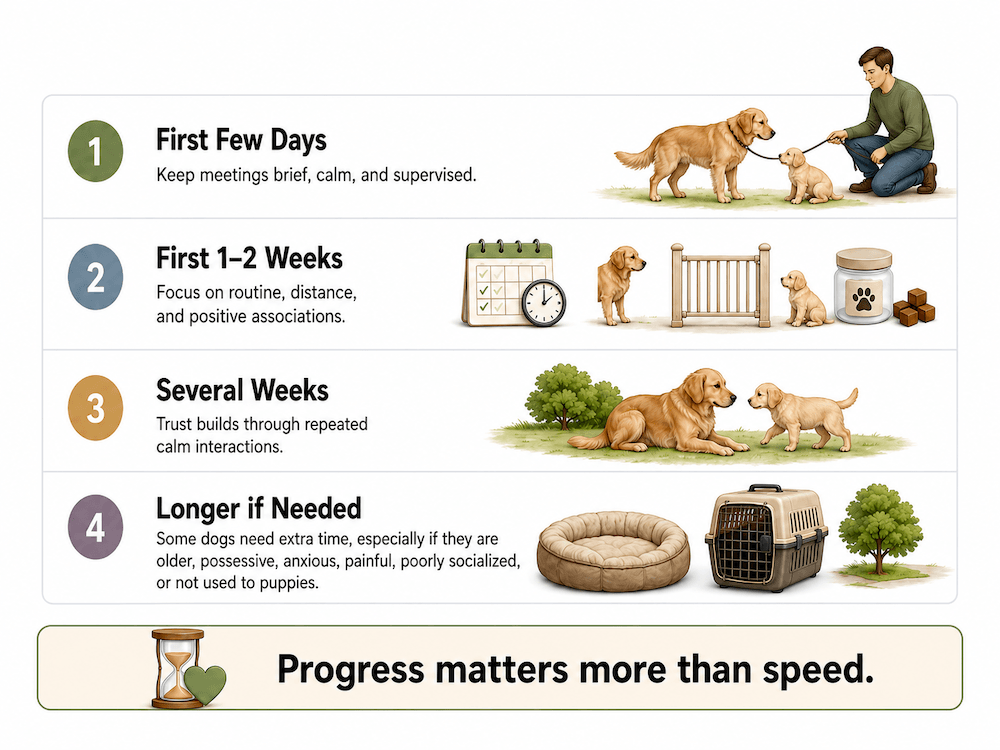
How Long Does It Take a Dominant Dog to Accept a Puppy
Some adult dogs adjust in a few days. Others need several weeks or longer, especially if they are older, possessive, anxious, painful, poorly socialized, or not used to puppies.
Think in stages rather than deadlines:
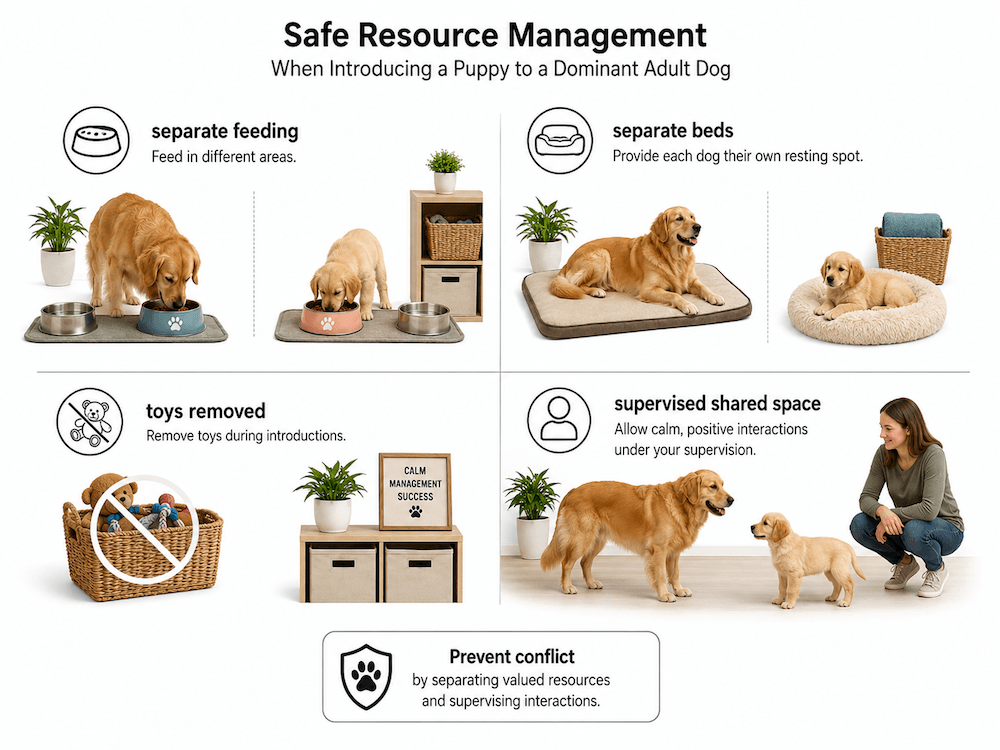
How to Manage Food, Toys, Beds, and Attention
Resource guarding is one of the biggest risks when bringing a puppy into a home with a dominant or possessive dog. In veterinary behavior research, resource guarding is described as avoidance, threatening, or aggressive behavior used to retain control of food or non-food items around people or animals.
For the first several weeks, manage resources as if guarding could happen, even if the resident dog has never guarded before. Puppies often run toward bowls, steal toys, climb into beds, and demand attention without understanding adult dog boundaries.
What Research Says About Introducing a Puppy to a Dominant Dog
Veterinary behavior organizations caution against using dominance theory as a general training method. AVSAB states that behavior problems are often better understood through reinforcement, fear, stress, environment, and learning history rather than assuming dogs are trying to gain rank over people or other animals.
Research and veterinary behavior sources also clarify that dominance is a relationship-based concept, not a simple personality label. This matters because labeling a dog “dominant” can lead owners toward forceful corrections when the safer approach is usually management, distance, reinforcement, and professional guidance when needed.[1]
Resource guarding is especially relevant in multi-dog homes. A study on canine resource guarding found that dogs in multi-dog households were more likely to show guarding-related behaviors around other dogs, which supports the practical advice to separate food, toys, chews, beds, and attention during the early adjustment period.[2]
Dog body language is also central to safety. AVMA guidance emphasizes that dogs communicate through posture, movement, vocalization, and facial expressions, which is why owners should treat growling, stiffening, hard staring, and avoidance as useful information rather than disobedience.
When to Call a Veterinarian, Trainer, or Behaviorist
Call a veterinarian first if the adult dog’s behavior has changed suddenly, especially if the dog is older, painful, limping, guarding body parts, hiding, snapping when touched, or reacting more intensely than usual. Pain and illness can reduce tolerance and make introductions more difficult.
Contact a certified professional dog trainer or veterinary behaviorist if the resident dog has a bite history, repeatedly pins the puppy, guards food or people, stalks the puppy, or cannot relax even behind barriers. Also seek help if the puppy becomes fearful, avoids rooms, screams during interactions, or stops eating around the adult dog.
Get professional help quickly if you see:
What to Do After Introducing a Puppy to a Dominant Dog
After the first successful introduction, continue managing the relationship instead of giving both dogs full freedom right away. Keep feeding separate, supervise shared time, remove high-value items, and give the adult dog puppy-free rest breaks.
Signs of success include relaxed body language, soft sniffing, choosing to move away, calm resting nearby, and both dogs responding to cues. Keep monitoring if you notice hovering, blocking, stiff posture, hard staring, growling, resource guarding, or rough play that only one dog seems to enjoy.
Keep the first few days structured and predictable. If both dogs stay relaxed, gradually increase supervised time together while still keeping meals, toys, beds, and rest areas separate. If tension returns, step back to shorter sessions, more distance, and calmer routines before trying again.
Frequently Asked Questions
The Bottom Line
The safest way to introduce a puppy to a dominant dog is to go slowly, start on neutral ground, use parallel walking, manage resources, and build trust through short supervised sessions. Do not rely on dominance tactics, forced greetings, or the idea that the dogs should “work it out.” A good introduction protects both dogs: the puppy learns confidence, and the adult dog learns that the puppy does not threaten their space, food, rest, or relationship with you. With structure, patience, and calm supervision, many dominant or pushy adult dogs can adjust well to a new puppy. If tension escalates or either dog seems unsafe, pause the process and get professional help before trying to move forward.