How to Fly With a Dog in 2026: Airline Pet Policies, Prep Guide & Tips

Canine Bible is reader-supported. We receive affiliate commissions via some of our links. Learn more.
Flying with a dog is possible, but the safest and easiest way depends on your dog’s size, health, age, breed, and the airline’s rules. Most small dogs can travel in the cabin if they fit in an approved carrier under the seat, while larger dogs may need to fly as checked or cargo transport, which carries more risk and stricter requirements. That simple answer gets more complicated once you factor in breed restrictions, health certificates, crate rules, layovers, temperature limits, and international entry requirements. Some dogs handle air travel well, while others may be poor candidates because of anxiety, medical issues, or breathing concerns. Many owners also assume every airline follows the same rules, but policies can vary a lot. The good news is that with the right planning, you can reduce stress, avoid common mistakes, and choose the safest option for your dog. This guide will walk through what to know before booking, how to prepare, and when flying may not be the best choice at all.
General Considerations When Flying With a Dog
| Travel Consideration | Why It Matters |
|---|---|
| Cabin vs cargo | Your dog’s size often determines the travel method, and cabin travel is generally less stressful and lower risk. |
| Airline rules | Each airline has its own pet policies for carriers, fees, breed limits, and booking procedures. |
| Health check | A pre-flight vet visit helps confirm your dog is healthy enough to travel and may be required for documentation. |
| Crate training | Dogs that are comfortable in a carrier or crate usually travel more calmly and safely during the trip. |
| Breed restrictions | Some airlines limit or ban certain breeds, especially dogs with short noses or higher breathing risk. |
| Trip timing | Choosing direct flights and mild weather can reduce delays, handling time, and temperature-related problems. |
| Travel costs | Flying with a dog can involve pet fees, vet paperwork, carrier costs, and possible destination requirements. |
| Dog temperament | Dogs with severe anxiety, medical issues, or poor crate tolerance may not be good candidates for air travel. |
Is Flying the Right Option for Your Dog?
Flying with a dog can be safe for some dogs when the trip is planned carefully, and the dog is a good fit for air travel. It is usually easiest for dogs that are healthy, calm, and already comfortable resting in a carrier. Even then, air travel is not the best option, especially for dogs with anxiety, breathing concerns, or medical issues.
Whether flying is appropriate depends on a few core factors. Your dog’s health, temperament, airline rules, carrier preparation, and travel documents all shape how realistic and safe the trip will be. Those details matter because airlines, destinations, and travel categories do not all follow the same requirements.
Pre-Flight Checklist
A pre-flight checklist helps you confirm the most important travel requirements before departure, so the trip is less chaotic and easier to manage. Reviewing the key items early can reduce last-minute problems, lower travel stress, and help prevent avoidable document issues at the airport.


Major U.S. Airlines Pet Travel Policies
The table below covers major U.S. airline pet travel policies. Policies and fees can change, so it’s best to recheck the airline before booking. American Airlines allows small dogs in cabin and accepts qualifying service animals; Delta allows some pets in cabin and ships some pets as cargo, with checked pets generally limited to certain military/FSO cases; United Airlines allows in-cabin pets and qualifying service dogs, with one in-cabin pet container per ticketed passenger; Southwest Airlines allows small vaccinated dogs in cabin on domestic flights onlyand trained service dogs under separate rules.
| Airline | Pet Travel Policy | Key Notes |
|---|---|---|
| American Airlines | Small dogs may travel in cabin in an approved under-seat carrier; qualifying service animals travel free. | Cargo-style pet options are limited; pet fees and restrictions should be confirmed at booking. |
| Delta Air Lines | Some pets may travel in cabin, and some may be shipped as cargo depending on route and size. | Checked pets are generally limited to certain military and foreign service travelers. |
| United Airlines | Pets are allowed in cabin on most flights in an approved carrier; qualifying service dogs are allowed under separate rules. | Usually one in-cabin pet container per ticketed passenger; per-flight pet fee applies. |
| Southwest Airlines | Small vaccinated dogs may travel in cabin on domestic flights in an approved carrier. | No international pet travel; pets must remain in the carrier in the airport and onboard. |
Dog Breeds Commonly Restricted for Air Travel
Common airline restrictions often focus on brachycephalic (short-nosed) breeds because they can face a higher risk of breathing and heat-related problems during air travel; AVMA and several airline policies reflect that pattern. American and Delta, for example, list brachycephalic dogs and mixes among breeds commonly restricted or not accepted in certain air-travel categories.
| Breeds | Reason |
|---|---|
| Bulldogs (all breeds) | Short muzzle and airway structure can raise breathing risk during air travel. |
| Pugs (all breeds) | Brachycephalic anatomy can make heat and respiratory stress harder to tolerate. |
| French Bulldogs | Flat-faced structure is commonly restricted because of higher airway risk. |
| Boston Terriers | Many airlines flag this breed because breathing problems can worsen in transit. |
| Boxers | Short-nosed conformation can increase concern about breathing and overheating. |
| Shih Tzus | Airlines may restrict them due to brachycephalic respiratory concerns. |
| Pekingese | Flat-faced anatomy can reduce margin for safe air transport. |
| Lhasa Apsos | Some airlines include them on short-nosed breed restriction lists. |
| Mastiffs (all breeds) | Some airlines restrict them because of snub-nosed traits and transport risk. |
| Chow Chows | They are commonly listed by airlines among restricted higher-risk breeds. |
How to Fly With a Dog Safely Step by Step
Follow these steps to help make flying with a dog safer, less stressful, and easier to manage from pre-trip planning to post-flight recovery.
Step 1: Decide Whether Your Dog Should Fly at All
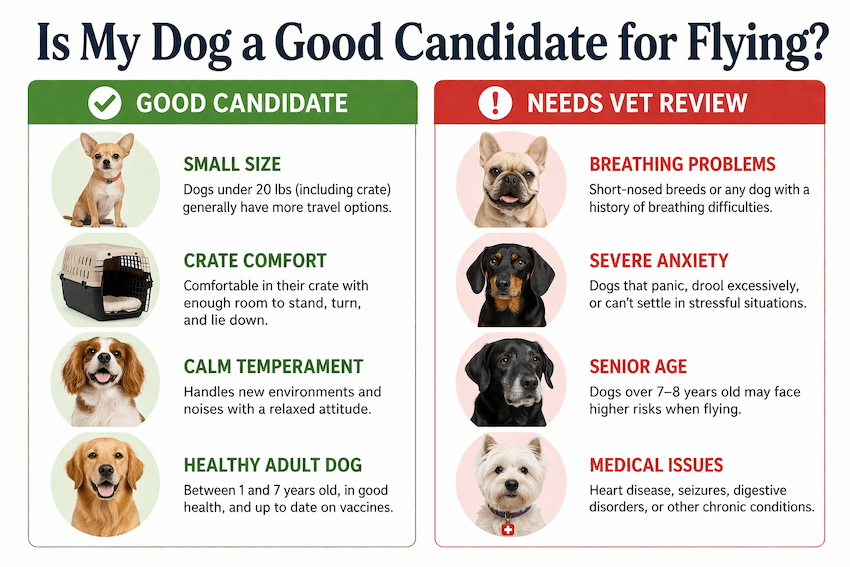
Start by asking whether flying is truly appropriate for your dog. Small, healthy, well-care-trained dogs usually have the easiest time, while dogs with severe fear, illness, or airway problems may face more risk. AVMA specifically advises caution with sedatives and notes that short-nosed pets may face increased travel risks.


Step 2: Check the Airline’s Pet Policy Before You Book
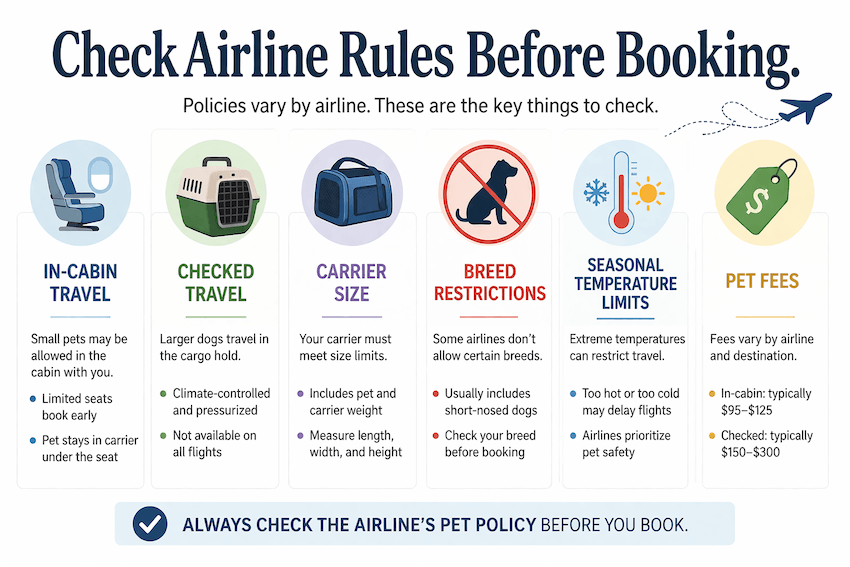
Look up the airline’s current rules for in-cabin pets, checked pets, carrier dimensions, breed restrictions, seasonal limits, and pet fees before buying the ticket. Airline policies are not standardized, and AVMA recommends confirming requirements directly with the carrier because different airlines may allow different travel methods and restrictions.
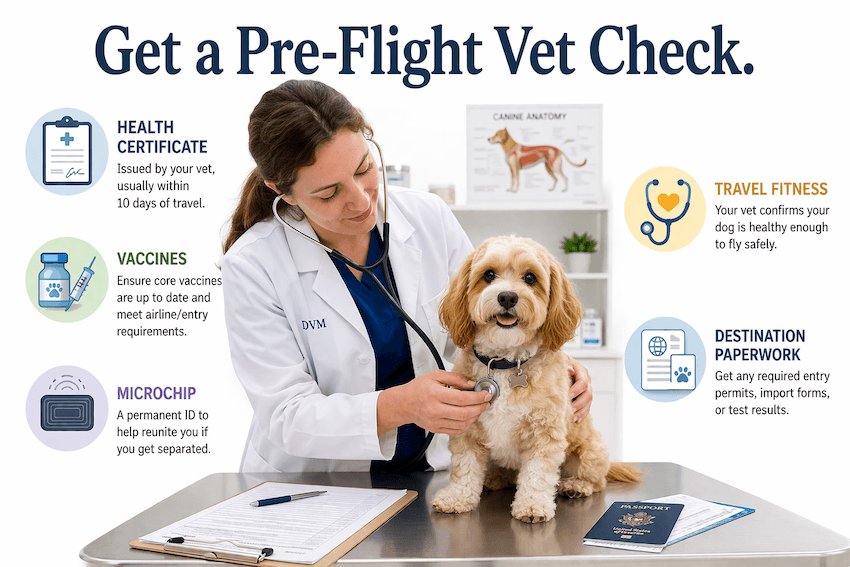
Step 3: Schedule a Veterinary Check and Ask About Travel Fitness
Book a pre-travel vet visit well before departure. Your vet can review your dog’s health, discuss motion sickness or anxiety, check vaccine timing, and tell you whether a health certificate is required for your route. AVMA states that air travel commonly requires a Certificate of Veterinary Inspection issued within 10 days, and USDA APHIS says international travelers should involve a USDA-accredited veterinarian early because some destinations require endorsement, testing, permits, or vaccine records.
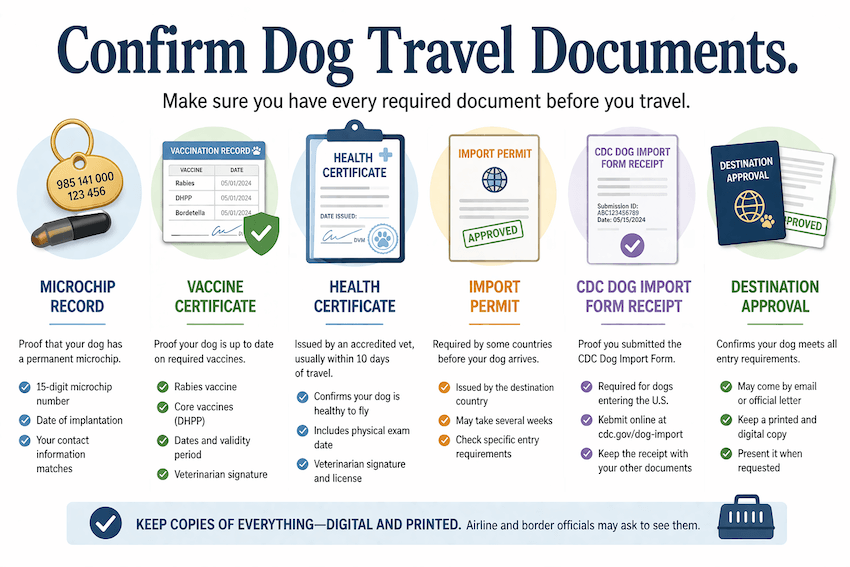
Step 4: Confirm Destination Entry Rules and Required Documents
Do not assume the airline is your only checkpoint. Domestic travel may be simpler, but international travel can require microchip records, vaccine proof, import permits, endorsed health certificates, arrival reservations, or age minimums, depending on the country. For example, CDC currently requires dogs entering or returning to the U.S. to have a CDC Dog Import Form receipt, and some dogs need additional documents depending on rabies-risk status and travel history.
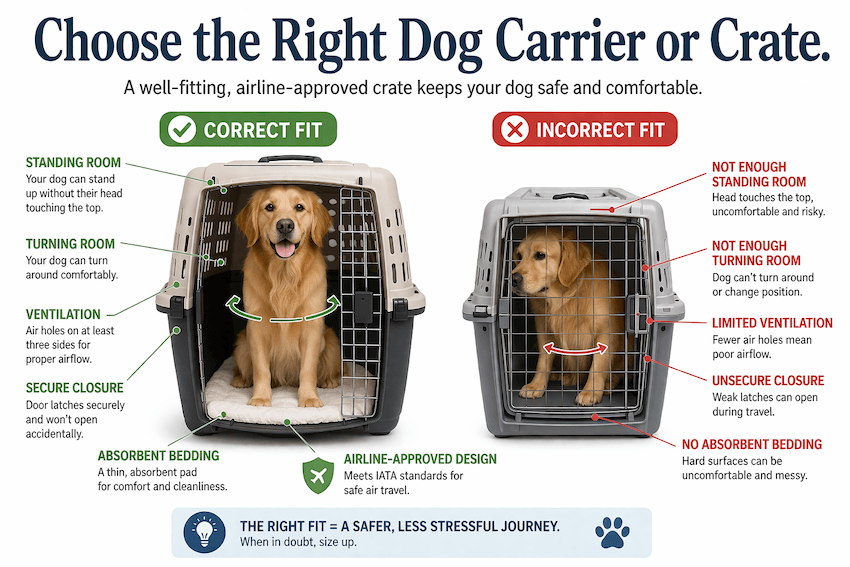
Step 5: Choose the Right Carrier or Crate and Train for It
Use an airline-approved carrier or dog crate that matches the airline’s size rules and gives your dog enough room to stand, turn, and lie down as required. Then start crate or carrier training before the trip so the space feels familiar rather than frightening. Research on dog air travel suggests many dogs cope well overall, but a subgroup experiences significant physical or emotional distress, which makes preparation and carrier familiarity especially important.
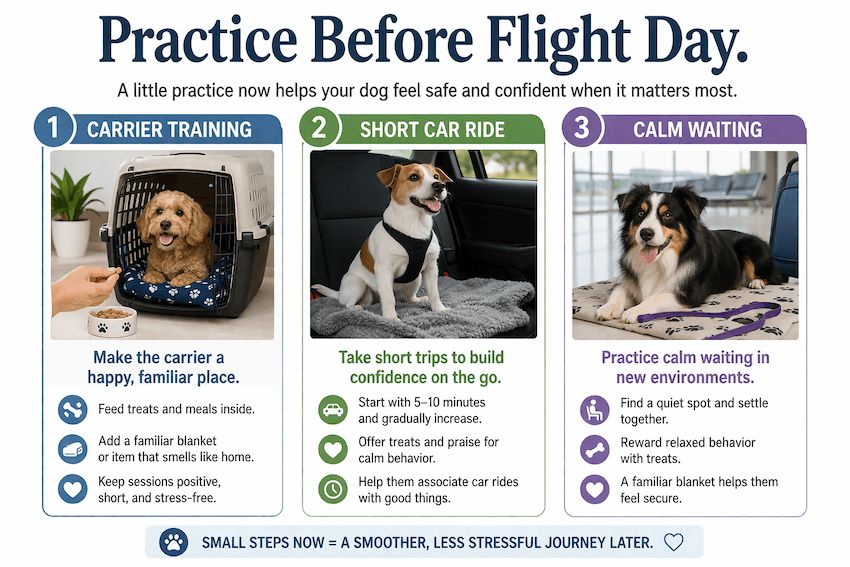
Step 6: Practice the Travel Routine Before Flight Day
Do several short practice sessions with the carrier, car rides, waiting periods, and calm reward-based entry, so your dog learns the sequence before the airport. This helps reduce novelty and makes it easier to spot problems early, such as panic, drooling, escape attempts, or motion sickness. Studies on transport stress in dogs show that travel can be stressful, especially for animals not used to it.
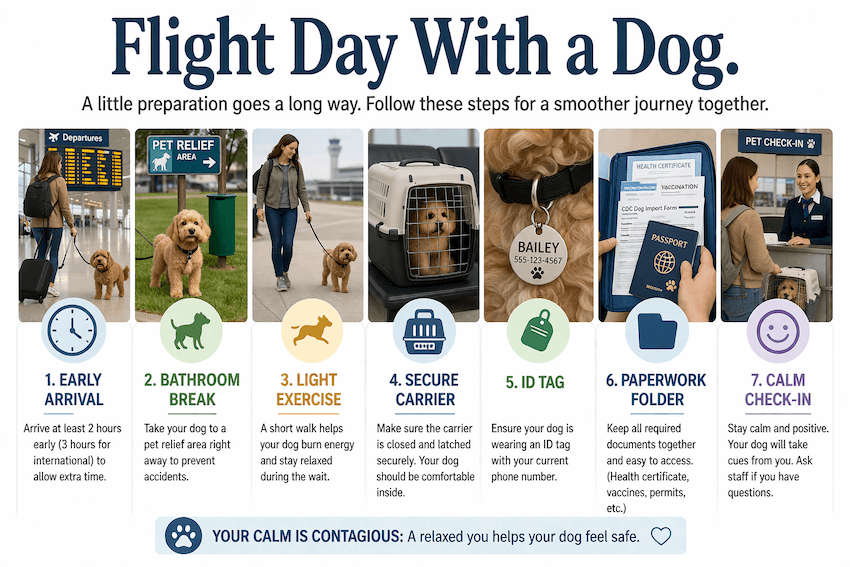
Step 7: Prepare Flight Day Logistics Carefully
Feed according to your vet’s guidance, give bathroom and exercise time before check-in, arrive early, and carry copies of all documents. AVMA advises owners to exercise the pet before entering the airport, secure the carrier, carry identification and health information, and avoid giving tranquilizers or sedatives unless specifically discussed with a veterinarian because they can increase heart or respiratory risk.
Step 8: Monitor Your Dog Closely After Arrival
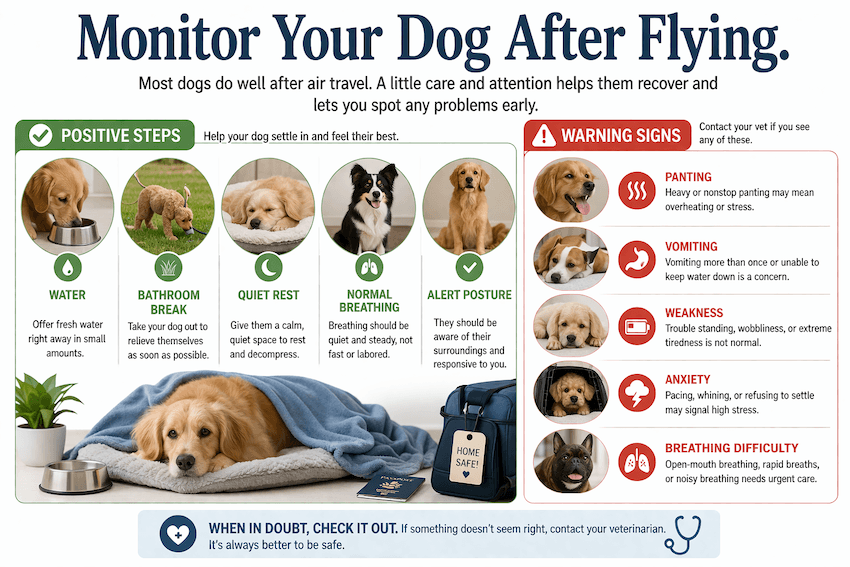
Once you land, get your dog to a quiet place, offer water, take a bathroom break, and watch for signs of overheating, breathing trouble, vomiting, extreme lethargy, or prolonged distress. Most dogs in one recent owner-reported study recovered well after air travel, but some showed meaningful physical or emotional difficulty, so post-flight monitoring matters.
Evidence-Backed Guidance on How to Fly With a Dog
Transport can be physically and behaviorally stressful for some dogs, especially when the experience is unfamiliar. A classic physiological study found that transportation, including air transport, can trigger measurable stress responses in dogs, reinforcing the value of early acclimation and careful handling.[1]
More recent owner-reported research suggests that many dogs cope and recover reasonably well after air travel, but not all do. The important takeaway is that a successful flight is not guaranteed just because many dogs do fine; preparation, individual temperament, and carrier training still matter.[2]
Short-nosed dogs deserve extra caution. A JAVMA study reported that brachycephaly was listed as the primary cause for nearly half of reported commercial air transport animal deaths in the dataset examined, and broader veterinary literature shows that brachycephalic conformation can compromise airway function. That is one reason many airlines restrict these breeds.[3]
Sedation is another area where owners often make mistakes. AVMA advises consulting a veterinarian before using tranquilizers or sedatives and notes that these drugs can increase heart or respiratory risk and are generally not allowed by airlines. Clinically, that matters because a sedated dog may have reduced stability and a harder time responding normally during transport.
Additional Tips for How to Fly With a Dog
These extra tips can make air travel smoother, safer, and less stressful for both you and your dog. Small planning details often make a big difference in comfort, handling, and overall travel logistics.
| Tip | Why It Helps | How to Apply It |
|---|---|---|
| Book direct flights | Fewer transfers usually mean less handling and less stress. | Choose the shortest route with no layovers when possible. |
| Use familiar bedding | Familiar scents can make the carrier feel safer. | Place a known blanket or shirt inside the carrier. |
| Update ID tags | Clear identification helps if your dog gets separated. | Check tags, microchip details, and contact numbers before departure. |
| Practice calm entry | Voluntary carrier entry reduces panic on flight day. | Reward your dog for entering and resting inside quietly. |
| Recheck rules | Policies and schedules can change before departure. | Confirm pet reservations and requirements the day before. |
| Pack cleanup supplies | Travel accidents are easier to manage with supplies ready. | Bring wipes, pads, bags, and a spare leash. |
Common Mistakes When Planning to Fly With a Dog
Many travel problems happen because important details are missed before the trip even begins. Knowing the most common mistakes can help you avoid preventable stress, safety issues, and last-minute disruptions.
| Mistake | Why It’s a Problem |
|---|---|
| Booking before checking rules | You may choose a flight your dog cannot legally take. |
| Skipping crate practice | An unfamiliar carrier can sharply increase fear and resistance. |
| Using sedatives casually | Sedation can increase respiratory and cardiovascular travel risk. |
| Ignoring breed restrictions | Short-nosed dogs may face higher airway and heat risk. |
| Leaving paperwork late | Health certificates and import documents can take time. |
| Choosing long layovers | Extra handling time can add stress and delays. |
| Assuming all dogs cope | Some dogs recover poorly and need a different plan. |
After Flying With a Dog
After the flight, focus on hydration, bathroom access, quiet rest, and observation. Signs that the trip went reasonably well include normal breathing, interest in surroundings, steady walking, normal urination, and a return to usual behavior within a reasonable period. Mild fatigue can happen after travel, but your dog should gradually settle rather than continue looking distressed.
Keep monitoring for vomiting, diarrhea, persistent panting, collapse, severe anxiety, refusal to move, or any breathing difficulty, especially in dogs with known medical or airway concerns. Seek veterinary help promptly if symptoms are intense, worsening, or do not improve after the trip. That is especially important for brachycephalic dogs, seniors, and dogs with preexisting disease.
Frequently Asked Questions
The Bottom Line
Flying with a dog can be done safely, but it is not just a matter of booking a seat and showing up at the airport. The best outcome depends on choosing the right travel method, meeting airline and destination requirements, and making sure your dog is truly a good candidate for the trip. For some dogs, especially those that are healthy, calm, and well prepared for a carrier, air travel can be manageable. For others, the stress, medical risk, or logistics may make another option the better choice. That is why the most important part of flying with a dog is thoughtful preparation. When you check the rules early, gather the right documents, use the correct carrier or crate, and plan around your dog’s needs, you reduce the chances of problems before, during, and after the flight. The goal is not just to get your dog on the plane, but to make the entire trip as safe, legal, and low-stress as possible.