Degenerative Myelopathy in Dogs: Symptoms, Types, Causes, Signs & Prevention

Canine Bible is reader-supported. We receive affiliate commissions via some of our links. Learn more.
A comprehensive guide to degenerative myelopathy in dogs, including risk factors, early warning signs, diagnosis, disease progression, supportive care, mobility management and what pet parents should know when caring for an affected dog.
Degenerative Myelopathy at a Glance
Most common in
Older, genetically predisposed dogs, typically over 8 years of age.
Common signs
Hind-leg weakness, wobbling, paw dragging and difficulty walking.
Diagnosis
Neurologic exam, imaging, genetic testing and exclusion of other causes.
Management
Physical therapy, exercise, mobility aids and supportive care.
Prognosis
Progressive; mobility typically declines as the disease advances.
Genetic risk
SOD1 gene variants are associated with increased risk in many breeds.
What Is Degenerative Myelopathy in Dogs?
Degenerative myelopathy (DM) is a progressive neurologic disease that affects the spinal cord of dogs. The condition causes degeneration of the nerve fibers responsible for communication between the brain and the limbs. It usually begins with subtle weakness and loss of coordination in the hind legs, which may appear as wobbling, scuffing of the paws or difficulty rising. As the disease progresses, affected dogs can gradually lose control of their hind limbs and may eventually develop paralysis. Degenerative myelopathy is most commonly diagnosed in older dogs and has been associated with variants of the SOD1 gene in several breeds. Because other spinal and orthopedic disorders can cause similar symptoms, veterinarians generally diagnose DM by evaluating neurologic signs and ruling out other possible causes.


Types
Degenerative myelopathy can progress through different stages as the spinal cord gradually loses function. Signs often begin with mild weakness and poor coordination in the hind legs, then advance to difficulty walking, loss of mobility, and eventually paralysis. Understanding these stages can help pet parents recognize changes in their dog’s mobility, plan supportive care, and work with their veterinarian to maintain comfort and quality of life.
Early Stage
Mild weakness and loss of coordination usually begin in the hind legs. Dogs may sway, stumble, scuff their rear paws or have difficulty positioning their feet normally.
Paw Dragging & Knuckling
As nerve function declines, dogs may drag the tops of their hind paws or place a paw incorrectly with the toes folded underneath, a problem known as knuckling.
Moderate Stage
Hind-limb weakness becomes more noticeable. Dogs may struggle to rise, climb stairs, maintain balance or walk for normal distances without assistance.
Loss of Hind-Limb Mobility
Progressive weakness can eventually prevent a dog from supporting weight or walking normally on the hind legs. Harnesses and mobility carts may become necessary.
Paraplegic Stage
Dogs may eventually lose voluntary movement of both hind limbs. At this stage, they generally require substantial assistance with mobility and daily activities.
Bladder & Bowel Changes
In advanced disease, some dogs may develop difficulty controlling urination or bowel movements as neurologic function continues to deteriorate.


Advanced Stage
Neurologic impairment may eventually extend beyond the hind limbs, causing severe mobility limitations and increasing dependence on caregivers for everyday activities.
Front-Limb Involvement
In very advanced cases, weakness may progress to the front limbs, further limiting the dog’s ability to stand, reposition or move without assistance.
Late-Stage Complications
Dogs with severe, prolonged disease can become increasingly dependent on supportive care and may develop complications related to reduced mobility and prolonged recumbency.
Disease Progression
Degenerative myelopathy is progressive, but the rate of decline varies between dogs. Regular veterinary assessments can help guide mobility support, rehabilitation and quality-of-life decisions.
Predisposed Dog Breeds
While degenerative myelopathy can affect many dogs, certain breeds have a higher genetic predisposition. Variants in the SOD1 gene are associated with increased risk, although inheriting a risk variant does not mean a dog will necessarily develop the disease. German Shepherd Dogs, Pembroke Welsh Corgis, Boxers, and several other breeds are among those in which degenerative myelopathy has been reported more frequently.
| Breed Group | Breeds | Notes on Risk Factors |
|---|---|---|
| Herding Breeds | German Shepherd Dog, Pembroke Welsh Corgi, Cardigan Welsh Corgi | Degenerative myelopathy is well recognized in these breeds. Genetic susceptibility involving variants of the SOD1 gene is an important risk factor. |
| Working Breeds | Boxer, Bernese Mountain Dog, Rhodesian Ridgeback | SOD1-associated genetic susceptibility has been identified in several breeds within this group. Clinical disease generally develops later in life. |
| Hound Breeds | Rhodesian Ridgeback, Borzoi | Degenerative myelopathy has been reported in hound breeds, and inherited SOD1 variants may contribute to susceptibility in affected dogs. |
| Terrier Breeds | Kerry Blue Terrier, Wire Fox Terrier | Degenerative myelopathy has been recognized in some terrier breeds. Genetic background and inherited susceptibility can influence the risk of developing neurologic disease. |
| Retrievers | Chesapeake Bay Retriever, Golden Retriever | SOD1 risk variants have been identified in retriever populations. Carrying a risk-associated variant does not mean that an individual dog will necessarily develop DM. |
| Other Predisposed Breeds | Poodle, Pug, Siberian Husky, American Eskimo Dog | Degenerative myelopathy has been reported across numerous breeds. Risk varies by breed, genetic background and age, and the presence of a SOD1 variant alone does not confirm clinical disease. |
Causes
Degenerative myelopathy in dogs is associated with genetic susceptibility, particularly variants of the SOD1 gene, although genetics alone do not determine whether a dog will develop the disease. The condition involves progressive degeneration of the spinal cord and typically appears in older dogs. The exact mechanisms that cause some genetically at-risk dogs to develop clinical signs while others remain unaffected are not fully understood.
Genetic Predisposition
Degenerative myelopathy has a strong genetic component. Variants of the SOD1 gene are associated with an increased risk of developing the disease in many dog breeds.
SOD1 Gene Variants
Certain SOD1 variants are strongly associated with degenerative myelopathy. However, carrying a risk variant does not guarantee that a dog will develop clinical disease.
Age
Degenerative myelopathy is primarily a disease of older dogs. Clinical signs commonly appear later in life as progressive degeneration of the spinal cord develops.
Breed Predisposition
The condition is reported more often in certain breeds, including German Shepherd Dogs, Pembroke Welsh Corgis, Boxers and several other genetically susceptible breeds.
Spinal Cord Degeneration
DM causes progressive degeneration of nerve fibers and their protective myelin within the spinal cord, gradually disrupting communication between the brain and limbs.
Abnormal Protein Accumulation
Abnormal accumulation of SOD1 protein is associated with damage to spinal cord nerve cells and is believed to play an important role in the disease process.
Incomplete Penetrance
Not every genetically at-risk dog develops degenerative myelopathy. This suggests that additional genetic, biological or age-related factors influence whether clinical disease eventually appears.
Symptoms
Degenerative myelopathy symptoms in dogs typically develop gradually and progressively, beginning with changes in the hind limbs. Early signs may include wobbling, paw dragging, knuckling, hind-leg weakness, and difficulty rising or climbing stairs. As the disease advances, dogs may lose coordination and strength in the rear legs, eventually becoming unable to walk without assistance. In later stages, weakness can extend to the front limbs and bladder or bowel control may be affected. Because similar symptoms can occur with other spinal, neurologic, and orthopedic conditions, dogs with new or worsening mobility problems should be evaluated by a veterinarian.
- Hind-leg weakness
- Wobbling or swaying while walking
- Dragging or scuffing the rear paws
- Knuckling of the hind paws
- Difficulty rising from a lying position
- Difficulty climbing stairs
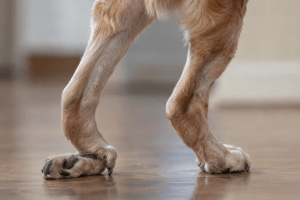
- Crossing of the hind legs while walking
- Loss of coordination in the rear limbs
- Progressive loss of hind-limb mobility
- Front-limb weakness in advanced disease
Degenerative myelopathy typically begins in the hind limbs and progresses as spinal cord function declines.
Stages & Progression of Degenerative Myelopathy in Dogs
Degenerative myelopathy in dogs is a progressive neurologic disease that typically begins with subtle weakness and loss of coordination in the hind limbs. As the spinal cord continues to deteriorate, dogs may develop increasing difficulty walking, loss of hind-limb mobility, and eventually paralysis. In advanced stages, weakness can extend to the front limbs and other neurologic functions may become affected. Understanding how the disease progresses can help pet parents anticipate mobility needs, plan supportive care, and monitor their dog’s quality of life.
Early Hind-Limb Changes
Subtle weakness and loss of coordination begin in the hind limbs. Dogs may sway, scuff their rear paws, stumble or occasionally knuckle while walking.
Increasing Weakness
Hind-limb weakness becomes more noticeable. Dogs may have difficulty rising, climbing stairs, maintaining balance or walking normally without assistance.
Loss of Hind-Limb Mobility
Progressive neurologic impairment can lead to severe rear-leg weakness and eventual inability to walk with the hind limbs. Mobility aids and caregiver assistance may become necessary.
Advanced Disease
Neurologic impairment may progress beyond the hind limbs. Front-limb weakness and increasing dependence on caregivers can occur as the disease becomes advanced.
This chart is a simplified visual guide rather than a formal veterinary staging system. Degenerative myelopathy does not progress at the same rate in every dog, and individual dogs may not fit neatly into these four stages.
- Early Stage: Subtle hind-leg weakness, wobbling, paw scuffing, or occasional knuckling may appear. Dogs can usually still walk independently, but coordination gradually becomes less reliable.
- Intermediate Stage: Hind-limb weakness and loss of coordination become more noticeable. Dogs may stumble, cross their rear legs, struggle with stairs, or have increasing difficulty rising.
- Advanced Stage: Progressive spinal cord degeneration can lead to severe hind-limb weakness and eventual loss of the ability to walk with the rear legs. Mobility aids and caregiver assistance may be needed.
- Late Stage: Neurologic impairment may eventually extend to the front limbs, causing more widespread weakness and loss of mobility. Dogs at this stage typically require extensive supportive care and close monitoring of quality of life.
Top Ways to Manage Degenerative Myelopathy in Dogs
Because degenerative myelopathy is a progressive neurologic disease with no cure, management focuses on maintaining mobility, comfort, and quality of life. Regular low-impact exercise, physical rehabilitation, maintaining a healthy weight, providing good traction, and using mobility aids when needed can help dogs remain active and independent for as long as possible. Regular veterinary monitoring can also help caregivers adjust supportive care as the disease progresses.
| Management Strategy | Why It Helps | How to Do It |
|---|---|---|
| Physical Rehabilitation | Regular rehabilitation can help maintain muscle strength, mobility, coordination, and function as the disease progresses. | Work with your veterinarian or a canine rehabilitation professional on an individualized exercise and therapy plan. |
| Regular Low-Impact Exercise | Appropriate activity helps maintain muscle strength and mobility without placing excessive strain on weakened limbs. | Use controlled walks and other gentle activities appropriate for your dog’s current mobility. Avoid exhaustion and activities that increase the risk of falling. |
| Maintain a Healthy Weight | Excess body weight places additional stress on weakened limbs and can make movement increasingly difficult. | Feed measured portions and adjust calorie intake with your veterinarian as your dog’s activity level changes. |
| Improve Traction at Home | Dogs with degenerative myelopathy can have difficulty maintaining their footing, particularly on smooth or slippery surfaces. | Place nonslip rugs, runners, mats, or other traction surfaces along commonly used walking areas. |
| Use Mobility Aids | Supportive equipment can help dogs remain mobile and independent as hind-limb weakness becomes more pronounced. | Consider support harnesses, slings, ramps, or appropriately fitted canine wheelchairs as mobility declines. |
| Protect the Paws | Paw dragging and knuckling can cause abrasions, worn nails, and injuries to the tops of the feet. | Inspect the paws regularly and discuss protective boots or other paw-protection options with your veterinarian when needed. |
| Make the Home More Accessible | Reducing physical obstacles can help a dog with declining coordination move around more safely and comfortably. | Use ramps where appropriate, limit access to slippery stairs, provide supportive bedding, and keep food and water easy to reach. |
| Regular Veterinary Monitoring | Ongoing examinations help track neurologic changes and identify other conditions that may cause pain or worsen mobility. | Schedule regular veterinary evaluations and report new problems such as falls, inability to rise, injuries, or changes in bladder and bowel function. |
| Monitor Quality of Life | DM is progressive, so supportive-care needs can change substantially as mobility and independence decline. | Regularly assess mobility, hygiene, appetite, engagement, comfort, and ability to perform normal daily activities with your veterinarian. |
Actionable Resources
If you want to support a dog with degenerative myelopathy, these Canine Bible resources may help with nutrition, mobility, and day-to-day supportive care. No food or supplement has been proven to cure or stop DM, so these should complement veterinary care and rehabilitation.
How Is Degenerative Myelopathy in Dogs Diagnosed
Diagnosing degenerative myelopathy in dogs requires a comprehensive veterinary and neurologic evaluation to identify characteristic signs and rule out other conditions that can cause similar mobility problems. Key steps include:
1. History & Physical Examination
Your veterinarian reviews your dog’s age, breed, medical history, and progression of mobility problems, then performs a physical examination to look for other possible causes.
2. Neurologic Examination
A neurologic exam evaluates gait, coordination, reflexes, paw positioning, muscle strength, and other responses to help determine where the nervous system is affected.
3. Laboratory Tests
Bloodwork, urinalysis, and other laboratory tests may be used to assess overall health and investigate metabolic, infectious, or systemic conditions that could contribute to weakness.
4. Spinal Imaging
X-rays may identify some orthopedic or spinal abnormalities, while MRI or CT imaging may be recommended to rule out problems such as intervertebral disc disease, tumors, or spinal cord compression.
5. SOD1 Genetic Testing
Genetic testing can identify SOD1 variants associated with an increased risk of degenerative myelopathy. A positive result supports susceptibility but does not, by itself, confirm that a dog’s neurologic signs are caused by DM.
6. Diagnosis by Exclusion
In a living dog, degenerative myelopathy is generally considered a diagnosis of exclusion. Veterinarians combine the dog’s clinical signs, neurologic findings, imaging, and other test results to rule out conditions that can cause similar symptoms.
Early recognition is important because supportive care and rehabilitation can begin sooner, helping dogs maintain mobility, muscle strength, and independence for as long as possible as degenerative myelopathy progresses.
Nutritional Support & Supplements
Proper nutrition can play an important supportive role for dogs with degenerative myelopathy by helping maintain a healthy weight, muscle mass, energy, and overall quality of life. Depending on your dog’s individual needs, veterinarians may recommend a complete and balanced, nutrient-dense diet and may discuss supplements such as omega-3 fatty acids or antioxidants. However, no diet or supplement has been proven to cure or stop degenerative myelopathy, so nutritional strategies should be used alongside veterinary care, appropriate exercise, and physical rehabilitation.
Important: No diet or supplement has been proven to
cure or stop degenerative myelopathy.
Always discuss supplements and dietary changes with your veterinarian,
especially if your dog takes medications or has other health conditions.
Supportive care—such as physical rehabilitation, mobility assistance, nutritional support, and home modifications—plays a crucial role in maintaining mobility, comfort, and quality of life in dogs with degenerative myelopathy. These measures cannot cure or stop the disease, so an individualized supportive-care plan should be developed and regularly reviewed with your veterinarian as your dog’s mobility needs change.
Over-the-Counter Products
Over-the-counter treatments and supplements mentioned in this article for degenerative myelopathy in dogs can be found on Amazon and Chewy.



Always consult your veterinarian before starting any new treatment, medication, or home-care regimen for canine degenerative myelopathy. Puppies and dogs with persistent vomiting, diarrhea, weakness, or dehydration may require prompt veterinary care. If you can’t reach your vet, you can chat live with a registered online veterinary professional via our online vet chat or video chat support (24 hours a day, 7 days a week). Or use Chewy’s online vet services (6 a.m. – midnight ET).
Treatment & Care
According to current veterinary understanding, degenerative myelopathy has no known cure, so treatment focuses on preserving mobility, maintaining muscle strength, and improving quality of life. Supportive care may include physical rehabilitation, controlled low-impact exercise, hydrotherapy, mobility aids, nutritional support, and home modifications. Regular veterinary monitoring helps adjust care as the disease progresses and address any additional health concerns.
Medications
Common medications used to treat degenerative myelopathy in dogs include:
| Medication / Treatment | Examples | How It Is Used | Important Considerations |
|---|---|---|---|
| Physical Rehabilitation | Therapeutic exercises, assisted walking, balance training | Helps maintain muscle strength, coordination, and functional mobility as degenerative myelopathy progresses. | Rehabilitation should be individualized and supervised by a veterinarian or qualified canine rehabilitation professional. |
| Hydrotherapy | Underwater treadmill, supervised aquatic rehabilitation | Water-supported exercise may help maintain muscle conditioning and mobility while reducing weight-bearing demands. | Not suitable for every dog. Sessions require professional supervision, particularly when weakness or coordination problems are severe. |
| Pain Management | Gabapentin, veterinarian-prescribed analgesics | May be prescribed when dogs have concurrent painful conditions, such as arthritis or other orthopedic problems. | Degenerative myelopathy itself is generally considered nonpainful. Pain should prompt evaluation for another condition. Some analgesics can cause sedation or worsen apparent coordination. |
| Nonsteroidal Anti-Inflammatory Drugs | Carprofen, meloxicam | May help manage pain and inflammation associated with concurrent arthritis or other painful musculoskeletal conditions. | These medications do not treat the underlying spinal cord degeneration. They may cause gastrointestinal, kidney, or liver problems and require veterinary supervision. |
| Omega-3 Fatty Acids | EPA and DHA, veterinary fish-oil supplements | May be considered for general nutritional support and management of concurrent inflammatory conditions. | Omega-3 supplements have not been proven to slow or stop degenerative myelopathy. Dosage should be discussed with a veterinarian. |
| Antioxidant Supplements | Vitamin E, veterinarian-selected antioxidant formulations | May be considered as nutritional support because oxidative stress is implicated in the disease process. | Clinical evidence that antioxidant supplementation changes DM progression is insufficient. Excessive supplementation may cause adverse effects. |
| Experimental Medication | Aminocaproic acid | Has historically been investigated and proposed for dogs with degenerative myelopathy. | There is no convincing clinical evidence that it slows or stops DM progression. It is not an established treatment and should not be used without specialist veterinary guidance. |
| B-Vitamin Supplementation | Vitamin B12, veterinarian-selected B-complex supplements | May be recommended when a dog has a documented nutritional deficiency or another medical condition requiring supplementation. | B vitamins are essential for normal nervous system function, but additional supplementation has not been shown to stop or reverse DM. |
| Mobility Assistance | Rear-support harnesses, support slings, canine wheelchairs | Helps dogs maintain mobility and participate in daily activities as hind-limb weakness becomes more pronounced. | Equipment should be fitted appropriately and adjusted as the disease progresses. Monitor for skin irritation and fatigue. |
| Supportive Nursing Care | Orthopedic bedding, paw protection, hygiene assistance | Helps maintain comfort, protect the skin, and support daily activities in dogs with substantial mobility limitations. | Dogs with advanced mobility loss may need assistance with repositioning and toileting. Regularly check for pressure sores, abrasions, and other complications. |
The best way to get these medications is at Chewy Pet Pharmacy:
Alternative & Integrative Therapies
Integrative and supportive therapies may help manage symptoms, maintain mobility, support muscle strength, and improve quality of life for dogs with degenerative myelopathy. Options such as acupuncture, massage, laser therapy, and hydrotherapy may complement conventional rehabilitation and supportive care, although evidence for some therapies remains limited. Always consult your veterinarian to ensure these treatments are safe and appropriate for your dog.
Surgical Options
Surgery is not a treatment for degenerative myelopathy itself, as there is currently no surgical procedure that can stop or reverse the disease. However, surgery may be recommended if your dog has another condition contributing to similar symptoms, such as intervertebral disc disease, spinal stenosis, or a spinal tumor. In these cases, surgery may relieve pain or spinal cord compression and potentially improve mobility and quality of life. Your veterinarian or veterinary neurologist will determine whether surgery is appropriate based on your dog’s individual condition, imaging results, and overall health.
Emotional & Lifestyle Impact
Degenerative myelopathy can be emotionally challenging for dogs and their families. As the disease progresses, dogs may experience gradual loss of mobility, coordination, and independence, affecting their daily routines and favorite activities. With physical rehabilitation, mobility aids, home adjustments, and supportive care, many dogs can continue enjoying comfortable, fulfilling lives while their families adapt to their changing needs.
For Dogs
- May experience gradual changes in mobility, coordination, and independence
- Can still enjoy many favorite activities with appropriate supportive care
- May need assistance with stairs, getting into vehicles, and navigating slippery surfaces
- Can remain affectionate, engaged, and connected with their family
- Individual care needs may change as the disease progresses
For Pet Parents
- It’s understandable to feel worried, sad, or overwhelmed after a diagnosis
- Focus on your dog’s comfort, safety, and overall quality of life
- Make home adjustments such as ramps, nonslip flooring, and supportive bedding
- Work closely with your veterinary team, including a neurologist or rehabilitation specialist when appropriate
- Consider joining support groups or online communities for encouragement and practical tips
- Celebrate the good days and the special bond you share with your dog
A diagnosis of degenerative myelopathy changes your journey, but it doesn’t take away the joy. Focus on today, the good days, and the love you share.
Brighter tomorrows.
Dog Degenerative Myelopathy Prognosis
A dog’s prognosis with degenerative myelopathy depends on several factors, including the stage at diagnosis, rate of progression, overall health, and level of supportive care. Although the disease is progressive and has no known cure, its progression varies between dogs. Many gradually lose hind-limb mobility, eventually becoming unable to walk independently. Physical rehabilitation, mobility aids, and supportive care can help maintain comfort and quality of life. Working closely with your veterinarian can help you prepare for your dog’s changing needs.
Key Factors That Influence Prognosis
Typical Annual Cost of Treating Canine Degenerative Myelopathy
| Category | Estimated Cost Range | Notes |
|---|---|---|
| Initial Diagnosis & Testing | $500 – $2,000+ | Initial diagnostic expenses may include physical and neurological examinations, bloodwork, and imaging to investigate other causes of weakness. MRI and additional specialist testing may increase the total cost. Degenerative myelopathy is generally diagnosed presumptively after excluding other conditions. |
| Neurological Consultation | $200 – $600 | Consultation with a veterinary neurologist to evaluate neurological signs, investigate alternative diagnoses, and develop an individualized management plan. Additional testing is usually billed separately. |
| Physical Rehabilitation | $1,000 – $3,500 | May include supervised therapeutic exercises, assisted walking, balance training, and hydrotherapy. Annual costs depend on session frequency, treatment duration, and the availability of rehabilitation services. |
| Mobility Aids & Equipment | $300 – $2,000 | Includes rear-support harnesses, mobility slings, canine wheelchairs, ramps, nonslip flooring, and supportive bedding. Many equipment purchases are one-time expenses, although replacements or adjustments may be necessary. |
| Medications & Pain Management | $100 – $1,000 | Degenerative myelopathy itself is generally considered nonpainful. Medications may be prescribed for concurrent conditions, such as arthritis or other painful musculoskeletal disorders. No medication has been proven to cure or stop DM. |
| Follow-Up Exams & Monitoring | $300 – $1,000 | Regular veterinary examinations help monitor disease progression, assess mobility, and adjust supportive-care recommendations. Additional testing may be required if new symptoms suggest another medical condition. |
| Nutritional Support & Supplements | $200 – $800 | May include veterinarian-recommended nutritional adjustments, omega-3 supplements, or specialized diets when medically appropriate. Supplements have not been proven to prevent or reverse degenerative myelopathy. |
| Alternative / Integrative Therapies | $300 – $1,500 | Optional complementary care may include acupuncture, massage, or therapeutic laser treatments. Evidence supporting these therapies specifically for degenerative myelopathy remains limited. |
| Pet Insurance Coverage | Varies | Coverage depends on the insurance provider, policy terms, waiting periods, and pre-existing condition exclusions. Some policies may reimburse eligible diagnostic, rehabilitation, or supportive-care expenses. Confirm coverage directly with your insurance provider. |
| Illustrative Annual Budget |
Basic Supportive Care:
$1,000 – $3,000
More Intensive Rehabilitation & Mobility Support: $3,000 – $10,000+ Actual expenses depend on your dog’s needs and may be substantially higher during the initial diagnostic period. |
|
Degenerative myelopathy care can add up quickly — from daily medications to possible surgeries. Pet insurance can ease the financial burden and ensure your dog gets the best treatment without compromise. If you want to compare plans and find out which providers offer the best coverage for degenerative myelopathy and chronic conditions, check out our full guides to the Best Pet Insurance for Dogs and Best Pet Wellness Plans.
Related Health Conditions
Several neurological and orthopedic conditions can cause symptoms similar to degenerative myelopathy in dogs, including hind-leg weakness, poor coordination, difficulty walking, and reduced mobility. Some may also occur alongside degenerative myelopathy, making diagnosis and management more challenging. Understanding these conditions can help dog owners recognize overlapping symptoms and work with their veterinarian to identify the underlying cause.
- Intervertebral Disc Disease (IVDD)
- Hip Dysplasia
- Arthritis (Osteoarthritis)
- Lumbosacral Stenosis
- Wobbler Syndrome
- Spinal Cord Tumors
- Fibrocartilaginous Embolism (FCE)
- Peripheral Neuropathy
- Spinal Infections (Discospondylitis)
- Cruciate Ligament Disease
Frequently Asked Questions
The Bottom Line
Degenerative myelopathy in dogs is a progressive neurological disease that can be emotionally challenging for pet parents. Although there is currently no cure, early recognition, veterinary care, and supportive management can help maintain your dog’s comfort and quality of life. By recognizing early warning signs, providing physical rehabilitation, mobility aids, proper nutrition, and a safe home environment, you can help your dog adapt as the disease progresses. Above all, your love, patience, and commitment can make a meaningful difference, helping your dog enjoy every possible moment throughout their journey.