When a dog begins losing strength in their back legs, something as routine as filling the food bowl can suddenly feel far more important. Degenerative myelopathy is a progressive neurological condition that affects mobility, coordination, and eventually a dog’s independence, making supportive daily care especially valuable. While no food can cure or stop degenerative myelopathy, a well-balanced diet can support a healthy body weight, muscle maintenance, overall wellness, and the energy your dog needs to stay active as long as possible. Choosing the right food also matters because excess weight can strain already-weakened limbs and make movement harder. The best options prioritize complete nutrition, quality protein, appropriate calories, and nutrients that support overall health without relying on unproven miracle claims. In this guide, we’ll explore the best dog foods for degenerative myelopathy, what nutritional features to look for, and how to choose a diet that fits your dog’s changing needs.
Can Diet Help Degenerative Myelopathy in Dogs?
Diet can help support dogs with degenerative myelopathy, but it cannot cure or stop the disease. The main goals are to maintain a healthy body weight, preserve lean muscle, support overall energy needs, and provide complete, balanced nutrition as mobility declines. Foods with quality protein, appropriate calories, good digestibility, and omega-3 fatty acids may be useful as part of supportive care, especially when paired with rehabilitation and regular veterinary monitoring. Because degenerative myelopathy is progressive, any dietary plan should focus on maintaining comfort and general health rather than relying on specific foods or supplements as a treatment.
Latest Research on Diet & Degenerative Myelopathy in Dogs
According to the latest research, no specific diet has been proven to slow degenerative myelopathy, but balanced nutrition can support overall health while mobility-focused care remains central.
No Specific Diet Has Been Proven to Slow Degenerative Myelopathy
Current evidence does not support a particular dog food, ingredient, vitamin, or supplement as a proven way to stop or reverse degenerative myelopathy. Research on DM management has found no established medical therapy that alters disease progression, so nutrition should be viewed as supportive care rather than a cure.[1]
📊Clinical Focus — Mobility & Supportive Care
Nutrition Should Complement, Not Replace, Mobility-Focused Care
Physical rehabilitation has stronger clinical support for dogs with degenerative myelopathy than any specific dietary strategy. A complete, balanced diet can still play an important supportive role by helping dogs maintain appropriate body condition and general health as mobility declines, but food should be part of a broader care plan that prioritizes safe activity and rehabilitation.[2]
⚠️Emerging Research — Curcumin
Curcumin Research Is Promising but Still Preliminary
One study of Pembroke Welsh Corgis with confirmed degenerative myelopathy found slower loss of weight-bearing ability and longer survival among dogs given curcumin. However, only a small number of dogs received curcumin and the study was not a randomized diet trial, so these findings are not enough to recommend curcumin-containing foods as a proven treatment for DM.[3]
Key Dietary Requirements of Dogs with Degenerative Myelopathy
Dogs with degenerative myelopathy benefit from a balanced diet that prioritizes quality protein, appropriate calories, omega-3s, digestibility, hydration, and essential nutrients.
Dietary Requirement
What to Look For
Quality protein
Animal-based proteins such as chicken, turkey, fish, beef, or eggs to provide essential amino acids.
Omega-3 fatty acids
Foods containing EPA and DHA from fish or fish oil in appropriately formulated amounts.
Controlled calories
Calorie levels matched to reduced activity so portions can be adjusted as exercise decreases.
Easy digestibility
Highly digestible proteins, fats, and carbohydrates that are gentle on the digestive system.
Moderate fiber
Sources such as beet pulp, pumpkin, or psyllium to promote regular, manageable stools.
Adequate hydration
Wet food, added water, or moisture-rich meals for dogs that may drink less as movement becomes harder.
Balanced vitamins & minerals
Properly formulated levels of essential micronutrients rather than high-dose individual supplements.
Remember to ALWAYS consult with your vet before making any changes that could affect your dog’s health, nutrition, or well-being. If you can’t reach your vet, you can chat live with a registered online veterinary professional via our online vet chat or video chat support(24 hours a day, 7 days a week). Or use Chewy’s online vet services(6 a.m. – midnight ET). Additionally, at-home dog gut health tests can analyze your dog’s microbiome, offering insights into which nutrients their diet should include. Similarly, at-home dog allergy testing kits can identify ingredients that may not be suitable for your dog, enabling you to choose the right diet and care plan to support optimal digestion, nutrition, and health.
Best Dog Foods for Degenerative Myelopathy
Here are the best dog foods for degenerative myelopathy of this year.
Best Overall Dog Food for Degenerative Myelopathy
4.9
★★★★★
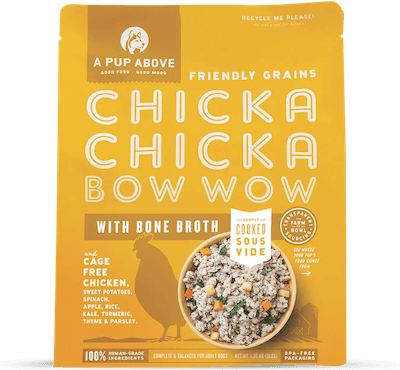
A Pup Above
Who It’s For: Dog owners seeking balanced nutrition that supports lean body weight, muscle maintenance, and everyday mobility as degenerative myelopathy progresses.
Why we recommended it: Unlike other recipes, A Pup Above stands out for its protein density, averaging over 45% protein on a dry matter basis, significantly higher than most other fresh and dry options. A Pup Above strikes a rare balance between quality, transparency, and nutrition. The food is sous vide-cooked to preserve nutrients without relying on artificial preservatives or high-heat processing. It’s also one of the only fresh foods that publishes the full amino acid profile and nutrient digestibility scores, showing a strong commitment to nutritional integrity.
What sets it apart from competitors: The company sources meat from GAP-certified farms, which also appeals to those concerned about ethical farming and food safety. It’s also unusually transparent: you can scan a QR code on the packaging to trace every ingredient back to its source. Many competitors offer vague sourcing or rely on generic terms like “chicken meal,” but A Pup Above keeps it simple and traceable.
Use code CANINEBIBLE50 for $50 OFF on $100+ orders (or CANINEBIBLE for 25% OFF on subscriptions). Use this link to get started.
Who It’s For: Owners of puppies from DM-prone breeds who want complete growth nutrition that supports healthy muscles, joints, and appropriate body condition.
Why we recommended it:Open Farm’s Gently Cooked Puppy Recipe combines the benefits of home-cooked meals with the convenience and safety of a pre-portioned commercial formula. The high-quality animal protein (like humanely raised chicken and wild-caught salmon) supports muscle development, while nutrient-dense produce like pumpkin, kale, and coconut oil helps build a strong immune system and promotes healthy digestion. The recipe is also formulated to meet AAFCO standards for puppy nutrition, ensuring a balanced foundation during the most important growth phase.
What sets it apart from competitors: Open Farm’s dedication to ethical sourcing and full traceability. Every ingredient in the recipe can be traced back to its origin via a lot code on the package. Unlike many brands, Open Farm uses GAP-certified meats, avoids antibiotics and growth hormones, and excludes any artificial preservatives or fillers. The food is gently cooked at low temperatures to preserve nutrients without compromising flavor and safety.
Who It’s For: Dogs with degenerative myelopathy that prefer softer meals or need extra moisture while maintaining adequate calories and high-quality protein.
Why we recommended it:The Purina Pro Plan Sport Chicken and Rice Entrée delivers targeted nutrition for active dogs in a highly digestible, wet format. The formula supports lean muscle mass with quality animal protein while also helping maintain hydration and energy levels, especially useful for highly active dogs or recovering from illness. It’s also backed by decades of veterinary nutritional research, giving owners peace of mind about its formulation and safety. It’s also fortified with essential nutrients like vitamin E and zinc, tailored for performance and immune health.
What sets it apart from competitors: Unlike many wet foods that emphasize flavor but skimp on protein, this formula offers 9% protein as-fed (approximately 45% on a dry matter basis), making it one of the more protein-rich options in the canned food category. Purina’s in-house research and consistent quality control help differentiate it from boutique brands that may lack large-scale safety testing.
Best Budget-Friendly Dog Food for Degenerative Myelopathy
4.5
★★★★★
I and love and you Naked Essentials
Who It’s For: Dog owners seeking affordable, complete nutrition that helps maintain muscle and a healthy weight without stretching the household budget.
Why we recommended it:I and Love and You Naked Essentials Chicken & Duck delivers solid nutritional value at a lower cost without compromising ingredient integrity. The formula prioritizes animal protein, offering USA farm-raised chicken and duck as the first ingredients, which helps support lean muscle maintenance and overall vitality. Plus, the brand includes added prebiotics and probiotics for digestive health—an uncommon bonus in this price tier.
What sets it apart from competitors: It uses clean, recognizable ingredients while keeping the cost approachable. Unlike many budget brands, it’s free from corn, wheat, soy, and artificial preservatives. The addition of flaxseed and coconut oil provides a dose of healthy fats for skin and coat health.
Best Raw Dog Food for Degenerative Myelopathy
4.6
★★★★★
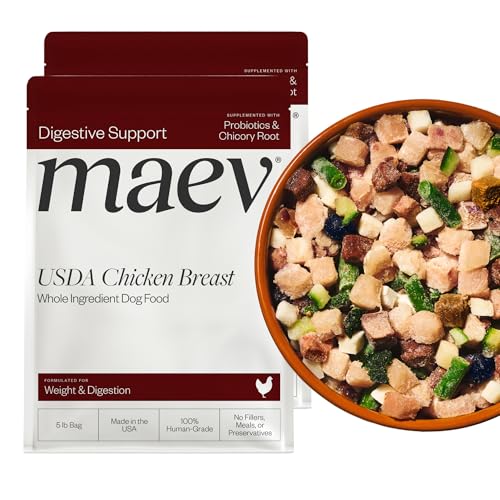
MAEV Raw Food
Who It’s For: Owners considering a raw diet for a dog with degenerative myelopathy who want protein-rich nutrition formulated to be complete and balanced.
Why we recommended it:Maev blends the benefits of raw feeding—high bioavailability, muscle-supporting protein, and real, whole ingredients—with the ease of ready-to-serve frozen packaging. The recipes are vet-formulated to meet AAFCO standards and don’t require any prep—just scoop and serve. The brand goes beyond raw meat by incorporating functional ingredients like bone broth, omega-rich oils, and vitamin-packed fruits and vegetables, helping support digestion, mobility, skin, coat, and immunity all at once. Maev distinguishes itself through its clean, minimalist formulation with a focus on real, human-grade ingredients and zero fillers.
What sets it apart from competitors: Unlike many raw brands that require portioning or thawing, Maev ships pre-portioned pellets that are easy to store and serve frozen, streamlining the raw feeding process. It also includes functional wellness blends—for example, joint-supporting glucosamine or calming supplements—integrated directly into the food.
Get 20% OFF your order with the code CANINE20 —Use this link to get started.
Best Grain-Free Dog Food for Degenerative Myelopathy
4.7
★★★★★
Open Farm Grain-Free
Who It’s For: Dogs with degenerative myelopathy that also need a veterinarian-recommended grain-free diet because of a diagnosed sensitivity or intolerance.
Why we recommended it:Open Farm’s Grain-Free Kibble offers responsibly sourced, animal-first proteins and a nutritionally rich recipe without grains or artificial additives. This formula provides balanced macronutrients from animal proteins like wild-caught salmon or grass-fed beef, supported by non-GMO fruits and vegetables like pumpkin, peas, and coconut oil. It’s a convenient, shelf-stable food that doesn’t compromise on quality, and it’s designed to meet AAFCO nutritional standards for adult dogs.
What sets it apart from competitors: Every ingredient is traceable back to its source through the lot code on the bag. Unlike many grain-free kibbles that use vague “meat meals,” Open Farm uses high-quality, antibiotic-free meat from humane farms. It’s one of the few brands offering grain-free formulas that also avoid artificial preservatives and mystery by-products.
Best Dog Food for Degenerative Myelopathy & Allergies
4.6
★★★★★
Acana Limited
Who It’s For: Dogs managing degenerative myelopathy alongside food sensitivities who need balanced nutrition with carefully selected, well-tolerated ingredients.
Why we recommended it:ACANA Limited Ingredient because it offers a thoughtfully crafted, limited-ingredient diet that doesn’t sacrifice protein quality or nutritional completeness. Using lamb as the single animal protein source and apples as a digestible carbohydrate, this formula supports muscle maintenance, skin health, and digestion—all key concerns for dogs with allergies. The high protein content (31% minimum) comes from fresh and raw lamb, not from meat meals or fillers, making it easier for sensitive dogs to digest and absorb nutrients.
What sets it apart from competitors: The inclusion of freeze-dried lamb enhances flavor without adding artificial flavorings, which many sensitive dogs react to. Commitment to whole-prey ratios and clean, regionally sourced ingredients. Most LID foods simplify the recipe but often compromise on ingredient quality—ACANA doesn’t. It avoids peas, potatoes, soy, and gluten, all while maintaining a biologically appropriate nutrient profile.
Best Large-Breed Dog Food for Degenerative Myelopathy
4.8
★★★★★
Purina Pro Plan High Protein
Who It’s For: Large dogs with degenerative myelopathy that need controlled calories and quality protein to maintain muscle without adding excess body weight.
Why we recommended it:Purina Pro Plan’s Chicken & Rice formula offers a balanced nutritional profile with 29% protein and 13% fat, aiding in maintaining lean muscle mass and an ideal body condition. The inclusion of glucosamine and EPA, an omega-3 fatty acid, supports joint health and mobility—crucial for larger breeds prone to joint issues. Additionally, the formula contains live probiotics and natural prebiotic fiber to promote digestive health, ensuring optimal nutrient absorption.
What sets it apart from competitors: This formula emphasizes digestive health alongside high protein content. The use of real chicken as the first ingredient ensures quality protein sources. Moreover, the product avoids artificial colors and flavors, focusing on natural ingredients to support overall health.
Best High-Protein Dog Food for Degenerative Myelopathy
4.7
★★★★★
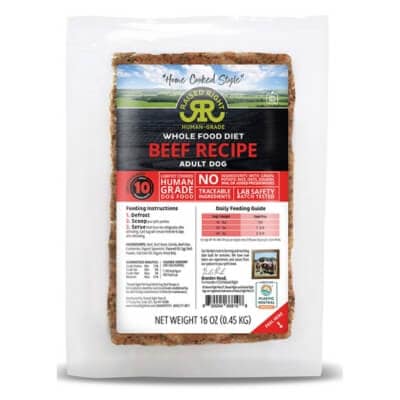
Raised Right
Who It’s For: Dogs with degenerative myelopathy that need ample high-quality protein to help preserve lean muscle as mobility and activity levels decline.
Why we recommended it:Raised Right features one of the highest-protein dog foods available—some recipes exceed 60% protein on a dry matter basis. What sets it apart is not just the sheer protein content, but also the purity of ingredients. Each recipe includes only a handful of recognizable items like meat, organs, and vegetables—no grains, legumes, or preservatives. The food is lightly cooked to meet safety standards while preserving nutrient integrity, and it’s formulated to meet AAFCO standards for complete and balanced adult dog nutrition.
What sets it apart from competitors: The formula avoids all common fillers—there are no potatoes, rice, lentils, peas, or synthetic vitamins. Instead, it relies on whole foods like carrots and blueberries for natural nutrient balance. It’s one of the few dog foods that publishes full lab results from a third-party testing facility for every batch, which is rare transparency in the pet food space.
Who It’s For: Older dogs with degenerative myelopathy that need senior-focused nutrition supporting muscle maintenance, weight control, and changing energy needs.
Why we recommended it:Blue Buffalo Wilderness Senior meets the unique needs of senior dogs with a combination of high-quality animal protein and age-specific nutrients. Deboned chicken is the first ingredient, providing lean protein to prevent muscle loss with age. Additionally, it contains glucosamine and chondroitin for joint support, L-carnitine for healthy weight maintenance, and antioxidant-rich LifeSource Bits to help strengthen the immune system—all important for senior dogs who may be slowing down but still require nutrient-dense fuel.
What sets it apart from competitors: Blue Buffalo Wilderness Senior maintains a relatively high protein level while still supporting aging joints, heart, and brain. The inclusion of proprietary LifeSource Bits—cold-formed to retain potency of vitamins and antioxidants—is a distinctive feature. The food is also free from poultry by-product meals, corn, wheat, soy, and artificial preservatives.
Best Air-Dried Dog Food for Degenerative Myelopathy
4.7
★★★★★
ZIWI Peak Air-Dried Dog
Who It’s For: Dog owners seeking a convenient, nutrient-dense option with quality protein to support muscle maintenance in dogs with degenerative myelopathy.
Why we recommended it:ZIWI Peak Lamb Recipe delivers one of the highest protein levels available in shelf-stable dog food, using a simple ingredient list anchored by ethically sourced, free-range lamb. The food is gently air-dried using a twin-stage process that locks in nutrients while eliminating harmful pathogens—offering the nutritional benefits of raw with the safety and convenience of dry kibble. It also includes organ meats, New Zealand green mussels for joint support, and kelp for natural vitamin and mineral supplementation.
What sets it apart from competitors: ZIWI Peak stands out by offering 96% meat, organs, bone, and New Zealand green mussels—without any fillers, grains, or rendered meals. Few air-dried products maintain such nutritional integrity while keeping ingredient lists so clean. The lamb used is single-sourced and pasture-raised, making it ideal for dogs with poultry or beef allergies. The air-dried format also enhances palatability, and many owners use it both as a full meal and a high-value training treat.
Best Dog Food Topper for Degenerative Myelopathy
4.5
★★★★★
Portland Pet Food Company
Who It’s For: Dogs with degenerative myelopathy that need extra meal appeal while keeping calories controlled and their regular diet nutritionally balanced.
Why we recommended it:Portland Pet Food Company’s Grandma Ada’s Turkey & Yams adds a nutritional and palatable lift to any meal without overwhelming your dog’s diet. Made with just five whole ingredients—cooked turkey, yams, green beans, red apples, and parsley—it provides lean protein and natural vitamins in a lightly cooked, stew-like texture that dogs love. The simplicity and transparency of the recipe make it easy on sensitive stomachs, while the high moisture content helps support hydration.
What sets it apart from competitors: This topper features a minimalistic, clean-label formulation using only USDA-certified human-grade ingredients, all sourced and made in the USA. Unlike many commercial toppers that rely on broths, gums, or mystery meats, this one offers clearly listed ingredients you could find in your own kitchen. It’s shelf-stable yet preservative-free, thanks to its pouch packaging and small-batch cooking method.
How to Transition Your Dog to a New Diet for Degenerative Myelopathy
A gradual food change helps reduce digestive upset and gives your dog time to adjust to the new diet. Unless your veterinarian recommends a different schedule, transition over about 7–10 days, using the guide below to slowly increase the new food.
Transition Period
Old Food
New Food
What to Do
Days 1–2
75%
25%
Mix thoroughly and keep normal meal times.
Days 3–4
50%
50%
Increase the new food while keeping portions measured.
Days 5–6
25%
75%
Continue the gradual change without adding new treats or toppers.
Days 7–10
0%
100%
Feed the new diet fully once your dog has adjusted.
Sensitive dogs
Reduce slowly
Increase slowly
Extend the transition if your veterinarian recommends a slower change.
Monitoring Your Dog’s Progress on a New Diet for Degenerative Myelopathy
After the switch, watch your dog’s appetite, stool quality, vomiting, and general energy level. Changes that persist or become significant may mean the new food is not agreeing with your dog and should be discussed with your veterinarian.
Track body weight regularly and note whether your dog is gaining or losing unexpectedly. Because degenerative myelopathy progresses over time, also pay attention to any noticeable improvement or worsening in overall comfort, daily activity, or existing symptoms rather than assuming every change is diet-related.
Dogs with degenerative myelopathy or other medical conditions should be monitored with veterinary guidance. Your veterinarian can help determine whether changes are related to the diet, the underlying disease, or another health problem.
The Bottom Line
Choosing the best dog food for degenerative myelopathy is about supporting your dog’s overall health as their mobility needs change. A complete, balanced diet with quality protein, appropriate calories, omega-3 fatty acids, and good digestibility can help support body condition and everyday well-being. Because no specific diet has been proven to stop or reverse degenerative myelopathy, nutrition should remain part of a broader care plan rather than a standalone treatment. The right food should also fit your dog’s age, activity level, preferences, and any additional health concerns. Transitioning gradually can make the switch easier on the digestive system, while regular monitoring helps you see how well the new diet is working. Work with your veterinarian to adjust feeding choices as your dog’s condition and nutritional needs evolve.
Like It? Subscribe & Share!
Sources
Canine Bible uses only high-quality sources, including peer-reviewed studies, to support the facts within our articles. Read our editorial process and product review methodology to learn more about how we fact-check, test products, and keep our content accurate, reliable, and trustworthy.
Canine Bible authorship represents the unified voice of our entire editorial team and our in-house veterinarians rather than a single author. Each article, blog post, and review published under the Canine Bible name undergoes a rigorous review process, involving all team members to guarantee accuracy and up-to-date in accordance with the latest veterinarian research. This collaborative effort is an integral part of our editorial process and aligns with our four pillars of content creation. This approach ensures our content is backed by expert knowledge and factual information, offering our readers reliable, actionable, and trustworthy content.