Training a dog can feel a lot like learning a new language—except your “student” may be chewing your shoes while you’re still figuring out the basics. The best dog training books give owners more than commands; they teach timing, body language, motivation, and how to build trust without confusion or frustration. For new puppy parents, rescue dog adopters, or owners dealing with barking, pulling, jumping, or stubborn behavior, the right book can turn daily struggles into teachable moments. A strong training guide also helps you avoid outdated methods that can damage your dog’s confidence or your bond. In this guide, we’ll reveal the best dog training books for different goals, experience levels, and dog personalities so you can choose the right resource for a calmer, happier, better-behaved companion.
Can Dog Training Books Improve Training Success?
Yes, dog training books can improve training success when they teach clear, evidence-based methods and help owners stay consistent. A good book explains timing, rewards, body language, and step-by-step practice, which can reduce confusion for both the dog and the person training them.
The right book also depends on your goal. Some dog owners need a general training guide, while others need help with specific challenges like leash training, crate training, potty training, trick training, or training an aggressive dog. Choosing a book that matches the behavior you want to improve makes the advice easier to apply in real life.
The key is choosing books that use humane, reward-based methods rather than fear or harsh corrections. Research on companion dogs found that aversive-based training was linked with more stress-related behaviors, higher post-training cortisol, and more pessimistic responses compared with reward-based training, supporting the value of positive training guidance.[1]
Latest Research on What Makes Dog Training Successful
According to the latest research, dog training success appears to depend on the dog, the owner, and their interaction, not on a single method. In companion dogs, the strongest predictors of completing a Canine Good Citizen program were lower owner-rated disobedience, higher owner cognitive scores, and more time spent training.[2]
📄Research Update — Training Methods
Reward-Based Training Remains the Safest Starting Point
Research comparing reward-based and mixed training methods found that reward-focused approaches can be effective without adding the welfare risks linked to harsher techniques. For dog training books, this means the most useful guides should teach clear reinforcement, timing, and gradual skill-building instead of relying on fear or physical corrections.[3]
📊Clinical Focus — Attention & Repetition
Consistent Practice Helps Dogs That Struggle to Focus
A study on inattentive dogs found that repetitive training can be more helpful than permissive handling for improving learning outcomes. This supports choosing books with structured lessons, short practice steps, and repeatable routines, especially for dogs that are easily distracted, impulsive, or slow to settle during training.[4]
⚠️Owner Myth Check — One-Size-Fits-All Training
Successful Training Depends on the Dog, Handler, and Goal
Modern working-dog research emphasizes that training success is shaped by selection, temperament, environment, handler skill, welfare, and performance goals. The same idea applies at home: the best dog training book is not always the most advanced one, but the one that fits your dog’s age, behavior needs, motivation, and learning pace.[5]
Best Dog Training Books
Here are the best dog training books of this year.
Best Overall Dog Training Book
4.9
★★★★★
The Power of Positive Dog Training
Who It’s For: Dog owners who want a well-rounded training guide that covers everyday manners, communication, and problem-solving in one practical resource.
Why we recommended it:The Power of Positive Dog Training offers a basic training program built around friendship, positive reinforcement, and clearer communication rather than intimidation. The book is updated with tools and techniques that include clicker training, which can help dogs connect a precise behavior with a reward more consistently. It also explains how to observe and respond to canine body language, an important part of reducing confusion during training. The guidance goes beyond teaching commands by helping the handler understand timing, reinforcement, and how to gradually move away from constant treats or clicker use. The treat suggestions and glossary make the lessons easier to apply in real life without making the material too technical or overwhelming. For dogs, the benefit is more about building predictable learning patterns, which can improve confidence and day-to-day behavior.
What sets it apart from competitors: Its six-week progression gives the book a more structured path than many training guides that read like loose collections of tips. The built-in progress diary turns training into a trackable routine, helping handlers notice patterns, setbacks, and small wins rather than relying on memory alone.
Best Dog Training Book for Puppies
4.8
★★★★★
Perfect Puppy in 7 Days
Who It’s For: Puppy parents who want gentle, step-by-step guidance for house training, socialization, biting, chewing, and building good habits early.
Why we recommended it:Perfect Puppy in 7 Days: How to Start Your Puppy Off Right gives puppy training a focused early-start approach built around positive reinforcement, routine, and environmental setup. Dr. Sophia Yin explains how puppies learn, why early training matters, and how daily handling shapes confidence, cooperation, and behavior. The book covers practical puppy needs like potty training, preparation, socialization, handling, and the Learn to Earn program, which teaches puppies that polite behavior helps them access rewards and attention. Its visual format is especially helpful, with over 400 photos supporting the step-by-step instruction. The approach helps reduce confusion by pairing clear signals with predictable rewards, which can make learning less stressful for a young dog’s developing nervous system. It is detailed enough to guide the first days at home without feeling too dense.
What sets it apart from competitors: The book’s first-week framework uses a real puppy example to show how training fits into ordinary home routines rather than presenting isolated commands. It also combines early development, preparation, house training, manners, and social exposure into one onboarding-style system, which gives it a more practical “start here” feel than many general puppy manuals.
Best Positive Reinforcement Dog Training Book
4.7
★★★★★
Don’t Shoot the Dog!
Who It’s For: Dog owners who prefer reward-based training that builds trust, confidence, and cooperation without fear, force, or harsh corrections.
Why we recommended it:Don’t Shoot the Dog!: The New Art of Teaching and Training explains how reinforcement changes behavior in a way that feels practical, not academic. Karen Pryor breaks down core learning concepts such as reinforcement, shaping, stimulus control, and clicker training, then shows how those ideas apply to real behavior challenges. For dog training, that matters because timing and consequence are often what separate clear learning from repeated frustration. The book also covers methods for reducing unwanted habits without relying on force, threats, guilt, or punishment. Its clicker-training discussion is especially useful because a marker signal can identify the exact behavior being rewarded, which helps dogs learn with less ambiguity. The material also helps readers think about behavior patterns, motivation, and how small changes in response can shift future actions.
What sets it apart from competitors: Rather than functioning as a command-by-command dog manual, this book is built around the mechanics of behavior change itself. That gives it a broader strategic value: readers can apply the same learning principles to new situations instead of depending on a fixed script for every training problem.
Best Dog Training Book for First-Time Owners
4.6
★★★★★
Zak George’s Dog Training Revolution
Who It’s For: New dog owners who want clear, beginner-friendly advice to understand their dog, avoid common mistakes, and start training with confidence.
Why we recommended it:Zak George’s Dog Training Revolution: The Complete Guide to Raising the Perfect Pet with Love gives dog raising and training a broad, easy-to-follow foundation built around positive reinforcement. It covers practical early needs such as choosing the right dog, preparing the home, house training, basic skills, leash walking, and behavior challenges like biting, barking, chewing, jumping, and aggression. The training logic is built around communication and motivation, which helps a dog understand which behaviors earn attention, access, play, or rewards. The book also includes health-care basics, travel tips, tricks, and activities, giving it enough range to guide the first stage of dog ownership without becoming overly technical. We like that it treats training as part of everyday life, not as a separate chore reserved for formal sessions.
What sets it apart from competitors: It follows a book-to-video structure: many topics are paired with corresponding YouTube demonstrations, giving readers both written instruction and visual modeling. That hybrid format is useful because leash handling, reward timing, and body position are often easier to understand when seen, not just described.
Best Dog Training Book for Obedience Training
4.5
★★★★★
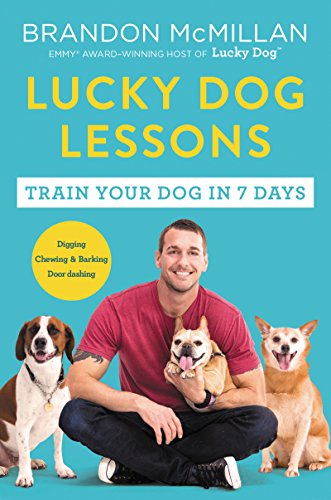
Lucky Dog Lessons
Who It’s For: Dog owners who want reliable help teaching core commands, better focus, impulse control, and everyday manners at home or in public.
Why we recommended it:Lucky Dog Lessons: From Renowned Expert Dog Trainer and Host of Lucky Dog: Reunions focuses on building obedience through trust, control, and repeatable training steps rather than long theory. Brandon McMillan’s system starts with foundational handling and then moves into the seven common commands: sit, stay, down, come, off, heel, and no. Those cues cover many daily obedience needs, from greeting people politely to walking with better control and responding when called. The book also addresses practical behavior issues such as house training, door dashing, chewing, barking, and mealtime manners, which often interfere with obedience at home. Its use of photographs and examples helps make body position, timing, and cue delivery easier to understand. That matters because dogs learn more reliably when the signal, behavior, and consequence are consistent.
What sets it apart from competitors: The book is shaped by a shelter-dog rehabilitation model, so the training is presented for dogs with different backgrounds, temperaments, and starting points. Its structure also includes variations based on breed, size, and temperament, which gives the obedience advice a more adaptable feel than one-size-fits-all command guides.
Best Dog Training Book for Behavior Problems
4.8
★★★★★
Zak George’s Guide to a Well-Behaved Dog
Who It’s For: Dog owners dealing with barking, jumping, chewing, anxiety, or stubborn habits who need practical strategies to improve daily life.
Why we recommended it:Zak George’s Guide to a Well-Behaved Dog: Proven Solutions to the Most Common Training Problems for All Ages, Breeds, and Mixes is built around solving specific behavior issues instead of teaching obedience in a broad, general way. It covers common challenges such as chewing, jumping, barking, play biting, begging, not listening, thunderstorm phobia, separation anxiety, and aggression. The approach emphasizes humane, modern, science-based training, helping readers work with motivation and environment rather than relying on intimidation. The guidance is flexible enough for early training as well as established habits without making the material feel overly technical. Case studies and video-linked examples help connect the written advice to real training scenarios, while the explanations help readers understand what the dog is practicing, why it keeps happening, and how to redirect it more effectively.
What sets it apart from competitors: Its main edge is the lookup-style organization, allowing readers to go straight to the behavior they are struggling with instead of working through a full obedience curriculum first. The book also includes prevention alongside correction, which is valuable because many behavior issues are easier to manage before they become rehearsed habits.
Best Dog Training Book for Reactive Dogs
4.7
★★★★★
Control Unleashed Reactive To Relaxed
Who It’s For: Dog owners with dogs that bark, lunge, or overreact on walks and need calm, structured guidance to build confidence and control.
Why we recommended it:Control Unleashed Reactive To Relaxed by Leslie McDevitt focuses on helping dogs learn how to relax, focus, and function in stimulating situations. The book builds from the Control Unleashed program and adds updated foundation behaviors, core games, and practical exercises for teaching life skills and coping skills. Its approach is rooted in operant conditioning, clicker training, and counterconditioning, which means the dog is guided toward useful alternative behaviors instead of simply being corrected for reacting. That matters because reactivity often involves high arousal, fear, frustration, or sensory overload, not just “bad manners.” The exercises are intended to make learning conditions safer and clearer, so the dog can stay under threshold long enough to process information. It also emphasizes comfort in the world, relationship-building, and communication between dog and handler.
What sets it apart from competitors: It emphasizes a “conversational training” model, where both dog and handler can give feedback instead of relying only on one-way cues. It also introduces yes/no-style questions as part of the training process, helping the handler adjust the setup when the dog shows the environment is too difficult for learning.
Best Dog Training Book for Trick Training
4.6
★★★★★
101 Dog Tricks
Who It’s For: Dog owners who want fun, engaging ways to teach tricks, strengthen bonding, and keep smart or energetic dogs mentally stimulated.
Why we recommended it:101 Dog Tricks: Step by Step Activities to Engage, Challenge, and Bond with Your Dog gives trick training a clear, approachable structure instead of treating it as random party entertainment. Kyra Sundance organizes the book around 101 activities, with photo-supported steps that make each movement easier to follow at home. The tricks range from simple foundation behaviors to more involved tasks, so the dog can progress gradually instead of being pushed into complex skills too soon. Each trick includes guidance such as difficulty level, prerequisites, troubleshooting, and ways to build on the skill, which helps make training sessions more intentional. This matters because trick training uses repetition, reinforcement timing, body awareness, and problem-solving in a way that keeps the dog mentally active.
What sets it apart from competitors: The curriculum has unusual scale and reach, with 101 tricks and availability in 18 languages with more than half a million copies sold. The author also brings a performance-trick background, which gives the book a more specialized trick-training focus than general dog manuals that only include a small bonus chapter on tricks.
Best Dog Training Book for Service Dogs
4.5
★★★★★
Training Your Own Full Potential Service Dog®
Who It’s For: Dog owners or handlers seeking structured training guidance for task work, public manners, reliability, and service-dog foundations.
Why we recommended it:Training Your Own Full Potential Service Dog®: Step by Step Instructions for Our Famous, “Basic Foundation Skills Course” to Get You Started focuses on the early foundation skills needed before a dog moves into advanced service work. Lelah Sullivan’s material is tied to the Full Potential Service Dog Training Method, which begins with basics that can support different types of service dog paths. The Basic Foundation Skills Course emphasizes essential foundation behaviors, public manners, focus on service dog work, and one adaptable task that can be customized for different disabilities. It also reinforces the idea that the dog should “learn how to learn,” which is important when later tasks become more complex. The material narrows the focus to foundational service-work preparation instead of treating service training like standard household manners.
What sets it apart from competitors: The book connects directly to a broader school-based training system rather than standing alone as a generic service dog manual. It functions as the starting textbook for a defined Basic Foundation Skills Course, with related materials and advanced pathways built around the same training method.
Best Dog Training Book for Crate Training
4.8
★★★★★
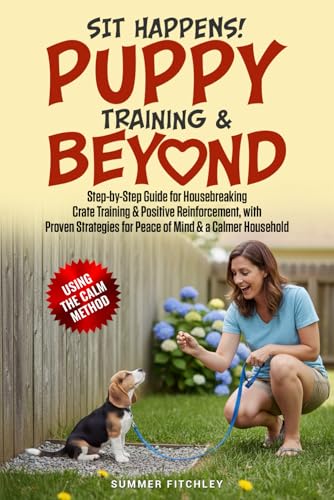
Sit Happens! Puppy Training & Beyond
Who It’s For: Dog owners who want to make crate time feel safe, calm, and positive for puppies or adult dogs adjusting to a new routine.
Why we recommended it:Sit Happens! Puppy Training & Beyond: Step-by-Step Guide for Housebreaking, Crate Training & Positive Reinforcement, with Proven Strategies for Peace of Mind & a Calmer Household focuses on the early puppy challenges that usually create the most stress at home: housebreaking, crate comfort, biting, chewing, leash manners, barking, and daily routine-building. Summer Fitchley presents the crate as a cozy, safe space, which matters because puppies learn better when confinement is paired with comfort and predictability rather than isolation or correction. The book’s positive reinforcement approach helps connect calm behavior, bathroom success, and crate time with clear rewards, making the routine easier for a young dog to understand. Its emphasis on action steps and daily plans is useful because crate training depends heavily on timing, repetition, and gradual exposure.
What sets it apart from competitors: Its most useful distinction is the way it connects crate training, housebreaking, and calmer household routines into one beginner-friendly system. Instead of treating the crate as a single training topic, it places crate comfort inside a full puppy setup plan with daily structure, family-friendly strategies, and prevention-focused habits.
Best Dog Training Book for Leash Training
4.7
★★★★★
The Ultimate Leash Training Manual
Who It’s For: Dog owners tired of pulling, lunging, or zigzag walks who want calmer, more enjoyable leash manners without constant frustration.
Why we recommended it:The Ultimate Leash Training Manual: 5 Steps to a Well Behaved Dog focuses directly on one of the most common daily training pain points: getting a dog to walk calmly on leash. Chad Singer and Canine Revolution Dog Training organize leash work around engagement, pressure awareness, repeated movement patterns, and proofing around distractions. That sequence is useful because leash walking is not just about stopping pulling; it requires attention, pressure awareness, muscle memory, and generalization. The book also covers leash reactivity, multi-dog walking, equipment choices, and illustrated handling techniques, giving the reader more than a basic “stop pulling” checklist. Its pressure-desensitization section is particularly relevant because many dogs naturally resist leash pressure, which can intensify pulling if the response is not taught clearly.
What sets it apart from competitors: Its 5-phase timeline gives the book a more sequential leash-training framework than many general dog manuals that only dedicate a short chapter to walking. The progression from engagement to real-world generalization creates a clearer path from low-distraction practice to public reliability.
Best Dog Training Book for Advanced Training
4.6
★★★★★
Ultimate Guide to Dog Training
Who It’s For: Dog owners ready to move beyond basics with sharper skills, better focus, complex commands, and more challenging training goals.
Why we recommended it:Ultimate Guide to Dog Training: Puppy Training to Advanced Techniques Plus 25 Problem Behaviors Solved! gives dog training a broader path than a basic obedience book. Teoti Anderson, CPDT-KA and KPA-CTP, explains training through clear step-by-step instruction and an easy-to-understand scientific explanation of positive methods. The book also covers foundation building, socialization, advanced techniques, and solutions for 25 common behavior problems, so weaker training areas can be addressed before harder work is added. Its positive reinforcement framework helps build behavior by rewarding correct choices and shaping repeatable responses instead of relying on confusion or pressure. It has enough room to explain technique, progression, behavior troubleshooting, and communication without becoming too dense.
What sets it apart from competitors: The book’s key advantage is its life-stage range: it does not assume the dog is starting as a blank-slate puppy or already trained adult. It stretches from early lessons to advanced techniques while also addressing retraining for rescue dogs, rebellious teens, and seniors, which gives it broader coverage than many single-stage training guides.
Other Dog Training Books
Best Dog Training Book for Small Dogs:The Small Dog Training Handbook: Solve Behavior Problems & Raise a Happy, Well-Trained Pup is built for dog owners who need training advice tailored to small breeds, not just scaled-down big-dog tips. It addresses common small-dog struggles like barking, nipping, stubbornness, housebreaking, leash pulling, and separation anxiety. The book also uses positive reinforcement, socialization strategies, and mental stimulation games to help small dogs build confidence without harsh corrections. It wins this category because it focuses on the unique habits, sensitivities, and big personalities that often come with French Bulldogs, Chihuahuas, Dachshunds, and other small breeds.
Best Dog Training Book for Rescue Dogs:Successfully Raising and Loving Your Rescue Dog is designed for dog owners who want a smoother transition after bringing home a rescue dog. It focuses on integration, understanding behavior, avoiding common mistakes, and building trust with a newly adopted dog. The step-by-step approach makes it especially helpful for dogs that may need extra patience, routine, and emotional security before training fully clicks. It wins this category because it looks beyond commands and helps owners navigate the adjustment period, bonding process, and behavior challenges that are common with rescue dogs.
How to Use a Dog Training Book Effectively
Dog training books work best when you turn the advice into small, consistent daily practice instead of reading passively and trying everything at once. Pick one goal, follow the steps, practice in short sessions, and adjust based on your dog’s age, temperament, and behavior history.
Training Step
What to Do
Why It Helps
Pick one goal
Focus on one skill or behavior at a time.
Prevents confusion and keeps training manageable.
Read first
Review the method before practicing with your dog.
Helps you understand the steps before adding distractions.
Keep sessions short
Practice for a few minutes, then take a break.
Dogs learn better when sessions stay focused and positive.
Use rewards clearly
Reward the behavior you want right away.
Good timing helps your dog connect action with reward.
Track progress
Note what worked, what failed, and what needs practice.
Makes it easier to spot patterns and adjust calmly.
Involve the family
Use the same cues, rules, and reward timing.
Consistency helps your dog learn faster at home.
Adjust expectations
Consider age, temperament, past experiences, and stress level.
Training feels fairer and more realistic for your dog.
When a Training Book Is Not Enough
A dog training book can be a helpful starting point, but some situations need more support than written advice can provide. If your dog shows aggression, has a bite history, becomes intensely reactive, or shows severe fear, it is safer to work with a veterinarian, veterinary behaviorist, or qualified reward-based trainer.
Professional help is also a good idea for separation anxiety, sudden behavior changes, or problems that keep getting worse despite consistent practice. These issues may involve stress, pain, anxiety, or a training setup that needs a personalized plan.
Getting help does not mean you failed. It simply means your dog may need closer observation, safer management, and step-by-step coaching that fits their specific behavior, environment, and emotional state.
Frequently Asked Questions
The highest-rated dog training books usually combine clear instructions, humane methods, and practical examples you can use at home. Look for books by respected trainers or behavior experts that explain timing, rewards, body language, and troubleshooting instead of only listing commands.
The best positive reinforcement dog training books teach dogs through rewards, praise, play, and clear communication rather than fear or harsh corrections. Good options explain how to mark the right behavior, reward consistently, and gradually build reliable habits.
Yes, some dog training books focus specifically on reactive dogs that bark, lunge, freeze, or become overwhelmed around triggers. These books usually emphasize distance, calm focus, counterconditioning, confidence-building, and keeping the dog under threshold during training.
Professional dog training books can be useful if they explain concepts clearly and include practical exercises. They are best for owners who want deeper guidance on learning theory, behavior modification, advanced obedience, or working with more challenging dogs.
Free dog training books or PDFs can be helpful for basic tips, but quality varies widely. Before relying on one, check the author’s credentials, avoid outdated punishment-based advice, and make sure the guidance matches modern, humane training practices.
The Bottom Line
The best dog training books give you more than a list of commands—they help you understand how your dog learns, communicates, and responds to daily situations. Whether you are raising a puppy, working with a rescue dog, improving leash manners, or managing reactivity, the right book can make training feel more organized and less frustrating. Positive, clear, and consistent methods are especially important because they build trust while helping your dog practice better choices. A good training book should match your dog’s age, temperament, behavior needs, and your own experience level. For beginners, step-by-step guidance can make the biggest difference, while experienced owners may benefit from books that go deeper into behavior, advanced skills, or specialized training. No single book will solve every issue overnight, but the right resource can give you a reliable plan and a better way to communicate with your dog. With patience and the right guidance, training becomes less about control and more about building a calmer, happier relationship.
Like It? Subscribe & Share!
Sources
Canine Bible uses only high-quality sources, including peer-reviewed studies, to support the facts within our articles. Read our editorial process and product review methodology to learn more about how we fact-check, test products, and keep our content accurate, reliable, and trustworthy.
Canine Bible authorship represents the unified voice of our entire editorial team and our in-house veterinarians rather than a single author. Each article, blog post, and review published under the Canine Bible name undergoes a rigorous review process, involving all team members to guarantee accuracy and up-to-date in accordance with the latest veterinarian research. This collaborative effort is an integral part of our editorial process and aligns with our four pillars of content creation. This approach ensures our content is backed by expert knowledge and factual information, offering our readers reliable, actionable, and trustworthy content.