A dog can look perfectly healthy while intestinal worms quietly steal nutrients, disrupt digestion, and put other pets—and sometimes people—at risk. Choosing the best dewormer for dogs is not simply about buying the strongest product; it means matching the treatment to the suspected parasite, your dog’s age, weight, health, and veterinary needs. The wrong formula may fail to target the worms involved, while delayed treatment can allow an infestation to worsen. A reliable dewormer helps protect your dog’s comfort, energy, growth, and long-term well-being. It also gives owners greater peace of mind when managing routine parasite prevention. In this guide, we’ll compare the best dog dewormers, explain what each option treats, and show you how to choose a safe, effective solution for your pet.
What Types of Worms Can Infect Dogs?
Dogs can develop several intestinal worm infections, including roundworms, hookworms, tapeworms, and whipworms. These parasites may spread through contaminated soil or feces, infected fleas, prey animals, nursing, or contact with larvae, and they can contribute to diarrhea, weight loss, poor growth, anemia, or a pot-bellied appearance.
Other worms affect areas beyond the intestines. Heartworms spread through mosquito bites and damage the heart and nearby blood vessels, while lungworms can live in the lungs or airways and cause coughing or breathing problems. Threadworms are less common but may affect young or immunocompromised dogs, so veterinary testing is important for identifying the parasite and choosing the correct treatment.
Signs Your Dog May Need a Dewormer
Worm infections may cause digestive, physical, or behavioral changes, but some infected dogs show no obvious symptoms. Because these signs can also result from other health problems, a veterinarian may need to examine the dog and test a stool sample before recommending treatment.
Sign
What It May Look Like
Possible Worm Link
Visible worms or segments
Worms or rice-like pieces in stool
Roundworms or tapeworms
Diarrhea
Loose, bloody, or mucus-covered stool
Intestinal irritation
Vomiting
Repeated vomiting; worms may appear
Possible heavy roundworm burden
Bloated abdomen
Rounded, pot-bellied appearance
Often linked to roundworms
Weight loss
Weight drops despite normal appetite
Poor nutrient absorption
Scooting or rear licking
Dragging or licking around the anus
Tapeworm segment irritation
Pale gums or weakness
Low energy and pale-looking gums
Possible hookworm-related anemia
Poor growth or dull coat
Slow growth or rough coat
Long-term nutrient loss
When Should You Deworm Your Dog?
Deworming timing depends on a dog’s age, lifestyle, exposure risk, fecal-test results, and current prevention plan. Puppies often need more frequent parasite control because worms can pass from the mother, while adult dogs should follow a schedule based on testing and individual risk. Pregnant or nursing dogs should only receive treatments confirmed as safe by a veterinarian.
Newly adopted dogs may need fecal testing when their treatment history is unknown. Dogs that hunt, have fleas, or spend time in contaminated areas may face greater exposure and require closer monitoring. Confirmed or recurring infections should be treated with parasite-specific medication, followed by flea control, environmental cleanup, or repeat testing when advised.
Remember to ALWAYS consult your veterinarian before deworming your dog to confirm the appropriate treatment and dosage for your dog’s needs. If you can’t reach your vet, you can chat live with a registered online veterinary professional via our online vet chat or video chat support(24 hours a day, 7 days a week). Or use Chewy’s online vet services(6 a.m. – midnight ET).
Best Dewormers for Dogs
Here are the best dewormers for dogs of this year.
Best Overall Dewormer for Dogs
4.9
★★★★★
PetArmor
Who It’s For: Dog owners who want a dependable, easy-to-use option that targets common worms and fits smoothly into their dog’s routine care.
Why we recommended it:PetArmor 7 Way De-Wormer for Dogs combines pyrantel pamoate and praziquantel in one flavored chewable treatment. Together, these active ingredients treat and control seven labeled species across tapeworms, roundworms, and hookworms. Using two complementary drugs allows one oral treatment to address multiple parasite classes without relying on a single ingredient to cover every labeled species. Weight-based dosing provides a clear administration framework, provided the dog is weighed accurately beforehand. The chewable can be offered directly or concealed in a small amount of food, although the complete dose must be swallowed. Separate strengths are available for dogs weighing 6 to 25 pounds and those weighing more than 25 pounds, helping align the tablet strength with the labeled dosing instructions.
What sets it apart from competitors: Its OTC animal-drug label is approved by the FDA under NADA #141-261, giving it a formally reviewed application with defined parasite claims. This combines nonprescription access with standardized dosing and regulated labeling rather than relying on supplement-style positioning.
Best Broad-Spectrum Dewormer for Dogs
4.8
★★★★★
Elanco
Who It’s For: Dog owners seeking one convenient treatment that covers several common intestinal worms without juggling multiple products.
Why we recommended it:Elanco Chewable Quad Dewormer for Dogs combines praziquantel, pyrantel pamoate, and febantel in one oral treatment. Its labeled spectrum covers tapeworms, hookworms, roundworms, and whipworms, allowing the formula to address several major intestinal parasite groups. Praziquantel targets tapeworms, while pyrantel and febantel act against susceptible nematodes through complementary mechanisms. The scored chewables support weight-based administration and are available in three tablet strengths for different dog sizes. They may be given directly or hidden in a small amount of food, provided the complete dose is swallowed. Fasting is neither required nor recommended, keeping administration closer to the dog’s normal routine.
What sets it apart from competitors: Its FDA-approved, over-the-counter animal-drug status under NADA #141-007 places it in a different regulatory category from supplement-style deworming formulas. This combines nonprescription access with formally reviewed parasite claims, standardized dosing, and regulated labeling.
Best Preventive Dewormer for Dogs
4.7
★★★★★
Innovet
Who It’s For: Dog owners who want a practical option for routine parasite control and ongoing protection as part of a vet-guided care plan.
Why we recommended it:Innovet Dietary Supplement Natural Pest Control uses a powdered blend of aged garlic, brewer’s yeast, desiccated liver, pumpkin seed powder, selenium, and food-grade diatomaceous earth. The formulation is designed for daily mixing with food, allowing the serving amount to be adjusted according to body weight. Its powder format can be stirred into dry or wet meals with a little water, making it easy to incorporate into an established feeding routine. Brewer’s yeast and desiccated liver contribute flavor and naturally occurring nutrients, while pumpkin seed powder adds another plant-based component to the blend. It is intended for gradual, ongoing use rather than immediate treatment of an active parasite infection. Because concentrated garlic products can cause toxicity in dogs at sufficient doses, careful adherence to the labeled serving amount is important.
What sets it apart from competitors: The formula combines several animal- and plant-derived ingredients in a single daily food topper rather than using a conventional chewable or tablet format. Its gradual dietary approach differs from products formulated to treat specifically identified intestinal worms during a defined course.
Best Holistic Dewormer for Dogs
4.6
★★★★★
Silver Lining Herbs
Who It’s For: Dog owners who prefer a gentler, wellness-focused approach using natural ingredients alongside responsible veterinary guidance.
Why we recommended it:Silver Lining Herbs 13 Herbal Wormer for Canines uses a proprietary botanical blend intended to support the intestinal environment and the body’s natural defenses against worms. Its formula includes herbs such as cascara, slippery elm, barberry, goldenseal, sage, clove, chaparral, and milk thistle. These ingredients give the supplement a broader digestive-support approach rather than the targeted action of a conventional anthelmintic drug. The capsule format follows body-weight tiers, providing a straightforward daily serving for dogs of different sizes. Each course lasts 10 days, so the supplement does not need to be mixed into every meal indefinitely. Because the formula does not provide validated clearance rates for named worm species, it should not replace fecal testing or proven treatment for a confirmed infection.
What sets it apart from competitors: The formula packages a multi-herb intestinal-support blend into capsules rather than using a loose powder, liquid, or conventional deworming chewable. Its defined 10-day course also differs from herbal supplements intended for continuous daily administration.
Best Dewormer for Puppies
4.5
★★★★★
Durvet
Who It’s For: Puppy owners seeking an age-appropriate, easy-to-dose formula that supports safe treatment during early growth and development.
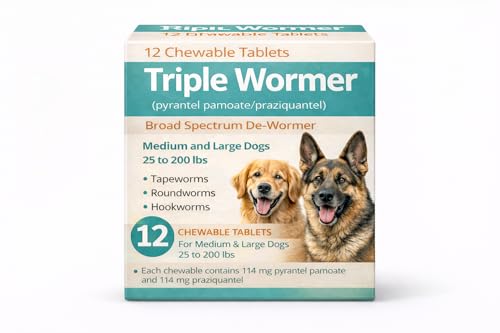
Why we recommended it:Durvet 12-Pack Triple Wormer Tablets for Puppies combine pyrantel pamoate and praziquantel in a weight-based oral treatment. The formula is labeled for seven species spanning tapeworms, roundworms, and hookworms, covering several intestinal parasites commonly encountered by young dogs. Pyrantel paralyzes susceptible roundworms and hookworms so normal intestinal movement can help expel them. Praziquantel works through a separate pathway, damaging and immobilizing tapeworms so they can be broken down within the digestive tract. The chewables may be offered directly or placed in a small amount of food, providing flexibility for dogs with different preferences.
What sets it apart from competitors: Its small-dog-specific tablet strength and 12-count package provide a more tailored format than products primarily sized for larger dogs or sold as single-treatment packs. The multi-tablet supply may also be more convenient for households managing more than one puppy or small dog.
Best Tablet Dewormer for Dogs
4.8
★★★★★
VetThera
Who It’s For: Dog owners who prefer a precise, mess-free tablet that is simple to store, measure, and give during regular parasite treatment.
Why we recommended it:VetThera Trio Dewormer for Dogs combines pyrantel pamoate and praziquantel to address tapeworms, roundworms, and hookworms. Each active ingredient targets different parasite groups, giving the formula broader intestinal coverage than a single-ingredient treatment. Pyrantel paralyzes susceptible roundworms and hookworms so normal intestinal movement can help remove them. Praziquantel works through a separate pathway, damaging and immobilizing tapeworms so they can be broken down within the digestive tract. Weight-based administration provides a clear dosing framework for dogs of different sizes. Its complementary active ingredients, broad parasite coverage, and straightforward oral format make it a practical option for common confirmed worm infections.
What sets it apart from competitors: Its scored-tablet design allows doses to be divided more precisely by body weight, offering a practical alternative to powders, liquids, and soft chews. The tablets are also manufactured in a GMP-compliant facility in the United States, providing a clearly stated production standard that many over-the-counter dewormers do not disclose.
Best Dewormer for Large Dogs
4.7
★★★★★
VivaElixir
Who It’s For: Owners of large dogs who need an effective, weight-appropriate dewormer that delivers a practical dose for bigger breeds.
Why we recommended it:VivaElixir De-Wormer for Dogs pairs pyrantel pamoate and praziquantel in an oral chewable formulated for tapeworms, roundworms, and hookworms. Pyrantel acts against susceptible roundworms and hookworms, while praziquantel targets tapeworms through a separate mechanism. Combining these active ingredients allows the formula to address biologically distinct intestinal worm groups in a single treatment. The chewable may be given directly or mixed with food, reducing the handling involved in administering a dose. Its concentrated tablet format also avoids the need to measure and the potential for spills associated with liquid dewormers. The product is available without a prescription and manufactured under GMP standards.
What sets it apart from competitors: The dosing framework extends from 25.1 to 200 pounds using whole-tablet increments, providing a clearly defined upper range for larger dogs. This can require fewer tablets and less measuring than using small-dog formulations or high-volume liquid doses.
Best Dewormer for Small Dogs
4.6
★★★★★
DURVMED
Who It’s For: Owners of small dogs who want a carefully dosed, easy-to-administer dewormer suited to smaller bodies and sensitive routines.
Why we recommended it:DURVMED De-Wormer for Small Dogs takes a dual-action approach, using two established compounds that work differently inside the intestinal tract. Pyrantel acts as a cholinergic agonist, disrupting neuromuscular function and paralyzing susceptible roundworms and hookworms. Its poorly soluble pamoate form limits absorption, helping the compound remain active where these parasites are located. Praziquantel alters calcium regulation in tapeworms, causing muscular contraction, paralysis, and damage to their protective outer surface. The chewable may be offered directly or mixed with food, which can reduce handling stress during treatment. Its lower-strength format is better aligned with puppies and small dogs than tablets designed around much heavier body weights.
What sets it apart from competitors: Its 6- to 25-pound positioning gives puppies and small dogs a more targeted format than dewormers built around broader weight ranges. This can reduce the need to divide tablets intended for larger dogs into small, uneven portions.
Best Dewormer for Tapeworms
4.5
★★★★★
Elanco
Who It’s For: Dog owners looking for a targeted treatment designed to eliminate tapeworms after flea exposure or a confirmed infestation.
Why we recommended it:Elanco Tapeworm Dewormer contains praziquantel and is labeled to remove Dipylidium caninum and Taenia pisiformis from dogs and puppies. These tapeworms are commonly associated with ingesting infected fleas or consuming prey animals. Praziquantel makes the parasites vulnerable to digestion, so they are generally broken down rather than passed as intact worms in the stool. The scored tablets follow a clear weight-based schedule and can be given directly by mouth or crumbled into food. Fasting is neither required nor recommended, keeping administration close to the dog’s usual feeding routine. One correctly measured treatment is designed to remove the labeled tapeworms.
What sets it apart from competitors: Its praziquantel-only formula targets two named canine tapeworm species without adding ingredients intended for roundworms, hookworms, or whipworms. This focused coverage provides a more specific option than broad-spectrum formulas when tapeworm treatment is the primary purpose.
Best Dewormer for Roundworms
4.8
★★★★★
VetLuminora
Who It’s For: Dog owners who need a focused treatment for roundworms, especially in puppies, newly adopted dogs, or dogs with exposure risks.
Why we recommended it:VetLuminora De-Wormer for Dogs combines pyrantel pamoate and praziquantel in an oral chewable treatment. Its labeled spectrum includes the canine roundworms Toxocara canis and Toxascaris leonina, along with selected hookworms and tapeworms. Pyrantel acts against susceptible roundworms and hookworms, while praziquantel extends the treatment to tapeworms through a separate mechanism. The chewable may be offered directly or hidden in a small amount of food, provided the complete calculated dose is swallowed. Dosing is determined by current body weight, giving the treatment a clear administration framework. The formula treats the labeled parasites present at the time of dosing but does not provide ongoing protection against later exposure.
What sets it apart from competitors: Its coverage specifically names two common canine roundworm species while also extending to selected hookworms and tapeworms. The chewable combines this multi-group coverage in one weight-based dose rather than requiring separate products for each labeled worm type.
Best Chewable Dewormer for Dogs
4.7
★★★★★
Luckyond
Who It’s For: Dog owners who want a tasty, fuss-free chew that makes deworming easier for pets that resist tablets or liquid medicine.
Why we recommended it:Luckyond Pyrantel Pamoate and Praziquantel De-wormer Tablet uses pyrantel pamoate and praziquantel, which act through different pathways against intestinal parasites. Pyrantel causes sustained muscular contraction and paralysis in susceptible roundworms and hookworms. Its poorly soluble pamoate form limits systemic absorption, helping it remain active within the intestinal tract. Praziquantel damages the protective outer surface of tapeworms, leaving them vulnerable to breakdown and removal. The dry tablet format eliminates the syringes, spills, and measuring steps associated with liquid medications. Its chewable structure may also make administration less stressful when a dog willingly accepts the full tablet.
What sets it apart from competitors: Each chewable contains equal amounts of pyrantel pamoate and praziquantel, giving it a notably simple two-active formulation. It also offers broader parasite coverage than single-ingredient pyrantel or praziquantel products without adding a third active compound.
Best Liquid Dewormer for Dogs
4.6
★★★★★
Worm X Plus
Who It’s For: Dog owners who prefer a flexible liquid formula that is easy to measure and give to puppies, small dogs, or picky pets.
Why we recommended it:Worm X Plus 7 Way Liquid Dewormer for Dogs, labeled as SENTRY HC WormX DS, uses pyrantel pamoate to treat two roundworm species and two hookworm species in dogs and puppies. Pyrantel disrupts neuromuscular function in susceptible worms, immobilizing them so normal intestinal movement can remove them. Because the pamoate salt is poorly absorbed, much of its activity remains within the digestive tract where these parasites are found. The liquid suspension allows the dose to be measured according to current body weight and may be easier to give to dogs that resist tablets or chews. It can be administered directly or mixed into a small portion of food without requiring fasting. Thorough shaking helps distribute the medication evenly before the dose is measured.
What sets it apart from competitors: Its liquid format provides more dosing flexibility than fixed-strength tablets, particularly for puppies and dogs that are difficult to medicate. The pyrantel-only formula also keeps treatment focused on susceptible roundworms and hookworms without adding tapeworm-specific medication.
Best Dewormer for Dogs With Sensitive Stomachs
4.5
★★★★★
Panacur C
Who It’s For: Dog owners seeking a gentle, easy-to-tolerate dewormer for pets prone to digestive upset or difficulty with stronger formulas.
Why we recommended it:Panacur C Canine Dewormer uses fenbendazole granules that can be mixed with a small portion of the dog’s usual food, avoiding the need to force down a tablet. Fenbendazole binds to beta-tubulin inside susceptible parasites, disrupting the cellular structures required for nutrient uptake and energy production. As their energy reserves decline, the worms lose the ability to maintain essential functions and are eventually eliminated. Its labeled spectrum includes roundworms, hookworms, whipworms, and one common tapeworm species associated with consuming infected prey. Treatment is given over consecutive days, maintaining exposure rather than relying on a single oral dose. The individual packets can be combined according to body weight, allowing the same granule format to accommodate dogs of different sizes.
What sets it apart from competitors: It can be used in pregnant dogs and puppies six weeks and older, offering broader reproductive and age suitability than many combination dewormers. Clinical data also place treatment-associated vomiting at approximately 1%, providing a more specific tolerability benchmark than a general claim that a formula is gentle.
Other Dewormers for Dogs
Best Dewormer for Hookworms:Safe-Guard Canine Dewormer for Dogs uses fenbendazole to treat both Ancylostoma caninum and Uncinaria stenocephala, two hookworm species commonly found in dogs. The granules mix into a small portion of regular food, which helps ensure the full dose is consumed without forcing down a tablet. Treatment is given for three consecutive days, maintaining exposure long enough to disrupt the parasites’ energy metabolism and eliminate them. It also covers roundworms, whipworms, and Taenia tapeworms, making it useful when a fecal test detects more than one intestinal parasite. Its FDA-approved labeling, broad coverage, and suitability for puppies six weeks and older make it the winner for hookworm treatment.
Best Dewormer for Whipworms:ViNet Dewormer for Dogs Broad Spectrum is presented as a fenbendazole-based formula intended for whipworms, roundworms, hookworms, and tapeworms. Whipworm coverage earns it this category because many pyrantel- or praziquantel-only treatments do not target Trichuris vulpis. The liquid can be given directly or mixed with food, providing a practical option for dogs that resist tablets or dry granules. Fenbendazole works by interfering with parasite cell structures and energy use, an established approach for canine whipworm treatment.
Best Fast-Acting Dewormer for Dogs:PetArmor Sure Shot Liquid Dewormer for Dogs uses pyrantel pamoate as a single-treatment option for large roundworms and hookworms. Pyrantel disrupts neuromuscular signaling in susceptible worms, paralyzing them so normal intestinal movement can remove them. The liquid requires no fasting, and the manufacturer notes that stool changes may become noticeable within 24 to 48 hours, although complete results can take several days. It can also be used in puppies as young as two weeks when administered according to the label. Its single-dose approach, straightforward liquid administration, and relatively prompt expected response make it the winner for fast treatment of its labeled parasites.
Best Dewormer for Dogs That Hate Pills:DURVET 2251171 Wormer-Double Strength Liquid Dog delivers pyrantel pamoate in an oral suspension instead of a chewable or solid tablet. The measured dose can be offered directly or blended into a small amount of food, helping reduce the struggle often associated with pill administration. It removes two large roundworm species and two hookworm species through a single weight-based treatment. Food does not need to be withheld, and the formula is labeled for puppies as young as two weeks. Its easy-to-measure liquid format, flexible serving method, and FDA-approved generic-drug status make it the clear winner for dogs that refuse pills.
How to Deworm Your Dog Safely
Safe deworming starts with identifying the likely parasite, selecting a medication that targets it, calculating the dose from the dog’s current weight, and following the label or veterinary instructions. Puppies, pregnant or nursing dogs, seniors, and dogs with health conditions may need veterinary guidance before treatment.
Step
What to Do
Why It Matters
Safety Considerations
Check basic details
Confirm age, current weight, and health status
Eligibility and dosing vary by dog
Ask a vet about young, pregnant, senior, or unwell dogs
Note possible signs
Record symptoms and collect a fresh stool sample if requested
Testing can help identify the parasite
Symptoms may have causes unrelated to worms
Discuss parasite risk
Tell the vet about fleas, hunting, travel, and exposure
Different risks suggest different worms
Seek prompt care for weakness, pale gums, or bloody stool
Select the treatment
Choose a dewormer labeled for the suspected worm
Not every formula treats every parasite
Do not substitute livestock or human medication
Read the label
Check age limits, directions, warnings, and storage
Instructions differ between formulations
Do not use expired or damaged medication
Give the correct dose
Measure or count the dose using current body weight
Too little may fail; too much may increase risk
Never estimate or use another pet’s prescription
Complete treatment
Give every dose for the stated duration
Some treatments require repeated doses
Do not stop or extend treatment without guidance
Monitor and follow up
Watch for reactions and complete advised retesting
Follow-up can confirm whether treatment worked
Call a vet for severe or persistent symptoms
Common Mistakes to Avoid When Deworming a Dog
Deworming may be ineffective or unsafe when the wrong medication is selected, the dose is estimated, treatment ends early, or follow-up care is skipped. Routine parasite prevention is an ongoing risk-based plan, while treatment for a confirmed infection should target the parasite identified.
Mistake
Why It Can Be a Problem
Better Approach
When to Contact a Vet
Choosing without identification
One dewormer may not cover the worm involved
Use symptoms, exposure history, and testing
When the parasite is uncertain or signs persist
Guessing weight or dose
Incorrect dosing may reduce safety or effectiveness
Weigh the dog and follow the exact chart
After an accidental overdose or missed dose
Using the wrong medication
Human, livestock, or another pet’s drug may be unsuitable
Use only medication intended for that dog
Immediately after an incorrect medication is given
Using expired or poorly stored medicine
Heat, moisture, or age may affect stability
Check the date, seal, and storage directions
If the medicine looks, smells, or feels unusual
Stopping treatment early
Some regimens require multiple scheduled doses
Complete the full labeled treatment course
If vomiting prevents a dose from being retained
Ignoring flea control
Flea-transmitted tapeworms can quickly return
Treat the dog and manage fleas together
When tapeworm segments keep reappearing
Skipping environmental cleanup
Feces and contaminated areas can support reinfection
Remove waste and wash bedding regularly
When several pets develop recurring infections
Skipping follow-up or repeatedly treating
Persistent signs may involve another parasite or illness
Use fecal testing and a risk-based prevention plan
When treatment fails or infections repeatedly return
Frequently Asked Questions
There is no single over-the-counter formula that is best for every infection. Praziquantel targets common tapeworms, pyrantel is commonly used for roundworms and hookworms, and fenbendazole covers several roundworms, hookworms, whipworms, and one Taenia tapeworm species. Choose an FDA-approved medication whose label matches the identified parasite, age, and body weight.
Online discussions can provide useful tips about taste, administration, or how easily a dog accepted a dose, but they cannot identify the parasite or establish the correct treatment. Similar symptoms may come from different worms or unrelated digestive conditions. Use fecal testing, veterinary guidance, and the medication’s official label as the basis for treatment rather than anecdotal recommendations.
Deworming frequency depends on age, lifestyle, exposure risk, and the preventive medication already being used. CAPC recommends fecal testing at least four times during a dog’s first year and at least twice yearly for healthy adults, with more frequent testing for higher-risk dogs. A veterinarian can use those results to determine whether additional treatment is needed.
The timeline varies by active ingredient and treatment schedule. Some medications are administered once, while fenbendazole formulas generally require a complete three-day course, so results should be judged only after all labeled doses have been given.
Follow the specific label because instructions vary. Several praziquantel and combination dewormers do not require fasting, while granule formulas such as fenbendazole must be mixed with food and fully consumed.
The Bottom Line
Choosing the best dewormer for dogs starts with identifying the parasite rather than selecting the broadest formula available. Active ingredients such as pyrantel, praziquantel, and fenbendazole target different worm species, so their coverage should match the diagnosis. Your dog’s age, current weight, health status, and preferred medication format also affect which treatment is appropriate. Tablets and chewables offer convenient dosing, while liquids and food-mixing granules may be easier for dogs that resist pills. Follow the label carefully, complete the full treatment course, and avoid repeating doses without veterinary direction. Fecal testing can confirm whether treatment worked and help detect parasites that require a different medication. Flea control, prompt waste removal, and routine veterinary care are also essential for reducing reinfection.
Like It? Subscribe & Share!
Sources
Canine Bible uses only high-quality sources, including peer-reviewed studies, to support the facts within our articles. Read our editorial process and product review methodology to learn more about how we fact-check, test products, and keep our content accurate, reliable, and trustworthy.
Canine Bible authorship represents the unified voice of our entire editorial team and our in-house veterinarians rather than a single author. Each article, blog post, and review published under the Canine Bible name undergoes a rigorous review process, involving all team members to guarantee accuracy and up-to-date in accordance with the latest veterinarian research. This collaborative effort is an integral part of our editorial process and aligns with our four pillars of content creation. This approach ensures our content is backed by expert knowledge and factual information, offering our readers reliable, actionable, and trustworthy content.