What if one missed monthly dose could leave your dog vulnerable to a parasite that quietly damages the heart, lungs, and blood vessels? Heartworm disease can progress without obvious early symptoms, making prevention far safer and easier than treating an established infection. The best heartworm medicine for dogs provides dependable protection while fitting your pet’s age, weight, health needs, and daily routine. Choosing the wrong formula—or using it inconsistently—can leave dangerous gaps in coverage and put your dog’s well-being at risk. With options ranging from monthly chewables and topical treatments to longer-lasting injections, finding the right one can feel overwhelming. In this guide, we’ll compare the best heartworm medicines for dogs, explain their key differences, and help you choose a reliable preventive option with your veterinarian.
Why Dogs Need a Heartworm Test Before Starting Prevention
A heartworm test checks whether a dog is already infected before preventive medication begins. Most preventives kill immature larvae but do not remove adult heartworms, so an infected dog needs a different treatment plan and veterinary monitoring. Testing can also detect circulating microfilariae, which may trigger an adverse reaction when certain preventives are administered. Adult dogs older than seven months that have not been receiving consistent prevention should be tested before starting or restarting medication.
Testing is also important because early infections may be too immature to detect immediately. Heartworm antigen tests generally identify proteins produced by adult female worms, so an infection acquired within the previous several months may initially produce a negative result. A peer-reviewed evaluation of in-clinic antigen testing confirmed that these tests are useful screening tools, while also showing that test performance depends on the infection stage and worm burden.[1] For this reason, veterinarians may recommend retesting about six months after prevention begins or after a missed-dose period.
Latest Research on Heartworm Disease & Prevention in Dogs
According to the latest research, canine heartworm disease, caused by the mosquito-borne nematode Dirofilaria immitis, is an increasingly prevalent and potentially fatal condition endemic across the United States, Europe, and Australia. Prevention relies exclusively on macrocyclic lactone (ML) drugs, but rising incidence, poor owner compliance, and emerging ML resistance complicate control efforts.
📄Research Update — Heartworm Prevention
Prevention Is Safer and Simpler Than Treating an Established Infection
Canine heartworm disease can damage the lungs, pulmonary arteries, heart, and other organs before obvious symptoms appear. Preventive medicines target susceptible immature stages of the parasite, while an established infection requires a prolonged treatment plan, exercise restriction, and careful veterinary monitoring.[2]
📊Clinical Focus — Consistent Dosing
Reliable Protection Depends on Giving Prevention as Prescribed
Real-world veterinary data link poor preventive compliance with a greater risk of heartworm disease and potentially lasting cardiac effects. The best medicine is therefore one that matches the dog’s health needs and can be administered consistently, whether it is a monthly chew, topical treatment, or longer-acting veterinary injection.[3]
⚠️Clinical Consideration — Preventive Efficacy
Heartworm Preventives Do Not Always Perform Identically Against Resistant Strains
Laboratory research using a macrocyclic lactone-resistant heartworm strain found meaningful differences in efficacy among commercially available preventives. This does not mean dogs should switch medicines without guidance, but it reinforces the importance of veterinary selection, correct weight-based dosing, routine testing, and avoiding missed doses.[4]
Remember to ALWAYS consult your veterinarian before starting heartworm prevention to confirm the right medication and dosage. If you can’t reach your vet, you can chat live with a registered online veterinary professional via our online vet chat or video chat support(24 hours a day, 7 days a week). Or use Chewy’s online vet services(6 a.m. – midnight ET).
Best Heartworm Medicines for Dogs
Here are the best heartworm medicines for dogs of this year.
Best Overall Heartworm Medicine for Dogs
4.9
★★★★★
Simparica Trio
Who It’s For: Dog owners who want dependable, easy-to-use heartworm protection that fits their dog’s routine and supports consistent year-round prevention.
Why we recommended it:Simparica Trio Chewable Tablet for Dogs combines sarolaner, moxidectin, and pyrantel in a prescription chew administered once monthly. Each active compound addresses parasites through a different biological pathway rather than relying on a single mode of action. Moxidectin disrupts nerve and muscle signaling in susceptible heartworm larvae, while sarolaner interferes with chloride-channel signaling in fleas and ticks. Pyrantel causes paralysis in susceptible intestinal worms, allowing them to be expelled from the digestive tract. The tablet may be given with or without food, which makes the dosing date easier to maintain independently of mealtimes. Supporting studies found complete heartworm prevention under the tested conditions, while flea activity began within four hours.
What sets it apart from competitors: Simparica Trio covers six tick species along with fleas, heartworm disease, roundworms, and hookworms in one monthly chew. It also prevents flea-transmitted Dipylidium caninum tapeworm infections by killing the vector fleas, extending its protection beyond the parasite groups addressed by many oral combination preventives.
Best Heartworm & Flea Prevention for Dogs
4.8
★★★★★
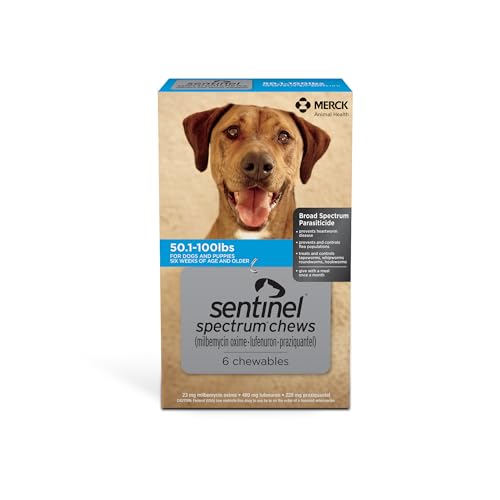
Sentinel Spectrum
Who It’s For: Dog owners seeking one convenient treatment that helps protect their dogs from both heartworms and fleas with fewer products to manage.
Why we recommended it:Sentinel Spectrum Chews for Dogs combine milbemycin oxime, lufenuron, and praziquantel in a prescription chew given once every month. Milbemycin oxime acts on parasite nerve and muscle cells, eliminating immature heartworm larvae before they develop into adults while also treating several intestinal nematodes. Lufenuron enters the dog’s bloodstream and is ingested by feeding fleas, where it disrupts chitin formation so their eggs cannot develop normally. Although it does not provide immediate adult-flea knockdown, consistent dosing helps interrupt the reproductive cycle behind persistent household infestations. Praziquantel damages tapeworm membranes, causing contraction and disintegration so the parasites can be removed through normal digestive processes. The chew is given with or immediately after a meal to support adequate absorption.
What sets it apart from competitors: It targets flea infestations at the egg stage rather than relying on an adult-flea insecticide, a less common approach among combination heartworm chews. It also treats several tapeworm species, including Echinococcus, extending its intestinal-worm coverage beyond many routine heartworm-and-flea combinations.
Best Preventive Heartworm Medicine for Dogs
4.7
★★★★★
NexGard Plus
Who It’s For: Dog owners who want reliable, year-round protection that helps stop heartworm infection before it can threaten their dog’s health.
Why we recommended it:NexGard Plus Flea and Tick Protection Plus uses afoxolaner, moxidectin, and pyrantel to address external parasites, developing heartworms, and common intestinal worms through separate pharmacologic actions. Afoxolaner interferes with regulated chloride channels in fleas and ticks, disrupting their nervous systems and killing the parasites after they feed. Moxidectin acts against susceptible heartworm larvae acquired through mosquito bites, stopping development before the worms mature. Pyrantel produces neuromuscular paralysis in adult roundworms and hookworms so they can be removed from the intestinal tract. The chew is administered once monthly and may be given with or without food, reducing the need to coordinate treatment with a specific meal. Laboratory heartworm studies recorded no adult worms in treated dogs after six consecutive monthly doses under the tested conditions.
What sets it apart from competitors: NexGard Plus helps prevent Borrelia burgdorferi infection by killing the black-legged ticks that transmit it, connecting parasite control with protection against a specific tick-borne infection. It also targets six tick species, including Gulf Coast ticks and longhorned ticks, giving it broader tick coverage than many monthly heartworm combinations.
Best Heartworm Medicine for Puppies
4.6
★★★★★
Heartgard® Plus
Who It’s For: Puppy owners seeking age-appropriate heartworm protection that is easy to give and supports a safe start to lifelong prevention.
Why we recommended it:Heartgard® Plus (ivermectin/pyrantel) Chewables for Dogs pair ivermectin with pyrantel in a once-monthly prescription preventive. Ivermectin eliminates tissue-stage heartworm larvae acquired during the preceding 30 days, stopping them before they can mature into adults within the heart and pulmonary vessels. Pyrantel works in the intestinal tract by disrupting neuromuscular function in susceptible worms so they can be passed naturally. Its label covers two roundworm species and three hookworm species, parasites that can be especially relevant during early life. The chew may be offered by hand or placed intact in a small amount of food, provided the entire dose is consumed. Its real-beef chewable format gives owners a straightforward way to maintain monthly administration without coordinating the dose with a full meal.
What sets it apart from competitors: The formulation avoids flea-and-tick insecticides, keeping its scope centered on heartworm larvae and key gastrointestinal worms while allowing external-parasite control to be selected separately. Its safety studies included breeding dogs, pregnant dogs, and puppies six weeks or older, populations not evaluated on every combination preventive label.
Best Heartworm Medicine for Large Dogs
4.5
★★★★★
Iverhart Plus
Who It’s For: Owners of large dogs who need properly dosed, dependable heartworm protection suited to their pet’s size and monthly routine.
Why we recommended it:Iverhart Plus Chewable Tablet for Dogs combines ivermectin and pyrantel in a prescription tablet administered once every month. Ivermectin eliminates susceptible heartworm larvae acquired during the previous 30 days, preventing them from maturing within the pulmonary arteries and heart. Pyrantel acts locally against susceptible intestinal worms by causing neuromuscular paralysis, allowing them to be expelled through the digestive tract. Its labeled coverage includes two roundworm species and three hookworm species that dogs may acquire from contaminated environments. The chew can be given by hand or placed in a small amount of food, offering flexibility in how the monthly dose is administered. Its two active ingredients address developing heartworms and several common intestinal worms without adding unrelated parasite-control compounds.
What sets it apart from competitors: A single weight-based tablet covers dogs from 51 to 100 pounds, reducing the need to combine multiple units for dogs within that range. Its focused formulation leaves flea and tick prevention separate rather than bundling external-parasite insecticides into the monthly tablet.
Best Heartworm Medicine for Small Dogs
4.7
★★★★★
Trifexis
Who It’s For: Owners of small dogs who want accurately dosed, easy-to-administer heartworm protection designed for petite breeds.
Why we recommended it:Trifexis Heartworm Prevention combines spinosad and milbemycin oxime in a prescription tablet given once each month. Spinosad activates nicotinic acetylcholine receptors in fleas, producing involuntary muscle activity and rapid parasite death. Milbemycin oxime disrupts nerve transmission in susceptible heartworm larvae, preventing them from progressing into adults that can injure the heart and pulmonary arteries. The same compound also treats adult hookworms, roundworms, and whipworms acquired from contaminated environments. Flea-killing activity begins within 30 minutes and reached complete effectiveness within four hours in a controlled laboratory study. The tablet is administered with food, which increases drug exposure and supports consistent absorption.
What sets it apart from competitors: Its oral flea component belongs to the spinosyn class rather than the isoxazoline class used in many contemporary combination preventives. The formulation omits tick treatment, keeping its external-parasite activity focused on fleas while allowing tick control to be handled separately.
Best Chewable Heartworm Medicine for Dogs
4.8
★★★★★
Tri-Heart Plus
Who It’s For: Dog owners who prefer a tasty, convenient chew that makes monthly heartworm prevention feel more like a treat than a chore.
Why we recommended it:Tri-Heart Plus Chewable Tablets for Dogs provide ivermectin and pyrantel in a flavored tablet administered every 30 days. Ivermectin targets susceptible heartworm larvae acquired during the preceding month, eliminating them before they mature and settle in the cardiopulmonary system. Pyrantel works within the gastrointestinal tract by paralyzing susceptible worms so they can be removed naturally. Its labeled intestinal coverage includes two roundworm species and three hookworm species commonly associated with contaminated soil and fecal exposure. Weight-specific dosing reduces the need to divide tablets or estimate an amount for most dogs. The chew can be offered directly or mixed with a small portion of food, providing flexibility in how the complete monthly dose is administered.
What sets it apart from competitors: Tri-Heart Plus keeps its formulation focused on heartworm larvae, roundworms, and hookworms without incorporating flea- or tick-control ingredients. Its flavored, weight-based tablets provide the established ivermectin-and-pyrantel combination in a distinct prescription option.
Best Topical Heartworm Medicine for Dogs
4.5
★★★★★
Advantage
Who It’s For: Dog owners seeking a non-oral heartworm preventive that applies easily to the skin and fits dogs that resist pills or chews.
Why we recommended it:Advantage Multi Topical Solution for Dogs combines imidacloprid and moxidectin in a prescription liquid applied directly to the skin once a month. Imidacloprid interferes with nicotinic acetylcholine receptors in fleas, disrupting nerve signaling and killing the parasites. Moxidectin is absorbed systemically and acts on susceptible heartworm larvae by altering chloride-channel activity, which impairs parasite nerve and muscle function. Its activity also extends to multiple developmental stages of hookworms and roundworms, along with adult whipworms. The same monthly application treats and controls sarcoptic mange caused by mites that burrow into the skin and trigger intense itching. Its topical format provides broad internal- and external-parasite control without requiring an oral chew or tablet.
What sets it apart from competitors: Advantage Multi treats circulating heartworm microfilariae in infected dogs, an indication many routine monthly preventives do not carry. Its contact-based flea activity also allows fleas to be killed without first feeding on the dog, an uncommon feature among topical heartworm combinations.
Best Broad-Spectrum Heartworm Medicine for Dogs
4.6
★★★★★
Interceptor
Who It’s For: Dog owners who want heartworm prevention plus protection against other common parasites in one convenient, vet-approved treatment.
Why we recommended it:Interceptor for Dogs uses milbemycin oxime in a flavored tablet given once each month. The medication interferes with neurotransmission in susceptible parasites, impairing their nerve and muscle activity. Against heartworms, it eliminates immature tissue-stage larvae before they develop into adults capable of damaging the heart and pulmonary arteries. Its anthelmintic activity also removes adult roundworms and whipworms while controlling adult hookworm infections. This intestinal nematode coverage addresses parasites dogs may acquire through contaminated soil, feces, shared exercise areas, or wildlife. The tablet may be offered directly, placed in food, or administered like a conventional oral medication.
What sets it apart from competitors: Interceptor provides broad nematode control without adding a flea-and-tick insecticide or a second deworming compound, keeping its monthly formulation narrowly focused. In palatability testing involving 244 dogs across 60 breeds, more than 95% willingly accepted the tablet when offered, giving its conventional flavored-tablet format a measurable administration advantage.
Best Flavored Heartworm Medicine for Dogs
4.7
★★★★★
Sentinel
Who It’s For: Dogs that resist plain tablets but happily take flavored medicine, making monthly heartworm prevention easier and less stressful.
Why we recommended it:Sentinel Flavor Tabs for Dogs combine milbemycin oxime and lufenuron in a palatable prescription tablet administered once each month. Milbemycin oxime disrupts nerve transmission in susceptible parasites, eliminating immature heartworm larvae before they can develop into adults. Its activity also removes adult roundworms and whipworms while controlling adult hookworm infections. Lufenuron prevents flea eggs from developing normally, gradually interrupting reproduction within the home environment. The tablet is given with a meal to support adequate lufenuron absorption and reliable flea-development control. Its monthly format addresses developing heartworms, several intestinal worms, and ongoing flea reproduction through two distinct modes of action.
What sets it apart from competitors: It may be used in puppies from four weeks of age, an earlier minimum age than many monthly combination preventives. Its flea strategy targets egg development rather than killing adult fleas, allowing immediate adult-flea treatment to be selected separately when needed.
Best Heartworm Medicine for Lactating Dogs
4.6
★★★★★
IVERHART MAX®
Who It’s For: Owners of nursing dogs who need veterinarian-approved heartworm protection that considers both the mother’s health and her puppies.
Why we recommended it:IVERHART MAX® Chew combines ivermectin, pyrantel pamoate, and praziquantel in a prescription chew administered once every 30 days. Ivermectin eliminates susceptible tissue-stage heartworm larvae acquired during the preceding month, interrupting development before adult worms can occupy the heart and pulmonary vessels. Pyrantel produces neuromuscular paralysis in susceptible roundworms and hookworms, allowing them to be cleared through the intestinal tract. Praziquantel disrupts tapeworm membranes and calcium regulation, causing the worms to contract and break down. Each dose can be offered by hand or placed intact in a small amount of food, providing flexibility in how the monthly chew is administered. Its three active ingredients address developing heartworms and several intestinal parasite groups through different mechanisms.
What sets it apart from competitors: IVERHART MAX adds direct tapeworm treatment to an ivermectin-based heartworm preventive, with activity against both Dipylidium caninum and Taenia pisiformis. This gives it broader gastrointestinal-worm coverage than many ivermectin-and-pyrantel chews that do not include praziquantel.
Best Heartworm Medicine for Senior Dogs
4.8
★★★★★
Revolt
Who It’s For: Owners of senior dogs seeking dependable heartworm prevention that fits their pet’s age, health needs, and medication routine.
Why we recommended it:Revolt Topical Solution for Dogs uses selamectin as a once-monthly prescription treatment applied directly to the skin. After absorption, selamectin activates parasite chloride channels, disrupting nerve and muscle function in susceptible organisms. This prevents immature heartworm larvae from developing into adults following mosquito exposure. It also kills adult fleas and prevents viable flea eggs from hatching, addressing both existing parasites and the reproductive stage that sustains an infestation. Separate labeled uses cover ear mites, sarcoptic mange, and infestations caused by the American dog tick. Bathing two or more hours after application does not reduce its labeled effectiveness against fleas or heartworm disease.
What sets it apart from competitors: Revolt provides heartworm, flea, mite, mange, and American dog tick control through selamectin alone rather than combining several active compounds. Its topical formulation also delivers both adult-flea killing and flea-egg control within the same monthly application.
Other Heartworm Medicine for Dogs
Best Topical Heartworm Medicine for Dogs:Selarid for Dogs is a once-monthly topical treatment that prevents heartworm disease without requiring a pill or chew. Its active ingredient, selamectin, is absorbed through the skin and stops immature heartworm larvae from developing after mosquito exposure. It also kills adult fleas, prevents flea eggs from hatching, and treats ear mites and sarcoptic mange. The formula provides additional control of American dog ticks, although it does not cover every tick species. Selarid earns this category because it combines convenient topical dosing with practical protection against several internal and external parasites in dogs six weeks and older.
Best Heartworm Medicine for Dogs With Intestinal Parasites:Barrier Topical Solution for Dogs combines heartworm prevention with treatment and control of hookworms, roundworms, and whipworms. Moxidectin acts systemically against developing heartworm larvae and susceptible intestinal worms, while imidacloprid kills adult fleas through contact. The monthly solution also treats circulating heartworm microfilariae and controls sarcoptic mange. Because it is applied to the skin, it works well for dogs that resist oral dewormers or already take several tablets. Barrier is the winner here because its label covers a notably broad group of intestinal parasites alongside heartworms and fleas in one topical prescription.
How to Give Heartworm Medicine to Dogs Safely
Giving heartworm medicine safely depends on using the correct weight-based dose, following the label exactly, administering the full dose on schedule, and applying topical products directly to dry skin when applicable. Dogs should be tested as directed before starting or restarting prevention, monitored for adverse reactions, and kept from licking topical application sites.
Safety Step
What to Do
Why It Matters
Get a heartworm test
Test as directed before starting or restarting prevention.
Preventives do not treat adult heartworms.
Confirm current weight
Use the dose made for your dog’s weight range.
Incorrect dosing may reduce safety or protection.
Follow the label
Give with food or on an empty stomach only as directed.
Food can affect absorption for some medicines.
Give the full dose
Watch your dog swallow the entire tablet or chew.
A partial dose may leave a gap in protection.
Apply topicals correctly
Part the coat and place the solution directly on dry skin.
Coat-only application may limit absorption.
Prevent licking
Keep pets apart until topical application sites are dry.
Swallowing topical medicine can cause adverse effects.
Keep a fixed schedule
Give each dose on the same date every month.
Late or missed doses can reduce protection.
Handle missed doses carefully
Contact your veterinarian rather than doubling the dose.
Testing or schedule changes may be needed.
Watch for reactions
Monitor for vomiting, weakness, tremors, or poor coordination.
Prompt veterinary advice can prevent complications.
Store it safely
Keep doses in their packaging and away from children and pets.
Prevents accidental ingestion or incorrect dosing.
What to Do If Your Dog Misses a Heartworm Dose
Give the missed dose as soon as you remember, then resume the regular monthly schedule according to the medication’s label. Do not give two doses at once unless your veterinarian specifically instructs you to do so. If your dog spits out, vomits, or only partially consumes an oral dose, contact the prescribing clinic because redosing instructions vary by medication.
Call your veterinarian when the dose is substantially late, more than one month has been missed, or you are unsure how much medicine your dog received. The clinic may recommend restarting prevention immediately, but the plan can depend on the type of medication, the length of the lapse, and your dog’s previous testing history. The American Heartworm Society advises consulting a veterinarian, restarting monthly prevention, and retesting six months later after a two-month lapse.
Follow through with any recommended heartworm testing even when your dog appears healthy. A recent infection may not be detectable right away because heartworms need several months to mature enough for standard antigen tests to identify them. Continue giving every scheduled dose during this testing period, since preventives target developing larvae rather than established adult heartworms.
Frequently Asked Questions
The best option is an FDA-approved preventive selected according to your dog’s age, weight, health history, parasite exposure, and ability to take oral or topical medicine. Available choices include monthly chews, monthly topical solutions, and longer-acting veterinary injections. Some also control fleas, ticks, or intestinal worms, but broader coverage is not necessary for every dog. A veterinarian can help match the medication to your dog’s specific risks.
Puppies should begin prevention as early as the selected medication’s label permits and no later than eight weeks of age. Puppies younger than seven months can generally start without an initial heartworm test, but follow-up testing is still needed because recent infections may not be detectable immediately. Older dogs should be tested before starting or restarting prevention.
Yes. Veterinary parasite-control guidelines recommend year-round prevention for all dogs, including primarily indoor dogs. Mosquito seasons vary, weather patterns are unpredictable, and travel can expose dogs to risk outside their usual area. Continuous dosing also reduces the chance of protection gaps caused by stopping and restarting treatment.
FDA-approved heartworm preventives for dogs require a prescription in the United States. A veterinary examination and heartworm testing may be needed before the prescription is issued, particularly for dogs seven months or older or those with an interrupted prevention history. Avoid sellers offering prescription heartworm medication without veterinary authorization.
Yes. Routine prevention is generally simpler, safer, and less costly than treating an established infection. Heartworm treatment can involve diagnostic testing, multiple medications or injections, strict exercise restriction, and months of monitoring. Even successfully treated dogs may retain lasting heart or lung damage, so preventing infection is the preferred approach.
The Bottom Line
Choosing the best heartworm medicine for dogs starts with matching the preventive to your dog’s age, weight, health history, and parasite exposure. Monthly chews are convenient for many dogs, while topical treatments may work better for those that resist oral medication. Combination formulas can also simplify protection against fleas, ticks, or intestinal worms, but coverage varies by product. Consistent year-round dosing is essential because missed or delayed treatments can leave gaps in protection. Dogs should receive appropriate heartworm testing before starting or restarting prevention, especially after a lapse. Work with your veterinarian to select the safest option and maintain a schedule that keeps your dog protected throughout the year.
Like It? Subscribe & Share!
Sources
Canine Bible uses only high-quality sources, including peer-reviewed studies, to support the facts within our articles. Read our editorial process and product review methodology to learn more about how we fact-check, test products, and keep our content accurate, reliable, and trustworthy.
Canine Bible authorship represents the unified voice of our entire editorial team and our in-house veterinarians rather than a single author. Each article, blog post, and review published under the Canine Bible name undergoes a rigorous review process, involving all team members to guarantee accuracy and up-to-date in accordance with the latest veterinarian research. This collaborative effort is an integral part of our editorial process and aligns with our four pillars of content creation. This approach ensures our content is backed by expert knowledge and factual information, offering our readers reliable, actionable, and trustworthy content.