What if your dog’s dinner is quietly sabotaging their organs? It’s a sobering thought—but for dogs with metabolic disorders such as kidney or liver disease, even high-quality, protein-rich kibble can do more harm than good. That’s because when a dog’s organs are compromised, too much protein doesn’t build muscle—it builds toxins. And the result? Fatigue, loss of appetite, and a heartbreaking decline you didn’t see coming. This is where low-protein dog food becomes more than a nutritional tweak—it becomes a lifeline. In this guide, we’ll break down how low-protein dog foods work, who needs them most, and reveal the best low-protein dog foods that balance reduced protein with the nutrients your dog still needs to thrive. Whether you’re navigating a new diagnosis or looking to extend your pup’s quality of life, you’re in the right place.
Benefits of Low-Protein Dog Foods
According to the latest research, here are the main benefits of low-protein dog food:
Benefit/Consideration
Details
Kidney Health
Lower protein intake is associated with reduced levels of metabolites linked to kidney dysfunction (e.g., urea, p-cresol sulfate).
Reduced Inflammation
Lower protein diets result in decreased metabolites associated with inflammation.
Gut Microbiome Effects
Low protein, high carbohydrate diets increase beneficial bacteria like Bacteroides uniformis and Clostridium butyricum, but may decrease bacterial diversity compared to high protein diets.
Digestive Health
Lower protein diets are linked to lower fecal pH and higher levels of beneficial indoles and short-chain fatty acids, supporting gut health.
Table sources: [1],[2]
Conditions That Benefit from Low-Protein Dog Food
Low to moderate protein dog food is often recommended for dogs with specific health conditions:
Condition
Why Low Protein Helps
Kidney Disease
Reduces the workload on kidneys by minimizing nitrogen waste, which the kidneys would otherwise have to filter out. Also helps manage phosphorus levels, which is important for slowing kidney damage.
Liver Disease
Decreases ammonia production from protein breakdown, which is crucial when the liver can’t properly detoxify the blood. Helps reduce neurological symptoms like confusion or seizures.
Bladder Stones
Limits certain amino acids and purines that contribute to stone formation, especially in breeds prone to these conditions (e.g., Dalmatians).
CPSS
Helps reduce ammonia and other by-products of protein metabolism that the liver would normally detoxify but can’t due to abnormal blood flow.
Senior Dogs
In aging dogs with reduced kidney or liver function, a controlled protein diet can help preserve organ function—but not all senior dogs need low protein.
Things to Know:
Protein deficiency risk: Prolonged low protein intake in healthy dogs may risk insufficient essential amino acids, affecting muscle maintenance and overall health
Not for all dogs: Low-protein diets are generally not recommended for healthy, active dogs unless prescribed for a medical condition, as they may not provide enough protein for muscle maintenance and overall health
Gut microbiome shifts: Low protein diets can positively influence certain gut bacteria, but the overall impact on gut health depends on the balance of other nutrients, especially carbohydrates and fiber.
Always consult your veterinarian before changing your dog’s diet. You can get personalized nutritional advice tailored to your dog’s low-protein needs from the comfort of your home through an online registered vet nutritionist on Vetster—available anytime, anywhere. You can also chat with an online vet to ask questions about protein restriction, phosphorus levels, fat content, and other kidney- or liver-friendly dietary considerations. Additionally, an at-home dog gut health test can assess your dog’s microbiome, helping you understand how well they absorb and process nutrients—especially important when managing chronic conditions. An at-home allergy test for dogs may also uncover ingredients that trigger inflammation or add strain to vital organs, helping you make informed, targeted food choices that support your dog’s long-term health.
Best Low-Protein Foods For Dogs
Here are the best low-protein foods for dogs this year.
Best Overall Low-Protein Dog Food
4.9
★★★★★
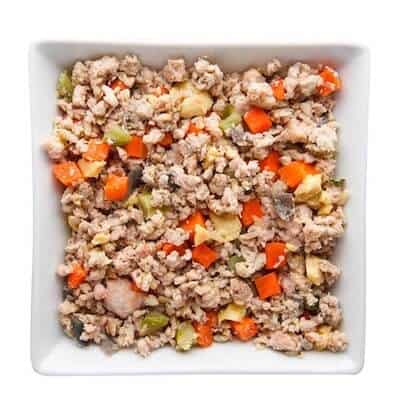
Chidog Wood Diet
Who It’s For: Dogs needing a gentle diet, including those with kidney or liver sensitivities, picky appetites, mild allergies, or digestive troubles.
Why we recommended it:The Chi Dog Fresh Recipes offers a blend of traditional and modern canine nutrition principles. The food is made in the USA in USDA-certified kitchens and prioritizes human-grade, whole ingredients—such as lean meats, eggs, grains, and fresh vegetables. Dogs reportedly experience improved digestion, shinier coats, and steady energy, with many owners noting a marked willingness to eat—even in pickier pets or those previously refusing kibble. Vet-designed, the recipes exceed AAFCO standards and avoid high-fat animal organs, which some competitors use as fillers or to boost protein artificially. The diet’s palatability and visible results earn regular praise from both pet owners and veterinarians.
What sets it apart from competitors: Tailores formulas using Eastern food therapy, offering five unique recipes (“Wood,” “Fire,” “Earth,” “Metal,” and “Water”)—each with its own intended health focus and protein base. Chi Dog avoids high-fat organ meats and carefully manages mineral content, which is relevant for dogs with kidney or liver challenges. Its single-protein recipes (including a vegetarian option) help address food sensitivities. The commitment to moderate protein, modest fat, lower carbohydrates, and the absence of artificial preservatives supplies a diet closer to what many dogs thrive on.
Best Low-Protein Dog Food For Kidney Disease
4.9
★★★★★
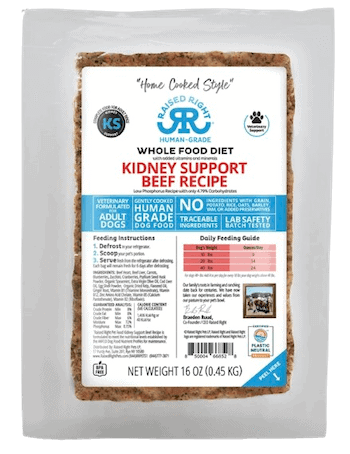
Raised Right Kidney Support
Who It’s For: Specifically designed for dogs diagnosed with kidney disease while offering the most nutritious, balanced, and palatable formula.
Why we recommended it:Raised Right Kidney Recipes use whole food ingredients you’d recognize from your own kitchen—like turkey thigh, carrots, and blueberries—without synthetic additives, preservatives, or ultra-processing. This makes it a great choice for dogs with sensitive systems or compromised renal health, as it’s easy to digest and less taxing on the kidneys. The brand’s veterinary-formulated kidney support recipes are designed to reduce protein and phosphorus intake while still providing essential nutrients, helping to slow the progression of kidney disease. The recipe is gently cooked and contains no high-carb fillers, legumes, grains, or synthetic additives, addressing concerns often associated with many commercial or prescription brands.
What sets it apart from competitors: Its extremely low phosphorus and moderate protein levels are tailored for kidney health, but without sacrificing ingredient quality or relying on synthetic phosphorus binders. Regular lab testing for every batch provides added peace of mind for dog owners
Best Low-Protein Dry Dog Food
4.7
★★★★★
VFS Low Phosphorus Formula
Who It’s For: A practical dry option tailored for dogs in early to moderate stages of metabolic diseases such as kidney or liver cancers, or other issues requiring a low-protein diet.
Why we recommended it:VFS Low Phosphorus Formula delivers phosphorus and sodium levels much lower than typical commercial foods (phosphorus: 0.45% max; sodium: 0.4% max). Made with cage-free turkey and whole egg, this food also includes brown rice, white rice, sweet potato, and salmon oil for omega-3 support. Even picky or medically challenged dogs will eat it, and some note improved bloodwork and greater energy after making the switch. The inclusion of antioxidants, vitamins C and E, as well as enhanced B vitamins, further supports overall wellness.
What sets it apart from competitors: Unlike most renal diets that are stocked only in vet clinics, this option can be purchased at pet specialty retailers, making it more accessible for owners. The food’s inclusion of premium US-sourced meats and eggs, absence of artificial ingredients, and strong palatability also distinguish it within the renal support market.
Best Low-Protein Dog Food for Liver Disease
4.7
★★★★★
Hill’s Prescription Diet l/d Liver Care
Who It’s For: Adult dogs diagnosed with liver disease or elevated liver enzymes that require clinical nutritional support. It’s ideal for dogs dealing with chronic liver stress or congenital shunts.
Why we recommended it:Hill’s Prescription Diet l/d Liver Care Chicken Flavor Dry Dog is clinically validated nutrient composition, specifically crafted to minimize the liver’s workload while maintaining whole-body health. It’s moderate protein levels reduce ammonia production (which can worsen hepatic encephalopathy), and the protein sources—like soy, dried egg, and maize gluten—are highly digestible and easy on the liver. It stabilizes liver values and supports recovery in affected dogs. It’s low copper content (2.9 mg/kg) helps prevent toxic copper accumulation—a crucial aspect for breeds predisposed to copper storage disease.
What sets it apart from competitors: Formulated with precise nutrient targets based on veterinary research. It also promotes a urinary environment that reduces the risk of struvite and calcium oxalate crystal formation, a feature particularly beneficial for dogs with concurrent urinary issues—a characteristic not typically found in most liver diets. This makes it a dual‑role diet: liver support and urinary health in one package.
Best Dehydrated Low-Protein Dog Food
4.7
★★★★★
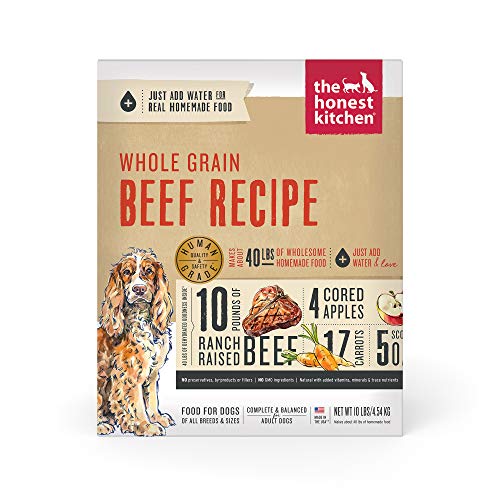
The Honest Kitchen Whole Grain Beef Recipe
Who It’s For: Tailored for adult or senior dogs who thrive on grain-inclusive diets and would benefit from modest protein and fat levels—making it a sensible pick for pets with mild organ sensitivities.
Why we recommended it:The Honest Kitchen Whole Grain Beef Recipe Dehydrated Dog Food delivers real, human‑grade ingredients—ranch‑raised beef, organic oats, barley, flaxseed, and vegetables—gently dehydrated to retain nutrients, flavor, and aroma. It’s lower protein and fat profile (relative to typical dehydrated meals) supports weight maintenance and gentle digestion while still offering satisfying whole‑food nutrition. Additionally, the product undergoes rigorous quality testing, is free of preservatives and artificial additives, and is made in a USA human food processing facility, ensuring high safety and quality standards.
What sets it apart from competitors: The inclusion of whole grains (organic oats, barley) distinguishes it from many grain-free competitors, appealing to dogs who tolerate grains well and whose health benefits from dietary fiber and steady energy sources. The product also carries FDA certifications related to ingredient sourcing and production quality, which adds trustworthiness.
Get 40% OFF your order with code 40CANINE— Just use thislink to get started.
Best Wet Low-Protein Dog Food
4.6
★★★★★
Nature’s Logic
Who It’s For: Dogs who enjoy a rich, moisture‑rich meal. It’s moderate protein helps ease organ burden, and the high moisture content supports hydration and helps with urinary health.
Why we recommended it:Nature’s Logic Canine Duck & Salmon Feast offers a moist, whole‑food base where duck meal and salmon provide most of the protein, yet the actual protein content is significantly lower than most wet foods. Rather than relying on synthetic nutrients, it’s made in the USA using recognizable ingredients like muscle meat, organs, and fruit/vegetable concentrates that naturally supply vitamins and minerals. Prebiotics from chicory root and yeast‑based probiotics support digestive wellness without additives like carrageenan or gums.
What sets it apart from competitors: The use of animal plasma and montmorillonite clay is unique among wet dog foods, supplying bioavailable nutrients naturally rather than through synthetic supplementation. It also excludes common fillers or starch ingredients like corn or potato, which differentiates it from many conventional canned diets.
Best Budget-Friendly Low-Protein Dog Food
4.5
★★★★★
GENTLE GIANTS
Who It’s For: Those on a tight budget and those who want food with moderate protein or dogs who can’t tolerate high-protein diets.
Why we recommended it:Gentle Giants has a reputation for ingredient transparency, using non-GMO meats, grains, and a blend of fruits and vegetables like carrots, cranberries, and blueberries. Owners regularly comment on the lack of fillers, artificial additives, and the brand’s absence of recall history, as well as the company’s commitment to making healthy dog food that’s accessible for more families. Dogs typically transition well to this food, and many pet parents report visible benefits—such as shinier coats, improved energy, and even longevity in larger breeds. There are also endorsements from those feeding Gentle Giants to both small breeds and large/giant breed dogs.
What sets it apart from competitors: It’s one of the few widely available foods that intentionally keeps protein and fat lower—22/9—for heart health and reduced risk of growth-related joint issues in puppies, based on founder recommendations.
Best Low-Protein Puppy Food
4.7
★★★★★
The Honest Kitchen Puppy Blend
Who It’s For: Tailored for puppies—both small and large breeds—who benefit from controlled protein levels during growth.
Why we recommended it:The Honest Kitchen Whole Food Clusters Puppy Blend combines minimally processed, human-grade ingredients such as cage-free chicken, liver, oats, barley, vegetables, and fruits that provide natural antioxidants and omega fatty acids. The product is gently cold-pressed and dehydrated to preserve nutrient integrity and flavor, making it both nutritious and palatable even for selective pups. The inclusion of probiotics and beneficial fats supports digestive health and brain development, while the absence of fillers and synthetic additives aligns with feeding dogs a clean diet.
What sets it apart from competitors: It avoids extrusion cooking, instead opting for cold-pressing and slow roasting to maintain the integrity of whole food nutrients. Its protein source is primarily whole muscle meat and organ meat rather than meat meals.
Get 50% OFF with code 50CANINE (or 40CANINE for orders under $30)—Use thislink to get started.
Best Low-Protein Dog Food for Skin & Coat
4.6
★★★★★
AvoDerm
Who It’s For: Aimed at adult dogs—especially those with sensitivities to corn or wheat—seeking moderate protein and added support for skin and coat health.
Why we recommended it:AvoDerm Original uses chicken meal as the primary protein source combined with omega-rich avocado and flaxseed—a smart combo for skin and coat nourishment. It offers moderate nutrient density with plenty of moisture-friendly oils, making it gentle on weak stomachs while still nourishing. Chicken meal ensures concentrated protein, while oats, rice, and rice bran offer gentle digestibility. Unlike many grain-free diets, this is grain-inclusive—reducing the risk of allergens and making it easier on digestion. The inclusion of herring meal for EPA/DHA, avocado oil, zinc chelates, and vitamin E helps strengthen coat shine and skin resilience more naturally than typical kibble formulations.
What sets it apart from competitors: Avocado is included as a skin‑healthy nutrient rather than filler, and the recipe avoids wheat, corn, artificial flavors, or colors. Its chelated minerals improve absorption, and fermentation-derived probiotics support gut health, indirectly boosting coat quality.
Best Personalized Low-Protein Dog Food
4.5
★★★★★
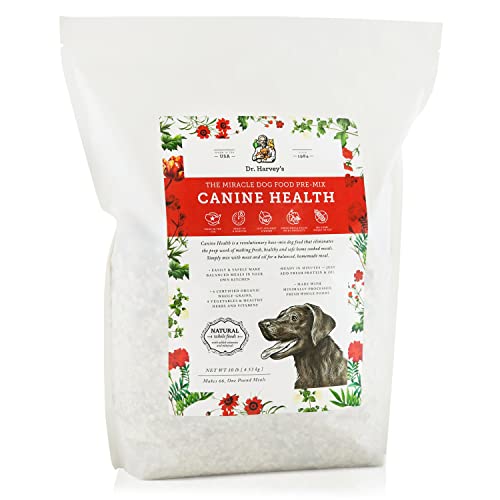
Dr. Harvey’s
Who It’s For: An excellent choice for dog owners who want complete control over protein levels and ingredient quality.
Why we recommended it:Dr. Harvey’s Canine Health Miracle Dog Food offers unmatched flexibility and a whole-food philosophy. By supplying only the dry “base mix”—a blend of organic grains, vegetables, and herbs—it lets you (under veterinary guidance) select exactly how much and what kind of meat or low-protein alternative to add for each meal. This personal control is invaluable for dogs needing strict protein limits or changing nutrition plans over time. The base itself contains no synthetic preservatives or chemicals, is non-GMO, and is prepared in the USA. Its holistic, grain-inclusive recipe—featuring six organic grains and nine vegetables—also sets it apart from many grain-free and filler-heavy commercial products.
What sets it apart from competitors: Customization for protein and fat intake, unlike pre-made kibbles or canned foods with fixed macronutrients. By adding your protein source and oil, you can accommodate allergies, taste preferences, or vet-specified restrictions (e.g., boiled eggs for ultra-low protein needs).
Best Low-Protein Dog Food for Renal Support
4.7
★★★★★
Royal Canin Renal
Who It’s For: Prescription-strength kibble developed explicitly for dogs diagnosed with chronic kidney disease or similar renal concerns.
Why we recommended it:Royal Canin Renal Support S stands out due to its highly palatable, energy-dense formula, which helps dogs with poor appetites eat enough even in small meals. Its composition—a precise blend of antioxidants, omega-3 fatty acids from fish oil, controlled phosphorus (max 0.42%), and reduced, high-quality protein (10.5–14.5% as-fed)—addresses both the nutritional and metabolic needs of dogs with renal dysfunction. It stabilizes appetite, improves quality of life, and, frequently, reduces the progression of kidney-related clinical signs. The ability to mix with other Royal Canin Renal Support varieties also helps to provide ongoing dietary appeal for dogs that often tire of a single food.
What sets it apart from competitors: Attention to palatability—including unique crescent-shaped kibble, formulated aromas, and texture profile—means it reliably encourages eating, a common struggle in renal patients. Its formulation is backed by veterinary nutrition science and consistently tailored through feedback from clinicians treating canine kidney disease. Additionally, the diet is manufactured under stringent quality and safety protocols, addressing the needs for consistency in pets requiring long-term renal support.
Best Low-Protein Dog Food for Hip & Joint
4.8
★★★★★
Diamond Pet Foods
Who It’s For: Dogs that are less active, overweight, or carrying extra joint stress, as it supports cartilage health, which is ideal for dogs with mild to moderate mobility concerns or joint pain.
Why we recommended it:Diamond Naturals Lite Lamb & Rice provides a digestible, animal-based protein source, while whole grains (rice, barley) and a blend of fruits and vegetables deliver natural antioxidants and fiber for digestive and immune support. Notably, the food includes added glucosamine and chondroitin—supplements known for supporting joint health—making it uniquely suited for dogs with hip and joint concerns. While not as protein-restricted as some prescription foods, its 18% crude protein and 6% fat levels support lean muscle and healthy weight without overtaxing older or less active dogs.
What sets it apart from competitors: The formula avoids meat by-products and artificial preservatives, relying instead on identified meat meals and a spectrum of whole-food inclusions like flaxseed, kale, chia seeds, and berries. The food is also made in the USA, and the company has a solid reputation for quality control, with a moderate cost that is accessible for most families.
The Bottom Line
Finding the right low-protein dog food isn’t just about lowering numbers on a label—it’s about giving your dog the best possible chance at a longer, healthier life. Whether you’re managing kidney disease, supporting liver function, or simply being proactive with your dog’s health, the right formula can ease symptoms, slow progression, and bring back their tail-wagging energy. But remember—low protein doesn’t mean low quality. The best options strike a delicate balance: limiting stress on vital organs while still delivering essential nutrients, digestibility, and taste your dog will actually enjoy. Now that you know what to look for—and what to avoid—you’re better equipped to make a choice that truly supports your dog’s well-being. And if you’re ever unsure, consult your vet; personalized guidance is always the safest path forward. Because when your dog’s health is on the line, every bite counts.
Like It? Subscribe & Share!
Sources
Canine Bible uses only high-quality sources, including peer-reviewed studies, to support the facts within our articles. Read our editorial process and product review methodology to learn more about how we fact-check, test products, and keep our content accurate, reliable, and trustworthy.
Canine Bible authorship represents the unified voice of our entire editorial team and our in-house veterinarians rather than a single author. Each article, blog post, and review published under the Canine Bible name undergoes a rigorous review process, involving all team members to guarantee accuracy and up-to-date in accordance with the latest veterinarian research. This collaborative effort is an integral part of our editorial process and aligns with our four pillars of content creation. This approach ensures our content is backed by expert knowledge and factual information, offering our readers reliable, actionable, and trustworthy content.