
How to Stop a Dog From Barking: 8 Easy-Step Guide (Fast & Effective)


Canine Bible is reader-supported. We receive affiliate commissions via some of our links. Learn more.
To stop a dog from barking, you need to identify why the barking is happening and respond with the right mix of training, management, and consistency. Rewarding quiet behavior, reducing triggers, and avoiding accidental reinforcement are usually the most effective starting points. But barking is not all the same. A dog that barks from boredom, fear, excitement, frustration, or separation-related stress will not respond to the same approach. Some common fixes can even make the problem worse if they only silence the noise without addressing the cause. That is why it is important to know when barking is normal, when it signals a deeper issue, and when training alone may not be enough. In this guide, we will break down what different types of barking mean, what actually helps, and which mistakes owners should avoid.
Why Stopping Excessive Barking Matters
| Why It Matters | Key Impact |
|---|---|
| Reduces stress | Stopping excessive barking helps lower stress for both your dog and everyone in the home. |
| Improves behavior | Addressing barking early can prevent it from turning into a stronger long-term habit. |
| Protects relationships | Less barking can reduce tension with neighbors, visitors, and other people around your dog. |
| Supports training | A quieter, calmer dog is often easier to guide, reward, and teach in daily life. |
| Helps spot problems | Understanding why your dog is barking can reveal boredom, fear, anxiety, or medical discomfort. |
| Creates calm at home | Managing barking makes the home environment more peaceful and easier to live in every day. |
| Improves safety | Reducing reactive barking can help your dog respond better in situations with people, dogs, or triggers. |
| Supports well-being | When barking is managed the right way, dogs often feel more secure, settled, and emotionally balanced. |
Why Do Dogs Bark?
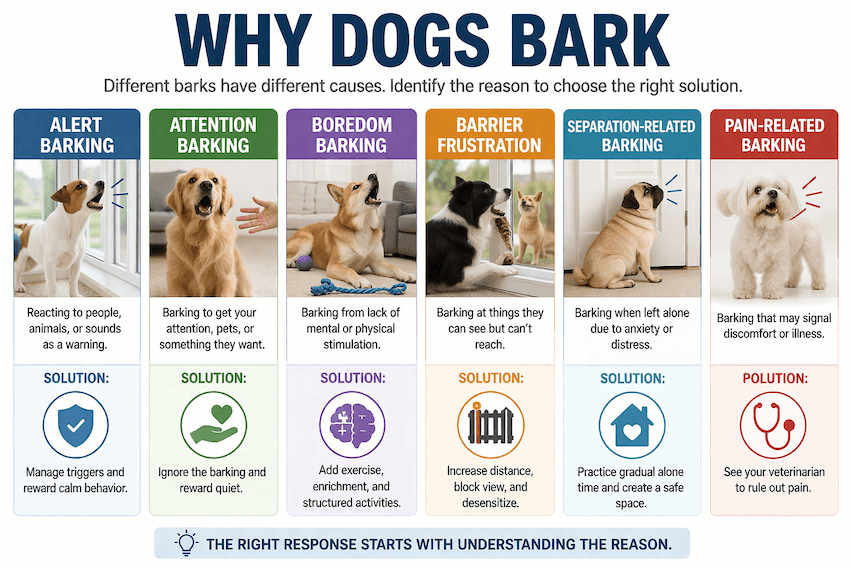
Dogs bark for different reasons, and the right solution depends on what is driving the behavior. Here are the primary and most common reasons dogs bark, since identifying the cause first makes it easier to choose a response that is more effective, calmer, and more appropriate for the dog.
How to Identify Your Dog’s Barking Trigger
Before you start training, look for a pattern. Pay attention to what happens right before the barking, who or what your dog reacts to, where it happens, what time it happens, and your dog’s body language. Also, ask whether barking is being rewarded by accident, such as getting attention, access, or the trigger to move away.
A few patterns can help you narrow it down. Barking at windows, fences, or the front door often points to alert or territorial barking. Barking when you are busy and stopping once you respond often suggests attention-seeking. Barking behind a gate, on leash, or when blocked from something exciting may point to frustration. Barking around departures or only when left alone may signal separation-related distress. Sudden barking with stiffness, confusion, or behavior change may suggest a medical or age-related cause.
Identifying the trigger comes first because it tells you what to manage, what to teach instead, and when to involve a veterinarian or behavior professional.


Step-by-Step Guide to Stop a Dog From Barking
Here’s a step-by-step guide to stop a dog from barking by reducing triggers, preventing accidental reinforcement, and teaching calmer, more appropriate responses.
Step 1: Reduce your dog’s chance to rehearse barking
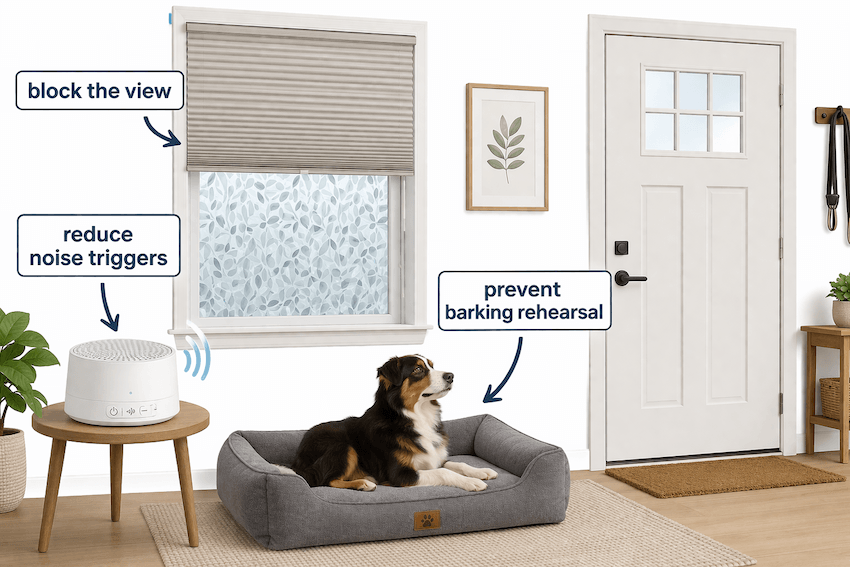
Start by changing the environment so your dog has fewer opportunities to bark at the same triggers. Close blinds, add window film, block fence views, move your dog away from front windows, and use white noise or soft music if outside sounds set them off. If your dog barks at the door, create distance before guests arrive instead of waiting for the barking to start.
Step 2: Meet the need behind the barking
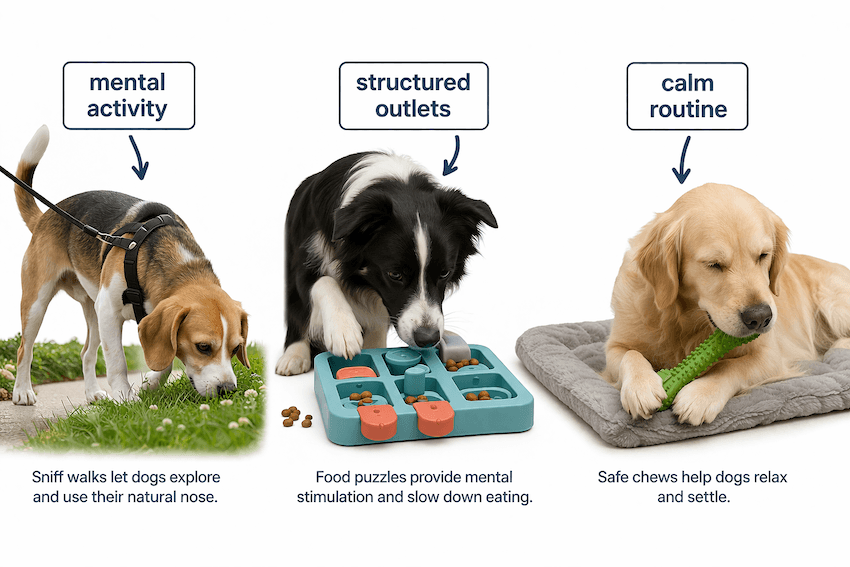
If your dog is barking because of boredom, under-stimulation, or excess energy, give them better outlets. Use sniff walks, dog puzzle toys, chew time, scatter feeding, and short training games that encourage thinking and settling. This helps most when barking is driven by restlessness rather than fear or distress.
Step 3: Stop rewarding barking by accident
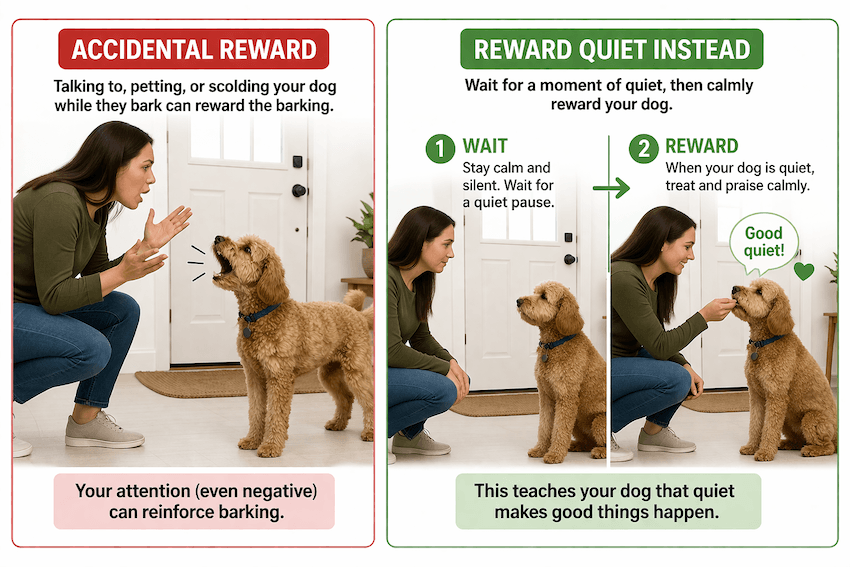
Some dogs keep barking because barking gets them something. If you talk to your dog, touch them, open the door, throw the toy, or rush over every time barking starts, the behavior can become stronger. Instead, wait for a brief pause or calm behavior, then give attention or access afterward.


Step 4: Teach an alternative behavior
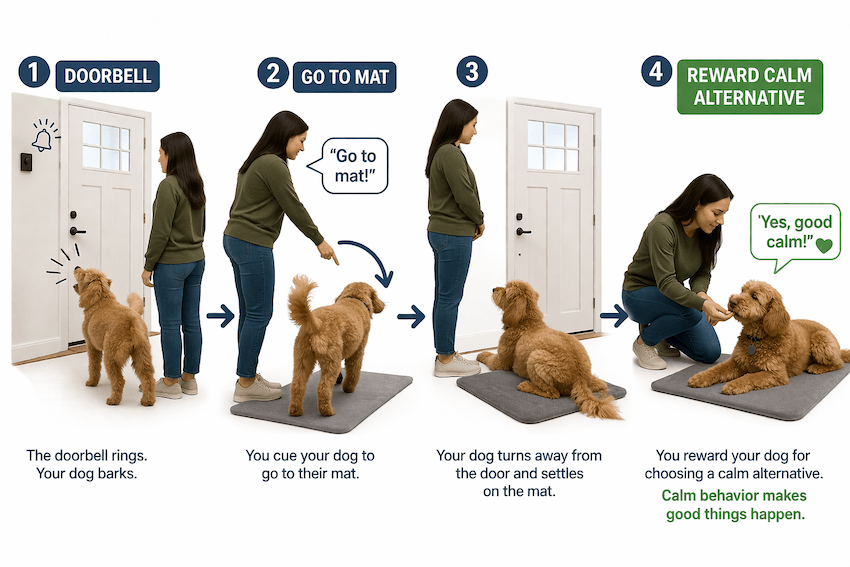
It is easier to reduce barking when your dog has a clear replacement behavior. Depending on the situation, teach go to mat, look at me, find it, sit for attention, or go to bed when the bell rings. The new behavior should be simple, easy to reward, and realistic for the trigger.
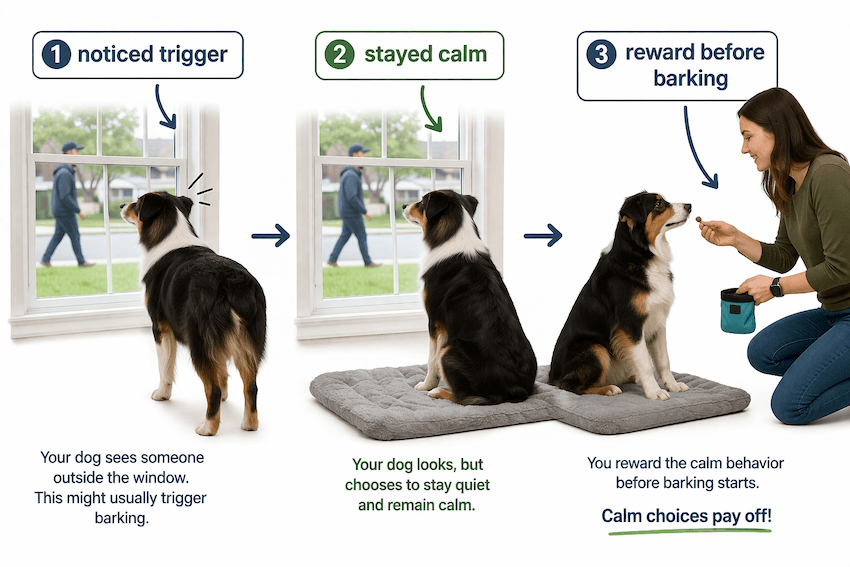
Step 5: Reward calm before barking escalates
Do not wait until your dog is already in a full barking burst. Watch for the moment your dog notices the trigger but stays quiet, or barks once and then pauses. Mark that calmer moment and reward it so your dog learns that staying settled works better than escalating.
Step 6: Use more distance for fear or trigger-based barking
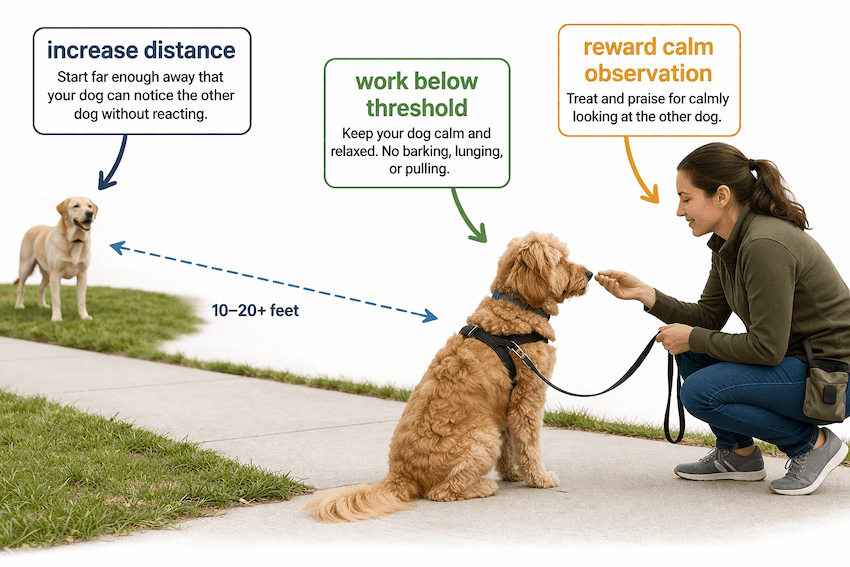
If the barking is tied to fear, worry, or over-arousal, do not work too close to the trigger. Move farther away, lower the intensity, and keep sessions easy enough that your dog can still think, eat treats, and respond. A dog that is too overwhelmed is not learning to stay calm.
Step 7: Practice in short, repeatable sessions
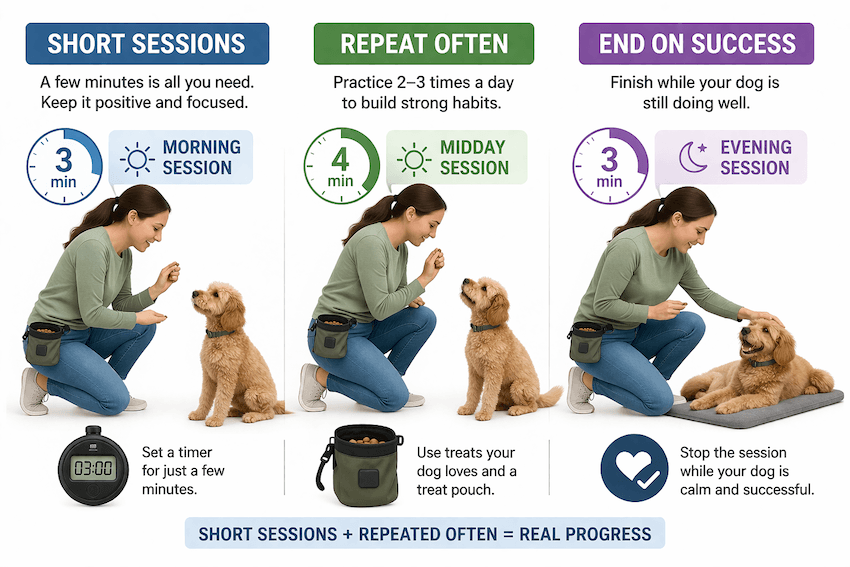
Keep practice sessions brief so your dog can succeed. Two to five minutes at a time is usually more effective than long sessions that end with frustration. Short sessions also make it easier to repeat training consistently throughout the week.
Step 8: Adjust the plan to the reason your dog is barking
Not all barking should be handled the same way. Alert barking often needs environmental management and calm-rewarding. Attention barking needs better timing so barking no longer gets a response. Boredom barking needs more appropriate outlets. Barrier frustration needs distance and fewer chances to explode at fences or windows. Separation-related barking may need a dedicated plan and professional help, while pain-related barking should be checked by a veterinarian first.
How to Teach “Quiet” and Reward Pauses
Teach “quiet” as a cue to pause and settle, not as punishment for barking. Start in an easy situation where your dog may bark briefly but can still calm down. The moment your dog stops barking, even for a second, mark it with a calm “yes” and give a reward.
After a few successful repetitions, say “quiet” just before you expect that pause, then reward the silence. Gradually build from a one-second pause to longer quiet periods. The goal is to reinforce silence after barking starts, not to yell over the barking.
Timing is key. Do not shout “quiet” over nonstop barking, and do not give attention while the dog is still vocalizing if attention is part of the reward. Wait for the pause, then mark and reward it so you do not accidentally strengthen the barking.
When Barking May Mean Fear, Separation Distress, Frustration, or Pain
Some barking is not just a training issue. If your dog looks tense, startles easily, backs away, or barks to create distance from people or dogs, fear or anxiety may be involved. If the barking happens around departures, keys, shoes, or closed doors, especially with pacing, destruction, or inability to settle, separation distress should be considered.
If barking gets worse behind a leash, fence, window, or gate, frustration or barrier frustration may be part of the problem. If the barking is new, worsening, happens at night, or comes with stiffness, confusion, restlessness, or other behavior changes, rule out pain, illness, or cognitive decline.
Training alone may not be enough in these cases. A veterinarian is a good first step when barking is sudden, excessive, or paired with physical or behavioral changes. A reward-based trainer or veterinary behavior professional may be especially helpful for fear, separation distress, or more complex cases.
What Research Says About Excessive Dog Barking
Current behavior guidance supports a cause-based, reward-based approach to barking. The American Veterinary Society of Animal Behavior recommends positive reinforcement for behavior change and warns that aversive methods can create more stress without solving the real problem.
Veterinary guidance also emphasizes finding the reason for the barking first. Cornell highlights reducing triggers, rewarding calm behavior, and teaching an alternative response, while Merck notes that separation-related barking should be evaluated as part of a wider distress pattern, not treated like ordinary nuisance barking.
Research supports this approach. Studies on barking at the door have found that positive-reinforcement training and replacement behaviors can reduce barking and overarousal. Separation-related research also shows that barking during owner absence is often part of a larger emotional issue, which is why the cause matters before building the plan.[1]
Additional Tips for Stopping Dog Barking
These extra tips fit the same evidence-based pattern: reduce trigger exposure, reinforce calm behavior early, and make your response clear and consistent. Small changes in setup and timing often make barking easier to manage before it escalates.
Common Mistakes When Trying to Stop Dog Barking
Most barking setbacks happen because the owner’s response is understandable but mistimed: too much emotion, too much trigger intensity, or too little attention to the real cause. Avoiding these common mistakes can make training more effective and less frustrating for both dog and owner.
Progress Tracking When Stopping Excessive Barking
Once you start the training, monitor how often barking happens, how intense it is, how long it lasts, and how quickly your dog recovers. Improvement often shows up first as smaller changes: the dog barks fewer times, settles faster, stays calmer at a greater distance, or can notice a trigger without immediately escalating.
Keep progress going by protecting your dog from unnecessary trigger overload, continuing to reward calm behavior, and updating the plan when the pattern becomes clearer. If the barking is getting worse, not improving after consistent practice, or seems tied to fear, panic, pain, aging, or separation distress, it is time to involve a veterinarian, a qualified reward-based trainer, or a veterinary behavior professional.
Frequently Asked Questions
The Bottom Line
Stopping a dog from barking starts with understanding why the barking is happening in the first place. Once you identify the trigger, you can use management, consistent training, calm reinforcement, and practical routine changes to reduce the behavior without relying on punishment. Progress usually comes from preventing repeated barking, rewarding quieter responses, and teaching the dog what to do instead. If the barking seems tied to fear, separation distress, frustration, pain, or sudden behavior change, training alone may not be enough. In those cases, getting help from a veterinarian or qualified behavior professional can make the plan safer and more effective.