How to Potty Train a Puppy: The Complete Guide (Easy Steps)

Canine Bible is reader-supported. We receive affiliate commissions via some of our links. Learn more.
Potty training a puppy requires a consistent schedule, close supervision, and rewarding the right behavior immediately. Take your puppy out frequently, use a designated potty spot, and reinforce success with praise or treats. Most puppies can learn this routine within a few weeks, but success depends on timing, patience, and avoiding mixed signals. Accidents will happen—but how you respond to them can either speed up or delay progress. Factors like age, breed, living environment, and even feeding schedule can all impact results. In this guide, we’ll break down exactly how to potty train your puppy step by step—plus the most common mistakes to avoid so you can get it right the first time.
Why Potty Training Your Puppy Matters
| Why It Matters | Key Impact |
|---|---|
| Prevents accidents | Consistent potty training helps your puppy learn where to go and reduces messes around the house. |
| Builds good habits | Starting early teaches your puppy a routine that can carry into adulthood. |
| Reduces stress | A clear potty plan makes daily life easier for both you and your puppy. |
| Protects your home | Fewer indoor accidents can help prevent stains, odors, and damage to floors or furniture. |
| Supports hygiene | Proper potty training helps keep your living space cleaner and more sanitary. |
| Improves communication | Your puppy learns how to signal when they need to go out, which strengthens understanding between you. |
| Saves time later | Teaching the right habits now can prevent longer training struggles in the future. |
| Boosts confidence | A puppy that understands the routine often feels more secure and settles in more quickly. |
Before You Start: What Puppy Owners Need to Know
Before you begin potty training, it’s important to understand that your puppy isn’t being stubborn or disobedient; they’re simply learning. Puppies have small bladders and immature muscle control, which means they physically can’t hold it for long periods. They need frequent opportunities to go outside, especially after eating, drinking, playing, or waking up. A helpful rule of thumb is that puppies can hold their bladder for about one hour per month of age, but this can vary depending on the individual dog.
You may also come across the “month-plus-one” rule often used with crate training, which suggests a puppy can hold it slightly longer in a confined space. While this can be a useful guideline, it should never replace careful observation. Watching your puppy’s signals—like sniffing, circling, or sudden restlessness—is just as important as following any timing rule.
House training typically takes about 4 to 6 months, though some puppies pick it up faster while others need more time. Factors like age, prior living conditions, and consistency in your routine all play a role. Setting realistic expectations from the start helps you stay patient and consistent, which is exactly what your puppy needs to succeed.
Supplies You’ll Need to Potty Train Your Puppy
You do not need a huge list of gear to start potty training, but having a few basic supplies ready can make the process much smoother. The right tools help you stay consistent, reward the right behavior quickly, and manage your puppy’s environment so accidents are less likely.


A leash is one of the most useful items because it helps you guide your puppy to the same potty area every time instead of letting them wander off and get distracted. Treats are just as important, since rewarding your puppy immediately after they go in the right spot helps them learn faster. Inside the house, a dog crate for puppies, baby gates, or even a small playpen can make supervision easier and limit access to rooms where accidents might happen. These tools help prevent mistakes while your puppy is still learning.
An enzymatic or odor-removing cleaner is another must-have. Regular cleaners may remove the stain, but they often do not fully remove the smell, which can draw your puppy back to the same spot again. Pee pads can also be useful in certain situations, especially if you live in an apartment, have limited outdoor access, or need a backup option during bad weather, but they work best when used with a clear plan. It also helps to have poop bags ready for outdoor trips, along with food and water bowls so your puppy’s daily routine stays predictable.
Potty Training Schedule That Matches Your Puppy’s Age
Your puppy’s potty schedule should change as they grow because bladder control improves with age, but younger puppies still need frequent trips outside. A practical rule of thumb is about one hour of bladder control per month of age, though that is not exact, so it is still important to take puppies out often, especially after waking, eating, drinking, playing, and other activity changes, while watching your own puppy’s behavior and adjusting the routine as needed.
| Puppy Age | General Potty Break Guide | Key Times to Take Them Out |
|---|---|---|
| 8–10 weeks | About every 45–60 minutes while awake. | Morning, after meals, naps, play, drinks, and bedtime. |
| 2–3 months | About every 2–3 hours as a general guide. | Morning, after meals, naps, play, drinks, and bedtime. |
| 4–5 months | About 4–5 hours if progress is going well. | Morning, after meals, naps, play, drinks, and excitement. |
| 6 months+ | Often longer, but still follow your puppy’s signals. | Morning, after meals, after rest, after play, and before bed. |
Step-by-Step Guide to Potty Training a Puppy
Follow these steps to potty train your puppy with a consistent routine that builds good habits over time.
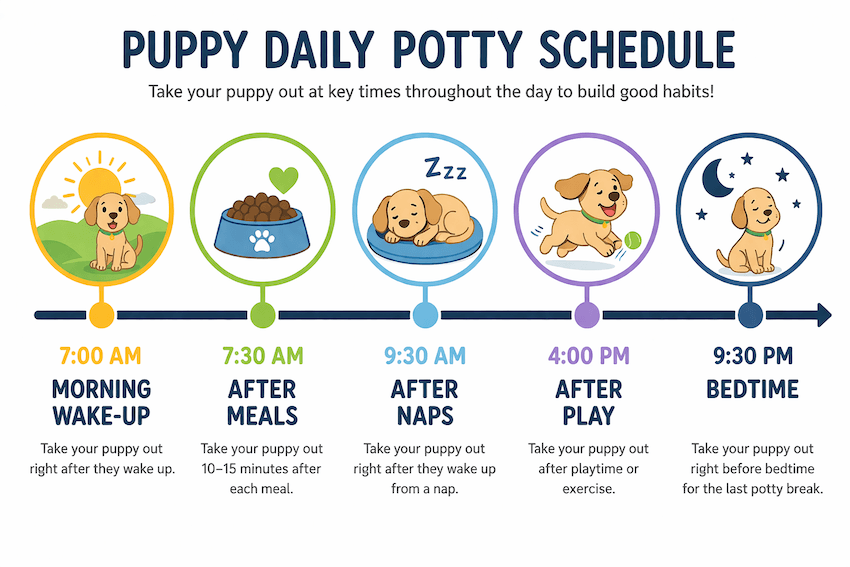
Step 1: Set a Consistent Potty Schedule
Take your puppy outside at regular intervals—first thing in the morning, after meals, after naps, after playtime, and before bed.


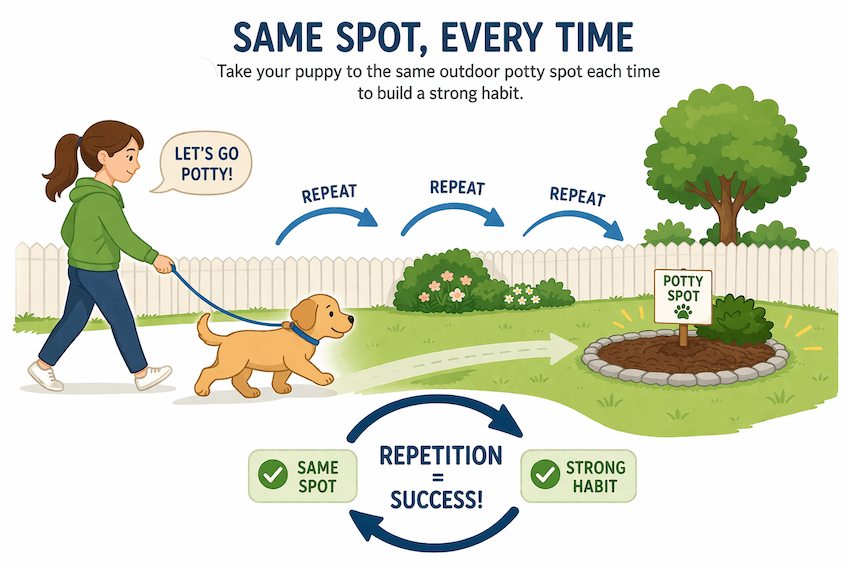
Step 2: Choose a Designated Potty Spot
Always bring your puppy to the same outdoor area so they associate that location with going to the bathroom.
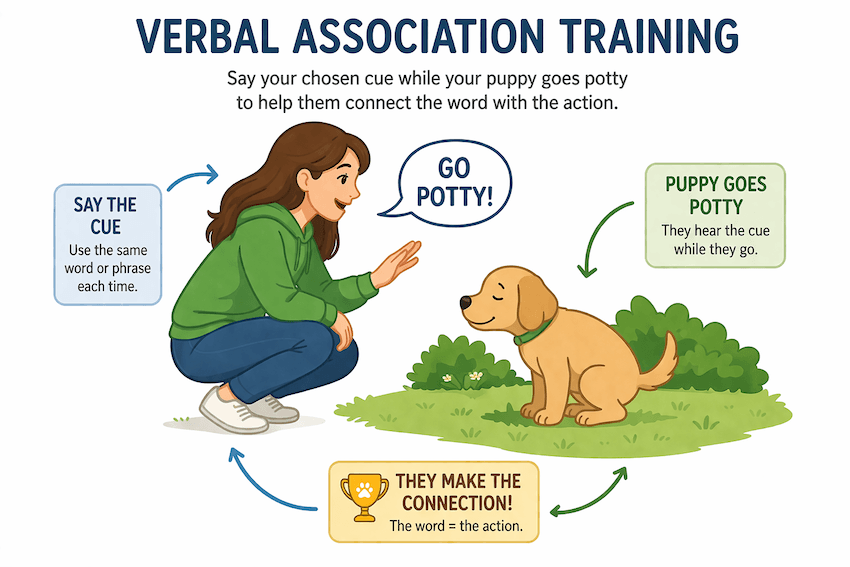
Step 3: Use a Verbal Cue
Say a simple phrase like “go potty” while your puppy is eliminating to build a connection between the cue and the action.
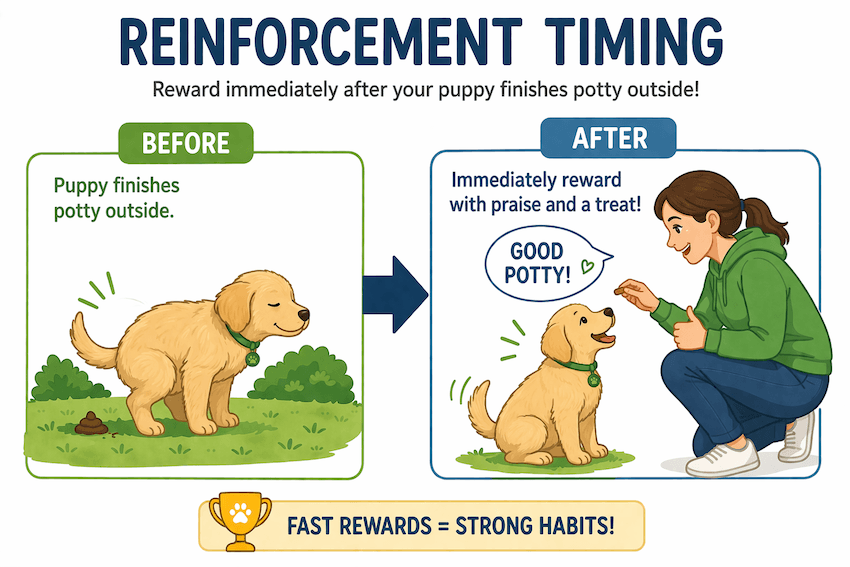
Step 4: Reward Immediately After Success
Give praise or a treat within seconds after your puppy finishes to reinforce the correct behavior.
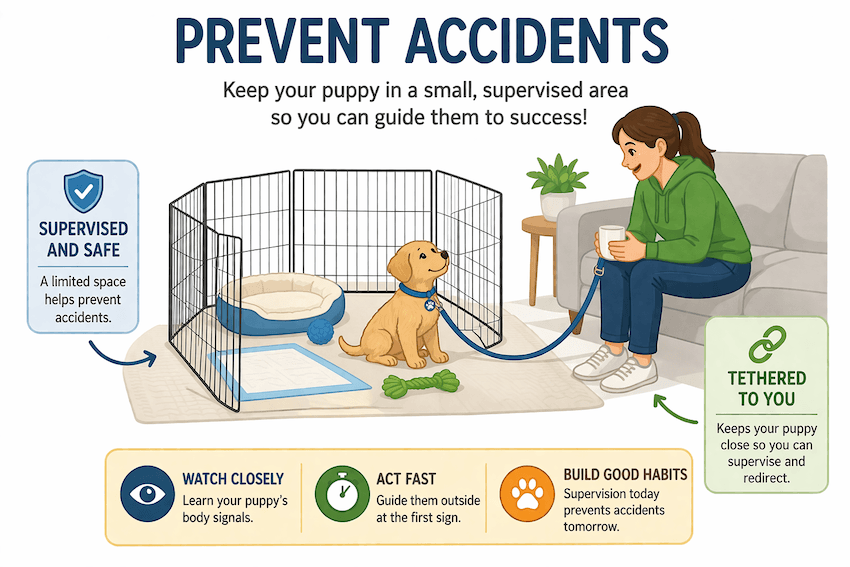
Step 5: Supervise Closely Indoors
Keep your puppy in sight or confined to a small area to prevent unnoticed accidents.
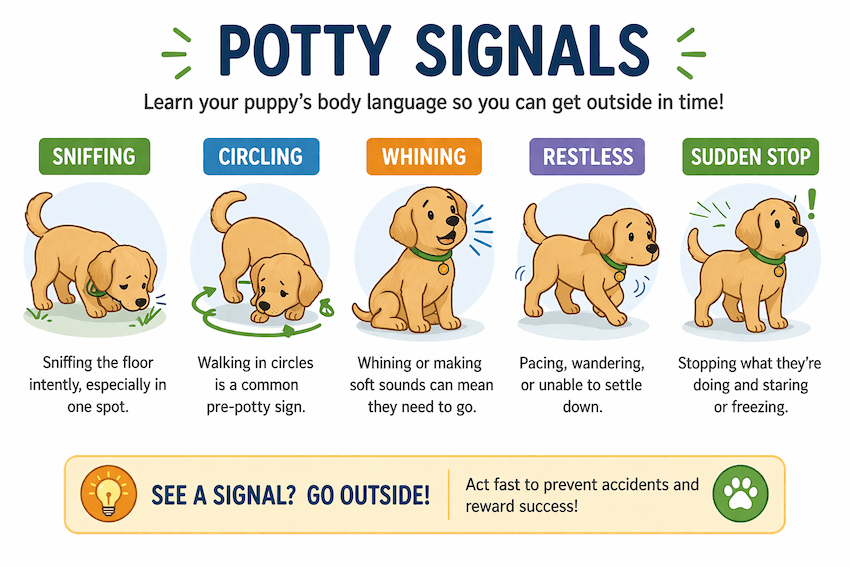
Step 6: Watch for Potty Signals
Look for signs like sniffing, circling, whining, or sudden restlessness and take your puppy out immediately.
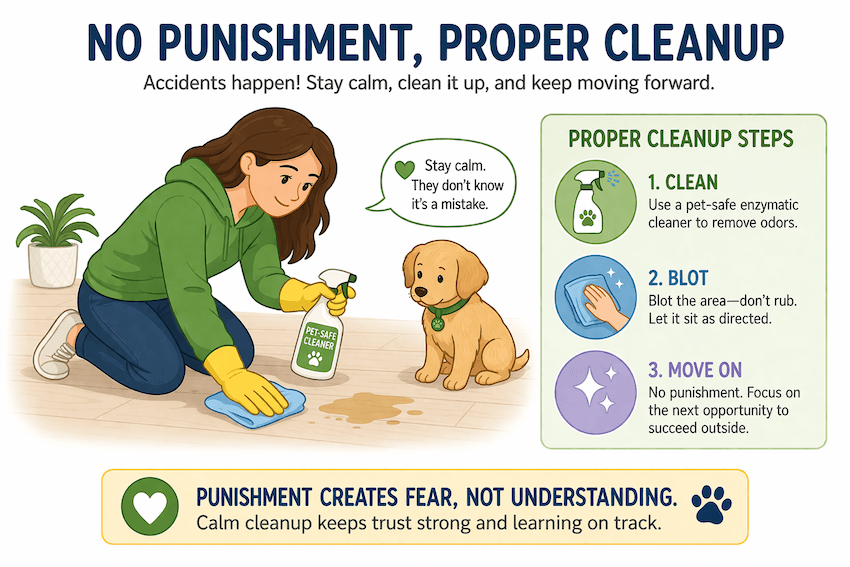
Step 7: Handle Accidents Properly
Clean accidents thoroughly and avoid punishment, which can create fear and confusion.
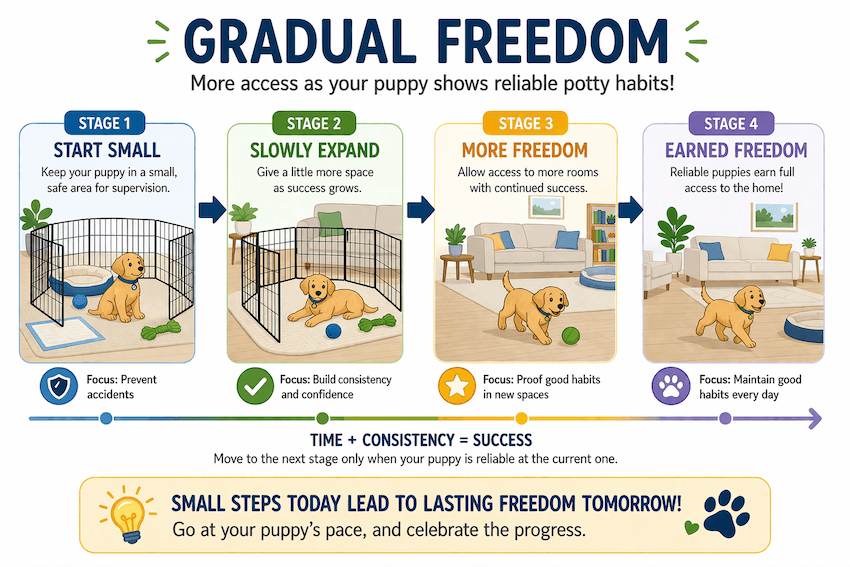
Step 8: Gradually Increase Freedom
As your puppy improves, slowly allow more access to the home while maintaining the routine.
Signs Your Puppy Needs to Go Potty
Puppies usually give small signals before they need to go, but these signs can be easy to miss—especially in the early stages of training. Learning to recognize them is one of the most effective ways to prevent accidents and guide your puppy outside in time.
Common signs include sniffing the floor, circling, pacing, or becoming suddenly restless. Some puppies may wander off to another room, stop playing abruptly, or begin to squat without much warning. Others may head toward the door or return to a spot where they’ve had accidents before, since lingering scents can draw them back. These behaviors often happen quickly, so close supervision is key, particularly when your puppy is awake and active.
Over time, you’ll start to notice your puppy’s unique patterns. Not every dog signals in the same way—some are obvious, while others are more subtle. Paying attention to these habits helps you respond faster, reinforce the right behavior, and build a more reliable routine. The sooner you catch these cues, the easier potty training becomes for both you and your puppy.
How to Handle Puppy Potty Accidents
Accidents are a normal part of potty training, especially in the early stages. Your puppy is still learning and doesn’t yet have full control, so mistakes are expected. What matters most is how you respond, because that response directly affects how quickly your puppy improves.
If you catch your puppy in the act, stay calm and gently interrupt without scolding. Quickly guide them outside to their designated potty spot and allow them to finish there. This helps them connect the right location with the behavior. If you find the accident after it has already happened, avoid reacting emotionally—your puppy won’t understand punishment after the fact, and it can create confusion or anxiety.
Cleaning the area thoroughly is just as important as the training itself. Use an enzymatic cleaner for dog urine to eliminate any lingering scent, since dogs are naturally drawn back to spots that smell like previous accidents. Without proper cleaning, the same area can quickly become a repeated problem.
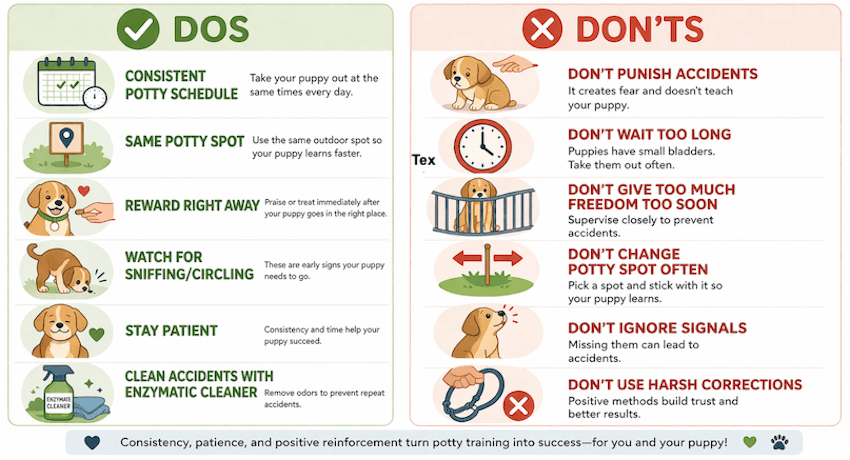
Potty Training Dos and Don’ts
Evidence-Based Insights on Puppy Potty Training
The strongest evidence supports a reward-based approach in puppy potty training. According to the peer-reviewed PLOS ONE study, dogs trained with aversive methods showed more stress-related behaviors, higher post-training cortisol, and poorer welfare outcomes than dogs trained with reward-based methods. That is why potty training works best when you reward success and avoid punishment after mistakes.[1]
Research tied specifically to house training points in the same direction. One published study found that owners who received brief house-training counseling had better success, used verbal punishment less often, and used enzymatic cleaners more often. In other words, structured guidance, consistency, and proper cleanup are not just good advice—they are backed by published veterinary research.[2]
Clinical house-soiling research also supports behavior modification over frustration or guesswork. One retrospective study found that behavior modification was the most commonly recommended treatment, and most improved cases were managed with routines that included taking the dog to the preferred elimination area and reinforcing elimination there.[3]
Additional Tips for Potty Training a Puppy
| Tip | Why It Helps | How to Apply It |
|---|---|---|
| Use same door | Builds a clear association with going outside. | Always take your puppy out through one consistent exit. |
| Feed on schedule | Predictable meals create predictable potty times. | Feed at the same times each day consistently. |
| Limit water at night | Reduces overnight accidents in early training stages. | Remove water 2 hours before bedtime. |
| Use enzyme cleaner | Removes odor cues that attract repeat accidents. | Clean all accidents with pet-specific enzyme cleaners. |
| Leash during potty | Keeps focus on bathroom behavior instead of play. | Use a leash until your puppy understands the routine. |
Common Mistakes When Potty Training a Puppy
| Mistake | Why It’s a Problem |
|---|---|
| Inconsistent schedule | Confuses your puppy and delays learning progress. |
| Punishing accidents | Creates fear and does not teach correct behavior. |
| Too much freedom | Leads to hidden accidents and missed training opportunities. |
| Late rewards | Breaks the connection between action and reward. |
| Ignoring signals | Missed cues increase chances of indoor accidents. |
Maintaining Potty Training Success
Once your puppy starts consistently going outside, your focus shifts to maintaining and reinforcing those habits. Continue using the same schedule and gradually increase the time between potty breaks as your puppy’s bladder control improves.
Signs of success include fewer accidents, clear signaling when they need to go out, and consistent use of the designated potty area. Continue rewarding good behavior intermittently to strengthen the habit.
If accidents suddenly increase, reassess your routine, supervision level, or possible health issues. In cases of persistent difficulty, consulting a professional trainer or veterinarian can help identify underlying problems and refine your approach.
Frequently Asked Questions
The Bottom Line
Potty training a puppy comes down to consistency, timing, and patience. When you follow a clear routine, supervise closely, and reward the right behavior, your puppy learns faster and with less stress. Accidents are part of the process, not a sign of failure. They simply show where adjustments in schedule or supervision are needed. The key is to stay calm, stick to the plan, and make it easy for your puppy to succeed. Over time, those small daily habits turn into reliable behavior. Every puppy learns at a different pace, but with the right approach, progress is inevitable. Stay consistent, and you’ll build a routine your puppy can understand and trust.