How to Train a Dog 101: Teach Obedience & Commands Like A Pro

Canine Bible is reader-supported. We receive affiliate commissions via some of our links. Learn more.
Training your dog starts with teaching clear cues, rewarding the behavior you want, and practicing consistently in short sessions. The most effective dog training is built on patience, repetition, timing, and positive reinforcement rather than punishment. But even simple training can go wrong when expectations are unclear, rewards are inconsistent, or your dog is distracted, anxious, or not ready for the lesson. Puppies, adult dogs, rescues, and stubborn breeds may all learn differently, and some behavior problems need a different approach than basic obedience. That is why it helps to know not just what to teach, but when to teach it, how long to practice, and what mistakes can slow progress. From house training and leash manners to barking, biting, and recall, this guide breaks down what works, what does not, and how to train your dog more effectively.
Why Training Your Dog Is Important
| Aspect | Why Dog Training Is Important | How It Helps In Real Life |
|---|---|---|
| Safety | Training helps dogs respond reliably in risky situations. | It can stop your dog from running into traffic or ignoring recall. |
| Behavior | It reduces unwanted habits like jumping, barking, and chewing. | Your dog becomes easier to manage at home and around guests. |
| Health | Training lowers stress and supports daily routines that protect well-being. | Vet visits, grooming, and handling become easier and less stressful. |
| Preventive Care | Early training can prevent small issues from turning into serious problems. | You can address leash pulling or reactivity before they get harder to fix. |
| Cost Savings | Well-trained dogs are less likely to cause damage or need intensive behavior help. | You may spend less on repairs, emergency situations, or professional intervention. |
| Peace of Mind | Training gives owners more confidence in their dog’s behavior. | You can feel more relaxed during walks, travel, and social situations. |
| Bonding | Training builds trust and strengthens communication between dog and owner. | Your dog learns to look to you for guidance and direction. |
| Socialization | Training helps dogs behave better around people, pets, and new environments. | It makes park visits, public outings, and meeting visitors smoother. |
| Quality of Life | Trained dogs usually have more freedom because they are safer and easier to control. | Your dog is more likely to join you on walks, trips, and everyday activities. |
| Long-Term Success | Consistent training creates habits that support a dog throughout life. | Good manners learned early often carry into adulthood and senior years. |
How to Train Your Dog
Training your dog means teaching clear behaviors through repetition, timing, and rewards so your dog understands what you want. The goal is not just obedience, but reliable communication, safer behavior, and a calmer daily life together. If your dog shows fear, aggression, or severe anxiety, basic home training may need support from a veterinarian or qualified behavior professional rather than a DIY approach alone.
How to Train Your Dog Step by Step
Follow these steps to teach your dog basic commands and obedience.
Step 1: Choose One Behavior to Teach First
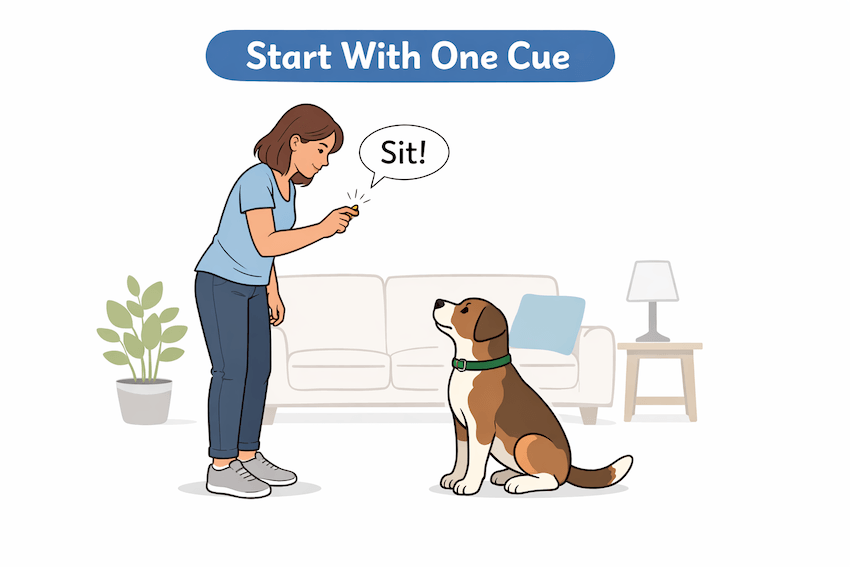
Start with one simple skill, such as sit, come, down, or go to bed. Training works better when you focus on one clear outcome instead of correcting everything at once. Pick a quiet environment with few distractions so your dog can succeed early.


Step 2: Use a Reward Your Dog Truly Wants
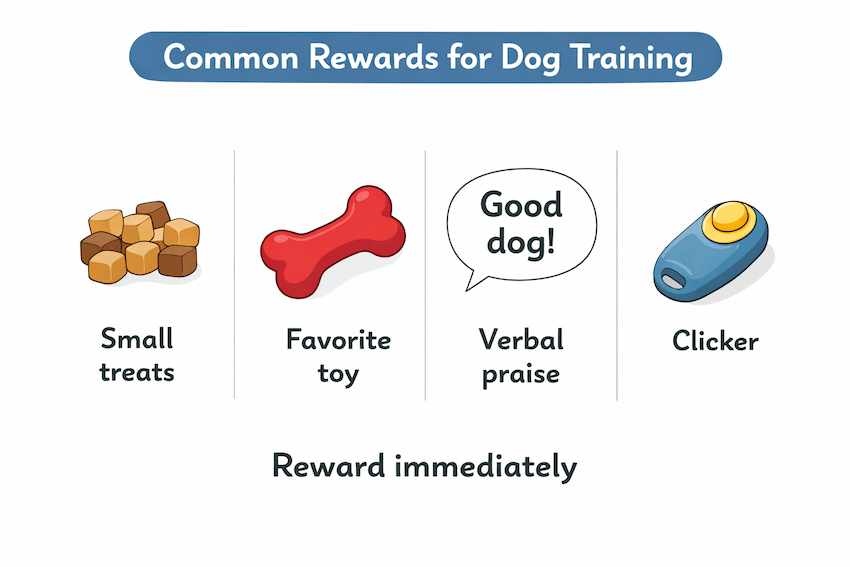
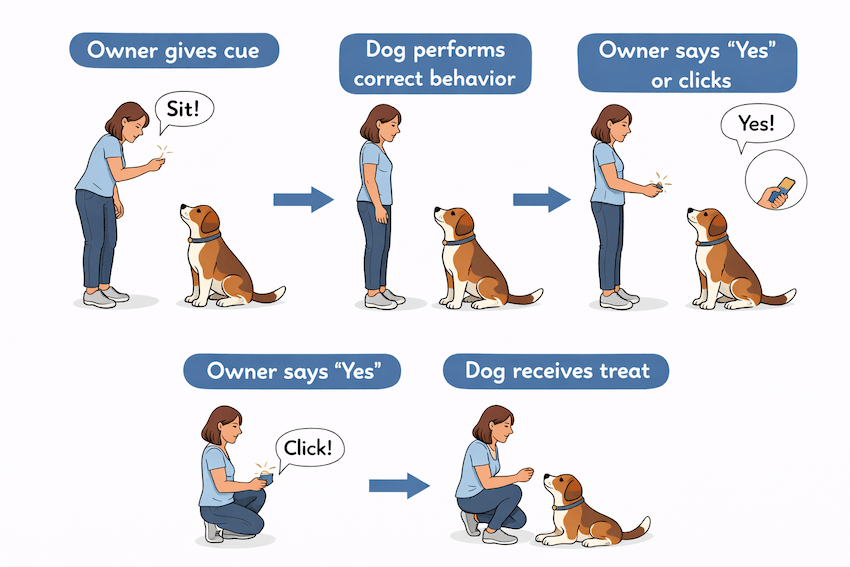
Use small, high-value treats, praise, a toy, or whatever your dog finds most motivating. The reward should come immediately after the correct behavior so your dog links the action to the payoff. Timely timing matters because delayed rewards create confusion. AAHA notes that immediate rewards and clear markers, such as “Yes” or a clicker, help dogs connect the right behavior to the reward.
Step 3: Mark the Exact Moment Your Dog Gets It Right
The moment your dog performs the correct action, mark it with a clicker or a short word like “Yes,” then give the reward. This helps your dog understand exactly which behavior earned the reward. Without a clear marker, dogs often guess wrong.
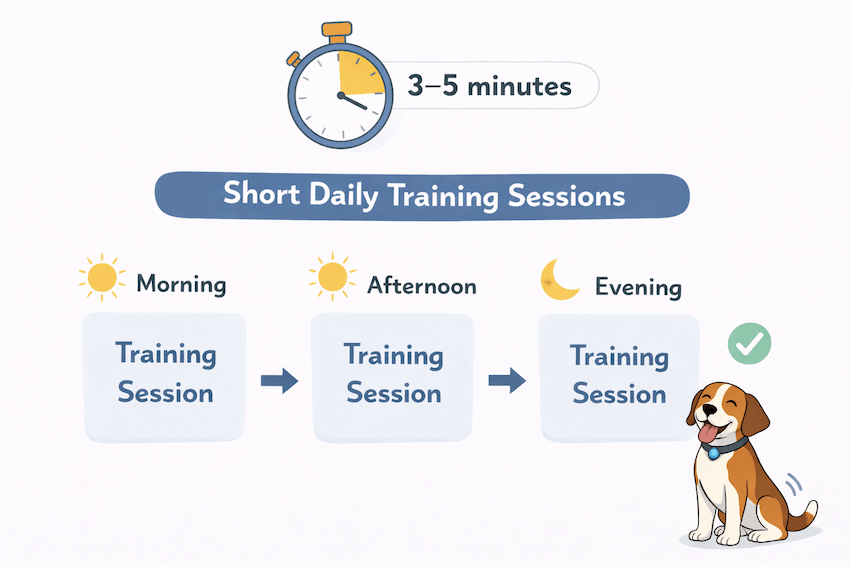
Step 4: Keep Sessions Short and Repeatable
Train for a few minutes at a time, then stop before your dog loses focus. Several short sessions each day usually work better than one long session. End on a success so your dog finishes motivated rather than frustrated.
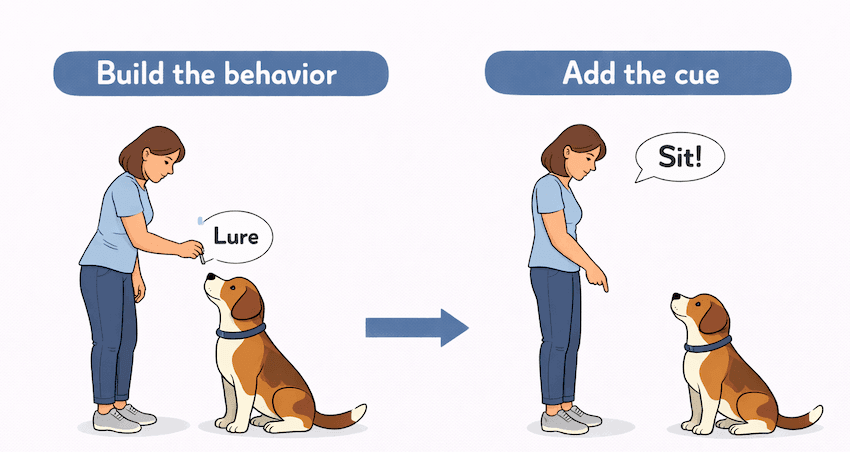
Step 5: Add the Verbal Cue After the Behavior Starts Happening
Once your dog begins offering the behavior consistently, pair it with a verbal cue like “Sit” or “Come.” Say the cue once, wait, then reward the correct response. Repeating cues over and over teaches your dog to ignore them.


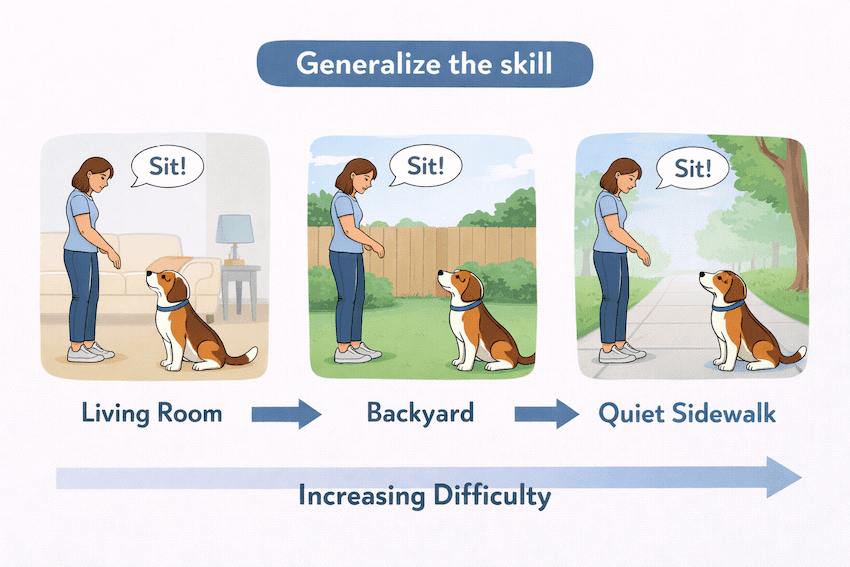
Step 6: Practice in Different Places and With Mild Distractions
Dogs do not automatically generalize a cue from the kitchen to the yard or from home to the park. Once your dog succeeds indoors, practice the same behavior in slightly harder environments. Gradually increase distractions so your dog learns to respond reliably in real life.
Step 7: Prevent Rehearsal of Bad Habits While Training
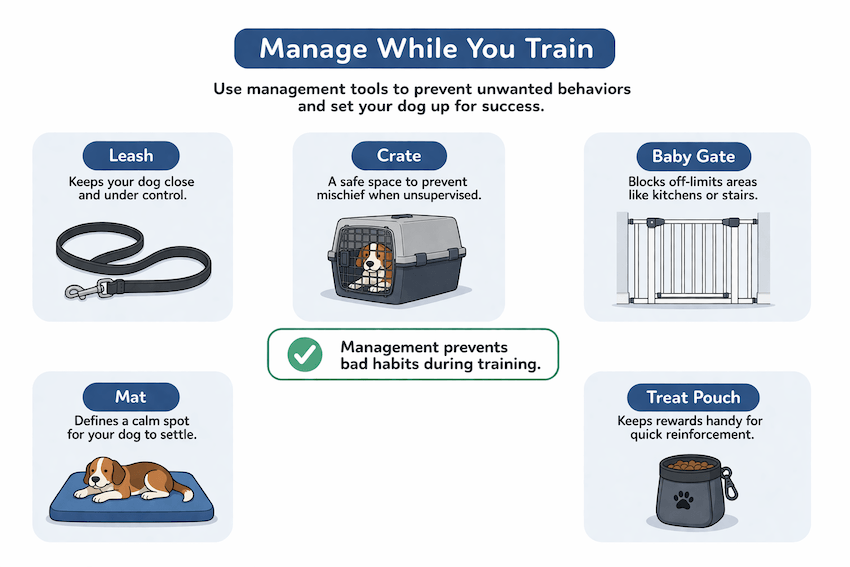
Management matters as much as practice. Use leashes, gates, crates, tethers, or distance to stop your dog from repeating behaviors like jumping, barking at windows, stealing food, or pulling toward triggers. A behavior practiced daily becomes harder to change.
Step 8: Build Reliability, Then Reduce Food Slowly
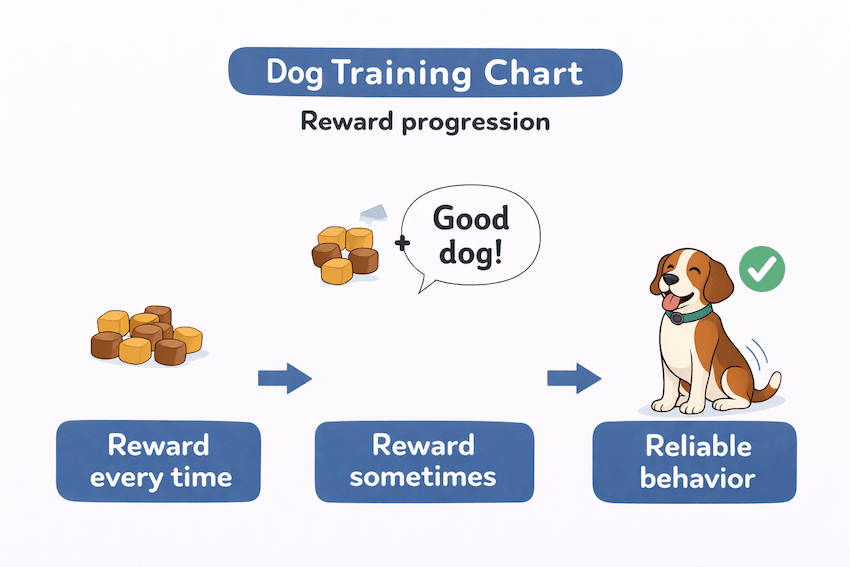
Once your dog responds well, do not stop rewarding abruptly. Gradually shift from rewarding every correct response to rewarding unpredictably, while still praising consistently. This keeps behavior strong without making the dog dependent on seeing food every time.
Step 9: Get Professional Help for Fear, Aggression, or Severe Reactivity
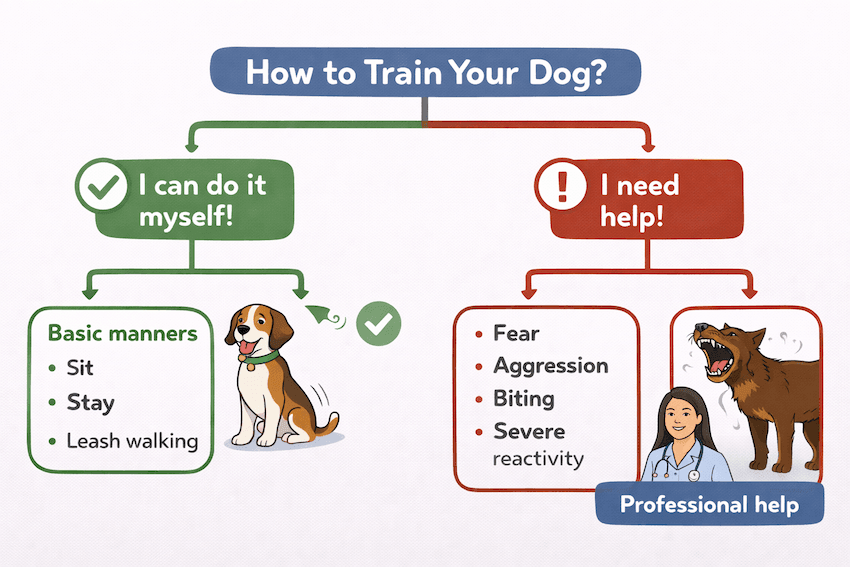
Basic obedience and manners are often manageable at home, but aggression, bite risk, intense fear, separation distress, or serious reactivity need a professional plan. AVSAB and AAHA both emphasize humane, reward-based methods and caution against aversive techniques that can worsen welfare and behavior outcomes. Research has also found poorer welfare in dogs trained with aversive-based methods, especially when used heavily.
Dog Training Dos and Don’ts
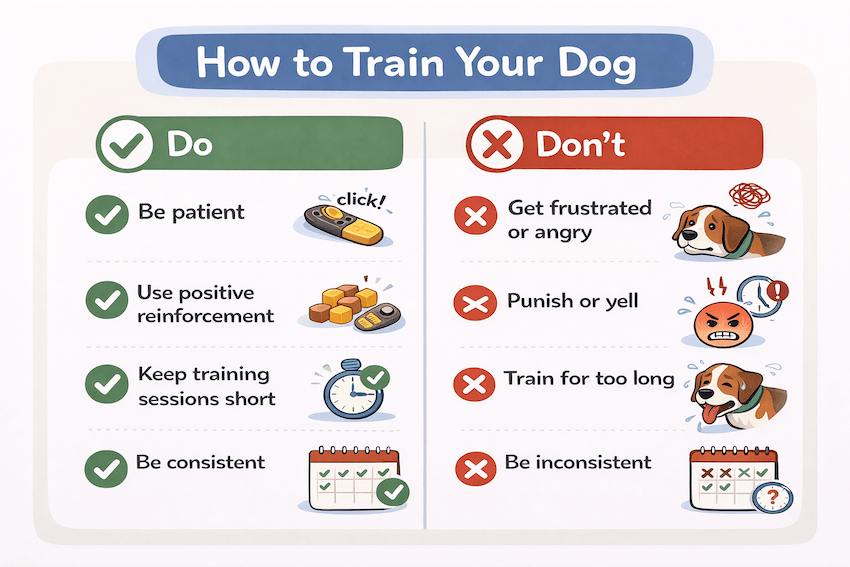
In general, training goes more smoothly when you stay patient, reward the behavior you want, keep sessions short, and stay consistent with your cues and expectations. Just as importantly, it helps to avoid getting frustrated, using punishment, dragging sessions on too long, or sending mixed signals. Small changes in your approach can have a big impact on your dog’s progress and confidence.
Evidence-Based Dog Training References
The strongest veterinary behavior guidance supports reward-based dog training. AVSAB states that current scientific evidence supports reward-based methods for all dog training and behavior work because they offer the most advantages with the least harm to welfare.
That recommendation is backed by peer-reviewed research. In a 2020 PLOS ONE study, dogs trained with aversive-based methods showed more stress-related behaviors during training and poorer welfare outcomes than dogs trained with reward-based methods; the authors concluded that aversive methods, especially when used in high proportions, compromise companion dog welfare.[1]
A 2021 study on training efficacy and efficiency reported that reward-based training can be as effective or more effective than mixed methods while avoiding the welfare costs associated with aversive techniques. That matters clinically because owners often assume punishment is necessary for reliability, but the evidence does not support that assumption.[2]
Early training and socialization also matter. AVSAB states that the most important socialization period is the first three months of life, and research links appropriate early socialization with lower rates of fear and behavior problems later on. AAHA’s life stage guidance likewise encourages positive reinforcement, handling practice, crate training, and early behavior support as part of preventive care.
Additional Tips for How to Train Your Dog
| Tip | Why It Helps | How to Apply It |
|---|---|---|
| Train Before Meals | Mild hunger can increase focus and food motivation. | Practice shortly before breakfast or dinner. |
| Use Tiny Treats | Small rewards keep sessions fast and efficient. | Use pea-sized pieces your dog can swallow quickly. |
| End on Success | A good finish keeps training positive and memorable. | Stop after one easy win your dog knows. |
| Lower Distractions First | Easy environments improve learning and reduce frustration. | Start indoors before practicing outside or around dogs. |
| Reward Calm Behavior | Dogs repeat behaviors that reliably earn reinforcement. | Give treats when your dog relaxes quietly. |
| Use a Release Word | It tells your dog when the task is over. | Say “Okay” before allowing movement again. |
| Practice Daily | Frequent repetition builds stronger, faster habits. | Do two or three short sessions each day. |
| Track Progress | Simple notes show what is improving or stalling. | Write down cues, distractions, and success rate. |
Common Mistakes When You Train Your Dog
| Mistake | Why It’s a Problem |
|---|---|
| Repeating the Cue | Your dog learns the first cue can be ignored. |
| Rewarding Too Late | Late rewards make the correct behavior unclear. |
| Training Too Long | Fatigue lowers focus and increases frustration. |
| Moving Too Fast | Big jumps in difficulty often cause failure. |
| Using Punishment First | It can increase fear, stress, or avoidance. |
| Ignoring the Environment | Distractions can overpower a half-learned skill. |
| Inconsistent Rules | Mixed messages slow learning and weaken reliability. |
| Expecting Instant Generalization | Dogs must relearn cues in new places. |
| Accidentally Rewarding Bad Behavior | Attention can reinforce barking, jumping, or whining. |
| Skipping Professional Help | Serious behavior issues can worsen without guidance. |
After You Train Your Dog
After each training session, give your dog time to relax and process what was learned. Keep practicing the same skill in short sessions over the next several days, then slowly test it in new rooms, outdoors, and around mild distractions.
You will know the training is working when your dog responds faster, needs less luring, and can perform the cue in more than one environment. Maintain results by rewarding good responses often enough to keep the behavior strong, even after the skill seems learned.
Keep monitoring for signs that your dog is struggling, such as freezing, avoidance, lip licking, barking, shutting down, or escalating frustration. If your dog becomes fearful, reactive, or aggressive, or if progress stalls despite consistent practice, contact your veterinarian or a qualified reward-based trainer or veterinary behavior professional for a more tailored plan.
Frequently Asked Questions
The Bottom Line
Training your dog is really about building clear communication, trust, and habits that make everyday life easier for both of you. The most effective approach is to keep things simple, reward the behavior you want, and practice consistently in short sessions. Progress may feel slow at first, but small wins add up quickly when your dog understands exactly what earns praise or rewards. Just remember that timing, repetition, and the right environment matter as much as the cue itself. Some dogs will learn faster than others, and challenges like fear, anxiety, or reactivity may require a more tailored approach. With patience and the right method, most dogs can learn the skills they need to be safer, calmer, and easier to live with. When training is done well, you are not just teaching commands—you are creating a stronger lifelong relationship with your dog.