How to Housebreak an Adult Dog: 7 Easy Steps (Trainer-Approved)

Canine Bible is reader-supported. We receive affiliate commissions via some of our links. Learn more.
Housebreaking an adult dog may seem challenging, especially if your dog has never been potty trained or has developed unwanted bathroom habits. However, adult dogs can learn reliable house-training routines with the right approach, consistency, and patience. Whether you’ve adopted a rescue dog, moved into a new home, or are dealing with frequent indoor accidents, understanding your dog’s behavior is essential. Unlike puppies, adult dogs may have established habits, previous training experiences, or underlying issues that affect their progress. But how long does it take to housebreak an adult dog, and what should you do when accidents keep happening? Could anxiety, marking behavior, or medical conditions be interfering with training? This guide explores what makes adult dog housebreaking different, common mistakes to avoid, and practical strategies for building lasting potty-training habits.
Key Considerations Before Housebreaking an Adult Dog
Housebreaking an adult dog requires understanding their previous habits, physical needs, and ability to adjust to a new routine. Some dogs learn quickly, while others need additional support because of their background, environment, or health.
| Key Consideration | What Dog Owners Should Know |
|---|---|
| Age Is Not a Barrier | Adult and senior dogs can learn new bathroom habits with appropriate training. |
| Previous Habits Matter | Rescue dogs and previously untrained dogs may need extra adjustment time. |
| Medical Problems | Urinary, digestive, or age-related conditions can cause accidents despite training. |
| Consistent Scheduling | Predictable bathroom opportunities help dogs establish reliable elimination routines. |
| Positive Reinforcement | Immediate rewards encourage outdoor elimination without creating fear or confusion. |
| Indoor Supervision | Managing household access helps prevent accidents while new habits develop. |
| Training Timeline | Some dogs improve within weeks; others require several months of practice. |
| Individual Challenges | Anxiety, marking, environmental changes, and limited outdoor access may affect progress. |
Why Adult Dogs Have Accidents Indoors
Incomplete house training is one of the most common reasons adult dogs eliminate indoors. Some dogs were never taught where to go, while others learned bathroom habits that do not match their new living environment. Rescue dogs, dogs previously kept outdoors, and pets transitioning from shelters may need time to understand household routines. Even previously trained dogs can experience setbacks after moving, changing caregivers, or adjusting to unfamiliar surroundings.
Not every indoor accident is a training problem. Urine marking, separation-related anxiety, fear of outdoor environments, and medical conditions can all cause inappropriate elimination. Some dogs may avoid going outside because of unfamiliar surfaces, loud noises, or unpleasant weather. Understanding whether your dog lacks training, feels uncomfortable, or cannot control elimination helps determine the most appropriate approach.
What You Need Before Housebreaking an Adult Dog
Preparing the right supplies, environment, and daily routine helps make housebreaking an adult dog more manageable. Before beginning, identify a suitable bathroom area, gather essential training equipment, and consider your dog’s health and individual needs.


| What You Need | Preparation | Why It Matters |
|---|---|---|
| Potty Area | Choose a quiet, accessible outdoor spot. | Establishes a consistent bathroom location. |
| Leash and Harness | Use secure, properly fitted equipment. | Ensures safe outdoor trips. |
| Training Treats | Prepare small, dog-safe rewards. | Encourages successful potty behavior. |
| Cleaning Supplies | Keep waste bags and enzymatic cleaner ready. | Removes waste and lingering odors. |
| Indoor Management | Prepare gates, a pen, or a comfortable crate. | Prevents unsupervised accidents. |
| Daily Schedule | Plan feeding times and bathroom breaks. | Builds predictable potty habits. |
| Health Check | Investigate sudden accidents or unusual symptoms. | Identifies possible medical causes. |
| Special Needs | Adjust access for mobility or anxiety. | Keeps training safe and manageable. |
How to Housebreak an Adult Dog Step by Step
Successful housebreaking depends on consistency, timing, and close supervision. These steps help your dog learn where to eliminate, how to build a reliable routine, and how to avoid repeated indoor accidents.
Step 1: Establish a Designated Bathroom Spot
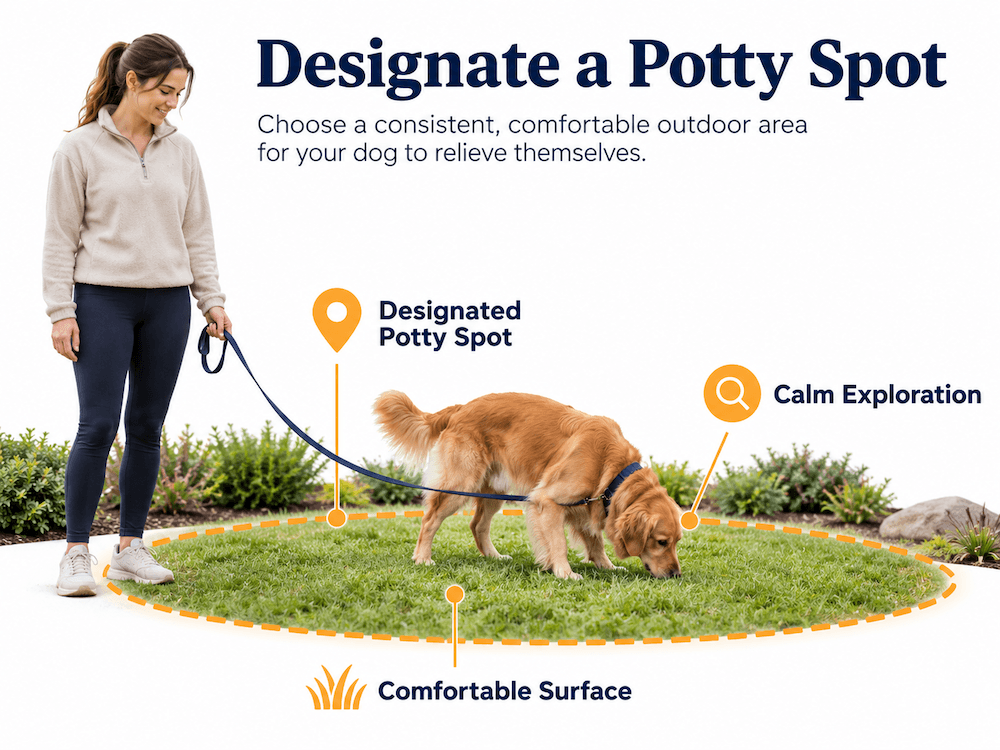
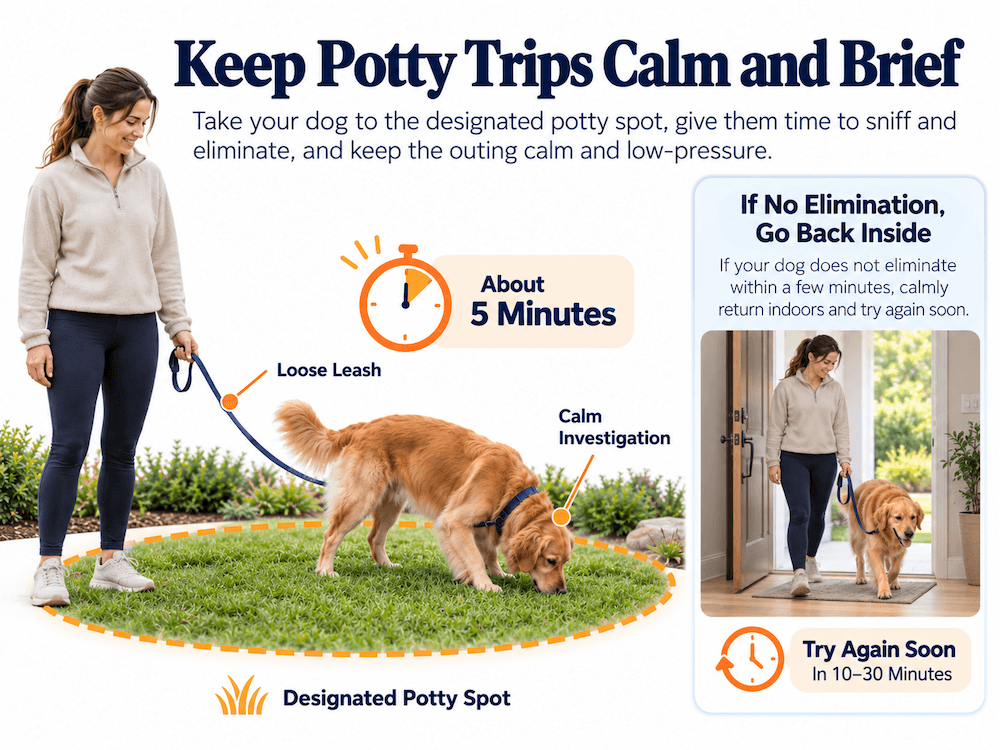
Take your adult dog to the same outdoor bathroom location whenever possible, preferably a quiet, accessible area with a comfortable surface. Allow your dog to investigate the spot naturally without pulling, rushing, or forcing them into a particular position. Repeated visits help establish the location as an appropriate place to urinate and defecate.
Step 2: Create a Consistent Potty Schedule
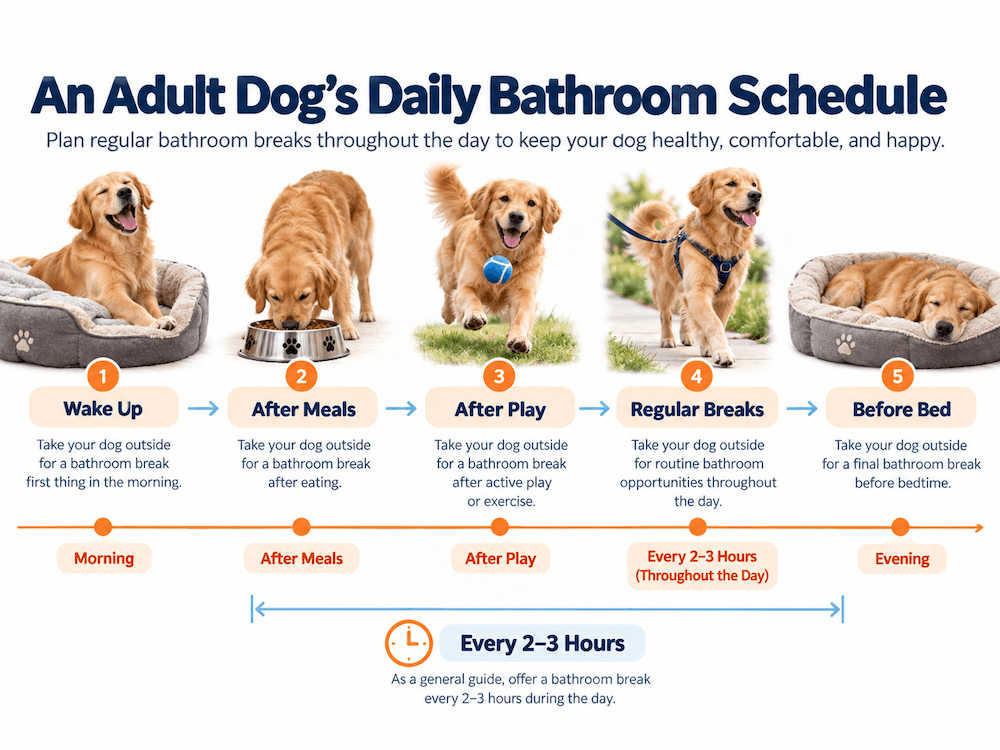
Take your dog outside at predictable intervals, initially about every two to three hours while awake, adjusting the frequency to their individual needs. Schedule additional bathroom opportunities immediately after waking, following meals, after active play, and before bedtime. Dogs with frequent accidents may need shorter intervals until a reliable pattern develops.
Step 3: Take Your Dog Outside and Wait Patiently
Lead your dog to the designated area on a leash and allow approximately five minutes of calm exploration without turning the trip into an exciting walk. If your dog does not eliminate, return indoors, maintain close supervision, and try again after approximately 10–15 minutes or sooner if they show signs of needing to go. Avoid pressuring your dog, since some adults need time to feel comfortable eliminating in a new environment.
Step 4: Reward Your Dog Immediately After Eliminating
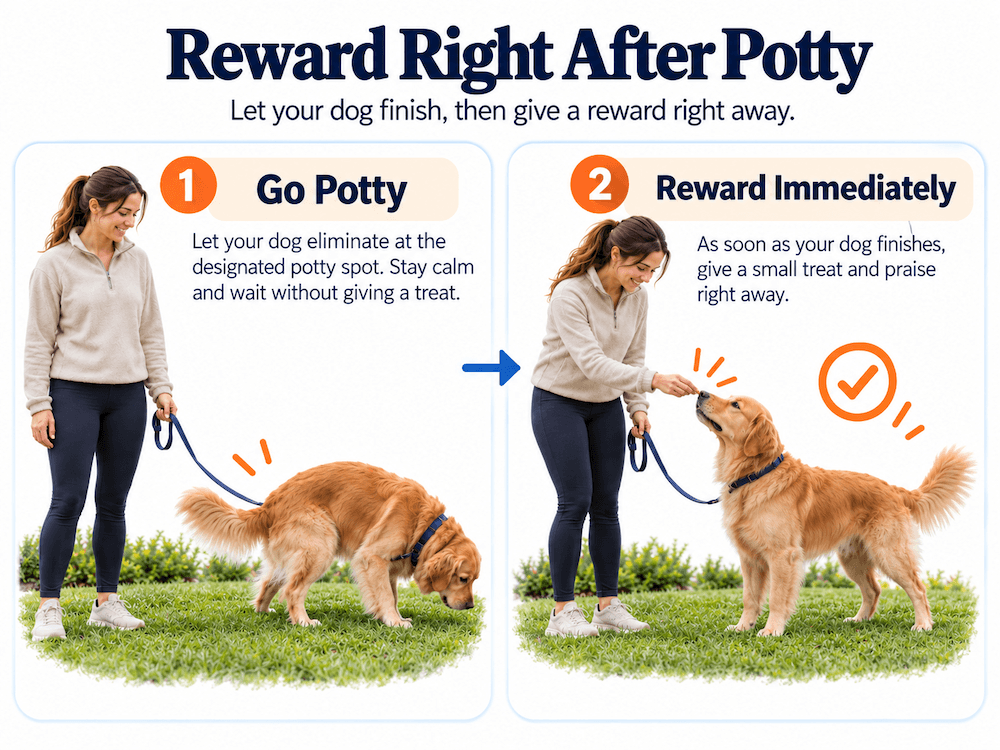
When your dog begins eliminating outdoors, calmly introduce a consistent verbal cue such as “Go potty” without interrupting them. As soon as your dog finishes, provide a small treat and gentle praise while still near the bathroom spot. Immediate reinforcement helps your dog associate eliminating in the correct location with a positive outcome.


Step 5: Recognize Potty Signals and Respond Quickly
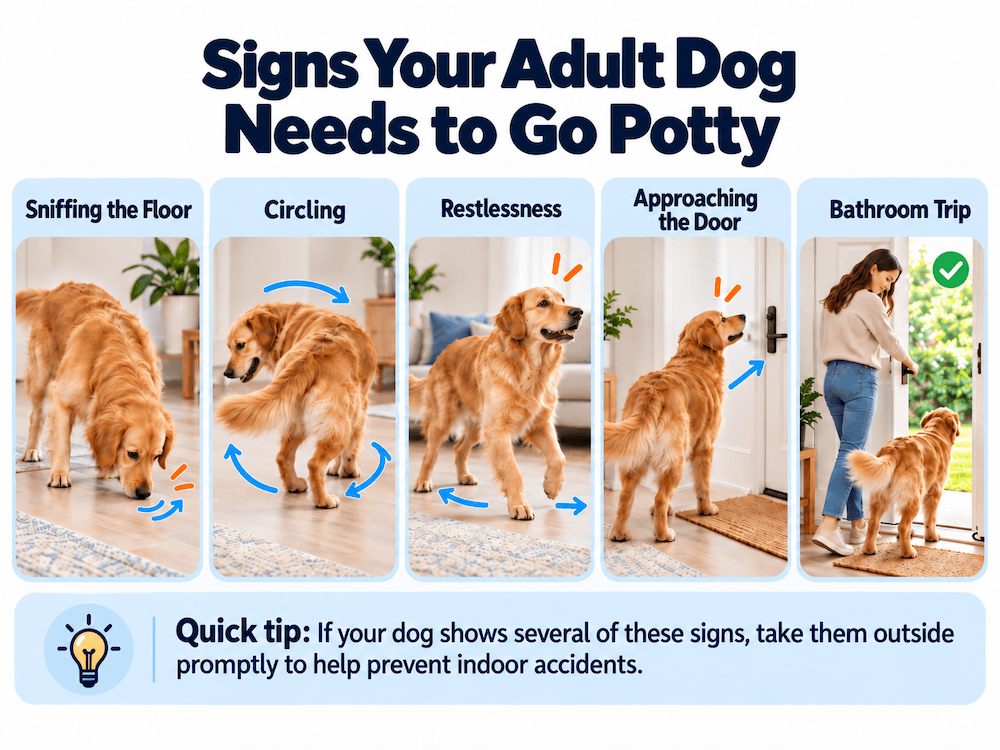
Watch for behaviors such as repeated floor sniffing, circling, pacing, restlessness, or suddenly moving toward a doorway. When these signals appear, calmly guide your dog outside before an accident occurs. Learning your dog’s individual signals is especially important because some adult dogs provide little obvious warning.
Step 6: Supervise Your Dog and Manage Indoor Freedom
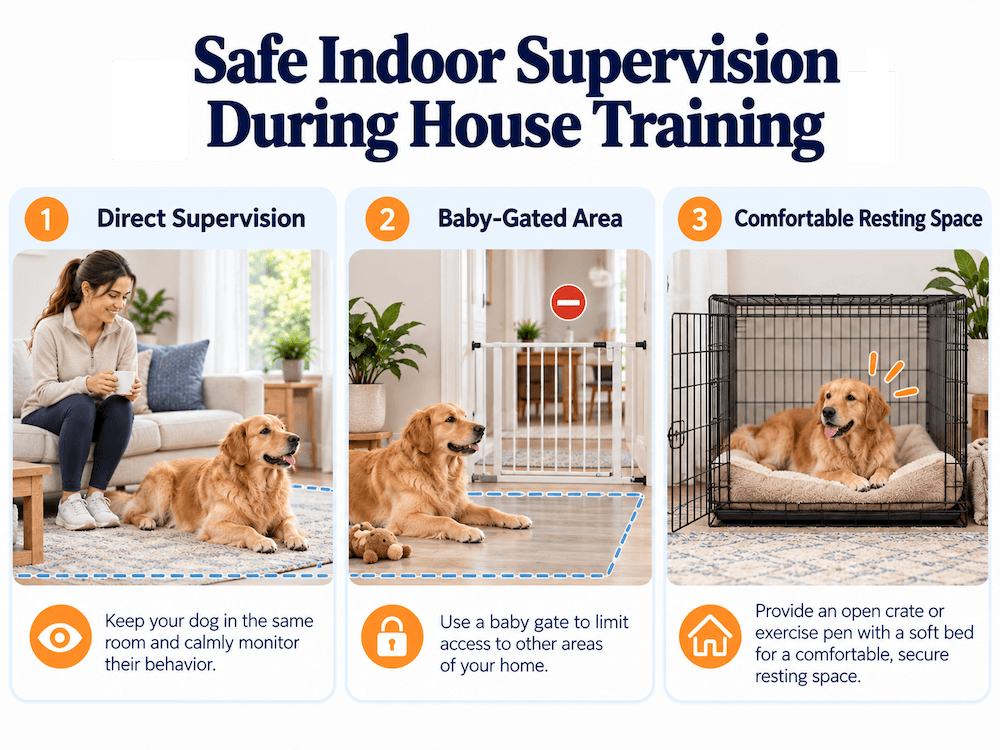
Keep your dog within sight during the early stages of training, using a supervised lightweight leash or baby gates when needed. When direct supervision is impossible, use a comfortable dog-proofed area, exercise pen, or positively introduced crate that allows the dog to rest safely. Choose management based on your dog’s comfort, and provide bathroom access rather than expecting them to remain confined beyond their needs.
Step 7: Clean Indoor Accidents Thoroughly
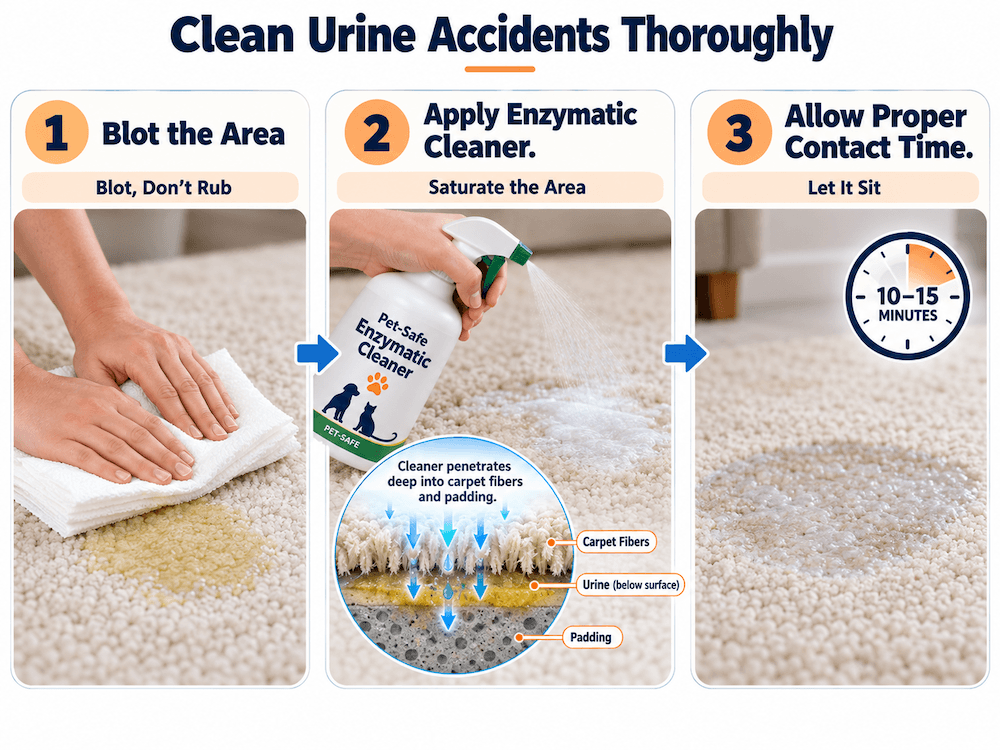
If an accident occurs, remove urine or feces promptly and apply an enzymatic pet cleaner according to its instructions. Treat the entire affected area, including any material the urine has penetrated, and allow the cleaner sufficient contact time to break down odor-causing residue. Thorough cleaning reduces lingering scent cues that may encourage your dog to return to the same location.
Helpful Tips for Housebreaking an Adult Dog
Small adjustments can make adult dog house training easier, particularly when your home, schedule, or dog’s background creates additional challenges. The following tips address practical situations that may require a different training arrangement. Use the recommendations that match your dog’s circumstances without changing the fundamental goal of consistent bathroom habits.
| Situation | Helpful Tip | Why It Helps |
|---|---|---|
| Apartment living | Keep walking equipment beside the door and account for elevator delays. | Reduces the time between recognizing urgency and reaching the bathroom area. |
| Bad weather | Provide a sheltered outdoor spot and suitable weather protection. | Helps dogs reluctant to use wet or uncomfortable surfaces. |
| Multiple caregivers | Share a written schedule and use consistent verbal cues. | Prevents conflicting routines and makes bathroom habits easier to track. |
| Fearful rescue dogs | Use quiet surroundings and gentle, low-key praise. | Reduces pressure on dogs uncomfortable with unfamiliar people or environments. |
| Difficulty signaling | Teach your dog to touch a doorbell before supervised bathroom outings. | Provides a recognizable way to request outdoor access. |
| Long workdays | Arrange a trusted dog walker or caregiver for necessary daytime breaks. | Prevents uncomfortable waiting periods that exceed your dog’s bladder control. |
Transitioning an Adult Dog From Pee Pads to Outdoor Potty Training
Transitioning an adult dog from pee pads to outdoor elimination requires gradually changing where and how your dog toilets. Dogs accustomed to indoor pads may prefer their familiar texture, so a gradual transition can reduce confusion and accidents.
Managing Nighttime Potty Accidents of Adult Dogs
Nighttime accidents can occur when an adult dog’s overnight bathroom needs exceed their ability to wait until morning. Sleep patterns, evening routines, digestive issues, and bladder control can influence when accidents happen. Identifying the circumstances helps determine whether simple adjustments or veterinary evaluation are necessary.
| Nighttime Situation | What to Do |
|---|---|
| Accidents Before Morning | Record accident times and temporarily schedule an earlier overnight break. |
| Waking to Go Outside | Keep bathroom trips brief, quiet, and free from play. |
| Restlessness at Night | Observe whether pacing or whining signals an urgent bathroom need. |
| Overnight Bowel Accidents | Review evening meal timing and monitor stool consistency. |
| Wet Bedding During Sleep | Arrange veterinary evaluation for possible urinary incontinence. |
| Increased Overnight Thirst | Maintain water access and consult your veterinarian about unusual drinking. |
Housebreaking Adult Dogs With Mobility Issues
Dogs with arthritis, injuries, or mobility issues may struggle to reach outdoor bathroom areas in time. Make the route easier by removing obstacles, using non-slip flooring, and providing ramps where appropriate. Choose a nearby bathroom surface that offers secure footing, and avoid requiring your dog to navigate stairs or slippery terrain unnecessarily.
Adapt bathroom arrangements to your dog’s physical abilities rather than expecting them to follow a standard routine. Dogs with significant mobility limitations may benefit from a reachable indoor grass station or a properly fitted supportive harness when recommended by a veterinarian. If your dog struggles to squat, appears uncomfortable while eliminating, or develops worsening mobility, seek veterinary guidance to address possible pain or physical limitations.
Mistakes to Avoid When Housebreaking an Adult Dog
Certain owner responses can unintentionally slow potty-training progress, even when a dog is capable of learning. These mistakes may create confusion, encourage bathroom avoidance, or introduce unnecessary health and behavioral concerns. Understanding the consequences helps owners choose safer, more effective alternatives.
| Mistake | Why It’s a Problem | Better Approach |
|---|---|---|
| Punishing indoor accidents | Scolding can create fear without teaching an appropriate bathroom location. | Avoid punishment and focus on preventing accidents through positive training. |
| Restricting drinking water | Limiting water can compromise hydration and does not establish bathroom habits. | Provide normal water access unless your veterinarian advises otherwise. |
| Ending every outing immediately after elimination | Some dogs may delay toileting to extend their outdoor time. | Allow a little relaxed sniffing after a successful bathroom break. |
| Using potty pads inconsistently | Changing acceptable bathroom surfaces can make household rules unclear. | Maintain one designated indoor station or a planned outdoor transition. |
| Relying entirely on dog diapers | Diapers contain accidents without addressing their underlying causes. | Use temporary protection only when appropriate alongside training or treatment. |
| Forcing a fearful dog into a crate | Unwanted confinement may increase distress and worsen elimination problems. | Choose a comfortable alternative and address the dog’s confinement anxiety. |
What to Do If Your Adult Dog Keeps Peeing or Pooping Inside
Repeated indoor accidents may indicate incomplete training, behavioral challenges, or underlying medical conditions. Identifying when and why accidents occur can help you determine the appropriate response. Consider the following steps if your adult dog continues eliminating indoors despite consistent house training.
Factors That Affect Housebreaking an Adult Dog
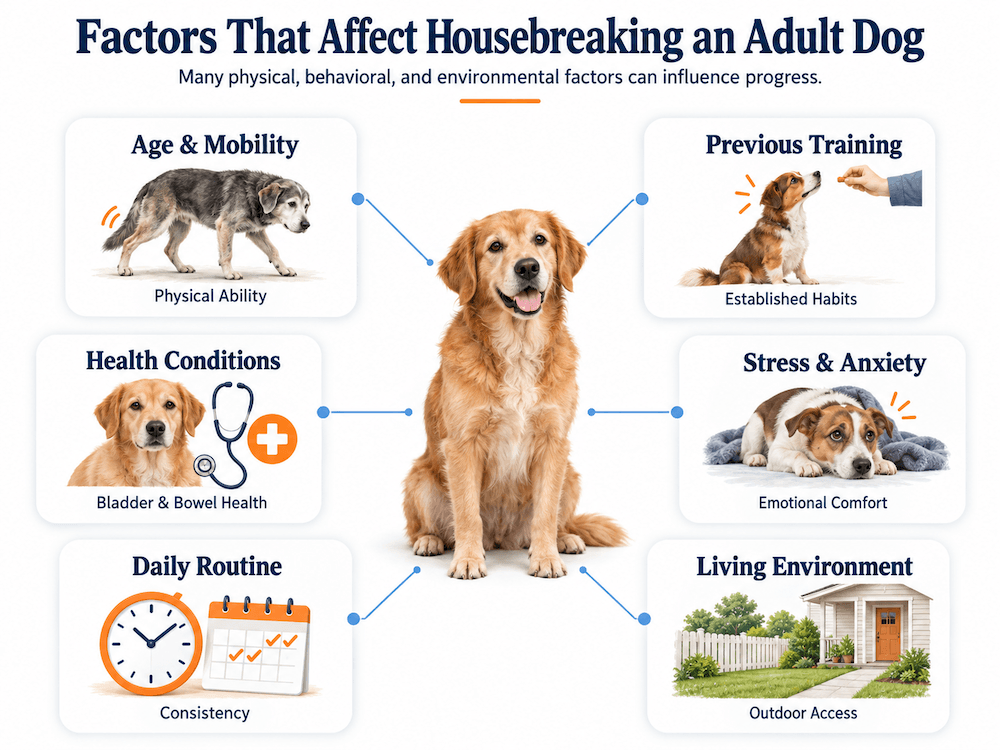
The time and effort required to housebreak an adult dog depend on several individual factors, including age, previous training, health, temperament, and living environment. Dogs with established indoor bathroom habits may need more time to adjust, while previously house-trained dogs often adapt more quickly to a new routine.
How Long Does It Take to Housebreak an Adult Dog?
Some adult dogs improve within several days or weeks, while others require months of consistent training. Progress depends on previous habits, health, stress levels, environmental conditions, and opportunities to practice appropriate elimination. Dogs who were previously house-trained may adjust quickly to a new routine, whereas dogs with long-standing indoor toileting habits may require more extensive retraining. There is no scientifically established deadline by which every adult dog should be reliably housebroken.
Consistent improvement matters more than reaching an exact timeline. Keep a simple bathroom log documenting successful outdoor trips, indoor accidents, and changes in elimination patterns. A growing number of successful outings, fewer accidents, and more recognizable bathroom signals suggest your dog is learning. If progress stalls or accidents become more frequent, reassess the training arrangement and consider whether a health or behavioral issue is interfering.
How to Maintain Housebreaking Progress for an Adult Dog
Maintaining consistent habits helps prevent setbacks as your adult dog becomes more reliable indoors. Gradually increase freedom, adjust rewards, and continue providing appropriate bathroom opportunities. The following strategies help reinforce successful house training over time.
| Strategy | What to Do |
|---|---|
| Expand Indoor Freedom | Introduce one additional room after a consistent accident-free period. |
| Continue Supervision | Monitor behavior in newly accessible areas. |
| Manage Setbacks | Temporarily restrict access if accidents return. |
| Adjust Rewards | Gradually replace frequent treats with occasional rewards and praise. |
| Maintain Potty Access | Provide regular bathroom opportunities based on your dog’s needs. |
| Adapt to Changes | Reinforce routines after moving, traveling, or changing schedules. |
| Monitor Progress | Watch for reliable bathroom signals and continued accident-free behavior. |
When to Call a Veterinarian About Adult Dog Housebreaking Problems
Inability to urinate is a veterinary emergency, especially if your dog repeatedly strains but produces little or no urine. A urinary obstruction can become life-threatening and requires immediate evaluation. Seek emergency veterinary attention if elimination difficulties are accompanied by severe abdominal pain, collapse, repeated vomiting, or marked weakness. Do not wait for the next scheduled potty break or attempt to treat suspected urinary obstruction at home.
New or worsening bathroom accidents warrant a veterinary appointment, particularly when accompanied by increased thirst, unusually frequent urination, blood in the urine, diarrhea, or changes in appetite. Dogs who repeatedly urinate during sleep or suddenly begin needing nighttime bathroom breaks should also be evaluated. These changes may reflect urinary tract disease, digestive problems, medication effects, or other medical conditions rather than incomplete training.
Professional assessment is important when the cause remains uncertain, or training produces little improvement. Senior dogs, dogs with mobility limitations, and pets displaying significant fear or separation-related distress may need individualized management. A veterinarian can evaluate medical causes and recommend appropriate diagnostic tests based on the symptoms. When behavioral concerns are involved, they may also recommend a qualified reward-based trainer or veterinary behaviorist.
What Research Says About Housebreaking Dogs
A study published in the Journal of the American Animal Hospital Association examined 105 dogs referred for indoor elimination problems. Among 59 dogs diagnosed with incomplete housebreaking, 48 (81%) showed improvement following treatment. The findings suggest that structured behavioral management can help resolve house-soiling problems, although the retrospective design and combined treatment approaches make it difficult to determine which individual techniques were most effective.[1]
A 2020 study published in the Journal of Veterinary Behavior analyzed 735 completed owner surveys. Researchers found that larger dogs were significantly more likely to be fully house-trained than smaller dogs, with reported completion rates of 95% and 66.8%, respectively. The findings suggest that body size and training experience may influence house-training outcomes, although the survey design cannot establish why these differences occur.[2]
Research published in PLOS ONE compared training approaches involving 92 companion dogs. Dogs exposed to more aversive training methods displayed more stress-related behaviors and higher post-training cortisol increases than dogs trained using reward-based methods. Although the study did not specifically measure housebreaking success, its findings support using positive reinforcement rather than punishment when teaching adult dogs appropriate bathroom habits.[3]
A study published in Applied Animal Behaviour Science examined eight dogs experiencing separation-related problems, including possible house soiling. Researchers found that gradual desensitization combined with behavioral intervention significantly reduced the frequency and severity of separation-related behaviors. These findings suggest that indoor accidents associated with separation distress may require targeted behavioral treatment rather than conventional potty training alone, although the small sample and combined behavioral outcomes limit broader conclusions.[4]
Frequently Asked Questions
The Bottom Line
Housebreaking an adult dog is possible at any age, but lasting results require patience, consistency, and an approach tailored to your dog’s needs. Establishing a predictable bathroom routine and rewarding successful outdoor elimination helps reinforce good habits. Close supervision, appropriate indoor management, and thorough cleanup can reduce accidents while your dog learns. Progress varies depending on previous training, health, temperament, and living conditions, so avoid expecting overnight results. If accidents continue, identifying patterns and possible triggers can help you make effective adjustments. Dogs facing challenges such as nighttime accidents, mobility limitations, or established indoor habits may need additional accommodations. With positive reinforcement, realistic expectations, and veterinary guidance when necessary, most adult dogs can develop more reliable house-training habits.
Sources
- A retrospective study of canine house soiling: Diagnosis and treatment
- Preliminary assessment of differences in completeness of house-training between dogs based on size
- Does training method matter? Evidence for the negative impact of aversive-based methods on companion dog welfare
- The efficacy of systematic desensitization for treating the separation-related problem behaviour of domestic dogs