Skye Terrier Dog Breed Information: Traits, Facts, Care & More

Canine Bible is reader-supported. We receive affiliate commissions via some of our links. Learn more.
Skye Terrier Distribution Map
Click a country to see estimated Skye Terrier population numbers.
Estimated Skye Terrier Population by Country (Top 10)
Population numbers are directional estimates, not official registry counts.
Skye Terrier
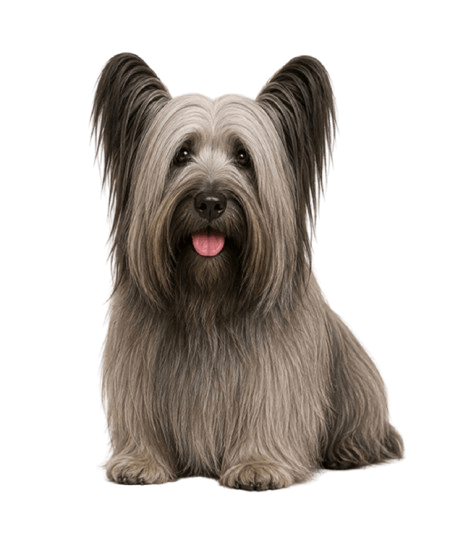
Skye Terriers are dignified, loyal, and affectionate small dogs known for their long, flowing coat and distinctive appearance. Originally bred on Scotland’s Isle of Skye to hunt vermin, today’s Skyes thrive as devoted companions and alert watchdogs. Despite their elegant looks, they possess a courageous and independent nature that keeps them confident and curious. Skye Terriers form close bonds with their owners and enjoy interactive play and attention. They adapt well to various homes but need regular exercise, training, and grooming to maintain their beautiful coats.
- Breed popularity ranking: 188 of 202
- Club: Skye Terrier Club of America
- Population: Rare, with only a small number registered annually
- Hypoallergenic: No
- Temperament: Loyal, affectionate, intelligent, independent
- Price: $1,500 – $3,000
- Best for: Owners seeking a devoted, elegant companion with a courageous personality and a love for family.

Weight
25–40 lbs

Height
9–10 inches

Lifespan
12–14 years
Breed Group
Terrier Group


Skye Terrier Growth Chart
Scientific Classification
History and Origin
The Skye Terrier traces its origins to the Isle of Skye in Scotland, where it was developed as a hardy terrier for hunting vermin and small game. Its ancestors were small working terriers from the Scottish islands, and their long bodies and sturdy legs helped them pursue prey through rocky terrain and burrows. The breed’s development focused on courage, endurance, and a distinctive weather-resistant coat.
By the 16th and 17th centuries, Skye Terriers were known in Scotland and gradually gained recognition among British nobility. Their loyalty and elegant appearance made them favored companions, while their hunting instincts remained an important part of their character. The breed became especially associated with Scottish estates and aristocratic households.
Historically, the breed’s story reflects a clear transformation: from rugged Scottish vermin hunters to devoted companions and eventually a standardized show breed. The Skye Terrier gained recognition in the late 19th century and was officially recognized by the American Kennel Club in 1887. Today’s Skye Terrier is the result of Scottish island origins, working-terrier heritage, aristocratic patronage, and kennel-club standardization.
Appearance
The Skye Terrier possesses a dignified elegance and distinctive charm that gives them a confident, graceful appearance despite their short legs. With their long flowing coat, elongated body, feathered ears, and unmistakably expressive face, Skye Terriers are devoted companion dogs known for their refined look and courageous personality.
Skye Terrier Breed Appearance
Hover or tap each numbered marker to explore key breed features.

1. Body Build
Skye Terriers have a long, low, and sturdy body with a broad chest and short legs. Their compact frame is strong rather than delicate, giving them a confident, balanced stance. Their long coat adds length and elegance, emphasizing the breed’s distinctive low-slung appearance.
2. Coat Type
The Skye Terrier has a long, straight double coat made up of a soft, dense undercoat and a hard, straight outer coat. This combination creates the breed’s signature flowing appearance. The coat falls naturally along the body, especially around the neck, chest, and sides.
3. Coat Colors
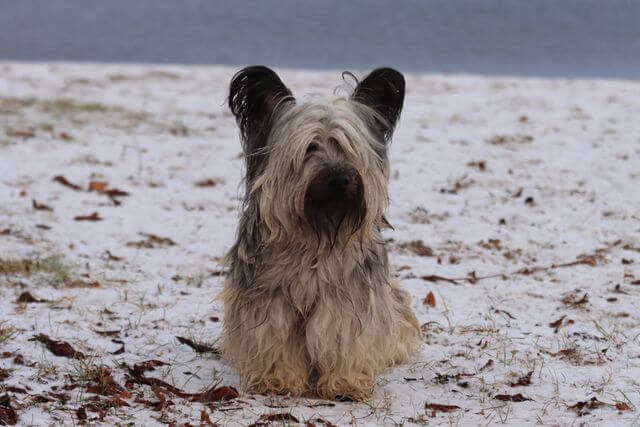
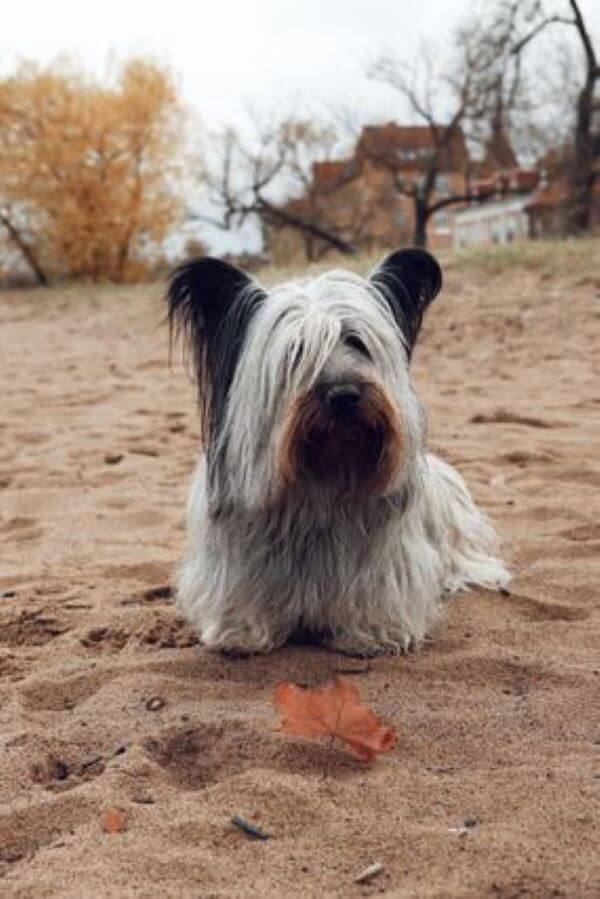
Skye Terriers come in several colors, including black, dark or light gray, silver, fawn, and cream. Their ears and muzzle are often darker than the rest of the coat, creating distinctive shading. Some Skyes may also have lighter hair on the head, chest, or legs.


4. Facial Markings
Facial markings vary depending on the dog’s coat color and shading. Skye Terriers have a long head with dark, expressive eyes, a strong muzzle, and a dignified expression. Their flowing facial hair gives them a distinctive, elegant appearance.
5. Chest Markings
The chest is covered with long, flowing hair that blends into the coat along the neck and body. Chest coloring may be lighter, darker, or match the rest of the coat depending on the dog’s color. The full chest coat contributes to the Skye Terrier’s graceful appearance.
6. Tail
The Skye Terrier’s tail is long, feathered, and carried low or slightly raised. It blends naturally with the flowing coat and follows the line of the body. The well-feathered tail adds to the breed’s elegant silhouette without overpowering its long, low frame.
7. Ears
Skye Terrier ears may be erect or drop slightly, depending on the individual dog. They are well-feathered and positioned high on the head, giving the dog an alert and attentive look. Their long hair often frames the ears and enhances the breed’s distinctive expression.
8. Eyes
Their eyes are dark, medium-sized, and expressive. Skye Terriers often have an intelligent, loyal, and watchful expression. The eyes should appear clear and attentive, adding warmth and character beneath the breed’s long facial hair.
9. Nose
The nose is typically black and proportionate to the breed’s long muzzle. It is well-defined and blends naturally with the dark facial coloring. Together with the eyes and flowing coat, the nose helps complete the Skye Terrier’s distinctive and dignified face.
10. Feet
Skye Terrier feet are compact, well-padded, and slightly rounded. Their sturdy pads support steady movement across different terrain. Despite their short legs, their feet should look strong and balanced with the rest of the long, low-set body.
11. Overall Expression
Skye Terriers have a dignified, intelligent, and loyal expression. Their calm demeanor and confident personality give them a distinctive presence. The combination of dark eyes, feathered ears, long coat, and sturdy posture creates their signature elegant and courageous look.
Sexual Dimorphism
Male and female Skye Terriers share the same distinctive long, low build and profuse double coat. Differences are generally subtle, though males can be noticeably larger and heavier than females, reflecting a natural gender difference in this sturdy terrier breed.
- Typically larger and slightly heavier, often reaching the upper end of the breed standard for weight (35–40 lbs) and height (10 inches).
- May appear broader in the chest and head, possessing a more distinctively masculine, robust terrier outline.
- Coat length and density tend to remain more consistent year-round if kept intact.
- Usually slightly smaller, lighter, and more refined in bone structure, often sitting at the lower end of the weight spectrum (25–30 lbs) and measuring slightly shorter.
- Coat condition and thickness can fluctuate more noticeably with hormonal cycles, pregnancy, or nursing (blowing coat).
- Retains the exact same 2-to-1 body length to height ratio required by the standard, just in a slightly smaller frame.
Photo Gallery
Skye Terrier Traits & Characteristics
Skye Terriers are loyal, dignified, and full of personality. Despite their short stature, they are confident, courageous, and often act like much larger dogs. They tend to be alert watchdogs, cautious with unfamiliar people, and highly devoted to their families. Skyes are affectionate, intelligent, and independent, but they can also be stubborn and strong-willed without consistent training. Their spirited nature makes them charming companions, but they do best with early socialization, patient guidance, and regular mental stimulation.
Core Traits
The further out a point is along a spoke, the stronger that trait is in the breed (on a scale of 1 to 10).
Remember: Dogs are individuals and not all dogs, even those of the same breed, will exhibit all the same qualities.
| Trait | Score | Description |
|---|---|---|
| Temperament | 8 | Dignified, brave, and deeply loyal. Skye Terriers are known for their aristocratic poise and resolute character. |
| Sociability & Friendliness | 6 | Affectionate and deeply devoted to their chosen family, but typically aloof or reserved toward strangers and unfamiliar dogs. |
| Intelligence | 8 | Sharp and clever with a strong independent mindset characteristic of working terriers. |
| Trainability | 6 | Can be trained successfully with patience and positive reinforcement, though they possess a distinct stubborn streak. |
| Energy Level | 6 | Moderate energy; they enjoy regular daily walks and playtime but are calm and relaxed indoors. |
| Shedding Level | 7 | Moderate to heavy shedders whose long, straight double coat requires consistent, thorough brushing to prevent matting. |
| Protective Instinct | 8 | Alert and naturally watchful, making them excellent watchdogs who take their protective duties seriously. |
| Loyalty | 10 | Famed for legendary devotion and unwavering fidelity to their primary owner, much like the historic story of Greyfriars Bobby. |
| Barking Level | 7 | Vocal when alerted or bored, though typically less high-pitched than smaller toy breeds. |
| Adaptability | 6 | Can adapt well to indoor living provided they receive adequate companionship and exercise, but dislike harsh treatment or neglect. |
Complete Traits Overview
Exercise & Activity Breakdown
Skye Terriers are moderately active and alert dogs with a playful, curious nature. While they don’t need the intense physical activity that larger breeds do, they do require regular daily exercise and mental stimulation to stay happy and prevent behavioral issues such as barking, boredom, or stubbornness.
- Puppy (0–12 months): At this stage, Skye Terrier puppies are eager to explore and bond. Short, gentle play sessions, socialization, and basic training lay the foundation for good behavior. Activities like tug toys, basic fetch, and early interactive games help build focus and confidence.
- Adult (1–6 years): Adult Skye Terriers benefit from brisk walks, indoor games, canine sports, and mentally stimulating activities. Puzzle toys, obedience training, and light agility courses designed for small dogs can keep them mentally sharp and physically active.
- Senior (7+ years): As they age, Skye Terriers may become less active but still need gentle walks and short play sessions to maintain mobility. Low-impact brain games and a steady routine support their overall health and emotional stability.
Skye Terrier Daily Activity Breakdown
Nutrition
Skye Terriers need a high-quality diet that aligns with their life stage (e.g., puppy, adult, senior). As a small breed with a moderate metabolism and a long double coat, it’s important to feed them food specifically formulated for toy or small breed dogs to support their energy levels, coat quality, and overall health.
These diets should include a balanced mix of nutrients to support skin and coat health, dental care, and immune function. Because Skye Terriers can be prone to weight gain if overfed, portion control and nutrient-dense, small-bite formulas are essential. As they age, a diet rich in omega-3s, antioxidants, and joint-supporting nutrients like glucosamine can help maintain mobility and cognitive function. Read our “Best Skye Terrier Dog Food Guide” to explore targeted nutrition tips and top food recommendations.
Nutritional Breakdown by Activity Level for Skye Terrier
Common Health Issues
Skye Terriers are generally hardy, long-lived dogs, but like many breeds, they can be prone to certain health concerns. Common issues may include hip dysplasia, patellar luxation, disc disease, eye conditions, allergies, skin disorders, and dental problems. Understanding these risks can help owners spot early warning signs, schedule routine veterinary checkups, and make proactive choices around diet, exercise, grooming, and preventive care.
*IE: Idiopathic Epilepsy
*LL: Lens Luxation
Recommended Health Tests for Skye Terriers
Routine veterinary exams and breed-appropriate screenings are important for early detection and prevention.
Proactive health measures, attentive care, and regular veterinary visits can help ensure your Skye Terrier lives a happy and healthy life as your loyal companion.
💡 Due to this breed's potential for orthopedic, eye, and other health issues, we recommend getting pet insurance and a wellness plan for financial protection against unexpected medical emergencies, ensuring your pet receives the best possible care without the burden of high out-of-pocket expenses. Check out our best pet insurance and best pet wellness guides to find a suitable plan for your pet.
Care Requirements
| Grooming Task | Recommended Frequency | Importance | Tools Needed | Recommended Product |
|---|---|---|---|---|
| Brushing | 2 to 3 times a week (Daily during heavy shedding) | Prevents severe mats and tangles in the long, double coat, removes debris trapped in the facial veil, and prevents breakage of the harsh outer coat | Slicker brush, de-shedding tool, grooming mitt | Hertzko Self Cleaning Slicker Dog Brush (View on Amazon) |
| Bathing | Every 4 to 6 weeks | Keeps the long, low-hanging coat clean from dirt, reduces doggy odor, and maintains skin health without stripping natural oils | dog-safe shampoo, conditioner, towel, hair dryer (optional) | OUAI Fur Bébé Pet Shampoo (View on Amazon) |
| Nail Trimming | Every 3 to 4 weeks | Prevents overgrowth, pain, and potential injury to their hare-like feet while walking or moving low to the ground | dog nail clippers, nail grinder, styptic powder | Coastal Pet Safari Nail Clipper (View on Amazon) |
| Ear Cleaning | Every 2 to 4 weeks | Prevents moisture and wax buildup, reducing the risk of ear infections whether the ears are prick or drop | Ear cleaning solution, cotton balls or pads (no Q-tips) | Zymox Ear Cleanser (View on Amazon) |
| Oral Care (Brushing Teeth) | Daily | Reduces plaque and tartar buildup around the low-set muzzle, prevents periodontal disease, and ensures fresh breath | Dog toothbrush, enzymatic toothpaste, dental chews | Greenies Dental Care Chews (View on Amazon) |
Skye Terrier Dog Trainability
Skye Terriers are intelligent, alert, and independent companion dogs. While they’re capable learners, their strong-willed personalities and occasional stubborn streaks can make training both rewarding and a bit challenging. Consistent, structured training that uses clear, positive reinforcement techniques is essential. They respond well to praise, treats, and playful engagement—especially when training is kept short, upbeat, and engaging to match their attention span.
When compared to other breeds, Skye Terriers benefit from gentle guidance, early socialization, and firm yet positive training. Their intelligence and curiosity flourish in environments where learning feels like play. With patience, repetition, and clear boundaries, they grow into confident, well-mannered companions.
Dog Breed Trainability Comparison
Intelligence
According to canine psychologist Stanley Coren (author of The Intelligence of Dogs - View on Amazon), dog intelligence can be broken down into three types:
- Instinctive Intelligence – What a dog is bred to do (herding, guarding, retrieving).
- Adaptive Intelligence – A dog’s ability to solve problems and learn from the environment.
- Working & Obedience Intelligence – How quickly a dog learns commands and obeys them.
IQ Comparison
Skye Terriers are known for their intelligent, observant nature and independent thinking, especially in environments that encourage interaction, attention, and problem-solving. Though modest in size, they can learn new commands well when motivated and retain skills through consistent practice. Their sharp minds and eagerness to engage make them well suited for trick training, agility for small dogs, and interactive games, often thriving in roles where they can explore and earn praise.
Skye Terriers shine when training is turned into a game. While their independent nature may challenge novice owners, they’re capable learners who excel with patient guidance and consistent routines. Their keen awareness and confidence allow them to show impressive intelligence despite their stubborn streak.
Dog Breed Intelligence Comparison
Breeding
Skye Terriers are cherished for their loyalty, intelligence, and dignified nature. Like many purebred dogs, however, they can be prone to inherited health conditions such as hip dysplasia, patellar luxation, eye disease, hypothyroidism, and liver disorders. This makes responsible breeding essential. Ethical breeders should conduct health screenings and genetic testing to help reduce the risk of passing on serious conditions. Proper spacing between litters is important to protect the health of both the dam and puppies, and only physically healthy, mentally stable Skye Terriers should be bred.
- Age: Skye Terriers should not be bred until they are fully mature—typically between 18 and 24 months of age.
- Litter size: A typical Skye Terrier litter includes 3–5 puppies.
- Temperament: Breeding dogs should have sound temperaments—loyal, alert, and confident, without signs of aggression, fearfulness, or extreme nervousness.
Is The Skye Terrier A Good Family Dog?
If the conditions below align with your lifestyle, personal preferences, and living situation, a Skye Terrier could be a wonderful pet for your family. Otherwise, you may want to consider other breeds.
✅ = Ideal / Strong Match | ⚠️ = Needs Consideration | ❌ = Not Recommended
| Suitability | Category | Score (1–10) | Notes |
|---|---|---|---|
| ✅ | Family Bonding | 9 | Deeply devoted and loyal; forms profound attachments to their primary family members. |
| ⚠️ | Child Friendliness | 5 | Best suited for older, respectful children due to their low-slung, dignified nature and sensitivity to rough handling. |
| ⚠️ | Good With Other Pets | 5 | Can be assertive or aloof with unfamiliar dogs, making early socialization and careful introductions essential. |
| ⚠️ | Maintenance Level | 9 | Requires rigorous, regular brushing and combing of their long, flat double coat to prevent matting. |
| ⚠️ | Monthly Expenses | 7 | Grooming supplies, quality nutrition, and routine veterinary care contribute to moderate upkeep costs. |
| ✅ | Home Size Compatibility | 7 | Adapts well to apartment living provided they receive adequate daily outdoor exercise and companionship. |
| ✅ | Lifestyle Match | 8 | Ideal for dedicated owners who appreciate a loyal companion for daily walks and indoor relaxing. |
| ⚠️ | Trainability | 6 | Highly intelligent but possesses a classic independent terrier streak; requires patient, positive reinforcement. |
| ⚠️ | Alone Time Tolerance | 4 | Deeply attached to their humans and prone to separation anxiety if left isolated for long hours. |
| ⚠️ | Shedding & Drool Level | 6 | Moderate shedders with a dense coat; minimal drooling. |
| ❌ | Hypoallergenic | 2 | Sheds and produces dander; not suitable for allergy sufferers. |
| ✅ | Protectiveness | 8 | Alert and naturally watchful, serving as reliable watchdogs with a courageous presence. |
| ✅ | Mental Stimulation Needs | 7 | Benefits from regular scent work, puzzle toys, and engaging walking routines. |
| ✅ | Climate Tolerance | 7 | Handles cool weather exceptionally well due to their Scottish heritage, though they require shade in high heat. |
| ✅ | Life Expectancy | 8 | Typically lives 12–14 years with proper care and health monitoring. |
| ⚠️ | Barking Level | 6 | Alert barkers when unfamiliar visitors arrive, but not excessively vocal otherwise. |
| ⚠️ | Travel Friendliness | 6 | Their long frame and coat require comfortable setups, but they travel well with proper crate training. |
| ⚠️ | Potty Training Ease | 6 | Can show stubborn tendencies during housetraining, requiring consistency and patience. |
Average Score: 6.78 / 10
Perfect Owner Profile for a Skye Terrier
The perfect Skye Terrier owner is someone who wants a small dog with a big personality. Skyes are best suited for people who enjoy a loyal, intelligent, and dignified companion but are also willing to provide structure, training, and regular grooming. They thrive with owners who can give them daily attention, mental stimulation, moderate walks, and consistent boundaries to manage stubbornness, boredom, and independence.
A Skye Terrier is a great fit for singles, couples, seniors, or families with older children who understand how to handle a dog gently. The ideal owner should be patient, attentive, and comfortable with a dog that loves being involved in daily life. Skye Terriers may adapt well to apartments, but they still need engagement, socialization, and a confident owner who will not let their independent nature excuse bad habits.
Annual Cost of Ownership
| Category | Estimated Annual Cost (USD) |
|---|---|
| Food & Treats | $400 – $700 |
| Routine Vet Care | $350 – $600 |
| Vaccinations & Preventatives | $200 – $400 |
| Pet Insurance | $400 – $800 |
| Grooming | $500 – $900 |
| Training & Socialization | $150 – $350 |
| Toys & Enrichment | $100 – $200 |
| Supplies (bed, heavy bowls, leash, etc.) | $150 – $300 |
| Emergency Vet Fund (recommended) | $400 – $800 |
| Boarding or Pet Sitting | $300 – $600 |
$2,950 – $5,650
Best Places to Get A Skye Terrier
Online marketplaces: For pre-screened, healthy puppies, Pawrade and PuppySpot are recommended resources that offer puppies from reputable U.S. breeders.
Rescue shelters: While Skye Terriers are rarely available at local shelters, opportunities can occasionally arise. Check your local animal shelters or dog rescue organizations for information. Online communities, such as Facebook groups, can also be helpful resources.
Breeders: Finding a reputable Skye Terrier breeder can be challenging due to the breed’s rarity and specialized breeding needs. Start by searching locally within your state. You may need to travel out of state if local options are unavailable. If purchasing from a breeder farther away, consider shipping the puppy if pickup is not an option. It’s essential to request medical records and health certifications for both parents. The Skye Terrier Club of America is a trusted resource for finding ethical breeders.
Avoid breeders who:
- Don’t provide health clearances for both parents
- Don’t allow visits to meet the dogs or see their living conditions
- Have frequent litters with no waiting list
- Emphasize appearance over health and temperament
Frequently Asked Questions
Skye Terrier Breed Connections
Skye Terriers belong to the rich heritage of Scottish terrier breeds, developed to work across rugged terrain and rocky dens. This section explores their ancestral roots, closely related breeds, and counterparts often compared or cherished by terrier enthusiasts.
Ancestry & Lineage
The Skye Terrier originates from the Isle of Skye in Scotland, descended from ancient low-slung working terriers used to hunt vermin and badgers in stony terrain.
- Isle of Skye working terriers
- Old Scottish Terriers
- Clydesdale Terrier ancestry
- Highland hunting terriers
Related Breeds
These breeds share Scottish terrier heritage, low-slung bodies, independent working drives, or distinctive double-coat structures.
- Scottish Terrier
- Cairn Terrier
- Dandie Dinmont Terrier
- West Highland White Terrier
- Cairn Terrier
- Cesky Terrier
- Glen of Imaal Terrier
- Irish Terrier
Commonly Compared Breeds
People often compare Skye Terriers with other long-bodied or dignified companion terriers when looking for a loyal, distinctive household guardian.
- Dandie Dinmont Terrier
- Scottish Terrier
- Basset Hound
- Cesky Terrier
- Norwich Terrier
- Border Terrier
- Welsh Terrier
- Lakeland Terrier
Breeds Skye Terrier Owners Also Love
Skye Terrier admirers frequently appreciate other historic, elegant, and fiercely loyal companion breeds with strong personalities and deep family bonds.
- Scottish Terrier
- Dandie Dinmont Terrier
- Whippet
- Greyhound
- Irish Wolfhound
- Standard Poodle
- Cavalier King Charles Spaniel
- Bernese Mountain Dog
Surprising Skye Terrier Facts
-
Inspired the legend of Greyfriars Bobby: while Bobby is widely associated with the Skye Terrier type, his story immortalized the peerless, unwavering loyalty that defines the breed.
-
Built with a unique 2-to-1 ratio: the Skye Terrier is famously twice as long as it is tall, giving it a distinct low-slung, powerful rectangular silhouette built for working rocky dens.
-
Favored by royalty: Queen Victoria was an avid admirer and breeder of Skye Terriers, helping propel the aristocratic breed into high society popularity during the 19th century.
-
Two distinct ear types historically: while drop ears are standard today, early Skye Terriers could also sport striking prick ears, famously seen in historical portraits and prints.
-
A magnificent floor-length double coat: their signature straight coat requires rigorous maintenance to protect them from harsh Scottish weather while maintaining their regal appearance.
-
One of Britain's rarest native breeds: despite their rich history and fierce loyalty, Skye Terriers face critical conservation numbers today, making them a rare treasure in the dog world.