Dog Breed Calculator: Find Your Perfect Breed Match


Canine Bible is reader-supported. We receive affiliate commissions via some of our links. Learn more.
Choosing the right dog breed isn’t just about finding the cutest puppy or your favorite-looking dog. Every breed has different exercise, grooming, training, and care needs, and the best match is one that fits your everyday lifestyle. Our free Dog Breed Calculator helps you discover dog breeds that may suit your activity level, living space, household, experience, and personal preferences. Whether you’re a first-time owner, live in an apartment, or want a family companion, this interactive dog breed finder can help narrow down your options. Below, you’ll find dog breed size charts, activity and grooming comparisons, practical selection guidelines, and answers to common questions to help you choose confidently.
Always consult your veterinarian before choosing a dog breed if you have concerns about breed-specific health risks, inherited conditions, physical limitations, or other factors that may affect your future dog’s health and well-being. If you can't reach your vet, you can chat live with a registered online veterinary professional via our online vet chat or video chat support (24 hours a day, 7 days a week). Or use Chewy's online vet services (6 a.m. - midnight ET).
What Dog Breed Is Right for Me?
The best dog breed for you is one whose exercise needs, temperament, size, grooming requirements, and daily care fit your lifestyle. A dog that thrives with an active family may not be the best choice for someone who prefers a quieter routine, even if both households have plenty of space. Start by considering how much time you can realistically dedicate to walking, training, playing, and caring for a dog. Your home environment, household members, other pets, budget, and previous dog ownership experience also matter.
For example, someone who enjoys long hikes and outdoor activities might consider an active breed such as a Labrador Retriever or Vizsla. Someone who prefers shorter walks and a relaxed home routine may want to explore breeds with more moderate activity requirements, such as a Shih Tzu, while accounting for grooming and health needs. However, breed alone cannot predict an individual dog's personality. Training, socialization, genetics, health, and life experiences all influence how a dog behaves.
What Should You Look for When Choosing a Dog Breed?
The most important considerations include:
The right choice is usually a balance of these characteristics rather than a breed that perfectly matches every preference.


Example: Finding a Dog for a First-Time Owner
Imagine you're a first-time dog owner living in an apartment. You can provide regular walks and playtime, prefer a small-to-medium dog, and want to limit shedding.
A dog breed selector may suggest researching breeds such as the Miniature Schnauzer, Havanese, or Miniature Poodle. These breeds may meet some of your preferences, but each comes with different grooming, activity, vocalization, and training considerations. Instead of choosing the highest-scoring breed immediately, compare the recommendations and decide which dog's needs you can consistently meet.
Dog Breed Size Chart
Dog breeds vary considerably in adult size, from tiny companion dogs to giant breeds weighing more than 100 pounds. Understanding these differences helps you choose a dog you can comfortably accommodate, handle, transport, and care for.
Dog Breed Size Chart by Weight
This chart groups dogs by approximate adult weight and provides examples of breeds commonly found in each size category.
| Dog Size | Adult Weight (lb) | Adult Weight (kg) | Example Breeds |
|---|---|---|---|
| Toy | Up to 12 lb | Up to 5.4 kg | Chihuahua, Pomeranian |
| Small | 13–25 lb | 5.9–11.3 kg | Shih Tzu, Miniature Schnauzer |
| Medium | 26–50 lb | 11.8–22.7 kg | English Springer Spaniel, Border Collie |
| Large | 51–90 lb | 23.1–40.8 kg | Labrador Retriever, Golden Retriever |
| Giant | Over 90 lb | Over 40.8 kg | Great Dane, Mastiff |
Note: These are general size categories rather than universal breed standards. Adult weights can overlap categories, and individual dogs may be smaller or larger than expected. Larger dogs typically require more food, bigger equipment, and additional consideration for transportation and physical handling. However, a dog's size does not automatically determine how energetic or easy to care for they will be.


Dog Breeds by Activity Level
A dog's energy level is one of the most important considerations when choosing a breed. Some dogs are comfortable with comparatively relaxed routines, while others need substantial daily exercise, training, and mental stimulation. The following chart compares common activity levels and example breeds.
| Activity Level | Typical Needs | Example Breeds |
|---|---|---|
| Lower | Regular walks, gentle play, and enrichment. | Shih Tzu, Greyhound |
| Moderate | Consistent walks, playtime, and training. | Beagle, Cocker Spaniel |
| High | Substantial exercise and daily mental stimulation. | Labrador Retriever, Vizsla |
| Very High | Demanding physical and mental activities. | Border Collie, Belgian Malinois |
These categories describe general breed tendencies, not fixed exercise requirements. Puppies, senior dogs, and dogs with medical conditions may need different routines. If you're considering an energetic breed, think about what happens on busy workdays or during bad weather. A dog that needs regular stimulation will still have those needs when your schedule becomes inconvenient.
Dog Breed Grooming and Shedding Chart
Grooming requirements can vary as much as exercise needs. A short-coated dog may shed heavily, while a low-shedding dog might need frequent brushing and professional haircuts. Compare these common coat and grooming characteristics before selecting a breed.
| Dog Breed | Coat Type | Shedding | Grooming Effort |
|---|---|---|---|
| Poodle | Curly | Lower | High |
| Labrador Retriever | Short, double coat | High | Moderate |
| Beagle | Short, smooth | Moderate | Lower |
| Bichon Frise | Soft, curly | Lower | High |
| Siberian Husky | Thick, double coat | High | Moderate to high |
Note: Grooming needs vary with coat condition, lifestyle, and individual dogs. Low shedding does not mean a dog is hypoallergenic.
Dog Breed Selection Guidelines
Choosing a breed involves more than comparing physical characteristics. Before bringing a dog home, consider whether you can provide the care, attention, and environment that particular dog needs throughout its life.
Match Your Dog's Energy Needs to Your Lifestyle
Your daily routine should guide your choice more than your occasional activities. If you enjoy a long hike once a month but usually have limited time for exercise, selecting a highly demanding working breed may create problems. Mental stimulation matters, too. Training, scent games, puzzle feeders, and interactive play help meet a dog's behavioral needs, but they should complement appropriate physical activity rather than replace it entirely.
Consider Your Home and Living Arrangements
A large backyard can be convenient, but it doesn't replace walks, social interaction, or enrichment. Similarly, apartment living doesn't automatically rule out larger breeds, provided the individual dog's needs can be met. Pay attention to barking, access to safe walking areas, stairs, and building restrictions. A dog that frequently vocalizes may be challenging in a building with shared walls, regardless of its size.
Think About Long-Term Care and Expenses
The cost of dog ownership continues long after adoption or purchase. Food, veterinary appointments, preventive care, grooming, training, equipment, and unexpected medical expenses should all factor into your decision. Some breeds need frequent professional grooming, while larger dogs often require more food and more expensive equipment. Before choosing, estimate your ongoing expenses using a dog ownership cost calculator or a realistic monthly household budget.
Evaluate Breed Health and Welfare
Different breeds can have different inherited health risks, and some physical characteristics can make everyday activities more difficult. Excessively short muzzles, for example, can be associated with breathing difficulties and poor heat tolerance. Research common conditions affecting breeds on your shortlist and ask about relevant health screening. Prioritize dogs with functional, healthy physical characteristics rather than extreme features selected mainly for appearance.
Factors That Can Affect Your Dog Breed Calculator Results
Your breed recommendations depend on the preferences and circumstances you enter. The following factors can meaningfully influence which breeds are suggested.
| Factor | Why It Matters | What to Check |
|---|---|---|
| Activity Level | Influences exercise compatibility. | Your normal daily routine. |
| Living Space | Affects practical housing needs. | Space, access, and restrictions. |
| Owner Experience | Influences training suitability. | Handling skills and training time. |
| Household | Shapes supervision and social needs. | Children and other pets. |
| Size Preference | Affects handling and expenses. | Expected adult size. |
| Grooming Preference | Changes maintenance requirements. | Brushing and grooming budget. |
| Dog's Age and Health | Changes daily care needs. | Life stage and medical history. |
| Available Time | Affects companionship and care. | Work hours and daily support. |
For more useful matches, answer based on your usual circumstances rather than an ideal routine. If your schedule or household changes significantly, reassessing your breed preferences can help identify a more realistic fit.
Common Mistakes to Avoid When Choosing a Dog Breed
Even a well-designed dog breed finder cannot compensate for unrealistic expectations. Avoid these common mistakes when reviewing your matches.
| Common Mistake | Why It Matters | Better Approach |
|---|---|---|
| Choosing by Appearance | Looks don't reflect care needs. | Compare lifestyle requirements. |
| Overestimating Activity | Exercise needs may go unmet. | Use your normal schedule. |
| Ignoring Adult Size | Puppies can grow considerably. | Research adult weight ranges. |
| Assuming Breed Behavior | Individual temperament varies. | Meet and assess the dog. |
| Overlooking Grooming | Coat care takes time and money. | Check maintenance requirements. |
| Ignoring Health Risks | Inherited conditions affect care. | Research screening and health. |
| Trusting Scores as Exact | Matches are estimates. | Compare multiple breeds. |
| Using Outdated Answers | Household circumstances change. | Update your preferences. |
A high compatibility score should encourage further research, not end the decision-making process. The dog's individual needs and your ability to meet them remain the deciding factors.
How to Choose a Dog Breed Responsibly
A breed calculator is a helpful starting point, but choosing a dog requires careful research and an understanding of the commitment involved. Before adopting or purchasing, take time to learn about the breed and the individual dog's background. Follow these guidelines before making your decision:
If you're concerned about breed-specific health problems, speak with a veterinarian before committing to a puppy or adult dog.
What to Do If Your Top Dog Breed Match Doesn't Suit Your Lifestyle
Sometimes a dog breed calculator recommends a breed that looks appealing on paper but isn't practical for your household. For example, you might receive a high match for an active herding breed despite having limited time for training and exercise. If that happens, review the recommendation and identify which characteristics create a conflict.
For example, if your preferred breed needs more exercise than you can consistently provide, choosing a dog with more manageable activity requirements is usually better than expecting the dog to adjust to an unsuitable routine.
Remember: A lower compatibility score doesn't necessarily mean a dog is unsuitable. The score reflects general matching criteria, while the individual dog and its circumstances still matter.
Special Considerations for Certain Dogs
How Does a Dog Breed Calculator Calculate Compatibility?
A dog breed compatibility calculator compares your answers with general characteristics associated with different dog breeds. It looks for similarities between your preferences and a breed's typical care and lifestyle requirements.
Depending on the calculator, factors such as exercise needs, owner experience, housing arrangements, grooming tolerance, preferred size, and barking expectations may influence the recommendations. Some breed matching tools assign different importance weights to these factors, allowing essential lifestyle considerations to count more heavily than minor preferences.
Dog Breed Compatibility Scoring Formula
- One possible approach is a weighted compatibility score:
- Compatibility Score (%) = [Sum of (Factor Weight × Factor Match)] ÷ Total Factor Weight × 100
- Where:
- Factor weight: How important a specific criterion is within the scoring system.
- Factor match: How closely a breed's general characteristics align with the selected preference, expressed from 0 to 1.
- Total factor weight: The combined weight of all scored criteria.
For example, a scoring model might give more importance to activity compatibility than preferred coat type because exercise requirements directly affect a dog's daily routine. These calculations produce an editorial matching estimate, not a scientifically validated prediction of individual compatibility.
Example Dog Breed Match Calculation
Consider a hypothetical owner who wants an active but manageable dog, has some training experience, lives in a house, and prefers moderate grooming requirements. Suppose a matching system uses the following weights:
- If the breed receives compatibility ratings of 0.90, 0.80, 0.70, 0.80, 1.00, and 0.60, respectively, the calculation would be:
- Compatibility Score = (30 × 0.90) + (20 × 0.80) + (20 × 0.70) + (15 × 0.80) + (10 × 1.00) + (5 × 0.60)
- Compatibility Score = 27 + 16 + 14 + 12 + 10 + 3 = 82%
- In this illustrative example, the breed earns an estimated compatibility score of 82%.
However, that doesn't mean there is an 82% chance the dog will be suitable. It simply represents the degree of alignment under the example's chosen scoring rules; different calculators may use different weights and criteria.
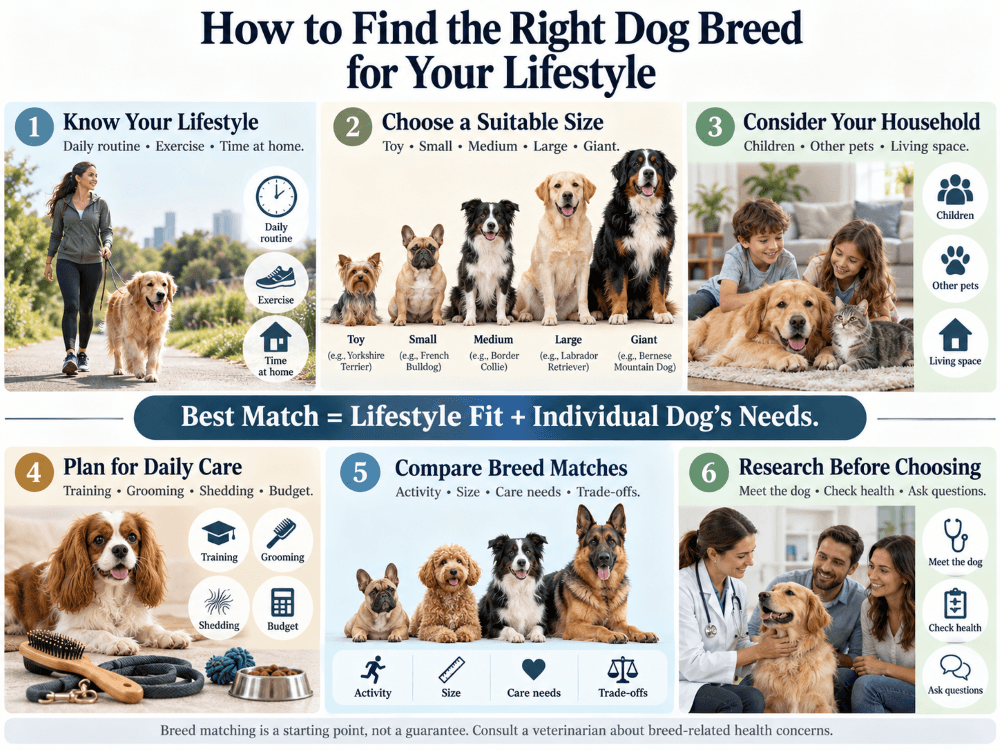
Dog Breed Calculator Infographic
Frequently Asked Questions
The Bottom Line
Our dog breed calculator helps you find breeds that may match your lifestyle, activity level, household, and preferences. By comparing exercise requirements, adult size, grooming, training, and other characteristics, you can create a practical shortlist of potential companions. However, choosing the right dog involves more than a compatibility score. Individual temperament, health, behavior, and your ability to provide consistent care are just as important as breed characteristics.
Use your results as a starting point, research your favorite matches, and speak with a veterinarian about relevant health concerns. You can also explore Canine Bible's dog breed guides, dog feeding calculator, and dog walking calculator to better prepare for life with your new companion.