Brussels Griffon Dog Breed Information: Traits, Facts, Care & More

Canine Bible is reader-supported. We receive affiliate commissions via some of our links. Learn more.
Brussels Griffon Distribution Map
Click a country to see estimated Brussels Griffon population numbers.
Estimated Brussels Griffon Population by Country (Top 10)
Population numbers are directional estimates, not official registry counts.

Brussels Griffon
Brussels Griffons are alert, affectionate, and expressive toy dogs known for their distinctive face and spirited personality. Originally bred in Belgium as stable companions and ratters, today’s Brussels Griffons thrive as devoted lap dogs and loyal family companions. Despite their small size, they have a bold, confident nature and a curious, almost human-like expression that endears them to many. Brussels Griffons form strong bonds with their owners and enjoy being part of daily activities. They adapt well to apartment living but need regular mental stimulation and gentle exercise to stay happy and healthy.
- Breed popularity ranking: 81 of 202
- Club: Brussels Griffon Club of America
- Population: 16,000+ (estimated in the U.S.)
- Hypoallergenic: No
- Temperament: Affectionate, alert, curious, loyal
- Price: $1,000–$2,500
- Best for: Owners seeking a small, devoted companion with a big personality and expressive charm.

Weight
8–12 lbs

Height
7–10 inches

Lifespan
12–15 years
Breed Group
Toy Group
Brussels Griffon Growth Chart
Scientific Classification
History and Origin
The Brussels Griffon traces its origins to Belgium, particularly the city of Brussels, where small rough-coated stable dogs known as Smousje were kept to control rats in horse stables and carriage houses. Over time, these dogs were crossed with breeds such as the Pug, King Charles Spaniel, and Affenpinscher, helping shape the distinctive appearance and companion-oriented temperament seen today.


By the 18th and 19th centuries, Brussels Griffons had become popular among Belgian households and eventually attracted the attention of European nobility. A major turning point came when Queen Marie Henriette of Belgium became an admirer of the breed in the late 1800s. Her patronage increased public interest and encouraged more formal breeding programs, helping establish the breed’s growing reputation beyond Belgium.
Historically, the breed’s story reflects a clear transformation: from hardworking stable ratters to cherished companion dogs and eventually a standardized toy breed. The Brussels Griffon gained wider recognition in the late 19th and early 20th centuries and was officially recognized by the American Kennel Club in 1910. Today’s Brussels Griffon is the result of Belgian working-dog heritage, aristocratic patronage, selective breeding, and kennel-club standardization.
Appearance
The Brussels Griffon dog breed possesses a distinctive charm and expressive features that give them a confident, human-like appearance despite their small size. With their compact body, prominent eyes, short muzzle, and characteristic beard and mustache, Brussels Griffons are captivating companion dogs known for their alert expression, sturdy build, and affectionate personality.
Brussels Griffon Breed Appearance
Hover or tap each numbered marker to explore key breed features.

1. Body Build
Brussels Griffons have a compact, square, and well-balanced body with a sturdy frame. Their small size is solid rather than delicate, giving them a confident, upright stance. Despite their toy-dog proportions, they possess a surprisingly robust build that contributes to their distinctive presence and self-assured demeanor.
2. Coat Type
The Brussels Griffon comes in two coat varieties: rough and smooth. The rough coat is dense, wiry, and slightly tousled, while the smooth coat is short, glossy, and close-fitting. Both coat types highlight the breed’s compact structure and expressive features, particularly around the face and head.
3. Coat Colors
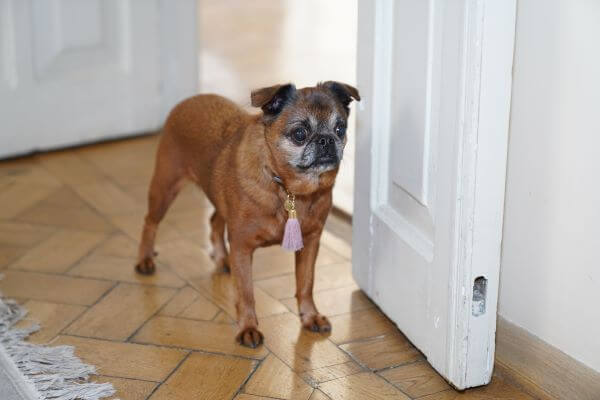
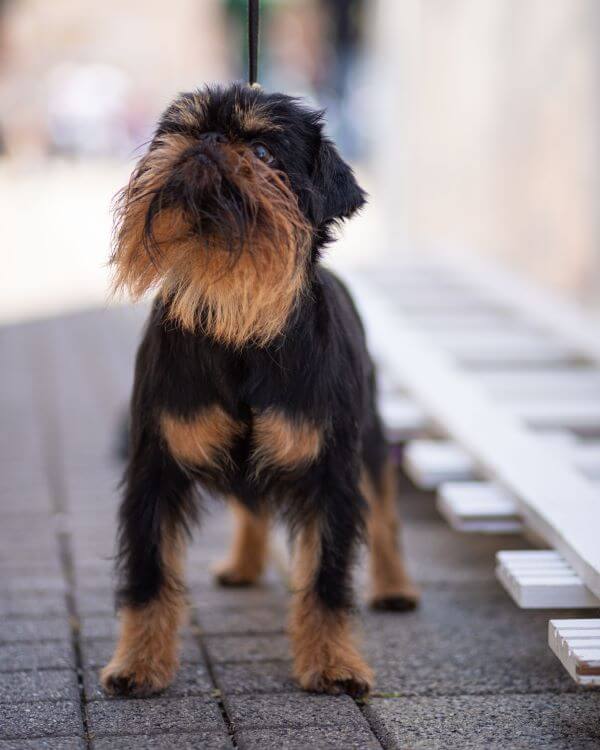
Brussels Griffons come in several accepted colors, including red, black, belge, black and tan, and various reddish-brown shades. Red is among the most commonly recognized colors, but the breed displays a range of rich coat variations. Some individuals may also exhibit subtle shading or darker facial furnishings.
4. Facial Markings
Facial features are among the breed’s most recognizable characteristics. Brussels Griffons have large, expressive eyes, a short muzzle, and a distinctive beard and mustache. Their almost human-like expression often gives them an alert, curious, and intelligent appearance that sets them apart from other toy breeds.


5. Chest Markings
The chest is moderately broad and well-developed, contributing to the breed’s sturdy outline. The neck is short, strong, and carried proudly, helping create the confident posture for which Brussels Griffons are known. Together, these features enhance the breed’s balanced and self-assured appearance.
6. Tail
The Brussels Griffon’s tail is set high and carried upright, contributing to the breed’s confident silhouette. Depending on the individual dog, it may be straight or gently curved and is carried proudly above the topline. This distinctive tail carriage enhances the breed’s alert appearance and balanced overall outline.
7. Ears
Brussels Griffon ears are small, set high, and either semi-erect or folded forward. They contribute greatly to the breed’s attentive and expressive look. Because they sit prominently on the head, the ears help emphasize the Brussels Griffon’s alert, curious, and intelligent expression.
8. Eyes
Their eyes are large, round, and dark. Brussels Griffons are known for their expressive, almost human-like gaze that conveys alertness, intelligence, and affection. The eyes should appear bright and prominent, adding significantly to the breed’s distinctive personality and charm.
9. Nose
The nose is typically black and relatively broad for the breed’s size. Positioned prominently on the short muzzle, it helps create the Brussels Griffon’s characteristic facial structure. Together with the eyes and beard, the nose contributes to the breed’s unique and recognizable expression.
10. Feet
Brussels Griffon feet are small, compact, and well-arched. Their sturdy pads support balanced, confident movement and good agility. Despite their toy-dog size, the feet are strong and proportionate, helping maintain the breed’s solid and well-balanced overall structure.
11. Overall Expression
Brussels Griffons have an alert, intelligent, and remarkably expressive appearance. Their large eyes, prominent beard, and confident posture often create an almost human-like expression. The combination of curiosity, affection, and self-assurance gives the breed its distinctive charm and unforgettable personality.
Sexual Dimorphism
Male and female Brussels Griffons are very similar in overall appearance, size, coat type, and breed standard. Differences are usually subtle and may be more related to individual structure, hormones, coat texture, and personality than pronounced physical distinctions.
- May appear slightly broader through the chest, shoulders, or head, though this varies by bloodline and individual dog.
- Often carries a somewhat stronger overall outline and more pronounced facial furnishings in rough-coated varieties.
- No consistent breed-standard difference in accepted size, coat color, or coat variety compared with females.
- May appear slightly finer-boned or more refined in the face and frame, though many females are equally sturdy and compact.
- Coat condition and fullness can fluctuate somewhat with hormonal cycles, pregnancy, nursing, or spaying.
- No consistent breed-standard difference in accepted size, coat color, or coat variety compared with males.
Photo Gallery
Brussels Griffon Traits & Characteristics
Brussels Griffons are alert, affectionate, and full of personality. Despite their small size, they are confident, curious, and often behave as if they are much larger dogs. They tend to be devoted companions, quick to notice unfamiliar sounds, and highly attached to their families. Griffons are playful, affectionate, intelligent, and social, but they can also be sensitive, opinionated, and stubborn without consistent training. Their expressive nature makes them entertaining companions, but they do best with early socialization, gentle boundaries, and regular mental stimulation.
Core Traits
The further out a point is along a spoke, the stronger that trait is in the breed (on a scale of 1 to 10).
Remember: Dogs are individuals and not all dogs, even those of the same breed, will exhibit all the same qualities.
| Trait | Score | Description |
|---|---|---|
| Temperament | 9 | Affectionate and expressive, Brussels Griffons are confident companion dogs with charming personalities and strong emotional bonds. |
| Sociability & Friendliness | 8 | Friendly and devoted with family but may be reserved around strangers until they feel comfortable. |
| Intelligence | 8 | Smart and observant dogs that learn quickly, especially when training is engaging and consistent. |
| Trainability | 7 | Responds well to positive reinforcement, though occasional stubbornness can appear during training sessions. |
| Energy Level | 6 | Moderately active and playful, requiring daily walks and interactive play without excessive exercise demands. |
| Shedding Level | 5 | Low to moderate shedding depending on coat variety, with rough-coated dogs typically shedding less. |
| Protective Instinct | 6 | Alert and watchful of their surroundings but primarily serve as companion dogs rather than guardians. |
| Loyalty | 10 | Exceptionally devoted to their owners and often form very strong attachments to family members. |
| Barking Level | 7 | Can be vocal when excited or alerting to activity but are generally less noisy than many toy breeds. |
| Adaptability | 8 | Adapts well to apartment living and various lifestyles when provided companionship, attention, and routine. |
Complete Traits Overview
Exercise & Activity Breakdown
Brussels Griffons are alert and affectionate toy dogs with a playful, curious nature. While they don’t require the intense physical activity that larger breeds do, they do benefit from regular daily exercise and mental stimulation to stay happy and prevent behavioral issues such as barking, anxiety, or stubbornness.
- Puppy (0–12 months): At this stage, Brussels Griffon puppies are eager to explore and bond. Short, gentle play sessions, socialization, and basic training lay the foundation for good behavior. Activities like tug toys, basic fetch, and early interactive games help build focus and confidence.
- Adult (1–6 years): Adult Brussels Griffons benefit from daily walks, indoor games, canine sports, and mentally stimulating activities. Puzzle toys, obedience training, and light agility courses designed for small dogs can keep them mentally sharp and physically active.
- Senior (7+ years): As they age, Brussels Griffons may become less active but still need gentle walks and short play sessions to maintain mobility. Low-impact brain games and a steady routine support their overall health and emotional stability.
Brussels Griffon Daily Activity Breakdown
Nutrition
Brussels Griffons need a high-quality diet that aligns with their life stage (e.g., puppy, adult, senior). As a small breed with a moderate energy level and compact build, it’s important to feed them food specifically formulated for toy or small breed dogs to support their energy needs, coat quality, and overall health.
These diets should include a balanced mix of nutrients to support skin and coat health, dental care, and immune function. Because Brussels Griffons are prone to dental issues and can gain weight if overfed, portion control and nutrient-dense, small-bite formulas are essential. As they age, a diet rich in omega-3s, antioxidants, and joint-supporting nutrients like glucosamine can help maintain mobility and cognitive function. Read our "Best Brussels Griffons Dog Food Guide" to explore targeted nutrition tips and top food recommendations.
Nutritional Breakdown by Activity Level for Brussels Griffon
Common Health Issues
Brussels Griffons are generally affectionate, long-lived dogs, but like many toy breeds, they can be prone to certain health concerns. Common issues may include dental disease, luxating patella, brachycephalic airway syndrome (BOAS), heart problems, eye conditions, syringomyelia, and allergies. Understanding these risks can help owners spot early warning signs, schedule routine veterinary checkups, and make proactive choices around diet, exercise, grooming, and preventive care.
*LS: Liver Shunt
Recommended Health Tests for Brussels Griffons
Routine veterinary exams and breed-appropriate screenings are important for early detection and prevention.
Proactive health measures, attentive care, and regular veterinary visits can help ensure your Brussels Griffon lives a happy and healthy life as your devoted companion.
💡 Due to this breed's predisposition to certain health issues, we recommend getting pet insurance and a wellness plan for financial protection against unexpected medical emergencies, ensuring your pet receives the best possible care without the burden of high out-of-pocket expenses. Check out our best pet insurance and best pet wellness guides to find a suitable plan for your pet.
Care Requirements
| Grooming Task | Recommended Frequency | Importance | Tools Needed | Recommended Product |
|---|---|---|---|---|
| Brushing | 2–3 times per week (smooth coat) or daily (rough coat) | Prevents tangles and matting in rough-coated Griffons, removes loose hair, and distributes natural skin oils | Slicker brush, de-shedding tool, grooming mitt | Hertzko Self Cleaning Slicker Dog Brush (View on Amazon) |
| Bathing | Every 4–6 weeks | Keeps the coat and facial furnishings clean while helping maintain healthy skin and coat texture | dog-safe shampoo, conditioner, towel, hair dryer (optional) | OUAI Fur Bébé Pet Shampoo (View on Amazon) |
| Nail Trimming | Every 3–4 weeks | Prevents discomfort, overgrown nails, and changes in gait that can affect joint health | dog nail clippers, nail grinder, styptic powder | Coastal Pet Safari Nail Clipper (View on Amazon) |
| Ear Cleaning | Every 2–4 weeks | Helps prevent wax buildup, irritation, and infections while supporting overall ear health | Ear cleaning solution, cotton balls or pads (no Q-tips) | Zymox Ear Cleanser (View on Amazon) |
| Oral Care (Brushing Teeth) | Daily | Especially important for Brussels Griffons, which are prone to dental disease and tartar buildup | Dog toothbrush, enzymatic toothpaste, dental chews | Greenies Dental Care Chews (View on Amazon) |
Brussels Griffon Dog Trainability
Brussels Griffons are intelligent, alert, and affectionate companion dogs. While they’re quick learners, their independent nature and occasional stubborn streaks can make training both fun and somewhat challenging. Consistent, structured training that uses clear, positive reinforcement techniques is essential. They respond well to praise, treats, and engaging activities—especially when training is kept short, upbeat, and rewarding to match their sensitive temperament.
When compared to other breeds, Brussels Griffons benefit from gentle guidance, early socialization, and firm yet positive training. Their intelligence and eagerness to bond flourish in environments where learning feels enjoyable. With patience, repetition, and clear boundaries, they grow into confident, well-mannered companions.
Dog Breed Trainability Comparison
Intelligence
According to canine psychologist Stanley Coren (author of The Intelligence of Dogs - View on Amazon), dog intelligence can be broken down into three types:
- Instinctive Intelligence – What a dog is bred to do (herding, guarding, retrieving).
- Adaptive Intelligence – A dog’s ability to solve problems and learn from the environment.
- Working & Obedience Intelligence – How quickly a dog learns commands and obeys them.
IQ Comparison
Brussels Griffons are known for their sharp intelligence and keen awareness, especially in environments that encourage interaction, attention, and positive reinforcement. Though small in size, they perform well in obedience-based training and are recognized for their ability to learn new commands quickly and retain them with ease. Their bright minds and eagerness to engage make them excellent at trick training, agility for small dogs, and interactive activities, often thriving in roles where they can bond closely with their owners and earn praise.
Brussels Griffons shine when training is turned into a game. While their independent nature may challenge novice owners, they’re quick learners who excel with patient guidance and consistent routines. Their keen awareness and strong attachment to their families allow them to perform well above their size in intelligence and trainability rankings.
Dog Breed Intelligence Comparison
Breeding
Brussels Griffons are cherished for their charm, intelligence, and affectionate nature. Like many purebred dogs, however, they can be prone to inherited health conditions such as BOAS (Brachycephalic Obstructive Airway Syndrome), luxating patella, dental disease, eye disorders, and syringomyelia. This makes responsible breeding essential. Ethical breeders should conduct health screenings and genetic testing to help reduce the risk of passing on serious conditions. Proper spacing between litters is important to protect the health of both the dam and puppies, and only physically healthy, mentally stable Brussels Griffons should be bred.
- Age: Brussels Griffons should not be bred until they are fully mature—typically between 18 and 24 months of age.
- Litter size: A typical Brussels Griffon litter includes 1–4 puppies.
- Temperament: Breeding dogs should have sound temperaments—affectionate, alert, and confident, without signs of aggression, fearfulness, or extreme nervousness.
Is The Brussels Griffon A Good Family Dog?
If the conditions below align with your lifestyle, personal preferences, and living situation, a Brussels Griffon could be a wonderful pet for your family. Otherwise, you may want to consider other breeds.
✅ = Ideal / Strong Match | ⚠️ = Needs Consideration | ❌ = Not Recommended
| Suitability | Category | Score (1–10) | Notes |
|---|---|---|---|
| ✅ | Family Bonding | 10 | Extremely affectionate and devoted; thrives when closely involved with family life. |
| ⚠️ | Child Friendliness | 6 | Generally best with older, gentle children who understand how to handle small dogs. |
| ⚠️ | Good With Other Pets | 7 | Can coexist well with other pets when socialized early but may be possessive of attention. |
| ⚠️ | Maintenance Level | 7 | Rough-coated dogs require regular brushing and hand-stripping; smooth coats need less upkeep. |
| ⚠️ | Monthly Expenses | 7 | Routine grooming, dental care, and veterinary expenses can add up over time. |
| ✅ | Home Size Compatibility | 10 | Excellent apartment dog that adapts well to small homes and urban living. |
| ✅ | Lifestyle Match | 9 | Ideal for owners seeking a loyal companion that enjoys daily interaction and moderate activity. |
| ✅ | Trainability | 8 | Intelligent and eager to please, though occasional stubbornness may require patience. |
| ⚠️ | Alone Time Tolerance | 4 | Strongly attached to owners and prone to separation anxiety if left alone too long. |
| ⚠️ | Shedding & Drool Level | 7 | Low drooling; shedding varies from low to moderate depending on coat type. |
| ❌ | Hypoallergenic | 3 | Produces dander and is not considered a hypoallergenic breed. |
| ⚠️ | Protectiveness | 7 | Alert and watchful; will often notify owners of visitors or unusual sounds. |
| ✅ | Mental Stimulation Needs | 8 | Benefits from puzzles, training games, and regular interaction to stay mentally engaged. |
| ⚠️ | Climate Tolerance | 5 | Can struggle in hot weather due to its brachycephalic face and requires heat precautions. |
| ✅ | Life Expectancy | 9 | Typically lives 12–15 years with proper care and preventive health management. |
| ⚠️ | Barking Level | 6 | Moderately vocal and alert but usually less noisy than many other toy breeds. |
| ✅ | Travel Friendliness | 8 | Small size makes travel relatively easy when properly socialized and crate trained. |
| ⚠️ | Potty Training Ease | 7 | Generally trainable but benefits from consistency and positive reinforcement. |
Average Score: 7.67 / 10
Perfect Owner Profile for a Brussels Griffon
The perfect Brussels Griffon owner is someone who wants a small dog with a big personality. Griffons are best suited for people who enjoy an affectionate, loyal, and expressive companion but are also willing to provide structure, training, and regular attention. They thrive with owners who can give them daily companionship, mental stimulation, short walks, and consistent boundaries to manage stubbornness, sensitivity, and separation anxiety.
A Brussels Griffon is a great fit for singles, couples, seniors, or families with older children who understand how to handle a small dog gently. The ideal owner should be patient, attentive, and comfortable with a dog that loves being involved in daily life. Griffons may be small enough for apartments, but they still need engagement, socialization, and a confident owner who will not let their charming personality excuse bad habits
Annual Cost of Ownership
| Category | Estimated Annual Cost (USD) |
|---|---|
| Food & Treats | $250 – $450 |
| Routine Vet Care | $350 – $600 |
| Vaccinations & Preventatives | $200 – $400 |
| Pet Insurance | $300 – $650 |
| Grooming | $250 – $700 |
| Training & Socialization | $150 – $350 |
| Toys & Enrichment | $75 – $175 |
| Supplies (bed, bowls, leash, etc.) | $100 – $250 |
| Emergency Vet Fund (recommended) | $400 – $800 |
| Boarding or Pet Sitting | $250 – $500 |
$2,325 – $4,875
Best Places to Get A Brussels Griffon
Online marketplaces: For pre-screened, healthy puppies, Pawrade and PuppySpot are recommended resources that offer puppies from reputable U.S. breeders.
Rescue shelters: While Brussels Griffons are less common in local shelters, opportunities can occasionally arise. Check your local animal shelters or breed-specific rescue organizations for information. Online communities, such as Facebook groups, can also be helpful resources.
Breeders: Finding a reputable Brussels Griffon breeder can be challenging due to the breed’s relative rarity and small litter sizes. Start by searching locally within your state. You may need to travel out of state if local options are unavailable. If purchasing from a breeder farther away, consider shipping the puppy if pickup is not an option. It’s essential to request medical records and health certifications for both parents. The American Brussels Griffon Association's breeder referral list is a trusted resource for finding ethical breeders.
Avoid breeders who:
- Don’t provide health clearances for both parents
- Don’t allow visits to meet the dogs or see their living conditions
- Have frequent litters with no waiting list
- Emphasize appearance over health and temperament
Frequently Asked Questions
Brussels Griffon Breed Connections
Brussels Griffons originated in Belgium and developed from small stable dogs bred for companionship and vermin control. This section shows where the breed comes from, which breeds are closely related, and which dogs are often compared with or loved by Brussels Griffon enthusiasts.
Ancestry & Lineage
The Brussels Griffon developed in Belgium from the rough-coated Smousje and was later influenced by several toy and companion breeds.
- Smousje
- Affenpinscher
- Pug
- King Charles Spaniel
Related Breeds
These breeds share similar ancestry, facial features, toy-dog characteristics, or historical development with the Brussels Griffon.
- Affenpinscher
- Pug
- English Toy Spaniel
- Belgian Griffon
- Petit Brabançon
- Cavalier King Charles Spaniel
- Japanese Chin
- Shih Tzu
Commonly Compared Breeds
People often compare Brussels Griffons with other small companion breeds when choosing a dog for apartment living, companionship, or a low-exercise lifestyle.
- Affenpinscher
- Pug
- Shih Tzu
- Japanese Chin
- Cavalier King Charles Spaniel
- Havanese
- Maltese
- Yorkshire Terrier
Breeds Brussels Griffon Owners Also Love
Brussels Griffon fans often enjoy other affectionate, expressive companion dogs with strong family bonds and engaging personalities.
- Affenpinscher
- Japanese Chin
- Cavalier King Charles Spaniel
- Havanese
- Maltese
- Pug
- Shih Tzu
- Toy Poodle
Surprising Brussels Griffon Facts
-
They were originally rat-catching stable dogs: Brussels Griffons began as hardworking little dogs used to control vermin in Belgian stables before becoming beloved companion animals.
-
Their human-like expressions are legendary: the breed's large eyes, short muzzle, and expressive face have earned Brussels Griffons a reputation for displaying almost human emotions.
-
There are three recognized coat varieties: Brussels Griffons can appear as rough-coated Brussels Griffons, rough-coated Belgian Griffons, or smooth-coated Petit Brabançons.
-
Pugs helped shape the breed: breeders crossed early Griffons with Pugs, contributing to the breed's distinctive head shape and helping create the smooth-coated variety.
-
They became favorites of European royalty: the breed gained popularity among Belgian nobility, especially after Queen Marie Henriette became an enthusiastic supporter.
-
They starred in a famous Hollywood movie: a Brussels Griffon named Verdell captured audiences worldwide in the film "As Good as It Gets," helping introduce the breed to many dog lovers.