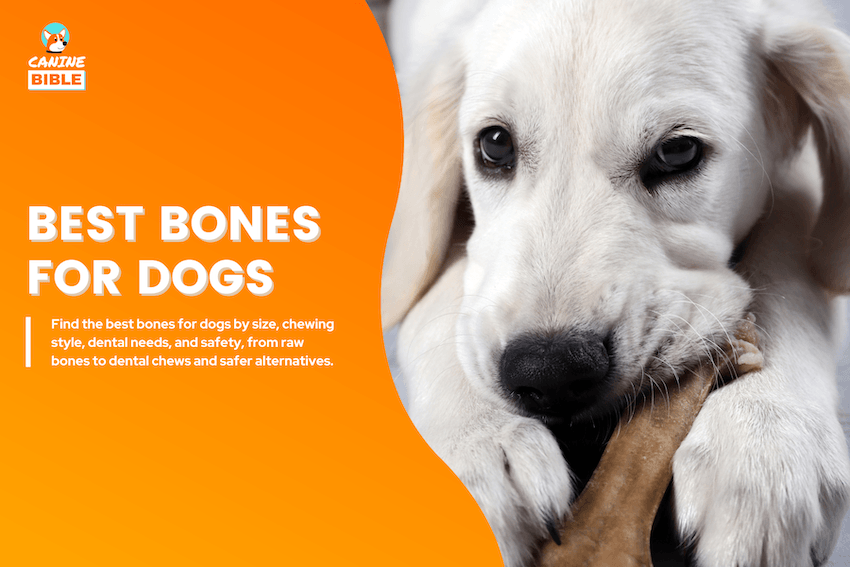
A dog bone can be a treat, a boredom-buster, and a dental tool—but the wrong one can also crack teeth, upset stomachs, or become a choking risk. That’s why choosing the best bones for dogs is more than picking whatever looks tasty on the shelf. The right bone can help satisfy your dog’s natural urge to chew, support cleaner teeth, and keep them mentally engaged, while the wrong option can lead to expensive vet visits or serious safety concerns. Size, texture, ingredients, chew strength, and your dog’s age all matter when deciding what belongs in their mouth. In this guide, we’ll break down what makes a dog bone safe, which types are best for different chewers, and what to avoid so you can choose with confidence.
Are Dog Bones Safe for Dogs?
Dog bones are not automatically safe; safety depends on the bone type, size, preparation, and the dog’s chewing style. Research does show potential dental benefits: a study in the Australian Veterinary Journal found that raw bovine bones reduced dental calculus in Beagles, and a later PLOS ONE study found autoclaved beef bones reduced calculus and gingival inflammation without observed enamel fractures, root injuries, or obstructions under controlled conditions. However, those findings do not mean all bones are safe for all dogs, especially aggressive chewers, dogs with weak teeth, puppies, seniors, or dogs that swallow chunks.[1][2]
The main science-backed concerns are tooth injury, choking or obstruction risk, and bacterial contamination, especially with raw bones. Studies on raw pet foods have found contamination risks involving pathogens such as Salmonella and Listeria, which can affect both pets and people handling the food or surfaces. For most dogs, safer routine choices are size-appropriate dental chews, softer edible chews, or rubber treat toys; real bones should be occasional, supervised, larger than the dog’s mouth, never cooked, and removed if they splinter, crack, or become small enough to swallow.[3][4]
Latest Research on Dog Chew Bones & Dental Health
According to the latest research, chewing is important for dogs’ dental and psychological health, but “best” chew bones must balance cleaning power, safety, and digestibility. Research compares natural bones, dental chews, and other treats mainly on oral health and risk.
📄Research Update — Dental Benefits
Chewing Bones May Help Reduce Dental Calculus in Some Dogs
Research on Beagle dogs found that raw bovine bones used as chewing items reduced dental calculus over a short study period. This suggests that bone chewing can provide mechanical cleaning benefits, but the finding does not mean every bone is safe for every dog or that bones should replace brushing, veterinary dental exams, or professional cleanings.[1]
📊Clinical Focus — Tooth Safety
Bone Type, Processing, and Hardness Matter
Studies evaluating autoclaved beef bones found that processing can affect bone strength and how bones perform as chewing items. Hardness is important because overly hard chews may increase the risk of tooth damage in the wrong dog, so bones should be chosen based on size, chewing style, dental health, and supervision needs.[5]
⚠️Owner Myth Check — “Any Bone Is Fine”
Dog Bones Need Matching, Monitoring, and Common-Sense Limits
Controlled research on beef bones has reported dental-cleaning benefits without observed tooth injuries under study conditions, but those results do not remove real-world risks such as gulping, splintering, tooth fractures, digestive upset, or poor size matching. The safest approach is supervised chewing with bones that are appropriately sized, inspected often, and removed once they become small, brittle, sharp, or damaged.[2]
Key Facts & Studies Owners Should Know
Dental chews have strong daily-use evidence: Multiple trials show that daily dental chews can reduce plaque, calculus, gingivitis, and halitosis across Beagles, toy breeds, and mixed pet dogs.[6][7][8]
Some chews may improve oral microbiota: Certain dental chews have been shown to shift the mouth’s bacterial profile toward more health-associated bacteria, adding value beyond simple scraping.[9]
Spongy and cortical bones behave differently: Spongy beef bones may clean faster but are consumed more fully and are linked with more gingival lesions and fragments, while cortical bones clean more slowly but showed fewer gum lesions.[5]
Digestibility varies widely by chew type: In vitro research found “bone”-type treats among the least digestible options compared with biscuits, meat products, and many commercial dental or chew treats.[6]
The ideal chew is a compromise: Research points toward chews that are interesting, somewhat long-lasting, proven to reduce plaque or calculus, not excessively hard, and lower risk for choking, toxicity, or GI obstruction.[10]
Types of Bones for Dogs
Type of Bone
What to Know
Safety Note
Raw Marrow Bones
Rich, flavorful bones with marrow inside; can keep dogs engaged.
Handle as raw food and avoid for dogs with pancreatitis or fragile teeth.
Raw Meaty Bones
Include meat, tissue, and bone for a more natural chewing experience.
Supervise closely and remove small or sharp pieces.
Dental Bones
Designed to help reduce plaque, tartar, and bad breath through chewing.
Choose the correct size and do not use as a replacement for brushing.
Filled Bones
Hard bones filled with flavored centers for extra interest.
Can be rich; avoid for dogs that crack bones or swallow chunks.
Antler Chews
Long-lasting and low-mess, but very hard.
Not ideal for puppies, seniors, or dogs prone to tooth fractures.
Yak Cheese Chews
Edible, firm chews made from hardened cheese.
Remove small end pieces or soften them before feeding.
Nylon Bones
Durable chew toys that satisfy chewing without being consumed.
Discard once sharp edges, cracks, or heavy wear appear.
Rubber Bones
Flexible, tooth-friendlier options that can often hold treats.
Pick a durable size and replace if pieces start breaking off.
Cooked Bones
Cooked bones can become brittle and splinter easily.
Avoid because they may cause choking, tooth damage, or digestive injury.
Remember to ALWAYS consult with your vet before making any changes that could affect your dog’s health, nutrition, or well-being. If you can’t reach your vet, you can chat live with a registered online veterinary professional via our online vet chat or video chat support(24 hours a day, 7 days a week). Or use Chewy’s online vet services(6 a.m. – midnight ET). Additionally, at-home dog gut health tests can analyze your dog’s microbiome, offering insights into which nutrients their diet should include. Similarly, at-home dog allergy testing kits can identify ingredients that may not be suitable for your dog, enabling you to choose the right diet and care plan to support optimal digestion, nutrition, and health.
Best Bones For Dogs
Here are the best bones for dogs of this year.
Best Overall Dog Bones
4.9
★★★★★
Raw Paws
Who It’s For: Dog owners who want a safe, reliable bone that balances chewing satisfaction, quality ingredients, and everyday value for most healthy adult dogs without overcomplicating treat time.
Why we recommended it:Raw Paws Beef Marrow Bones for Dogs feature a frozen, single-ingredient beef marrow bone format made in the USA and sold as a hard chew for power-style chewing. It has no preservatives, additives, fillers, flavors, or colors, which keeps the chew simple for dogs that do best with minimal-ingredient treats. Its dense structure gives the jaw and chewing muscles a focused task, while the marrow adds scent and palatability that can help sustain interest. Chewing creates abrasive contact against the tooth surface, which may help reduce surface plaque and tartar, though it should not replace brushing or veterinary dental care. The frozen serving style can also slow the chewing session, making it more useful as an enrichment chew than a quick snack. Since this is a raw animal chew, it needs supervision, careful handling, surface cleanup, and removal once it becomes small enough to swallow.
What sets it apart from competitors: The marrow-bone line offers a more adaptable structure than many single-format recreational bones, with whole and split cuts available across 2-inch and 4-inch sizes. Whole bones encourage slower work, while split bones expose the center sooner, giving buyers more control over chew duration and marrow access.
Best Premium Dog Bones
4.8
★★★★★
PeaksNpaws
Who It’s For: Dog owners who prefer carefully sourced, higher-quality bones that feel more natural, thoughtfully made, and worth the extra cost for their dog’s regular chewing routine.
Why we recommended it:PeaksNpaws Large Split Antler Dog Chews use 100% elk antler in a split format, giving dogs access to the inner marrow area without turning the chew into a soft or fast-finished treat. The dense outer antler creates a slow chewing challenge, while the exposed center adds scent and flavor that can help maintain interest longer than a fully closed antler. The firm texture creates mechanical contact with the tooth surface, which may help scrape some buildup during chewing, but it should not be treated as a replacement for brushing or dental checkups. The mineral-rich nature of elk antler also gives this chew a naturally different profile from starch-based or rawhide-style chews, though it should still be offered as a supervised chew rather than a nutritional staple. Because antlers are very hard, they are best reserved for dogs with strong, healthy teeth, and veterinary guidance commonly warns that antlers and other hard chews can contribute to tooth fractures if the dog bites down too forcefully.
What sets it apart from competitors: PeaksNpaws builds this chew around naturally shed elk antlers gathered in the USA from the Rocky Mountains, giving it a clearer renewable-sourcing angle than many manufactured bones, farmed animal byproducts, or synthetic chew materials. The “Grade A” selection also signals fresher, denser antler material with better retained flavor compared with older, weathered antlers.
Best Dental Bones for Dogs
4.6
★★★★★
Greenies
Who It’s For: Dog owners who want a chew that helps freshen breath, reduce buildup, and support cleaner teeth between brushing, vet checkups, and consistent daily at-home dental care.
Why we recommended it:Greenies Veterinarian-Recommended Dental Dog Treats feature a flexible, chewy texture designed to let teeth sink into the treat so the surface can make more contact with the gumline and tooth edges. That texture matters because dental chews work mainly through mechanical abrasion: as the dog chews, the treat rubs against plaque-prone surfaces rather than simply breaking apart like a biscuit. Greenies are accepted by the Veterinary Oral Health Council for plaque and tartar control, which gives this pick a more evidence-based role in a dental-care routine. The formula is made with natural ingredients plus vitamins, minerals, and nutrients, and the treats are intended for once-daily use when fed according to size directions. They are also softer and more digestible than many hard recreational bones, making them a more practical option for dogs that need dental support without the tooth-fracture risk associated with very hard chews.
What sets it apart from competitors: Greenies have one of the clearest validation paths in the dental-chew category because VOHC lists Canine Greenies across five sizes with plaque and tartar claims, with the seal first awarded in 2007. That size range gives the chew a structured fit system rather than a one-size approach, which matters because dental contact depends heavily on the dog chewing the correct size.
Best Bones for Aggressive Chewers
4.7
★★★★★
K9 Connoisseur
Who It’s For: Dogs that power through regular chews and need a tougher, longer-lasting bone that keeps them busy while standing up better to strong, determined daily chewing habits over time.
Why we recommended it:K9 Connoisseur Beef Marrow Dog Bones feature a single-ingredient beef bone format, with real marrow and hickory-smoked meaty bits for a more engaging chew session. They are non-irradiated and free from preservatives, additives, artificial flavors, and colors, which keeps the chew straightforward for dogs that do best with simple animal-based treats. The dense bone structure gives active chewers a job to focus on, while the marrow adds scent and flavor that can help redirect chewing away from furniture, shoes, or household items. The chewing motion creates surface friction along the teeth, which may help loosen some soft buildup, but it should not be treated as a substitute for brushing or veterinary cleanings. The marrow also makes the bone more rewarding than a plain hollow chew, though it can be rich, so portion control and supervision matter. Because hard bones can contribute to tooth fractures in some dogs, this is best used as a monitored recreational chew for steady gnawers.
What sets it apart from competitors: K9 Connoisseur’s bone range is organized by dog weight, with small, medium, and large categories rather than a one-size marrow bone approach. The Dynamo bone sits in the 16–50-pound range, which gives it a more precise fit for many strong chewers that are too large for toy-breed chews but not suited to oversized giant-breed bones, helping reduce the guesswork that often comes with choosing hard recreational bones.
Best Long-Lasting Dog Bones
4.8
★★★★★
Redbarn
Who It’s For: Dog owners who want a durable chew that keeps their dog entertained longer during quiet time, crate time, work hours, or busy afternoons when boredom can quickly set in.
Why we recommended it:Redbarn Large Filled Dog Bones use a natural beef femur bone filled with a cheese-and-bacon-flavored center, giving dogs both a hard chewing surface and a more motivating inner reward. The structure matters because long-lasting chews work through persistence: the outer bone keeps the mouth occupied, while the filling encourages licking and gnawing instead of quick swallowing. Chewing can create friction along the tooth surface, which may help reduce some soft buildup, but it should still be paired with brushing and routine veterinary dental care. The formula includes animal-based ingredients such as chicken meal and chicken fat in the filling, while the bone itself provides the main chewing challenge rather than acting like a complete food. Because it is calorie-containing and relatively rich, it makes more sense as an occasional supervised chew than a daily free-choice snack.
What sets it apart from competitors: Redbarn describes a proprietary hand-filled process that keeps the filling semi-moist and adhered to the bone walls, rather than loose or easily scattered. Once the center is finished, the hollow bone can also be reused with dog-safe fillings, giving it more after-use value than many single-session stuffed chews and supporting repeated enrichment setups.
Best Meaty Dog Bones
4.5
★★★★★
Raw Paws
Who It’s For: Dogs who love rich, savory flavor and owners who want a satisfying chew that feels closer to a real meat treat than a plain biscuit or basic everyday snack at home.
Why we recommended it:Raw Paws Meaty Beef Bones for Dogs feature frozen raw beef neck bones, giving dogs a chew that combines muscle meat, connective tissue, and bone in one naturally textured format. The physical act of gnawing can create friction along the teeth and gums, helping reduce some soft buildup while also giving the jaw muscles a focused task. Nutritionally, the meat portion contributes animal protein, while the bone portion supplies calcium-rich material, though this should still be treated as an intermittent raw chew rather than a complete meal. The frozen format also helps slow eager chewers, making the bone more useful for controlled enrichment rather than quick snacking. Because raw animal foods can carry bacteria, this chew needs clean handling, surface sanitation, and supervision from start to finish. Any loose or small pieces should be removed promptly to help reduce choking or digestive-risk concerns.
What sets it apart from competitors: The 40% meat and 60% bone ratio gives this chew a clearer “meaty bone” identity than bare marrow bones or fully processed dental chews. That structure creates a two-stage chewing pattern with more sensory variety: softer tissue first, then denser bone engagement afterward, without relying on artificial coatings or flavored fillings.
Best Filled Dog Bones
4.7
★★★★★
Pawstruck
Who It’s For: Dogs that enjoy extra flavor and mental stimulation from a bone packed with tasty filling, especially during downtime, crate time, boredom, or enrichment sessions at home.
Why we recommended it:Pawstruck Filled Dog Bones feature a hollowed natural beef femur bone with a flavored center, giving dogs a chew that combines licking, gnawing, and longer engagement in one format. The filling helps hold attention at the center of the bone, while the outer femur creates the slower chewing challenge that makes this type of chew useful for enrichment. The chewing action may create some mechanical scraping against the teeth, but it should be viewed as light dental support rather than a replacement for brushing or professional cleanings. The ingredient panel is more complex than a single-ingredient bone, with a natural beef bone base and a formulated filling, so this is better for dogs that tolerate richer, flavored chews well. Because femur bones are hard, supervision matters; veterinary guidance warns that bones can fracture teeth or create choking and GI risks, especially when dogs chew too aggressively.
What sets it apart from competitors: The patented filling process gives this chew a more purpose-built structure than basic stuffed bones where the center may loosen or fall out quickly. Pawstruck also offers the filled format in three core flavors and two size options, giving the line more variety than single-flavor, one-size stuffed bones without changing the chew style.
Best Bones for Small Dogs
4.5
★★★★★
SmartBones
Who It’s For: Small dogs that need appropriately sized bones they can chew comfortably without struggling with options that are too large, heavy, hard, awkward, or difficult to handle.
Why we recommended it:SmartBones Mini Bones feature a rawhide-free chew format made with real chicken and vegetables, giving dogs a bone-style treat without the toughness of traditional rawhide or hard recreational bones. The vegetable outer layer and chicken center create a chew that is more food-like than a nylon toy or marrow bone, with a softer chew experience than hard recreational options. The formula has 45 calories per chew, so it is easy to account for in a small dog’s daily treat budget where calories add up quickly. The formula is vitamin- and mineral-enriched, including listed nutrients such as vitamin E, manganese, zinc, B vitamins, and iron, which gives the chew a more complete treat profile than a plain starch-based snack. Because these are intended for intermittent or supplemental feeding, they work best as a controlled treat given 1–2 times daily according to package guidance, with fresh water nearby and supervision during chewing.
What sets it apart from competitors: The mini sizing system gives this chew a more precise small-dog fit than many generic “small” bones that still feel bulky for tiny mouths. At about 2.5 inches and positioned for the 5–10-pound range, it is scaled for dogs that need a chew they can actually hold, reposition, and finish without wrestling with an oversized treat.
Best Bones for Puppies
4.6
★★★★★
Nylabone
Who It’s For: Puppies that are teething or learning to chew and need gentler, age-appropriate bones that support safe habits without being too hard, rich, messy, or oversized for daily use.
Why we recommended it:Nylabone Healthy Edibles Natural Puppy Chews use a highly digestible edible chew format made for growing puppies. The formula uses a starch-and-protein base with ingredients such as wheat starch, vegetable glycerin, pea protein, apple, fish oil, and lamb meal, creating a softer edible structure rather than a bone meant for aggressive adult chewing. Its chew time gives puppies a small outlet for teething frustration, while the edible design makes it more appropriate for supervised treat use than hard femur bones or antlers. It is made in the USA and listed as free from artificial preservatives, colors, or flavors, which keeps the formula more straightforward for a puppy treat. Because it contains DHA, calcium, and fiber, it has a more development-focused profile than a plain flavored chew, though it should still be counted as a treat and fed within the daily limit.
What sets it apart from competitors: The puppy-specific formulation is the key distinction: it is not simply a smaller adult chew, since the recipe and feeding guidance are built around young dogs. Nylabone also offers the puppy chew line across multiple size ranges, including petite, regular, and souper formats, which makes it easier to scale the chew as a puppy grows.
Best Bones for Giant Dogs
4.8
★★★★★
The Country Butcher
Who It’s For: Giant dogs that need larger, sturdier bones sized for powerful jaws, big mouths, and longer chewing sessions without feeling too small, flimsy, or risky to offer at home.
Why we recommended it:The Country Butcher Giant Dog Bone features a large beef dino bone made from USA-raised beef, then slow-roasted with natural liquid smoke for a smoky, meaty chew experience. The larger structure gives giant dogs a chew they can brace between their paws and gnaw more steadily instead of working through it too quickly. The dense beef bone gives the jaw a sustained chewing task, and the meaty tidbits on the surface add enough sensory reward to keep interest without turning it into a filled or coated chew. It features a high-protein and high-fat profile, so this is better treated as an occasional recreational chew rather than a routine daily snack. Because hard bones can fracture teeth when dogs bite down with force, this is safest for supervised gnawers and should be removed if pieces, slivers, or chunks break off.
What sets it apart from competitors: The 12–14-inch front-leg cut gives this chew a true giant-bone profile rather than simply scaling up a standard marrow bone. The Country Butcher’s own feeding guidance also emphasizes choosing bones larger than the dog’s lower jaw and removing them once they become small enough to fit inside the mouth.
Best Dog Bones for Sensitive Stomachs
4.7
★★★★★
Get Naked
Who It’s For: Dog owners seeking simpler, gentler bones for pups prone to digestive upset, food sensitivities, or trouble with rich, greasy, heavily processed, or overly complex chews.
Why we recommended it:Get Naked Dental Chew Sticks are grain-free, chicken-flavored dental sticks made with dried potatoes, vegetable glycerin, gelatin, chicken, organic flaxseed, chia seed, chicory root fructooligosaccharides, and Bacillus coagulans fermentation product. The formula is a better fit for sensitive-stomach use than rich bones because it avoids heavy marrow, smoked fat, and hard femur-style chewing that can be too intense for some dogs. From a digestive standpoint, ingredients like flaxseed, chia seed, and chicory-root prebiotic fiber help create a more gut-focused chew. The stick shape also provides dogs with a softer chewing task, creating light abrasive contact with their teeth that may help reduce buildup during chewing without the dental-fracture risk of very hard bones. Its low-fat profile makes it easier to work into a daily routine for dogs that need treats kept modest and predictable.
What sets it apart from competitors: Get Naked identifies Ganeden BC30, a patented Bacillus coagulans strain, rather than using a vague “digestive blend” claim. It also comes in small and large sizes, making portion control easier for dogs that need digestive chews matched more carefully to body size.
Best Raw Bones for Dogs
4.8
★★★★★
Raw Paws
Who It’s For: Dog owners who prefer a more natural chewing option and are comfortable handling raw bones safely as part of a supervised, careful feeding and chewing routine at home.
Why we recommended it:Raw Paws Frozen Marrow Bones for Dogs feature a frozen raw, single-ingredient beef marrow bone format made in the USA. The dense bone structure gives dogs a slower chewing challenge than soft treats or quick snacks, making the session more mentally engaging. The bones contain no preservatives, additives, fillers, flavors, or colors, keeping the chew simple for dogs that do best with minimal-ingredient animal chews. Functionally, the dense bone encourages gnawing and jaw engagement, while the marrow adds aroma and palatability; the chewing motion may help scrape some surface plaque and tartar, though it should still be paired with brushing and veterinary dental care. The frozen storage and shipping format also helps maintain freshness until feeding, but it does not eliminate the usual safety concerns associated with raw animal material. Because the bone itself is hard, it should be used as a monitored recreational chew and removed if pieces break off.
What sets it apart from competitors: The whole 4-inch raw format gives this chew a different use case than split marrow bones: it slows direct access to marrow and makes the dog work around the bone rather than immediately licking out the center. The same collection includes whole and split formats across 2-inch and 4-inch sizes, creating a more flexible raw-bone system than a single-cut offering.
Best Dog Bones for Large Dogs
4.6
★★★★★
Jack&Pup
Who It’s For: Large dogs that need bigger, more durable bones suited to strong jaws, steady chewing, and a size that feels satisfying without being too small, flimsy, or risky to offer.
Why we recommended it:Jack&Pup Mammoth Big Dog Bones use a large beef bone prepared by slow roasting and natural smoking with pieces of tendon and meat for a more engaging chew experience. The oversized format matters for large dogs because it gives them something easier to hold between the paws and less likely to be treated like a quick, swallowable snack. The ingredient is beef bone, with a high-protein guaranteed analysis and caloric content published for feeding awareness, which helps make this easier to evaluate than bones with vague nutrition panels. The hard surface gives dogs a sustained gnawing task, while the marrow and attached meaty portions add scent and reward value that can keep chewing focused. Because beef femur bones are very hard, supervision is non-negotiable; veterinary dental guidance warns that animal bones can fracture teeth when the chew is as hard as, or harder than, the tooth.
What sets it apart from competitors: The full femur-and-knuckle structure gives this chew a more substantial handling profile than shorter marrow cuts or small center-cut bones. Instead of relying on a filling, coating, or compressed chew material, the chewing experience comes from the shape of the bone itself: long shaft, wider ends, and natural surface variation.
Best On-the-Go Dog Bones
4.5
★★★★★
A Freschi Srl
Who It’s For: Dog owners who want a convenient, low-mess bone they can pack for travel, car rides, outings, or busy days when their dog needs a quick, satisfying chew break anywhere.
Why we recommended it:A Freschi Srl Turkey Tendons for Dogs feature USA-sourced turkey tendon with coconut glycerin in a rawhide-free strip format. The chewy tendon texture gives dogs something to work through without the weight, mess, or fracture concern of a hard recreational bone. From a functional standpoint, tendon chews rely on collagen-rich connective tissue, so the chewing experience is springier and more fibrous than a biscuit, which can help keep the mouth engaged while still breaking down more gradually than a soft treat. The natural chewing motion may help reduce some plaque and tartar through surface friction, though it should not replace brushing or professional dental care. These make the most sense as a supervised, cleaner alternative to bones, bully sticks, or rawhide-style treats.
What sets it apart from competitors: A Freschi offers turkey tendons in multiple shapes, including strips, giving this line more format flexibility than turkey tendon treats sold in only one form. The strip version is slim and lightweight, making it easier to pack than bulky femur bones or filled chews.
Other Bones for Dogs
Best Digestible Dog Bones:Pet Naturals BusyButter Dog Chews are the winner because they combine chew time with stomach-friendly support. The peanut butter filling keeps dogs engaged, while pumpkin, probiotics, and prebiotic fibers make this a smarter pick for dogs that need more than a basic treat. The semi-hard exterior gives dogs something satisfying to work on without being as intense as a real bone. It’s a good match for dog owners who want a digestible chew that supports gut balance while still feeling like a fun reward. Pet Naturals describes BusyButter Balanced Belly Bones as mess-free peanut butter chew bones made with pumpkin and added probiotics for gut-health support.
Best Safer Bone Alternatives for Dogs:Rexipets 100% Natural Yak Dog Chews win because they offer a long-lasting chew without using rawhide, nylon, or real animal bone. The yak cheese format gives dogs a firm chewing experience while being edible and lower-mess than many traditional bones. They’re especially useful for dogs that need a satisfying chew but do better with a simpler, odor-free option. Since they’re listed as lactose-free and gluten-free, they also work well for many dogs with common treat sensitivities. Rexipets chews are natural yak cheese chews for small, medium, and large dogs, with dental-cleaning, long-lasting, odor-free, and gluten-free positioning.
Best Budget Dog Bones:The Country Butcher Beef Shank Bone Dog Treat is the winner for budget shoppers because it gives dogs a real beef bone chew without the higher cost of multi-pack specialty bones or premium filled chews. It’s a straightforward option for large dogs that need a tough, satisfying chew on an occasional basis. The natural, limited-ingredient profile keeps it simple, while the shank shape gives dogs plenty to gnaw on. It’s also made in the USA and listed as grain-free, natural, and free from corn, wheat, and soy, which adds value for the price. This is a single-count shank bone with diet and sourcing attributes, which is positioned for large breeds.
Best Nylon Dog Bones:Pet Qwerks Dinosaur Dog Bone stands out because it gives heavy chewers a durable, non-edible outlet that feels more bone-like than a standard rubber toy. The dinosaur-inspired shape adds multiple chewing surfaces, helping dogs grip, reposition, and stay interested. It’s a smart choice for dogs that destroy softer toys quickly but should not be given edible bones too often. The bacon flavor also helps keep attention focused on the toy instead of furniture or household items. The Dinosaur BarkBone is a nylon dog bone for aggressive chewers, with comfortable chewing surfaces and no sharp shards like real bones.
Best Rubber Dog Bones:KONG Extreme Goodie Bone Dog Toy wins because it combines tough rubber chewing with treat-stuffing enrichment. The KONG Extreme rubber is built for power chewers, while the Goodie Gripper openings let you add kibble, paste, or treats to extend playtime. That makes it more versatile than a plain rubber bone because it works as both a chew toy and a puzzle-style reward. It’s also gentler on teeth and gums than hard bones, which makes it a safer everyday option for many active dogs. The toy is made from KONG Extreme ultra-durable rubber, has treat-dispensing features, and comes in medium and large sizes.
Best Natural Dog Bones:Bones & Chews Bone Dog Treat is the winner because it keeps the ingredient list simple while still giving dogs the rich, meaty experience many want from a real bone. The beef knuckle is hand-trimmed with meat and fat left on, which makes it more appealing than a stripped-down bone. It’s slow-roasted to maintain moisture levels and help minimize splintering, though supervision is still important with any natural bone. It’s a strong fit for dogs that need a natural chewing option without artificial colors, flavors, preservatives, bleach, chemicals, or formaldehyde. Made with a single beef bone ingredient, this USA-made dog bone is artificial-free, hand-trimmed, and slow-roasted for quality and flavor.
How to Pick the Best Bones for Your Dog
Choosing the best dog bone comes down to fit, chewing behavior, digestion, and supervision. A good chew should match your dog’s size, age, dental condition, and tolerance level—not just look durable or tasty.
What to Check
Best Choice
Good Sign
Red Flag
Chewing Style
Match the chew to gentle, steady, or strong chewing.
Slow, controlled gnawing.
Crushing or snapping.
Age
Choose chews labeled for your dog’s life stage.
Age-appropriate texture.
Too hard for young or older dogs.
Size Fit
Pick a chew your dog cannot swallow whole.
Easy to hold and chew.
Fits fully in the mouth.
Dental Health
Use gentler chews for sensitive or worn teeth.
Comfortable chewing.
Bleeding, pawing, or stopping.
Digestion
Introduce new chews slowly.
Normal stool afterward.
Vomiting, gas, or diarrhea.
Ingredients
Choose clear labels, especially for sensitive dogs.
Simple, named ingredients.
Vague flavors or allergens.
Calories
Count chews as part of daily treats.
Calories are listed.
Frequent extras without adjustment.
Purpose
Pick based on chewing, enrichment, or dental needs.
One clear use.
Chosen only by flavor.
Timing
Offer chews when you can supervise.
Calm, focused chewing.
Guarding or rushing.
After-Chew Check
Inspect the chew and your dog after use.
No irritation or missing chunks.
Sharp edges or stomach changes.
Monitoring Your Dog’s Safety and Comfort With New Bones
When introducing a new bone, watch your dog closely during the first few chewing sessions. Look for calm, steady gnawing rather than frantic biting, crushing, or trying to swallow large pieces. If the bone becomes sharp, splinters, cracks, or gets small enough to fit fully in the mouth, take it away.
Check your dog’s mouth afterward for bleeding, gum irritation, broken teeth, pawing at the face, or sudden reluctance to chew. Also monitor digestion over the next 24 hours, especially for vomiting, diarrhea, constipation, gas, or loss of appetite. Rich bones, filled bones, and raw bones can be harder on sensitive stomachs, so shorter sessions are safer at first.
Comfort matters as much as durability. A good bone should keep your dog occupied without causing stress, guarding, mouth pain, or stomach upset. When in doubt, choose a softer or larger option, limit chew time, and ask your vet before offering bones to puppies, seniors, aggressive chewers, or dogs with dental or digestive issues.
Frequently Asked Questions
No real bone can be guaranteed not to splinter, especially once a strong dog starts chewing it. Cooked bones are the biggest concern because they can become brittle and break into sharp pieces. For lower splinter risk, consider rubber bones, dental chews, or carefully supervised raw recreational bones from reputable sources, but still check the chew often and discard damaged pieces.
Butcher bones can be risky if they are cooked, smoked, too small, or weight-bearing bones that are hard enough to damage teeth. Raw butcher bones also carry bacteria concerns, so they require careful handling, sanitation, and supervision. If you use one, choose a size larger than your dog’s mouth, avoid cooked bones, and remove it before it becomes small or brittle.
Vets usually recommend caution with real bones for aggressive chewers because very hard chews can crack teeth or break into risky pieces. Safer choices are often durable rubber chew toys, size-appropriate dental chews, or supervised edible chews that have some give instead of rock-hard density. A good rule is the “fingernail test”: if you cannot indent the chew with your nail, it may be too hard for many dogs.
The safest options are correctly sized, supervised chews that are not too hard, not brittle, and not small enough to swallow whole. Dental chews, rubber treat holders, and softer edible chews are often safer everyday choices than cooked bones, antlers, hooves, or dense weight-bearing bones. No bone is completely risk-free, so always remove pieces that splinter, crack, or become small enough to gulp.
Puppies should get puppy-specific edible chews or soft rubber teething toys instead of hard adult bones. Their teeth and gums are still developing, so very hard bones, antlers, and nylon chews can be too intense. Choose chews labeled for the puppy’s age, weight, and chewing style, and supervise closely so they do not swallow large pieces.
The Bottom Line
Choosing the best bones for dogs comes down to more than picking the toughest or tastiest option. The right chew should match your dog’s size, age, dental health, chewing style, and digestive tolerance. Raw bones, dental chews, filled bones, antlers, rubber toys, and edible alternatives all serve different purposes, so there is no single best choice for every dog. Safety should always come first: supervise chewing, choose the right size, and remove any bone that cracks, splinters, or becomes small enough to swallow. Dogs with sensitive stomachs, weak teeth, or aggressive chewing habits may need softer or safer alternatives instead of hard natural bones. When used carefully, the right bone can support enrichment, help satisfy natural chewing instincts, and make treat time more rewarding. With a little attention to fit and safety, you can choose a bone that keeps your dog happy, engaged, and comfortable.
Like It? Subscribe & Share!
Sources
Canine Bible uses only high-quality sources, including peer-reviewed studies, to support the facts within our articles. Read our editorial process and product review methodology to learn more about how we fact-check, test products, and keep our content accurate, reliable, and trustworthy.
Canine Bible authorship represents the unified voice of our entire editorial team and our in-house veterinarians rather than a single author. Each article, blog post, and review published under the Canine Bible name undergoes a rigorous review process, involving all team members to guarantee accuracy and up-to-date in accordance with the latest veterinarian research. This collaborative effort is an integral part of our editorial process and aligns with our four pillars of content creation. This approach ensures our content is backed by expert knowledge and factual information, offering our readers reliable, actionable, and trustworthy content.